
Operation Francis Marion and Pleiku Border Defense
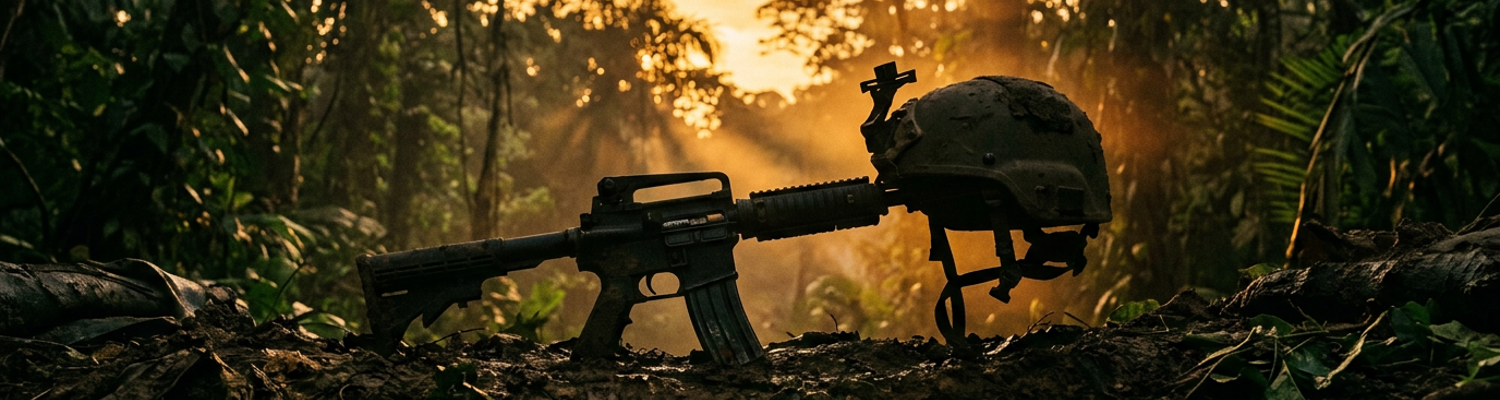
Extractor claws on the M16 rifles sheared through the soft copper alloy rims of stuck cartridges during morning weapons checks. Spent brass jammed tightly against the carbon-fouled chamber walls, venting pressurized exhaust without cycling the heavy bolt carrier groups. Riflemen dropped down behind dirt berms immediately, unscrewing steel cleaning rods from their packs to punch the stubborn casings out from the muzzle ends. High humidity and persistent ground rot degraded the cotton stitching of their web gear, causing magazine pouches to drop into the slick red laterite mud. Soldiers scrubbed orange rust from the rifle springs and wiped green corrosion off twenty-round box magazines before sliding the ammunition back into place. Platoons worked quickly in the dawn mist, listening to the metallic clicks of working actions to verify their rifles could feed fresh rounds without binding.
Colonel Charles A. Jackson deployed the 1st Brigade, 4th Infantry Division into western Pleiku Province during Operation Francis Marion in May 1967 to block North Vietnamese Army B3 Front units crossing the Cambodian border. Brigade headquarters positioned forward operational centers across the plateau to maintain constant radio contact with field companies entering the frontier wilderness. Jackson organized his forces to seal off the primary mountain trails and river valleys where enemy regiments gathered before launching strikes against government outposts. Artillery batteries hauled 105mm howitzers into hastily cleared firing positions, establishing overlapping defense zones to protect tactical airlift corridors and supply depots. Combat engineers carved landing zones out of the secondary growth with heavy explosives to prepare drop areas for the rifle companies assigned to track the opposing forces. Forward observers set up optical rangefinders on elevated hilltops, scanning the jungle canopy for telltale wisps of smoke or signs of fresh trail movement.
Maneuver battalions initiated reconnaissance patrols across dense jungle terrain to disrupt enemy staging areas and protect critical supply routes. Squads hacked through thick bamboo stands and thorny vines, descending into shadowed ravines where natural visibility dropped to ten yards. Soldiers stepped carefully over exposed root networks and slick red laterite slopes to prevent injuries far from medical evacuation sites. Point men scanned the brush for tripwires connected to Chinese stick grenades, noting freshly cut branches that concealed enemy trail junctions. Platoons uncovered camouflaged weapons caches, fortified earthen bunkers, and deep supply trenches dug into the damp stream banks near the Cambodian border. Scout teams marked these fortified enemy complexes on gridded paper maps before radiomen called in tactical air strikes and heavy artillery fire to demolish the log-reinforced shelters.
Shrapnel from the detonating artillery shells tore through the upper canopy, raining splintered hardwood branches down onto the forest floor. Infantry platoons established temporary night defensive perimeters along the cleared ridges, digging shallow fighting positions with entrenching tools before darkness fell. Riflemen opened their damp rucksacks to inspect corroded ammunition magazines and reassemble clean rifle components by feel under poncho hoods. Infantrymen snapped fresh twenty-round magazines into their receivers, listening for the distinctive metallic click of the magazine catch engaging the aluminum notch. Squad leaders distributed extra fragmentation grenades and claymore mines along the low brush, setting tripwires across suspected enemy avenues of approach. Gunners positioned their machine guns to cover the open dead space in the ravines, feeding linked ammunition into the feed trays as the surrounding valley settled into complete silence.
Initial Reconnaissance and the Ia Tchar Ambush
Company B of the 1st Battalion, 8th Infantry pushed out into the quiet ravines at first light to scout the western approaches of the Ia Tchar Valley. Advancing platoons navigated slick laterite terrain and deteriorating equipment before encountering interlocking fields of enemy machine-gun and mortar fire. Soldiers slid down red clay banks, struggling against greasy mud that caked their boots and worked inside their canvas web gear. Cotton equipment straps snapped under the weight of waterlogged ammunition pouches, forcing infantrymen to wire their gear to their belts with spare communications wire. Point men chopped through tangled bamboo thickets with machetes, watching for freshly cut branches and stripped tree bark along the damp trails. Scouts noted these subtle signs of recent human activity, but the surrounding jungle remained completely motionless under the rising morning heat.
Bunkers concealed beneath layered teak logs and thick vines suddenly opened fire across the trail, shattering the stillness of the valley floor. Company B walked directly into a concealed, fortified North Vietnamese Army regimental perimeter. Heavy machine guns from the North Vietnamese 66th Regiment fired from well-hidden log openings, catching the lead American squads in overlapping kill zones. Mortar crews lobbed 82mm high-explosive rounds into the center of the American platoons, blowing apart tree trunks and showering the red laterite mud with jagged steel fragments. Radio operators scrambled for cover while platoon leaders shouted into their telephone handsets to request immediate tactical air strikes. Riflemen dropped behind fallen logs to return fire, only to find that damp ammunition and expanding copper cartridge cases jammed their bolt carrier assemblies after firing just two or three rounds.
Cartridge casings wedged tightly inside carbon-fouled chambers, forcing riflemen to expose themselves under direct fire to clear their weapons. Soldiers unscrewed steel cleaning rods from their packs and rammed them down rifle muzzles while enemy snipers fired down from platforms tied high in the hardwood canopy. Machine gun crews dragged their heavy M60 weapons through the slick clay, attempting to lay down suppressive fire toward the bunker lines to cover their trapped comrades. Enemy gunners concentrated heavy fire directly on the American muzzle flashes, killing several assistant gunners and blowing apart their spare ammunition boxes. Wounded soldiers crawled backward through the brush toward the center of the formation. Squad leaders salvaged ammunition magazines from dead comrades, wiping red grit off the feed lips to keep functioning rifles shooting.
Platoon sergeants consolidated the surviving riflemen into a tight circular perimeter around a shallow ravine to prevent the company from disintegrating under the assault. North Vietnamese assault squads charged out of hidden communication trenches with AK-47 rifles, attempting to overrun the flanks before American heavy weapons could intervene. Forward observers positioned along the ravine bank used their remaining portable radios to direct 105mm artillery batteries onto the fortified bunker line five hundred yards away. High-explosive artillery shells slammed into the tree canopy, tearing through the bamboo and forcing the enemy ground troops back into their log shelters. Company officers distributed the final boxes of machine-gun ammunition. They ordered every surviving soldier to dig hasty rifle pits into the red clay with their bayonets and steel helmets.
Weapon Malfunctions and Tactical Isolation under Triple Canopy
Steel helmets scooped red clay into shallow parapets as rifle companies from the 3rd Battalion, 12th Infantry and the 3rd Battalion, 8th Infantry pushed into adjacent ravines to relieve the pinned perimeter. Both relief battalions ran straight into prepared kill zones where soldiers immediately suffered widespread M16 chamber jams caused by failure-to-extract malfunctions during point-blank firefights. Hot propellant gases pushed bolt carrier groups backward with violent force, but the sharp extractor claws ripped chunks out of the soft cartridge rims instead of withdrawing the spent cases. Expanding brass casings stuck tightly inside the hot, carbon-fouled chambers, rendering the standard infantry rifles completely inoperable after soldiers fired only two or three rounds. Riflemen dropped behind exposed roots to pry at the jammed actions with pocket knives or screw together segmented cleaning rods under heavy machine-gun fire. Many soldiers snapped their steel rods inside the rifle muzzles or took fatal bullet hits while kneeling upright to hammer stuck cartridge casings free.
Infantrymen dragged wounded comrades into the center of the defensive circle while forward observers shouted map coordinates into radio handsets to request urgent artillery support. The dense triple-canopy jungle severely restricted overhead artillery observation, helicopter resupply runs, and aeromedical evacuations for wounded infantrymen. Interlocking tree limbs rose more than one hundred feet above the forest floor, creating a continuous ceiling that hid the battlefield from circling observation planes. Forward air controllers in light aircraft flew directly over the grid coordinates but could not locate the American positions, the enemy bunker lines, or the red smoke markers tossed by squad leaders. Heavy howitzer batteries fired mission barrages based solely on unadjusted map coordinates, causing the artillery shells to strike the upper canopy and detonate prematurely in the high hardwood branches. Shrapnel and chopped tree limbs plummeted straight down onto the American foxholes, failing to damage the reinforced earthen bunkers of the North Vietnamese soldiers.
Helicopter crews approached the battle area at treetop level, searching for small clearings to deliver ammunition and evacuate mounting casualties. Dense layers of wild banana leaves, teak crowns, and hanging vines prevented transport helicopters from touching down anywhere near the beleaguered rifle companies. Crew chiefs dropped heavy crates of small-arms ammunition through the foliage, but the wooden boxes broke open on the upper branches and scattered loose ammunition rounds across unreachable areas of the jungle. Pilots hovered their aircraft over tiny breaks in the canopy to lower steel hoist cables and jungle penetrators down to the ground. North Vietnamese machine gunners in surrounding trees fired directly into the hovering helicopters, piercing the thin aluminum hulls and severing vital hydraulic controls. Pilots wrestled with vibrating cyclic sticks and pulled away from the tree line with wounded crewmen aboard, leaving the infantry companies without fresh supplies or medical evacuation.
Company commanders collected functioning weapons and clean magazines from the dead, redistributing the remaining ammunition to soldiers holding the perimeter. Riflemen abandoned their jammed M16 rifles entirely, taking up captured Soviet AK-47 assault rifles and drum-fed light machine guns from fallen North Vietnamese soldiers around the brush. Medics wrapped wounded soldiers in rubber ponchos to protect exposed fractures and chest wounds from the damp red mud at the bottom of the ravine. Platoon sergeants repositioned machine-gun teams to cover blind draws where enemy infiltrators could crawl beneath the low bamboo stands. Soldiers positioned claymore mines along the perimeter rim, unrolling command wires and connecting manual firing devices to repulse the next North Vietnamese ground assault. Platoon leaders checked compass bearings in the failing light, preparing their depleted squads for a night of total isolation inside the hostile border valley.
Engagements at Chu Goungot and Landing Zone Jackson
Riflemen gripped their weapons in the dark as American forces sustained intense close-quarters perimeter defenses during the Nine Days in May battles around the Chu Goungot massif and Landing Zone Jackson. Moisture rotted through the canvas straps of their web gear, leaving ammunition pouches dangling loose against greasy uniform trousers caked in wet laterite clay. Squads huddled in muddy foxholes along the military crest, listening to the metallic clinking of enemy entrenching tools and muffled movement through the surrounding bamboo. Whistles and bugle calls suddenly echoed down the ridgeline, followed by volleys of rocket-propelled grenades that tore through the tree trunks and showered the fighting positions with burning timber. Infantrymen responded by triggering perimeter claymore mines, sending thousands of steel ball bearings ripping through the dense foliage to break up the initial wave of attackers. Machine gun teams opened up into the darkness, traversing their M60s back and forth across the brush to pin down enemy infiltrators attempting to cut through the tactical wire.
Bullets cracked inches above the dirt parapets as enemy shock troops surged out of the bamboo draws toward the American foxholes. Coordinated massed assaults by North Vietnamese regular infantry repeatedly tested battalion perimeters, requiring point-blank defensive fires and concentrated artillery support. Forward observers pressed their radio handsets against their ears, screaming urgent coordinates to American howitzer batteries stationed at Landing Zone Jackson and nearby fire support bases. Heavy 105mm artillery shells screeched overhead and detonated in the jungle canopy fifty yards beyond the friendly parapets, blasting tree limbs into splinters and showering the ground with hot steel fragments. Riflemen leaned over their muddy revetments to engage enemy soldiers at distances of less than twenty feet, firing continuous bursts from their M16s until spent cartridge cases jammed inside hot, carbon-crusted chambers. Platoon sergeants scrambled between foxholes to distribute captured Soviet carbines and drum-fed machine guns to men whose service rifles had frozen solid during the onslaught.
Soldiers jammed green-lacquered ammunition into the captured weapons, firing through the cordite smoke as North Vietnamese squads attempted to overrun the company aid station. Combat medics worked frantically inside a central drainage ditch, pressing gauze bandages into open chest wounds and tying tourniquets onto severed limbs under the illumination of falling parachute flares. Blood mixed with red laterite clay along the bottom of the trench, creating a slippery mud that coated litters and waterlogged field jackets. Artillery forward observers continued walking high-explosive barrages in a tight ring around the perimeter, using proximity-fused shells to clear the dead space where enemy assault teams gathered for fresh charges. Shrapnel from the defensive barrages severed telephone wires and shredded radio antennas. Unit leaders relayed tactical orders by shouting through the deafening noise of the explosions.
Runners dashed through the shell craters to deliver handwritten fire adjustments and ammunition requests to the company command bunker as the incoming mortar fire finally slackened. Morning light revealed hundreds of North Vietnamese casualties tangled in the low brush and concertina wire outside the American fighting positions. Fatigued infantrymen climbed out of their muddy pits with cleaning rods, punching out corroded cartridge casings and checking weapons for the inevitable morning counterattack. Helicopters clattered low over the treetops from Landing Zone Jackson, kicking up red dust as pilots braved sniper fire from the surrounding slopes. Crew chiefs dropped fresh ammunition crates and lifted out the most severely wounded soldiers. Battalion commanders consolidated the battered perimeter lines along the Chu Goungot ridgelines, redistributing mortar rounds and positioning fresh listening posts along the border draws before the tropical heat set in.
Strategic Toll and the Presidential Unit Citation
Scouts manning the fresh listening posts watched silent jungle trails as North Vietnamese regiments broke contact and withdrew into their Cambodian base areas. The defense halted the B3 Front cross-border offensive at the cost of heavy casualties and yielded three Medals of Honor for conspicuous gallantry. Posthumous decorations recognized Sergeant First Class Bruce A. Grandstaff, Private First Class Leslie A. Bellrichard, and Staff Sergeant Frankie Z. Molnar, who each performed extraordinary acts of valor under fire by calling artillery onto their own overrun positions or smothering live grenades with their bodies to shield their squads. Riflemen stepped cautiously out of their muddy foxholes to search the dense bamboo stands, recovering fallen comrades and securing abandoned enemy weapons from the blast craters. Litter teams carried wounded soldiers up the slippery red clay slopes to forward collection points, wrapping torn limbs in field dressings and covering exposed chest wounds with rubber poncho liners. Flight medics loaded the worst trauma cases into hovering utility helicopters, bracing the stretchers against vibrating cabin floors as pilots pulled collective pitch to clear the high teak canopy.
Helicopters ferried casualties and damaged equipment directly to field hospitals and maintenance depots at Pleiku, where technical inspectors began examining the physical wreckage of the nine-day battle. Weapons specialists disassembled hundreds of recovered M16 service rifles on grease-stained wooden benches, finding sheared extractor claws, carbon-crusted chambers, and ruptured cartridge cases welded inside barrel extensions. Technical reports verified that high humidity, abrasive laterite dust, and unbuffered buffer springs had caused repeated extraction failures, confirming the desperate radio reports sent by pinned platoons during the worst of the fighting. Ordnance crews also cataloged moisture-rotted canvas web gear, corroded aluminum magazines, and dented cleaning rods that soldiers had snapped off inside jammed barrels while trying to hammer stuck brass free under fire. Quartermasters stacked the broken equipment in salvage yards while medical officers recorded the severe human toll, treating hundreds of blast wounds and packing deceased infantrymen into aluminum transfer cases. Truck convoys hauled replacement weapons, fresh cotton web gear, and clean ammunition crates westward along Highway 19 to re-equip the depleted companies still holding the border ridges.
Infantrymen from arriving relief battalions stepped into the muddy revetments to replace the battered companies of the 1st Brigade, allowing the exhausted survivors to pull back from the forward trenches. Officers inspected the abandoned North Vietnamese field fortifications, discovering extensive networks of log-reinforced bunkers, ammunition caches, and camouflaged trenches that proved the enemy had intended to seize the western highlands. Artillery craters and air strikes had crushed the staging bases of the 32nd and 66th Regiments, breaking the combat power of two seasoned regular units and forcing the B3 Front command to suspend its dry-season offensive plans. Brigade intelligence sections counted hundreds of enemy dead across the valley floor, establishing that concentrated American defensive fires and point-blank small-arms resistance had inflicted unsustainable losses on the assault waves. Company clerks compiled casualty rosters, ammunition expenditure logs, and handwritten patrol reports into comprehensive operational files for division headquarters. Staff officers forwarded these tactical records to the Pentagon, where senior planners began a thorough analysis of the border fighting.
Pentagon researchers reviewed the accumulated field logs to determine how isolated units had withstood massed enemy assaults despite severe mechanical and environmental disadvantages. A formal 1969 Department of the Army evaluation reviewed casualty ratios and tactical performance, culminating in the award of the Presidential Unit Citation. Army evaluators documented that the 1st Brigade had achieved a decisive tactical victory by denying the B3 Front access to key infiltration corridors into Pleiku Province. The official citation specifically credited the brigade infantry battalions, cavalry troops, and artillery batteries for displaying extraordinary heroism and unit cohesion during nine days of continuous close combat. Department officials issued General Orders formally conferring the decoration, directing unit custodians to attach the blue citation streamer embroidered with Pleiku Province to the brigade colors. Personnel clerks updated division records and service jackets at military bases across the country, documenting the collective honor alongside the combat badges earned in the Ia Tchar Valley.