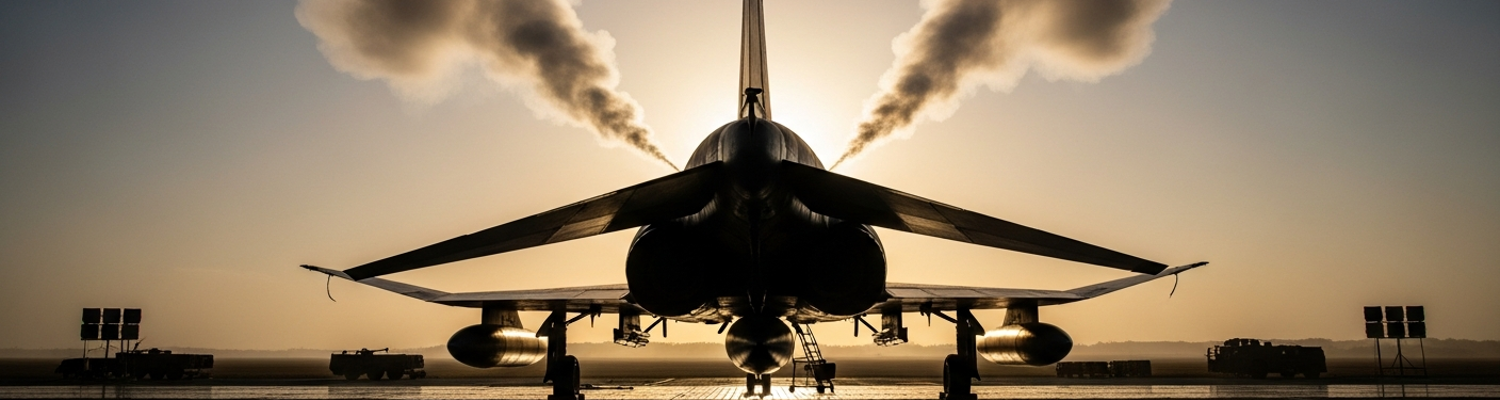

The Readiness Shock at Chu Lai
The directive to deploy Marine Air Group 11 (MAG-11) to Chu Lai in late 1965 arrived with an almost impossible timeline. Planners at Fleet Marine Force, Pacific, envisioned a swift insertion of advanced airpower onto a forward operating base. This would intensify pressure on enemy forces and shorten flight times to targets in the I Corps Tactical Zone. The site itself, a stretch of sandy coastline fifty miles south of the saturated Da Nang airbase, was chosen in haste. Speed was the primary directive from the 1st Marine Aircraft Wing. The entire concept, from securing the ground to launching the first sorties, was compressed into weeks. This left no margin for error.
Initial elements of the Chu Lai complex were established on May 7, 1965. By June 1, A-4 Skyhawks of MAG-12 were already landing on a partially completed runway. The subsequent arrival of MAG-11’s more complex, two-seat F-4 Phantoms was expected to maintain this tempo, bringing an all-weather, multi-mission capability to the escalating conflict.
A severe disconnect awaited the incoming maintenance crews and pilots. Stateside training manuals for the F-4B Phantom II promised a Fully Mission Capable (FMC) rate of approximately eighty percent. This figure, derived from operations in the controlled environments of bases in California and Japan, was the foundation of sortie generation planning. It was a number that assured commanders of a specific combat power available on any given day.
The conditions at Chu Lai immediately invalidated these projections.
Operational logs indicate that actual FMC rates plummeted upon arrival. The humid, salt-laden air and pervasive sand attacked the Phantom’s advanced systems. Avionics, particularly the complex Westinghouse AN/APQ-72 fire-control radar filled with vacuum tubes, suffered from unprecedented failure rates. Fuel leaks became a persistent and dangerous problem. Seals and lines struggled to cope with temperature extremes and the corrosive environment. The powerful General Electric J79 engines, while providing immense thrust, were highly susceptible to foreign object damage from the sandy, hastily prepared surfaces. The very structure of the aircraft, designed as a high-altitude interceptor, was stressed by the high-G maneuvering required for close air support missions.
A Foundation of Sand and Aluminum
The F-4B Phantom was a weapon system that demanded its own ecosystem of advanced support. At Chu Lai, that ecosystem did not exist. The readiness crisis was compounded by a logistical infrastructure that was fundamentally underdeveloped. The promise of a modern jet base clashed with the reality on the ground. Chu Lai was an expeditionary airfield carved out of a beach.
The core of the problem was the runway. Constructed by Navy Seabees in blistering heat, the airfield consisted of AM-2 aluminum planking laid over soft sand. This strip was a marvel of expeditionary engineering but a nightmare for sustained jet operations. The interlocking aluminum panels constantly shifted, sank, and buckled under the weight of the Phantoms and the punishing rhythm of landings and takeoffs. Water became trapped inside the matting. The temperature cycle from day to night caused bulges and cracks on the surface. Damage from forklift tines and routine wear required constant, labor-intensive repair, often forcing the closure of runway sections and disrupting flight operations.
The supply chain was just as fragile. With no natural harbor, all supplies had to be brought ashore via landing craft from ships anchored offshore or flown in from the congested hub at Da Nang. This sea line of communication was at the mercy of the weather, especially during the northeast monsoon season when heavy seas could halt all offloading for days. Pontoon causeways and an amphibious fuel line laid along the sea bottom were frequently damaged by rough surf. On the ground, deep, powdery sand hindered the movement of all vehicles and equipment. Support units like Marine Wing Support Group 17 were stretched to their limits, trying to build a permanent base while simultaneously sustaining a high operational tempo. For the maintenance chiefs of MAG-11, this meant that even when they could diagnose a failed component on an F-4, acquiring a replacement was an exercise in uncertainty.
Aviation fuel was the lifeblood of air operations, and at Chu Lai, it was a resource in constant peril. The portable fuel bladders used for storage were insufficient for the demands of a full aircraft group and were themselves vulnerable to damage. There were periods where fuel state became so low that mission planning was dictated not by tactical necessity, but by the number of gallons available in the storage bladders, forcing commanders to cancel missions.
The Navy Supply Disconnect
A deep, structural disconnect existed between Marine Corps expeditionary needs and the U.S. Navy's sea-based resupply system. At Chu Lai, this translated into a constant struggle for the materiel of war. Archival evidence reveals a cumbersome, multi-layered requisition process. A Marine maintenance officer needing a specific part, for instance, a replacement hydraulic pump for an F-4, would submit the request through the Marine Wing Support Group 17 supply channel. This request would then ascend the Marine command structure only to be transferred and re-formatted for the Navy supply system, which controlled the ammunition ships and fleet oilers anchored offshore. This bureaucratic translation often resulted in errors, mismatched stock numbers, and significant delays. The request was funneled into a system prioritizing the Navy’s own carrier groups operating at Yankee Station.
Institutional priorities did not align. Navy supply officers, operating on a different set of procedures, frequently failed to grasp the urgency of requests from the sand-swept Marine airfield, viewing it as a separate, and sometimes secondary, operational entity.
Documented delays of up to 72 hours for supplies became an accepted feature of operations. A close review of MAG-11’s operational logs from late 1965 and early 1966 details a recurring crisis in the availability of aviation ordnance and specialized fluids. Sorties were planned, pilots were briefed, but F-4s sat waiting on the flight line. They were unable to be armed because the requested 500-pound Mk 82 bombs or Zuni rocket pods had not yet been offloaded from the supply ship lingering miles offshore. The 72-hour figure appears repeatedly in maintenance records, representing a three-day lag between an urgent request and its fulfillment.
This was not an inconvenience. It was a tactical vulnerability.
The problem was just as severe for less-lethal, but equally essential, consumables. The F-4B Phantom was notoriously prone to leaks in the hot, corrosive environment, constantly weeping red-dyed MIL-PRF-5606 hydraulic fluid. A shortage of this fluid, or of the specialized turbine engine oil for the J79 powerplants, could ground an entire squadron as effectively as enemy action. The wait for 55-gallon drums of these fluids to be laboriously lightered from ship to shore could stretch for days, a period during which millions of dollars of advanced aviation assets were rendered inert.
Compromised Missions, Open Coastlines
Operation Market Time was conceived as a layered naval blockade. MAG-11's Phantoms were meant to be the quick-reaction hammer. The inability to consistently generate sorties from Chu Lai directly compromised the security of allied coastal supply lines. Operational logs from the period show a constant mismatch between threat identification and air response. Aircraft at Chu Lai were frequently unable to answer the call.
The shortages of spare parts and ordnance meant that even as Navy patrol craft tracked targets offshore, fully capable Phantoms sat inert on the flight line, awaiting a replacement hydraulic pump or a full load of bombs delayed on a resupply ship.
This failure was not one of airmanship. It was a failure of logistics.
Every hour of delay was an hour the enemy could use to slip through the net.
This systemic failure had its most pronounced effects on the waters off Qui Nhon and Cam Ranh Bay. These two deep-water ports were rapidly becoming the logistical backbone for American and South Vietnamese forces in the II Corps Tactical Zone. Viet Cong strategy aimed to isolate these burgeoning hubs. Intelligence reports from the period indicated that Viet Cong regiments were actively working to interdict land-based supply routes, making secure sea-lanes necessary. Viet Cong sapper attacks inside Qui Nhon itself, including a hotel bombing in February 1965 that killed 23 U.S. soldiers, demonstrated the local threat level. The inability of MAG-11 Phantoms to maintain consistent armed reconnaissance patrols over the approaches to these bays created a dangerous vacuum.
North Vietnamese trawlers, often disguised as civilian vessels, could exploit this gap, delivering munitions and supplies to local VC forces. The aerial shield that was supposed to protect these vital arteries was, in practice, frequently nonexistent.
The Ordnance Mismatch
Even when aircraft were available, they were often armed improperly for maritime interdiction. The F-4B Phantom could carry a wide array of munitions, but the logistical pipeline to Chu Lai was biased toward volume and availability, not tactical suitability. The ideal weapons for engaging a small, maneuvering vessel like a smuggling trawler were munitions that allowed for a degree of precision, such as pods of 5-inch Zuni rockets. A salvo of Zunis could saturate a target area, increasing the probability of a disabling hit.
Zuni pods were often in short supply.
Instead, MAG-11’s Phantoms were typically armed with what was most plentiful: general-purpose Mk 82 500-pound bombs. Hitting a small, moving ship with an unguided bomb from a fast-moving jet is a task of extreme difficulty. Pilots were forced to make multiple low-level passes, exposing themselves to potential anti-aircraft fire, to have any chance of success. Often, these bombs were fitted with Snakeye high-drag fins, designed to slow the bomb’s fall and allow the aircraft to escape the blast radius during low-altitude delivery. This did little to improve the fundamental inaccuracy of the weapon against a point target.
The result was a significant expenditure of ordnance for minimal effect, with bombs frequently missing their targets entirely. This forced reliance on a less-than-optimal tool turned precise interdiction missions into exercises in frustration and inefficiency.
Cannibalization and Command Triage
Archival reports from MAG-11's supply and maintenance officers (NARA Record Group 127, 1st MAW Command Chronologies) paint a picture of constant triage. The practice of cannibalization became the standard, grim procedure for keeping a fraction of the force operational. Maintenance chiefs, facing a grounded aircraft and a needed sortie, would designate another downed airframe as a parts donor. These "hangar queens" were systematically stripped of working components. Hydraulic pumps, electrical connectors, avionics modules, and even engine parts were removed to get other Phantoms airborne. This created a downward spiral. The airframes being stripped were often only waiting for a single, specific part themselves but were sacrificed for short-term operational gains. The result was a flight line dotted with skeletal, inert aircraft, a visible testament to a logistics system failing under the strain of combat operations. An aircraft could be grounded for weeks awaiting a single part from depots in Japan or the United States.
This scarcity of mission-capable aircraft forced a brutal triage of mission priorities upon the MAG-11 command staff. Every available F-4B had to be allocated to one of several competing, high-stakes tasks. The most immediate was providing close air support to Marine infantry units engaged in heavy contact with Viet Cong forces. Operations like Starlite in August 1965 demonstrated the need for air power to support ground troops. Commanders had to weigh a request from a ground unit in a firefight against other pressing missions.
A second, persistent demand was for armed reconnaissance and coastal patrol. These missions were the airborne component of Operation Market Time. Every F-4B allocated to a ground support mission was one less aircraft available to patrol the vital sea lanes. The third mission, reconnaissance, was equally important for gathering intelligence on enemy movements but was often the first to be sacrificed when resources were stretched thin.
The decision of where to send the few available jets was a daily command dilemma with no easy answer. A Phantom sent to support troops near the Demilitarized Zone was a Phantom that could not intercept a smuggling trawler off the coast, a trade-off that left dangerous gaps in the American operational screen.