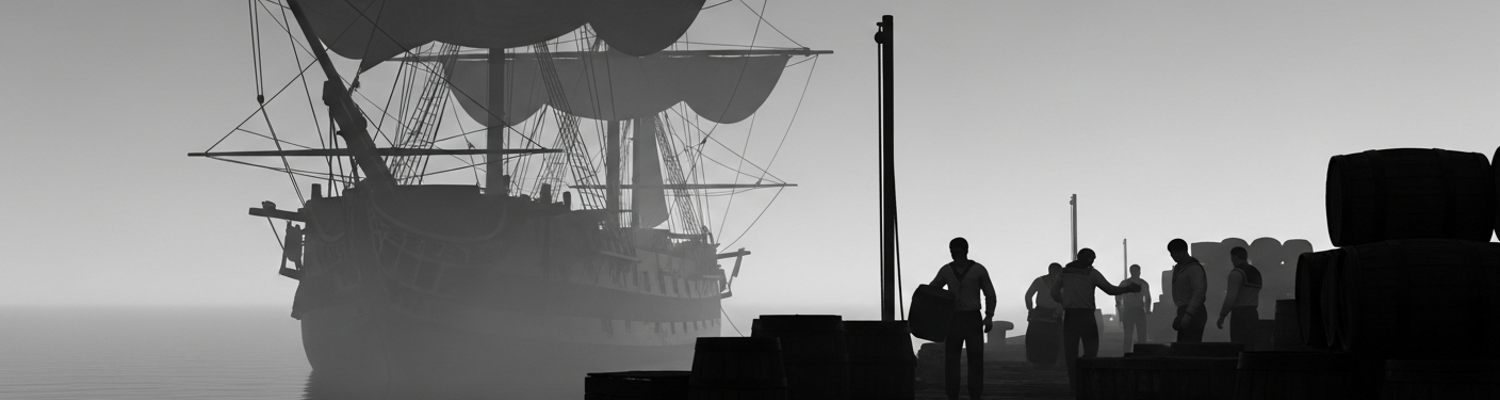

The first frigates of the United States Navy pushed into blue water on a tide of revolutionary fervor but were tethered to shore by a logistical chain that was brittle to the point of nonexistence. Forged to shield American merchantmen from French privateers and Barbary corsairs, the Navy’s squadrons operated at the extreme end of a supply line measured in months and fraught with peril. This reality forced a generation of commanders like Thomas Truxtun and Edward Preble to become masters of the ledger and the diplomatic note, skills as vital as gunnery and seamanship. The material facts of provisioning ships, battling timber rot, and preserving crew health thousands of miles from a home port defined the absolute limits of American sea power. These formative operations delivered a brutal, enduring lesson: logistics, not cannons alone, dictates the reach and persistence of a naval force. The Navy’s initial hand-to-mouth existence provides a stark contrast to the modern US Navy’s global network of supply depots and dedicated replenishment ships, a complex system born directly from the hard-learned lessons of this era.
Ad-Hoc Supply Chains in the Mediterranean
During the Quasi-War with France from 1798 to 1800, the US Navy confronted its logistical infancy. Squadrons patrolled the Caribbean to hunt French privateers, operating without dedicated supply vessels or overseas bases. Captains relied on a patchwork of expedients. They captured what they could from enemy ships or bargained for necessities with local merchants in neutral ports like British Jamaica or Spanish Havana. These transactions were steeped in uncertainty. A ship’s purser, desperate for fresh water, citrus, or salt pork, was a prime target for price gouging. Diplomatic friction was a constant danger. The Caribbean was a complex chessboard of colonial interests, and an American frigate limping into port for repairs was a strategic liability, tolerated one week and potentially interned the next. After his bruising 1799 victory over the French frigate L’Insurgente, Commodore Truxtun’s flagship, the USS Constellation, had to make for Jamaica for critical repairs, a stark reminder of his dependence on foreign-controlled facilities. The entire war effort was hampered by this lack of a dedicated logistical tail, delaying deployments and leaving ships vulnerable far from home.
The challenge magnified exponentially during the First Barbary War from 1801 to 1805. President Thomas Jefferson, despite his skepticism of a standing navy, dispatched squadrons across the Atlantic. Sustaining a force in the Mediterranean was a monumental undertaking. Commodore Edward Preble, commanding from the deck of the USS Constitution, showed immense resourcefulness. He established a forward supply depot at Syracuse, Sicily, securing a friendly port through careful diplomacy with the Kingdom of the Two Sicilies. He even leased gunboats and bomb ketches from the Neapolitan king to augment his blockade of Tripoli. Still, this was a negotiated, temporary solution, not a sovereign American base. US consuls in ports like Gibraltar, Livorno, and Malta became de facto logistics officers, their primary duty shifting from commerce to sourcing everything from sailcloth and gunpowder to hardtack and rum. This reliance created profound strategic vulnerabilities. Access could be choked off by shifting European alliances, and the financial cost was immense. The funds required to sustain the Mediterranean Squadron consumed a huge portion of the federal budget, a fiscal reality that directly influenced strategic decisions back in Washington. This hand-to-mouth reality is a world away from the modern US Navy’s Military Sealift Command, whose Combat Logistics Force ships provide underway replenishment, delivering fuel, munitions, and stores directly to warships at sea, granting them operational independence unimaginable to Preble.
The War Against Rot and Sickness
Far from home, the very fabric of the ships was under constant assault. The magnificent live oak hulls, prized for their resistance to cannon fire, were not immune to the ravages of the sea. In warm waters, wood-boring teredo worms could honeycomb planks and structural timbers, turning a sound hull into a fragile shell. The relentless growth of marine life, a thick carpet of weeds and barnacles, fouled hulls and could slash a frigate’s top speed by several knots. For a ship that relied on speed to chase or escape, this was a potentially fatal handicap. Without access to proper dry docks, captains resorted to the back-breaking and perilous practice of careening. This involved heaving a ship onto its side in a shallow, protected bay, using the immense leverage of its own masts and tackles. The crew would then scramble onto the exposed hull to scrape, clean, and re-caulk the planks. The process took days or weeks, required emptying the ship of its guns, ammunition, and stores, and left the vessel utterly defenseless against a surprise attack. The strain on the ship’s frame was immense. It was a desperate, necessary evil, a universe removed from the scheduled, high-tech maintenance cycles of modern warships in dedicated shipyards.
The human cost of these long voyages was staggering. The standard daily ration, consisting of salted beef or pork, hardtack biscuits often infested with weevils, and a ration of grog, was a recipe for malnutrition. Outbreaks of scurvy were inevitable. The vitamin C deficiency manifested in horrific ways, with sailors suffering from bleeding gums, loose teeth, excruciating joint pain, and wounds that refused to heal. While the British Royal Navy was beginning to institutionalize the use of citrus juice, the practice was inconsistent in the early US Navy. Surgeons like Edward Cutbush documented the horrors and advocated for dietary reform, but change was slow. In the Caribbean, mosquito-borne yellow fever and malaria could sweep through a crew with terrifying speed. In 1799, the USS Delaware limped into port with nearly three-quarters of its crew incapacitated by fever. The ship’s sick bay, a dark, poorly ventilated space below the waterline, became a festering hotbed of disease. Mortality from sickness and accidents consistently and dramatically outpaced combat losses, a constant drain on precious manpower that no logistical system of the time could replace.
Strategic Constraints of Limited Reach
The severe logistical limitations were not just a matter of crew comfort or maintenance headaches, they directly shaped and constrained American naval strategy. The inability to keep ships on station for extended periods made effective, sustained blockades nearly impossible. Commodore Preble’s celebrated campaign against Tripoli was a masterclass in aggressive tactics born of logistical frustration. His squadron, led by the formidable USS Constitution, could bombard the city and raid its harbor, but it could not maintain a continuous, watertight blockade. Ships constantly had to break off and undertake the long sail to Syracuse or Malta for fresh water, provisions, and repairs. These operational pauses gave the Tripolitans breathing room and opportunities to run the blockade. Preble’s strategy was one of intermittent blows, not a sustained siege, a tactical choice forced upon him by his logistical tether. His predecessor, Commodore Richard Dale, had been rendered almost completely ineffective by these same constraints, his year-long deployment achieving little.
The operational radius of the early Navy was defined by the contents of its water casks and provision holds. Deployments were shorter, and the projection of power was fleeting. A frigate appearing off a foreign coast was a powerful symbol, but its influence waned when local rulers understood it could not remain indefinitely. During the Quasi-War, while the US Navy captured approximately 85 French vessels, French privateers still seized over 2,000 American merchant ships. This disparity highlights the difficulty of controlling vast swathes of ocean with a logistically challenged fleet. The lack of a robust logistical tail meant that naval power was episodic, not persistent. This contrasts sharply with the global presence of the modern US Navy, where a carrier strike group can remain on station for months, sustained by a continuous flow of supplies from a logistics network that is itself a global, multi-billion-dollar enterprise. The early struggles in distant harbors taught a foundational lesson: a blue-water navy is not merely a collection of powerful warships. It is a system, and the line between victory and defeat, between order and chaos, lies in its ability to sustain itself far from home.