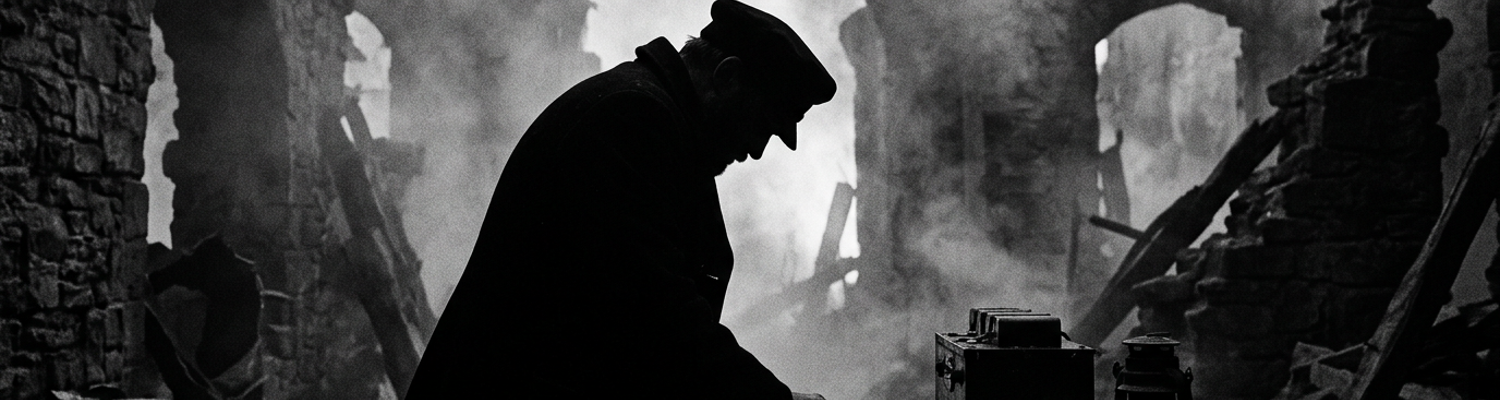

Landing Operations Across the Place des Consuls
Archival evidence shows that by July 14, 1882, British naval bombardment and uncontrolled post-shelling fires leveled four-fifths of the European district in Alexandria. An estimated seven hundred corpses lay unburied in the streets. Commercial property destruction exceeded sixty million dollars. At 0730 that morning, Rear Admiral James W. Nicholson ordered a combined American expeditionary detachment to disembark from the Mediterranean Squadron. The contingent consisted of exactly one hundred and thirty-three sailors and United States Marines. These men were drawn directly from three warships anchored in the outer harbor. Seventy-three men originated from the screw-sloop flagship USS Lancaster. Thirty-four came from the gunboat USS Nipsic. Twenty-six transferred from the corvette USS Quinnebaug. Commanded by Lieutenant Commander Caspar F. Goodrich, these men carried .45-70 caliber Springfield Model 1873 rifles. They wore heavy canvas cartridge belts and carried iron entrenching tools into an urban zone thick with drifting ash.
None of them carried respirators against the smoke.
Goodrich marched his bluejackets and Marines down Rue de la Bourse. The column pushed past armed looters toward the northern edge of the Place des Consuls. A close review of operational logs indicates the American consulate stood scorched. Its stone lintels were cracked by nearby shell explosions. Radiant heat across the plaza had charred its wooden shutters. Sparks from neighboring commercial blocks threatened the compound roof. Armed sentries took up firing positions at the intersection of Rue Cherif Pacha and the consulate carriage gate. Naval working parties constructed a barricade out of overturned carts, stone ballast, and iron pipe. Rifle squads mounted flat gravel rooftops to suppress sniper fire from Egyptian irregulars hiding in adjacent alleyways. Two Model 1877 Gatling guns mounted on field carriages were dragged into position. These weapons faced outward toward the smoking ruins of the French and Italian legations. They secured a clean field of fire across three hundred yards of blackened cobblestones.
The heat baked the soles of their leather boots through the street stones.
When examining the historical record, the landing force found the municipal infrastructure of Alexandria completely disabled. Subterranean gas lines had ruptured and burned out. Water mains lay dry from reservoir breaches. The aerial communication web that bound Egypt to Europe was gone. The principal cable office of the Eastern Telegraph Company near the Grand Square was gutted. Above the street, iron poles had warped under the three-day fire. Severed copper and galvanized iron wires dropped into tangled heaps beneath fallen masonry. Gutta-percha insulation had liquified inside brick terminal vaults. This created carbonized blockages across the trunk connections to Malta, Suez, and Cairo. Engineers immediately inspected the consulate basement. They needed to determine whether any local battery sets or Morse instruments could draw current from surviving submarine cables anchored in the harbor basin.
The copper conduits were dead.
Naval mechanics discovered that the telegraph junction boxes along the exterior consulate wall had taken blast fragmentation from British naval shells. Terminal screws were stripped. Copper coils lay fused into solid lumps of slag. Porcelain insulators lay shattered across the flagstones. Saltwater runoff from improvised firefighting efforts had flooded the subterranean battery pits. This shorted the zinc-copper cells and saturated the paper message tape with caustic sludge. Goodrich assigned three signalmen to clear the debris. They were ordered to locate an intact line run to the harbor quays before nightfall.
Securing the Damaged Consulate Telegraph Terminal
Archival evidence shows that rifle fire began striking the second-story cornices of the consulate within twelve minutes of the detachment arriving. Marine Sergeant Michael McCormick directed six marksmen to scale the interior service stairwell. They secured the flat roof above the chancellery offices. Across the scorched expanse of the Place des Consuls, Egyptian irregulars and mutinous garrison troops occupied the blackened minaret of the nearby Terbana Mosque. Hostile forces also held the shell-cracked masonry parapets of the adjacent Okelle Neuve. Incoming .43 Egyptian Remington rounds chipped limestone lintels. Sharp rock fragments showered the terrace. Working beneath low decorative balustrades, the Marines threw down sandbags filled with street rubble. They hoisted heavy structural timbers salvaged from an internal collapse to form two fortified firing redoubts. McCormick positioned two men with Springfield Model 1873 rifles to cover Rue Cherif Pacha. Four riflemen maintained continuous volley fire into the upper window embrasures of the ruined Okelle. That counter-fire suppressed the rooftop snipers. It drove them back from the parapets and granted the working parties below clear access to the upper signal corridors.
Lead slugs continued to indent the stone facade every few minutes.
A close review of operational logs indicates that the interior communication hub of the consulate suffered severe radiant heat damage. This room was located in a small southern alcove off the main chancery. When Goodrich and two Lancaster telegraphers breached the warped cedar door, they found the municipal relay equipment ruined. Two heavy brass Morse sounders sat fused to their mahogany bases. The gutta-percha insulation on their electro-magnet windings had melted into a black crust. This locked the armatures permanently open. Cast-brass knife switches on the line-distribution board had warped out of their terminal contacts. Ambient heat in the alleyway had exceeded four hundred degrees Fahrenheit. On the floorboards, sixteen glass Daniell gravity cells belonging to the local loop battery array lay shattered by fallen ceiling plaster. The spilled zinc and copper sulfate electrolyte combined with firefighting seawater to form a corrosive greenish slurry. This mixture ate through the copper binding screws. It completely severed the wire connections between the office instruments and the external trunk riser.
Nothing in the circuit could draw an amp of current.
When examining the historical record, Goodrich prioritized determining whether the private codes of the legation had been compromised during the three days of looting and street violence. Signal staff forced open the distorted iron door of the office dispatch safe using cold chisels and a naval boarding axe. Inside the heat-blistered compartment, technicians located the primary State Department cipher volume. They also found five confidential message ledgers detailing transmissions between Washington and Alexandria since January. Ash had sifted past the damaged rubber seals of the safe. This scorched the edges of the cipher code tables without destroying the numerical lookup keys. Bluejackets spread the brittle paper across an undamaged wooden table. They transcribed the remaining intact pages before humidity could turn the waterlogged vellum to mush. These recovered sheets confirmed that outbound cable communications sent immediately prior to the British bombardment had cleared to the submarine station at Malta. Forty-eight unencoded incoming telegrams from European consulates lay half-burned in the waste bins.
Goodrich assigned a corporal to guard the safe with a loaded carbine.
Galvanic Circuit Reconstruction Under Fire
A close review of operational logs indicates that at 1115, two telegraph technicians from USS Lancaster crawled across the northern debris field of the Grand Square. They needed to repair seventy yards of downed trunk conductor. Overhead copper wire hung in loose coils from distorted iron brackets along the facade of the ruined Anglo-Egyptian Bank. Naval shell fragments had severed the lines. Street fires had annealed the metal brittle. Sniper positions in the upper floors of the Okelle de France maintained periodic fire with .43 Egyptian Remington rifles. This kicked up limestone dust around the work party. Marine marksmen stationed behind overturned dray carts answered with .45-70 Springfield volleys to suppress the hostile positions. Scrambling up the bent iron lattice of a fallen gas lamppost, the naval linemen used pocket knives and wire nippers to strip carbonized gutta-percha insulation from the surviving ends of the main line. They scraped the scorched copper clean with dry file blades. The men bound the conductor ends using tightly twisted Western Union splices. They insulated the exposed joints with strips of tarred canvas salvage.
Sniper rounds perforated the masonry inches above the spliced joints.
Archival evidence shows that the consular relay required a functioning primary battery bank to overcome the electrical resistance of the corroded municipal line. All sixteen of the commercial gravity jars in the consulate lay smashed across the basement floor. Technicians gathered ten undamaged two-quart glass battery jars and unglazed ceramic porous cups from an abandoned apothecary shop on Rue de l Obelisque. Operating under the immediate supervision of Goodrich, mechanics stripped raw sheet zinc from the fire-warped flashing of the consulate carriage house roof. They cut the metal into rectangular plates with tin snips. Working parties dissolved thirty pounds of recovered copper sulfate crystals into distilled water boiled off from a portable steam pump condenser. Bluejackets poured the blue vitriol solution into the outer glass jars. They inserted hammered copper strip electrodes into the bottom sediment. The men seated the porous earthenware cups inside the jars. Filling the internal cups with dilute zinc sulfate solution, the men suspended the salvaged zinc plates in the inner electrolyte. This created ten improvised Daniell cells wired in series with bare copper jumper leads.
Each completed cell generated 1.08 volts of direct current across its terminals.
When examining the historical record, the landing party completed the battery assembly at 1440. They linked the series array directly into the consular sending key and a salvaged brass galvanometer. Linemen on the quayside of the Old Port had previously located an intact submarine feeder lead. They traced its armored core across the harbor breakwater where it connected to a submerged copper-conductor line anchored off the main harbor channel. Sailors secured the landward end to the consular circuit. Signal officers aboard USS Lancaster dropped an insulated copper lead over the port quarter of the flagship into the harbor floor to ground the naval terminal. Closing the main knife switch sent continuous galvanic current pulsing through four miles of submerged and terrestrial wire. Needle deflection on the consulate galvanometer shifted thirty-two degrees off zero. This confirmed that an unbroken electrical loop existed between the landing force and the flagship of Admiral Nicholson.
The naval squadron had established direct line contact with the ground landing party.
Goodrich assigned the chief telegrapher of the Lancaster to tap test signals through the hand key using American Morse code. Atmospheric heat distortion and partial ground leakage along the harbor sea wall caused signal resistance to hover at 420 ohms. This required the battery technicians to insert two additional improvised zinc-copper cells to stabilize the voltage. Outbound click sequences confirmed operational receipt aboard Lancaster. An immediate return transmission directed the landing detachment to maintain the perimeter along the western approaches of the Place des Consuls until relief companies from HMS Invincible arrived.
Cryptographic Security and Despatch Protocols
Archival evidence shows that transcribing plaintext into secure cable dispatches required a manual system of double-entry mathematical encipherment. Working inside the soot-covered chancellery of the consulate, telegraphers from USS Lancaster laid out the recovered State Department code volume alongside the confidential cipher key of the Navy Department. Every outbound sentence had to be broken down word by word. Operators converted the text into five-digit numerical code groups using the 1878 Navy Cryptographic Codebook. They then shifted these groups against a variable additive daily key to prevent interception on the open lines to Europe. Sweat dripped onto the fragile vellum sheets. Bluejackets blotted each line with dry chalk before the ink dissolved. A single four-hundred-word transmission to Washington required nearly four hours of uninterrupted hand calculation. Signalmen worked in rotating two-man pairs under flickering kerosene lanterns. They cross-checked every digit sequence by reading the tables backward against the numerical index. One clerical slip in a five-number block could garble an entire paragraph into unreadable gibberish at the receiving terminal in London.
A single transcription error rendered an entire transmission unreadable.
When examining the historical record, this cryptographic secrecy shielded sensitive operational data from foreign intelligence networks and hostile Egyptian units. Goodrich had to transmit detailed reports to Admiral Nicholson and Navy Secretary William E. Chandler without compromising the position of the landing party as a strictly neutral force. Dispatches contained specific damage assessments of Fort Ras El Tin and the dismantled coastal batteries along the harbor. The reports noted exact gun emplacements shattered by British naval artillery. The encrypted traffic also detailed the retreat of nine thousand Egyptian soldiers under Ahmed Arabi. These forces fell back toward fortifications at Kafr el-Dawwar. Alongside these tactical summaries ran complete evacuation manifests. These lists detailed the names, nationalities, and physical condition of seven hundred and thirty European refugees sheltering inside the American compound or boarded onto transports bound for Malta. Transmitting these lists in plaintext would have exposed civilian identities and evacuation routes to armed looters and irregulars who controlled the southern rail junctions.
Plaintext broadcasts invited immediate interception and armed retaliation.
A close review of operational logs indicates that the detachment faced deliberate electronic disruption from rogue operators along the overland trunk network. Hostile telegraphers stationed near the Gabari railway yards repeatedly dropped grounded iron rods across the iron wire to produce dead-shorts. Others tapped directly into the circuit to inject forged messages into the system. These fraudulent transmissions attempted to redirect refugee convoys or issue false withdrawal orders to the Marine perimeter. Goodrich defeated these intrusions by establishing a rigid verification handshake for every transmission passing between the consulate and the fleet. Senders had to preface each cable with a pre-arranged mathematical check-value. Operators calculated this by multiplying the Greenwich Mean Time minute by a confidential officer register number (Navy Register Document 1882-A). If an incoming transmission arrived without the matching check-sum, bluejackets opened the line breaker. They also grounded the battery circuit at the switchboard if an operator detected the irregular keying rhythm of an unauthorized sender.
The circuit stayed dead until the sender proved his identity.
By midnight on July 14, this verification protocol had intercepted three separate forged advisories originating from unmapped taps south of Lake Mareotis. Signal technicians logged each intrusion. They adjusted the operational cipher keys by four numerical shifts. The men then restored the direct galvanic loop to the harbor cable head. At 0115, Lancaster acknowledged receipt of the verified refugee manifest without losing a single group of encrypted text.
Jurisdictional Friction with British Military Authorities
Archival evidence shows that by midday on July 15, British naval provost marshals began systematic efforts to control all electrical traffic entering and leaving Alexandria. Royal Navy staff officers under Admiral Sir Beauchamp Seymour established a communications censorship bureau. This bureau operated inside the partially burned exchange building near the harbor gates. These British officers demanded that American signalmen hand over all outbound dispatches for manual inspection before line transmission. They argued that military necessity and martial law overrode diplomatic privilege. At the landing house of the Eastern Telegraph Company on Ras el-Tin, British technicians seized physical control of the submarine line relays to Malta. They threatened to ground the American consular patch cord unless landing detachment telegraphers provided unencrypted clear-text transcripts of every cipher block sent to the Mediterranean Squadron. Deliberate administrative holds followed immediately. British operators detained American messages for up to six hours under the pretext of line congestion and tactical security reviews.
Foreign censors demanded clear-text transcripts of every outbound cable.
A close review of operational logs indicates that Lieutenant Commander Caspar F. Goodrich directly rejected these British interventions to protect the non-combatant status of the landing party. Goodrich met British provost representatives at the consulate gates. He stated directly that the landing detachment operated under strict instructions from Rear Admiral James W. Nicholson to preserve absolute neutrality. American sailors and Marines held sovereign jurisdiction over the consulate compound, its battery sets, and the signalmen running the Morse keys. Sergeant Michael McCormick placed two Marine sentries armed with loaded .45-70 Springfield rifles at the switchboard alcove. He issued standing orders to block any unauthorized officer from approaching the instruments or reviewing message ledgers. A British naval party attempted to sever an American line splice on Rue Cherif Pacha. Goodrich positioned four armed bluejackets across the roadway to physically guard the wire run. His detachment held the line switchboard against foreign access without surrendering a single cipher book.
Armed guards barred foreign personnel from entering the instrument alcove.
When examining the historical record, British operators retaliated against this resistance by freezing the connection of the consulate to the overland lines entirely. Goodrich responded by establishing an independent optical communication link to circumvent the British-monitored street circuits. Signal quartermasters climbed to the scorched flat roof of the chancellery. They set up mechanical Begbie kerosene lamps on iron tripods alongside red and white visual wig-wag flags (Signal Corps Pattern 1879). These men targeted the main deck of USS Lancaster. The ship was anchored two miles out in the harbor roads past the line of British ironclads. Flag sweeps and shuttered light flashes transmitted five-digit numerical code groups directly over the heads of British patrols occupying the European quarter. Staff officers aboard Lancaster copied the optical flashes using bridge telescopes. They bypassed the shore censors completely. The naval officers routed the verified cables through the independent line arrangements of the flagship.
Kerosene lanterns flashed through the smoke until the flagship confirmed receipt of the final code group.
Evacuation Manifests and Final Shore Withdrawal
Archival evidence shows that by the morning of July 23, the consular relay began clearing the final evacuation manifests over the restored submarine connection to the cable hub at Malta. Chief telegraphers keyed four separate cipher runs containing the identities and status reports of seven hundred and thirty-five foreign nationals. These civilians were processed through the American legation compound during the nine days of occupation. Among these were seventy-six American citizens. The list included merchant seamen, consular staff dependents, and expatriate engineering personnel from the municipal waterworks. Goodrich required each transmission to catalogue specific injuries, known asset losses, and shipboard billeting assignments aboard commercial steamers chartered for transport to Marseille and Genoa. Operating over high-resistance lines that continued to suffer voltage drops from harbor ground leaks, telegraphers sent these lengthy lists in five-digit encrypted groupings. Each block had to be repeated twice and verified by the receiving operator before the circuit advanced to the next surname.
Every name was checked against consular passport ledgers before transmission.
A close review of operational logs indicates that the order to strike the field telegraph station and secure all sensitive materials reached the chancery at 0430 on July 24. Bluejackets immediately opened the main knife switches. They disconnected the series leads bridging the improvised Daniell cells. Sailors carefully ladled out sixty gallons of hazardous copper sulfate and zinc sulfate electrolyte from the glass battery jars. They neutralized the caustic liquid with dry ash before draining it into the courtyard gutters. Mechanics used wire brushes and kerosene rags to scour greenish corrosion off the copper binding screws, terminal clamps, and brass jumper strips. The ten glass jars and ceramic porous cups were packed into wooden sea chests lined with canvas sailcloth to prevent transit breakage. Signal officers dismantled the brass Morse keys, sounders, and the sensitive reflecting galvanometer. They wrapped each mechanical component in oiled wool (Ordnance Department Specification 12). The State Department code volume, daily transposition tables, and telegraph logs were placed inside lead-lined tin dispatch boxes and locked with brass padlocks.
Corrosive battery acid had eaten through the canvas work trousers of the men.
When examining the historical record, the formal withdrawal of the one hundred and thirty-three bluejackets and Marines began at 0900. British military police units under Major General Sir Archibald Alison advanced into the Place des Consuls to assume full garrison control over the European quarter. Goodrich mustered his three shipboard contingents in the consular courtyard. He inspected rifles, bayonets, and cartridge boxes to account for every round of .45-70 ammunition. The landing force dismantled their sandbag parapets. They rolled up sixty yards of salvage copper wire from the rooftops. The men limbered the two Gatling guns onto their iron field carriages. Marching in two columns with bayonets fixed, the detachment cleared Rue de la Bourse. They moved through three-quarters of a mile of rubble-strewn streets toward the customhouse docks of the Old Port. At 1015, the men reached the stone quay where steam cutters and twelve-oared pulling launches from the Mediterranean Squadron waited along the seawall. Loading occurred by ship detachment. Thirty-four men boarded cutters bound for USS Nipsic. Twenty-six embarked for USS Quinnebaug. The remaining seventy-three, along with Goodrich and the boxed telegraph gear, transferred to the launches of USS Lancaster.
By 1130, the last American cutter cast off from the wharf and cleared the inner breakwater.