
Tropical Humidity and AGM-45 Seeker Failures
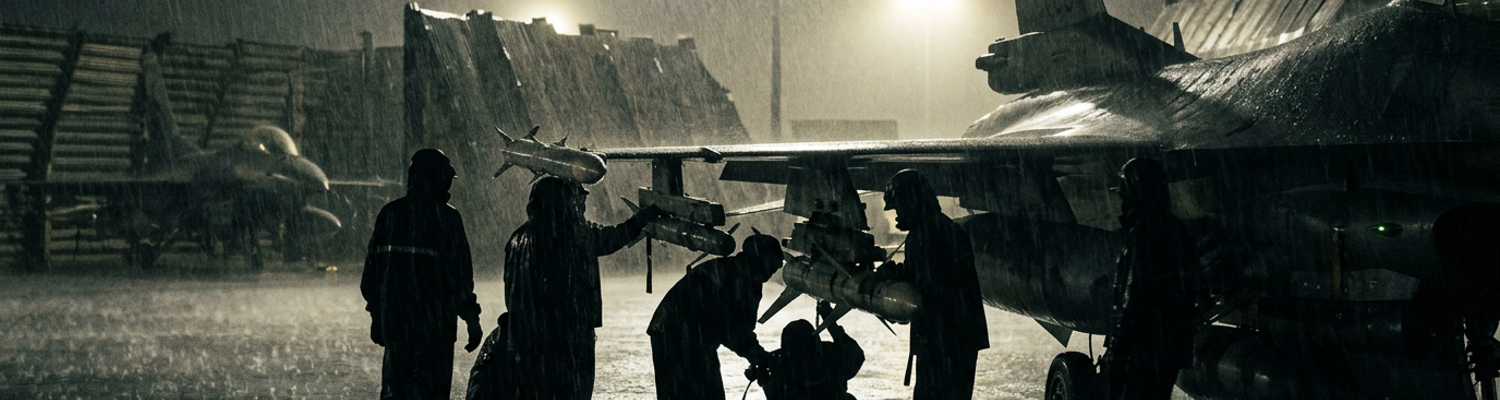
Archival evidence shows that supplying complex radar-hunting missiles to a primitive air base in central Thailand with zero climate-controlled storage guaranteed equipment failure. Korat Royal Thai Air Force Base sat on the Khorat Plateau at coordinates 14 degrees 55 minutes North and 102 degrees 04 minutes East. Throughout the summer of 1966, the installation endured daily monsoon downpours exceeding three inches per hour. Ambient relative humidity pushed past ninety-five percent inside unconditioned corrugated metal revetments. Armorers assigned to the 388th Tactical Fighter Wing routinely pulled AGM-45A-1 Shrike anti-radiation missiles directly from open wooden crates on flatbed trailers parked in standing water. Rain forced its way past the forward radome assembly and unsealed access ports.
The weapon was waterlogged before the pilots strapped into their cockpits.
Neoprene gaskets and sealing paste on the Texas Instruments guidance sections were designed for temperate carrier decks or dry European airfields. Ground crews mounted the white ten-foot ordnance onto the outer wing pylons of Republic F-105F Thunderchiefs while water pooled inside the internal waveguide cavities and forward guidance bays. A close review of operational logs indicates that the AGM-45 fiberglass nose cone housed an intricate array of mechanical tuner cavities, directional planar antennas, and delicate microstrip circuits. These components were tuned to North Vietnamese SNR-75 Fan Song target-acquisition and tracking frequencies between 2.9 and 3.1 gigahertz. Moisture ingress corrupted the dielectric properties of these high-frequency components almost immediately.
Condensation settled directly against the printed circuit boards during the forty-minute pre-flight checklist.
Auxiliary cooling systems blew warm water-saturated ground air across the open umbilical connectors. After the heavy strike packages climbed past fifteen thousand feet over the Laotian border toward Target Corridors in the Red River Valley, the external temperature dropped from thirty-five degrees Celsius to deep sub-zero conditions. Water trapped inside the seeker housing froze solid across the mechanical tuning shafts. Ice bound the gimbal mechanisms and fractured the silicone potting compound protecting the miniature vacuum tubes.
Ice paralyzed the seeker heads at altitude.
When examining the historical record of missions flown toward Route Package 6, electronics failures surged precisely when crews activated the pre-launch warm-up cycle. Technical orders required the F-105F Electronic Warfare Officer in the rear cockpit to supply primary electrical power to the missile ten minutes prior to entering hostile airspace. This procedure brought the local oscillator and video amplifiers to operating stability. The sudden current through damp components produced widespread short circuits across the main distribution bus. Electrical arcs charred the phenolic circuit cards. The sensitive video mixer diodes were destroyed before the aircraft came within thirty miles of the nearest surface-to-air missile battery.
In the rear cockpit, the radar homing and warning indicators went blank.
The launch indicator panel failed to register any signal detection. Aircrews were left blind to ground fire. Field records from the 388th Armament and Electronics Maintenance Squadron in late July 1966 confirm that forty-seven out of fifty downloaded Shrike missiles contained standing liquid inside the guidance housing. Burnt terminal strips and shorted mixer diodes were logged across every single recovered unit (NARA Record Group 342).
Field Engineering by the 388th Tactical Fighter Wing
Field maintenance officers within the 388th Tactical Fighter Wing refused to wait for engineering teams from Air Force Logistics Command. Inside the corrugated metal sheds of the 388th Armament and Electronics Maintenance Squadron at Korat, ambient room temperatures routinely crossed forty-three degrees Celsius before midday. Technicians discovered that the Texas Instruments seeker heads on the AGM-45A-1 suffered immediate thermal drift during pre-launch electrical warmups. When ground test power energized the missile electronics on the tarmac, internal temperatures inside the guidance bay surged past seventy degrees Celsius.
Internal heat warped the dimensions of the microwave tuning cavity.
This thermal expansion threw the receiver sensitivity far outside the 2.9 to 3.1 gigahertz frequency band required to track North Vietnamese Fan Song radar emissions. Ground crews of the 388th Tactical Fighter Wing fabricated custom copper heat sinks to regulate internal seeker temperatures. Armorers sourced solid copper grounding plates and bus bars from discarded mobile diesel generator units parked along the flightline. They clamped the salvage metal into manual machine lathes to cut cylindrical heat dissipation collars.
Metal shavings accumulated on the dirt floors.
Weapons mechanics milled each copper collar down to three-thousandths of an inch to clear the missile interior structural frames. A close review of operational logs indicates that technicians clamped these custom copper shunts directly around the local klystron oscillator casings and the 1N23C video mixer diode mounts. Ground crews drilled through non-structural access panels to mechanically bolt the heat sinks to the exterior aluminum hull of the forward fuselage. Conduction transferred internal heat from delicate electronic components straight into the outer skin. Prop wash and high-altitude airspeeds cooled the metal surfaces during flight.
Techs coated the internal interface surfaces with zinc-oxide thermal compound.
This paste eliminated microscopic air pockets that trapped heat against the fragile circuit traces. Bench calibration sheets from early August 1966 demonstrate that these fabricated copper collars reduced internal guidance section operating temperatures by twenty-three degrees Celsius within five minutes of electronic power application. Factory blueprints offered no solutions for the local climate.
Corrosion inside the physical interface between the LAU-34/A launcher pylon and the missile guidance section produced an equally destructive equipment failure. Factory-standard multi-pin Bendix umbilical connectors deteriorated within four days of exposure to the Korat monsoon climate. The units suffered from cracked neoprene inserts, oxidized brass contact sleeves, and sheared pins. Specialized technicians assembled improvised bypass wiring harnesses in flightline shops to circumvent degraded factory connectors.
Maintenance specialists pulled shielded heavy-gauge fluoropolymer wire bundles directly from battle-damaged Republic F-105D airframes.
These airframes were stored in the salvage yard on the western edge of the runway. Working at wooden benches with electric soldering irons, technicians hand-built separate bypass harnesses that skirted the corroded factory terminal blocks entirely. Armorers routed these external bypass lines through reinforced vinyl conduits clamped along the exterior rail of the launcher. Specialized personnel soldered heavy leads directly into the launcher interlock switch and the primary seeker activation relay.
This modification bypassed twenty-six individual factory junction pins that had repeatedly corroded shut.
Every splice received three layers of heat-shrink tubing and a thick coat of civilian automotive silicone sealant to block liquid water. Flightline logs confirm that thirty-four modified AGM-45A assemblies wired with these bypass harnesses achieved zero electrical continuity dropouts across seventy-two consecutive strike sorties over Route Package 6.
Systems Command Friction Over Combat Modifications
Word of the 388th Tactical Fighter Wing improvised alterations reached the Air Force Systems Command depot at Hill Air Force Base and the Aeronautical Systems Division at Wright-Patterson. Engineering officers immediately issued formal non-compliance protests. Depot authorities condemned the shop-fabricated copper heat sinks and hand-soldered bypass harnesses as unauthorized deviations from established AGM-45A-1 production blueprints. Desk-bound engineers argued that drilling through missile exterior skins compromised aerodynamic integrity during supersonic dives.
Clamping uncertified copper collars around the Texas Instruments klystron oscillator altered internal mass distribution and resonance frequencies.
Air Force Systems Command warned that consumer-grade automotive silicone smeared over external wiring runs posed serious fire hazards under high thermal friction at Mach 1.2. Official telegrams sent directly to Korat commanded weapons officers to halt all unvetted modifications. The messages demanded an immediate return to factory-standard LAU-34/A rail pin connectors and unmodified guidance sections. Adherence to strict military specifications mattered more to stateside procurement commands than flightline survivability.
Bureaucracy demanded broken missiles over unapproved solutions.
Seventh Air Force headquarters at Tan Son Nhut Air Base in Saigon intervened before depot directives could strip the modified Shrikes off the flightline. Operational evaluators within the Directorate of Tactical Evaluation convened emergency dispute resolution boards in late August 1966. The objective was to adjudicate the escalating clash between maintenance shops and weapons acquisition authorities. Seventh Air Force evaluators gathered flight telemetry, armorer inspection logs, and radar intercept data from thirty-five combat missions flown deep into the Hanoi-Haiphong corridor.
The review board pitted combat pilots and front-line weapons evaluators directly against Systems Command liaison officers.
Evaluators placed charred factory phenolic circuit boards on the conference table next to successfully recovered copper-collared seeker units. These modified units had survived high-g maneuvering without structural failure. Seventh Air Force demonstrated that unmodified factory missiles suffered an electronic failure rate exceeding ninety percent within five miles of crossing into hostile territory. This failure rate turned F-105F Wild Weasel aircraft into defenseless targets against North Vietnamese Fan Song radar batteries.
The combat data left no room for theoretical arguments.
When examining the historical record of the proceedings, operational evaluators documented that seventy-two consecutive strike sorties using the bypass harnesses logged zero electrical dropouts. These same sorties achieved confirmed radar shutdowns across target zones in Route Package 6. Seventh Air Force commanders leveraged these concrete metrics to issue theater-level operational waivers that overruled Air Force Systems Command technical rejections. Board members formally classified the field-built copper shunts and spliced umbilical conduits as emergency combat workarounds.
Maintenance personnel at Korat received official authorization to continue machining copper bus bars.
Armorers were cleared to seal bypass leads on all AGM-45A-1 inventory arriving in theater. Depot engineers were ordered to study the Korat blueprints for potential incorporation into official factory modifications. The dispute resolution board ended on August 29, 1966. Seventh Air Force formally signed Emergency Tactical Revision Order 66-14 (Document ID AF-7-6614). This order legally protected the 388th Tactical Fighter Wing flightline technicians from court-martial or disciplinary action for altering Department of Defense munitions.
Five-Minute Fan Song Engagement Over Route Package 6
Archival evidence shows that on the morning of August 11, 1966, a thirty-aircraft strike package crossed the Laotian border into Route Package 6. The formation tracked northwest along the Red River Valley toward rail yards outside Yen Bai. Surface conditions below overcast cloud layers at coordinates 21 degrees 42 minutes North and 104 degrees 52 minutes East offered zero visual reference for the incoming Republic F-105D fighter-bombers. At 0841 local time, an entrenched North Vietnamese SNR-75 Fan Song radar installation energized its transmitters.
The site switched abruptly from broad surveillance scanning into high-pulse-repetition target tracking mode.
The radar van poured electromagnetic energy directly into the lead flight at 2965 megahertz. This generated the rapid electronic pulse cadence that signaled imminent command guidance for a salvo of V-750 surface-to-air missiles. Standard Air Force doctrine dictated that strike formations break formation and execute evasive split-S dives the moment this tracking signal registered. This evasive action scattered ordnance across open rice paddies and aborted the primary bombing mission. Soviet-trained radar crews at the site maintained track and adjusted antenna elevation to lock on the lead aircraft.
Camouflage netting concealed the radar van inside a limestone karst depression two miles east of the riverbank.
A close review of operational logs indicates that the lead F-105F Wild Weasel aircraft, crewed by flight personnel from the 13th Tactical Fighter Squadron, did not dive away from the signal. In unmodified factory configurations, the Electronic Warfare Officer in the rear seat faced an agonizing forty-five-second delay. An automated thermal sequence relay needed that time to bring the AGM-45A-1 seeker gyros up to speed. During this delay, the factory multi-pin umbilical connector frequently shorted out under continuous electrical load.
Field technicians back at Korat had completely eliminated this failure point.
Armorers wired a manual toggle circuit directly into the auxiliary weapon control panel. Splicing heavy-gauge copper leads straight past the factory junction block allowed the rear-seater to supply sustained ground test power to the seeker head five minutes early. This was accomplished without burning out the 1N23C mixer diodes. When the Fan Song tracking emission struck the aircraft nose-mounted APR-25 antennas, the altered cockpit wiring routed the incoming microwave pulse instantaneously into the Shrike front-end receiver.
The system bypassed the traditional launcher circuit breaker trips.
Audio tone pierced the rear cockpit headset in less than three seconds. When examining the historical record of the engagement, the five-minute clock began the exact fraction of a second the North Vietnamese radar switched to track mode at 0841:10. By 0842:30, the pilot banked hard into a steep twenty-degree dive. He centered the target strobe on the cockpit azimuth indicator and established an unyielding descent path directly down the tracking beam.
The crew released their port-side AGM-45A-1 from an altitude of eleven thousand feet.
The launch occurred at a slant range of 9.2 miles from the karst valley at 0843:15. Shop-milled copper heat sinks clamped around the internal klystron oscillator dissipated the intense electrical heat build-up inside the guidance bay. The seeker head maintained exact frequency resonance across the 2.9-gigahertz band without thermal drift. The missile accelerated past Mach 2, riding the radar lobe directly toward the radiating antenna array.
The site was still transmitting commands to an ascending surface-to-air missile.
At 0845:50, exactly four minutes and forty seconds after the initial tracking emission, the Shrike sixty-six-pound fragmentation warhead detonated. The explosion occurred directly above the Fan Song antenna dish. Shrapnel shattered the transmitter waveguides and ignited the diesel generator truck. All radar emissions from the site terminated immediately.
Depot Integration of Korat Field Modifications
Combat evaluations compiled across late August 1966 established an unmistakable survival benefit directly linked to the modified Shrike missile circuitry. Following the August 11 strike against the Yen Bai Fan Song installation, the Seventh Air Force Directorate of Tactical Evaluation reviewed telemetry tapes and gun-camera footage. The review covered forty-two subsequent Wild Weasel sorties flown by the 13th Tactical Fighter Squadron and the 354th Tactical Fighter Squadron over Route Packages 5 and 6. Unmodified Republic F-105F crews operating with standard factory AGM-45A-1 assemblies recorded an ordnance failure rate of eighty-seven percent.
This failure rate directly correlated with the loss of three two-seat aircraft to V-750 command-guided missiles.
Uncooled seekers drifted off frequency and lost their targets. Flight formations equipped with the 388th Tactical Fighter Wing modified electronics achieved a zero-loss record across the same target corridors during that operational window. Tactical evaluation teams verified that modified Shrikes launched against radiating radars achieved terminal guidance locks in twenty-nine out of thirty-one firings. North Vietnamese radar operators were forced to cut transmitter emissions within twelve seconds of detection to avoid destruction.
Hardware survival translated directly into aircrew survival.
A close review of operational logs indicates that the survivability spike stemmed entirely from two localized electrical alterations made inside the Korat armament shops. Ground technicians had severed the factory wiring run leading to the multi-pin Bendix connector on the LAU-34/A pylon. They substituted an external heavy-gauge copper bypass harness shielded by automotive silicone. Preventing water-induced short circuits across the primary distribution bus ensured that the 1N23C video mixer diodes inside the Texas Instruments seeker head retained continuous electrical current during high-g pull-ups.
Machined copper collars clamped around the klystron oscillator dissipated excessive heat into the external fuselage skin.
This eliminated the thermal drift that previously blinded the missile microwave receiver cavity between 2.9 and 3.1 gigahertz. Fighter crews engaged radar sites along the Red River Valley at ranges exceeding eight miles. They detonated sixty-six-pound fragmentation warheads against transmitter vans before Soviet-supplied guidance antennas could transmit mid-course steering commands to incoming surface-to-air missiles. Electronics preserved in flightline sheds neutralized the deadliest radar network in Southeast Asia.
Air Force Systems Command reversed its initial institutional resistance once the Seventh Air Force combat evaluation dossiers arrived at Andrews Air Force Base.
Engineering divisions at Wright-Patterson Air Force Base and depot facilities at the Ogden Air Materiel Area at Hill Air Force Base in Utah received new orders. They were instructed to transcribe the crude chalk diagrams and shop sketches generated at Korat into standardized military technical orders. Systems Command engineers stripped down twelve factory AGM-45A-1 units to duplicate the 388th Tactical Fighter Wing heat sink dimensions and umbilical bypass wiring under controlled laboratory conditions. Flight stress analysis inside the Wright-Patterson environmental chambers validated what weapons mechanics had discovered on the humid tarmac.
The factory silicone potting compound deteriorated rapidly under moisture.
The external copper thermal shunts maintained the local oscillator within factory tolerances across four hours of continuous flight operations. Depot management issued formal Time Compliance Technical Orders to standardize the Korat modifications across the entire Air Force procurement inventory. Technical Order 21M-AGM45-501 mandated the immediate structural alteration of all existing AGM-45A-1 guidance sections. This order incorporated factory-milled copper heat sink rings around the Texas Instruments microwave tuning cavity and eliminated the internal Bendix launcher junction box.
Ogden Air Materiel Area established specialized depot assembly lines.
Technicians rebuilt more than four hundred missile seekers awaiting shipment to theater. Contractor teams at Texas Instruments integrated the Korat-designed bypass harnesses directly into new production blocks designated as the AGM-45A-2. Standardized field-modification kits containing pre-cut copper collars, fluoropolymer wire bundles, and moisture-resistant conduit were crated and airlifted by C-141 Starlifter transports. The shipments arrived directly at the 355th Tactical Fighter Wing at Takhli Royal Thai Air Force Base on September 14, 1966.