
United Nations Sanctions and Khawr Abd Allah Smuggling Routes
Training manuals for naval interdiction outlined orderly vessel compliance. These documents detailed procedures where targeted ships maintained a steady course at five knots while lowering a clean pilot ladder for boarding teams. The physical environment delivered rusted barges violently pitching in six-foot swells. Desperate crews actively attempted to ram approaching military craft. Archival evidence shows that by February 1995, the enforcement of United Nations sanctions against illegal Iraqi oil smuggling had devolved into highly dangerous evasion tactics. Following UN Security Council Resolution 661, Iraq bypassed global embargos by pumping raw crude oil into heavily modified coastal dhows at the Mina al Bakr offshore terminal. Smugglers welded false steel bulkheads into the cargo holds. This modification concealed up to three thousand metric tons of petroleum beneath layers of rotting agricultural goods.
The cargo held a value of hundreds of thousands of dollars on the regional black market.
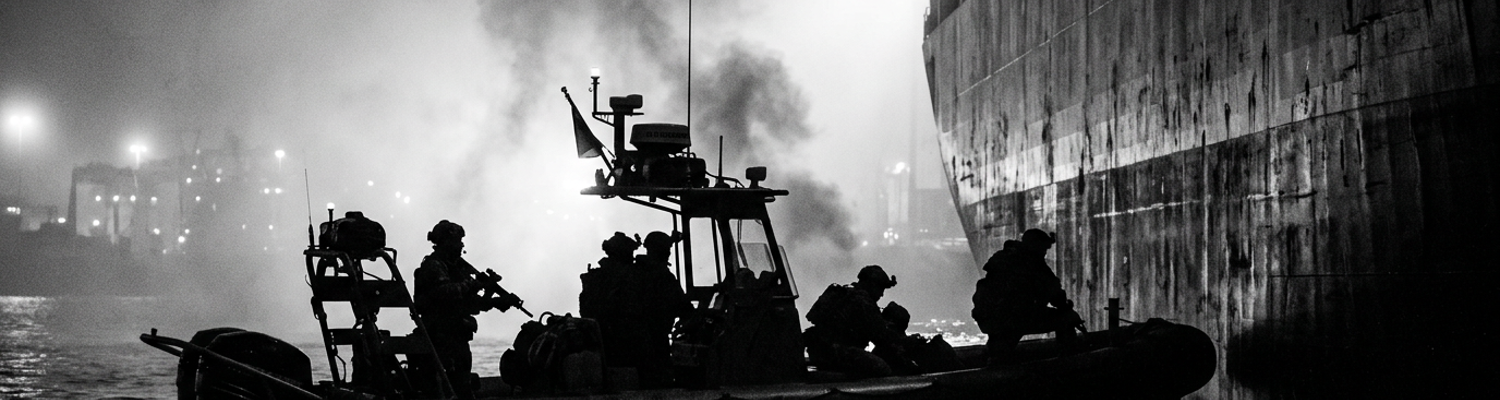
Smuggling syndicates steered through the shallow mudflats of the Khawr Abd Allah waterway under the cover of darkness. Tidal currents in this specific sector ran at four knots. These currents frequently dragged vessels off course into Iranian territorial waters. Coalition forces possessed no legal jurisdiction to pursue targets across that specific boundary line. A close review of operational logs indicates that these syndicates utilized commercial off-the-shelf GPS receivers to navigate narrow channels between international boundaries with extreme precision. Radar operators aboard coalition destroyers tracked dozens of these low-profile surface contacts every night. US Navy deployment of maritime interdiction teams in the northern Persian Gulf operated under exceptionally strict rules of engagement designed to prevent regional escalation. Visit, Board, Search, and Seizure detachments from ships like the USS Valley Forge launched in eleven-meter rigid-hull inflatable boats into pitch-black waters.
Sailors wore forty pounds of Level III body armor.
They carried heavy breaching kits. Combat Information Centers restricted these boarding parties from chambering rounds in their 9mm submachine guns until they faced a direct threat to life. Rules of engagement dictated proportional force. A sailor could not draw a weapon if a smuggler brandished a blunt object. Warning shots required explicit authorization from the ship captain. This authorization process took up to three minutes over encrypted UHF radios. Boarding officers had to physically climb aboard hostile vessels to verify the cargo manifest. They sounded the fuel tanks using weighted dipsticks. Unarmed smuggler crews routinely sabotaged the steering gear or opened sea valves to scuttle the ship while the Americans were trapped below decks. Saltwater corrosion degraded the seals on the boarding teams tactical radios.
This environmental damage routinely cut off all communication with the parent ship.
At 0214 hours on February 18, the outcome of a major interception mission pivoted on a localized window of mechanical failure. A twelve-man Visit, Board, Search, and Seizure team approached a 150-foot suspected smuggling barge loitering near coordinate 29°35'N, 48°45'E. The coxswain throttled the twin 200-horsepower outboard engines to match the erratic eight-knot speed of the barge. Diesel exhaust and sea spray obscured the vision of the boat crew. As the lead petty officer grabbed the rusted gunwale of the barge, the helmsman threw the rudder hard to port. The heavy steel hull swung aggressively toward the fiberglass inflatable boat. The rigid-hull craft was pinned between the barge and a sudden two-meter wave. Under the strict rules of engagement, the boarding officer could not authorize suppressive fire against the unlit pilothouse. No visible weapons were present on the deck.
The team had ninety seconds to make a tactical decision.
They could abort the boarding and watch the dhow cross the invisible line into Iranian waters. They could execute a non-compliant boarding maneuver while actively being crushed. The bow hook dropped his telescoping pole. He manually shoved against the steel plating of the barge to create a six-inch gap. The coxswain threw the starboard engine into reverse. This action tore the inflatable collar against a rusted cleat. High-pressure air hissed violently from the punctured starboard tube. The rigid-hull boat immediately began taking on water over the gunwales. The boarding officer ordered the primary assault element to leap across the widening gap. Three sailors landed heavily on the steel deck of the barge. They drew their sidearms. Sprinting toward the aft pilothouse, they breached the wooden door of the bridge structure using a standard dynamic entry technique. The helmsman was found zip-tying the ship wheel to the port-side railing.
This action intentionally locked the vessel into a continuous tight circle.
Explosive Ordnance Disposal Deployment and Steering Sabotage
Standard training manuals for maritime salvage outlined procedures where well-lit decks and cooperative crews assisted boarding parties with heavy equipment transfer. The physical conditions delivered an unlit abandoned dhow rigged with suspected explosives drifting uncontrollably toward hostile waters. When examining the historical record of this specific February 1995 incident, operational logs indicate that conventional Visit, Board, Search, and Seizure teams were explicitly ordered to stand down. Intelligence reports suggested the fleeing smuggler crew had deliberately armed scuttling charges near the primary sea valves before escaping in a motorized skiff. Command of the boarding operation shifted to United States Navy Explosive Ordnance Disposal Mobile Unit Eight, Detachment Four.
These technicians launched from the deck of the USS Crommelin.
They utilized an unarmored Zodiac combat rubber raiding craft. They carried specialized diagnostic gear instead of standard breaching tools. Each man wore a bulky Kevlar fragmentation vest over a nomex flight suit. They packed a customized tool roll containing ceramic wire cutters, non-magnetic beryllium-copper wrenches, and a portable X-ray generator. Their target was a 160-foot steel-hulled cargo vessel drifting powerless at two knots on a direct heading toward the Shatt al-Arab delta. Approaching the massive hull required the Zodiac coxswain to steer entirely by passive sonar and a handheld thermal imager. Making a rapid tactical decision, the EOD team leader boarded near the aft quarter to gain immediate access to the steering compartment. This approach bypassed the main cargo hold where secondary booby traps were most likely positioned.
The heavily armed specialists hooked their titanium caving ladders onto the rusted gunwale at exactly 0312 hours.
Zero-visibility boarding conditions near the mouth of the Shatt al-Arab delta severely degraded the operational timeline of the detachment. Rolling off the Iraqi mudflats, a dense localized sea fog dropped ambient visibility to less than three feet. Heavy airborne moisture rendered the AN/PVS-7 night vision goggles entirely useless. Technicians had to rely on low-lumen red-filtered tactical flashlights that barely penetrated the gloom. Moving through the physical environment proved highly dangerous. The EOD specialists traversed decks coated in a thick layer of spilled diesel fuel and rotting fish scales. Archival evidence shows their primary objective was to secure a compromised steering rig that was actively driving the vessel off course. Sabotage of the mechanical linkage connecting the wooden helm to the massive steel rudder had been deliberate.
Temperatures down in the cramped unventilated steering gear room exceeded one hundred degrees Fahrenheit.
Inspection revealed that the main hydraulic return lines had been intentionally severed with a hacksaw. Spraying across the bulkheads, high-pressure hydraulic fluid created a slick hazardous workspace. Every ocean swell slammed the heavy steel rudder quadrant violently against its mechanical stops. This action generated enough force to crush a human hand instantly. A sheared cotter pin lay rusted on the deck plates next to an empty one-gallon plastic jug. The EOD Chief had a strict five-minute window to arrest the movement of the rudder before the tidal current pushed the dhow across the 29°52'N, 48°43'E coordinate line into Iranian territorial waters. Crossing that invisible geographic boundary would instantly trigger an international diplomatic crisis. It would legally force the American team to abandon the vessel.
They would surrender thousands of gallons of illicit petroleum to the regional black market.
Finding no immediate explosive threats attached to the mechanical linkages, they initiated an emergency manual override. Two heavily armored EOD operators positioned themselves on opposite sides of the violently swinging steel quadrant. They timed the rhythm of the ocean swells to precisely predict the erratic movements of the rudder across the flooded compartment deck. The steel swung. Using heavy-duty ratchet straps and half-inch galvanized steel chains brought aboard in their gear bags, the technicians anchored the starboard side of the steering quadrant to a structural steel rib on the hull of the ship. The port-side chain snapped taut with a deafening metallic crack as the next wave hit the stern. Securing the compromised steering rig required extreme physical exertion in the suffocating heat of the compartment. Directing his men to wrap a tertiary length of chain around the primary hydraulic ram, the team leader physically locked the steel piston in the dead-center position.
Two heavy come-along winches provided the necessary tension.
These winches held the chains simultaneously against the raw hydrodynamic force of the ocean pressing against the submerged rudder blade. This mechanical fix held the rudder firmly amidships. Immediately, the dhow stopped its slow turn to port and straightened its drift pattern. A quick reading from the handheld commercial GPS receiver confirmed their exact geographic coordinates. Drifting had stabilized exactly four hundred yards from the Iranian maritime border. Kneeling on the fluid-soaked deck plates, the technicians began inspecting the severed hydraulic lines for secondary explosive triggers.
UHF Telemetry Loss and Magnesium Flare Saturation
A close review of operational logs indicates that at exactly 0317 hours, United States Navy Explosive Ordnance Disposal Mobile Unit Eight lost all telemetry with the USS Crommelin. The detachment relied on Motorola Saber III encrypted UHF handheld transceivers to maintain a constant data link with the Combat Information Center of the destroyer. Moving deep into the flooded aft steering compartment of the smuggling dhow placed three layers of solid steel decking between the EOD operators and the open night sky. This heavy iron shielding blocked all radio frequencies. Signal attenuation dropped the transmission strength well below the receiver threshold required by the KY-57 VINSON cryptographic modules.
The encrypted connection abruptly zeroized.
Technicians attempting to re-establish the link found severe saltwater corrosion degrading the copper threading on their primary antenna bases. The battery contact pins on the Saber units had also suffered rapid oxidation from the highly saline humidity inside the unventilated compartment. Up on the destroyer, the Combat Information Center watch officer recorded the exact timestamp of the signal drop. He initiated standard loss-of-contact protocols. Protocol dictated that any loss of secure communications lasting longer than three minutes required an immediate mission abort. The EOD team leader faced a direct mechanical contradiction inside the cramped workspace. Retreating up the titanium caving ladders to reacquire satellite line-of-sight meant leaving the heavy steel rudder unsecured against the driving ocean currents.
Staying below deck meant operating completely blind from tactical overwatch.
They were handling suspected volatile compounds wired directly to the primary sea valves of the vessel. Without a functional relay, the boarding officer could not request authorization to physically cut the live ignition wires. Archival evidence shows the situation deteriorated rapidly at 0320 hours. A series of unannounced illumination ordnance detonated directly overhead. An unidentified coastal patrol boat loitering in the shallow mudflats near the Iranian border fired four Mk 24 parachute flares into the low cloud ceiling. These magnesium-based projectiles burned at roughly three thousand degrees Fahrenheit. Slowly descending under miniature silk canopies, their intense thermal output saturated the immediate operational theater with a blinding white spectrum.
The sudden burst of heavy luminosity instantly overwhelmed the sensitive optical equipment of the boarding team.
Auto-gating circuitry inside their AN/PVS-7 night vision goggles triggered an emergency shutdown. This mechanical failsafe prevented the gallium arsenide photocathodes from burning out permanently. EOD operators standing on the exposed weather deck were forced into total operational blindness. Retinal bleaching required up to forty-five minutes of dark adaptation to recover natural night vision. Sensor degradation extended well beyond the visible spectrum. The extreme heat signature radiating from the falling magnesium flares created a massive thermal saturation effect on the handheld AN/PAS-13 infrared cameras. The Zodiac coxswain used these cameras to navigate the debris-filled waters. Temperature contrast between the cold ocean surface and the steel hull of the drifting dhow completely vanished from the digital displays.
Navigating the rigid-hull inflatable boat through the heavy swells became highly dangerous.
The optics rendered only unreadable white static. The coxswain was forced to kill the twin 200-horsepower outboard engines to avoid slamming blindly into the heavy iron rudder chains swinging off the stern. He dropped a fifteen-pound Danforth anchor straight into the tidal mud. Inside the steering compartment, the lack of radio communication compounded the localized visual failure. The team leader ordered his men to switch to low-lumen chemical lights to illuminate the mechanical linkages. They cracked three green plastic cylinders. They tied them to the ruptured hydraulic lines using standard nylon zip ties. The chemical glow barely penetrated the thick airborne diesel mist suspended in the room. Operators had to press their faces within inches of the steel bulkhead to trace the copper wiring leading from the suspected scuttling charges.
The primary detonator cord was routed directly through a rusted drainage pipe.
Oliver Hazard Perry-Class Radar Acquisition and Firing Sequence
A close review of operational logs indicates that at exactly 0322 hours, the Oliver Hazard Perry-class frigate USS Kauffman steamed at twenty knots on a direct intercept course toward coordinate 29°52'N, 48°43'E. Radar operators stationed inside the Combat Information Center of the warship tracked a stationary surface contact heavily masked by the descending magnesium flare smoke. The AN/SPS-49 long-range air search radar painted a consolidated mass of metal drifting dangerously close to the Iranian maritime border. Tactical Action Officers misinterpreted the combined radar cross-section of the drifting smuggling dhow and the attached unarmored Zodiac combat rubber raiding craft. They classified the anomaly as a hostile Iranian fast attack boat preparing to ambush coalition forces maneuvering in the shallows.
The Mk 92 Fire Control System of the frigate automatically acquired the target.
Continuous-wave radar illumination locked directly onto the stationary steel hull of the dhow. It bounced high-frequency radio waves off the heavily oxidized superstructure. Automated hydraulic servos slewed the Mk 75 76-millimeter naval gun mount directly toward the American explosive ordnance disposal detachment. Below decks on the frigate, the primary weapons control console displayed a solid tracking solution with a ninety-nine percent probability of hit. Firing protocols for the 76-millimeter gun required any designated target to fail a standard Identification Friend or Foe interrogation before engagement. The Zodiac carrying the American technicians completely lacked an active APX-72 transponder. Their primary Motorola Saber III radios remained entirely dead due to the saltwater corrosion and cryptographic zeroing experienced minutes earlier inside the flooded steering compartment.
The detachment possessed zero electronic means to digitally broadcast their friendly status to the approaching warship.
Aboard the Kauffman, the tactical action officer elevated the threat condition of the ship to Weapons Tight. This specific command authorized the gunners to chamber a high-explosive point-detonating round. The automated carousel loader cycled a seventy-pound shell into the firing breech with a loud metallic clank. The execution sequence required only a single button press from the surface warfare commander. This specific identification breakdown lasted exactly five minutes. It spanned from 0322 to 0327 hours. Frigate command operated under strict rules of engagement dictating immediate defensive action against unidentified vessels demonstrating hostile intent near the exclusion zone. The stationary posture of the dhow matched the exact tactical profile of an asymmetric swarm attack setup often utilized by regional paramilitary forces.
Technicians aboard the dhow felt the physical vibration of the targeting radar sweeping across their position.
The team leader recognized the specific emission frequency of a Mk 92 system locking onto their coordinates. He ordered his men to drop their beryllium-copper wrenches. They immediately abandoned the severed hydraulic lines in the steering compartment. Three operators scrambled up the titanium caving ladders to the main weather deck. They slipped on the diesel-coated steel plates. They retrieved a backup PRC-112 survival radio from a waterproof Pelican case strapped to the Zodiac. The unencrypted analog frequency offered their only mechanical chance to abort the fratricide engagement. When examining the historical record of this near-miss, the timeline reveals an extreme operational margin for error. The Chief keyed the PRC-112 handset on the international maritime distress frequency of 156.8 MHz.
He broadcasted in the blind to any coalition receiver in range.
Heavy static filled the VHF channel. He transmitted their exact GPS coordinates and specific detachment callsign three consecutive times into the handheld unit. Up in the Kauffman Combat Information Center, a junior radioman monitoring the guard channel caught the transmission through dense atmospheric interference. The tactical action officer ordered an immediate temporary hold on the firing sequence at exactly 0326 hours. He demanded physical visual confirmation of the target before proceeding with the engagement. A lookout positioned on the starboard bridge wing of the frigate trained a pair of high-powered Fujinon binoculars through a brief break in the localized sea fog. He spotted a distinct infrared strobe light attached to the Kevlar helmet of the team leader flashing at a preset NATO frequency.
The Mk 75 gun barrel depressed back to its neutral resting angle.
Naval Forces Central Command Tactical Modifications
A close review of operational logs indicates that the near-miss fratricide incident involving the USS Kauffman prompted an immediate structural overhaul of Fifth Fleet target identification parameters. Naval Forces Central Command headquarters in Bahrain convened an emergency tactical board on March 4, 1995. They completely rewrote the signal verification procedures for close-range maritime interceptions. The reliance on unencrypted VHF broadcasts over PRC-112 survival radios was deemed an unacceptable failure point for friendly force tracking in congested littoral waters. Technicians assigned to the Naval Surface Warfare Center physically modified the entire inventory of eleven-meter rigid-hull inflatable boats and unarmored Zodiacs operating out of Bahrain. They drilled directly into the fiberglass center consoles.
They bolted AN/PPN-19 compact radar transponders next to the outboard engine cowlings.
These heavy twenty-pound battery-powered beacons operated continuously on the X-band frequency. They drew power from a dedicated marine deep-cycle cell. When swept by an AN/SPS-49 air search radar or an Mk 92 Fire Control System, the transponder automatically replied with an encrypted distinct double-pulse return. Radar operators analyzing the raw data returns in the Combat Information Center could instantly separate a coalition boarding craft from a hostile Iranian fast attack boat operating in the same shallow mudflats. The automated hydraulic servos of the Mk 75 naval guns were mechanically locked out from acquiring any surface contact broadcasting this specific X-band pulse. Archival evidence shows that engineers also addressed the severe saltwater corrosion degrading the Motorola Saber III handheld transceivers.
The base copper threading on the tactical antennas received a heavy coat of dielectric silicone grease.
A heat-shrink polyolefin tubing seal was applied to block highly saline humidity. To prevent the KY-57 VINSON cryptographic modules from zeroizing inside flooded iron-shielded steering compartments, boarding officers received secondary tethered relay buoys. Operators manually unspooled a fifty-foot coaxial cable attached to a floating fiberglass antenna module before descending below the main weather deck of any suspected smuggling barge. This floating relay rode the six-foot swells. It maintained uninterrupted satellite line-of-sight with the communication mast of the parent destroyer. Standard operating procedure now mandated that if the encrypted UHF link dropped for more than sixty seconds, the tactical action officer of the ship would initiate a passive visual interrogation. The boarding team leader had to expose an MS-2000 infrared strobe light set to a highly specific flash rate of fifty-two beats per minute toward the night sky.
This exact frequency was pre-programmed into the optical recognition software of the frigate before the boarding team ever left the ship.
Any variance in this specific strobe rhythm authorized the destroyer to resume active targeting sweeps across the derelict hull. When examining the historical record of United States Navy boarding operations, the February 1995 crisis forced a complete rewrite of the rules of engagement for night salvage and interdiction detachments. Previous directives restricted Visit, Board, Search, and Seizure teams from chambering 9mm hollow-point rounds in their Heckler & Koch MP5N submachine guns until a direct threat physically manifested on the deck. Operators wearing forty pounds of Level III ceramic body armor were forced into a severe tactical disadvantage during close-quarters engagements. Issuance of the revised Fifth Fleet unclassified tactical manual on March 12 authorized all primary assault elements to conduct non-compliant boardings with weapons fully loaded and safeties disengaged.
Planners explicitly stripped the proportional force requirement from night salvage operations targeting unlit derelict vessels drifting near the 29°52'N, 48°43'E coordinate line.
Boarding officers no longer needed to wait up to three minutes over a compromised radio link to request authorization for warning shots from the ship captain. New standing orders granted the on-scene petty officer full authority to employ disabling fire directly into a vessel engine block or steering linkage if a smuggler helmsman attempted to ram a coalition craft. Teams encountering suspected explosive scuttling charges near the primary sea valves received preemptive clearance to destroy the mechanical linkages using specialized munitions. Command issued Remington 870 heavy breaching shotguns loaded with solid copper slugs to all explosive ordnance disposal technicians specifically for shattering locked hydraulic pumps.