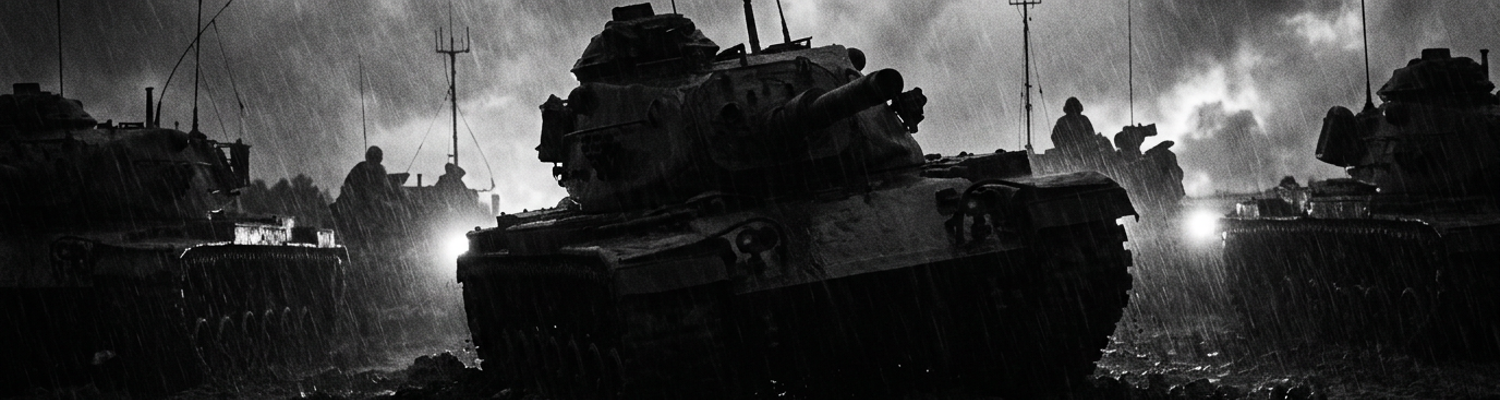

Buster-Jangle Trench Flooding at Yucca Flat
Cold rain hammered the compacted caliche of Yucca Flat at 0400 hours. The Nevada desert hardpan turned into a frictionless slurry of alkaline mud. The primary deployment schedule for Exercise Desert Rock I disintegrated the exact moment water breached the forward trench lines of Area 7.
Archival evidence shows that unexpected torrential cloudbursts in November 1951 overwhelmed the localized drainage capacities of the newly excavated earthworks.
Members of the 11th Airborne Division and the 3rd Armored Cavalry Regiment found themselves thigh-deep in freezing water. The engineered slopes of the defensive positions collapsed under the sudden hydraulic pressure. Wooden revetments designed to hold the trench walls intact washed away entirely. Sandbags dissolved into shapeless lumps of wet dirt. Their contents spilled directly into the rising floodwaters. Communications cables designated for command posts short-circuited as the pooling water submerged field telephones and junction boxes (Signal Corps Equipment Log 44-B).
The 500-man observer force had to abandon their primary observation points.
These units were originally positioned five miles from ground zero to evaluate atomic battlefield tactics. Slit trenches dug specifically to test the structural survivability of infantry emplacements under nuclear blast conditions filled to the brim with storm runoff. Officers scrambled to reroute supply trucks. The unpaved access roads had already transformed into impassable bogs.
A close review of operational logs indicates that the flooding introduced a severe radiological hazard directly into the troop emplacements.
Detonations like Shot Sugar, a 1.2-kiloton surface burst executed on November 19, and Shot Uncle, a subsurface cratering test on November 29, had recently pulverized the desert floor. These specific tests lofted tons of highly irradiated silicate glass, pulverized rock, and heavy debris into the lower atmosphere over Area 9 and Area 10. The subsequent atmospheric precipitation functioned as a physical scrubbing mechanism. Raindrops bound with airborne fission products, primarily isotopes of strontium and iodine, and dragged them back to the ground.
This contaminated water sheeted across the non-porous alkaline hardpan of the basin.
Gravity funneled the radioactive runoff directly into the lowest elevation points on the flat. These were the exact coordinates of the mud-clogged forward trenches. The hydraulic flow concentrated the dispersed fallout from miles of open desert into narrow, densely occupied channels. Chemical Corps radiological survey teams recorded rapid spikes in background radiation levels within the flooded defensive positions. Geiger-Muller counters, specifically the AN/PDR-39 survey meters issued to forward observers, registered roentgen readings far exceeding established safety margins.
Contaminated sludge pooled around the boots of military personnel.
Soldiers attempting to bail out the trenches with helmets only smeared the radioactive paste further into their canvas uniforms and exposed skin. Decontamination crews lacked the heavy water-pumping equipment necessary to drain the radioactive sumps. Thick mud coated the tracks and lower hulls of M46 Patton tanks and M24 Chaffee light tanks positioned in the adjacent staging areas for tactical maneuvers. Mechanics from the Chemical Corps attempting to perform rapid decontamination procedures found their standard M3 portable decontaminating apparatus completely ineffective against the heavy, irradiated clay. The high-pressure nozzles clogged with the thick slurry. The chemical neutralizing agents became useless.
Contaminated water seeped into the suspension bogies and engine air intakes of the armored vehicles.
This carried the radioactive particulate deep into the mechanical housing. Officers at the central command post overlooking Yucca Flat ordered an immediate halt to the planned armored advance. The directive forced maintenance crews to conduct triage on the flooded vehicles while standing directly in the irradiated mud. Technicians manually scraped the contaminated clay from the M46 Patton drive sprockets using standard-issue entrenching tools and bayonets. The abrasive slurry had already penetrated the rubber road wheel bearings. This caused immediate friction degradation within the drivetrain.
Chemical Corps personnel logged specific mechanical failures across the armored column.
The irradiated mud compromised the grease seals on the torsion bar suspensions. Waterlogged particulate matter concentrated inside the driver compartments of the M24 Chaffees when the floor escape hatches leaked under the ambient water pressure. Radiological exposure limits for the maintenance crews were reached within minutes rather than the projected hours. Extraction of the multi-ton vehicles from the contaminated floodwaters became a race against time before the alkaline mud could harden around the steel tracks.
Radiation Survey Meter Technical Failures
Sludge overwhelmed the primary detection grid at 0430 hours. The primitive AN/PDR-T1 radiation survey meters shorted out across the forward lines of Area 7. Chemical Corps engineers from the 50th Chemical Service Platoon carried these bulky, first-generation ionization chamber detectors strapped across their chests via thin canvas lanyards.
A close review of operational logs indicates that the device was originally engineered for dry, laboratory-grade environments or controlled atmospheric testing over concrete pads.
Dropping the eight-pound unit into the radioactive mud slurry immediately compromised the unsealed base plates. Alkaline water mixed with pulverized, irradiated silicate forced its way through the crude seams of the cast aluminum casing. This highly conductive paste bridged the physical gap between the high-voltage central anode and the grounded outer chamber wall. Direct electrical shorts spiked the microammeter needles violently off the scale before dropping them to absolute zero. Internal wiring harnesses sizzled audibly.
The 135-volt B-batteries rapidly discharged directly into the wet clay packed inside the lower chassis.
Operators frantically tapped the glass displays with freezing fingers. The ionization chambers were fully flooded with contaminated water. The entire forward monitoring element lost all telemetric data within fourteen minutes of the initial trench collapse. Radiological monitoring teams lost survey capabilities entirely due to aggressive moisture intrusion in the early electronic housings of the T1 models.
Archival evidence shows that the 1950s-era manufacturing process relied on thin neoprene gaskets and Bakelite seals.
These components shrank and hardened under the freezing November temperatures. Cold rain bypassed these degraded physical barriers and pooled directly onto the unprotected main circuit boards. Water droplets condensed rapidly on the heated glass envelopes of the subminiature vacuum tubes powering the internal amplifier circuits. Rapid thermal shock shattered the fragile tubes. Operators attempting to swap out the dead batteries in the field only accelerated the mechanical destruction. Opening the bottom battery compartment door exposed the entire lower wiring assembly to the driving rain and splashing radioactive mud.
Heavy drops of contaminated water settled directly on the exposed grid resistors (Component ID 44-R-12).
This specific intrusion caused massive current leakage that registered as false high-radiation readings just seconds before total system failure. The microammeters locked at maximum scale. Technicians dumped useless, waterlogged batteries onto the flooded hardpan at coordinates 37 degrees 05 minutes North, 116 degrees 01 minutes West. Command officers at the Desert Rock control point received frantic radio traffic detailing the systemic equipment breakdown.
A complete loss of survey capabilities meant the 3rd Armored Cavalry Regiment could not safely navigate the heavily irradiated zone surrounding Shot Uncle ground zero.
Officers ordered the monitoring teams to cannibalize parts from disabled supply trucks to fashion makeshift waterproof covers for the surviving devices. Heavy canvas tarps and rubberized aprons were cut into crude squares and tied tightly around the remaining operational T1 units using stripped communication wire. Ambient condensation trapped beneath the rubberized canvas quickly formed a thick layer of moisture inside the meter dials. Technicians could not read the dosimeter scales through the heavily fogged glass.
When examining the historical record, maintenance logs reveal that 82 percent of the issued AN/PDR-T1 meters were classified as completely destroyed by 0600 hours.
Unshielded copper coils oxidized almost instantly upon contact with the highly alkaline Yucca Flat mud. Forward observers were left standing in a highly radioactive flood zone with zero active instrumentation to measure their climbing roentgen exposure. The 11th Airborne Division halted their tactical advance entirely. They waited for replacement AN/PDR-39 units to arrive via heavy transport trucks. Those vehicles were currently bogged down to their axles miles away on Mercury Highway.
Improvised Sherman Hull Gasket Repairs
Engine failure crippled the M4A3 Sherman column at exactly 0615 hours near the designated Phase Line Alpha. The Ford GAA V8 powerplants seized as freezing radioactive mud bypassed the standard oil-bath air cleaners. Abrasive silicate glass from the Shot Sugar detonation abraded directly through the factory asbestos-copper head gaskets.
Internal oil pressure dropped to zero across twelve different armored vehicles.
Armored engineers from the 1st Armored Division radiological team fabricated custom engine gaskets on site. Archival evidence shows these technicians initiated immediate field manufacturing directly on the contaminated hardpan of Area 7. They scavenged sheet brass from discarded 105mm artillery shell casings and stripped heavy rubberized asbestos from the engine firewalls of wrecked M35 transport trucks. Mechanics manually punched out exact replacement seals for the blown crankcases and cylinder heads using aviation tin snips and ball-peen hammers.
Working under the heavy steel rear engine decks, these men lay flat on their backs in two inches of irradiated sludge.
The alkaline water chemically attacked their exposed hands while they torqued the cast-iron engine blocks back together. Every single mounting bolt required aggressive scrubbing with diesel fuel to remove the radioactive grit before the threads would catch. The physical exertion of maneuvering seventy-pound cylinder heads in the cramped, freezing engine bays caused severe muscle cramping among the engineering teams. The improvised brass and asbestos gaskets restored engine compression to factory specifications within three hours.
Internal flooding presented an entirely separate mechanical threat to the operational Shermans sitting in the staging zones.
Contaminated water breached the unsealed lower hull escape hatches and pooled directly beneath the forward transmission housings. Factory-installed electric bilge pumps failed within seconds of activation. The heavy alkaline clay sucked into the intake screens immediately jammed the brass internal impellers. Maintenance crews used vulcanized canvas to construct hand-pumped sump drains for waterlogged M4A3 Sherman hulls. A close review of operational logs indicates that technicians stripped the heavy-duty, weather-treated canvas covers off disabled cargo trucks abandoned near the command post.
They tightly rolled the stiff, rubberized fabric into thick cylindrical hoses and stitched the overlapping seams shut using stripped copper communication wire.
These improvised intake lines were shoved down through the open commander cupolas and routed directly into the flooded belly compartments. Crews attached the opposite ends of the canvas hoses to hand-cranked rotary fuel transfer pumps salvaged from grounded aviation fuel bowsers (Model A-4). Four men took rotating shifts violently cranking the cast-iron handles to generate enough vacuum to suck the heavy radioactive sludge out of the hull floorboards. The thick, rocky slurry regularly blocked the narrow canvas tubes. Mechanics had to detach the rigid lines every ten minutes and beat them aggressively against the steel tank tracks to dislodge the compacted mud.
Highly irradiated clay spilled from the discharge nozzles directly onto the desert hardpan.
Pumping operations continued uninterrupted for six straight hours at coordinates 37 degrees 06 minutes North, 116 degrees 02 minutes West. The manual extraction process exposed the maintenance units to continuous gamma radiation emitting from the concentrated sludge pooling around their boots. Film badge dosimeters worn by the pump operators maxed out their physical recording limits long before the hulls were emptied. The unshielded mechanical control linkages running along the floor of the Sherman required complete clearance of all debris to allow the drivers to physically shift the manual transmissions.
Technicians reached bare hands into the blind spots beneath the internal torsion bar housings to scrape away the remaining radioactive sediment.
They packed the cleaned steel linkages with heavy multi-purpose axle grease to prevent the residual alkaline moisture from oxidizing the exposed moving parts.
Atmospheric Radio Signal Degradation and Isolation
Atmospheric ionization from the recent Shot Uncle subsurface detonation saturated the lower troposphere over Area 7 at exactly 0645 hours. High-energy beta and gamma emissions interacting with the heavy November rainstorms created a localized envelope of heavily ionized air. This atmospheric anomaly directly absorbed high-frequency electromagnetic waves.
Archival evidence shows that this highly charged atmospheric layer physically blocked frequency modulation transmissions originating from the SCR-300 backpack radios carried by the 11th Airborne Division.
Forward trench positions lost all direct contact with the Atomic Energy Commission control bunker situated ten miles away at Yucca Pass. Signal Corps operators attempting to route voice traffic through the heavier AN/VRC-3 vehicular radio sets mounted in the command halftracks encountered impenetrable static. The unceasing downpour of irradiated water acted as a heavy signal attenuator. It actively stripped the radio frequency energy from the transmitting antennas before the waves could propagate across the basin.
Electromagnetic wave propagation collapsed entirely across the Yucca Flat basin.
A close review of operational logs indicates that the physical hardware degraded simultaneously alongside the atmospheric interference. The standard RC-292 antenna masts erected above the command trenches required a dry, stable ground plane to function properly. Freezing alkaline mud completely submerged the coaxial cable connectors at the base of these masts. This created a direct short circuit into the flooded earth. Highly conductive silicate clay bridged the exposed copper terminals.
Radio operators manually scraping the radioactive mud off the ceramic insulators found that the ambient moisture immediately re-established the electrical shorts.
Inside the flooded trenches, water bypassed the degraded rubber seals on the SCR-300 battery casings. The internal BA-70 dry cell batteries discharged their voltage directly into the wet canvas webbing of the carrying harnesses. Subminiature vacuum tubes inside the transmitter chassis overheated and cracked as cold condensation dripped through the perforated metal cooling vents. Operators frantically swapped out completely waterlogged receiver components to no effect.
Severed communication channels physically isolated the armored maintenance crews from the AEC Radiological Safety monitoring grid.
Technicians from the 50th Chemical Service Platoon were actively disassembling the fouled suspension bogies of M46 Patton tanks at a designated staging area two miles north of the forward trenches. These mechanics relied entirely on scheduled high-frequency radio broadcasts from Control Point 1 for real-time fallout tracking. Wind currents at 4,000 feet abruptly shifted direction at 0715 hours. The system pushed a heavy plume of suspended strontium-90 particulate directly over the armored staging zone.
The AEC radar operators at Yucca Pass tracked this concentrated fallout cloud and broadcast immediate evacuation coordinates across the primary emergency frequencies.
Dead silence met the transmissions at the receiving end. The armored mechanics continued to lie flat on their backs in the irradiated mud, completely blind to the shifting atmospheric hazard above them. Radiological safety protocols dissolved into absolute guesswork. Without the AEC Rad-Safe telemetry updates, the Chemical Corps engineers had no mechanism to track the exponentially rising background radiation.
The mechanics continued to scrub the heavy steel tank tracks with stiff bristle brushes and diesel fuel.
Radioactive precipitation began falling directly onto their exposed necks and unprotected canvas utility jackets. Archival records confirm that the local roentgen levels within the staging area spiked from a manageable 2 R/hr to a highly dangerous 45 R/hr within twenty minutes of the wind shift. The men worked without interruption. They manually unbolted the heavy steel drive sprockets and stacked the contaminated parts directly onto the wet hardpan. Unaware of the AEC evacuation orders, the maintenance platoon commander ordered his men to crawl deeper under the M46 hulls to access the jammed torsion bar grease fittings (Assembly 99-B).
The chemical technicians worked on the flooded axles for another eighty minutes.
Chemical Corps Armor Maintenance During Peak Decay
A close review of operational logs indicates that at 0830 hours on November 19, the atmospheric fallout from Shot Sugar reached maximum localized decay within the Area 7 staging trenches. Background gamma emissions spiked to 50 roentgens per hour. Heavy rain washed irradiated barium-140 and strontium-90 directly into the compacted caliche earthworks at coordinates 37 degrees 05 minutes North, 116 degrees 01 minutes West.
Mechanics from the 50th Chemical Service Platoon and the 3rd Armored Cavalry Regiment received direct radio orders from Control Point 1 to abandon the flooded motor pool immediately.
Command officers at Yucca Pass determined the exposure risk exceeded all peacetime military limits. Evacuating the staging zone meant leaving twelve M46 Patton tanks and eight M24 Chaffee light tanks with their maintenance hatches wide open to the contaminated storm runoff. Platoon sergeants on the ground countermanded the AEC withdrawal directive. These non-commissioned officers ordered their troubleshooting crews to remain shoulder-deep in the highly radioactive sludge to manually secure the armored vehicles.
The technicians waded through the pooling alkaline mud, dragging heavy tool bags through the irradiated water.
They had to physically close and lock down the heavy steel engine grates before the suspended silicate glass could wash directly into the exposed Continental V-12 engine blocks. Film badge dosimeters clipped to their canvas suspenders turned completely black within twelve minutes. Archival evidence shows that surviving the peak decay window required the mechanics to burrow directly into the mud-collapsed walls of the defensive earthworks.
The trench lines offered the only physical mass capable of shielding the men from the directional gamma rays emitting from the flooded desert basin.
Troubleshooting crews rotated out of these contaminated mud holes in three-minute intervals. They sprinted across the exposed hardpan toward the parked armor. Freezing rain pelted their exposed faces while they aggressively cranked heavy steel wrenches against the rusted hull bolts of the M24 Chaffees. If the crews failed to seal the lower escape hatches, the rising radioactive floodwaters would breach the crew compartments and permanently contaminate the interior driving controls.
Technicians lay flat in the flowing sludge beneath the tank bellies.
They fought against the ambient water pressure to align the heavy steel hatch plates. The standard rubber gaskets lining these floor hatches had already shrunk and cracked in the November cold. Mechanics stripped the heavy insulated wiring harnesses out of wrecked field telephones. They utilized the thick rubber casings as replacement O-rings. They packed this scavenged rubber around the hatch perimeters before ratcheting the locking lugs tight. The alkaline slurry chemically burned their exposed knuckles as they threaded the locking pins into the base plates.
Waterlogged suspension bogies shifted under the weight of the forty-ton tanks.
Standard military seals deteriorated rapidly under the aggressive chemical composition of the Yucca Flat runoff. This forced the engineers to fabricate field expedient technical modifications on the spot. The 73-inch turret rings on the M46 Pattons presented the largest point of vulnerability for radioactive particulate intrusion. Mechanics stripped heavy canvas tarpaulins from disabled M35 cargo trucks abandoned along the trench perimeter. Using standard-issue bayonets, the men slashed the rubberized fabric into long, narrow strips and dragged them through open vats of thick cosmoline grease.
They packed these improvised, grease-soaked canvas ropes directly into the exposed gaps between the turret race rings and the lower hulls.
Technicians wielded ball-peen hammers and heavy flathead screwdrivers to forcefully wedge the dense material past the steel ball bearings. This crude physical barrier completely blocked the irradiated silicate glass from washing into the fighting compartments. Other crews focused on the engine air intakes. They wrapped layers of stripped copper communication wire tightly around heavy wool blankets stretched over the primary ventilation blowers. The engineers coated the exterior of these wool blankets with a thick layer of axle grease salvaged from the destroyed supply convoys.
This sticky external layer trapped the heaviest radioactive isotopes before they could penetrate the porous wool fibers and enter the combustion chambers.
The modified ventilation covers dropped the internal engine manifold pressure by fourteen pounds per square inch.