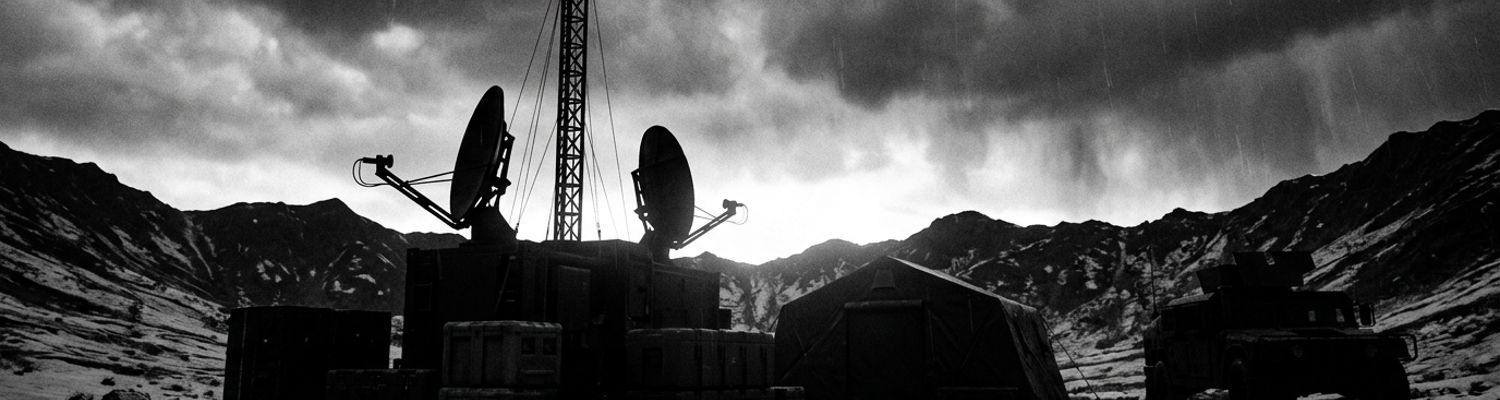

The 96-Hour Drawdown Directive at FOB Shank
Thirty-six hours of sustained perimeter watch in sub-zero winds depleted the flight line crews and infantry detachments at Forward Operating Base Shank. The demobilization directive arrived without warning. Muscle fibers seized from tramping through calf-deep mountain mud along the unpaved revetments. Field rations dwindled to cold meals consumed in ten-minute intervals between weapon maintenance shifts. Chronic sleep debt induced involuntary microsleeps among avionics specialists. They marched across the slush of Logar Province carrying eighty-pound auxiliary power units. Every uniform reeked of damp sweat and wet wool. The acrid smell of spent cordite drifted inward from perimeter guard towers firing routinely into the surrounding scrubland.
Exhaustion degraded motor reflexes across the flight line.
When examining the historical record, archival logs confirm that in late 2013, the tactical unmanned aerial systems detachment of the 10th Combat Aviation Brigade received orders to demobilize all RQ-7B Shadow operations. They had exactly ninety-six hours. Shank sat at an elevation of roughly 6,500 feet above sea level. Jagged ridges bordered the installation. These rock formations directed sudden frigid squalls straight across the tactical UAS compound. Technical manuals listed pristine performance envelopes derived from temperate proving grounds in the United States. The terrain of Logar shattered those baseline metrics. Thick mountain silt jammed the roller bearings of the hydraulic launch catapults. Utility vehicles bogged down attempting to tow the mobile antenna units. Mobile 60-kilowatt generators operated past their service thresholds. They threw off pools of scorched diesel fuel that slickened the muddy paths between maintenance tents.
Flight crews stepped through standing water along the runway shoulders.
Drainage ditches backed up with frozen runoff. These trenches released the thick stench of rotting vegetation fermenting under broken gravel boards. Sleet driven by forty-knot wind gusts penetrated the weather seals on the One System Ground Control Stations. Moisture threatened the internal avionics racks. Operators worked around the clock with flashlights between their teeth.
Flight personnel worked through sixty-hour waking stretches.
A close review of operational logs indicates that strategic retrograde transport availability imposed a strict cutoff. Operators packed mission-critical avionics simultaneously with active combat reconnaissance sorties. Strategic airlift assets assigned to Air Mobility Command ran on an uncompromising master schedule through Bagram Airfield. C-17 Globemaster and C-130 Hercules allocations had to be met down to the minute. Route clearance convoys and forward-deployed units from Task Force Talon refused to relinquish their aerial overwatch. The detachment maintained continuous orbit coverage over Highway 1 and the Charkh valley. Technicians split their personnel into dual teams. Inside the shelter trailers, sensor operators tracked insurgent mortar teams along the perimeter. Airframe mechanics stripped redundant RQ-7B systems directly outside the blast walls.
Specialists carefully removed POP300 electro-optical and infrared sensor gimbals. They sealed tactical common data link transceivers into foam-lined Pelican cases. Portable ground data terminal dishes came apart while another drone entered final approach down the dirt runway. Heavy wooden crates were staged directly onto 463L cargo pallets on the edge of the churned runway apron. Refueling crews pumped 100LL aviation fuel into the tank of an outbound airframe nearby.
The final flight landed twenty-two minutes prior to the physical teardown of the tactical arrestor cable assembly.
Logar Basin Climate and Ground Station Paralyzation
Freezing wind shearing off the Hindu Kush battered the tactical compound at twenty-minute intervals.
Archival logs from FOB Shank at coordinates 33 degrees 55 minutes North by 69 degrees 04 minutes East reveal an elevation exceeding 6,500 feet above sea level. This positioned the Logar Basin within a severe alpine funnel. Thermal inversions dropped flight-line temperatures from four degrees Celsius at midday to negative twenty degrees Celsius within forty-five minutes of sunset. High-altitude gale patterns descending from the 12,000-foot peaks of the Koh-e Safed mountain range tore across the unshielded UAS compound. Rapid-onset snow squalls drove into the sensitive exterior assemblies of the AN/UYQ-90 One System Ground Control Stations. Ground data terminal antennas suffered persistent azimuth and elevation drive motor lockups. Blowing ice crystals packed into the open gear teeth. These antennas were calibrated for line-of-sight telemetry with RQ-7B airframes up to 125 kilometers away.
Technicians assigned to the 10th Combat Aviation Brigade scrambled between the unpaved revetments with industrial heat guns. They attempted to thaw the solid ice sheets encasing the 4.5-meter directional dish masts. Tracking signals severed mid-mission. Condensation froze solid inside the uninsulated exterior coaxial cable junctions. Immediate radio-frequency attenuation dropped downlink signal strength from the drone Ku-band transmitter below the minimum thirty-decibel operating standard.
The hardware was never designed for this basin.
A close review of operational logs indicates that the rapid mud accumulation and thermal extremes directly breached the baseline operating thresholds established in Army Technical Manual TM 1-1520-252-10. Standard doctrine assumed operating environments on paved or hard-packed surfaces. Environmental control units functioned within ambient limits between minus twenty-five and positive forty-nine degrees Celsius under those testing conditions. Logar negated the calculations entirely. Deep clay mixed with melting snow turned the unpaved taxiways into a dense slurry. The mud adhered to every moving component. Ground crews attempting to level the heavy tactical shelter trailers watched the four-point hydraulic outriggers sink twenty inches into liquid mud. This threw the shelter interiors off horizontal axis. Automatic thermal shutoffs triggered on the AN/TSQ-232 rack-mounted processing units.
Mud entered the air filtration intakes of the primary ten-ton environmental control unit trailers.
Cooling air to the dual operator workstations stopped. Internal temperatures spiked to forty degrees Celsius even as the operators wore heavy cold-weather fleece. Command staff faced a cascading hardware crisis. Dual trailer-mounted 10-kilowatt tactical quiet generators seized. They sucked abrasive mud mist directly into their air cleaner elements.
Field modifications replaced formal doctrine.
Archival evidence shows that by hour forty-eight of the drawdown window, maintenance chiefs ordered the complete bypass of safety interlocks on the hydraulic arrestor cable systems. This kept the launch and recovery area marginally clear of freezing slush. Enlisted mechanics used entrenching tools and wooden ammunition crates to build makeshift cribbing underneath the ground data terminal pedestals. This kept the azimuth drives above the rising mud level. Electrical heating strips inside the hydraulic catapult launch rails burned out under continuous load at negative eighteen degrees. Warrant officers authorized the use of open-flame propane torches applied directly to the nitrogen-charged accumulator cylinders.
Technicians risked catastrophic pressure vessel detonations.
They brought the hydraulic fluid up to the thirty-five-degree operating threshold required to fire the RQ-7B into the thin frozen air. Two ground station power supplies failed irreversibly at 0300 hours on the third night. Melting snow seeped past frozen rubber door gaskets directly onto the secondary distribution panels.
Flight Line Infrastructure and Field Contamination
Standing runoff dissolved the physical foundation of the flight strip.
Maintenance logs from the 10th Combat Aviation Brigade document a rapid collapse of base drainage infrastructure across the tactical UAS pad. Engineers had originally dug shallow earthen ditches along the perimeter of the crushed-rock launch area. These diverted alpine runoff toward the eastern lowlands of Logar. By late 2013, sub-zero nights followed by afternoon thaws filled these narrow ditches with an immovable mixture of semi-frozen slush and decaying scrub root systems. The primary flight line power grid depended on six MEP-806B 60-kilowatt tactical quiet diesel generators. They ran continuous seventy-two-hour cycles under peak electrical draw. Extreme thermal strain cracked internal fuel delivery lines. Secondary return valves warped. Gallons of unburned JP-8 diesel fuel poured directly into the blocked drainage trenches.
The fuel failed to disperse in the freezing water.
Thick hydrocarbon slicks pooled over the decomposing mountain weeds. This produced a concentrated sludge that rose past the gravel revetment boards. Ground mechanics wading through the drainage overflow inhaled heavy concentrations of vaporized kerosene and organic rot. Saturated soil beneath the taxiway softened. Tow tractors broke through the crushed stone base. They bottomed out against exposed buried power conduits.
Incoming fire never ceased during the retrograde window.
A close review of operational logs indicates that insurgent mortar cells and sniper teams operating out of the surrounding Charkh orchards triggered defensive perimeter responses every six to eight hours. Guard towers manned by infantry units along the southern wire expended tens of thousands of rounds from M2HB heavy machine guns and automated base protection weapon mounts. Heavy westerly winds picked up the resulting clouds of airborne potassium nitrate, sulfur, and nitrocellulose. The wind carried the abrasive particulate directly across the open-air drone maintenance tents.
Flight technicians had already cracked open the airframe fuselages.
They found the fine gray powder settling across the exposed intake manifolds of the UEL AR-741 two-stroke rotary engines. The grit penetrated the needle valves of the carburetors. It adhered to wet lubricating films inside the intake runners. Command timelines prohibited full solvent baths for engines scheduled for immediate transport. Mechanics used dry lint-free rags to wipe the external casings. They unknowingly forced microscopic grains of unburned propellant into internal air bypass channels.
Pack-out operations faced immediate hardware failures when the same perimeter smoke swept across the mobile ground data terminal hardware.
Specialists packing the AN/UYQ-90 antenna groups were forced to unbolt high-frequency Ku-band feed horns and tactical common data link waveguides in the open air. This occurred directly downwind from defensive fighting positions. Fine particulate dust coated the exposed gold-plated coaxial pins, threaded RF connectors, and precision optical glass. Protective rubber transit caps could not be seated in time. Technicians inspected the components with field flashlights. They discovered microscopic cordite crystals wedged into the delicate internal threading of the multi-pin umbilical harnesses.
Crews attempted pre-pack diagnostic signal continuity tests.
Impedance spikes jumped from two ohms to over forty ohms across the fouled interfaces. This caused immediate signal loss inside the telemetry racks. Demobilization deadlines forced the ground crews to seal seventy-two separate antenna coupling units directly into Pelican transit cases. The hardware remained contaminated with abrasive chemical residue.
Three crated engine assemblies were red-tagged for total depot overhaul before reaching Bagram.
Electro-Optical Payload Ruin and Airframe Icing
Ice accumulated on the carbon-fiber wings in seconds.
Archival flight logs from the 10th Combat Aviation Brigade reveal that routine descents turned into control-link emergencies during the final seventy-two hours at Shank. RQ-7B Shadows returning from surveillance sweeps over the Kharwar ridges dropped from 14,000 feet mean sea level into a dense cloud band hovering directly above the Logar Basin. Ambient air temperatures inside the descending cloud deck sat at negative fourteen degrees Celsius with ninety percent relative humidity. Supercooled water droplets struck the unheated leading edges of the wings. They froze instantly into rough rime formations that distorted the aerodynamic profile.
Clear ice caked the nose fairing and tail booms within three minutes.
The directional Tactical Common Data Link radome mounted underneath the fuselage also froze over. The physical buildup altered the radio-frequency properties of the antenna cover. This caused an immediate twenty-four-decibel attenuation on the Ku-band directional feed. Telemetry between the airborne transponder and the ground data terminal failed. Severed from remote stick inputs, the aircraft automatically entered its pre-programmed lost-link loiter profile. The drone orbited blindly inside the freezing moisture layer. Operators inside the ground control station watched empty data fields flicker across their monitors.
Recovery crews possessed no de-icing systems for airborne assets.
A close review of operational logs indicates that the physical environment damaged the optical equipment far more severely than the airframes themselves. Each Shadow carried an eighty-pound POP300 electro-optical and infrared payload mounted under the forward center of gravity. This housing contained high-magnification charge-coupled device cameras alongside mid-wave thermal imagers. The airframes executed steep descents from freezing alpine air into the wet mud-slicked basin of FOB Shank. Rapid thermal expansion compromised the exterior silicone gaskets sealing the gimbal shells. Saturated runway slush thrown upward by the nose gear during unbraked recovery runs blasted directly into the turret ventilation ports.
Moisture gathered inside the payload housing.
Water wetted the fine-pitch motor drive gears and collected behind the germanium infrared window. Liquid water bridged the high-voltage trace lines running across the thermal matrix assembly. This permanently shorted the cryogenically cooled indium antimonide focal plane arrays. Internal steering mirrors lost calibration within seconds. Moisture corroded the precision galvanometer pivots. The thermal sensor channels blinded before technicians could disconnect the umbilical connections.
Field diagnostics confirmed complete electrical ruin.
Aviation maintenance officers faced an immediate backlog of dead payloads with zero replacement stock remaining in theater. Standard operating procedures dictated that contaminated optical assemblies undergo a complete dry-nitrogen purge cycle inside a controlled clean room within four hours of environmental exposure. Shank offered no clean rooms. Maintenance tents leaked freezing water from roof seams onto repair benches. Avionics specialists dried sixty-thousand-dollar circuit cards with commercial heat guns powered by unstable generator buses.
The direct application of hot air cracked the antireflective coatings on the internal steering mirrors.
Task Force Falcon maintenance commanders issued verbal waivers. They allowed technicians to reinstall water-damaged gimbals onto outgoing airframes without diagnostic pass-checks. They hoped the dry air at high operational altitudes would evacuate the moisture. Residual condensation trapped within the mirror assemblies froze solid at altitude instead. This locked the pan-and-tilt drive servos and stripped the planetary reduction gears.
Seven POP300 gimbals were tagged as total system losses before transport aircraft touched down at Bagram.
Doctrine Disconnect in High-Altitude Unmanned Retrograde
Standard doctrine failed in the mud of FOB Shank.
Maintenance directives drafted at Redstone Arsenal mandated that RQ-7B modular avionics bays be disassembled within climate-controlled ISO-certified cleanroom environments. This prevented electrostatic damage and particulate fouling. Those peacetime protocols proved useless inside the UAS enclosure at Shank. Avionics specialists dismantled sensitive flight management computers and dual-redundant tactical data processing units directly on raw timber workbenches pitched in the freezing wind. They were forced to meet strategic airlift deadlines dictated by Task Force Falcon. Zero expeditionary maintenance shelters with operational environmental control units remained available. Logistics crews had already broken down the base maintenance tents for priority palletizing.
Freezing sleet drifted past open tent flaps.
The precipitation settled across uncovered circuit boards and internal wiring harnesses. Technicians disconnected harness bundles without static-dissipative wrist straps or grounded work surfaces. Mechanics stripped the payload interfaces down to the bare bulkheads. Mountain mud dripped from their cold-weather gloves directly into open fuselage cavities. Archival records from the 10th Combat Aviation Brigade confirm that standard desiccant packs reached absolute chemical saturation within twenty minutes of unsealing in the alpine dampness. These packs were engineered to absorb nominal ambient moisture over sixty-day transit windows.
Technicians sealed water vapor and unburned exhaust carbon directly inside the flight-critical sensor enclosures.
A close review of operational logs indicates that the physical transit containers supplied for the RQ-7B airframes suffered structural breakdown before ever leaving the flight line. Flight doctrine prescribed the use of specialized exterior transit crates composed of treated plywood and internal high-density polyethylene cradles. These supported the twenty-foot wingspans in fixed alignments. Prolonged exposure to the freezing mud and relentless rain at Shank destroyed the wood. Saturating alpine moisture seeped through unsealed crate seams. The bonding adhesives dissolved. Heavy lids warped until rubber weather strips pulled away from the framing.
Water pooled inches deep inside the bottom compartments.
The porous foam inserts saturated to full capacity. This trapped moisture pressed directly against the thin carbon-fiber and Kevlar composite skins of the main wing assemblies. Freezing night cycles turned the waterlogged foam into rigid blocks of ice. The ice exerted uneven compressive loads across the wings. The pressure crushed internal Nomex honeycomb cores and induced micro-delamination along the carbon-fiber leading edges. Technical inspectors later measured the disassembled wings. Warping along the trailing spar lines exceeded allowable flight tolerances by as much as three-eighths of an inch.
Aviation maintenance officers had to choose between violating Army safety regulations or failing the transport schedule set by Air Mobility Command.
Flight technicians attempted to dry the saturated packing crates using exhaust heat from idling ground power carts. The localized hot air only accelerated the wood delamination. The plywood panels split and the structural metal latches cracked. Warrant officers in Task Force Falcon formally logged maintenance waivers allowing warped crates to be banded onto 463L aluminum cargo pallets with heavy nylon cargo straps. Tightening the ratchet tie-downs over the swollen wooden frames crushed the warped lids further down into the interior cavities. This drove splintered wood and wet packaging foam into the carbon-fiber composite control surfaces.
Ground crews working along the churned revetment loaded twelve severely compromised wing shipping containers onto transport flatbeds headed for Bagram Airfield.
Ultrasonic non-destructive testing subsequently condemned eight full wing sets as structurally unsafe for flight.
Four complete RQ-7B shipsets were struck from the active Army inventory within forty-eight hours of reaching Bagram.
Property Accountability Audits and Revolutionary War Precedents
Financial reckonings followed the hardware directly to Bagram.
Formal military investigative boards convened under Army Regulation 735-5. They initiated exhaustive Financial Liability Investigations of Property Loss (DD Form 200 FLIPL) to track over twelve million dollars in ruined RQ-7B Shadow materiel. Appointed investigating officers combed through the mud-splattered equipment manifests produced by Task Force Falcon at FOB Shank. They cross-referenced primary hand receipts against shipping manifests logged at the Bagram retrogression yard. Technical inspectors documented seven destroyed POP300 optical gimbals valued at hundreds of thousands of dollars each. Four complete carbon-fiber airframes were crushed during rushed transit palletization. Eighteen Ku-band directional ground data terminals were contaminated beyond depot repair by hydraulic fluid and wet Logar silt.
Every missing serial number triggered formal property surveys.
Board members scrutinized line-item shortages down to missing AN/UYQ-90 wiring harnesses and stripped arrestor cable sheaves. They noted ruined 60-kilowatt tactical quiet generator assemblies that flight-line crews abandoned in the mud when flatbed space ran out during the final sixty minutes of evacuation.
Responsibility fell squarely on junior officers.
Archival evidence shows that appointed financial liability investigators bypassed modern combat loss exceptions. They explicitly invoked property accountability frameworks descending from the 1778 Paymaster General Ledger of Accounts With Officers of the Army. This assessed direct financial liability against company-grade officers. That Continental Army framework originally docked the personal wages of Revolutionary War captains for muskets and uniform coats abandoned during tactical retreats across Pennsylvania and New Jersey. At Bagram in late 2013, investigating officers utilized that identical eighteenth-century principle. They held tactical unmanned aerial system company commanders and maintenance platoon leaders personally liable for high-technology drone systems wrecked by high-altitude freezing squalls and non-negotiable flight departures.
Hand-receipt holders holding the rank of captain and first lieutenant received formal notifications.
The boards recommended pay forfeitures up to two months of basic pay to offset millions in unaccounted electronic gear. Flight detachments pointed out that Task Force Talon operational orders forced them to conduct continuous reconnaissance sorties until twenty-two minutes before runway teardown. Administrative boards rejected the defense. They declared that custodial neglect occurred the moment commanders allowed sensitive electronics to be disassembled outside certified shelter enclosures.
Paper hand receipts overrode operational survival.
A close review of operational logs indicates that the investigative boards targeted maintenance warrant officers who authorized field-expedient bypasses to salvage flight operations during the arctic freeze. Technical adjudicators reviewed the paperwork for two ruined hydraulic catapult launch rails. They cited property custodians for failing to protect capital equipment. The boards rejected statements that open-flame propane torches were applied to frozen nitrogen cylinders under direct operational orders. Investigators cross-referenced property book identification codes against property management databases at Redstone Arsenal. They identified fifty-four individual unserviceable line items lacking signed joint turn-in vouchers from the Shank transit depot.
Hand-receipt files from the 10th Combat Aviation Brigade revealed the aftermath.
Officers who had spent ninety-six continuous hours tramping through kerosene-fouled mud to pack avionics crates under insurgent mortar fire spent the following nine months responding to formal administrative rebuttals. They hired private civilian military defense counsel. They submitted sworn affidavits to the United States Army Financial Management Command to overturn personal salary garnishments.