
Strategic assessments from 1948 reveal a palpable sense of dread. The Soviet Navy, while not yet a blue-water equal to the United States, was rapidly expanding its submarine force. Intelligence estimates projected a fleet capable of deploying dozens of long-range submarines against the American eastern seaboard. This was not a theoretical threat. It was a numbers game, and the numbers were grim. The target was the densest concentration of industrial, political, and military might in the Western Hemisphere. The shipyards of Newport News and the Fore River Shipyard in Quincy, Massachusetts, were responsible for the construction and repair of the U.S. Navy’s most advanced warships. The ports of New York and Boston were the primary logistical funnels for deploying men and material to a shattered Europe under the Marshall Plan. Political direction for the entire Cold War effort flowed from Washington D.C., a coastal city itself. Any successful disruption could sever the arteries of American power projection.
The responsibility for protecting this vital coastline fell, by historical precedent, to the United States Army.
This was a force in a state of terminal decline. The U.S. Army Coast Artillery Corps, once a premier branch, was being systematically dismantled. By 1948, its remaining units were a shadow of their wartime strength. The great gun parks that lined the approaches to major harbors were falling into disuse. A survey of the Harbor Defenses of Boston from this period shows that the massive 16-inch M1919 guns at Fort Duvall, each capable of firing a 2,340-pound projectile over 25 miles, were maintained by skeleton crews. These weapons, originally intended for a new class of battleships and diverted to the Army after the Washington Naval Treaty, were mechanical titans. Archival maintenance logs (NARA Record Group 153) indicate persistent problems. Hydraulic recoil mechanisms developed slow leaks that were difficult to source and repair. The complex M1 Gun Data Computers, analog marvels of gears and relays used for calculating firing solutions, suffered from moisture intrusion and a lack of technicians trained in their calibration. Most batteries were in caretaker status after 1945. The primary armament was coated in protective grease and the massive concrete bunkers were often unheated and unlit. The decision had already been made to scrap the majority of these weapons; by 1950, the Coast Artillery Corps would cease to exist.
Against this backdrop of managed decay, training exercises were conducted to test remaining capabilities. One such exercise, centered on the defense of the Chesapeake Bay approaches in the fall of 1948, exposed the alarming fragility of the entire system. The scenario posited a coordinated surface and submarine raid aimed at mining shipping channels to Baltimore and Hampton Roads. The gun batteries at Fort Story and the former Fort John Custis were notionally brought to full alert. The exercise’s primary failure point was not the guns, but the communications intended to direct them. Planners simulated the cutting of landline telephone cables, forcing units to rely on tactical radio equipment. Operational logs show a catastrophic breakdown in command and control. The primary radios available, such as the vehicle-mounted SCR-508s and the infantry’s SCR-300 walkie-talkies, were World War II surplus. These FM radios were ill-suited for coastal operations. Their signals were easily obstructed by the terrain, and atmospheric conditions over the water created unpredictable dead zones. Messages between fire direction centers and the disparate base-end stations became garbled or were lost entirely. The lack of effective encryption on these sets forced operators into using easily deciphered brevity codes. The exercise was halted after only a few hours, the mock attacking force having achieved all its objectives without a single notional shot being fired in a coordinated manner.
The entire defense rested on a single piece of aging electronics.
Operational logs from the fall 1948 exercise pinpoint the primary sensor as a single SCR-584 radar set. This was a technological marvel of the Second World War, a microwave-frequency, automatic-tracking gun-laying radar that had proven devastatingly effective against German aircraft over Anzio. The complete system, weighing over 10 tons, was housed within a K-78 trailer. For coastal defense, its role was repurposed from anti-aircraft to surface search, capable of detecting ships nearly 40 miles away. The specific unit in the exercise was emplaced at a key observation post on the dunes of Cape Henry, a strategic spit of land forming the southern lip of the Chesapeake Bay entrance. Designated Observation Post Able, it afforded a commanding view of the deep-water channels leading to the naval yards at Norfolk. It was manned by a skeleton crew from the 2nd Coast Artillery, a regiment in the process of being systematically deactivated.
Its power supply was its Achilles' heel.
The catastrophic failure occurred shortly after the exercise began. To operate its 2J32 magnetron tube and associated vacuum-tube electronics, the SCR-584 required nearly 10 kilovolt-amperes of three-phase, 115-volt current, supplied by a dedicated gasoline generator. Archival maintenance annexes from the period detail persistent issues with the high-voltage power supply sections of these aging systems. At Observation Post Able, the critical component to fail was a high-voltage power capacitor within the radar’s modulator unit. This component, a large can filled with oil and paper insulation, was essential for shaping the high-power electrical pulse sent to the magnetron. Due to age-related degradation and moisture contamination from the humid, salt-heavy air of Cape Henry, the capacitor’s internal dielectric insulation broke down. The result was an instantaneous, high-energy short circuit. Operators in the main trailer reported hearing a loud bang from the direction of the power unit, followed by the smell of burnt oil. The radar’s distinctive Plan Position Indicator scope, which moments before had been sweeping the Atlantic, flashed and went dark.
The post was now blind and mute.
This single component failure initiated a cascade that neutralized the entire observation post. The short circuit overloaded the main generator, tripping its primary circuit breaker and plunging the entire post into electrical silence. This event knocked out not only the SCR-584 radar but also the command-and-control radio systems that relied on the same power source. The post’s primary long-range radio link to the Harbor Entrance Control Post at Fort Story was dead. The crew was instantly isolated. Their only recourse was to revert to World War I-era techniques: a man with binoculars and a field telephone connected by landlines that the exercise scenario already stipulated were severed. The electronic eyes and ears of the Chesapeake Bay’s defense had been extinguished by a predictable failure in a single electrical component. The Fire Direction Center received only silence.
Operational logs for the November 1948 training evolution reveal a scenario deliberately constructed to probe the breaking points of the Chesapeake Bay’s Harbor Defense Command. Planners designated the threat as a “swarm boat” assault, a tactical problem that shifted focus from capital ships to a large number of small, fast-moving targets. The attacking force, notionally composed of two dozen repurposed World War II-era PT boats, was tasked with a nighttime infiltration of the primary shipping channels. Their objective was twofold: simulate the mining of the Thimble Shoal Channel to block access to Hampton Roads and conduct a high-speed torpedo run against the anchored naval vessels at Norfolk. This was a direct challenge to the very concept of fixed coastal artillery, whose slow-firing, heavy guns were ill-suited for engaging multiple, agile targets.
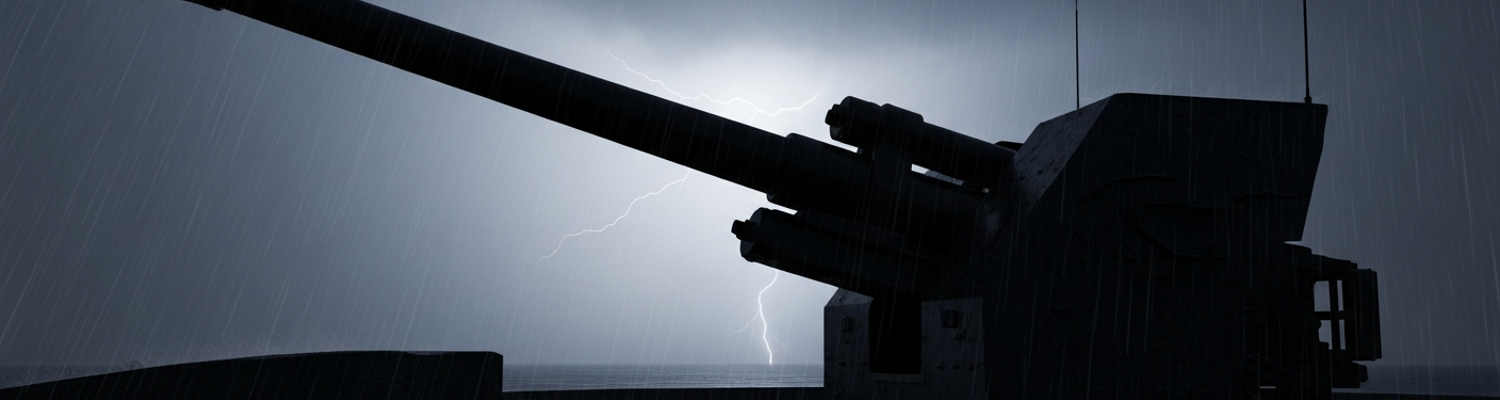
The night selected for the exercise was punishing. A cold front moved over the Virginia Capes, bringing with it a driving, near-freezing rain and winds that churned the Atlantic into a violent chop. Visibility was reduced to near zero. For the men of the 2nd Coast Artillery, huddled in their concrete observation posts and gun emplacements, the conditions were miserable. The biting wind cut through their field jackets. Numb fingers struggled with the delicate knobs and switches of their equipment. More critically, the saline mist driven inland by the gales was a direct threat to their aging electronics. The constant exposure to salt-laden moisture was known to accelerate corrosion on electrical contacts and degrade insulation.
The collapse began not with a bang, but with static. The primary communications net for the harbor defenses relied on a series of vehicle-mounted SCR-508 and backpack SCR-300 radios. Their operation in a coastal environment, especially during a storm, exposed critical flaws. The driving rain and salt spray penetrated the canvas covers of the SCR-508s. After-action reports indicate that moisture intrusion was the primary culprit for a series of cascading failures. Water seeped into the dynamotor power supplies, causing voltage fluctuations and intermittent power cuts. On the backpack-carried SCR-300s, the 33-inch whip antennas became coated in a film of saltwater, detuning them and severely shortening their effective range from a typical three miles to less than one. Within the first hour of the exercise, the Harbor Entrance Control Post at Fort Story began losing contact with its outlying observation stations. First, the post at Cape Henry went silent. Soon after, another post monitoring the northern approach near Fisherman Island reported its transmissions were becoming garbled, then ceased altogether. The Fire Direction Center, responsible for coordinating the fire of all batteries, was now receiving targeting data from only a fraction of its sensors. The information it did get was sporadic and unreliable. The simulated PT boat swarm was now operating in an electronic void.
An Army Signal Corps corporal sat before an SCR-608 radio set, bolted into a makeshift console inside the concrete Fire Direction Center at Fort Story. The air in the bunker was thick with the smell of damp concrete and ozone. His headset, a pair of HS-30 receivers, delivered only a torrent of atmospheric noise punctuated by the faint squawks of dying transmitters. He was the nexus point for all incoming tactical data from the outlying observation posts. His message log was a testament to systemic collapse. Where there should have been a steady flow of encrypted reports on target bearings and ranges, there were only scribbled fragments: a partial bearing from one post before it went silent, a garbled message about engine noise from another, and then, for the last ten minutes, nothing. The command staff, a collection of colonels and majors from the 2nd Coast Artillery, stood behind him. Their anxiety was a palpable pressure in the small room. They demanded information he did not have, staring at a plotting map that remained empty.
Army Signal Corps doctrine from 1948 was an extension of lessons from World War II, emphasizing rigid communications security and operational hierarchy. All transmissions were to be brief, use pre-approved brevity codes, and be encrypted whenever possible. Operators were explicitly forbidden from transmitting in the clear or engaging in conversational traffic. Information was meant to flow up from observation posts to the Fire Direction Center, where it would be collated, analyzed, and then disseminated back down as firing commands to the individual gun batteries. It was a methodical, hierarchical process designed for a battlefield where command and control were expected to remain intact. In the chaos of the simulated swarm assault, with the communications backbone severed, this doctrine guaranteed paralysis. An operator who followed the rules would report the loss of signal to his superiors and then wait for orders that could no longer be effectively transmitted. He was a cog in a machine that had ground to a halt.
The final, desperate report from a sound-powered telephone link to an observation post near the bay’s entrance forced his hand. The post, too close for radar and now blind in the rain, reported the distinct whine of multiple marine engines passing the sea buoy, heading directly into the Thimble Shoal Channel. They were inside the outer defensive line. Based on the speed of World War II-era PT boats, the FDC officers calculated they had less than fifteen minutes before the lead elements would be within torpedo range of the anchored fleet at Norfolk. The massive 16-inch guns at Fort Story and the 6-inch guns at Fort Wool were useless without targeting data. Their crews were effectively blindfolded. The corporal, whose name is not recorded in the official after-action report, understood the timeline. He recognized that the methodical process of command-and-control was now a death sentence for the fleet. He reached over to his transmitter, switched the frequency from the defunct command net to the common frequency used by the gun batteries themselves, and keyed the microphone. He disregarded all encryption, all brevity codes, and the entire chain of command. His transmission, logged by another station that remained operational, was a raw broadcast in plain English. He announced the threat, its last known position, its course, and its speed to anyone on the net who could hear him, asking for any station with any information to report it directly on that same channel.
The corporal’s plain-English broadcast into the storm was a doctrinal heresy, but it was not unheard. At the battery command post for the 6-inch guns at Fort Wool, an artificial island fortress in the middle of the Hampton Roads channel, a junior officer heard the transmission. He heard it not on his primary SCR-608 command radio, but on a small, low-power AN/TRC-1 radio set. This was an auxiliary unit, a simple VHF FM transceiver intended for local, point-to-point communication within the fort itself, not for monitoring the main command net. Critically, it was unsecured. The decision to even listen on this channel was a minor breach of protocol. The decision to transmit on it was a severe escalation. After a tense, thirty-second consultation with his battery commander, the officer at Fort Wool keyed his own microphone. He responded in the clear, confirming he had read the broadcast from Fort Story and reporting his own status: his guns were operational, but he was blind, lacking any targeting data. Any hostile force with a simple receiver could now pinpoint the locations of at least two active command posts and know that their primary communications had failed.
This single link between Fort Story and Fort Wool was useless without more data. The solution emerged from another isolated post, a small observation detachment of the 2nd Coast Artillery located near the seaside community of Ocean View. Their SCR-584 radar was down, and their primary SCR-508 radio was out, but they too overheard the unauthorized traffic on a secondary receiver. A Signal Corps lieutenant at the post recognized the futility of trying to reestablish a radio link to the Fire Direction Center (FDC). A review of the post’s layout shows it possessed one asset the other stations lacked: a direct, functioning civilian telephone line connected to the Bell System exchange in Norfolk. The line was there for administrative purposes. What followed was an act of inspired technical desperation. The lieutenant ordered his radio operator to physically integrate their military radio with the civilian telephone system.
The process was a crude electronic patch. The operator, using alligator clips and salvaged copper wire, tapped directly into the leads of a standard black bakelite telephone handset. One lead was attached to the radio receiver’s speaker output, another was clipped to the microphone input. It was a clumsy, signal-degrading interface that introduced a significant hum. The lieutenant then picked up the receiver and asked the civilian operator at the Norfolk exchange to place a long-distance call to the FDC at Fort Story. When a connection was established, the Ocean View post became a human-machine relay. They received the weak, unsecured FM transmissions from Fort Wool, transcribed the messages by hand, and then read them aloud over the open phone line to the FDC. The information was delayed and second-hand. A spotter at Fort Wool would see a notional target, his report would be broadcast over the low-power auxiliary radio, received at OceanView, and then relayed by telephone through a civilian switchboard before finally reaching the plotting board at Fort Story.
It was an ugly, agonizingly slow system. It worked.
Over the next hour, this improvised network managed to pass just enough fragmentary data to be useful. Fort Wool reported sightings of fast-moving craft passing their position and heading south toward the main Norfolk anchorage. The reports were vague, little more than “multiple high-speed contacts” with estimated courses. At the FDC, the information was plotted with grease pencil on the main board, each plot marked as low confidence. The data was too imprecise for the massive 16-inch guns at Fort Story, but for the quicker-firing 6-inch guns at Fort Wool, it was just enough. The Fort Wool battery commander, receiving his own targeting data back from the FDC via the same convoluted relay, was able to lay his guns on a general bearing. After-action reports indicate the battery notionally engaged and destroyed a group of three swarm boats attempting to mine the channel, a success attributed directly to the jury-rigged communications link.
The improvised relay through the Ocean View telephone exchange was functional, but its existence highlighted a deeper problem of time and distance. Data that crawled through a human chain of operators, transcribers, and civilian switchboards was minutes old by the time it was marked on the plotting board at Fort Story. For engaging a swarm of fast-moving PT boats, it was nearly useless. Another observation post, however, one that had remained silent, suddenly possessed a clear target picture. This post, on a low rise of ground designated Hill 35, was equipped with an experimental sound-ranging apparatus. In the driving rain, the acoustic gear had been a mess of indecipherable noise, but a brief lull in the storm provided a window. Operators heard the distinct, unsynchronized thrum of dozens of high-revving marine engines. They had a bearing, and their proximity to the coast gave them a rough but usable range estimate.
There was no time for the telephone relay. The post commander, a first lieutenant of the 2nd Coast Artillery, made a decision that mirrored the corporal’s at the FDC. He ordered his radio operator to transmit the acoustic bearing and estimated range directly onto the unauthorized common frequency. It was a single, unverified data point. Fire control doctrine from the era shows this was a cardinal sin. All target data was to be verified by a secondary source before being sent to the FDC for collation. Transmitting raw, unconfirmed sensor data was explicitly forbidden. It invited the expenditure of limited ammunition on ghost targets and revealed the position of friendly sensors. The lieutenant’s transmission was broadcasting a raw data packet, a bearing, a range, a target type, and a confidence level of “low”, into the void.
This broadcast rewired the entire defensive system. The transmission from Hill 35 was not addressed to the Fire Direction Center at Fort Story. It was a blind call, directed at any gun battery that might be listening. This single action reduced the colonels and majors in the FDC to the status of concerned listeners. They could hear the raw traffic from their own monitoring receivers but were powerless to intervene, verify, or countermand the action. Their plotting boards, once the sole source of truth for the harbor defense, now reflected a fractured reality, with official, second-hand tracks from the telephone relay competing with the immediate, unvetted reports coming directly from the observation posts. The entire purpose of the FDC was to act as a filter, to prevent exactly this kind of decentralized engagement.
The raw data arrived as a disembodied voice in the headset of a radio operator in the concrete casemate of Battery 224, one of the 6-inch gun emplacements at Fort Wool. The battery commander, already working with the slow data from the telephone relay, was now faced with a new, immediate, and completely unverified target. The shouted coordinates described a target box several miles away from the information trickling in from the FDC. He had contradictory data and a tactical choice. He chose to trust the more immediate report. The true challenge lay in translating this raw report into a firing solution. The battery’s fire control system, centered on an electro-mechanical gun data computer, was designed to accept a continuous stream of processed data from the FDC. It needed multiple, sequential plots to calculate the course and speed of a target. Giving it a single, unverified bearing was mathematically impossible. The gun crew had to abandon their advanced equipment. The battery commander grabbed a grease pencil and, using the plotting board as a simple map, drew a line along the reported bearing. He made a judgment call, estimating the range and ordering an “area fire” mission. The gun captain barked orders, and the crew, working with hand wheels and voice commands, manually slewed the weapon to the rough coordinates. They were not aiming at a specific target; they were aiming at a patch of ocean. The after-action report notes this salvo was notionally ineffective, landing hundreds of yards from any simulated target.
A detailed analysis of umpire after-action reports reveals the initial, desperate salvo from Battery 224 was a complete failure. The rounds, fired on a single, unconfirmed acoustic bearing from Hill 35, landed harmlessly in the open ocean. Standard fire control doctrine dictated that the battery should now cease engagement and await further, verified targeting data from the Fire Direction Center. The FDC, however, was still reliant on the agonizingly slow telephone relay. The battery commander at Fort Wool, a captain of the 2nd Coast Artillery, was presented with two equally unacceptable options: follow procedure and allow the attackers to slip past, or continue to act on unauthorized, low-confidence intelligence.
He chose the latter.
Instead of returning the guns to a ready-standby position, the commander ordered his gun crews to remain on the manually aimed bearing. He made a judgment call, estimating a course and speed for the unseen enemy based on the single acoustic report and the time that had elapsed. On the plotting board inside the concrete casemate, he drew a grease-pencil line, a crude projection of the swarm’s likely path. His crew, having disengaged from the inert electro-mechanical gun data computer, now treated the World War II-era weapon as if it were a Civil War cannon.
The gamble was justified by an act of insubordination miles away. At a small observation post guarding Willoughby Spit, near the Norfolk Naval Station itself, a Signal Corps detachment had been listening to the chaotic, open-channel radio traffic. Their primary equipment was down, but they possessed a single, high-intensity M-2 searchlight. Hearing the roar of engines growing closer and understanding the FDC was blind, the post’s commanding sergeant made a decision. Without orders, he directed his crew to power up the light and sweep the channel. For a brief, thirty-second period, the 800-million-candlepower beam cut through the rain, illuminating a cluster of three low-slung vessels moving at high speed. This single action provided the one piece of data the entire defensive network had lacked: a visual confirmation.
This improvised intelligence was never formally reported. It did not need to be. The sudden flash of light across the water was directly visible to the observers at Fort Wool. The battery commander now possessed three distinct, time-sensitive, and entirely unofficial pieces of information: an acoustic bearing from Hill 35, a direct visual from his own post of a searchlight beam, and, within that beam, the fleeting silhouette of his targets. The three data points, when triangulated on his plotting board, formed a small, high-probability target box. It was a firing solution generated not by a computer, but by a confluence of doctrinal disregard across multiple, isolated units.
The captain at Fort Wool shouted new orders for deflection and elevation. The gun pointers, straining against the manual handwheels, slewed the 6-inch gun’s barrel, chasing the grease-penciled mark. The gun captain confirmed the lay and slammed the breech shut on a high-explosive round. The command to fire was given less than a minute after the searchlight was extinguished. The resulting salvo was not an indiscriminate area fire mission but a targeted volley aimed at a specific point in the water where the enemy was calculated to be. Exercise umpire logs, timestamped to the second, note the result. The fire mission from Battery 224 was ruled to have bracketed the lead section of the attacking swarm. Two of the notional PT boats were designated as destroyed, and a third was ruled combat-ineffective with simulated damage to its engines. The strike had broken the momentum of the entire assault. The umpire declared the primary objective of mining the Thimble Shoal Channel a failure for the attacking force.
The immediate aftermath of the exercise was not relief, but recrimination. Within the Fort Story Fire Direction Center, umpire reports confirming the notional neutralization of the lead attacking elements were met with a cold fury from the senior command staff. The system had succeeded only after it had comprehensively failed. This paradox was unacceptable.
An official board of inquiry was convened within a week. Its focus was singular: the flagrant and repeated violations of established communications doctrine. The pre-1950 Articles of War provided the framework, with potential charges ranging from failure to obey a direct order to dereliction of duty. The principal subjects of the review were the unnamed Signal Corps corporal at the FDC and the lieutenant in command of the acoustic listening post at Hill 35. The board, composed of senior officers from the Coast Artillery and the Signal Corps, methodically dissected the chain of events. They noted the corporal’s unauthorized broadcast in the clear as the inciting incident. They then cataloged every subsequent violation: the response from Fort Wool on an unsecured auxiliary channel, the jury-rigged connection to the civilian telephone network, and the direct transmission of raw sensor data from Hill 35. Each action was a textbook example of what Signal Corps doctrine was designed to prevent.
The controversy centered on a fundamental question. Was it better to maintain procedural discipline in the face of certain defeat, or to risk operational chaos for a chance at success? The traditionalist faction on the review board argued that the improvised network was a catastrophic vulnerability. Any moderately capable adversary, they contended, could have listened to the plain-English transmissions, pinpointed the locations of the FDC and active batteries, and understood the full extent of the defensive collapse. They pointed to the initial, wildly inaccurate salvo from Battery 224 as proof that bypassing the FDC’s role as a data filter created an unacceptable risk.
Opposing this view were the exercise planners and a minority of younger officers on the board. A forensic analysis of the equipment failure logs provided their core argument. The breakdown of the SCR-584 radar, followed by the systemic failure of the FM radio sets in the storm, had created a scenario where established doctrine was no longer relevant. The command hierarchy ceased to exist not because of insubordination, but because its electronic components had been severed. In this context, waiting for orders that could never arrive was the only truly negligent act. This faction argued that the operators had not disregarded the chain of command; they had rebuilt one from the wreckage. The telephone relay and the open-channel broadcasts represented a successful adaptation under extreme duress.
The board’s final report was a document of profound contradiction. No courts-martial were recommended. The corporal and the lieutenant received formal letters of reprimand, a serious administrative censure but a clear step back from punitive action under the Articles of War. While condemning the specific breaches of protocol, the report’s main conclusion validated the underlying principle of adapting under duress. An annex to the main report, authored by the Signal Corps representatives, acknowledged that the exercise had revealed a critical flaw in their own doctrine. The rigid, centralized communication model was too brittle to function in a degraded environment. The improvised, decentralized network, born of desperation, was cited as an “example of operator-initiated recovery of command and control.” The incident directly led to a revision in training exercises for the following year, which began to include scenarios specifically designed to force units to operate with failed primary communications, codifying the lessons of the chaotic 1948 ordeal.