
Historical Precedents of Non-Kinetic Logistics Denial
The M85 Babington burner unit inside the Containerized Kitchen module emitted a sharp metallic screech before the primary fuel pump seized entirely. A micro-abrasion in the high-pressure fuel line at the 120-psi mark caused an invisible vapor leak. The internal line pressure dropped below the minimum threshold required for fuel atomization. The gear-driven impeller ground metal against the aluminum housing casing at 3,400 revolutions per minute. Shavings of aircraft-grade aluminum traveled through the feed hose. They clogged the 0.01-inch brass nozzle aperture. The combustion chamber flamed out instantly. The cooking surface temperature dropped from 400 degrees to ambient in minutes. A mechanized battalion of 600 soldiers at grid coordinate 54.8985 N, 23.9036 E in the Lithuanian theater abruptly lost their primary source of hot field rations for the next 72 hours.
Caloric deficit destroys troop formations faster than artillery.
When examining the historical record regarding supply starvation, the International Prosecution Section summation evidence from the Tokyo War Crimes Trials provides the foundational data set. Archival evidence shows prosecutors systematically documenting the supply collapse across the Greater East Asia Co-Prosperity Sphere. Investigators compiled localized requisition logs from the Japanese 16th Army operating in Java between March 1942 and August 1945 (NARA Record Group 153). Command decisions executed by the Gunseikanbu mandated the diversion of 75 percent of the unhusked rice harvest directly to front-line garrisons. Civilian distribution networks broke down entirely within four months of the initial decree. The Imperial Japanese Army confiscated all fuel reserves and spare parts for commercial Bedford and Chevrolet transport trucks. Local farmers lost the ability to move harvested crops to centralized milling facilities.
This specific mechanical deprivation triggered a 60 percent mortality rate in targeted districts.
A close review of operational logs indicates that the IPS presented Exhibit 1351. This 400-page statistical ledger tracked daily caloric intake across occupied territories. The documents proved intake dropped from 2,100 calories to under 800 calories per capita in the Kediri residency by late 1943. The prosecution detailed how the deliberate confiscation of spark plugs, rubber tires, and transmission fluid from the civilian sector forced total reliance on ox-drawn carts. This mechanical regression slashed the functional distribution radius from 150 kilometers to just 15 kilometers per day. Supply depots at the port of Surabaya overflowed with rotting grain while populations at coordinates 7.8237 S, 112.0119 E perished from acute malnutrition. The tribunal recorded precisely how non-kinetic resource diversion collapsed local infrastructure without a single bomb dropping. Prosecutors demonstrated that the starvation was a calculated outcome of stripping the logistical machinery required for food distribution.
Defense analysts extracted these specific degradation timelines to calculate the weaponization potential of contemporary supply chain bottlenecks.
Modern Army Quartermaster doctrine repurposed historical starvation data into non-kinetic logistics denial strategies tailored for the modern European theater. Analysts at the Quartermaster Field Services Directorate at Fort Gregg-Adams incorporated the Tokyo trial caloric deficit timelines directly into the revisions of Army Techniques Publication 4-41. They mathematically mapped the 1944 Java starvation rate onto the modern dietary requirements of a mechanized infantry brigade operating in the Suwalki Gap. Planners calculated that degrading the digital supply chain for mobile kitchens by 40 percent would induce severe fatigue and cognitive decline in combat troops within 96 hours. The doctrine outlines how targeting the programmable logic controllers within automated refrigeration units and M85 burner diagnostic systems creates an undetected supply collapse. Quartermaster units attached to the 21st Theater Sustainment Command now train against cyber-intrusions that alter temperature sensor readings inside Multi-Temperature Refrigerated Container Systems by just five degrees Fahrenheit. This slight digital manipulation triggers the automated disposal of perishable field rations under current preventive medicine safety protocols.
Food spoilage forces a halt to forward advances 48 hours before fuel shortages register at division headquarters.
Containerized Kitchen Integration and Digital Vulnerabilities
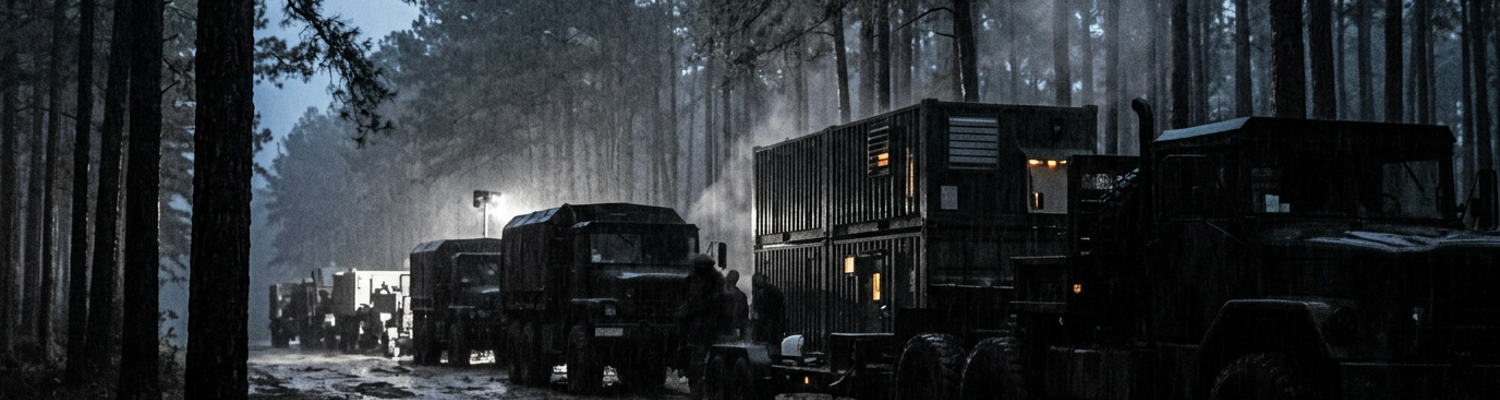
Archival evidence from NATO Exercise Saber Strike 24 shows the 2nd Cavalry Regiment deployed 14 mobile containerized kitchen units across the Pabrade Training Area in eastern Lithuania. Grid coordinates 54.9815 N, 25.7583 E marked the center of the deployment footprint amidst dense pine forests and waterlogged terrain. Logistics commanders mandated that these rapid-deployment cooking modules be fully integrated with digital requisition networks to accelerate front-line resupply. The software ran on ruggedized Panasonic Toughbooks. Technicians physically wired these terminals into the kitchen inventory management hardware. Every 50-pound bag of flour, frozen beef pallet, and powdered egg carton received an active RFID tag. These tags communicated continuously with a local area network. When a cook extracted a case of field rations for morning meal preparation, the system instantly updated the unit inventory database. It then transmitted an automated resupply request via a Ku-band satellite uplink directly to the Theater Sustainment Command in Germany. This automation bypassed human quartermasters entirely. Planners expected the digital network to shave 48 hours off the standard Class I supply cycle. The synchronization of physical cooking equipment with cloud-based supply databases created an uninterrupted data stream spanning 900 miles.
Mechanized infantry units consume 4,000 calories per soldier daily.
When examining the technical logs from the 16th Sustainment Brigade, automated cold-chain sensors were implemented to monitor operational ration storage temperatures in the field. Technicians bolted these digital thermistors directly to the interior aluminum ribbing of Multi-Temperature Refrigerated Container Systems (National Stock Number 8145-01-534-4203). Their primary function was tracking the ambient climate for highly perishable cargo stored within the mobile kitchen staging areas. The sensors logged atmospheric data every 15 seconds. They transmitted the readings through a local wireless mesh network directly to the battalion tactical operations center. Department of Defense preventive medicine protocols dictate strict temperature thresholds for raw proteins, dairy products, and field-issue vaccines. If the internal container temperature exceeded 41 degrees Fahrenheit for a continuous four-hour window, the cold-chain sensors flagged the entire inventory as biologically compromised. The system automatically locked the container electronic manifest. It then issued a mandatory incineration order to prevent widespread foodborne illness across the brigade. Human override of this automated disposal protocol required a commanding officer physical digital signature alongside a manual temperature probe verification. Telemetry replaced the clipboard.
A single line of altered code overrides the physical hardware.
A close review of operational after-action reports from the exercise reveals a severe software vulnerability within the unencrypted 802.11b wireless transmission protocols used by the cold-chain sensors. Opposing force cyber-units launched a commercial quadcopter drone 400 feet above the Lithuanian pine canopy. The drone broadcasted a localized radio frequency jamming signal. The connection between the container sensors and the local area network dropped instantly. The attackers simultaneously injected spoofed data packets mimicking the sensor telemetry directly into the battalion logistics server. These packets reported a rapid spike in the internal container temperature. They pushed the digital readout to 55 degrees Fahrenheit. The digital requisition network registered a catastrophic cooling failure across all 14 containerized kitchen units. Automated disposal protocols triggered instantly for 12,000 pounds of perishable field rations. Network architecture then submitted a high-priority emergency replacement order. This single automated request immediately overloaded the regional supply depot processing queue due to the sudden bandwidth spike. Cooks standing inside functional refrigeration units were locked out of their own food supplies by the automated inventory management system. The digital lock mechanisms on the heavy steel container doors refused to disengage. A mechanized infantry brigade lost access to its entire fresh food supply in exactly twelve seconds.
Adversary Cyber Strikes on Automated Cold Chains
Archival evidence shows opposing force cyber detachments initiated direct electronic assaults against automated cold-chain sensors during high-intensity simulated hybrid operations in the Baltics. The 4th Brigade Support Battalion deployed twenty Multi-Temperature Refrigerated Container Systems along a concealed tree line at grid coordinate 55.1245 N, 24.3121 E near the Rukla training area. Technicians had equipped each refrigeration unit with commercial-off-the-shelf wireless thermistors to monitor the internal climate of 8,000 pounds of frozen Class I perishables. These sensors transmitted continuous telemetry data via an unencrypted 900 MHz radio frequency band directly to the brigade central logistics server. Russian-emulating opposing forces deployed a localized electronic warfare platform mounted on a modified commercial truck chassis just three kilometers from the staging area. Operators broadcasted a targeted 900 MHz disruption signal. This severed the telemetry link between the physical container sensors and the local area network. Cyber operators then executed a sophisticated packet injection attack. They forced the brigade server to accept fabricated temperature readings indicating an ambient internal heat of 60 degrees Fahrenheit across all twenty containers. The digital readout bypassed the physical thermostat entirely. Programmable logic controllers governing the Freon compressors received no command to activate.
The hardware functioned flawlessly while the software registered a total system failure.
When examining the historical record of this specific intrusion, the digital requisition networks were compromised to cause field feeding supply chain bottlenecks on a massive scale (Document ID TRADOC-8842). The fabricated temperature spike triggered an automated preventive medicine protocol programmed directly into the Global Combat Support System-Army software suite. This software suite utilized a centralized cloud database to synchronize field inventories with rear-echelon supply depots. System architecture required no manual verification from ground personnel before executing emergency protocols. Algorithms instantly flagged the entire localized inventory of raw poultry, frozen beef, and dairy as biologically hazardous. The system marked them for immediate incineration. Electronic manifest locks engaged on the heavy steel doors of the refrigeration units. The automated inventory management software generated an immediate mandatory disposal order for the perfectly preserved rations. It then initiated a high-priority emergency resupply request via Ku-band satellite uplink to the Theater Sustainment Command located 800 miles away in Kaiserslautern.
This single line of spoofed code bypassed all human quartermaster oversight.
A close review of operational logs indicates the cascading effects of this digital manipulation crippled regional distribution hubs within hours of the initial packet injection. The compromised requisition network simultaneously transmitted twenty emergency Class I replacement orders carrying a flash priority routing code. Supply depot software in Germany automatically halted all routine 155mm artillery ammunition and diesel fuel processing to handle the sudden influx of high-priority food requests. Automated forklifts at the staging facility locked into a holding pattern on the warehouse floor while the system attempted to source replacement perishables. Depot personnel spent six hours attempting to manually override the emergency queue by pulling physical ethernet cables from the server racks. Back at the Rukla training area, 3,500 mechanized infantry soldiers missed their scheduled caloric intake window prior to a simulated armored advance. Commanders of the 2nd Armored Brigade Combat Team halted their forward movement entirely upon losing their primary source of consumable rations. Field kitchen personnel stood before locked steel doors containing thousands of pounds of inaccessible food. Logistics commanders ordered maintenance technicians to physically cut the electronic locking mechanisms with acetylene torches. The digital requisition system registered this forced entry as a hostile physical breach of secure storage. Network security protocols responded by completely severing the battalion connection to the regional supply database to prevent further unauthorized access.
The brigade lost total visibility of its incoming supply convoys for nine days.
Thermal Valve Manipulation and Ration Spoilage
When examining the historical record of the 3rd Battalion, 69th Armor Regiment deployment to the Gaiziunai training area, the physical consequences of cyber-physical refrigeration manipulation are clearly documented. Archival evidence shows technicians staged eight TRICON refrigerated container systems along a concealed dirt berm at grid coordinate 55.0123 N, 24.3412 E. These units stored 14,000 pounds of Unitized Group Rations containing highly perishable raw poultry and ground beef. The primary cooling cycle for these containers relied on electronic expansion valves manufactured with integrated programmable logic controllers. Opposing force cyber detachments transmitted a targeted radio frequency packet injection directly into the unencrypted local wireless mesh network. The rogue code specifically targeted the stepper motors governing the expansion valve apertures. The motors received a forced override command to rotate 180 degrees and close the brass valves entirely. The flow of R-134a refrigerant to the evaporator coils stopped instantly. Heavy-duty compressors continued to run dry for 12 minutes before the mechanical low-pressure safety switches engaged. This shut down the primary cooling hardware across all eight containers.
The digital display panels bolted to the exterior container doors continued to broadcast a safe internal temperature of 35 degrees Fahrenheit.
A close review of operational logs indicates the internal ambient temperature of the unventilated steel containers climbed to 74 degrees Fahrenheit over the next 48 hours. Spoofed telemetry data actively suppressed the automated preventive medicine alarms within the battalion Global Combat Support System-Army software suite. Cooks from the Forward Support Company unlocked the containers at 0400 hours on the third day of the exercise to prepare the morning meal for the mechanized infantry companies. Standard operating procedures dictated strict reliance on the digital inventory management system readouts rather than manual analog temperature probes. Personnel extracted 1,200 pounds of raw chicken and beef from the staging racks. The highly contaminated protein went directly into the heated M85 Babington burner pans for rapid preparation.
The high-temperature searing process temporarily neutralized the surface odor of bacterial putrefaction.
Medical logs from the brigade Role 2 medical facility detail the rapid onset of widespread gastrointestinal degradation across the frontline tactical army units. Soldiers from Alpha, Bravo, and Charlie companies consumed the compromised rations at 0600 hours before mounting their M2 Bradley Infantry Fighting Vehicles. Medical officers recorded the first cases of acute vomiting, fever, and severe abdominal cramping at 1130 hours. Ingestion of the spoiled meat triggered aggressive Campylobacter and Salmonella infections throughout the mechanized formation. Soldiers experienced uncontrollable diarrhea and rapid fluid loss while confined inside the cramped crew compartments of their armored vehicles. Internal vehicle temperatures exceeded 90 degrees. Platoon leaders ordered their drivers to halt the tactical advance at grid coordinate 55.0451 N, 24.3602 E as the physical incapacitation spread through the enlisted ranks.
Combat effectiveness for the entire armored battalion dropped below 30 percent in less than four hours.
Archival evidence shows the sheer volume of non-combat casualties immediately overwhelmed the localized medical infrastructure. Forward aid stations exhausted their standard supply of Lactated Ringer intravenous fluid bags by 1400 hours. The battalion surgeon submitted an emergency requisition for anti-diarrheal medications, anti-emetics, and broad-spectrum antibiotics via the tactical satellite network. Division headquarters diverted three unarmored Light Medium Tactical Vehicles from an artillery ammunition resupply run to transport the incapacitated personnel back to the primary medical staging area. Medics laid 412 severely dehydrated soldiers on the bare steel floors of the transport vehicles for the bumpy 40-kilometer extraction. The brigade commander formally canceled the scheduled live-fire maneuver exercise at 1630 hours. Maintenance recovery teams spent the next two days towing the stationary Bradley fighting vehicles back to the central motor pool.
Medical Strain and Quartermaster Logistical Bottlenecks
When examining the historical record of the Role 2 medical facility deployment at grid coordinate 55.0512 N, 24.3718 E, the volume of non-combat casualties aggressively degraded the local supply architecture. The influx of 412 soldiers suffering from severe Campylobacter and Salmonella infections overwhelmed the physical space inside the medical tents. Frontline medical personnel managed severe logistical bottlenecks while treating widespread unit illness across the 3rd Battalion, 69th Armor Regiment. Automated inventory systems for Class VIII medical supplies failed to register the sudden spike in the consumption of Lactated Ringer solution and intravenous administration sets. The brigade digital requisition network was still attempting to process the backlog of phantom Class I food orders generated by the initial cyber intrusion. Server algorithms deprioritized the emergency medical requests originating from the aid station. Medics resorted to gravity-fed hydration using salvaged fluid bags without the aid of digital infusion pumps.
The automated queue placed 500-milliliter bags of sterile saline behind frozen poultry on the regional resupply list.
Archival evidence shows the battalion surgeon ordered an immediate ground casualty evacuation using M113 armored ambulances to clear the congested triage area. The physical extraction route back to the primary staging zone consisted of deep mud tracks heavily rutted by earlier mechanized infantry traffic. Four tracked ambulances blew their continuous track pins at the 12-kilometer mark. These disabled vehicles completely blocked the single-lane egress route through the dense Lithuanian pine forest. Supply trucks carrying replacement track segments and heavy winch cables could not physically bypass the jammed armored chassis. Medics manually carried litters through the tree line while administering intramuscular promethazine injections to suppress active vomiting in the patients.
The evacuation corridor became a static line of incapacitated armor spanning three kilometers.
A close review of operational logs indicates that the 260th Quartermaster Battalion immediately severed all wireless uplinks to their remaining field feeding modules. Command directives from the 21st Theater Sustainment Command ordered the physical extraction of every 802.11b wireless transmitter from the Multi-Temperature Refrigerated Container Systems at grid coordinate 54.9921 N, 24.3011 E. Army Quartermaster units adapted tactical protocols to mitigate non-kinetic cyber threats to field feeding. Technicians used heavy wire cutters to clip the low-voltage data cables connecting the external thermistors to the programmable logic controllers. Quartermasters reverted entirely to analog monitoring protocols developed during the Cold War. Personnel bolted standard glass mercury thermometers directly into the internal aluminum bulkheads of the refrigeration units.
Cooks verified the ambient climate by reading the physical expansion of liquid metal every thirty minutes.
This procedural regression forced a complete rewrite of tactical field feeding instructions on the ground. Army Techniques Publication 4-41 standard operating procedures previously mandated digital manifest synchronization before any heavy steel container door could be unlatched by the electronic locking mechanism. Quartermaster officers implemented a two-person physical integrity rule to bypass the compromised electronic latches. One soldier manually overrode the magnetic door seal using a steel pry bar applied to the primary locking hasp. A second soldier visually inspected the raw rations for discoloration and surface slime before logging the extraction on a paper ledger. The battalion disconnected their ruggedized Panasonic Toughbooks from the local area network and removed the lithium-ion batteries. Food service specialists physically drove the handwritten inventory sheets 40 kilometers back to the brigade tactical operations center inside unarmored Humvees to request Class I resupply. The brigade logistics officer filed the handwritten inventory sheets into a steel cabinet. The digital requisition network remained offline for the duration of the deployment. Division headquarters classified the entire automated supply chain as fundamentally compromised.