
Discovery of W88 Telemetry and Operation Kindred Spirit
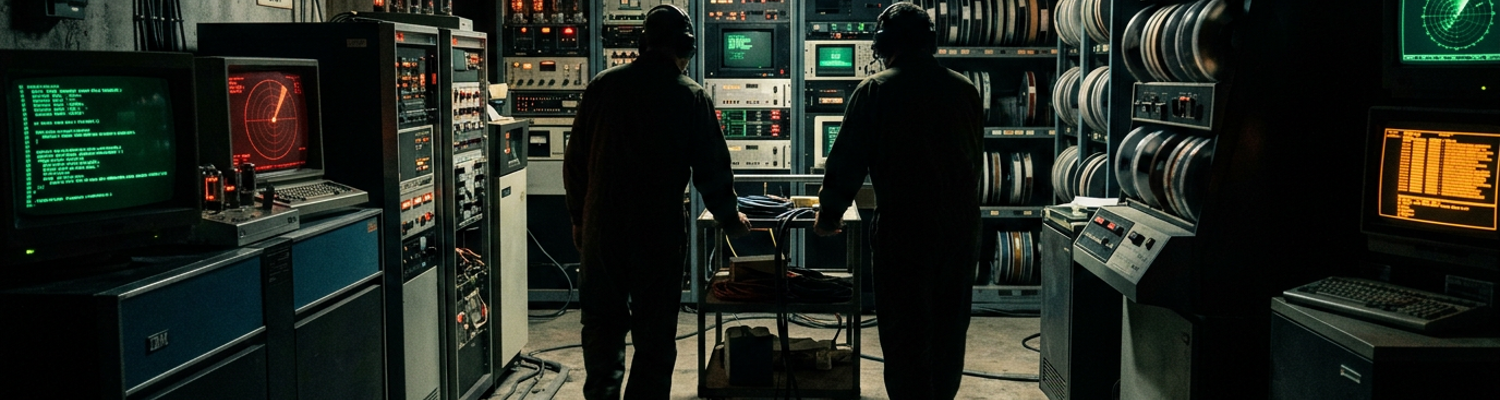
Drive motors whined and seized inside the terminal racks as technicians attempted to read degrading eight millimeter data tapes in the basement storage vault. Brittle magnetic ribbons slipped across worn drive heads, scattering dark oxide dust over the circuit boards while warning lights flashed red across the terminal console. Department of Energy intelligence analysts had identified classified telemetry, explosive weight, and structural design dimensions of the US Navy Trident II D5 W88 warhead within a restricted Chinese military technical document in 1995. These foreign documents contained exact flight test values and internal geometry that belonged exclusively to the Mark 5 reentry body deployed on American ballistic missile submarines. Technicians and intelligence specialists crowded around the green phosphor screens as the tape drives failed to catalog the legacy archive directories. Custodians shut down the overheating tape bays and spread the translated technical reports across a steel workbench to compare the figures side by side.
Custodians matched the foreign curves against classified Navy design manuals, proving that foreign weapon designers possessed precise measurements of the warhead internal package. Department of Energy and Federal Bureau of Investigation leadership initiated the classified counterintelligence inquiry code named Operation Kindred Spirit to determine how details of the Mark 5 reentry body leaked from naval contractors or national laboratories. Bureau investigators moved into the basement facilities and demanded complete access logs for every mainframe that had ever processed the physics codes. Systems operators explained that decades of partitioned digital networks, civilian contractor transfers, and laboratory testing had scattered the files across thousands of unindexed magnetic reels. Agents brushed aside the technical explanations, set up temporary desks inside the secure vault, and impounded the handwritten terminal logs to track down everyone who had handled the classified warhead data.
Paper logs revealed that hundreds of weapon scientists, naval technicians, and private contractors had held legitimate access to the W88 files over the previous ten years. Plastic tape cartridges stacked up in cardboard cartons along the concrete floor while portable electric fans pushed hot exhaust air away from the diagnostic terminals. Counterintelligence agents suspected that a scientist had deliberately copied the geometry onto external media, but the systems operators struggled to reconstruct the missing audit trails from damaged magnetic tracks. Laboratory specialists warned the investigators that running the brittle storage tapes through high speed forensic readers would shred the plastic ribbons and destroy the remaining file headers. Federal agents insisted on continuing the data extraction anyway, ordering technicians to mount the fragile cartridges onto backup drives to check every stored sector for unauthorized duplication.
Tape heads stripped the oxide coating off several critical reels during the automated scan, leaving unreadable gaps across the system directories and triggering shouting matches between the computer specialists and the federal agents. Interagency friction intensified as investigators accused the laboratory staff of sloppy record keeping, while technicians pointed out that counterintelligence demands were destroying the only physical evidence left. Federal agents shifted their operational strategy from recovering corrupted electronic audit trails to interviewing individual scientists who had worked on the Trident II program. Investigators locked the remaining eight millimeter cartridges inside tamper proof aluminum footlockers and loaded them into unmarked transport vans for transfer to regional field offices. Escorts cleared the basement corridor while the survey team carried out the final boxes of confiscated logs to continue the inquiry behind closed doors.
Tape Audits and Partitioned Legacy Mainframes
Steel security doors clicked shut behind the armed escorts, leaving the computer staff surrounded by towering rows of unread media in the basement vault. Federal agents had seized the handwritten visitor books, but millions of lines of weapons physics remained locked inside the digital tape library. Weapons data custodians at Los Alamos National Laboratory spent months manually indexing thousands of unclassified and classified magnetic tape cartridges and reel to reel tapes spanning decades of Cray supercomputer runs. Technicians pulled dusty cardboard containers from the high density storage racks, checked each exterior label against incomplete property manifests, and logged the serial identifiers into new tracking spreadsheets. Every plastic reel represented hundreds of hours of classified nuclear modeling, yet decades of casual filing habits had mixed administrative memos and routine academic drafts with restricted weapons schematics. Custodians stacked the verified cartridges on rolling metal utility carts so that recovery teams could feed them into the reader stations one by one.
Metal utility carts rattled across the concrete floor as technicians pushed the sorted media toward the diagnostic tape bays. Systems technicians faced physical magnetic storage degradation, worn drive heads, and incomplete user access logs across the Common File System, complicating efforts to establish a chain of custody for W88 hydrodynamic simulation codes. Constant friction from round the clock reading sessions wore the ceramic surfaces of the drive heads down to bare copper, causing the tape transports to misalign and drop critical data tracks. Brittle magnetic ribbons shed dark brown iron oxide particles directly onto the capstan rollers, gumming up the precision motors and snapping fragile tape leaders during automated rewinds. Technicians had to halt the drives every twenty minutes, unscrew the transport faceplates, and wipe down the delicate guide pins with cotton swabs soaked in pure isopropyl alcohol before mounting the next cartridge.
Alcohol vapors hung thick in the air as operators loaded the cleaned drives to examine the directory structures stored inside the Common File System. Laboratory scientists had originally built this centralized storage network to allow researchers to transfer data freely between different mainframes without keeping rigid audit trails. Decades of calculations modeling the high explosive compression of plutonium pits had been broken into fragmented file partitions without unique user credentials attached to each block. Shared project accounts allowed dozens of civilian physicists and naval liaisons to run hydrodynamic codes under common group names, wiping out any record of who had extracted individual calculations to external tape. Technicians watched green terminal displays scroll through corrupted header blocks, discovering that older Cray simulation files lacked digital timestamps entirely. Programmers worked under intense scrutiny from Department of Energy supervisors, typing custom shell scripts to rebuild the missing file paths sector by sector.
Printers chattered against the back wall as the custom diagnostic scripts finished reconstructing the scrambled file trees. Rebuilt catalog files proved that the primary and secondary implosion calculations had been copied onto open partition sectors accessible from outside the classified weapons division. Technicians isolated three damaged cartridges that contained duplicate numerical meshes of the Mark 5 reentry cone, but the physical degradation of the magnetic emulsion prevented the software from identifying the terminal that had initiated the transfer. Systems administrators transferred the surviving file fragments onto write protected optical disks, locked the damaged tapes inside lead lined security safes, and handed the forensic logs to waiting federal couriers.
Albuquerque Field Office FISA Surveillance Request
Couriers carried the sealed pouches containing the forensic printouts directly into the FBI Albuquerque Field Office, where case agents spread the reconstructed logs across steel sorting tables. Department of Energy counterintelligence officer Notra Trulock had recently concluded an administrative inquiry that narrowed the suspect pool down to personnel inside the Applied Theoretical Physics Division. Special agents at the field office intensified their focus in May 1997 on Taiwan born Los Alamos computer scientist Wen Ho Lee after reviewing Trulock findings alongside the fragmented Common File System records. Investigators cross referenced Lee travel manifests and international symposium itineraries with his official clearance level, noting his routine handling of hydrodynamic modeling codes for the Trident II W88 warhead. Case officers tracked his daily physical movements between secure terminal rooms and unclassified office workstations, searching for any vulnerability where nuclear physics data could have left the classified network. Analysts highlighted travel documents from the mid 1980s showing that Lee had attended computational fluid dynamics conferences in Beijing, arguing that his past interactions with Chinese scientists warranted immediate counterintelligence surveillance.
Investigators recognized that degraded magnetic tapes and missing mainframe access logs could never provide definitive proof of an unauthorized file transfer on their own. Bureau supervisors determined that live technical monitoring offered the only realistic chance to detect an ongoing compromise of nuclear weapons design data. FBI investigators drafted a formal Foreign Intelligence Surveillance Act application seeking electronic surveillance and physical search authority for Lee office terminal, home computer, and residential telephone lines. Special agents typed extensive supporting affidavits describing Lee advanced systems expertise and detailing how a senior programmer could transfer partitioned data blocks from classified supercomputers to unclassified network nodes. Bureau engineers prepared wiring diagrams of Lee desk terminal inside Building 43, planning clandestine entries to install keystroke recorders directly into the machine hardware. Specialists assembled audio wiretap receivers and physical signal splitters ready to splice into the overhead copper telephone lines feeding his residence in nearby White Rock.
Agents compiled the completed FISA application packets into red classified folders alongside technical schematics of Lee computer equipment and residential utility connections. Albuquerque leadership dispatched the thick legal dossier to FBI Headquarters and the Department of Justice Office of Intelligence Policy and Review in Washington for mandatory legal review. Federal attorneys inside the Justice Department scrutinized the submission and challenged whether the circumstantial evidence from the administrative inquiry satisfied the statutory probable cause standards required by federal judges. Reviewing lawyers argued that degraded mainframe tapes and conference travel records demonstrated opportunity, but failed to prove that Lee had acted as an agent of a foreign power or actively disclosed restricted data. Albuquerque investigators pushed back forcefully over secure conference lines, warning that waiting for pristine forensic proof from damaged thirty year old tape drives would allow weapon design files to slip through federal fingers.
Supervisors secured the contested warrant applications inside their Albuquerque office vault and immediately began gathering supplemental telephone records to challenge the legal objections raised in Washington. Telephone company billing tapes arrived at the field office on magnetic spools as investigators scrambled to pull every long distance call placed from the Lee household. Agents loaded the digital call logs into terminal databases and printed hundreds of pages of itemized toll receipts spanning several years. Analysts sat under fluorescent desk lamps and highlighted outgoing calls to scientific contacts, travel agents, and relatives across East Asia, attempting to link normal family conversations and routine academic correspondence to foreign intelligence handlers. Special agents pasted these raw call tables into supplemental affidavits, arguing that frequent international communication justified round the clock monitoring of Lee personal life. Technicians compiled the final folders alongside circuit diagrams of local telephone junctions and loaded the materials into sealed courier pouches.
Justice Department Rejection and FISA Statutory Standards
Couriers hand carried the expanded surveillance binder directly into the Robert F Kennedy Department of Justice Building in Washington for a final legal assessment. Richard Scruggs, head of the Office of Intelligence Policy and Review, received the expanded surveillance packet inside the Department of Justice in August 1997. Scruggs gathered his senior attorneys to evaluate whether the bureau submission met the strict statutory requirements established under the Foreign Intelligence Surveillance Act of 1978. Department of Justice attorneys discovered that the bureau relied heavily on circumstantial deductions from the initial Department of Energy administrative inquiry rather than independent evidence of espionage. Scruggs concluded that the application failed to show that an unauthorized disclosure of classified defense data had actually occurred through Lee computer terminal.
Lawyers determined that the Albuquerque dossier failed to establish statutory probable cause under FISA, citing overreliance on ethnic profiling, outdated travel records, and insufficient evidence of ongoing clandestine activity. In August 1997, the Department of Justice Office of Intelligence Policy and Review formally rejected the FBI application for electronic surveillance warrants against Wen Ho Lee. Scruggs pointed out in his written evaluation that Lee international symposium trips had taken place in the mid 1980s, creating an unbridgeable time gap that could not establish current espionage. The statutory standard of the Foreign Intelligence Surveillance Act demanded solid, timely evidence that a targeted individual was currently operating as an active agent of a foreign power. Bureau investigators could point to no secret meetings, no dead drops, no unexplained financial deposits, and no encrypted radio transmissions connecting Lee to foreign intelligence officers.
Attorneys noted that investigators had narrowed their initial suspect pool almost exclusively around persons of Chinese ancestry while ignoring dozens of other laboratory personnel who possessed identical access to the W88 data. Scruggs warned that presenting such thin, biased reasoning to the Foreign Intelligence Surveillance Court would damage the credibility of the entire department. Staff attorneys stamped the surveillance package officially rejected and returned the documentation across town to the J Edgar Hoover Building. FBI counterintelligence supervisors in Washington received the stamped rejection files with open frustration, viewing the legal decision as an unacceptable roadblock to a critical national defense case. Bureau officials held heated internal meetings to debate whether to appeal the decision directly to Attorney General Janet Reno or attempt to gather fresh surveillance on the ground.
Managers argued that technical compromise of the Navy premier warhead required extraordinary measures, but the legal staff at Main Justice refused to bend the probable cause statute. Field agents in Albuquerque were ordered to dismantle their prepared wiretap harnesses, box up their uninstalled keystroke monitors, and stand down from entering Lee office after hours. Case officers locked their surveillance equipment back into secure supply cages and shifted their operational plan to routine physical tailing and administrative interviews in Los Alamos. Sedans carrying plainclothes FBI agents shadowed Wen Ho Lee along the mountain roads of Los Alamos while investigators conducted clumsy interviews that alerted laboratory staff to the counterintelligence probe.
Bellows Report and Systemic Nuclear Security Failures
Agents gathered little usable intelligence from these visual checks, triggering furious arguments among department heads in Washington over who bore responsibility for the stalled inquiry. Federal Bureau of Investigation supervisors accused Justice Department attorneys of crippling the case, while Department of Energy officials claimed that the Clinton administration had downplayed signs of foreign espionage to protect international trade policy. Attorney General Janet Reno commissioned federal prosecutor Randy Bellows in 1999 to investigate the bureaucratic deadlock among the FBI, Department of Energy, and Clinton National Security Council. Bellows established a secure review staff inside basement rooms at Main Justice, demanding every operational log, classified briefing slide, and internal cable generated since the initial 1995 telemetry discovery. Cartons of classified files and computer printouts filled the review rooms as Bellows began reconstructing the institutional decisions that had paralyzed the federal government.
Investigators discovered that artificial procedural barriers prevented counterintelligence agents and criminal prosecutors from sharing basic evidentiary updates. Energy Department analysts withheld vital technical context regarding warhead manufacturing facilities, while bureau field offices locked raw informant interviews behind strict internal compartments that prevented independent verification. National Security Council officials received fractured, incomplete briefings that hid the sharp disagreements between Justice Department review attorneys and the Albuquerque case squad. Bellows summoned case supervisors, laboratory directors, and White House policy advisors into closed depositions, compelling them to explain why unresolved legal disputes over probable cause had sat unaddressed for years. Officials under questioning admitted that the Kindred Spirit task force had focused almost exclusively on Wen Ho Lee based on flawed administrative rosters while ignoring hundreds of other personnel across Navy contractors and assembly plants who held identical access to the W88 specifications.
Managers had treated corrupted tape files and missing Common File System directories at Los Alamos as evidence of criminal concealment rather than acknowledging the physical decay of aging magnetic media and neglected mainframe systems. Tunnel vision led the field office to dismiss alternative points of compromise at military proving grounds, locking the inquiry onto a single target and leaving the broader security perimeter uninspected. Interrogators leaned on aggressive polygraphs and public pressure instead of developing verifiable intelligence, compounding procedural errors that trampled civil rights while letting potential leakage pathways go unmonitored. Randy Bellows compiled these systemic breakdowns into an exhaustive, classified final report that laid out the organizational failures of the nuclear counterintelligence establishment. Released in 2000, the Bellows Report documented systemic procedural walls, flawed intelligence sharing, and premature investigative narrowing that compromised both civil liberties and national nuclear counterintelligence oversight.
Bellows detailed how persistent distrust between Justice Department attorneys and FBI case agents had created a self inflicted legal paralysis, preventing timely electronic monitoring while encouraging groundless assumptions about laboratory personnel. Reviewers demonstrated that senior officials throughout the administration had repeatedly misinformed the Foreign Intelligence Surveillance Court and congressional oversight leaders because no single department possessed a complete, accurate picture of the technical evidence. Couriers boxed the numbered volumes into secure lockboxes and loaded the heavy containers onto armored transport vehicles for delivery to designated committee leaders on Capitol Hill. Archivists secured the master copy behind the steel vault doors of Main Justice.