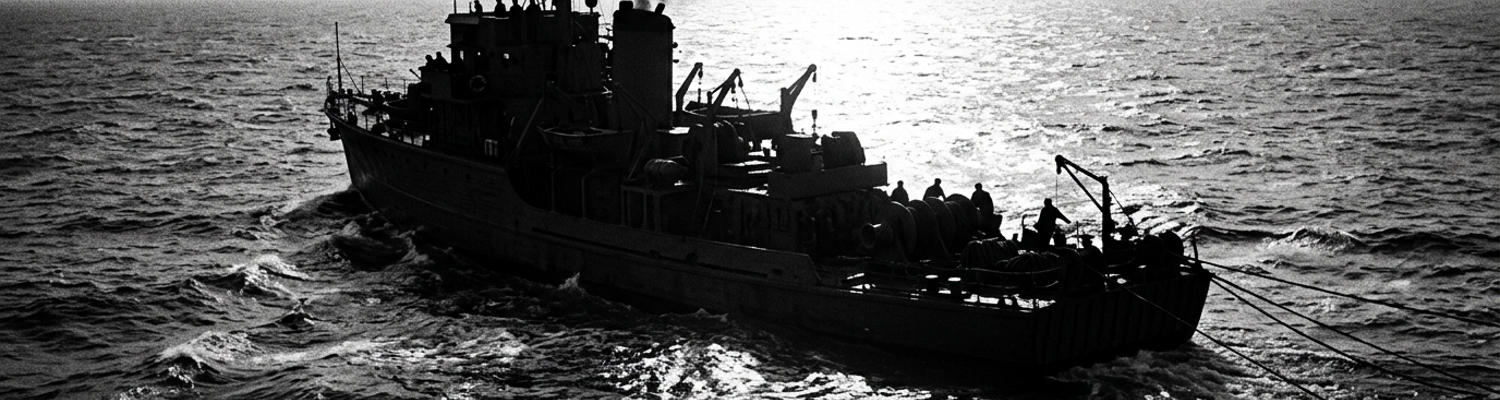

Persian Gulf Deployment During Operation Desert Thunder
Fleet planners in Bahrain gave Commander Task Force 52 exactly forty-eight hours. They needed operational mine sweeping formations across the northern approaches of the Persian Gulf. Operation Desert Thunder had escalated following Baghdad refusing cooperation with United Nations weapons inspectors. Fifth Fleet intelligence warned of a specific threat. Iraqi forces could seed acoustic and contact mines across commercial shipping lanes before coalition battle groups established control. In May 1998, Task Force 52 deployed mine countermeasure assets to the northern Persian Gulf. Naval command tracked a narrow operational window. Bottom-moored LUGM-145 mines deployed off the Al Faw peninsula would trap amphibious forces. Supply freighters entering Kuwaiti waters would halt. Archival evidence shows that maintenance cycles at Mina Salman were truncated. Dock teams rushed sonar repairs and magnetic sweep gear aboard. Propulsion mechanics cleared biological fouling from seawater cooling strainers.
The clock expired before the second sweep unit cleared the Bahrain breakwater.
A close review of operational logs indicates that USS Ardent (MCM-12) and USS Dextrous (MCM-13) conducted continuous clearance tracks. Ambient deck temperatures exceeded 115 degrees Fahrenheit. Operating these wooden and glass-reinforced plastic hulls in stagnant littoral waters turned internal compartments into unventilated thermal boxes. Solar radiation heated sweep winches and steel handling cables. The metal caused contact burns through utility gloves. Gulf surface water temperatures surpassed 92 degrees. Engineering plants failed to shed heat through primary heat exchangers. Marine chill water plants shut down repeatedly on high-pressure cutouts. The AN/SQQ-32 variable-depth mine-hunting sonar consoles lost necessary refrigeration. Technicians inside the Combat Information Center worked in soaked undershirts. They wiped sweat and condensation from display scopes. Space temperatures climbed past 105 degrees. Line-handlers tending heavy acoustic cables suffered heat cramps within thirty minutes of exposure. They rotated directly into machinery spaces to relieve engine-room watchstanders.
Hydraulic fluids thinned to the consistency of water inside the deck winches.
Thermal stress accelerated the breakdown of crew stamina. Crews maintained prolonged heightened watch rotations due to the risk of asymmetric Iraqi coastal attacks. Small patrol boats and modified civil dhows operated near Bubiyan Island. Shore-based artillery positioned near the Khawr Abd Allah waterway turned every linear clearance track into an exposed run. MCM-class hulls possessed a top speed of fourteen knots. Self-defense capabilities consisted of .50-caliber machine guns. Tactical survival required early visual acquisition of surface threats. Watchstanders operated on compressed watch bills. They alternated between four hours on the bridge and four hours tending sweep gear. Physical exhaustion deepened over seventy-two-hour operational blocks. Sonar technicians stared into green cathode screens for hours. They separated genuine bottom mine signatures from ship debris, discarded oil drums, and mud mounds. Bridge lookouts scanned the shimmering horizon through thermal optics until eye strain triggered severe headaches.
Sleep deprivation degraded crew reaction speeds to levels resembling acute physical intoxication.
Deck logs from USS Ardent record repeated engineering casualties during peak afternoon heat cycles. Raw-water booster pumps failed under sustained loads. Machinists climbed into bilge spaces measuring over 130 degrees. They repacked mechanical pump seals with graphite cord. Ambient heat exhaustion forced them out. Command staff prioritized clearance track coverage over rest periods. Off-watch sailors mustered for small-arms defense watches whenever radar tracks showed unidentified coastal traffic. Operational reports from USS Dextrous noted personnel experiencing disorientation and slow motor function. Four consecutive days of fractured sleep in berthing areas warmed by heat radiating through the ship superstructure took a toll. Combat teams tracked radar clutter caused by thermal inversions. They repeatedly called crews to general quarters to man forward machine-gun mounts against false surface targets. Medical personnel treated over a dozen sailors across both ships for heat exhaustion. They administered intravenous saline on wardroom tables. Sickbay berths were stacked with repair parts for failed ventilation fans.
On May 28, USS Dextrous logged a cracked engine cylinder liner. The ship operated on a single shaft while completing acoustic sweep tracks within range of Iraqi shore batteries.
Moored Contact Mine Clearance Along Northern Shoals
Archival evidence shows that intelligence officers in Bahrain identified deliberate Iraqi mine-laying operations. These centered along the shallow maritime boundary near the Khor al-Amaya oil platform. Iraqi naval teams operating from small tugs and unflagged river dhows dropped Soviet-designed LUGM moored contact mines into the shipping channels. They executed night runs from the Khawr Abd Allah waterway. Heavy cast-iron sinkers anchored the weapons. The spherical steel casings floated six to twelve feet beneath the surface. Steel wire rope tethered them to snare the hulls of deep-draft cargo transports. Each casing held an explosive charge of over three hundred pounds of cast TNT. Lead-sheathed galvanic Hertz horns detonated the charge upon physical impact. Deck logs confirm that low-water spring tides pushed several buoyant spheres into plain sight above the waterline. Rising tides concealed them directly within the operating draft of Task Force 52 minesweepers. Deck lookouts rotated every twenty minutes to counter eye strain caused by the blinding midday glare off the Persian Gulf. Striking an unmapped tether would pull the explosive sphere straight into the wooden side of the hull.
A single contact would tear through the four-inch fir hull planking instantly.
USS Ardent and USS Dextrous deployed specialized acoustic and magnetic sweep gear across variable-depth littoral shelf zones north of Bubiyan Island. Water depth along these coastal shelves fluctuated erratically between thirty-five and fifteen feet. Both ships streamed their AN/SLQ-37 systems while maintaining precise spatial clearance above bottom mud banks. Electricians ran high-amperage pulsed direct current through buoyant magnetic sweep cables trailed hundreds of yards astern. This simulated the magnetic signature of large merchant hulls. Mechanics lowered Mk 104 acoustic noisemakers behind the magnetic tails. Cavitation disks spun by water flow discharged simulated propeller noise. Towed sweep wires snagged continuously on discarded drilling pipe and coral heads embedded in the shelf floor. Deck winches on USS Dextrous overheated. Hydraulic line seals degraded and sprayed hot fluid across the fantail. Engineering teams worked with hand tools on the exposed stern. They replaced severed sweep cutters and cleared fouled tow lines. The ships remained on active clearance courses within range of Iraqi land-based Silkworm radar emissions.
Winches ran until friction plates turned red.
The physical threat of submerged triggers required sonar operators to sustain uninterrupted acoustic monitoring through severe thermal layers. The AN/SQQ-32 variable-depth sonar system operated inside water stratified by scorching surface temperatures and cold hyper-saline currents creeping along the Gulf seabed. These distinct water layers acted as acoustic refractors. They bent active high-frequency sonar pulses away from target fields. This created blind zones within the water column. Sonar technicians inside the dark unventilated Combat Information Centers worked through four-hour continuous monitoring shifts without looking away from the flickering displays. Operators strained to distinguish the faint acoustic shadows cast by moored LUGM spheres from local biological scattering, floating debris, and thermal noise spikes. The sustained sensory focus caused intense eye fatigue and severe physical nausea. Hull vibration and unrelenting cabin heat hovering above ninety degrees compounded the physical toll. Supervisors rotated technicians out only when cognitive processing broke down. They found sailors staring through blank screens with dilated pupils and slow verbal responsiveness.
Mental fatigue eroded the watchstanders ability to recognize echo returns.
A close review of operational logs indicates that during the afternoon sweeps of June 2, USS Ardent tracked three consecutive false acoustic contacts off Ras al-Qulayah. This triggered emergency maneuvering bells that strained the port diesel engine. Watchstanders on the bridge stood watch in sweat-soaked battle dress. They tracked acoustic warnings while sweeping binoculars across choppy brown waters concealing submerged mooring lines. Salt crusting accumulated on external optics. This obscured the waterline and forced bridge teams to wipe optical surfaces every ten minutes with fresh water rations. Technical teams on USS Dextrous reported forty-eight distinct acoustic anomalies across six linear clearance tracks. Each required manual classification while the hull drifted within four hundred yards of unverified mine positions. By nightfall, two sonar technicians collapsed from thermal dehydration during active sweep tracks. They received emergency saline drips in the aft passageway while the ship completed its final acoustic run along channel buoy four.
Encryption Unit Overheating and Communications Signal Drift
Archival evidence shows that temperatures inside the enclosed radio central compartments on both mine countermeasure hulls climbed beyond 118 degrees Fahrenheit by noon each day. Radiomen stationed aboard USS Ardent faced continuous hardware breakdowns. Sustained thermal exposure crippled the shipboard AN/WSC-3 transceiver racks. These line-of-sight and satellite communications transceivers depended on internal forced-air fans. The fans merely recirculated superheated compartment air across densely packed solid-state circuit cards. Thermal expansion warped sensitive crystal oscillator circuits. This caused chronic frequency drift across the standard ultra-high-frequency bands. Transmitters shifted by dozens of hertz away from assigned fleet frequencies. Voice traffic garbled into indecipherable static. Modulation locks with overhead relay channels broke. Communication specialists pulled hot chassis slides directly from the equipment racks without protective gear. They worked with manual tuning tools to drag drifted carrier frequencies back onto assignment while sweat dripped onto bare terminal lugs.
Solder joints softened inside the equipment cabinets.
A close review of operational logs indicates that heat-induced component degradation struck the companion KY-58 cryptographic processing units with even greater severity. Mounted directly into the audio processing paths to provide secure voice and Link communications, these compact encryption boxes lacked autonomous cooling systems. Internal junction temperatures inside the KY-58 units regularly exceeded safe design thresholds of 140 degrees Fahrenheit. System processors triggered automatic parity shutoffs. These thermal crashes instantly dumped volatile cryptographic keys from internal memory arrays. This severed secure digital plot reports intended for Fifth Fleet command in Manama. Without functional encryption, tactical plot computers could not transmit updated coordinates of cleared lanes or freshly mapped mine positions across Bahrain tactical data circuits. Communication watchstanders spent hours in kneeling positions across the vibrating deck plates. They used manual fill devices to reload physical key tapes into burning hot receptacle ports. The machines zeroized their crypto variables thirty minutes later.
Zero-fill alarms sounded in complete darkness.
Severed communications links left the bridge teams in severe tactical isolation along the Iraqi littoral. Task Force 52 commanders had instructed USS Dextrous to push forward into unswept channels northwest of the Mina al Bakr oil terminal. Repeated equipment blackouts isolated the ship from the Fifth Fleet common operational picture. Bridge crews swept active mine tracks without real-time intelligence feeds, tactical air warnings, or the security of rapid tactical backup. Lookouts knew that if an Iraqi Silkworm anti-ship missile battery locked onto their wooden hull from the Al Faw peninsula, no destroyer squadron in the central Gulf would hear their distress call. If an armed Boghammar fast boat closed the distance under the radar horizon, they were on their own. Conning officers held helm control wheels with clammy palms. They scanned the shallow brown water for contact horns while second-guessing every bottom sonar plot flickering across local screens.
Solitary wooden ships swept through live minefields entirely cut off from the outside world.
Radioman deck logs from June 4 record that USS Ardent drifted through clearance box Tango-Twelve for nine continuous hours without a single confirmed transmission to shore headquarters. Senior officers in Manama had no way of knowing whether the silent minesweepers were still conducting acoustic sweeps or sitting split open on the Persian Gulf seabed. Inside the Combat Information Center, watch officers marked prospective mine contacts by hand with grease pencils across clear plastic status boards. They could not cross-reference their findings against satellite surveillance updates or aerial mine reconnaissance reports generated by carrier aviation. Tension among the tactical action officers degraded sleep cycles. Bridge teams operated on thirty-six-hour wake periods while listening to the hollow dead hiss of unkeyed radio speakers. At 1640, technical teams aboard USS Dextrous burned through their final spare cooling blower assembly while attempting to revive the forward transceiver rack forty miles south of Umm Qasr.
Equipment Degradation in Hyper Saline Waters
Archival evidence shows that northern Persian Gulf surface salinity reached forty-two parts per thousand between Kuwait Bay and the Mina al Bakr terminal. This created an intensely corrosive chemical environment that rapidly destroyed external shipboard surfaces. Atmospheric humidity levels hovered near ninety-five percent. The hyper-saline brine evaporated on contact with exposed metal. It left behind thick crystalline crusts that trapped moisture against equipment housings. Chemical primers, polyurethane topcoats, and anti-corrosive enamels on topside machinery bubbled and detached across USS Ardent and USS Dextrous within days of departing Bahrain. Exposure to airborne sodium chloride broke down the sealant around magnetic sweep cable reel housings. Deck cranes and securing padeyes developed deep rust patterns that penetrated beneath primer layers. Boatswain mates chipped away flaking paint during brief morning lulls. They found the bare metal pitting beneath fresh applications before the new enamel could fully dry in the damp coastal air. Salt deposits clogged grease fittings on crane pivots and fouled the manual release levers of stern-mounted depth bomb racks.
Protective paint rolled off topside equipment in brittle sheets.
A close review of operational logs indicates that this aggressive chemistry created rapid structural failures across the mechanical sweep winches and armored variable-depth sonar cables. The ships streamed the AN/SQQ-32 sonar system. The dissimilar metals of the armored tow cable acted as an active galvanic cell against bronze level-wind sheaves and aluminum deck tracks. The cable incorporated high-tensile contra-helical steel wrap over copper conductors. Concentrated brine forced its way between the tight outer wire wraps. This generated rapid galvanic pitting that weakened load-bearing strands and produced abrasive zinc oxidation inside the cable core. Level-wind mechanisms on the heavy sweep winches began binding as salt crystals ground into drive gears and drive chains. The spooling gear lurched violently under load. Cable strands frayed and separated under tension. They formed jagged clusters of bent wire that jammed tightly against drum flanges during recovery cycles. Deck crews on USS Dextrous paused underway mine clearance runs to pry wedged cable turns free using bronze pry bars. This exposed deck personnel to high-tension snapback hazards while the ship drifted in active clearance corridors.
Corrosion welded adjacent wire wraps into solid unspooling blocks.
Primary propulsion and auxiliary engineering spaces presented an equally destructive operating environment. Temperatures inside the main machinery rooms housing the Isotta Fraschini non-magnetic diesel engines regularly climbed to 135 degrees Fahrenheit. This drove compartment heat-stress indexes well beyond maximum safe exposure limits. Navy thermal-stress doctrine restricted watchstanders to twenty-minute shifts. The constant stream of physical failures forced machinists to remain stationed in the suffocating heat for hours. High-salinity raw cooling water corroded bronze pump impellers. It eroded copper-nickel piping and fouled heat exchanger tube bundles with hard mineral scale. This triggered chronic cooling system ruptures. Deprived of replacement fittings from Bahrain, engine room personnel executed continuous improvised patch repairs to keep the generators running. Sailors wrapped leaking auxiliary seawater lines with strips of high-temperature silicone gasket. They secured the patches with stainless steel band clamps. They applied fast-curing Belzona polymer resin directly to leaking pipe seams while bilge water sloshed around their work boots.
Machinists vomited into bilge collection troughs before wrapping another layer of gasket rubber around cracked heat exchanger pipes.
Administrative Supply Bottlenecks for Critical Hydraulic Seals
Archival evidence shows that supply channels into Naval Support Activity Bahrain operated under peacetime administrative procedures established by the Naval Supply Systems Command. Fifth Fleet maintained combat-alert footing for Operation Desert Thunder. Every high-priority parts requisition submitted by Task Force 52 required sequential verification across three separate administrative commands before warehouse personnel could release inventory to Military Airlift Command transports. Supply officers aboard USS Ardent submitted Category Three and Category Four Casualty Reports for mission-essential deck machinery. Their standard military requisition forms routed through automated stock clearinghouse points in Mechanicsburg Pennsylvania. Peacetime audit requirements forced supply clerks to verify physical paper manifests and cross-reference funding accounting numbers before loading pallets onto outbound C-141 Starlifter flights. Supply clerks at intermediate transit hubs in Rota Spain and Sigonella Sicily repeatedly held high-priority pallets on cargo aprons. Paperwork lacked non-standard customs stamps or wet signatures from regional theater coordinators. Documentation discrepancies between standard automated inventory records and Middle Eastern port-of-entry directives grounded palletized military air shipments at European airfields for weeks.
Paper manifests took longer to clear European transit points than military transports took to cross the Atlantic Ocean.
A close review of operational logs indicates that this administrative breakdown directly blocked the delivery of Viton and nitrile hydraulic packings. These were required for the Lake Shore sweep winches on both clearance hulls. Operating pressures inside the electro-hydraulic drive units exceeded three thousand pounds per square inch. This generated localized fluid heat that degraded synthetic seals into hardened brittle rings within seventy-two hours of active sweep deployment. Replacement seal kits sat stranded inside Defense Distribution Depot Susquehanna and forward hangars at NSA Bahrain. Engineering departments depleted onboard stock balances by late May. Winches aboard USS Dextrous leaked up to five gallons of MIL-H-17672D hydraulic oil during every four-hour clearance run. This coated the wooden fantail in slippery chemical film that broke down non-skid deck coatings. Machinists broke down weeping directional valve blocks at sea. They cleaned scored O-rings with solvent and wrapped flattened seals in commercial Teflon tape to maintain minimum hydraulic pressure. Fluid pressure loss caused the winch drums to stall under load during cable recovery. Magnetic tails trailed dead in the water while the ship drifted inside the tracking arcs of Iraqi coastal radar sites.
Winch operators stood in pooling oil while tightening weeping valve fittings with hand wrenches.
The complete absence of depot deliveries forced engineering teams to cannibalize auxiliary deck equipment to keep mine clearance winches operational. Machinists aboard USS Ardent systematically stripped hydraulic assemblies from the forward anchor windlass and the stern boat-handling crane. They salvaged internal elastomeric rings, copper crush washers, and dynamic cylinder packings. Senior petty officers worked in cramped deck compartments with brass scrapers and dental picks. They extracted compressed seals from unpowered secondary machinery without tearing the aged polymer. Installing these worn distorted components into primary sweep winches created erratic fluid pressure surges across the hydraulic lines. This demanded continuous manual throttle corrections from exhausted watchstanders. Stripping the stern crane left the deck force unable to deploy rigid-hull inflatable boats for surface mine disposal. Disabling the anchor windlass meant the ship could not set anchor if main diesel engines failed in the northern shoals.
On June 6, machinists aboard USS Dextrous stripped the final functional shaft seal from the auxiliary fire pump to repack the port magnetic reel motor.
Psychological Strain of Sustained Littoral Clearance
Archival evidence shows that berthing compartments aboard USS Ardent and USS Dextrous sat directly adjacent to auxiliary machinery flats. This exposed off-watch personnel to continuous acoustic pressure exceeding eighty-five decibels. Non-magnetic diesel generators pulsed low-frequency vibrations through the laminated wooden hull frames. Aluminum bunk stanchions rattled without pause. Watch rotations shifted erratically between three-section and two-section watch bills to accommodate emergency sweep recoveries. Sailors rarely obtained more than ninety consecutive minutes of uninterrupted rest. Ambient compartment temperatures inside the lower crew racks hovered between ninety-eight and one hundred and four degrees Fahrenheit. Ventilation fans blew hot stagnant air across wet mattresses. Off-duty sailors lay on vinyl-covered pads soaked in perspiration. Sweat ran down their temples and pooled in their ear canals. Chronic heat exhaustion prevented deep REM cycles. Crew members woke repeatedly in states of acute disorientation. Personnel reported for bridge duty with elevated resting heart rates, splitting frontal headaches, and physical tremors in their hands.
Berthing fans pushed scorching air across sailors whose skin never fully dried.
A close review of operational logs indicates that junior lookouts and sonar operators endured relentless psychological tension. Their wooden hull offered zero blast deflection against bottom-laid or moored ordnance. Sonar technicians on USS Dextrous sat trapped in the darkened Combat Information Center for six-hour stretches. They fixated on high-frequency returns while calculating how many milliseconds separated an acoustic trip from structural disintegration. Erratic acoustic blooms caused by shrimp beds or water column thermal shear triggered sudden adrenaline spikes. The cold realization followed that human error on the console would kill everyone aboard. Up on the bridge wings, nineteen-year-old lookouts scanned the brown surface swells. They searched for the dark silhouettes of drifting contact horns or tethered spheres bobbing beneath the glare. Glancing away from the water for even five seconds invited catastrophic disaster. This produced extreme visual strain and severe mental paralysis. Lookouts reported persistent phantom sightings. They repeatedly shouted contact alarms at floating garbage, dead sea snakes, and wooden packing crates discarded by merchant traffic.
Every submerged shadow looked like an explosive casing until binoculars confirmed it was sea wrack.
The thermal collapse of shipboard KY-58 encryption units and high-frequency transceivers cut the minesweepers off from Fifth Fleet command in Bahrain for up to twelve hours at a stretch. Detachments operating forty miles south of Umm Qasr understood that no carrier-based air support or surface escorts patrolled within visual range of their slow clearance boxes. Bridge officers manned their stations with the awareness that if an armed Iraqi patrol boat emerged from the Al Faw marshes or a land-based coastal battery opened fire, the ship could neither transmit a Mayday nor outrun incoming fire at ten knots. Shipboard medical officers noted sharp increases in acute stress reactions among junior enlisted personnel. They perceived themselves as abandoned expendable targets drifting in hostile territorial margins. Junior officers second-guessed course corrections. They feared an unverified drift track had pushed their vulnerable hulls directly over an uncharted acoustic mine cluster without fleet tracking systems recording their loss.
Silence from the bridge radio speakers confirmed the detachment was entirely on its own.
Deck logs from USS Ardent on June 8 document that three junior sailors collapsed from acute psychogenic hyperventilation during a single afternoon sweep run along channel sector November. Medical corpsmen administered oral rehydration salts and mild sedatives in the mess deck. This space doubled as an overflow triage bay when ambient temperatures in the sickbay reached one hundred and twelve degrees. Operations continued without relief rotations. Task Force 52 had no replacement personnel available in theater.
Operational Fallout and Fifth Fleet Mine Warfare Protocols
Archival evidence shows that Task Force 52 formally concluded the northern Persian Gulf mine clearance sweep on June 12 1998. Acoustic and magnetic passes verified sixty nautical miles of deep-water transit channels off Bubiyan Island and the Kuwaiti coastline. Clearance teams aboard USS Ardent and USS Dextrous charted twenty-four cleared maritime corridors. They confirmed that Iraqi forces had not anchored acoustic influence mines across commercial sea approaches to Mina Al Ahmadi. Verification of these maritime lanes came at an acute physiological cost to the crews. For twenty-one consecutive days, sailors operated in ambient deck heat exceeding 120 degrees Fahrenheit while standing port-and-starboard watch bills. Broken sleep patterns degraded human performance across every division. Technicians, machinists, and deck personnel averaged less than three hours of rest per day amidst continuous equipment casualties. Medical corpsmen treated sixty-two sailors across both ninety-man crews for acute physical dehydration, heat exhaustion, and skin ulcerations caused by unevaporated sweat and fiberglass insulation dust. Bilge mechanics lost an average of twelve pounds of body weight per man over the three-week operation.
Forty-two crewmen across both ships required direct intravenous fluid infusions on the mess deck before the vessels secured their mooring lines at Mina Salman.
Post-deployment engineering reviews and formal debriefs conducted in Manama exposed severe design limits in shipboard environmental control systems. Marine chill water plants engineered for temperate Atlantic waters could not shed condenser heat into Gulf surface seawater that consistently hovered at 94 degrees Fahrenheit. Cavitation and mineral scaling choked raw-water booster pumps. Chillers tripped off on high-pressure cutouts when combat systems needed them most. Electronics racks housing the AN/SQQ-32 variable-depth sonar processors climbed past 115 degrees inside the Combat Information Center. Technicians aimed commercial box fans at exposed circuit motherboards. Bulkhead temperatures inside Radio Central aboard USS Ardent registered 122 degrees. This induced thermal drift in crystal oscillators and triggered automatic zeroize shutdowns across KY-58 encryption units. Denied effective heat exchange, solid-state components suffered micro-fracturing along delicate solder traces.
The mechanical breakdown compounded administrative bottlenecks in theater supply chains.
Priority One casualty requisitions for high-pressure nitrile and Viton hydraulic packings sat stranded inside Defense Supply Center depots in Pennsylvania for up to seventeen days. Peacetime requisition systems routed urgent parts requests through domestic inventory clearinghouses. These required redundant paperwork verifications before releasing stock to transport aircraft. Forward air stations in Rota and Sigonella held back cargo pallets carrying Lake Shore winch seals due to missing regional customs stamps and conflicting billing codes on flight manifests. Warehouse facilities at Naval Support Activity Bahrain held virtually no specialized repair parts for wooden Avenger-class hulls. Without depot backing, shipboard machinists manufactured improvised gaskets from scrap rubber sheeting or stripped seals from anchor windlasses while rolling in active mine corridors. The supply pipeline failed to deliver a single factory-standard winch packing to either ship before sweep operations terminated.
Confronted by the physical collapse of clearance crews and widespread equipment failure, Fifth Fleet leadership rewrote Persian Gulf mine warfare protocols. Fleet planners in Manama abolished the standing operational assumption that mine countermeasure hulls could sustain indefinite littoral sweeps in the northern Gulf without dedicated tender support. Revised doctrine capped continuous clearance operations at seven consecutive days during high-heat cycles. It established mandatory forty-eight-hour operational pauses at air-conditioned berths. Technical directives mandated the installation of auxiliary high-capacity chilled water units inside all forward-deployed MCM hulls to protect sonar processing cabinets and cryptographic gear from thermal cutouts. Fleet supply commands established pre-staged parts reserves at Mina Salman containing pre-inspected hydraulic packs, raw-water pump impellers, and chemical descaling compounds reserved exclusively for Task Force 52. New operating rules prohibited task force commanders from committing wooden-hulled mine sweepers to shallow hyper-saline waters whenever ambient air temperatures exceeded 110 degrees unless an auxiliary support vessel remained within five nautical miles to provide immediate engineering relief.