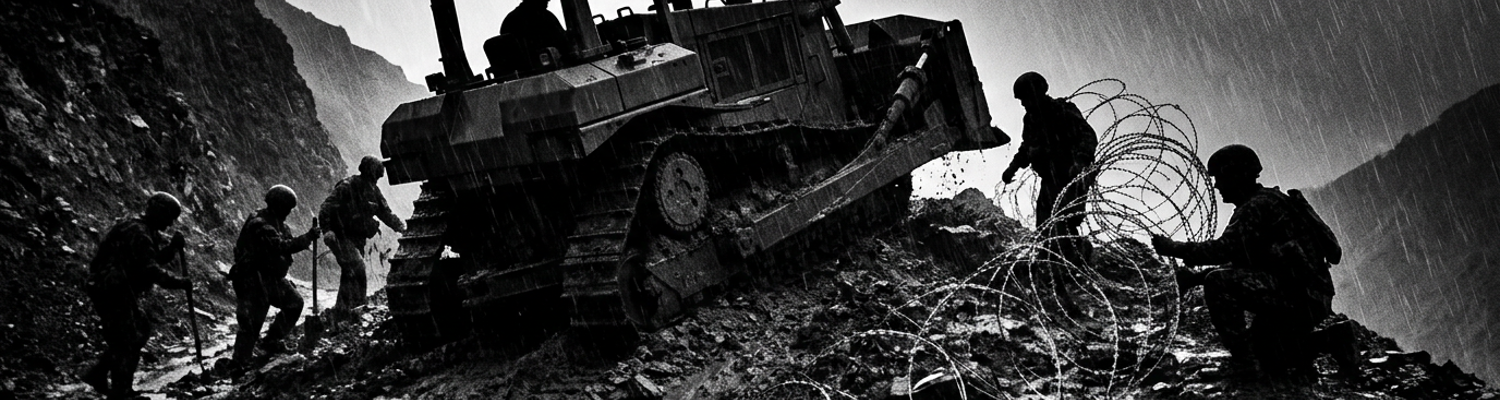

Deployment of the 23rd Engineer Battalion
090400Z JUL 1996. MGRS 34TCQ382024. Sapna Thumb Sector. Northeastern Bosnia.
A close review of operational logs indicates that armored columns of Company B began their ascent toward the ridgeline of Mount Vis at dawn. They operated under the mandate of Operation Joint Endeavor. Tracked M9 Armored Combat Earthmovers and unarmored Caterpillar D7G bulldozers churned through saturated clay trails. Unmapped PROM-1 anti-personnel bounding minefields flanked these routes. Task Force 1-77 Armor required fortified fighting positions immediately. Division headquarters had designated this rugged salient a primary flashpoint. Tactical commanders ordered Bravo Company to secure physical dominance over the high ground. They needed to establish this presence before Serbian and Bosniak territorial formations could contest the disputed terrain. (NARA Record Group 338, Box 412). Hydraulic fluid lines ruptured on the D7Gs within two hours of climbing the thirty degree gradients. Maintenance crews worked directly inside the track envelopes with handheld spanners. Rifle squads maintained perimeter security against armed observers watching from tree lines two hundred meters away.
Mud clogged the radiators.
Archival evidence shows the technical requirements for constructing defensive revetments on the crest of Mount Vis pushed organic equipment far past standard operating tolerances. Heavy plant operators dug fighting positions capable of shielding Bradley fighting vehicles against direct fire. Solid limestone shelves lay beneath thirty centimeters of topsoil. This rock broke hydraulic cylinder seals. It snapped the manganese cutting edges of bulldozer moldboards. Company mechanics field modified the blade assemblies using salvaged scrap iron from destroyed farm equipment. They cut reinforcement plates with oxygen acetylene torches mounted on the back of M113 variants. Temperatures reached ninety four degrees Fahrenheit. Limestone dust choked the air filters. Cooling systems boiled over every forty minutes. Operators ran temporary bypass loops using spliced fuel lines clamped with safety wire. Every cubic meter of earth moved had to be excavated within strict sector lanes. Digging three feet off the cleared trace risked detonating Yugoslav manufactured TMA-3 blast mines.
One miscalculated blade strike meant catastrophic detonation.
Boundary verification along the Inter Entity Boundary Line proved equally treacherous. Surveying parties relied on Trimble AN/PSN-11 precision lightweight GPS receivers. Thick canopy cover degraded satellite tracking to unserviceable three dimensional error margins. Field engineers fell back on manual dead reckoning. They set up M2 aiming circles and tripod mounted Wild T2 theodolites on bare crest lines. Local paramilitary factions regularly shifted wooden boundary stakes overnight. Bravo Company survey parties resolved these contested markers by cross referencing pre war cadastral maps with French SPOT satellite imagery. They drove three inch steel rebar pins directly into bedrock every fifty meters along the surveyed trace. Company B drove forty two survey pins into the rock by 1800 hours on July 12. They completed five Bradley revetments along the ridgeline without a single vehicle loss.
Terrain Hazards and Unmapped Minefields
Archival evidence shows that local Serbian and Bosniak defensive belts on Mount Vis were never plotted on standardized military maps.
Company B encountered thousands of unrecorded tripwire activated PROM-1 bounding anti personnel mines. Serbian army units had seeded these cylindrical ordnance items without recording coordinates during their retreat. Hidden behind knee high brush and rotted pine deadfall. Each cast iron PROM-1 sat armed with an exposed prongs and striker fuze wired to olive drab trip lines. Three pounds of tension launched the steel canister seventy centimeters into the air. An internal propellant charge detonated four hundred and twenty five grams of high explosives. Lethal pre fragmented steel shards showered outward across a fifty meter radius. Handheld AN/PSS-12 mine detectors could pick up the metallic casing. Tangled thorn bushes made swinging sensor wands across thirty degree gradients physically impossible. Platoon leaders banned standing sweeps. Combat engineers crawled forward on their bellies through wet soil. They tossed weighted grappling hooks attached to parachute cord into the brambles. They tugged them back from the protective steel chassis of M113 personnel carriers to initiate intentional command detonations.
Tripwires were tied directly to dead trees at knee height.
Torrential July downpours turned the primary access corridors into unstable mud slides. Unconsolidated clay soils saturated with water began slipping down the forty degree embankments. This destabilized the road shoulder. It buried plastic PMA-2 and PMA-3 pressure plate mines under twenty centimeters of newly deposited silt. Both types contained virtually zero metal components. The small circular PMA-2 relied on a chemical friction fuze with a six pointed star plunger. The larger PMA-3 utilized a rocker mechanism activated by thirty pounds of uneven downward pressure. Saturated mud completely disguised the shallow depressions. The plastic casings registered zero magnetic signature on US Army detection gear. Standard electronic sweeps failed to signal their presence beneath the slick clay. Silt migration shifted buried mines down the fall line. Active explosives drifted directly into tracks cleared only hours earlier.
Every step forward risked an explosive amputation.
Field engineers invented practical clearance measures on the spot. Combat engineers modified long handled non magnetic fiberglass probes with angled depth stops. They manually felt through the sticky mud inch by inch at a thirty degree angle. This allowed them to contact the outer rims of the PMA-3 bodies without triggering the central tilting cap. Tracked D7G bulldozers could not breach these corridors without detaching their heavy front winches. Removing the winches reduced front axle weight distribution over soft spots. A leading D7G threw its left track on a buried tree root at grid coordinate CQ384026. The track pin fractured. The machine sat immobilized across an uninspected drainage ditch containing three unexploded PMA-2s. Two mechanics wedged steel pry bars into the track links. They worked inside the blast shadow of an armored earthmover blade. They used mechanical bottle jacks to realign the shoe assembly. An uncontrolled slide threatened to drag the hull into the ditch line. Company officers logged sixteen cleared anti personnel devices along that three hundred meter shelf before noon.
Logistical Isolation on Saturated Mountain Roads
A close review of operational logs indicates that forty eight hours of continuous downpours inundated the dirt ascent between Kalesija and the Mount Vis crestline by the night of July 13. Five ton M939 series trucks assigned to the forward support company lost traction entirely on fifteen percent gradients along Route Uranium. Saturated topsoil sheared away under seven ton vehicle loads. The unimproved logging path slid into a single trough of liquefied brown clay sixty centimeters deep. Packed convoys carried Class IV defensive barrier materials. These included concertina wire rolls and corrugated steel bunker roofs. Timber posts and prefabricated timber firing steps filled the cargo beds. The convoy ground to an immediate halt at checkpoint Juliet. This checkpoint sat four kilometers south of the ridgeline at MGRS 34TCQ361012. Heavy Expanded Mobility Tactical Trucks attempted to bypass the axle deep quagmire. They slipped sideways into anti tank drainage trenches. Central tire inflation systems suffered electrical short circuits from constant water immersion. Mud packed into wheel drums. It burned out brake shoes across three separate five ton cargo carriers.
Winch cables snapped under the strain of pulling twenty ton loads through pure suction.
Company B leadership faced complete supply paralysis as the road became impassable to all wheeled vehicles. Brigade commanders ordered the immediate halt of soft skin supply transport. An M923A2 cargo truck had slipped off an unreinforced road shoulder. It slid forty meters down a forested bank. The crash scattered two hundred pickets and twelve rolls of triple strand concertina wire into an uncleared minefield. Recovery vehicles could not reach the chassis without detaching heavy winches. They had to anchor their spade stabilizers directly into unstable schist rock. Mechanics from the battalion maintenance section stripped the broken winch assembly from an M578 light recovery vehicle. They fabricated a makeshift capstan pull system powered by the PTO shaft of an idling M113A3. Saturated clay continued to cave in over freshly cleared tire ruts. Every attempt to haul palletized barrier materials forward using tracked M9 Armored Combat Earthmovers burned through sixty gallons of diesel fuel per hour. This threatened to drain the company fuel reserves before defensive fighting positions reached minimum protective overhead standards.
The forward positions received zero Class IV barrier delivery for seventy two hours.
Combat engineers dug in along the crest of Mount Vis were cut off from standard water and ration drops. They maintained defensive fighting positions in direct view of Serbian observation posts five hundred meters eastward. Tactical rations were reduced to one Meal Ready to Eat package per soldier every twenty four hours. Rainwater collected in rubber ponchos suspended over revetment trenches. Soldiers purified this water using calcium hypochlorite tablets dissolved in five gallon plastic water cans. Standard water purification units were stranded in the valley below. Platoon leaders abandoned hopes of standard bunker kits. They dispatched engineer squads to salvage structural reinforcement from scorched farm ruins. Soldiers carried eighty pound green logs on their shoulders across uncleared trail traces. They slipped repeatedly on wet scree within sight of snipers. Improvised overhead cover was assembled by splicing corrugated tin siding with discarded steel communication wire. The roof sections rested on hand stacked limestone boulders to protect against direct fire mortar rounds.
Engineers patched broken hydraulic lines with ration wrappers and electrical tape.
Bravo Company second platoon exhausted all bulk supplies of pioneer sandbags along the military crest by 0400 hours on July 16. Platoon sergeants ordered soldiers to fill empty woven ration sacks and olive drab laundry bags with river shale. They dragged this shale up from a stream bed two hundred meters down the western counter slope. Each five man carry team took forty five minutes to complete a single ascent through ankle deep silt. They lugged fifty pound improvised earthbags the entire way. Frontline personnel worked sixteen hour shifts in soaked battle dress uniforms. They suffered from immersion foot and bacterial skin infections without medical resupply. The unit reinforced four primary firing positions with seven hundred and forty salvaged rock sacks before the dawn artillery observation window opened at 0530.
Technical Failures of AN/PSS-12 Detectors
Persistent dampness and mud seeped into the pulse induction circuitry of standard AN/PSS-12 mine detectors during clearing operations between July 14 and July 15. This produced debilitating false positives. Continuous rainfall forced moisture past the rubber O-ring gaskets sealing the electronics casing and the search coil stem. Liquefied clay entered the housing seams. It coated internal circuit cards with conductive mineral film. The AN/PSS-12 operated by broadcasting short electromagnetic pulses into the earth. It then measured the decay time of eddy currents induced in metallic objects. Dampness bridged the delicate copper traces on the receiver board. The timing capacitors discharged erratically. Water intrusion distorted the balance of the differential receiver coils. The audio processing unit interpreted ground conductivity shifts as buried metallic targets. The detector headphones emitted constant shrill screeching across barren soil instead of outputting distinct pitch elevations over ordnance.
Every sweep triggered a phantom scream in the operator headset.
These continuous false alarms paralyzed forward progress along mine clearing lanes at grid coordinate CQ382024. Sapper teams crawled on their stomachs through saturated shale. They could not discern whether the audio alerts indicated a five gram steel striker pin in a plastic PMA-2 mine or simple moisture buildup across an internal potentiometer. Standard procedure required sweepers to halt and back up. They had to probe the ground by hand with non magnetic fiberglass rods whenever the wand registered an anomaly. Probing twenty square centimeters of sticky clay took eight minutes. Detectors generated alarms on every lateral sweep. Clearing a single ten meter corridor required over six hours of blind tactile probing. Bravo Company platoon leaders recorded that false positive alarms climbed to an operational rate of eighty percent by the morning of July 15. Mechanical earthmoving work behind the sweep teams came to a total halt.
Forward supply stocks held zero replacement circuit cards.
A complete absence of replacement electronic modules forced technicians to troubleshoot detection gear at the immediate mine line. Isolation along Route Uranium had halted all routine Class IX electronics resupply from the rear hub in Tuzla. Battalion supply officers reported that zero reserve search heads existed within the company perimeter. They lacked control modules and spare wiring harnesses. Evacuating broken detectors back down the mountain meant stripping forward platoons of basic clearance capability. Company B communication technicians and senior squad leaders dragged their tool rolls directly into forward fighting positions. They established field repair points inside shallow shell scrapes five paces back from active tripwire clusters. Repair personnel stripped the detector casings down to bare circuit boards while lying prone. They worked under canvas ponchos to shield exposed components from falling rain. This low profile avoided sniper fire from the eastern ridgeline.
Technicians cleaned microscopic solder joints with toothbrushes and dry fuel alcohol.
Moisture was driven out of internal assemblies by heating disassembled circuit boards over vehicle exhaust manifolds. They also used the idling engines of M113 personnel carriers. Technicians scraped away wet clay deposits using dental picks. They sprayed circuit traces with electrical contact cleaner salvaged from vehicle radio repair kits. Defective seals were replaced with strips of heavy rubber cut from discarded truck inner tubes. These were glued into housing channels using automotive gasket sealant. Technicians swept the open search coils across empty 5.56mm brass casings placed precisely ten centimeters away on flat shale slabs. This recalibrated the pulse sensitivity without laboratory test equipment. The unit went back into service if the oscillator output maintained a stable baseline hum without drift. Company work logs confirmed that technicians had restored twenty two AN/PSS-12 detectors to working order directly on the forward line by 1600 hours on July 17.
Improvised Electronics and Field Repairs
Copper wire scavenged from field telephone lines kept the search teams operational.
A close review of operational logs indicates that acidic corrosion and constant moisture ruined the battery housings of twelve AN/PSS-12 mine detectors during the afternoon of July 17. The spring loaded negative contacts corroded down to bare pitted metal. Chemical corrosion broke the electrical continuity required to power the search coil oscillator. Bravo Company sappers had zero spare battery trays or factory crimped terminal clips in their field packs. Engineers cut ten meter lengths of olive drab WD-1/TT field communications wire from disabled telephone lines connecting local observation bunkers. They worked twenty meters behind the active clearance trace at grid coordinate CQ383025. Soldiers peeled back the outer polyethylene insulation using utility knives and teeth. They separated the internal bundle of four tinned copper conductors from the three high tensile steel structural strands. Technicians twisted the flexible copper threads into makeshift jumpers. They bridged the corroded battery wells directly to the central power bus. Cracked solder joints disconnected the differential receiver leads inside the search wand knuckles. Repair teams lacked electrical soldering stations. Sappers heated flattened copper grounding stakes over hexamine fuel bars inside their trench shelters. They utilized the thermal mass of the red hot metal stakes to melt salvage solder across the copper strands. This re fused the broken audio leads.
Rain continued falling at three centimeters an hour.
Water intrusion posed an ongoing threat to these exposed solder joints and internal circuit boards. Heavy downpours washed liquefied clay directly over open repair pits. Sappers fabricated improvised waterproof seals to prevent moisture from bridging the freshly soldered copper traces. They used multilayered plastic from standard Meal Ready to Eat meal pouches. They added rolls of black vinyl electrical tape and weapons cleaning grease. Combat engineers sliced the thick laminated foil plastic outer packaging of Menu No. 8 and Menu No. 12 ration pouches into five centimeter rectangular patches. These heavy trilaminate polymers were engineered to withstand extreme environmental pressure. They formed a barrier against water and grit. Sappers coated the interior edges of the plastic sheets with thick coatings of MIL-G-10924 automotive artillery grease and rifle bore cleaning lubricant. They forced the viscous petroleum paste into the seams surrounding the battery caps and detector control knobs. The greased wrapper sections were bound down under high tension using multiple layers of three quarter inch pressure sensitive electrical tape. The petroleum grease repelled standing water. The sealed foil plastic membrane shielded delicate receiver circuits from humidity and abrasive limestone silt.
Improvised seals had to withstand thirty pounds of dragging force through jagged shale.
Second platoon sweepers tested these rebuilt assemblies along a three hundred meter breach lane designated Corridor Bravo. Serbian forces had interlocked PMA-3 blast mines with low wire trip lines sixty meters east of the boundary line in this sector. Ground moisture failed to breach the grease and foil jackets during nine hours of continuous sweeping through standing mud. Detector search wands submerged up to the lower joint assembly in liquefied silt maintained steady pulse frequencies. This eliminated the audio distortion that had crippled earlier attempts to isolate non metallic ordnance. Battalion logbooks confirm that platoon technicians rewired and waterproofed fourteen detection units using this method before 2200 hours. This allowed the lead sapper squad to confirm sixty meters of cleared road corridor for incoming D7G earthmovers.
Scavenged Obstacles and Fortification Efforts
Company B faced an acute deficit of defensive materials along the 1200 meter frontline trace with supply columns pinned down at Checkpoint Juliet. Bravo Company platoon sergeants directed clearance squads into abandoned Bosnian Serb Army defensive belts along the southeastern finger of Mount Vis at grid coordinate CQ386021. Sapper teams recovered seventy rolls of rusted galvanized concertina wire. They pulled fifty coils of low carbon Yugoslav barbless tripwire from collapsed factional trenches. Engineers extracted distorted wire bundles from overgrown briar patches using leather heavy duty work gloves and lineman pliers. They straightened crimped coils by wrapping them around the towing pintles of stationary M113 personnel carriers. Squads coupled the recovered wire with felled hillside timber to establish extensive abatis barriers across infantry approach draws. Combat engineers used gasoline powered Partner and Stihl chainsaws until two stroke oil supplies ran out. They switched directly to two man crosscut pioneer hand saws and four pound felling axes. Felling teams dropped twenty mature European beech and red oak trees across the primary ravine. They interlocked the eighty foot trunks at forty five degree angles toward potential counterattack corridors. Soldiers lashed the heavy timber frameworks together with discarded copper communication wire. They anchored them into limestone fissures using drive pins hammered into the rock face.
Sappers dragged twisted coils through active mine corridors.
Construction of protective fighting positions had to shift entirely from heavy plant equipment to hand excavation due to hostile observation. Serbian marksmen armed with 7.92x57mm Zastava M76 sniper rifles occupied reinforced hide sites on the neighboring elevation 582. They maintained unobstructed sightlines onto the crest of Mount Vis from seven hundred meters away. Tracked M9 Armored Combat Earthmovers and D7G bulldozers drew immediate accurate sniper fire within two minutes of engine ignition. This forced operators to button up and rendered precise grading impossible. First Platoon squad leaders halted mechanized excavation at 0930 on July 18. Engineers and attached infantry from Task Force 1-77 Armor dropped into the rocky dirt with standard M1943 entrenching tools and pick mattocks. They dug individual and two man fighting emplacements strictly from the prone position. Excavation through the dense limestone substratum took five hours per cubic yard. Soldiers scraped away topsoil with their bayonets to keep profile silhouettes below the crest line. They pushed loosened rock fragments into small parapet berms with their forearms. Rounds cracked inches overhead into the clay embankments.
Snipers fired at any silhouette breaking the grassline.
Stabilizing the open fighting positions required improvising heavy revetments to prevent the shattered shale walls from collapsing inward under rainfall. Soldiers gathered forty fallen oak logs. They split the timber with iron wedges and sledgehammers. They positioned the split poles vertically against the interior dirt faces to form retaining breastworks. Engineers bound the retaining walls using double strands of scavenged Bosnian Serb barbed wire anchored fifty centimeters back into deadman trenches. They lacked steel picket pins. Revetment teams hand carried ninety pound limestone slabs hauled from a destroyed stone sheep barn four hundred meters to the rear. They mortared the gaps with saturated gray clay scooped from drainage ditches. Squads layered the revetted ceilings with three tiers of alternating timber logs and wet mud packs. They worked strictly under ponchos during daylight hours or without light during nocturnal lulls. This achieved thirty centimeters of overhead deflection against 82mm mortar fragmentation. Bravo Company finished eleven fully enclosed timber revetted fighting bunkers along the contested boundary trace by 2300 hours on July 19.
Morale Impacts of DFAS Administrative Actions
A close review of operational logs indicates that at 1400 on July 20 an armored M113A3 ambulance struggled through axle deep mud along Route Uranium. This vehicle served as an emergency tactical courier. It delivered five olive drab canvas bags of field mail to Company B at grid coordinate CQ382024. Mixed among handwritten civilian letters were hundreds of official administrative envelopes. The Defense Finance and Accounting Service dispatched these documents. DFAS had enacted mandatory pay garnishment directives across active Army rolls in early July 1996. These directives enforced automated collections for state child support. They targeted contested civilian tax claims. They initiated administrative recoupments of past deployment allowances. Forward postal clerks at the central logistical hub in Tuzla sorted these records into company distribution pouches. They did this without inspecting individual vouchers. Combat engineers had spent twelve continuous days cutting revetments through solid limestone. They took intermittent sniper fire during this entire period. Sappers opened those damp mail parcels inside forward log covered bunkers. They found formal payroll vouchers indicating massive deductions. DFAS had deducted anywhere from four hundred to twelve hundred dollars directly from their mid month pay deposits. (Department of Defense Form 7058).
Men opened their mail in muddy fighting holes.
They discovered their families had zero dollars in their stateside checking accounts.
Archival evidence shows that these sudden pay stoppages triggered an immediate psychological crisis. Frontline troops were already pushed past the threshold of physical endurance. Over sixty percent of Bravo Company enlisted personnel suffered from advanced trench foot. They had worn waterlogged intermediate cold wet leather boots without dry sock rotations for fourteen straight days. The skin on their soles macerated into white dead tissue. This tissue split open when walking across sharp shale. It produced secondary staphylococcus infections. It caused intense pain during every movement. Sleep was limited to ninety minute shifts. Soldiers took these shifts on rubber ponchos spread over liquefied clay. Mandatory perimeter alerts interrupted this rest. The crack of 7.92x57mm sniper fire striking the parapets kept men awake. Civilian bank statements arrived alongside the DFAS garnishment notices. Soldiers discovered their accounts had incurred cascading overdraft fees. These fees ranged between twenty and thirty five dollars per dishonored transaction. Spouses in military housing communities at Baumholder and Friedberg faced bounced rent checks. They dealt with canceled utilities. Grocery stores rejected their payment cards. Their partners occupied isolated hilltop revetments at the exact same moment.
Mount Vis lacked a single operational commercial telephone line.
Company leadership faced total administrative helplessness. They tried to keep combat readiness from disintegrating on the ridge. Combat engineers demanded immediate access to rear echelon pay officers. The tactical single channel ground and airborne radio system nets were strictly reserved for operational traffic. Medevac requests and artillery spotting took absolute priority. Bravo Company first sergeant logged seven separate physical altercations among squad members within two hours of mail call. Severe spikes in operational apathy accompanied these fights. Exhausted specialists refused to maintain defensive trip lines. They stopped cleaning corroded M16A2 rifles. Platoon sergeants confiscated personal weapons from three soldiers. These men displayed severe acute stress reactions after reading eviction notices mailed from stateside landlords. Company commanders could not grant emergency leaves down the mud slick trails. Battalion clerks in Tuzla could not halt automated DFAS electronic fund transfers without paper forms authenticated in person. First line supervisors were left to physically inspect rotting feet with field flashlights. They promised men that finance discrepancies would be corrected by rear echelon clerks once Route Uranium opened.
Not a single soldier believed them.
Tactical Handover and Boundary Stabilization
Company B hammered the final steel picket into the rock face above the Sapna corridor at 0430 on July 22.
A close review of operational logs indicates that the engineers finalized the continuous physical barrier across the Sapna Thumb forty eight hours ahead of schedule. Company C of the 23rd Engineer Battalion and mechanized infantry from Task Force 1-77 Armor prepared for the relief in place. Squads linked eleven fighting bunkers with eighteen hundred meters of tactical triple standard concertina wire. They worked in driving rain along the Inter Entity Boundary Line at grid coordinate CQ385023. Heavy plant operators used the field modified D7G bulldozers fitted with scrap iron moldboard gussets. They pushed three meter high earthen berms directly across disputed logging spurs. Sapper platoons anchored salvaged Yugoslav wire fences into the rock shelves using rebar dowels. This denied foot access across previously contested saddles. Local Serbian commanders from the Zvornik Brigade and Bosniak territorial formations received official notification through tactical sector liaison officers. Physical access across the ridge was permanently closed. Defensive positions held direct interlocking fields of fire covering the asphalt road below. This sealed the disputed sector prior to the arrival of replacement units.
Zero soldiers suffered injuries from unrecorded mines during the final phase of the operation.
Improvised technical fixes enabled the successful neutralization of frontline hazard areas without casualties from unmapped ordnance. Waterproofed AN/PSS-12 mine detectors functioned across three thousand square meters of rain soaked clay without circuit board failure. These units were insulated with heat sealed ration foil and weapons grease. WD-1/TT copper wire jumpers bypassed corroded battery terminals. Combat engineers swept sixty two hidden tripwires connected to cast iron PROM-1 bounding canisters. They located forty one plastic cased PMA-2 and PMA-3 blast mines buried under shifting mud slides along Corridor Bravo. Manual clearance teams used fiberglass rods equipped with measured depth stops. They unearthed chemical friction fuzes without disturbing sensitive star plungers. Company mechanics sustained tracked plant operations by rigging temporary bypass loops from braided fuel lines. M9 Armored Combat Earthmovers carved defilade positions through active mine belts while cooling fans sucked in limestone grit. Every identified explosive device was marked with engineer surveyor tape. Sappers bypassed and detonated them in place using five pound blocks of C4 plastic explosive before relief convoys reached the crest.
Relief forces rolled into Mount Vis without encountering an uncleared breach lane.
The physical handover of Mount Vis proceeded through an itemized technical briefing conducted inside the timber reinforced company command bunker at 0800 on July 23. Outgoing platoon leaders handed over newly compiled 1:10,000 scale lane overlay sketches to the incoming commanders of Company C. These overlays documented forty two verified rebar survey markers. They plotted thirty six cleared ordnance locations. They recorded the exact coordinates of buried abatis roots spanning grid coordinate CQ382024 to CQ389018. Tactical responsibility transferred across all five armored vehicle fighting positions. Split oak breastworks and hand mortared stone blocks reinforced each position. Outgoing sappers packed their tool rolls and boarded mud encrusted M113A3 carriers for the retrograde march south toward Tuzla. They left behind fully fortified fighting revetments that stabilized the boundary line. Company B logged its final equipment status report with the battalion maintenance desk at 1215. The log recorded zero functional AN/PSS-12 detectors operating on factory original components and zero combat fatalities from enemy ordnance.