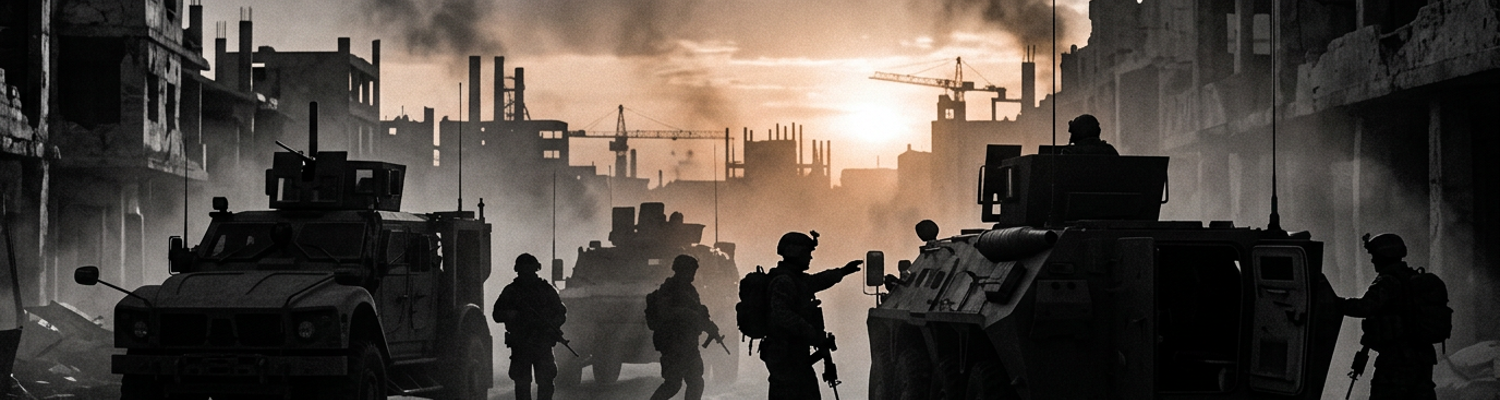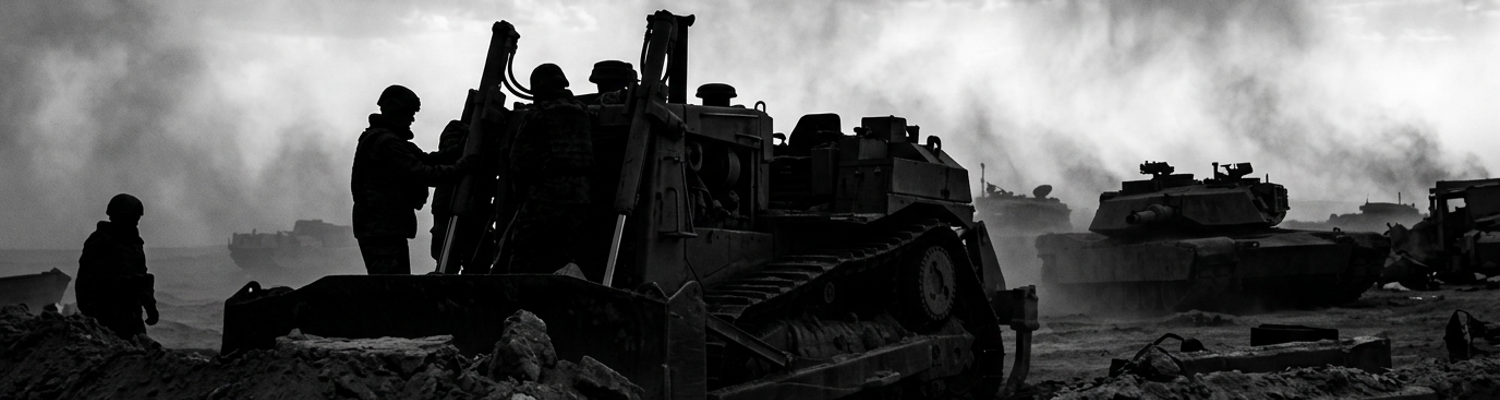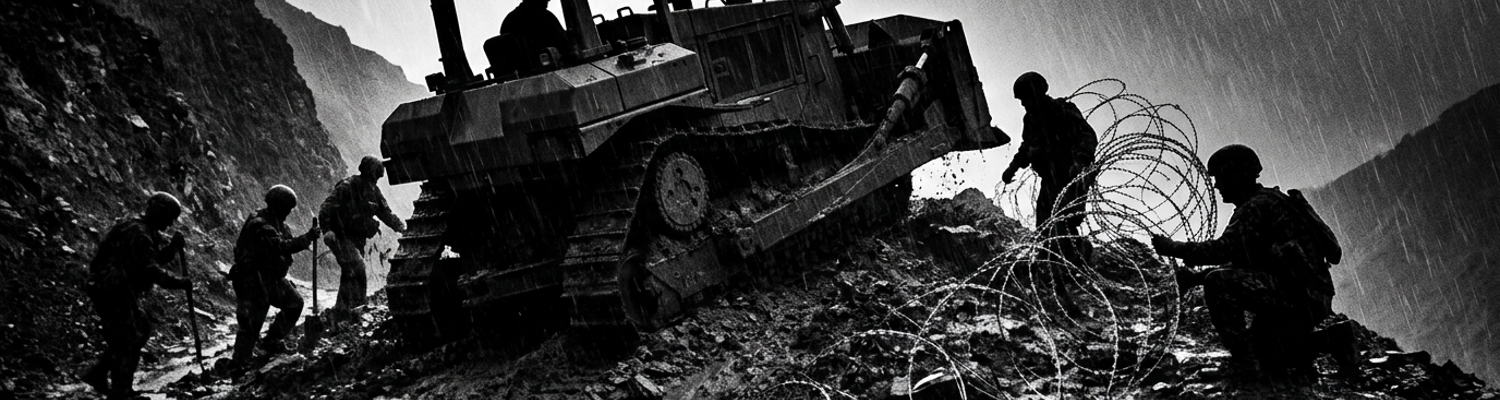
<h2>Ceasefire Realities and the Hundred Hour War Myth</h2><p>Radio antennas whipped against the desert wind as high frequency communications between frontline units and tactical headquarters suddenly severed, forcing forward tank commanders to navigate operational ambiguity on their own initiative. President George H.W. Bush announced a suspension of offensive combat operations on February 28, 1991, establishing the popular perception that the Gulf War concluded abruptly after one hundred hours of ground combat. Broadcast networks around the globe instantly portrayed the conflict as officially finished, yet frontline crews in southern Iraq faced hundreds of armed Republican Guard soldiers who had received no such notification through their damaged field radios. Combat vehicle crews kept their turbine engines running and main gun barrels depressed toward the desert terrain, knowing that political declarations from Washington did not neutralize enemy armored formations positioned less than two miles away. Armored cavalry platoons established local security screens without centralized guidance, relying on hand signals, colored smoke markers, and aggressive positioning to keep the volatile standoff from triggering open combat.</p><p>Combat threatened to erupt at any moment until VII Corps commander Lieutenant General Frederick M. Franks Jr. ordered Major General Thomas G. Rhame and his 1st Infantry Division to establish forward defensive positions inside sovereign Iraqi territory to enforce the demarcation boundary. Combat engineers from the division deployed armored bulldozers and bucket loaders into the disputed sands north of the border, cutting trench lines and piled berms to anchor the American battle position. Iraqi commanders, lacking working transmitters and clear maps, repeatedly sent scouting trucks and infantry platoons directly toward the fresh American works. Gun crews on M1A1 Abrams tanks aimed laser sights at these approaching vehicles, firing warning bursts into the dunes to force the confused Iraqi units back across the desert. Mechanized infantrymen in Bradley fighting vehicles then occupied the newly dug ditches, securing the perimeter while keeping their machine guns aimed directly across the northern desert floor.</p><p>Bradley fighting vehicles and Abrams tanks from the 1st Infantry Division rolled forward across that northern desert floor onto Safwan Airfield to expel remaining Iraqi units and secure a surrender venue. General H. Norman Schwarzkopf and Iraqi Lieutenant General Sultan Hashim Ahmad convened at Safwan Airfield on March 3, 1991, to negotiate military ceasefire conditions rather than a permanent peace treaty. American military police directed the arriving Iraqi delegation inside an olive drab canvas tent surrounded by armed soldiers and armored vehicles with active thermal sights. Schwarzkopf set terms requiring full disclosure of minefields, the immediate release of allied prisoners of war, and clear flight corridors that barred Iraqi combat aircraft from entering operational air space. Ahmad reviewed the maps and agreed to the mechanical rules of disengagement before signing the document and walking back out to his convoy under armed escort.</p><p>Convoys carrying the Iraqi delegation drove north toward Basra while American units remained entrenched in the sands to secure the newly settled line. Soldiers of the 1st Infantry Division extended their trench works for dozens of kilometers across the desert expanse, filling sandbags and stringing concertina wire along the frontier. Armor crews took turns sleeping in their vehicle seats with hatches partially open, ready to fire within seconds if surviving Iraqi armor units drifted across the demarcated perimeter. Patrol leaders checked boundary markers on foot twice daily, logging coordinates and reporting local violations over tactical networks to prevent accidental clashes from restarting combat. Division commanders rotated companies through forward observation posts along the trench wall, keeping combat ready weapons manned until higher commands finalized withdrawal orders.</p><h2>Sector Demarcation Boundaries and VII Corps Directives</h2><p>Withdrawal orders remained nonexistent for the soldiers manning those forward observation posts because ambiguous ceasefire demarcation lines necessitated forward defensive screening along highway corridors connecting Safwan to Basra and Kuwait City. VII Corps headquarters had drawn initial sector boundaries on high level operational maps without confirming that allied ground forces actually controlled the critical highway junction near the Safwan airstrip. American broadcast reports had declared an end to offensive combat operations, yet Iraqi rear guard units remained dug into fortified positions around the intersection. These enemy forces controlled the primary asphalt transportation route, creating a direct physical barrier that threatened to disrupt logistics columns moving across southern Iraq. Brigade commanders dispatched reconnaissance teams into the disputed desert to resolve the tactical confusion and pin down the exact disposition of hostile armor. Scouts in lightly armored Humvees and Bradley fighting vehicles accelerated north along the cracked highway lanes to confront the hostile presence and secure the contested intersection.</p><p>Abrams tanks and Bradley fighting vehicles rolled forward to secure the contested intersection and establish tactical dominance over the crossroads. The 1st Squadron 4th Cavalry Regiment seized the Safwan crossroads on March 1, 1991, after a tense standoff against dug in Iraqi Republican Guard T72 tanks. American gunners locked laser rangefinders directly onto enemy hull armor from distances under five hundred meters, while AH64 Apache attack helicopters hovered low over adjacent sand berms with Hellfire missiles armed. Cavalry officers deployed their armored vehicles into an aggressive crescent formation, using loudspeakers and interpreter hand signals to convince the Iraqi garrison to withdraw without triggering open warfare. Iraqi officers initially refused to budge, arguing through radio traffic that their orders forbade any retreat, until American commanders warned that airstrikes would level the intersection within minutes. Iraqi tank crews finally started their diesel engines, climbed out of their sand revetments, and retreated north along the highway toward Basra.</p><p>Iraqi forces retreating north along the highway toward Basra left the intersection clear, but units of the 1st Infantry Division were prohibited from advancing further while maintaining interlocking fields of fire against regrouping enemy armored formations. Division planners recognized that pursuing the retreating armor risked shattering the fragile suspension of hostilities, so vehicle commanders anchored their tanks behind freshly bulldozed sand berms along the highway shoulders. Gun crews on M1A1 Abrams tanks aimed their 120 millimeter main cannons across assigned sectors, overlapping their fields of view with neighboring Bradley fighting vehicles to eliminate dead space across the flat desert floor. Combat engineers laid out extensive concertina wire fences and marked the forward limit of advance with bright orange engineer tape to establish a visible tripwire against accidental incursions. Tank gunners kept their thermal night sights calibrated against the desert heat, tracking every distant vehicle silhouette that appeared through the shimmering horizon. Artillery batteries registered target reference points along the northern highway, giving forward companies immediate high explosive fire support if enemy forces attempted to retake the intersection.</p><p>Enemy forces attempting to retake the intersection remained a constant threat, so observers sat atop armored vehicles along the demarcation line, plotting map coordinates for those batteries while watching enemy convoys assemble in the distance. Radio operators monitored Iraqi tactical frequencies to detect any coordinated armored movements, routing intelligence updates through division command channels every fifteen minutes. Logistics personnel distributed fresh water cans, ammunition crates, and replacement engine filters directly to forward fighting positions, keeping every tracked vehicle fully operational under harsh desert conditions. Crews maintained a continuous watch from behind their earthworks, keeping turret sights energized and machine guns manned as Iraqi military trucks halted short of the boundary markers. Division officers logged every enemy vehicle movement into company journals, preserving the sector boundary until higher headquarters finalized formal disengagement orders.</p><h2>Combat Earthmoving Operations and Berm Construction</h2><p>Disengagement orders never arrived, and journals documenting those relentless enemy movements convinced brigade commanders that a paper ceasefire could not guarantee tactical security. The 1st Engineer Battalion and attached VII Corps engineering units deployed D7G bulldozers and M9 Armored Combat Earthmovers to excavate extensive sand berm networks across southern Iraq. Popular historical narratives often portrayed the post armistice desert as a tranquil staging ground for triumphant soldiers, yet combat engineers labored through blinding dust storms to erect miles of field fortifications against potential counterstrokes. Caterpillar D7G bulldozers lacked armored protection or air conditioned cabs, exposing their operators to swirling grit, toxic exhaust fumes, and blistering daytime heat while working within direct line of sight of armed Iraqi observation posts. Fine sand packed into radiator grills and choked engine air precleaners every few hours, forcing maintenance crews to clear filter elements with high pressure air hoses so the excavating teams could keep shaping the open frontier.</p><p>Engineers shaping the open frontier constructed continuous anti tank ditches and earthen ramparts extending across miles of desert to prevent unauthorized vehicular infiltration and counterattacks. Operators steered their tracked vehicles along lines of engineer stakes, scooping out broad V shaped trenches four meters wide and two meters deep into the hard desert pavement. Bulldozer blades shoved the excavated dirt into three meter high parapets along the southern lip of the trenches, creating formidable physical ramparts that prevented Iraqi reconnaissance vehicles from viewing American rear assembly areas. Underneath the soft desert surface, dense caliche layers shattered hardened steel cutting edges and blew out high pressure hydraulic lines, forcing maintenance teams to weld replacement teeth onto earthmover buckets under the blazing sun. Armed sentry teams kept watch as Iraqi transport trucks rumbled along the northern highway, providing covering fire sectors while the earthmovers churned forward yard by yard to complete that defensive wall.</p><p>Excavators completing that defensive wall turned their attention behind the ramparts to prepare protected battle stations for frontline armor. Heavy earthmovers carved deep hull down revetments and defilade positions to protect M1A1 Abrams tanks and M2A2 Bradley fighting vehicles from potential artillery or direct fire strikes. Bulldozer blades dug sunken rectangular slots into the hardpan so only the thick turret armor and day night optics of the American combat vehicles rose above ground level. Tank drivers carefully backed their sixty ton Abrams into these prepared defilades, checking elevation limits to ensure their 120 millimeter main cannons could depress sufficiently to engage enemy armor crossing the anti tank ditch. Bradley fighting vehicle gunners tested their turret traverse mechanisms inside adjacent revetments, verifying that their twin TOW missile launchers could fire across the open avenues of approach without striking the surrounding earthen mounds. Vehicle commanders adjusted desert camouflage nets over the open hull pits to break up thermal signatures against the cooling desert floor.</p><p>Desert floor temperatures dropping signaled the start of night operations as soldiers occupied those camouflaged hull down positions, monitoring thermal sights for any sign of Iraqi armor advancing from Basra. Relief crews rotated through the revetments every four hours, carrying five gallon water cans, field rations, and replacement radio batteries to the gunners stationed inside the dug in turrets. Company officers walked the trench lines on foot to inspect the exact depth of the anti tank ditches and verify that every vehicle retained overlapping fields of fire across the demarcation perimeter. Mechanics in heavy M88 recovery vehicles patrolled the supply tracks behind the berms, towing overheated earthmovers to field maintenance collection points while armor crews stood fast in their fighting pits. Brigade commanders ordered the engineers to keep their D7G bulldozers and M9 earthmovers fully fueled at forward assembly points, ready to repair shell craters or seal new breaches at a moments notice.</p><h2>Infantry Entrenchment Realities in Shifting Desert Sand</h2><p>Engineer vehicles sealing new breaches at a moments notice remained tied to rear assembly areas, forcing infantrymen to shoulder the burden of establishing the forward perimeter by hand. Mechanized infantry squads dug two man fighting positions and trench lines into dry desert topsoil using standard tri fold entrenching tools and sandbags. Popular accounts depicted the post armistice desert as a high tech staging ground where soldiers remained comfortably inside climate controlled armored fighting vehicles, yet the physical reality demanded relentless manual labor. Riflemen dropped their combat rucksacks on the dry hard ground, unfolded their short metal shovels, and hacked through the crust to carve out defensive pits. Squad members shoveled loose dirt into woven sandbags, lifting the heavy sacks into neat rows along the rim of each excavation to build chest high parapets. These connected fighting holes formed a continuous tactical barrier where pairs of soldiers could maintain visual contact, depress their M16 rifles toward the north, and interlock machine gun fire across the open terrain.</p><p>Terrain exposed the fresh earthworks to high velocity shamal winds, causing sand parapets to crumble rapidly after soldiers stacked them along the edge of the flat desert. Constant vehicle vibrations repeatedly collapsed loose unreinforced sand parapets, requiring continuous reexcavation from the exhausted infantry squads. Powerful wind gusts blew tons of airborne silt across the lines, while the heavy diesel engines and steel tracks of patrolling Abrams tanks shook the dry ground until the unbraced pit walls gave way. Infantrymen cleared tons of cave in debris using their small shovels, scooping away the same dry dirt three or four times during a single twelve hour shift. Squad leaders gathered discarded ammunition crates, wire mesh, and desert scrub brush to build makeshift revetments inside the pits, trying to stop the granular earth from slumping over their weapons. Dust coated every rifle bolt, radio dial, and canteen cap, turning the simple chore of keeping a defensive position open into an exhausting physical struggle.</p><p>Troops enduring this exhausting physical struggle lived for weeks inside exposed sand trenches with minimal overhead cover, facing daytime temperatures exceeding ninety degrees Fahrenheit and near freezing desert nights. Mechanized units could not erect tents or deploy spacious base camps along an active ceasefire line, forcing soldiers to sleep directly on the dirt floor of their fighting pits. Riflemen rigged nylon poncho sheets across the trench tops with engineer stakes to block the intense midday sun, but the thin fabric trapped stagnant heat that pushed pit temperatures well past ninety degrees. Soldiers stripped down to their undershirts, rationed warm water from five gallon plastic cans, and swabbed gritty paste from their eyes while direct sunlight heated the open Iraqi plain. The environment reversed itself completely once darkness fell, dropping the desert air to near freezing levels that caused teeth to chatter and shivering limbs to cramp inside thin sleeping bags. Sentries pulled heavy cold weather parkas over their load bearing vests, blowing warm air into their gloves while staring out into the pitch black desert.</p><p>Platoon leaders staring out into the pitch black desert organized round the clock security shifts to keep those freezing sentries alert against Iraqi military probes. Armor crews and foot soldiers worked in pairs, using handheld thermal viewers to sweep the highway sectors and identify distant vehicular heat signatures along the northern approach. Mechanics crawled through the frontline trenches at daybreak to deliver fresh five gallon water cans and sealed rations, collecting sand clogged rifle magazines that required ultrasonic cleaning back at vehicle staging points. Squads rotated gunners between open trench pits and the armored hulls of idling Bradley fighting vehicles, giving exhausted soldiers brief relief from the howling wind before sending them back out to their sandbags. Division officers logged every incident of parapet collapse and local boundary observation, adjusting defensive fields of fire across the southern desert as the troops prepared to hold their ground indefinitely.</p><h2>Turbine Filter Degradation and Atmospheric Oil Soot</h2><p>Soldiers holding their ground indefinitely faced a toxic ordeal as plumes of unburned crude oil and heavy soot from over six hundred burning Kuwaiti oil wells settled into low altitude thermal inversions over southern Iraq. This dense chemical fog blanketed the defensive positions that division officers had just organized along the desert perimeter. Popular post war accounts frequently depicted coalition armor resting easily in clear desert skies after a flawless blitzkrieg, but the operational reality along the Safwan line was an environmental disaster. Cool nighttime air pinned the dense petroleum smoke against the desert floor, cutting surface visibility down to less than fifty yards and obscuring Iraqi movements to the north. Soldiers stationed along the earthworks pulled protective goggles over their eyes and wrapped wet bandannas around their mouths to filter out acidic sulfur compounds and burning hydrocarbons. Heavy black flakes drifted across the sand ramparts, settling into every open hatch, weapon bolt, and optical sight along the demarcation line.</p><p>Soot particles settling into every optical sight and open hatch along the demarcation line created an immediate mechanical crisis for the forward tank battalions. Caustic oil soot mixed with fine desert silt to form an adhesive paste that choked the Textron Lycoming AGT1500 gas turbine engines of M1A1 Abrams tanks. Popular battlefield lore celebrated these high performance turbines for their silent speed and formidable automotive power, yet the engines required staggering volumes of clean air that the polluted atmosphere could not supply. Fine mineral silt combined with airborne crude oil droplets on the rapidly spinning intake fans, creating a gummy black sludge that hardened under extreme combustion heat. This sticky coating restricted airflow across internal compressor blades, causing turbine temperatures to skyrocket while available horsepower plummeted. Drivers watching their instrument panels reported sudden exhaust gas temperature spikes and erratic RPM drops while maneuvering along the trench line, signaling that the sixty ton fighting machines were losing power without taking a single enemy hit.</p><p>Crews losing power without taking a single enemy hit removed and manually blew out V pack air induction filters multiple times daily using compressed air systems to prevent catastrophic turbine stalls. Tankers climbed onto the hot rear decks of their combat vehicles, unlatched the heavy access doors, and muscled four bulky filter assemblies out of their metal housings under the burning sky. Soldiers hooked rubber air hoses to on board auxiliary connections or external compressor trailers, blowing high pressure air through the pleated paper elements until dense clouds of dark grit erupted into the wind. Sticky hydrocarbon sludge often resisted pressurized air, forcing crew members to scrape away gummy tar deposits by hand with flat wooden tools and solvent soaked rags. Loaders and drivers repeated this exhausting maintenance procedure three or four times every twenty four hours to keep their air intakes clear. Tank commanders supervised every cleaning cycle with urgent care, knowing that a single choked filter bank could trigger an automatic shutdown and leave their vehicle dead in the dirt.</p><p>Mechanics refusing to leave any vehicle dead in the dirt supported those frontline crews by stockpiling clean replacement filters at forward field supply points and rushing compressed air tanks directly to the trench line. Supply trucks navigated greasy tracks behind the berms under the dark canopy of smoke, delivering crates of fresh V packs to company staging areas before the forward units burned through their operational spares. Maintenance teams set up dedicated cleaning stations in protected revetments, using industrial blowers to recondition dozens of clogged filter elements around the clock. Company commanders rotated individual platoons off the perimeter berms for mandatory engine servicing, ensuring that half of their armored vehicles remained fully powered and ready to fire at all times. Division leaders logged filter degradation rates alongside fuel consumption figures, adjusting their logistical resupply schedules across southern Iraq to keep the armored line intact against the environmental onslaught.</p><h2>Weapon Fouling and Optical Sensor Failures</h2><p>Resupply convoys keeping the armored line intact against the environmental onslaught carried clean filters, but these deliveries could not resolve the parallel mechanical crisis unfolding inside frontline trenches where infantry weapons failed under relentless stress. Popular wartime lore often depicted American ground troops carrying flawless small arms that operated without interruption in the desert, but reality proved far messier. Talcum fine desert dust and airborne oil particulate penetrated M16A2 rifle and M249 squad automatic weapon receiver groups, gumming bolt carrier assemblies. Microscopic mineral grains mixed with sticky unburned petroleum, entering through charging handle channels, magazine wells, and forward assist assemblies. The resulting paste created immense mechanical resistance, preventing bolts from locking into battery and causing widespread feeding and cycling failures during routine clearing drills. Riflemen attempted to scrub this sludge from their firing pins and recoil springs using issued gun oil, only to find their weapons seizing up faster.</p><p>Weapons seizing up faster occurred because standard Cleaner Lubricant and Preservative attracted airborne abrasive silica, forcing armorers to experiment with dry wipe downs to prevent weapon stoppages. Technical manuals instructed soldiers to maintain a generous wet film on moving internal parts, but the oily coating bonded directly with blowing mineral grit. This toxic mixture turned into an abrasive grinding compound that chewed through protective phosphate finishes and bound moving parts tight inside the upper receivers. Unit armorers quickly realized that conventional cleaning doctrine failed in the oil smoke atmosphere, ordering troops to strip away all liquid lubricants from their bolt assemblies. Soldiers scrubbed every component clean with dry cotton rags and bore brushes, running weapons completely dry so loose dust would blow free rather than cling to oiled steel. Infantrymen covered their rifle muzzles with plastic bags and kept ejection port covers snapped shut to block the abrasive desert storm from ruining their weapons.</p><p>Sand ruining their weapons was a constant fear, but thermal imaging systems on M1A1 tanks and integrated sight units on M2 Bradleys also suffered severe lens clouding and abrasion from airborne soot and scouring sand that blew directly across the vehicle turrets. Television coverage celebrated coalition armored sights as all seeing technological marvels that effortlessly pierced nighttime darkness and battlefield smoke, yet environmental conditions along the Safwan line severely degraded optical glass. Hard silica granules whipped against forward facing vision blocks at fifty miles per hour, scouring delicate antireflective coatings and etching thousands of micro scratches into external lenses. This constant sandblasting distorted incoming light wavelengths, blurring thermal sight pictures and generating static snow across gunner video displays. Caustic oil droplets from burning wells baked onto exposed optic heads, forming an opaque film that blocked infrared energy and degraded long range vehicle identification.</p><p>Gunners facing degraded long range vehicle identification climbed onto vehicle hulls with bottles of rubbing alcohol and soft optical lens tissues to scrub away the hardened chemical film before Iraqi patrols could exploit the blindness. Tankers discovered that ordinary water or rough field rags scratched the softened lens surfaces, leaving behind permanent streaks that blinded the sensitive night vision sensors. Crews improvised protective hoods from discarded canvas vehicle covers and heavy cardboard ration boxes, tying them over sight housings with communication wire to block blowing grit during high winds. Vehicle commanders ordered loaders to manually swing doghouse armored sight doors closed whenever main guns were not actively tracking targets along the northern highway. Platoon sergeants conducted optical inspections at morning and evening stand to, inspecting objective lenses by flashlight to ensure forward crews retained clear fields of fire across the southern desert.</p><h2>Quartermaster Overextension and Forward Supply Rationing</h2><p>Fields of fire cleared across the southern desert highlighted a deeper vulnerability as forward units exhausted their operational supplies at the edge of the contested boundary. Popular accounts regularly portrayed the Gulf War as an effortless technological triumph supported by limitless American industrial abundance, yet frontline realities told a starkly different story. VII Corps supply lines stretched over one hundred fifty miles across unimproved desert trails from logistics bases in northern Saudi Arabia to forward positions in southern Iraq. Heavy logistical transport trucks churned the loose sand into deep powder ruts, throwing drive shafts, shredding tires, and stalling out in vehicle swallowing bottlenecks along the desert tracks. Drivers navigated through choking dust clouds for up to eighteen hours at a stretch without GPS guidance, relying on compass bearings and engineer track markers to reach the combat screen. These extreme transportation delays left frontline tank battalions and mechanized infantry units stranded at the far end of an overextended logistics pipeline, forcing forward commanders to immediately enforce strict resource austerity.</p><p>Quartermasters enforcing strict resource austerity rationed potable water to two to three gallons per soldier daily for all hydration, food preparation, and personal sanitation. Desert heat regularly climbed past ninety degrees by midday, drawing sweat from infantrymen as they dug earthworks and cleaned soot from fighting equipment under the open sun. Soldiers carefully poured their measured daily allowances from plastic five gallon water cans into personal canteens, drinking in small swallows to avoid heat cramps. Field cooks could not operate mobile kitchen trailers without adequate bulk water reserves, forcing troops to subsist entirely on dry prepackaged meals. Infantrymen washed their faces with dampened rags or antiseptic wipes rather than clean water, saving every spare drop for hydration and radiator cooling systems.</p><p>Hydration and radiator cooling systems took precedence, while supply echelons prioritized critical Class IX repair parts, specifically replacement air filters and fuel pumps, over Class A fresh rations and garrison comfort supplies. Quartermasters rejected incoming shipments of refrigerated meats, fresh fruit, personal mail bags, and civilian comfort kits at rear depots so that flatbed haulers could carry vehicle maintenance packages instead. Burning Kuwaiti oil well soot had turned the desert air into a mechanical nightmare, destroying hundreds of M1A1 engine filters every twenty four hours and burning out electric fuel pumps strained by contaminated diesel. Forward maintenance sections piled wooden crates of cylindrical paper filters and electrical assemblies into armored recovery tracks, racing the replacement parts directly to defensive revetments. Soldiers accepted weeks of monotonous cold packaged rations without complaint because an immobilized combat vehicle represented an immediate tactical failure against nearby Iraqi Republican Guard formations.</p><p>Iraqi Republican Guard formations nearby kept the pressure high as mechanics tore open those prioritized crates along the vehicle line, bolting fresh fuel pumps into stalled armored transports and sliding replacement air filters into turbine housings to restore full division combat power. Heavy M88 recovery crews assisted vehicle teams in dragging choked tanks into maintenance pits, clearing fouled fuel lines with manual hand pumps and checking electrical connections under the desert sun. Tank commanders restarted their turbine engines once the fresh filters locked into place, monitoring cockpit gauges to confirm that exhaust temperatures and compressor pressures returned to normal operating limits. Drivers swung their turrets back toward the northern highway corridors, resting their hands on traversing controls while quartermaster trucks turned south into the desert trails to begin the long journey for another load of maintenance parts.</p><h2>Health Hazards and Demobilization Delays</h2><p>Trucks beginning the long journey for another load of maintenance parts rolled south into the desert, churning up clouds of fine silt that mingled with falling petroleum soot and settled directly into the dugouts where soldiers kept watch along the boundary. Entrenched soldiers developed acute respiratory symptoms, including persistent cough and bronchial irritation, from prolonged inhalation of sulfur dioxide and particulate matter. Black mucus clogged the nasal passages of infantrymen who coughed constantly while trying to clear their raw throats during perimeter security watches. Medics distributed throat lozenges and paper dust masks to troops along the trench line, but the coarse fabric could not stop acidic chemical vapors from entering human lungs. Soldiers awakened from fitful sleep inside their fighting holes with stinging eyes and sharp chest pain, forcing squad leaders to rotate wheezing gunners away from the open parapets for brief rests inside armored hulls. Heavy soot coated the skin and lips of every soldier, turning spit dark gray and leaving troops short of breath even when carrying light five gallon water cans across the company revetments.</p><p>Company revetments and the canteens placed near fighting positions attracted swarms of black desert insects, accelerating the spread of debilitating stomach ailments among the dug in platoons. Gastrointestinal illness spread through forward perimeter dugouts due to blowflies, blowing sand contamination of rations, and primitive field sanitation facilities. Troops dug shallow slit trenches into shifting sand that constantly blew open in the wind, exposing human waste to hordes of flies that coated open meal packets within seconds. Abrasive silica dust blew into opened rations, mixing directly into canned food and causing agonizing stomach cramps, frequent vomiting, and severe dehydration across the defensive line. Medics distributed rehydration salts and anti diarrheal pills by the fistful, yet infantrymen frequently had to abandon their firing steps to relieve themselves behind collapsing sand berms. Sick soldiers lost pounds of body weight within days, weakening the physical strength of frontline squads as men leaned against sandbag walls while trying to stay upright on guard duty.</p><p>Sentries trying to stay upright on guard duty watched days turn into weeks while military disengagement schedules were repeatedly pushed back by theater headquarters. Television broadcasts back home showed ticker tape parades and joyous celebrations for rear echelon personnel, but frontline combat troops remained pinned to their fighting holes under scorching desert heat. Iraqi Republican Guard units continued to maneuver on the northern side of the demarcation line, requiring round the clock visual observation and constant weapon readiness from American crews. Mechanics patched worn vehicle tracks with scavenged pins and replaced cracked road wheels in forward berms, keeping tanks ready to repel hostile probes across the disputed border corridor. Company commanders repeatedly revised rotation charts as scheduled redeployment dates came and went without transport ships arriving at Saudi Arabian ports to carry heavy armor back to Germany or Kansas.</p><p>Troops hoping to carry heavy armor back to Germany or Kansas waited in their dusty revetments through the spring heat, watching empty supply tracks where relief convoys were supposed to appear. The 1st Infantry Division maintained its static defensive posture until late April and May 1991, when United Nations Iraq Kuwait Observation Mission forces relieved frontline units. Blue helmeted international observers arrived in white four wheel drive patrol vehicles to establish permanent observation posts along the cleared demilitarized zone. American armor crews handed over tactical sector maps to the arriving peacekeepers and loaded their remaining ammunition crates onto flatbed trailers. Tank commanders started their turbine engines, raised their dozer blades out of the defensive berms, and pivoted their armored hulls toward the southern highway corridor. Infantry platoons collapsed their fighting positions, filled in the slit trenches with entrenching tools, and marched in long single files toward waiting transport trucks.</p>
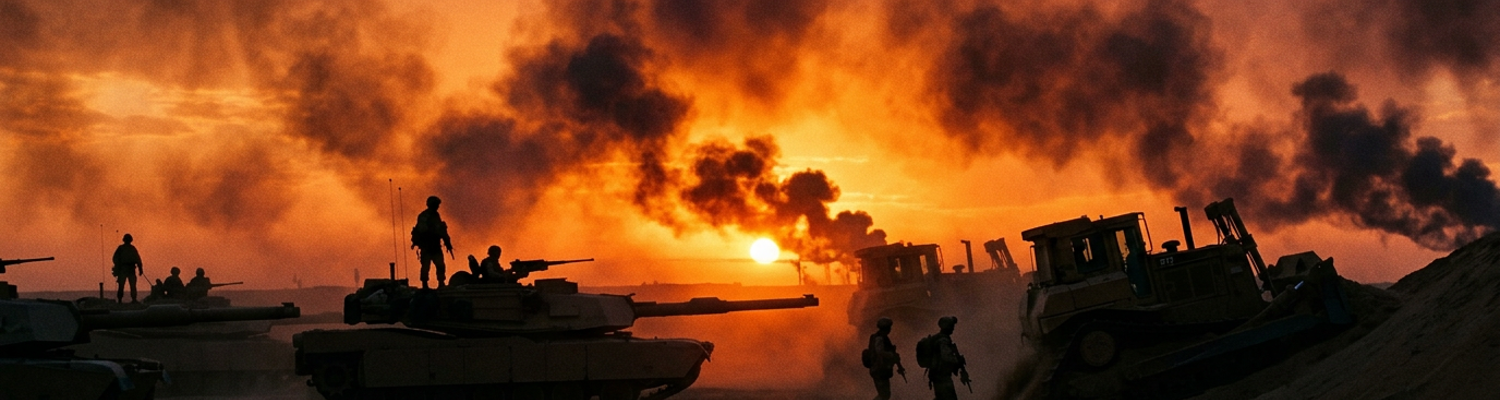
First Infantry Division Trenches Along the Safwan Line

USMilitaryArchive
Published on
76
Views
0
Likes
Text Size
Historical Topics:
1st Infantry Division
Abrams Tank
Apache Helicopter
Artillery
Base Realignment and Closure
Battle of Fallujah
Bradley Fighting Vehicle
Camp Lejeune
Casualties
Chemical Warfare
Combat Engineers
Desert Shield
Desert Storm
Discharge
Equipment
Evacuation
Field Artillery
Forward Operating Base
Friendly Fire
Preserve the Legacy of Service
History isn't just written in textbooks—it is preserved by family members, researchers, and veterans who ensure the details are never lost. Join our community to bookmark records, build custom reading collections, and share stories.