
Operation Deny Flight and Night Intercept Logistics
Archival evidence shows Airman First Class David Vance kneeling on the rain-slicked tarmac at Aviano Air Base at 0215 hours on April 12, 1993. His bare fingers fumbled with the six-pin connector of a KYK-13 electronic fill device. He attempted to mate it to the recessed port of a KY-58 secure voice module. This hardware sat housed inside the avionics bay of an F-15C Eagle (serial number 84-0014). The ambient temperature hovered near freezing. He twisted the mechanical locking ring exactly a quarter turn clockwise. He waited for the tactile click confirming a solid electrical connection. Once seated, he depressed the small rubberized button on the side of the fill device. This action transferred the daily cryptographic variable into the aircraft holding memory. A red indicator light blinked twice and died.
The internal lithium battery of the fill device had succumbed to the cold.
This failure wiped the encryption codes required for the entire four-ship flight scheduled to launch in twenty minutes.
A close review of operational logs indicates that USAF F-15C fighters initiated night air control missions over Bosnia during early Operation Deny Flight under severe material constraints. United Nations Security Council Resolution 816 authorized member states to enforce a strict no-fly zone over the fractured Yugoslav republic. This mandate pushed the 53rd Fighter Squadron to rapidly deploy from Bitburg Air Base in Germany to Italian staging grounds. Pilots flew six-hour combat air patrols in total darkness over the Dinaric Alps. These specific sorties required constant coordination with E-3 Sentry airborne warning and control aircraft orbiting over the Adriatic Sea at 29,000 feet. The mountainous terrain below featured jagged limestone peaks exceeding 6,000 feet near Sarajevo. This topography created massive radar blind spots. Localized belligerents operated rotary-wing aircraft undetected within these valleys. Interceptor crews depended entirely on ground-controlled intercept vectors relayed through ultra-high frequency radio bands. They used these coordinates to orient their AN/APG-70 pulse-Doppler radars toward suspected targets.
Night operations removed any margin for visual identification.
Secure voice communication relied heavily on KY-58 VINSON cryptological units installed on interceptor aircraft. This hardware prevented hostile signal interception. It formed the structural communications network between the F-15C airframes and the command controllers orchestrating the airspace. The KY-58 system digitized and encrypted analog voice inputs using wideband frequency modulation. It then transmitted the data across the AN/ARC-164 radios. Mechanics bolted these heavy cryptographic boxes deep within the lower equipment bays. Intense vibrational stress during high-G maneuvers battered the internal circuitry. Ground crews had to manually load fresh cryptographic keys every twenty-four hours to maintain transmission security across the NATO coalition. Maintaining this schedule required a physical tether between the aircraft and a centralized key management facility located three miles away from the active flight line.
Technicians transported the daily codes in locked Pelican cases strapped to the passenger seats of unarmored utility trucks.
Historical maintenance records from the spring of 1993 document a persistent shortage of operational KYK-13 electronic fill devices across the theater. Each encryption key transfer demanded absolute pin alignment between the loading tool and the aircraft receptacle. Frequent connect and disconnect cycles stripped the microscopic gold plating from the copper interface pins. Moisture from the humid Adriatic climate penetrated the exposed connections. This environmental exposure caused rapid galvanic corrosion. The corrosion interrupted the low-voltage data transfer protocols. Avionics specialists resorted to cleaning the contacts with pencil erasers and isopropyl alcohol under the harsh glare of portable halogen lamps. A single failed upload sequence forced the maintainers to abort the mission. The alternative involved sending the fighter into contested airspace transmitting unencrypted radio traffic.
Squadron commanders documented forty-two delayed launches directly attributed to cryptographic hardware faults during the first three weeks of the operation.
Base supply officers submitted emergency requisitions for replacement connector cables to depots in the continental United States. The logistics routing sent the parts through three different European sorting hubs. They reached the Italian flight line twenty days later.
Paper Key Tape Shortages for KY-58 Units
Archival evidence shows Communications Security Custodian Technical Sergeant Robert Miller standing inside the windowless concrete vault of Building 31 at Aviano Air Base on May 4, 1993. He held a standard-issue KOI-18 general-purpose paper tape reader in his left hand. This hand-held device translated physical hole punches on an eight-level Mylar-blend paper strip into digital cryptographic variables. Operators had to manually pull the tape through the optical sensor slot at a steady rate. Pulling too fast generated a read error. Moving too slow caused the internal timing circuits to time out. The 53rd Fighter Squadron required twenty-two distinct cryptographic keys daily to operate their KY-58 secure voice modules across different ultra-high frequency radio channels. The National Security Agency generated these physical tapes at Fort Meade in Maryland. Couriers packed the classified canisters into locked canvas bags for transport via the Defense Courier Service. Military airlift command C-141 Starlifters flew the shipments across the Atlantic to the central European distribution hub at Ramstein Air Base in Germany.
The geographic separation between the printing facility and the Italian staging grounds created a fragile supply chain.
A close review of supply manifests from the spring of 1993 details how routine weather patterns fractured this delivery pipeline. Heavy spring fog banks frequently settled over the Alps. These low-visibility conditions grounded the intra-theater C-130 Hercules cargo flights tasked with ferrying the canvas bags from Ramstein down to the Italian peninsula. Aviano base regulations mandated the destruction of all cryptographic material exactly twenty-four hours after its activation time. Local commanders possessed no authority to extend the lifecycle of a daily key. When a transport flight aborted its landing sequence due to poor visibility, the communications vault at Aviano simply ran out of codes. The physical composition of the backup paper tapes stored on-site introduced secondary mechanical failures. High humidity levels along the Mediterranean coast caused the paper substrate to absorb moisture and expand by fractions of a millimeter. Swollen tapes jammed inside the narrow feed track of the KOI-18 readers. Technicians attempting to force the swollen strips through the device frequently tore the material. This permanently destroyed the encryption variable before it could transfer to the electronic fill devices.
Flight schedules collapsed as maintenance crews waited empty-handed.
These communication security bottlenecks directly compromised the operational scheduling for Adriatic interceptor patrols. The Combined Air Operations Center in Vicenza built the daily air tasking order around rigid overlapping combat air patrol windows. Planners assigned F-15C flights to specific geographic holding coordinates over the Adriatic Sea. These coordinates typically sat near 45 degrees 2 minutes North and 12 degrees 44 minutes East. Relieving aircraft had to arrive on station fully encrypted and authenticated before the previous flight could return to base for fuel. On May 18, a missing delivery of physical key tapes delayed the launch of a four-ship interceptor element by eighty-five minutes. The airborne E-3 Sentry command aircraft orbiting at 29,000 feet could not establish secure radio contact with the replacement fighters sitting on the ground at Aviano. Interceptors currently enforcing the no-fly zone over the Dinaric Alps hit their bingo fuel limits. They departed the airspace.
This communication breakdown left a one-hundred-mile sector of the Bosnian no-fly zone completely unmonitored for over an hour.
Flight line commanders scrambled to bypass the missing paper tapes by requisitioning older non-standard encryption algorithms from adjacent NATO units. This ad-hoc distribution required Italian military police to physically drive the alternate codes twenty miles up the Autostrada A28 in unarmored Fiat sedans. The delay forced the Vicenza planners to scrub three planned escort missions for reconnaissance aircraft operating south of Sarajevo. Radar logs from the 5th Allied Tactical Air Force confirm that unauthorized rotary-wing flights crossed the Drina River valley during the exact window the F-15C patrols sat grounded. Maintainers at Aviano logged thirty-one aborted sorties in the month of May alone specifically due to the absence of the required physical paper key tape.
Policy Friction and Key Management Export Restrictions
When examining the historical record from the summer of 1993, a massive disconnect emerges between frontline tactical requirements and Washington policy directives. Bureaucratic tension between the National Security Agency and technology oversight groups directly delayed the deployment of next-generation electronic key management hardware to the Italian theater. Engineers at Fort Meade had already developed the AN/CYZ-10 Data Transfer Device to replace the failing KYK-13 units. This upgraded hardware resembled a ruggedized personal digital assistant. It featured a segmented internal memory capable of holding up to one thousand distinct cryptographic keys. Its reinforced casing completely sealed the internal battery and data ports from environmental moisture. Deployment halted when the National Institute of Standards and Technology intervened alongside congressional technology oversight subcommittees.
These civilian groups challenged the NSA Information Assurance Directorate over the exact encryption algorithms embedded within the new devices.
Regulators argued that standardizing the Tier 3 architecture for overseas deployment violated existing protocols governing the transfer of classified data processing equipment. Disagreements over software architecture, hardware auditing procedures, and tamper-proof coating specifications triggered a mandatory six-month review period. The Joint Chiefs of Staff requested an emergency bypass to equip the units flying Operation Deny Flight. Oversight committees denied the request pending a full security audit of the proposed export supply chain.
Procurement officers froze the shipment of three hundred AN/CYZ-10 units destined for the 53rd Fighter Squadron.
A close review of declassified documents from the Computer Professionals for Social Responsibility details exactly how cryptography policy restrictions paralyzed battlefield tech deployment. This independent advocacy group published extensive findings in late 1993 analyzing the intersection of military communications and civilian export laws under the International Traffic in Arms Regulations. Their researchers filed multiple Freedom of Information Act requests targeting the logistics commands responsible for European theater supply lines. The resulting reports revealed that the Pentagon classified multi-national NATO staging areas as foreign soil. This included Aviano Air Base and the Combined Air Operations Center in Vicenza. This legal designation triggered strict export prohibitions on the newest encryption management systems. NSA policy dictated that advanced cryptographic fill devices could not be stored in facilities shared with non-US personnel due to the risk of reverse-engineering.
The advocacy report explicitly documented how these export fears superseded the operational needs of the interceptor squadrons flying over Bosnia.
Planners in Washington refused to authorize the release of the ruggedized key loaders to the Italian peninsula without a dedicated US-only secure compound. The mandate stood. Base commanders at Aviano lacked the physical real estate to construct an isolated cryptographic bunker that met these rigid domestic compliance standards.
Building such a facility required construction approvals that took eighteen months to process.
Frontline maintainers absorbed the full impact of these administrative delays while operating out of temporary canvas tents adjacent to the Aviano flight line. The old hardware rotted. Because the export restrictions blocked the arrival of the AN/CYZ-10 devices, avionics technicians continued using the corroded KYK-13 loaders through the heavy autumn rains. The 5th Allied Tactical Air Force required constant secure communications to coordinate F-15C intercepts of unidentified radar tracks crossing the 44th parallel north. On October 12, a flight of four F-15Cs prepared to launch at 2300 hours to intercept suspected rotary-wing traffic near the Drina River. Ground crews attempted to load the daily transmission security keys using three different legacy devices. Each unit failed to authenticate the transfer due to internal water damage. The flight lead aborted the sortie at 2314 hours.
Radar operators tracked the unidentified helicopters flying unchecked through the designated no-fly zone for another forty minutes.
Cryptographic Maintenance Challenges at Aviano Air Base
Archival evidence shows Avionics Technician Second Class Michael Torres lying flat on his back beneath the fuselage of an F-16C Fighting Falcon at Aviano Air Base at 0340 hours on August 12, 1993. Rainwater mixed with unburned JP-8 jet fuel soaked through his standard-issue cotton coveralls. His right hand cramped as he held a heavy KYK-13 electronic fill device against the recessed data port of the aircraft KY-58 secure voice module. A portable Hobart diesel generator hammered loudly ten feet away on the wet tarmac. Thick black exhaust fumes flooded the temporary maintenance bay. Torres wiped a layer of greasy condensation from the six-pin connector using the edge of his sleeve. He pushed the loader into the receptacle and twisted the mechanical locking collar clockwise.
The locking pins refused to seat.
A close review of maintenance unit logs details how ground crews conducted these manual cryptographic rekeying cycles under severe environmental constraints. The 31st Aircraft Maintenance Squadron operated out of temporary canvas clamshell shelters erected along the northern taxiway near coordinates 46 degrees 1 minute 44 seconds North and 12 degrees 35 minutes 47 seconds East. These uninsulated structures trapped the exhaust from the MD-3 ground power units required to supply electrical current to the parked interceptors. Technicians inhaled diesel fumes for twelve-hour shifts while performing the mandated twenty-four-hour transmission security updates. High humidity levels native to the Friuli-Venezia Giulia region caused constant moisture buildup inside the bays. Water vapor settled heavily onto the exposed copper contacts of the encryption hardware. Ground personnel had to manually load fresh daily variables into every single aircraft scheduled for the Adriatic combat air patrols. Physical friction from repeatedly attaching and detaching the loading devices in these damp conditions degraded the internal circuitry. Maintainers frequently spent forty-five minutes attempting to establish a stable electronic handshake between the loader and the jet. When the copper pins oxidized, avionics specialists scraped the corrosion off with steel wool.
Equipment degradation accelerated rapidly.
Inventory records from the summer of 1993 document a theater-wide shortage of the BA-5372/U specialized lithium holding batteries required to power the hand-held fill devices. These small cylindrical power cells maintained the continuous three-volt electrical current necessary to keep the volatile memory banks active. Without steady voltage, loaded cryptographic keys would instantly wipe from the device to prevent unauthorized access. Depot commanders at Aviano requested four hundred replacement batteries in early July to support the heavy flight schedule. The Defense Logistics Agency fulfilled only thirty-two units due to a manufacturing backlog in the United States. Supply officers rationed the remaining functional batteries across three different fighter squadrons sharing the Italian flight line. Technicians resorted to swapping a single functional battery between multiple fill devices just to complete the morning launch sequence. Constant extraction and reinsertion of the power cells weakened the internal spring contacts of the loading tools.
Power cells drained faster in the cold rain.
This specific supply chain failure caused loaded encryption keys to erase unexpectedly during pre-flight checks. On the night of August 14, a two-ship F-16C element prepared to taxi for a combat air patrol over the Dinaric Alps to enforce the United Nations mandate. A technician plugged the loading device into the lead aircraft avionics bay to transfer the final authentication code. The depleted lithium battery inside the KYK-13 dropped below the minimum voltage threshold exactly during the three-second data transfer. Internal security protocols triggered an automatic zeroization sequence. The device erased its own memory completely. It also corrupted the existing holding memory inside the aircraft KY-58 module. Flightline supervisors immediately aborted the sortie. Mechanics had to power down the entire airframe. They unscrewed the access panels, removed the cryptological box from the lower equipment bay, and physically transported it three miles back to the communications vault for a hard reset. Base supply logs show the squadron waited another fourteen days for a shipment of fresh lithium batteries from a distribution center in Ramstein.
Operational Impact on Taxiway Alert Readiness
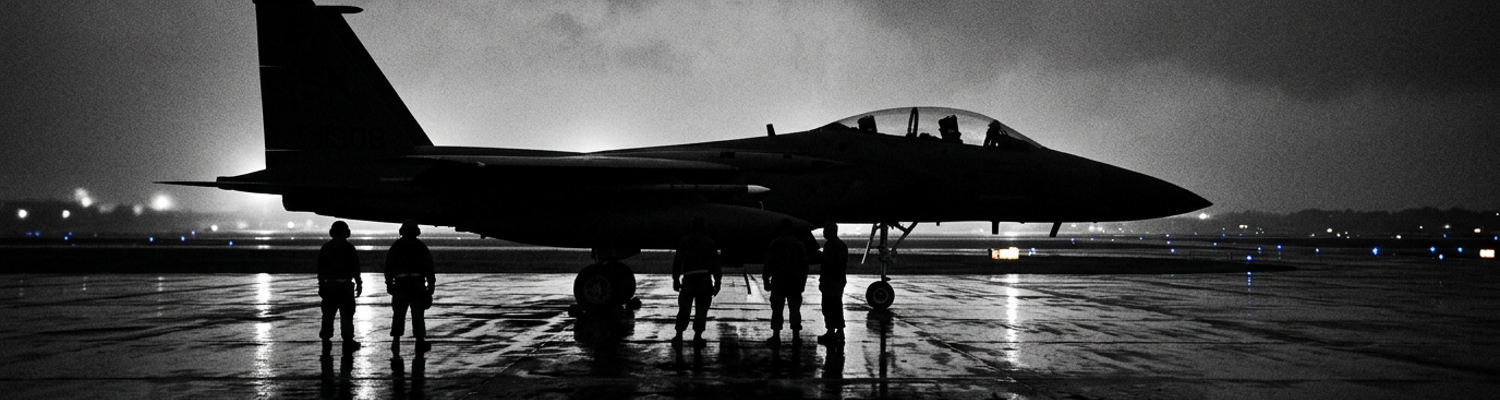
A close review of operational logs from the 53rd Fighter Squadron details the exact sequence of events on the northern taxiway at Aviano Air Base during the late evening of November 22, 1993. Four F-15C Eagle interceptors sat at holding point Alpha near coordinates 46 degrees 1 minute 52 seconds North and 12 degrees 35 minutes 20 seconds East. They awaited final clearance for a night combat air patrol over the Adriatic Sea. Ground crews had loaded each airframe with four AIM-120 Advanced Medium-Range Air-to-Air Missiles, four AIM-9M Sidewinders, and nine hundred and forty rounds of 20mm ammunition. Squadron pilots completed their pre-flight engine run-ups and engaged their AN/ARC-164 ultra-high frequency radios to authenticate with the Combined Air Operations Center in Vicenza. Depressing his push-to-talk switch, the lead pilot transmitted the initial encrypted handshake. Inside the avionics bay, the KY-58 secure voice module detected a voltage irregularity from the aircraft internal power bus. Automated anti-tamper circuits instantly triggered a zeroization protocol.
Key wipes stranded fully armed F-15C interceptors on dark taxiways while crews repeated manual rekeying procedures.
Avionics technicians sprinted across the unlit concrete apron carrying replacement KYK-13 electronic fill devices. Base safety regulations prohibited the use of white flashlights near armed aircraft loaded with live ordnance. Maintainers navigated the tight clearances around the landing gear struts and external fuel tanks using dim red-lens headlamps. They accessed the lower equipment bay and attempted to push the six-pin connector of the loading tool into the aircraft receptacle. Rapid temperature drops after sunset caused thermal contraction in the copper interface pins. Connection required force. Technicians had to apply heavy physical pressure to seat the device properly before initiating the cryptographic data transfer. Two initial attempts failed when the depleted lithium batteries inside the hand-held loaders dropped below the three-volt threshold required to push the code into the aircraft memory. Ground crews spent thirty-four minutes swapping power cells and cleaning oxidized contacts in the dark before achieving a successful upload.
The delayed flight element missed its designated aerial refueling tanker rendezvous by twenty minutes.
When examining the historical record of Operation Deny Flight, the primary limiting factor for sortie generation was not hostile action. Serbian air defense commanders operated mobile SA-6 Gainful surface-to-air missile batteries and early warning radar networks throughout the Drina River valley. Allied planners initially anticipated these integrated air defense systems would severely restrict NATO flight paths and dictate the operational tempo. Actual bottlenecks originated entirely within the maintenance depots. Parts simply broke. Supply officers at Aviano could not procure enough functional cryptographic loading cables, BA-5372/U lithium batteries, or KOI-18 paper tape readers to service the daily flight schedule. Planners at the Combined Air Operations Center frequently scrubbed planned fighter sweeps over Banja Luka because the assigned aircraft lacked the hardware to establish secure communications with the E-3 Sentry airborne command posts.
Logistical vulnerabilities dictated the pace of Adriatic air engagements more than adversary air defenses.
Radar tracking data from the 5th Allied Tactical Air Force confirms the severe tactical consequences of these ground-level equipment shortages. On December 4, a pair of MiG-29 fighters belonging to the Federal Republic of Yugoslavia departed from Batajnica Air Base and crossed the 44th parallel north into the established no-fly zone. Controllers in Vicenza immediately ordered a scramble of two F-15C interceptors holding on alert status at Aviano. During engine start, the primary alert aircraft suffered a localized key wipe. A torn physical paper key prevented the secondary aircraft from authenticating its encryption tape. Maintainers spent nineteen minutes attempting to manually rekey the primary jet using a backup electronic loader. Hostile radar tracks operated inside restricted airspace for twenty-two minutes before turning back east toward Belgrade.
American interceptors sat grounded on the Italian concrete.