
Radio Intercepts and Reserve Mobilization
Television networks broadcast endless footage of laser guided bombs destroying concrete bunkers, selling the public a clean vision of push button warfare. War planners in Riyadh focused entirely on rapid armored maneuvers and precision air strikes, ignoring the massive logistical burden of managing thousands of anticipated captives. Radio operators at Third Army operational headquarters picked up intercepted communications indicating that Iraqi frontline infantry divisions were severely neglected and positioned to collapse. Forward reconnaissance teams patrolling the desolate border confirmed the trouble within hours, sending urgent radio traffic about enemy soldiers attempting to surrender to unmanned sensor posts before ground combat had even begun. General Norman Schwarzkopf and his staff realized that frontline combat divisions lacked the personnel and vehicles required to secure these massive crowds. Pentagon planners searched emergency activation rosters for specialized units that could handle mass confinement, locating the specific capability within the ranks of part time reserve formations.
Brigadier General Ronald Conlon received the sudden mobilization directive for the 800th Military Police Brigade in late 1990, ordering his New York based Army Reserve unit from civilian occupations directly into active federal service. His personnel consisted largely of municipal police officers, state troopers, corrections officials, and schoolteachers who had spent their weekends drilling in regional armories. Conlon faced immediate logistical obstacles as his soldiers reported to mobilization stations with obsolete uniforms, missing cold weather clothing, and transport trucks dating back to the Vietnam era. The Pentagon assigned Conlon and his reserve personnel the primary theater level detainee internment responsibilities across the entire Saudi theater of operations, expanding their administrative mission to encompass the care and confinement of up to fifty thousand anticipated enemy prisoners. Brigade staff officers processed medical records, conducted physical exams, and issued updated desert camouflage uniforms around the clock, pushing thousands of citizen soldiers toward military airfields within weeks of receiving their activation alerts.
Airlifters packed with these newly activated reservists landed on the tarmac at Dhahran air base, unloading the 800th Military Police Brigade directly into the chaotic staging zones of eastern Saudi Arabia. Reserve personnel collected their field gear under heavy desert sun and discovered that theater supply coordinators had prioritized fuel, artillery shells, and tank parts over detainee containment materials. Conlon and his subordinate battalion commanders realized that basic engineering supplies were virtually absent from theater stockpiles, leaving them without sufficient concertina wire, metal pickets, generators, or canvas shelter tents. Reserve supply sergeants bartered with local Saudi vendors and traded personal equipment with neighboring combat units to secure basic hand tools, timber, and heavy duty plastic sheeting. Brigade planning officers mapped out remote locations in the northern desert gravel plains, calculating water consumption rates and perimeter security requirements for construction sites that sat hundreds of miles away from major supply ports.
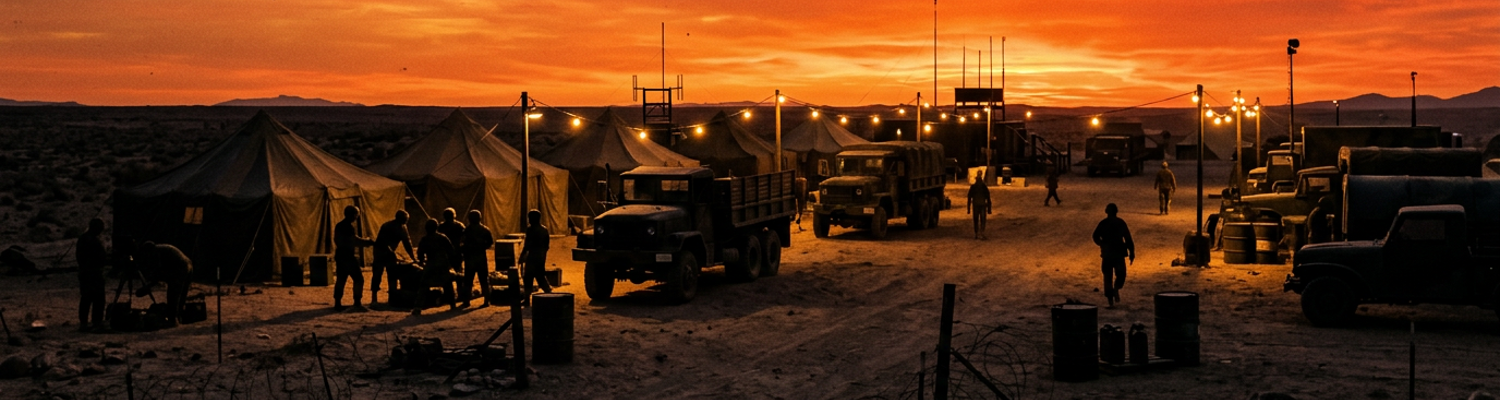
Conlon dispatched advance construction detachments north into the rocky desert waste, ordering his military police companies to break ground on the massive internment facility designated as Camp Brooklyn. Working through blinding daytime dust storms and freezing nighttime temperatures, reserve soldiers unrolled miles of razor wire by hand and drove steel fence posts into the hard packed limestone with heavy sledgehammers. Reserve mechanics revived broken cargo trucks by taking commercial spare parts from local civilian salvage yards, keeping critical water tankers and ration trailers moving along the single paved supply route. Medical teams assigned to the brigade cleared empty sand clearings to set up field clinics, stacking wooden cargo pallets to serve as makeshift examination tables before their medical chests had fully arrived. Construction crews worked twelve hour shifts under floodlights, racing to complete the outer security fences before the ground campaign commenced and funneled thousands of exhausted enemy soldiers into their open pens.
Bulldozers and Barbed Wire at Camp Brooklyn
Bulldozer operators pushed tons of loose sand and crushed limestone into high embankments around the clock, throwing up eight foot berms to backstop the perimeter fences at Camp Brooklyn near King Khalid Military City. Reserve military police unspooled miles of concertina wire directly behind these dirt ridges, anchoring coiled wire loops to steel pickets with short lengths of tie wire. Blinding shamal sandstorms battered the work details for days at a time, kicking up fine grit that clogged heavy equipment air intakes, stalled diesel generators, and blinded soldiers who tied damp cloth over their faces to breathe. The fierce wind constantly threatened to rip loose wire coils out of the hands of the soldiers, tearing through leather work gloves and puncturing desert boots as troops wrestled the steel loops into interlocking rings. Reserve officers walked the lines with battery powered lanterns, measuring compound footprints and dividing the barren ground into separate holding pens designed to isolate hundreds of prisoners at a time. Supply shortages forced these work parties to ration steel fence posts and substitute wooden shipping timbers, stretching their limited materials across miles of empty sand to ensure the primary compound fences remained unbroken.
Engineers hauling leftover spools of wire moved seventy miles eastward across open desert expanses to erect Camp Bronx near the isolated village of Sarrar. Brigade leadership planned Camp Bronx as a secondary internment hub to prevent Camp Brooklyn from collapsing if frontline combat units captured more enemy soldiers than theater headquarters anticipated. Reserve soldiers at Sarrar confronted the same barren terrain, driving steel pickets into packed limestone using manual sledgehammers whenever mechanical post drivers broke down from sand contamination. Sweeping desert winds pushed massive drifts of powdery sand against the wire, burying bottom coils under feet of silt within hours of placement. Construction crews used entrenching tools and wooden shovels to dig out the buried wire lines by hand, stringing fresh rows of concertina directly over the buried layers to prevent prisoners from walking over the covered barriers. The work parties repeated this exhausting process across multiple rectangular pens, building watchtower platforms from scrap lumber at each compound corner so guards could look down into the holding yards with mounted searchlights.
Trucks hauling white canvas Saudi Hajj pilgrimage tents rolled into the camps as soon as the wire enclosures stood ready for internal shelter construction. These massive canvas structures, normally used to shelter millions of religious pilgrims in Mecca, provided the only available barrier against daytime desert heat and subfreezing nighttime temperatures. Reserve military police hauled the bulky canvas bundles into the center of each pen and wrestled the heavy fabric upright against the unrelenting gusts of the shamal. Soldiers drove two foot steel stakes into the loose sand to anchor the heavy guy lines, using extra ropes to tie down the tent flaps so the desert wind would not tear the roofs away. Support personnel connected black rubber water bladders outside the wire gates, running plastic hoses to communal drinking troughs so prisoners could access clean water without guards having to enter the locked compounds. Reserve medics stacked boxes of intravenous fluids and field bandages onto plywood tables inside the designated clinic tents, checking pressure gauges on emergency water tanks as advance scout vehicles radioed that the first convoys of Iraqi captives had crossed into the rear area.
Cargo Trucks and Forward Collection Points
Trucks rumbled through the perimeter gates of Camp Brooklyn with the first wave of shivering captives within minutes of those radio alerts. The coalition ground offensive had launched on February 24, 1991, triggering the rapid collapse of Iraqi frontline infantry divisions that had already endured five weeks of round the clock air strikes, artillery barrages, and severe supply isolation. Frontline Iraqi conscripts abandoned their sandbagged bunkers and trenches in droves, walking out across minefields with hands raised, waving white cloth strips and surrender leaflets at advancing American armored columns instead of firing their weapons. Coalition tank crews and mechanized infantry units bypassed secondary positions at top speed, leaving small trail detachments behind to herd thousands of surrendering troops into shallow desert depressions bounded by concertina wire. Forward military police units operating just behind the breach lanes watched their designated collection points overflow within hours of the initial breakthrough, forcing field commanders to issue frantic calls over tactical radio frequencies for logistical assistance.
Drivers steered every available cargo vehicle northward along rutted combat trails to answer those emergency dispatches and evacuate the swelling throngs of captives. Army cargo haulers, commercial flatbed trailers hired from local Saudi contractors, and empty fuel and ammunition transports lined up bumper to bumper along desert tracks, loading dozens of Iraqi men onto open flatbeds under bone chilling winter rain. The sudden capture of nearly seventy thousand enemy prisoners of war quickly swamped forward collection points and choked rear logistical transport networks that theater planners had built solely to move fuel, water, and tank rounds forward. Reserve military police escorts found themselves riding in open Humvees alongside massive truck columns stretching across miles of barren gravel, lacking enough personnel to conduct thorough searches or maintain armed guards on every vehicle. Tires blew out under the punishing human cargo on washboard desert paths, forcing stranded drivers to chain disabled flatbeds behind working trucks while prisoners sat quietly in the freezing drizzle, too exhausted and famished to attempt escape.
Fences at forward collection points groaned under the physical weight of these arriving crowds as more trucks discharged prisoners into the muddy desert clearings. Reserve guards stripped down their security procedures to the bare essentials, patting down prisoners for hidden grenades and firearms while discarding standard paperwork and fingerprinting cards that had quickly turned to pulp in the rain. Military police sergeants handed out emergency water bladders and opened cases of brown plastic Meal Ready to Eat ration packets, watching hundreds of starving Iraqi conscripts divide single biscuits and dry cheese spreads among their comrades. Medical personnel in forward areas exhausted their first aid dressings and intravenous lines within hours, bandaging shrapnel wounds, trench foot, and untreated burns with cut strips of canvas and clean undershirts. Brigade commanders realized the forward depots would buckle completely without immediate relief, ordering field officers to bypass tactical intake steps entirely and reroute convoys directly to the newly built compounds at Camp Brooklyn and Camp Bronx.
Floodlights at Camp Brooklyn cut through the dark as the rerouted transport columns arrived at the outer security ditches throughout the night. Reserve military police unhitched the wooden tailgates of dozens of flatbed trucks at once, shouting instructions in makeshift sign language as thousands of stiff, limping Iraqi soldiers dropped down onto the sand. Triage teams under Brigadier General Ronald Conlon directed the incoming flow of humanity through narrow concertina corridors, separating the critically wounded for emergency stabilization in the medical tents before ushering the remaining men into the expansive Hajj shelters. Guard details locked the compound gates behind each group of five hundred captives, securing the wire latches with heavy chain and posting armed sentries along the perimeter berms as fresh truck headlights appeared over the southern horizon. Reserve soldiers unloaded emergency pallets of bottled water and wooden crates of field rations until dawn, bracing for the next endless line of supply trucks rolling out of the north.
Surgical Tents and Detainee Processing
Cargo trucks backed up to the Camp Brooklyn perimeter wire at dawn, dumping hundreds of crippled Iraqi prisoners directly into the triage pens. Reserve military police conducted round the clock emergency medical triage in open sand clearings, checking every arriving captive for blast trauma, untreated shrapnel wounds, dehydration, and dysentery. Many of the Iraqi conscripts had survived weeks of heavy aerial bombardment inside collapsed dirt bunkers, leaving them with festering shrapnel lacerations that swarmed with desert flies and smelled of rotting tissue. Severe dehydration had left dozens of men unable to stand, their lips cracked and dry after days without water rations along the frontline. Soldiers drove iron pickets into the limestone ground to hang plastic intravenous bags, running clear saline lines into the arms of collapsed men laid out on canvas litters. Medics carried the most critical blast casualties onto folding cots inside the primary surgical tent, where doctors worked without pause under hanging electric bulbs.
Surgeons cut away stiff, blood caked wool uniforms to expose ragged metal fragments and bone fractures caused by artillery bursts and cluster bomblets. Military police personnel held down thrashing patients while medical officers washed infected wounds with bottled sterile water and applied thick gauze dressings to stop hemorrhaging. Dysentery spread rapidly through the crowded arrivals, forcing the brigade to dig deep isolation latrines and quarantine hundreds of sick men to prevent camp wide outbreaks. Guard details hauled heavy buckets of white lime powder into the quarantine zones, shoveling the chemical over waste trenches to suppress bacterial contamination and kill insects. Reserve troops boiled extra water in metal drums and distributed oral rehydration salts to hundreds of shivering men resting beneath canvas sunshades. Military police escorted stabilized prisoners directly out of the medical ward and into the intake lanes to begin identity processing.
Clerks guided the barefoot captives toward long rows of wooden tables arranged under open canvas awnings to catalog every man. Reserve soldiers rolled black ink across the fingers of each captive to take full sets of prints on paper cards, matching the records against personal paybooks or identification booklets. Translators questioned the detainees in Arabic, recording family names, home villages, ranks, and military units before issuing each man a stamped metal internee tag on a wire loop. Dust blew across the tabletops constantly, gumming up typewriter ribbons and sticking to wet ink cards, which forced clerks to wipe down their equipment with alcohol swabs after every dozen prisoners. Soldiers photographed each man against a plywood board, pinning a paper identification number to his chest for visual confirmation. Clerks tapped detainee serial numbers, capture coordinates, and unit designations into bulky keyboard consoles running on generator power.
Computer terminals transmitted these digital records straight to the automated National Prisoner of War Information Center, establishing the official theater accountability rosters required by international law. Reserve data teams worked twelve hour shifts behind the monitors, updating capture logs and cross referencing names to track thousands of enemy soldiers moving between forward collection points and rear compounds. Automated tracking files prevented duplicate counts and allowed theater commanders to confirm that incoming captives received medical care, shelter, and legal protections. Ground crews stamped laminated wristbands with assigned internee numbers and fastened them around the wrists of the processed captives. Military police marched the cleared detainees into the main barbed wire pens in groups of fifty, patting down each man one final time before releasing him into the tent lines. Guards locked the heavy steel chains on pen number four and turned back toward the intake tables as five more truckloads of captives rolled through the main gate.
Perimeter Guards and Mass Repatriation
Convoys swung the five heavy transports into the intake lot, unloading hundreds more surrendering soldiers just as radio networks announced the March 1991 ceasefire. General Norman Schwarzkopf declared combat operations suspended, but the official halt in shooting brought no relief to the reserve military police managing over twenty thousand captives behind the wire. Armed guards remained on the perimeter catwalks day and night, watching overcrowded pens where tensions rose over food distribution and political friction between loyalist Baathists and conscripted soldiers. Soldiers of the 800th Military Police Brigade kept their weapons loaded and carried out regular inspections inside the compounds to confiscate sharpened tent stakes and makeshift clubs fashioned from scrap wood. Perimeter sentries broke up physical scuffles with loudspeaker warnings and non lethal riot control squads, maintaining strict camp security as rising spring temperatures began to strain the open air facility.
Thermometers mounted on the wooden guard towers registered temperatures exceeding 130 degrees Fahrenheit following the March 1991 ceasefire, raising heat levels to dangerous extremes inside the crowded pens. Scorching daytime heat baked the canvas Saudi Hajj pilgrimage tents, trapping stagnant air and forcing thousands of prisoners to strip down to their undershirts beneath makeshift sunshades. Black rubber water bladders absorbed the desert sun until the drinking water scalded the mouths of thirsty men, prompting military police to bury supply pipes in deep sand trenches to keep the flow cool. Reserve medics worked through the hottest hours of the day to treat dozens of prisoners and guards suffering from heat stroke, dehydration, and heat exhaustion with emergency intravenous saline bags. Humanitarian care required the constant delivery of ice blocks, electrolyte powders, and fresh water rations by the truckload, demanding nonstop physical labor from reserve work details whose own uniforms stayed soaked with sweat.
Delegates from the International Committee of the Red Cross inspected these water stations and medical tents alongside brigade commanders to verify that the detainees received adequate humanitarian care. Reserve officers established daily liaison with the International Committee of the Red Cross and Saudi military authorities to draft safe custody regulations and plan a legal repatriation pipeline. Neutral observers walked through every pen to conduct private interviews with Iraqi soldiers, noting health complaints and documenting which men feared execution if forced back into Saddam Hussein territory. Brigade clerks sat beside Saudi liaison officers to cross reference detainee identity cards with captured personnel rosters, verifying thousands of names against official war records. Joint planning teams resolved diplomatic disputes over prisoner status and prepared travel manifests for mass prisoner repatriations to ensure that all transfers followed the Geneva Conventions.
Buses chartered by Saudi military authorities lined up beside the outer gates to carry out the approved travel manifests as mass prisoner repatriations accelerated across the desert. Commercial passenger coaches and military transport planes chartered by the coalition assembled at King Khalid Military City to receive long columns of processed prisoners. Military police details verified identity wristbands against final manifests at the compound gates, searched each man for contraband, and handed out travel rations before loading the detainees onto outbound transports under Red Cross supervision. Reserve drivers escorted the vehicle convoys north toward border exchange points near the neutral zone, where Saudi officers and international delegates transferred thousands of men across the frontier to Iraqi officials each week. Clean up crews locked the wire gates of the vacated compounds behind the departing convoys, completing the mass prisoner repatriations of nearly seventy thousand enemy soldiers by May 1991.
Weapons Crates and Redeployment Logistics
Padlocks clicked shut across the empty wire gates, freeing military police units from prison guard shifts only to send them directly into grueling customs clearance operations for returning combat divisions. Reserve military police from the 800th Military Police Brigade moved south to staging areas and ports at Ad Dammam, Dhahran, and King Khalid Military City to establish twenty four hour border inspection lines. Thousands of frontline combat soldiers from armored and mechanized units arrived at these marshaling yards expecting immediate flights back to the United States, but instead found reserve MPs ordering them to dump their field bags onto bare plywood tables. Brigade inspectors conducted exhaustive customs clearances, searching every rucksack, duffel bag, and cargo footlocker for forbidden war souvenirs and hazardous materials. Reserve soldiers unzipped canvas pockets and felt through folded uniforms, pulling out smuggled Iraqi bayonets, chemical protective gear, gas masks, and foreign currency. Angry arguments broke out along the inspection tables as combat veterans protested having their personal battlefield souvenirs confiscated by rear echelon reserve MPs who had spent the war behind the wire.
Weapons crates filled up rapidly along the customs sheds as military police seized hundreds of unauthorized AK47 assault rifles, Iraqi pistols, and live machine gun belts. Combat troops had concealed live fragmentation grenades, rocket propelled grenade warheads, and artillery fuses inside sleeping bags, vehicle toolboxes, and canteen pouches to bring home as trophies. Military police summoned explosive ordnance disposal teams to carry away these live munitions to desert demolition pits before the explosives could accidentally detonate aboard crowded transport aircraft. Brigade teams also crawled through the oily interiors of M1A1 Abrams tanks, Bradley fighting vehicles, and heavy equipment transporters parked along the docks, searching bilge spaces and turret stowage racks for hidden weaponry. Mechanics unbolted heavy steel access panels on the armored vehicles, allowing reserve inspectors to shine flashlights into engine compartments and ammunition bins where combat crews often stashed captured enemy gear. Each cleared combat division received signed customs manifests only after inspectors certified that every vehicle, cargo container, and passenger duffel complied fully with federal customs laws and military safety regulations.
Inspectors finished processing the combat divisions and reported back to Camp Brooklyn and Camp Bronx to begin the systematic turnover and closure of theater internment facilities. Reserve military police stripped down miles of concertina wire and dismantled wooden guard towers across the desert expanse. Work crews pulled up thousands of steel fence pickets with pry bars and sledgehammers, coiling razor wire into bundles to prevent stray desert livestock from getting injured. Soldiers struck the massive white canvas Saudi Hajj pilgrimage tents, scrubbing the fabric down, folding the canvas into transport bundles, and stacking them onto flatbed trailers for return to Saudi authorities. Brigade supply officers walked the barren compounds alongside Royal Saudi Land Forces representatives, conducting comprehensive property inventories of water tanks, diesel generators, and perimeter fencing. Formal handover documents transferred administrative control of the camp footprints and remaining structural assets to the host nation, leaving the vast sand compounds completely clear of prisoners and coalition equipment.
General Ronald Conlon signed the final facility closure paperwork, clearing the way for the 800th Military Police Brigade to execute its own redeployment to the United States. Reserve MPs packed their unit equipment into steel shipping containers, subjecting their own duffel bags to the same rigorous customs inspections they had enforced on the combat divisions. Mechanics serviced the surviving cargo trucks and utility vehicles, driving the convoy columns onto naval transport vessels docked at the Persian Gulf ports. Reserve soldiers boarded commercial charter airliners at King Khalid Military City and Dhahran, leaving behind the empty desert where they had interned tens of thousands of enemy soldiers with improvised supplies. Transport aircraft landed at military airfields across New York and New Jersey, where brigade commanders marched their demobilized reserve companies into processing centers to begin final medical examinations and discharge procedures.