
Sumter Memorial Stadium Festivities and Hidden Fatigue
Radio operator Staff Sergeant Raymond Miller detected the first sign of operational trouble over the base tactical frequency as an incoming F-16 flight leader reported severe flight control binding, prompting wing leaders to initiate rapid recovery protocols while public festivities unfolded nearby. Base commanders ordered maintenance officers to sequester the troubled jets inside remote hangars so that the arriving aviators could board charter buses bound for the community arena without delay. President George H.W. Bush welcomed returning aircrews of the 363rd Tactical Fighter Wing and Ninth Air Force at Sumter Memorial Stadium in South Carolina on March 17, 1991, projecting an image of an effortless air war that glossed over widespread airframe fatigue and severe physical exhaustion among deployed personnel. Loudspeakers blasted patriotic anthems across the athletic field while uniformed airmen struggled to hide bloodshot eyes, trembling hands, and significant weight loss caused by weeks of sustained combat stress. Base commanders ordered the weary pilots to march around the running track under a shower of confetti while ground crews quietly towed the damaged aircraft into restricted hangars.
Mechanics opening the doors to those restricted hangars abandoned the stadium festivities to inspect the physical toll of the air campaign. Ground crews discovered that months of relentless combat sorties and desert sand infiltration had ground deep gouges into turbine compressor blades. Crew chiefs working through the night documented severe hydraulic fluid leaks pooling inside wheel wells where excessive g-force turns had stretched metal fittings far beyond their factory design limits. Flight line specialists found that pilots had repeatedly pulled violent evasive maneuvers against Iraqi antiaircraft fire without recording structural stress alarms in operational logs. Staff sergeants marked dozens of F-16 tail sections with red grease pencils, grounding airframes that looked outwardly pristine to spectators at the stadium but now posed extreme flight hazards.
Inspectors conducting post-deployment maintenance audits examined those grounded airframes and uncovered staggering backlogs of unrecorded structural overstresses alongside a depleted base-level parts inventory. Supply personnel discovered empty warehouse shelves across the base logistics complex because forward units deployed to the Persian Gulf had consumed every spare circuit board, radar amplifier, and tire casing in the wing supply system. Maintenance officers attempting to repair the damaged fighters found zero replacement titanium fasteners, canopy seals, or fuel transfer pumps remaining in local storage racks. Ground teams dismantled three grounded F-16s to salvage hydraulic valves and navigation instruments, bolting the worn hardware into other battered jets to keep a handful of planes airworthy for essential training. Wing leaders signed emergency requisition orders to the depot at Hill Air Force Base for replacement structural bulkheads, halting all routine flight operations across the base until factory technicians could rebuild the weakened airframes.
Combat Attrition and the Spike Thomas Shootdown
Depot technicians rebuilding those weakened airframes at Hill Air Force Base discovered that structural twisting and metal fatigue had begun when intense anti-aircraft artillery forced tactical shifts. Flight leaders had pushed their formations into higher altitudes to escape concentrated light cannon fire, but the change exposed single-engine F-16s to modern tracking radars and demanded instant evasive dives. Pilots reacted to screeching cockpit threat warnings by throwing their aircraft into violent high-g turns while scanning the dark terrain below for incoming missile plumes. Sudden jerks on the flight control stick bent hydraulic lines, overstressed tail assemblies, and pushed engine turbines beyond normal thermal limits as throttles slammed repeatedly into maximum afterburner.
Engine turbines pushed beyond their thermal limits caused a catastrophic in-flight failure for Captain Scott Spike Thomas of the 33rd Tactical Fighter Squadron as he returned from an attack along the Euphrates River. Flames erupted from the engine exhaust at thirty-two thousand feet, filling the cockpit with smoke and sending gauge needles swinging past redline limits. Lieutenant Eric Dodson flew his wingman jet close to inspect the damage, observing bright sparks and a heavy trail of vapor pouring from the belly of the crippled fighter. Thomas turned the shuddering aircraft south toward the border and attempted to glide toward friendly lines, but the cockpit floor buckled and complete hydraulic failure locked the flight controls. Captain Thomas pulled the yellow ejection handle between his knees, firing his rocket-assisted seat through the blown canopy into the freezing night air and parachuting down to the desert floor more than fifty miles behind enemy lines.
Desert rocks battered Thomas upon impact, prompting him to bury his parachute, grab his survival kit, and hide under low thorn bushes as Iraqi trucks mobilized on distant roads. Dodson circled overhead through hostile airspace to verify the coordinates on his navigation computer, relaying the location to an airborne warning and control platform before low fuel forced him to turn home. Commanders scrambled Army Black Hawk helicopters from a forward staging base, but the emergency combat search and rescue extraction exposed critical communication vulnerabilities between strike packages and recovery assets deep in Iraqi territory. Radio operators discovered that Air Force fighter escorts and Army special operations helicopters lacked synchronized secure frequencies, forcing pilots to transmit vital coordinates across unencrypted tactical channels. Electronic interference and relay confusion over the crowded frequencies left rescue crews without clear updates on enemy troop movements, nearly sending the helicopters past the downed pilot as Iraqi search parties closed within two miles of his position.
Radio calls from Thomas finally redirected the lead Black Hawk after the pilot spotted his faint infrared signal flashing near a dry riverbed. Escorting F-15E strike fighters dropped cluster bombs on an approaching Iraqi vehicle to suppress hostile fire while the helicopter flared its rotor blades and touched down on the sand. Rescuers pulled Thomas through the open cargo door, lifted off immediately, and dodged an enemy surface-to-air missile that detonated harmlessly behind their tail. Intelligence officers at King Khalid Military City immediately confiscated the flight navigation logs and communication notes, launching urgent reviews to rebuild theater rescue coordination before the next deep strike package crossed the border.
Sustained Operational Tempo and Sortie Rates
F-16 pilots of the 363rd Tactical Fighter Wing pushed their strike packages back across the Iraqi border within hours of that rescue review, sustaining around-the-clock interdiction sorties against dug-in Iraqi Republican Guard forces and mobile Scud launch corridors. Aviators dropped thousands of cluster bomblets and high-explosive ordnance onto fortified armor revetments, targeting artillery batteries and dug-in tanks across southern Iraq and occupied Kuwait. Night patrols combed desolate highway sectors to hunt mobile Scud missile launchers hidden beneath concrete bridges and desert camouflage nets. Radar-guided antiaircraft guns and portable missile batteries fired continuous barrages from the sand berms below, compelling flight leaders to jink their jets violently and burn precious fuel reserves to survive each bombing run. Pilots delivered their final munitions against secondary supply convoys along the Euphrates River before limping back to friendly bases on emergency fuel settings, nursing cramped legs and strained back muscles from hours strapped into upright ejection seats.
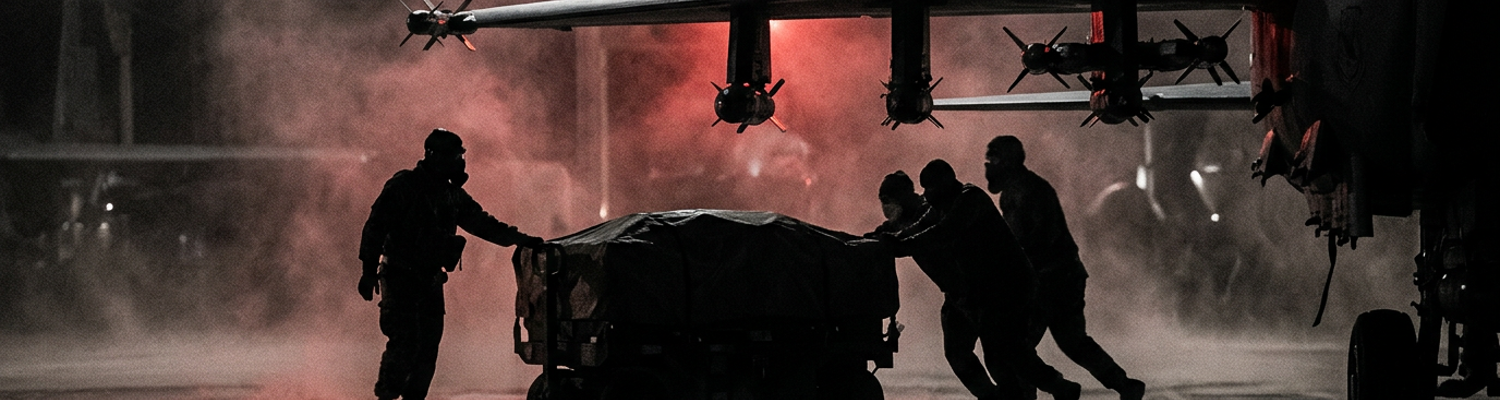
Teletype machines at Al Dhafra Air Base spewed out hundreds of pages of rigid Air Tasking Order cycles to greet those returning pilots, mandating rapid aircraft turnaround windows that severely compressed crew rest and inspection intervals. Ground crews rushed out to meet the returning jets the moment their wheels touched the parking tarmac, dragging heavy fuel hoses and rolling carts of Mark 84 bombs toward hot engines while tires still smoked from landing. Mechanics bypassed standard twenty-four-hour maintenance inspections to meet the tight flight schedules, performing fast visual walk-arounds with flashlights instead of opening engine panels to examine turbine blades for desert sand damage. Supply specialists refueled fuel tanks and rearmed weapon pylons in less than ninety minutes, forcing crew chiefs to sign off on deferred maintenance write-ups so the next formation could launch on time. Pilots stumbled into debriefing rooms to gulp cups of black coffee, handed over mission maps to intelligence specialists, and caught barely two hours of sleep on cot mattresses before flight schedulers woke them for the next mission brief.
RF-4C Phantom II crews joined those morning briefings to coordinate hazardous low-level reconnaissance missions alongside F-16 strike packages, mapping enemy positions and confirming target destruction across southern Iraq. Reconnaissance pilots flew completely unarmed twin-engine jets down to five hundred feet above the desert, roaring across Iraqi defensive lines at near-supersonic speeds while optical cameras clicked continuously inside the aircraft nose. Iraqi gunners opened fire with automatic cannons and surface-to-air missiles as the low-flying Phantoms zipped across bunker complexes, forcing weapons officers in the rear seat to visually spot hostile missile plumes while keeping the cameras aligned with target coordinates. Wingmen in escorting F-16s dropped cluster bombs on active gun positions to shield the vulnerable reconnaissance jets, pulling high-g turns to keep visual contact through smoke and sand plumes. Phantom crews pulled up sharply after completing their camera passes, climbed above the dust layer to conserve fuel, and raced back toward Saudi runways with exposed film rolls sealed inside their camera bays.
Film couriers intercepted the returning Phantom jets on the flight line, unbolting external camera panels and sprinting exposed magazines into darkened laboratory trailers under intense combat deadlines. Darkroom specialists performed delicate wet-film processing by hand in chemical trays, bathing long ribbons of photographic emulsion in developer and fixative solutions while checking timers to prevent heat damage from the desert air. Laboratory workers fed the wet negatives through drying machines, sliced the transparent rolls into target strips, and rushed the still-damp film directly to intelligence officers waiting at light tables. Photo interpreters used magnifying lenses to count destroyed tanks, identify active Scud launch revetments, and mark surviving anti-aircraft sites onto fresh operational maps. Commanders immediately transmitted those target coordinates back to the flight line, ordering maintenance crews to load fresh bomb loads onto waiting F-16s for the next wave of strikes across the border.
Precision Munitions Deficits and Tactical Friction
Armament crews rolled heavy carts of unguided Mk-82 and Mk-84 gravity ordnance out to the sunshades to arm those waiting F-16s, winching the thick steel bombs onto wing pylons because precision-guided weapons remained in critically short supply across the theater. Flight planners at Al Dhafra had to assign these free-fall iron munitions to the bulk of daily taskings, creating severe tactical friction for 363rd Tactical Fighter Wing pilots who discovered that high-altitude releases caused unguided bombs to drift hundreds of yards off target in strong upper-level winds. Pilots had to shove their flight sticks forward into steep forty-five-degree dives, descending into contested envelopes below twelve thousand feet where Iraqi antiaircraft artillery and shoulder-fired missiles filled the sky with lethal shrapnel. Aviators waited until the computed aiming crosshairs stabilized in their heads-up displays, pickled their bomb loads, and immediately wrenched their jets into violent five-g pullouts while popping bundles of flares to dodge ground fire. Heavy iron bombs tore deep craters into desert sand and shattered exposed vehicle parks, but the unguided weapons routinely failed to destroy reinforced revetments unless pilots risked their aircraft in repeated low-altitude dive profiles.
Pilots flying those dangerous low-altitude dive profiles desperately needed targeting pods with forward-looking infrared sensors and laser designators to guide smart bombs from safer altitudes, but a critical shortage of LANTIRN targeting pods restricted independent night-strike capability across the wing. Factory production delays left Ninth Air Force with only a tiny handful of operational pods in the Persian Gulf, forcing wing leaders to divide the scarce pods among specialized formations. Strike flights without targeting pods had to invent vulnerable buddy-lasing tactics, pairing an F-16 carrying a laser-designator pod alongside wingmen loaded with Paveway guided bombs. Pod-equipped lead aircraft had to fly a rigid, predictable flight path through defended airspace to keep its infrared laser beam centered on the target, while the trailing wingman dropped the laser-guided bomb and broke away. Hostile surface-to-air missile crews routinely exploited this predictable laser-tracking orbit, forcing the designating pilot to choose between holding the target lock through enemy fire or abandoning the run to defeat an incoming missile.
Missile crews and Iraqi engineers magnified these targeting hurdles on the ground by concealing their valuable assets beneath hardened aircraft shelters and sophisticated camouflage networks that degraded initial bomb damage assessment and masked surviving targets. Desert camouflage netting, decoy airframes, and artificial bomb craters painted onto taxiways duped returning pilots and aerial sensors into reporting complete destruction. Intelligence analysts reviewing cockpit videotapes and RF-4C film rolls struggled to verify whether reinforced concrete bunker roofs had cracked or whether high-explosive blasts had simply blackened the exterior soil. Photo interpreters had to mark dozens of potential target complexes as unconfirmed kills, compiling lists of suspicious airfield bunkers and command centers for immediate follow-up strikes. Tactical planners reacted to these ambiguous damage assessments by compelling dangerous secondary restrikes, ordering 363rd Wing aviators to fly back into the exact same flak traps and missile belts they had attacked hours earlier to drop more unguided iron into already smoldering target boxes.
Avionics Shortages and Airframe Cannibalization
Target boxes requiring these brutal restrike profiles forced pilots into violent evasive climbs and dives that caused cockpit displays and sensor processors to overheat inside uninsulated nose cones. Sustained combat sorties rapidly exhausted line-replaceable units for AN/APG-68 radars, head-up displays, and electronic countermeasure systems. Fine desert sand penetrated cooling intake ducts across the flight line, building up inside equipment chassis and causing delicate circuit boards to short out during high-altitude bomb runs. Pilots returned to Al Dhafra with darkened glass screens and malfunctioning threat warnings, scribbling urgent maintenance tags before climbing down from their cockpits. Avionics specialists pulled the malfunctioning modular boxes from the forward equipment bays, only to find base supply storage bins entirely bare of fresh depot replacements. Technicians carried the burned-out hardware into maintenance trailers, probing circuit cards by hand with multimeters while searching for replacement components that did not exist on the base.
Cargo pallets loaded with factory-rebuilt circuit cards and replacement modules sat stranded at transit hubs because airlift distribution backlogs within Military Airlift Command delayed depot-level avionics shipments from reaching forward operating locations. Military cargo transports prioritized bulk ammunition, vehicle fuel bladders, and tank engines over specialized electronics boxes, leaving critical avionics crates stacked inside rear staging warehouses in Europe and the United States. Supply officers at Al Dhafra sent urgent teletype messages through logistics channels to locate missing parts, but shipments sat lost inside disorganized transit yards across the theater. Logistics coordinators frequently offloaded pallets at the wrong Persian Gulf airfields, forcing forward units to wait days for courier helicopters to locate and forward their supplies. Maintenance superintendents faced uncompromising Air Tasking Order launch schedules with depleted stockrooms, watching mission-capable rates sink as combat flight hours steadily mounted.
Ground crews at Al Dhafra Air Base initiated aggressive airframe cannibalization programs, stripping grounded fighters to keep scheduled taskings airworthy. Crew chiefs selected the most heavily damaged F-16s to serve as dedicated donor airframes, pushing the stripped jets into remote corner revetments and marking their status boards in red grease pencil. Mechanics removed working radar transmitters, display computers, and jammer amplifiers from the donor aircraft, hauling the heavy boxes across the ramp to install them into jets scheduled for the next combat sortie. Avionics teams worked through sixteen-hour shifts under sunshades, swapping the same electronic modules between different aircraft up to three times in twenty-four hours to meet departure times. Repeated removals and field installations stripped fastener threads, bent mounting pins, and created intermittent electrical glitches inside the crowded avionics racks.
Wire bundles and multi-pin electrical connectors cracked under constant wrenching, forcing technicians to splice fragile wiring harnesses inside tight maintenance bays. Maintenance officers signed off on daily operational waivers that authorized pilots to fly missions with degraded electronic warfare systems or secondary radar modes inoperable. Aviators accepted aircraft with partially disabled cockpit displays, relying on visual scanning and close formation flying to spot surface-to-air missile launches over central Iraq. Armament and avionics specialists scrambled across the flight line until the final minutes before takeoff, securing loose wire connections with electrical tape so pilots could clear the runway on time. Ground teams continued unbolting instruments until donor airframes sat completely hollowed out on flat tires, while flight schedulers marked the next batch of mission-ready fighters on plastic dispatch boards.
Persian Gulf Heat and Flightline Attrition
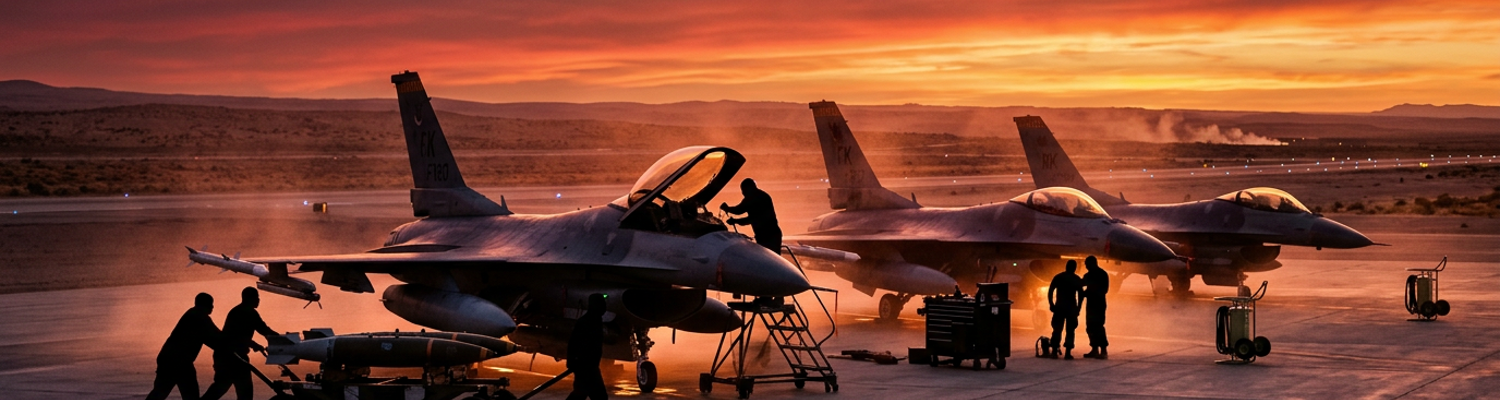
F-16 fighters marked on those dispatch boards taxied out onto open concrete ramps where ambient surface temperatures exceeding 120 degrees Fahrenheit at Al Dhafra caused severe thermal stress, inducing frequent electronics and avionics failures. Metal skin panels heated rapidly under direct sunlight, transferring high temperatures into the uninsulated nose bays that housed fire-control computers and radar transmitters. Cooling carts hooked up to the parked aircraft blew lukewarm air through the intake ducts, leaving delicate circuit connections to expand and break before engines could even start. Pilots sitting inside sealed cockpits flipped system master switches only to watch radar screens flicker off or display false target warnings across their heads-up displays. Crew chiefs rushed extra blowers to the flightline to force airflow through the smoldering avionics racks, but fierce gusts regularly blew clouds of fine desert grit across the parking revetments.
Dust clouds churned up by taxiing fighters carried abrasive silica straight into running engines, where airborne desert dust caused accelerated erosion of F100 engine compressor blades and rapid deterioration of critical flight-control hydraulic seals. Microscopic sand particles cut directly into rotating titanium fan stages, blunting blade leading edges and degrading engine airflow efficiency during full-power takeoffs. Hydraulic fluid leaked steadily past sand-scored rubber packings on horizontal stabilizer actuators, leaving red puddles across landing gear doors and concrete parking pads. Ground mechanics spent hours disassembling actuator linkages and flushing fluid reservoirs to purge gritty sediment before pressurized control surfaces locked in flight. Flightline crews had to crawl under the dripping airframes to replace shredded O-rings while hot exhaust and scorching tarmac heated the crowded work areas.
Airmen on maintenance teams suffered widespread heat exhaustion while servicing heat-soaked tarmac aircraft in full chemical defense ensembles. Threat warnings of Iraqi Scud launches forced ground personnel into heavy charcoal-lined overgarments, thick butyl rubber gloves, and restrictive gas masks that trapped body heat within minutes. Metal wrenches and aircraft access panels absorbed so much solar radiation that bare skin blistered on contact, while rubber gloves filled with sweat inside the sealed protective sleeves. Ground workers staggered across the concrete with severe muscle cramps and dizziness, collapsing onto empty bomb trailers until peers could drag them into shaded hangars. Medics administered bags of intravenous saline fluids to dehydrated technicians inside air-conditioned trailers, reviving stricken airmen before sending them back out to replace fallen ramp workers.
Squadron commanders reorganized flightline shift patterns to push heavy airframe repairs into nocturnal hours when tarmac temperatures subsided slightly. Maintenance supervisors rigged portable sunshades from canvas tarps and camouflage netting over active revetments to shield working mechanics from direct solar exposure. Expediter trucks ferried large coolers of ice water and electrolyte packets directly to each parking spot, enforcing ten-minute rest breaks for every twenty minutes of manual labor on open ramps. Tactical planners coordinated with Ninth Air Force to stagger takeoff windows, allowing avionics bays to cool under portable ground conditioning units until minutes before taxi clearance. Crew chiefs signed final inspection logs under battery-powered floodlights, marshaling the next flight of bomb-laden F-16s onto the darkened runway for midnight interdiction strikes over Kuwait.
Deployment Bottlenecks and Al Dhafra Beddown
Fighter wings launching those midnight strikes operated under logistical deficits that originated when the 363rd Tactical Fighter Wing deployed from Shaw Air Force Base over 7,000 miles to Al Dhafra Air Base in August 1990. Operation Desert Shield began with emergency deployment orders that sent twenty-four F-16C Fighting Falcons airborne with only hours of preparation. Pilots endured exhausting multi-stage aerial refuelings over the Atlantic Ocean and the Mediterranean Sea, hooking up to KC-135 and KC-10 tankers up to seven times during non-stop crossings lasting nearly fifteen hours. Aviators remained strapped tightly into their ejection seats for the entire journey, swallowing water rations from plastic tubes and battling severe physical cramping as they held tight formation in turbulent weather. Flight leaders monitored fuel consumption gauges and engine oil pressures across vast stretches of water while ground controllers tracked the armada across southern Europe and the Arabian Peninsula, directing the weary pilots toward their new forward operating location on the Persian Gulf coast.
Tires touched down on the sunbaked runway at Al Dhafra, where the sudden arrival of dozens of American fighters in the United Arab Emirates produced severe ramp congestion. Base personnel found an airfield that lacked the taxiway space, revetments, and covered maintenance shelters necessary to support a full combat wing on short notice. Ground controllers directed incoming F-16s to squeeze wingtip to wingtip onto narrow parking aprons, leaving virtually no clearance for refueling trucks or emergency vehicles. Giant C-141 and C-5 cargo transports landed immediately behind the fighters, unloading hundreds of tons of equipment that quickly choked every open patch of concrete. Forklift operators faced a massive bottleneck as cargo stacked up faster than it could be inventoried, stranding support gear and munitions pallets on unrevetted aprons directly exposed to the blazing sun. Ground personnel scrambled to drag heavy bomb racks and tool cribs out of taxi routes by hand, clearing enough room for incoming transports while exposed ordnance sat on open tarmac without protective dirt berms or splinter shields.
Splinter shields and protective berms were entirely absent when cargo pallets unloaded onto that open tarmac revealed that initial beddown detachments lacked complete War Reserve Spares Kits, crippling early efforts to establish an orderly maintenance pipeline. Strategic airlift managers had pushed weapons and defensive personnel onto early transport flights, bumping secondary supply crates and leaving base warehouses without vital fuel filters, hydraulic pumps, and starter valves. Mechanics opening the few crates that did arrive discovered empty shelves where delicate avionics cards and replacement radar components should have been. Maintenance officers suddenly realized they had only enough spare parts to support a few days of peacetime training, yet wing commanders were ordering around-the-clock combat readiness against a potential Iraqi invasion across the Saudi border. Technical sergeants marked dozens of maintenance logs with red crosses as hydraulic leaks and electrical shorts began grounding fighters on the sweltering ramps.
Ramp breakdowns forced supply technicians to rush into regional civilian markets, leaving early combat air patrols dependent on improvised local supply workarounds to keep jets flightworthy. Logistics officers drove rented civilian trucks into Abu Dhabi and Dubai to purchase commercial automotive seals, industrial hydraulic fluids, electrical connectors, and hardware store fasteners that could substitute for missing Air Force stock. Ground crews rigged commercial plastic ducting and retail air-conditioning blowers to the sides of parked jets, channeling chilled air into fragile avionics bays to prevent computers from melting during ground checks. Mechanics modified civilian hardware to secure loose access panels and improvised test benches out of plywood and borrowed Emirati power generators. Aviators scrambled into cockpits kept running by these makeshift repairs, taxying past crowded aprons to launch defensive patrols along the Saudi border where they guarded the skies against Iraqi armor divisions pushing toward the oil fields.