Full Calendar
THIS DAY IN U.S. MILITARY HISTORY • OCTOBER 31 1941 U.S. Navy World War II

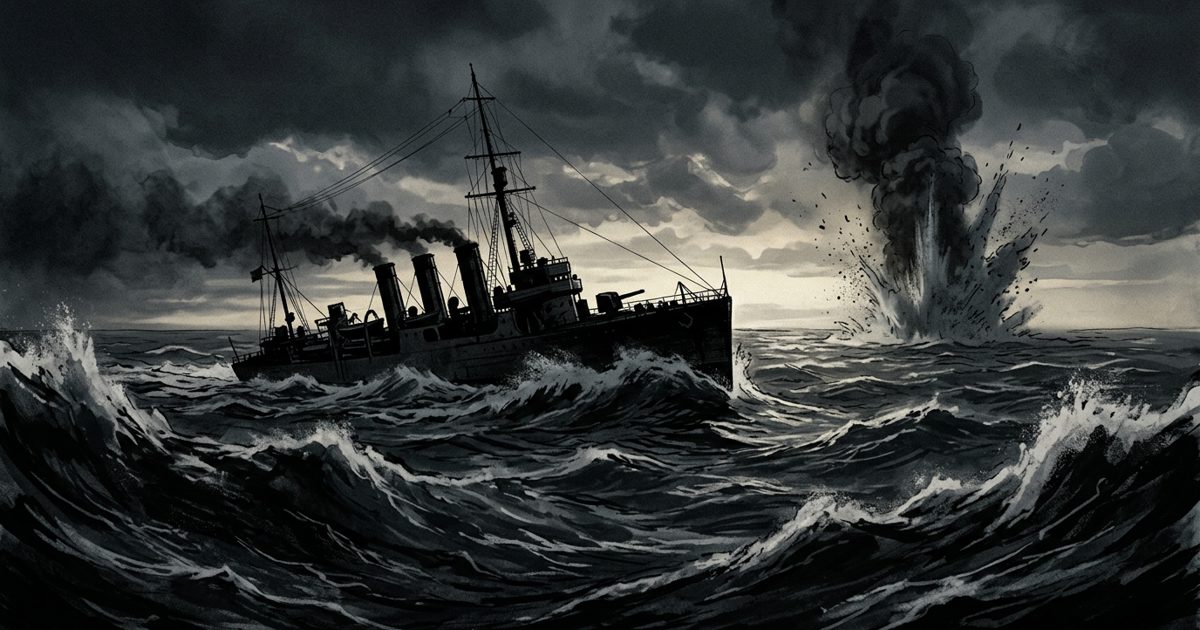
Loss of USS Reuben James in the North Atlantic

German submarine U-552 torpedoes an American destroyer escorting convoy HX-156 off Iceland five weeks before Pearl Harbor.
Loss of USS Reuben James in the North Atlantic

Kapitanleutnant Erich Topp maneuvered the German submarine U-552 into firing position near the southern coast of Iceland in the pre-dawn darkness of October 31, 1941. Lookouts aboard the Clemson-class destroyer USS Reuben James scanned the heavy North Atlantic swells while escorting Allied convoy HX-156 toward Britain. Commander Heywood L. Edwards positioned his warship between an ammunition carrier and suspected submarine contact sectors to shield vulnerable merchant vessels. Sonar operators lost track of the incoming threat moments before a torpedo slammed into the port side of the destroyer.

Explosives within the forward magazine detonated violently under the impact of the German torpedo, severing the entire bow section instantly from the keel. Frigid seawater flooded the remaining compartments as the ruptured hull began sinking beneath the waves in less than five minutes. Crew members scrambled across oil-slicked deck plates without access to damaged lifeboats, leaping directly into freezing ocean waters. Depth charges from the sinking stern exploded underwater, killing swimming sailors who had survived the initial blast.

Destroyers USS Niblack and USS Hilary P. Jones rushed to the scene to pull survivors from the debris field. Rescue crews recovered 44 enlisted sailors, while 100 enlisted men and all seven commissioned officers, including Commander Edwards, perished in the cold Atlantic. The loss marked the first sinking of an American naval vessel by hostile action during World War II, five weeks before the attack on Pearl Harbor. President Franklin D. Roosevelt cited the attack to win congressional support for revising the Neutrality Acts, permitting the arming of merchant vessels and allowing American ships into combat zones.

CHRONOLOGICAL RECORD

October 31 Across U.S. Military History

8 Verified Events
1803 U.S. Navy Landmark Event • First Barbary War

Frigate USS Philadelphia Grounds Off Tripoli

Captain William Bainbridge ran the 36-gun frigate USS Philadelphia aground on an uncharted reef while pursuing a corsair vessel outside Tripoli harbor. Heavy fire from enemy gunboats battered the stranded warship while crewmen threw cannons overboard to lighten the vessel. Bainbridge surrendered the ship to prevent the massacre of his crew, leading to nineteen months of captivity for over three hundred American sailors.

1864 U.S. Navy • Civil War

Union Gunboats Recapture Plymouth North Carolina

Commander William H. Macomb led a flotilla of Union gunboats up the Roanoke River to bombard Confederate fortifications defending Plymouth, North Carolina. Sailors blasted shore batteries with heavy naval guns and landed landing parties after the previous sinking of the Confederate ram CSS Albemarle. Confederate defenders evacuated the town, restoring Federal control over vital inland waterways connecting to Albemarle Sound.

1918 U.S. Army • World War I

American Divisions Strike Along the Lys

Soldiers of the 37th and 91st Divisions launched an offensive across western Belgium alongside French units to break German lines between the Lys and Escaut rivers. Infantrymen advanced three miles against machine-gun nests and artillery barrages on the first day of combat. Combat engineers laid footbridges across waterways under shellfire, opening paths for Doughboys during the final drive toward the Scheldt River.

1919 U.S. Marine Corps Landmark Event • Interwar Period

Marine Patrol Infiltrates Haitian Rebel Stronghold

Sergeant Herman H. Hanneken led a disguised patrol into the mountain stronghold of Haitian rebel leader Charlemagne Peralte near Grande-Riviere-du-Nord. Hanneken guided his force past six security outposts before shooting Peralte and dispersing the rebel force. Marines secured the outpost and effectively ended the Caco uprising, earning Hanneken and Corporal William R. Button the Medal of Honor.

1943 U.S. Navy Landmark Event • World War II

Corsair Secures First Radar Guided Night Victory

Lieutenant Hugh D. O'Neill piloted an experimental F4U-2 Corsair night fighter belonging to squadron VF(N)-75 over the Solomon Islands. Radar equipment mounted on the starboard wing directed O'Neill through dense darkness to intercept an enemy raid off Vella Lavella. Machine-gun fire destroyed an incoming Japanese Mitsubishi G4M Betty bomber, marking the first carrier-type radar interception and kill in naval aviation history.

1966 U.S. Navy Landmark Event • Vietnam War

James Williams Battles Flotilla in Mekong Delta

Boatswain James E. Williams commanded River Patrol Boat 105 during a reconnaissance mission along the Mekong River. Ambushing forces fired rockets from concealed shore emplacements and deployed dozens of armed sampans. Williams maneuvered under heavy fire for three hours, destroying over fifty enemy craft with helicopter support and later receiving the Medal of Honor for his actions.

1967 U.S. Army Landmark Event • Vietnam War

Captain Riley Pitts Fights at Ap Dong

Captain Riley L. Pitts led Company C of the 27th Infantry Regiment Wolfhounds against fortified enemy bunker complexes near Ap Dong. Pitts repeatedly moved through automatic weapons fire to designate hostile positions and direct air strikes for his pinned unit. Enemy fire claimed his life as he rallied his soldiers, posthumously earning him the Medal of Honor as the first African American commissioned officer so decorated.

1968 U.S. Air Force Landmark Event • Vietnam War

President Johnson Orders North Vietnam Bombing Halt

President Lyndon B. Johnson announced a complete cessation of all air, naval, and artillery bombardment against North Vietnam effective November 1. This strategic directive officially brought Operation Rolling Thunder to an end after three and a half years of sustained aerial attacks. Air Force and Navy air wings pivoted their strike sorties toward infiltration corridors along the Ho Chi Minh Trail in Laos.

MEDAL OF HONOR ACTION 1972

Michael Thornton Rescues Fellow SEAL Behind Enemy Lines

Michael E. Thornton, a Navy SEAL petty officer, accompanied a five-man reconnaissance team behind enemy lines near the Cua Viet River naval base in South Vietnam on October 31, 1972. North Vietnamese troops ambushed the patrol with heavy automatic weapons fire during an intelligence mission along the coast. Lieutenant Thomas R. Norris directed naval artillery gunfire from offshore warships to shield their withdrawal toward the beach. Enemy bullets struck Norris in the head as hostile soldiers advanced, knocking him unconscious and prompting retreating South Vietnamese commandos to report him dead.

Thornton charged back through intense enemy fire across open sand dunes to verify the report and recover his commander. Gunfire eliminated two North Vietnamese soldiers attempting to overrun the position before Thornton lifted the wounded officer onto his shoulders and dashed toward the surf. Thornton inflated the officer life jacket and swam into open water, towing Norris alongside a wounded Vietnamese commando for over two hours until a support craft completed extraction. Thornton received the Medal of Honor for his actions, marking a rare event in military history where one Medal of Honor recipient saved the life of another.