
Tenth Army Intelligence Failures South of Hagushi
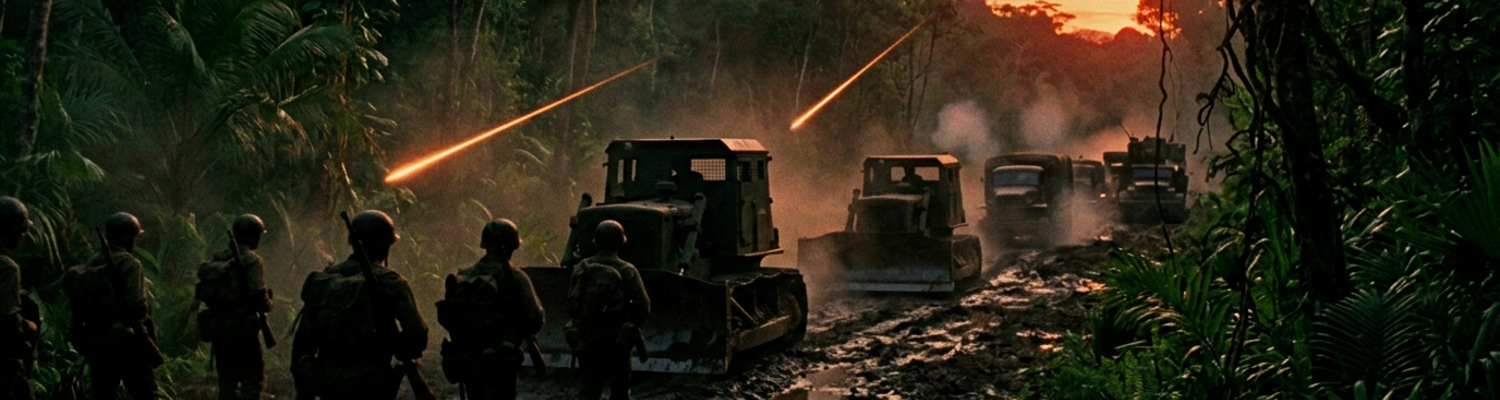
Rainwater pooled in the deep treads of stalled supply trucks as XXIV Corps pushed south through knee deep mud. The mud cut off clean rations and forced riflemen to chew wet biscuits while marching without rest. Radio operators struggled through the steady downpour under the crushing weight of SCR-300 backpacks. These operators scraped green corrosion from brass battery terminals that failed in the damp air. Exhausted infantrymen of the 96th Infantry Division took shelter in flooded drainage ditches. Soldiers used bayonet points to pry sticky clay out of jammed Garand bolts. Tenth Army and XXIV Corps intelligence assessments initially anticipated light rear guard resistance south of the landing beaches. This assessment convinced field commanders that the Japanese forces had fragmented into disorganized pockets. Intelligence bulletins circulated down to battalion command posts reported only small delay teams along the coastal highways. Company commanders read these reports and expected little coordinated artillery fire during their advance. Staff planners assumed this smooth early push proved the enemy lacked the organized manpower and heavy weapons to defend the rugged interior hills.
Lieutenant General Mitsuru Ushijima deliberately traded northern territorial space to concentrate his 32nd Army in southern Okinawa. Ushijima drew his best divisions into prepared defensive sectors around the limestone hills. The Japanese commander allowed the American assault divisions to unload unmolested over the Hagushi beaches. This decision ensured his troops could hold back their fire and dig into the high ground where naval gunfire could not reach them. Japanese engineering units had spent months boring through solid coral rock. These engineers fortified hundreds of caves and linked them with buried telephone lines, subterranean barracks, and covered communication trenches. General Simon Bolivar Buckner Jr. and his Tenth Army staff interpreted the quiet landscape as evidence that the enemy garrison was broken and retreating in panic. Buckner ordered assault battalions to accelerate their march toward the southern highlands. High altitude photo interpretation teams examined rolls of wet film flown in from carrier squadrons. Analysts searched these photographs to verify whether any defensive works stood between the foot soldiers and the Shuri hills.
Cameras mounted on those naval aircraft captured hundreds of frames of quiet brush and terraced farms. Aerial reconnaissance failed to uncover the vast underground honeycomb connecting fortified caves across the Shuri perimeter. Natural jungle growth, camouflage netting, and native stone walls obscured the narrow machine gun embrasures. Hidden tunnel portals and disguised pillboxes blasted into the reverse slopes of the ridges remained invisible from the sky. Heavy concrete bunkers and steel blast doors sat safely beneath twenty feet of limestone caprock. These fortifications remained entirely shielded from overhead cameras and naval bombardment. Japanese gunners parked artillery pieces on steel tracks inside these subterranean galleries. Artillery crews stood ready to wheel their guns out, fire rapid salvos into advancing American platoons, and pull them back behind steel doors within seconds. Troops of the 32nd Army stacked ammunition crates and mortar shells inside these underground corridors. Garrison forces watched through concealed periscopes as American scouting parties entered the open valleys below.
XXIV Corps riflemen tramped directly into the shadow of Kakazu Ridge under cold rain with wet boots and empty bellies. Faulty radio batteries left the advancing troops completely unaware that an entire reinforced infantry brigade occupied the crest above them. Radio operators on the valley floor repeatedly turned tuning dials through deafening static. These signalmen failed to raise command posts on water damaged sets while forward scouts moved within range of hidden spigot mortars. Captains and lieutenants checked their terrain maps in the drizzle. The officers trusted Tenth Army reports that described the ridge ahead as a simple outguard position rather than a primary defensive anchor. Japanese machine gun squads laid their barrels across the stone rims of their firing embrasures. Enemy gunners waited for the American point squads to enter the pre-registered kill zone at the bottom of the slope. Riflemen of Company L clicked off their rifle safeties and stepped into the open gully at the base of the ridge without supporting artillery fire.
Japanese Reverse Slope Fortifications on Kakazu Ridge
Mud in the drainage ditch pulled at the combat boots of Company L as the lead platoons climbed up the exposed terrace. The troops moved toward what appeared to be an abandoned crest. Tenth Army intelligence staff had designated the high ground as an ordinary outpost. Kakazu Ridge actually anchored the primary northern defense belt of the subterranean Shuri network. Lieutenant General Mitsuru Ushijima and his staff had chosen this natural limestone wall to break the momentum of XXIV Corps. The Japanese command intended to bleed the American infantry divisions through organized attrition. Defending units of the Japanese 62nd Division deliberately abandoned the forward slope facing north. This tactic left the rocky approaches silent so American companies would advance without calling for naval star shells or continuous artillery barrages. Platoon leaders checked their compasses in the gray mist and motioned their squads forward over terraced sweet potato patches. The advancing troops found no barbed wire and no tripwires to impede their ascent. Riflemen reached the razor thin rim of the crest without drawing a single shot. Soldiers gathered in exposed clusters along the limestone ledges while radio operators tried to report the position secure over wet SCR-300 transmitters.
Japanese machine gunners concealed along the southern descent waited until the entire American assault wave walked across the skyline. The hidden defenders tripped their firing pins the moment the silhouettes appeared against the gray clouds. Japanese defensive doctrine integrated interlocking machine gun bunkers and pre-sighted mortar kill zones along the reverse slope. This layout was designed to destroy enemy formations the moment they crossed the crest. Type 92 heavy machine guns fired through disguised embrasures cut at knee level. Bursts of steel swept across the reverse slope and cut down lead riflemen before they could unhook grenades from their web belts. Mortar teams stationed in defilade behind the ridge dropped heavy shells into pre-measured grids along the draw lines. These explosions boxed in the support squads so no reinforcements could climb up the northern face. American soldiers scrambled into shallow shell depressions and natural rock clefts for cover. Crossfires swept every angle of the open ground and prevented any organized movement. Shrapnel ripped through radio backpacks, smashing vacuum tubes and severing rubber handsets. Platoon leaders realized their standard infantry weapons could not penetrate the subterranean defenses.
Coral tunnels bored deep into the heart of the ridge gave the Japanese garrison complete immunity against the heaviest weapons in the American arsenal. Emplacements constructed within these tunnels shielded garrison troops from heavy naval gunfire and aerial bombing that had pounded the heights for days. Japanese construction battalions had spent months drilling through the limestone caprock. The engineers created subterranean galleries linked by interior stairways, blast curtains, and communication tubes. Heavy naval shells from offshore cruisers struck the northern ridge face without penetrating the five inch timber supports and thick bedrock protecting the underground barracks. Japanese soldiers rested safely inside dry living quarters beneath twenty feet of stone. Garrison troops emerged through hidden shafts to man their fighting positions only after the offshore bombardment lifted. Assault squads attempting to attack these strongpoints with bazookas discovered that their high explosive rockets bounced harmlessly off natural coral boulders shielding the firing ports.
Riflemen pulled back from the reverse slope under continuous automatic fire. The soldiers crawled on their bellies across jagged coral while dragging wounded comrades toward the northern crest. Japanese snipers tied into camouflaged spider holes fired at anyone who raised a head to return fire. This precision shooting forced squad leaders to clear jammed Garand actions with muddy bayonet blades while lying flat in the mud. Spigot mortar bombs launched from the valley floor behind the ridge tumbled end over end through the overcast sky. The massive projectiles detonated with concussive blasts that tossed bodies and equipment into the air. Forward observers on the northern rim repeatedly tried to establish line of sight with company command posts. Dense cordite smoke and driving rain obscured every visual signal and prevented semaphore communication. Surviving noncommissioned officers gathered their remaining men in shallow limestone depressions. The sergeants fixed bayonets and distributed half empty ammunition clips as Japanese counterattack teams began crawling up the reverse slope through connecting trenches.
Environmental Attrition and Coral Mud Fouling
Riflemen drove their thumbs down against the top cartridges of their remaining ammunition clips. The soldiers chambered rounds as Japanese grenade discharger teams moved into effective throwing distance. Fine coral sediment penetrated M1 Garand receivers and caused recurring bolt cycling malfunctions during sustained firing. Microscopic rock particles ground into the operating rod tracks and bolt lugs whenever soldiers fired rapid strings into the advancing counterattackers. Soldiers used bayonet points, trench knives, and dirty fingertips to gouge thick grey paste from the internal receiver wells. The gritty compound continued to foul the extractors and hold the bolts half open despite these frantic cleaning efforts. Riflemen struck the operating handles forward with the heels of their combat boots to force each stubborn cartridge into battery. Japanese potato masher grenades detonated across the outer lip of the depression while the Americans fought their weapons. Empty brass casings jammed sideways in the ejection ports. These malfunctions forced squad leaders to turn toward their heavy weapons squads for defensive firepower.
Browning machine gun teams dropped behind low rock outcrops to lay grazing fire across the trench approaches. The heavy weapons crews swept the advancing Japanese infantry with continuous bursts of thirty caliber ammunition. Caked mud and grit insulated the water cooled Browning machine guns and caused severe overheating during extended firefights. Splattering rain and exploding mortar dirt threw a thick layer of wet coral slurry over the steel water jackets. This mud trapped the heat inside the metal sleeves and prevented the circulating fluid from cooling the barrels. Steam hissed through the rubber condensing tubes as the internal water reached violent boiling points within minutes. The boiling process exhausted the small auxiliary water cans that gunners carried onto the crest. Asbestos mittens burned through the palms of assistant gunners as they frantically scraped hardened mud crusts from the barrel casings. This scraping was necessary to prevent the hot metal from warping and seizing the firing pins. Gunners poured drinking water from their personal canteens into the brass filler caps. The crews emptied their only source of fresh hydration to keep the guns firing down into the reverse slope draws.
Ammunition carriers struggled back toward the supply depots along the coast to bring fresh water cans and belted cartridges up to the forward gun emplacements. Torrential rains turned the rugged coral ravines fronting Machinato Inlet into deep, abrasive mud that exhausted foot soldiers. Gullies that served as the only covered approach routes filled with churning slurry that reached the knees of the pack details. The thick mud pulled boots clean off swollen feet and slowed the resupply columns to an agonizing crawl. Every step through the jagged limestone cuts ground sharp coral fragments into raw blisters. Stretcher bearers slipped and fell beneath the weight of wounded men while trying to navigate the flooded paths. Stalled supply trucks stood abandoned along the northern trails with their axles buried in the muck. Foot soldiers had to carry heavy wooden crates on their shoulders through driving sheets of cold rain because the vehicles could not move. Carriers dropped from sheer physical collapse along the ravine beds. The exhausted men were unable to lift the five gallon water cans that the rifle companies needed on the firing line.
Radio operators on the ridge line crouched over their SCR-300 sets in the pouring rain. The signalmen realized that no fresh ammunition or cooling water would reach the isolated forward platoons before dark. Water seeped through cracked rubber gaskets into the transmitter housings. The moisture coated the delicate vacuum tubes and degraded outgoing signal strength to faint static. Operators scraped dried coral mud from the external toggle switches with thumbnail edges. The radiomen tried desperately to establish contact with the artillery battalion fire direction center. Enemy machine gun bursts chipped limestone shards across the top of the depression. The flying rock cut the flexible whip antenna and showered the radio housing with abrasive dust. The operator pressed the wet microphone switch with trembling, mud caked fingers. The signalman attempted to transmit a single set of defensive fire coordinates before the radio battery went dead.
SCR-300 Signal Blackouts in Karst Ravines
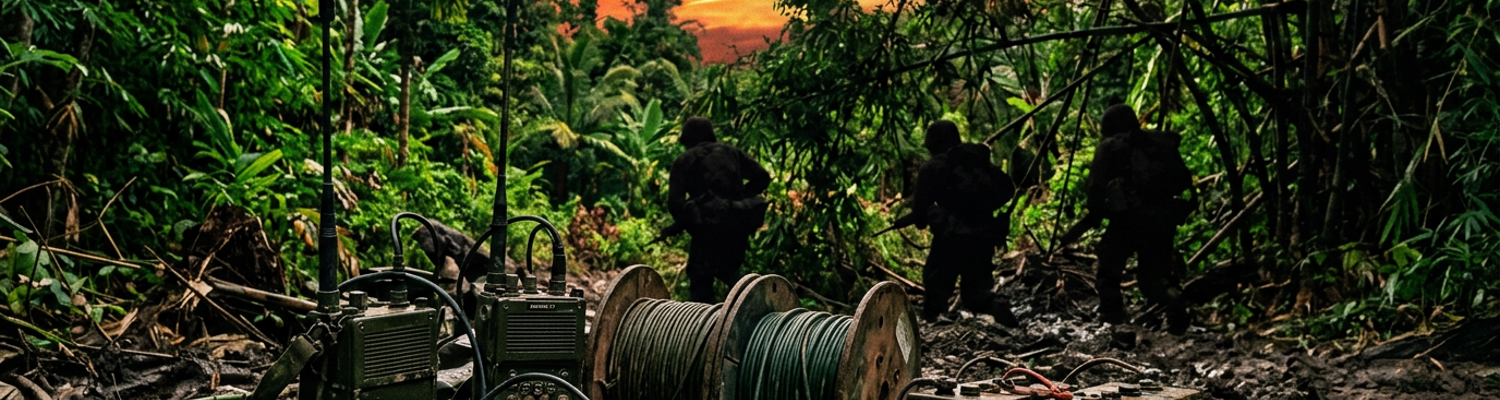
BA-70 dry batteries inside the waterproof aluminum radio casing lost electrical charge as tropical downpours soaked the canvas carrying harnesses. The rainwater leaked past the rubber gaskets and flooded the battery compartments. Constant rain and humidity caused rapid corrosion across BA-70 battery terminals and internal wiring. The damp environment coated the brass contact pins in a thick layer of green copper sulfate. Radio operators pried open the battery compartments with their trench knives. The men used bayonet blades and dry rifle cleaning patches to scrape the crust from the corroded terminals. Moisture trapped inside the transceiver chassis condensed against the miniature glass vacuum tubes. This condensation caused electrical shorts that burned out the plate circuits whenever an operator engaged the power switch. Salt air sweeping inland from the East China Sea attacked the bare solder joints of the internal wiring. The delicate connections turned brittle until they snapped under the concussive jolts of nearby shell bursts. Operators reached into their canvas field pouches for fresh replacement batteries. Rainwater had already seeped through the packaging and ruined the spare cells before they could be plugged into the sets.
Limestone bluffs rising vertically from the ravine floors blocked the faint signals before the radio waves could escape the northern draws. Deep limestone draws and karst ravines created severe dead zones that broke VHF line of sight propagation for SCR-300 backpack transceivers. Very high frequency FM radio signals traveled strictly along straight visual paths. This physical limitation made it impossible for transmissions to bend over the sheer coral walls enclosing the American assault routes. The porous limestone rock absorbed and scattered the radio energy. The terrain converted outgoing calls for artillery into meaningless bursts of static on the receiving end. Operators screwed ten foot whip antennas into the top connectors and stood upright in the mud. The radiomen tried to lift the radiating tips above the ravine rims, only to have Japanese snipers shoot the metal rods to pieces. Static roared through the rubber ear cushions of the handsets as operators frantically rotated the tuning knobs across the frequency bands. The signalmen were unable to push a single voice transmission past the sheer rock walls.
Radio operators struggled to maintain unbroken links between forward assault platoons and battalion fire direction centers as Japanese mortar fire shredded backup wire lines. Assault companies pinned down in the reverse slope gullies desperately needed high explosive artillery fire. The infantry required heavy barrages to break up Japanese infantry assemblies gathering in the subterranean cave mouths. Forward observers crouched behind coral boulders and shouted coordinates into their dead microphones. The observers received only the hiss of dead air while Japanese mortar shells walked closer to their foxholes. Platoon leaders looked back toward the battalion command posts located less than a mile to the north. The officers knew that the physical topography prevented their urgent requests for defensive barrages from ever reaching the 105mm howitzer batteries. Rifle companies attempted to send volunteer runners back through the ravines with written coordinates. Japanese machine gunners zeroed in on every connecting draw and shot the messengers down before they reached the open flats.
Signalmen established relay teams along the exposed canyon ledges to bridge the signal gaps. The operators passed voice messages manually across the karst dead zones to bypass the terrain interference. Soldiers crawled onto high rock shelves under steady rifle fire. The relay men held their SCR-300 handsets against the driving rain to catch fragmented words from the ravines below and retransmit them toward the rear. Wet fingers slipped across the rubber push to talk switches as operators relayed target coordinates one number at a time between deafening mortar concussions. Japanese mortar crews spotted the long whip antennas swaying against the overcast sky. The enemy gunners dropped pre-registered rounds directly onto the intermediate relay positions and destroyed the radios. Forward riflemen on the ridge crest ran out of ammunition while listening for the sound of incoming American artillery that never received clearance to fire. Platoon commanders drew their sidearms and ordered the remaining riflemen to fix bayonets in the muddy ditches. Japanese counterattack squads charged over the crest and engaged the Americans in close combat.
The 96th Infantry Division Forward Advance
Bullets ripped through the mist as officers fired their sidearms into the oncoming Japanese soldiers. The isolated assault troops fought for their lives in the mud using entrenching tools and bare hands. The 96th Infantry Division pushed into the dissected terrain before Kakazu Ridge to breach the Machinato Line. Limestone ravines, jagged coral hills, and flooded rice terraces broke the American advance into separated company pockets. These isolated units could not see or support one another across the broken landscape. Foot soldiers struggled through knee deep mud that sucked combat boots off their feet and coated their Garand rifles in abrasive paste. Radio operators struggled to keep pace beneath thirty eight pound SCR-300 packs. The radiomen felt wet canvas straps dig into their bruised shoulders while rainwater leaked through their field jackets. Japanese artillery batteries zeroed in on every natural path from concealed cave positions inside the high ground. The enemy gunners dropped heavy barrages that tore up the valley floor and halted the forward momentum.
Shrapnel from those artillery barrages tore across the flats as Company A of the 383rd Infantry Regiment advanced. The regiment moved across open, pre-registered fields of fire under heavy enemy observation. Japanese machine gunners and mortar crews on the crest adjusted their fire with lethal accuracy. The defenders swept the bare ground without needing to search for targets. Riflemen dropped flat into water filled shell holes. The soldiers pressed their faces into the mud while steel fragments shredded their canvas field packs. Platoon leaders crawled from hole to hole in the driving rain. The officers shouted over the noise of the explosions to push their surviving squads forward toward the base of the ridge. Dozens of wounded soldiers remained pinned in the open mud under interlocking machine gun crossfire. The injured men cried out for help while litter bearers were cut down trying to reach them.
Tanks from the supporting armored battalions attempted to push through the mud to shield these wounded soldiers. Deep ravines, anti tank ditches, and muddy coral slopes prevented direct support from M4 Sherman tanks. Steel tracks churned through wet coral clay, sliding sideways off narrow terraced paths and bogging down to the vehicle belly plates. Japanese combat engineers had blasted steep anti tank ditches across every natural gap. The engineers covered each obstacle with concealed 47mm anti tank guns hidden inside limestone caves. Armor piercing rounds cracked through the rain, striking the turrets and tracks of lead vehicles. The accurate anti tank fire forced the surviving tank crews to halt their advance. Tank commanders buttoned their steel hatches against heavy mortar bursts. The armored vehicles were unable to climb the slippery slopes or maneuver through the jagged draws to deliver point blank high explosive fire. Deprived of armored cannon fire, the isolated infantry platoons lay exposed at the bottom of the ravines with dwindling ammunition and mounting casualties.
Radio operators huddled beside their platoon leaders in the waterlogged mud. The signalmen frantically turned the dials of their SCR-300 transceivers to call for emergency artillery support to replace the stalled armor. Rain poured over the aluminum radio casings, leaking past the rubber seals and shorting the internal vacuum tubes. Outgoing signals died into static before reaching the battalion fire direction center. Operators pressed the push to talk switches with cold, trembling fingers. The sheer limestone bluffs deflected the radio waves and prevented the transmissions from reaching the artillery batteries. Riflemen fixed their bayonets and passed their remaining Garand clips down the line. The infantrymen prepared to hold the wet drainage ditches on their own as dusk settled over the valley. Squad leaders wiped gritty mud from their rifle bolts with oily rags and checked their fields of fire. Surviving units held their muddy positions through the dark and prepared to resume the assault at dawn.
The Reverse Slope Crisis of Company A
Riflemen from Company A, 383rd Infantry Regiment advanced past the battered frontline foxholes on the morning of April 9, 1945. The infantrymen pushed forward only to become pinned on the exposed reverse slope of Kakazu Ridge. Lead squads crossed the narrow crest expecting open ground. The soldiers stepped directly into interlocking machine gun fields of fire arranged across the southern face. Japanese gunners opened fire from camouflaged cave embrasures cut into the lower limestone terraces. The crossfire trapped the American soldiers against bare rock where there was no natural cover. Coral splinters sprayed across the open ground as bullets struck the limestone. The flying rock wounded men who tried to scramble for cover. Gritty mud jammed the operating rods of several Garand rifles when soldiers pressed their bodies flat into shallow water drainage ruts. Squad leaders quickly discovered that crawling backward over the crest exposed their men to grazing fire from the heights. Moving forward carried the squads straight toward concealed pillboxes.
Japanese defenders retaliated with heavy counterattacks and massive 320mm spigot mortar fire. The enemy directed this heavy ordnance onto the crest to break the trapped company. Concealed mortar tubes hidden deep in the southern draws launched huge spigot shells. The massive projectiles tumbled end over end through the gray rain before detonating along the rocky rim. Concussive blasts from these heavy shells threw soldiers into the air and collapsed stone ledges. The explosions buried American weapons and severed communication wire lines back to battalion headquarters. Japanese infantry squads charged out of subterranean cave mouths behind the artillery barrages. The counterattacking troops fired automatic weapons and threw ceramic hand grenades into the American positions. Shrapnel tore through field gear and sheared off radio antennas. The destruction left platoon leaders isolated in small pockets along the muddy slope. Dense black smoke from burning cordite drifted across the defilade. The thick smoke blinded the surviving noncommissioned officers as enemy counterattack teams closed within grenade throwing range.
Grenade blasts and automatic weapon fire hemmed in the survivors. Company A faced complete annihilation within an intense five minute window unless indirect fire could be brought directly onto the reverse slope defilade. Standard flat trajectory artillery fired from the north slammed uselessly into the opposite hillside or passed harmlessly over the crest. The low angle shells failed to hit the protected ravines where Japanese troops were gathering. Radio operators worked frantically with mud coated hands to tune waterlogged SCR-300 transceivers. The signalmen used knife points to clean corroded battery contacts and raise the battalion fire direction center. Forward observers shouted exact map numbers into their wet microphones. The observers demanded immediate high angle mortar barrages to drop explosives along the reverse slope just yards ahead of their own rifle pits. Static crackled through the earpieces as artillery plotters calculated the steep firing angles needed to lob shells over the ridge rim. Trapped riflemen pulled their trench knives and fixed bayonets to their jammed rifles. The infantrymen watched the smoke clear as Japanese assault troops advanced up the slope to overrun the position.
XXIV Corps Artillery Fire and Extraction
Radio operators shouted frantic grid corrections into their transmitters as Japanese assault troops surged across the final terrace. Corroded battery contacts yielded just enough power to send the voice signal through the static. The forward radio operator transmitted emergency defilade coordinates directly to XXIV Corps field artillery batteries. Forward observers pressed their bodies against wet coral boulders. The spotters read off map sectors where Japanese infantry were assembling in dead spaces sheltered from direct fire. Field artillery plotters in the rear calculated the steep trajectory needed to drop heavy ordnance into the reverse slope. The gunners had to clear the ridge without hitting the friendly line clinging to the top. Artillery officers ordered every available 105mm and 155mm gun battery to fire continuous missions into the designated reverse slope defilade. Howitzer crews slammed high explosive shells into smoking breeches and yanked their firing lanyards. The artillerymen sent salvos of heavy steel arcing across the lowlands toward Kakazu Ridge.
Artillery rounds detonated across the southern face in a continuous chain of explosions. Massed artillery barrages struck immediately in front of the pinned riflemen to neutralize counterattacking Japanese infantry. Concussive shockwaves smashed the charging enemy formations. The blasts threw Japanese soldiers down the rocky slope and shredded them with thousands of jagged metal fragments. Pulverized limestone and red dust erupted into a dense cloud of debris. The dust cloud blocked the sightlines of Japanese machine gunners on the lower bluffs. American soldiers pressed their bodies into the muddy crevices. Hot shrapnel hissed inches over their steel helmets and tore through their canvas field packs. Heavy detonations blew open fortified bunkers. The explosions detonated enemy munitions stored in outer trenches and triggered secondary blasts across the hillside. Explosive pressure waves cracked the limestone walls of enemy pillboxes. The collapsing stone buried Japanese rifle squads before they could deploy their satchel charges.
Smoke billowed from the collapsed cave mouths as the curtain of high explosive shellfire suppressed Japanese spigot mortar positions. The heavy bombardment enabled the surviving elements of Company A to withdraw. Platoon sergeants grabbed wounded soldiers by their jacket collars. The noncommissioned officers hauled the casualties across the jagged coral terraces while the shell blasts kept enemy snipers pinned deep underground. Riflemen abandoned their jammed Garands and empty bandoliers. The soldiers used both hands to carry stretcher cases over the narrow crest under the falling soot. Medics applied pressure dressings and tourniquets to bleeding limbs. The corpsmen crawled through mud filled shell craters to reach stranded men. Fragments of exploded coral sprayed against the northern slope as the rear guard moved backward. The retreating squads dragged three disabled Browning machine guns through the churned mud. Japanese spigot mortar tubes remained silent in the southern ravines. The enemy mortar crews lay dead or trapped beneath dozens of tons of blasted limestone debris.
Company A riflemen took advantage of the silenced enemy mortars. The survivors slid down the muddy northern face into the drainage ditches at the foot of Kakazu Ridge. Litter teams met the retreating platoons with dry stretchers and plasma bottles. Medical personnel loaded the severely wounded into armored utility vehicles parked along the sunken road. Squad leaders gathered the remaining riflemen along the northern terraces. The sergeants distributed fresh ammunition clips and cleared the gritty mud from their rifle breeches with wire brushes. Combat engineers quickly laid temporary telephone lines along the ditch banks. The fresh wire replaced the water damaged field lines and restored battalion communications. Forward observers set up fresh SCR-300 batteries in a reinforced stone culvert. The spotters kept continuous telephone and radio contact with the XXIV Corps artillery direction center to maintain interdiction fires on the ridge. Artillery pieces continued to shell the crest every two minutes throughout the afternoon. The continuous bombardment prevented Japanese units from reoccupying the forward defensive trenches.