
Kawanishi H8K Crash off Cebu
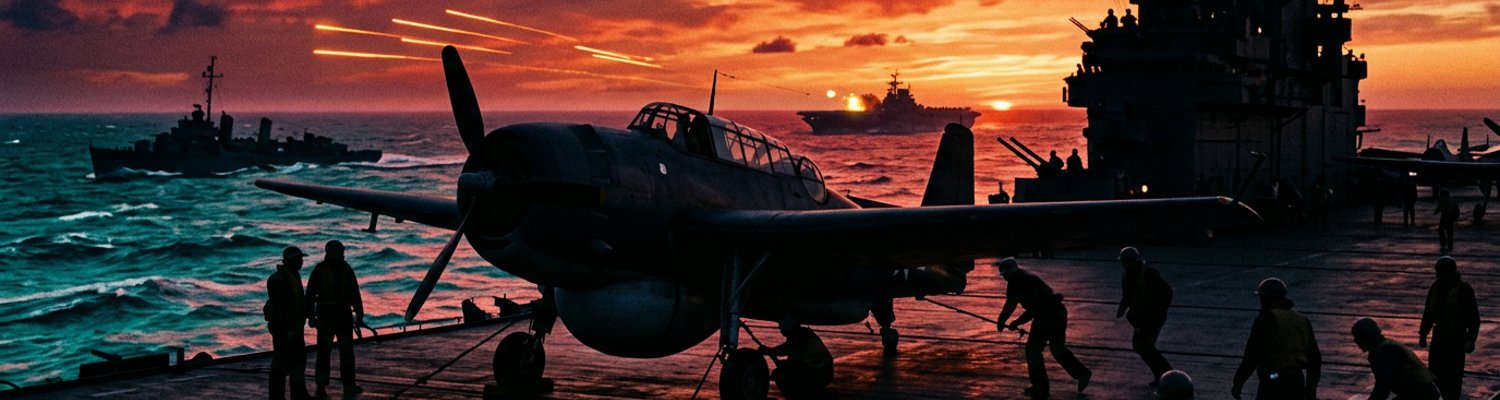
Ground crews of the Imperial Japanese Navy struggled with the massive logistical challenge of loading an entire mobile fleet headquarters into two Kawanishi H8K Type 2 flying boats at the Palau anchorage on March 31, 1944. Mechanics, radio operators, and supply personnel hauled heavy cipher machines, wooden trunks packed with operational battle plans, personal gear, and specialized communications equipment across crowded docks into the metal hulls. Combined Fleet leaders required both large four-engine seaplanes to transport dozens of key staff officers more than six hundred miles west to Davao on Mindanao before advancing American aircraft carriers could strike the harbor. Ground teams pumped thousands of gallons of aviation fuel into the wing tanks, balancing the excessive payload against the maximum takeoff limits of the aircraft. Both overloaded flying boats roared across the choppy lagoon water and climbed slowly into darkening skies as a violent typhoon swept directly across their planned flight route between Palau and Davao. Torrential rain and violent wind shear battered the heavily laden aircraft, reducing visibility to zero and forcing the pilots apart in the darkness as their engines consumed their fuel reserves.
Admiral Mineichi Koga and his flight crew plunged into the sea as the severe storm overwhelmed the lead flying boat, killing the commander in chief and his entire headquarters detachment without broadcasting a single distress call. Pilots aboard the second Kawanishi H8K, carrying Combined Fleet Chief of Staff Vice Admiral Shigeru Fukudome and eight other staff officers, lost their bearings entirely in the driving rain and drifted far north of Mindanao. Low on fuel and unable to locate the Davao airfield, the crew spotted scattered shore lights along the eastern coast of Cebu and descended toward the water near the municipality of San Fernando. The aircraft struck the rough ocean surface at high speed, tearing the fuselage open and igniting the remaining aviation fuel into an immediate fire. Vice Admiral Fukudome survived the crash along with nine other men, suffering deep burns and head trauma as the impact threw them free of the sinking hull. The surviving Japanese officers clung to floating wooden crates and rubber seat cushions in the darkness, drifting with the tides as smoke and burning fuel spread across the water toward the beach.
Fishermen from the coastal village of Balud near San Fernando spotted the floating wreckage and survivors drifting near the reef just before sunrise on April 1. Pedro Gantuangco and several neighboring fishermen pushed their wooden outrigger boats into the surf, intending to scavenge usable lumber and salvage materials from the crash site. The fishermen pulled the severely burned Vice Admiral Fukudome and nine other exhausted Japanese officers out of the water, assisting the injured men onto the sandy shore. Wading back into the shallow breakers, Gantuangco discovered floating wooden supply boxes and a heavy red leather portfolio soaked in seawater and pungent aviation fuel. Curious villagers opened the portfolio on the beach, discovering thick stacks of waterlogged papers covered in Japanese kanji, colored military charts of Pacific anchorages, and bound cryptographic tables. Recognizing that these documents represented vital military intelligence, the villagers hid the fuel-soaked portfolio inside a hollow bamboo post in an offshore fish corral and sent a runner into the hills to contact the local guerrilla resistance.
Guerrilla scouts from the Cebu Area Command received the runner and moved quickly down from their mountain hideouts to secure the crash area. Armed resistance fighters took charge of the ten injured Japanese prisoners, keeping Fukudome hidden from curious onlookers while securing the village perimeter against potential Japanese search patrols. Scouts retrieved the waterlogged red leather portfolio from the bamboo fish corral, wrapped the fuel-soaked operational binders in dry canvas, and carried the materials to an inland command post. Preliminary inspection revealed that the papers contained Combined Fleet Operation Plan Number 73, known as the Z Plan, which detailed the entire Japanese naval defense strategy for the western Pacific, along with secret fleet code sheets. Lieutenant Colonel James M. Cushing, commander of the Cebu Area Command, recognized the strategic significance of the find and ordered the documents sealed in waterproof containers. Cushing organized a secure courier team to protect the fuel-soaked Z Plan binders on the first leg of their journey into the mountains, setting in motion an urgent race to deliver the papers to Allied intelligence.
Guerrilla Capture of Vice Admiral Shigeru Fukudome
Runners carrying the canvas-wrapped packets marched along steep limestone ridges under heavy jungle canopy, transferring the recovered intelligence binder to an inland jungle command post in the central mountains. Lieutenant Colonel James Cushing established secure custody over Vice Admiral Shigeru Fukudome and eight Japanese survivors at this remote base camp, placing armed guards around the injured officers to prevent escape or ritual suicide. Guerrilla medics dressed Fukudome with captured medical supplies to treat his severe burns and fractured shoulder, while resistance scouts housed the remaining eight staff members in separate bamboo huts to restrict their communications. Cushing examined the fuel-soaked operational binder inside his timber headquarters shack, spreading the damp pages over wooden tables to air-dry the cryptographic tables, fleet charts, and operational orders without smudging the damp ink. Radio operators from the Cebu Area Command decoded urgent messages from Allied headquarters in Australia confirming the strategic value of the captured files, while local couriers arrived from the lowlands with initial reports of enemy troop mobilizations.
Colonel Satoshi Onishi mobilized the Japanese garrison in Cebu City after search planes failed to locate the downed flying boat or its high-ranking passengers. Japanese infantry battalions launched massive punitive sweep operations across central Cebu, marching through coastal farming communities and mountain foothills to locate the missing admiral. Soldiers set fire to dozens of rural villages, burning residential bamboo huts, food stores, and livestock to terrorize local populations into revealing guerrilla hideouts. Onishi distributed written ultimatums across the province, threatening mass civilian executions and the complete destruction of inland settlements if the guerrillas did not surrender Fukudome and the other eight prisoners within days. Japanese patrols executed suspected resistance sympathizers along roadsides, seized community elders as hostages, and tightened cordons around mountain trails, pushing closer to the defensive perimeter established by Cushing.
Smoke from burning settlements billowed over the mountain ridges toward the guerrilla base camp, forcing Cushing to evaluate the brutal terms set by Onishi against the immediate survival of local civilians. Guerrilla field commanders urged the immediate execution of Fukudome and the eight prisoners in retaliation for the slaughtered villagers, but Cushing recognized that killing the imperial admiral would provoke unrestrained massacres across the entire province. Cushing drafted a conditional exchange proposal to release Vice Admiral Fukudome and the eight surviving Japanese officers in return for an immediate halt to all punitive sweeps, the release of civilian hostages, and the withdrawal of Japanese troops to their coastal garrisons. Holding the waterlogged Z Plan binder at his inland command post allowed Cushing to execute a daring tactical deception, as Onishi remained completely unaware that the master war plan of the imperial fleet had survived the crash and entered guerrilla hands. Cushing ordered his courier team to carry the fuel-soaked documents south through dense mountain terrain toward a secret rendezvous point, while he prepared his guerrilla perimeter to execute the high-stakes prisoner handover under the barrels of Japanese guns.
Cushing Hostage Trade and Submarine Extraction
Guerrilla riflemen covered the mountain trail with rifles and machine guns as Japanese emissaries approached the jungle perimeter under white truce flags. Lieutenant Colonel James Cushing faced heated opposition from several of his own officers and direct warnings from Allied command in Australia, who wanted the high-ranking imperial commander held as a prisoner of war. Japanese punitive battalions were burning villages and executing unarmed civilians across the province, leaving Cushing convinced that releasing Vice Admiral Shigeru Fukudome was the only practical way to halt the ongoing atrocities against Filipino noncombatants. Cushing marched his prisoners to the designated clearing and completed the handover, demanding and receiving an immediate enemy pledge to end reprisals against local communities and withdraw back to coastal garrisons. Japanese officers placed their injured admiral into an armed truck convoy and began their return march to Cebu City, entirely unaware that their operational fleet plans had already slipped away to the south.
Couriers carried the fuel-soaked Z Plan binders down steep ravines to the western coast of Cebu and loaded the canvas bundles into wooden outrigger boats. Resistance boatmen paddled through the dark waters of the Tanon Strait, dodging coastal patrol craft until they reached the eastern shores of neighboring Negros Island. Armed runners then began a clandestine overland march across enemy lines, hauling the heavy waterproofed packets through thick rainforest and over rugged mountain ridges under constant threat of Japanese ambushes. Colonel Salvador Abcede dispatched scouts from the Seventh Military District to meet the team at isolated trail junctions, guiding the porters around Japanese garrison posts and providing armed protection along the route. Porters carried the intelligence cache across rushing rivers and rocky volcanic passes for over a hundred miles until they reached the secluded southwest coast of Negros Island, where local lookouts hid the papers in a secure coastal camp.
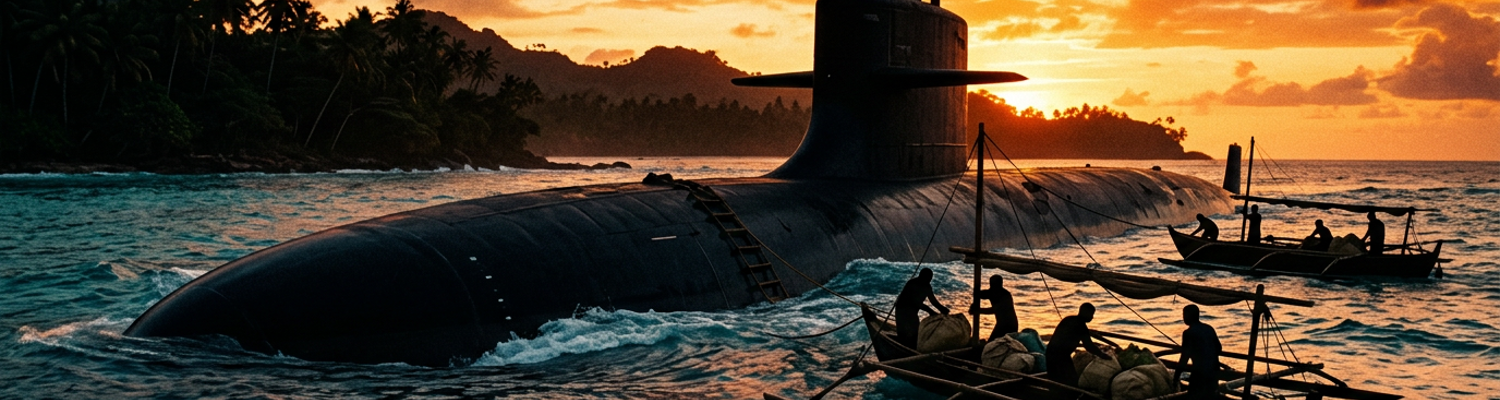
USS Crevalle surfaced off the southwest coast of Negros Island just before sunset on May 11, 1944, keeping its deck guns manned while crewmen searched the shoreline for the guerrilla signal. Lieutenant Commander Francis Walker guided the fleet submarine through shallow coastal shoals to meet wooden bancas launched through the breakers by local resistance fighters. Guerrilla boatmen transferred forty civilian evacuees, including twenty-eight women and children along with four wounded soldiers who had escaped the Bataan Death March, across the choppy water to the submarine deck. Deck crews hoisted the water-damaged Z Plan binders down the main hatch into the control room and locked the canvas-wrapped packets inside an officer stateroom for safekeeping. Sailors passed cases of ammunition, food rations, and medical supplies down into the waiting guerrilla boats to resupply the resistance units before the submarine cleared the beachhead.
Commander Walker ordered all deck hatches dogged shut and put his diesel engines at full speed, pointing the submarine south toward open water. Japanese patrol aircraft and surface escorts spotted the submarine three days into the return journey, subjecting Crevalle to severe depth-charge attacks that damaged its radar mast and plunged the hull deep below its safe operating limit. Torpedomen and machinists plugged interior leaks and restored basic propulsion while the civilian passengers and the intelligence cache remained secure in the forward compartments. Crevalle completed the hazardous transit across the Timor Sea and tied up at the submarine docks in Darwin, Australia, on May 19, 1944. Military intelligence couriers boarded the vessel, took custody of the sealed Z Plan binders from the control room, and rushed the waterlogged documents to an awaiting transport plane bound for Allied headquarters in Brisbane.
Document Restoration at ATIS Indooroopilly Headquarters
Transport pilots flew the sealed waterproof dispatch box across the Australian continent to Archerfield Airfield near Brisbane under strict military guard. Armed couriers transferred the metal container into an unmarked command car and drove directly through the western suburbs to Tighnabruaich, a sprawling three-story Victorian estate in Indooroopilly that served as the operational headquarters for the Allied Translator and Interpreter Section. Colonel Sidney Mashbir, commander of the joint intelligence agency, received the damp red leather portfolio inside a secure basement room alongside technical specialists. Seawater and high-octane aviation fuel had penetrated the guerrilla canvas wrappings during the submarine transit, cementing hundreds of thin Japanese rice paper sheets into a solid, foul-smelling block of decaying fiber. Mashbir inspected the blackened edges under overhead work lamps, realizing that any hasty attempt to pull the leaves apart by hand would tear the fragile fibers and erase the water-soluble ink.
Mashbir directed laboratory technicians to prepare specialized chemical baths to dissolve the hardened engine oil and ocean salt without destroying the hand-brushed naval text. Technicians lowered the compacted documents into shallow zinc trays filled with mild petroleum-based solvents and warm chemical wash mixtures that loosened the sticky fuel residue without dissolving the damp ink. Laboratory personnel used thin bone spatulas, soft artist brushes, and fine tweezers to tease each individual brine-saturated sheet away from the stack with light, steady pressure. Workers transferred every freed leaf of rice paper onto heated electric drying plates, regulating the surface heat to prevent the thin fibers from curling, shrinking, or crumbling into brittle flakes. Technicians pressed each stabilized page between sheets of clean blotting paper, revealing legible columns of Japanese naval kanji, detailed tactical charts, and secret fleet communications tables.
Guards from the intelligence detachment established a permanent security cordon around Tighnabruaich to enforce absolute secrecy while the physical preservation work progressed. Mashbir restricted access to the basement workrooms to a small cadre of vetted Japanese-American Nisei linguists and senior Australian and American officers who held maximum security clearances. Security personnel searched everyone entering the mansion, confiscated notebooks and personal cameras at the door, and logged all movements between workrooms to prevent unauthorized contact with the materials. Mashbir banned any radio transmission or unencrypted telephone conversation mentioning the Cebu crash, the recovery of Fukudome, or the arrival of captured Japanese naval documents in Australia. ATIS leadership recognized that even the slightest whisper of the find would alert Imperial Japanese Navy intelligence officers, who would immediately order fleet ciphers burned and rewrite Operation Plan Number 73 before Allied naval commands could act on the information.
Photographers from the ATIS reproduction section carried each dry, flattened sheet directly to high-resolution copy cameras set up in an adjoining darkroom. Technicians mounted the fragile rice paper originals behind heavy glass frames to hold the pages flat while taking dozens of sharp photographic negatives of every chart, map, and operational order. Darkroom crews developed the film negatives in chemical processing tanks, dried the photographic plates, and printed multiple sets of enlarged contact sheets for immediate distribution to the translation pool. Mashbir checked each finished print against the numbered originals, filing the delicate primary documents into fireproof steel safes under double lock and key. Translators seated at long wooden tables in the adjacent study hall pulled the photographic duplicates toward them, began penciling English translations across ruled legal pads, and prepared to decode the secret dispositions of the Imperial Japanese Navy.
Nisei Translation of Secret Operation Order 73
Yoshikazu Yamada and George Yamashiro, two experienced Military Intelligence Service Nisei linguists, divided the photographic duplicates into working stacks across the wooden tables to begin around-the-clock translation shifts. The linguists worked in alternating twelve-hour cycles under desk lamps to decipher columns of formal naval kanji and complex military abbreviations. Yamada focused on administrative orders, fleet distribution rosters, and cryptographic notes, while Yamashiro untangled dense operational sections packed with maritime jargon and tactical maneuvers. Coffee mugs piled up on the worktables as the translators debated the exact meaning of ambiguous characters, consulting specialized Japanese-English technical dictionaries to ensure total accuracy. Every completed English page passed immediately to reviewing officers who cross-referenced ship names, geographical coordinates, and radio call signs against existing Allied intelligence records.
Sheets of translated text assembled from these cross-referenced intelligence records exposed Combined Fleet Secret Operation Order Number 73, detailing the full doctrine of the Japanese A-Go decisive naval battle. The deciphered orders revealed that imperial naval planners intended to draw the United States Pacific Fleet into a single catastrophic engagement near the Mariana or western Caroline islands. Japanese commanders planned to commit their entire remaining naval strength, including nine aircraft carriers, massive battleships, and hundreds of island-based aircraft, to smash the American fleet in a decisive showdown. Translators decoded precise instructions for preliminary submarine scouting lines, deceptive bait maneuvers by secondary surface units, and concentrated air strikes against American carrier task forces. Yamashiro marked specific operational annexes that mapped out carrier strike group deployments and complex flight paths across Pacific island airfields.
Sidney Mashbir gathered these marked operational annexes to conduct a technical verification of Imperial Japanese Navy carrier strike group dispositions and integrated land-based air coordination grids. Mashbir worked alongside naval intelligence officers, comparing the translated Japanese fleet assignments against recent Allied radio traffic and submarine reconnaissance logs to confirm that the captured documents reflected current enemy plans rather than discarded drafts. The verification confirmed the three-division battle structure of Vice Admiral Jisaburo Ozawa and his First Mobile Fleet, identifying every carrier, battleship, and screening cruiser assigned to the strike force. Mashbir examined the land-based air coordination grids, which tied Ozawa and his carrier planes to naval bomber groups stationed on Guam, Saipan, Tinian, and Rota. This integrated coordination system relied on shuttle bombing, allowing Japanese carrier planes to launch beyond American radar range, attack United States ships, land on island airfields to refuel, and strike American vessels again on their return flight. Mashbir plotted these flight corridors and coordinate grids directly onto Allied operational master charts to confirm that every Japanese airfield staging base was accounted for.
Cartographers drafted clear tactical overlays from these plotted master charts, illustrating the exact routes Japanese carrier strike groups and land-based bombers would fly. Darkroom crews photographed the finished maps while typists cut mimeograph stencils of the translated Secret Operation Order Number 73, running the printing drums continuously to produce dozens of copies. Intelligence clerks assembled the mimeographed pages, tactical charts, and air coordination grids into thick dossiers bound in heavy paper covers. Mashbir signed the verification certificates and stamped each portfolio with top-secret classification marks, confirming that the deciphered A-Go battle plans were authentic and operationally verified. Armed couriers loaded the sealed packets aboard awaiting transport planes at Archerfield Airfield, dispatching the authenticated battle orders across the Pacific to Admiral Chester Nimitz and Fifth Fleet commander Admiral Raymond Spruance before their warships engaged.
Dissemination of ATIS Limited Distribution Translation 4
Transport planes took off from the Brisbane runway carrying the first operational summaries into the night, while assembly crews at the Indooroopilly estate finished the publication and binding of the complete Japanese operational plan as ATIS Limited Distribution Translation Number 4 on May 23, 1944. Colonel Sidney Mashbir supervised the hand assembly of thirty-two mimeographed copies, ensuring that every twenty-two-page volume received stiff cardstock covers and secure brass fasteners. Clerks stamped each finished dossier with red top-secret warning marks and registered individual distribution numbers on a master control log to track every copy. Mashbir assigned Copy Number One for delivery to General George C. Marshall in Washington and designated Copy Number Two for General Douglas MacArthur, while intelligence officers packed the remaining binders into locked leather courier pouches. Armed officers took charge of these locked pouches and boarded transport aircraft to begin rapid delivery runs across multiple Allied Pacific commands.
Pilots flew courier aircraft north over the Coral Sea and crossed the high spine of the Owen Stanley Range, delivering copies to General Douglas MacArthur and his Southwest Pacific Area headquarters in Hollandia. Staff couriers carried the sealed binder directly into the advance command post, handing the papers to MacArthur and his intelligence chief, Major General Charles Willoughby. Willoughby examined the translated deployment schedules and confirmed that the Japanese Combined Fleet was gathering its naval forces to defend the Marianas rather than moving south to disrupt American operations along the coast of New Guinea. MacArthur reviewed the enemy order of battle and recognized that his upcoming amphibious landings on Biak Island could proceed without interference from Japanese aircraft carriers. Southwest Pacific Area headquarters signaled field commanders to accelerate their assault schedules on New Guinea, knowing that Imperial Japanese Navy warships were sailing east toward American naval formations in the Central Pacific.
Navy transport aircraft completed the long overseas dispatch of translated binders to the Joint Intelligence Center, Pacific Ocean Areas and Fourteenth Naval District at Pearl Harbor to alert those Central Pacific naval forces. Cryptanalysts and naval linguists at the Pearl Harbor intelligence center opened the pouches and began a line-by-line review of the translated orders. Navy specialists noticed that army translators in Australia had used standard ground force phrasing, prompting Admiral Chester Nimitz to order a precise naval retranslation of every nautical term and ship disposition. Linguists from the Joint Intelligence Center reconciled Japanese fleet call signs, coordinate grids, and carrier flight doctrines against existing Pacific Fleet radio intelligence. Analysts confirmed that Vice Admiral Jisaburo Ozawa commanded nine aircraft carriers and planned to launch shuttle bombing attacks using airfields on Saipan and Guam. Intelligence officers reprinted the revised naval text alongside detailed plotting maps and bound the finished volumes into emergency operational packets for fleet flag officers.
Couriers rushed these operational packets aboard dispatch boats and patrol aircraft directly to warships gathering at forward anchorages across the central Pacific. Admiral Raymond Spruance received his personal binder aboard the heavy cruiser USS Indianapolis and studied the exact routes Japanese carrier strike groups planned to navigate. Vice Admiral Marc Mitscher reviewed identical tactical charts aboard the carrier USS Lexington, matching his fighter squadrons against the predicted Japanese launch vectors. Spruance placed his battleships and anti-aircraft cruisers into defensive screening formations around American troop transports off Saipan, refusing Japanese bait maneuvers that were explicitly identified in the translated plan. Carrier task groups took up combat stations west of the Mariana Islands with fighter direction officers briefed on enemy shuttle bombing tactics, preparing radar teams and deck crews for the approaching Japanese naval strike.
Fifth Fleet Tactics in the Philippine Sea
Couriers delivered fresh printings of the translated Japanese fleet doctrine and tactical grid maps directly to Admiral Raymond A. Spruance inside the flag plot of the heavy cruiser USS Indianapolis as radar teams searched the western horizon. Spruance spread the captured operational charts across his plotting table, tracing the precise flight corridors that Admiral Mineichi Koga and his staff had assigned to the Imperial Japanese Navy. These grid maps revealed the exact operational boundaries, radio frequencies, and cruising formations of the enemy vanguard, battleship groups, and carrier divisions, giving Fifth Fleet commanders advance knowledge of Japanese tactics. Spruance compared the enemy movement sectors against his own fleet positions, noting how the Japanese battle plan relied on striking American carriers from distances exceeding three hundred miles, well beyond normal American scouting range. Knowing these exact distances and operational plans allowed the American admiral to anticipate how the enemy fleet would try to exploit its longer aircraft range during the opening phases of the engagement.
Vice Admiral Marc Mitscher incorporated this captured Japanese carrier disposition data directly into Task Force 58 combat air patrol dispositions to shield the fleet against the expected long-range strikes. Fighter directors aboard the fleet carrier USS Lexington arranged Hellcat fighter squadrons into layered defensive stacks, stationing interceptors at specific altitudes and bearings that matched the approaching Japanese attack vectors. Radio teams fed real-time shipboard radar plots to these airborne fighter patrols, directing divisions of Grumman F6F Hellcats toward the exact flight sectors where Japanese dive bombers and torpedo planes were expected to gather. Flight deck crews kept dozens of armed fighters warmed up and spotted on catapults, ensuring fresh combat air patrols could launch instantly to replace returning aircraft low on fuel or ammunition. This synchronized fighter screen turned incoming Japanese flight formations into vulnerable targets for American pilots long before enemy aircraft could reach bomb release points above the American carriers.
Admiral Raymond A. Spruance evaluated these defensive air victories while studying the exposed transports and supply ships unloading along the Saipan shoreline. Senior carrier aviators urged Spruance to steam Fifth Fleet west during the night to hunt down the retreating Japanese carriers, but Spruance rejected their advice. Spruance made the deliberate decision to anchor Fifth Fleet movements directly to the Saipan beachhead, refusing to abandon the vulnerable amphibious forces to an enemy end-around attack. This disciplined station-keeping destroyed the core premise of Admiral Jisaburo Ozawa and his planned shuttle-bombing maneuver, which depended on American warships pursuing the Imperial fleet into open waters while Japanese carrier planes bombed the carriers and flew on to land-based airfields on Guam and Rota. Ozawa sent four successive waves of carrier aircraft into the sector, but the planes found Fifth Fleet holding firm near Saipan beneath concentrated anti-aircraft gunfire and dense combat air patrols.
Hellcat pilots and shipboard anti-aircraft gunners systematically destroyed hundreds of Japanese aircraft during Ozawa and his failed shuttle strikes throughout June 19, 1944. Exhausted Japanese aircrews who survived the American fighter screens arrived over Guam and Rota only to find American bombs had cratered the runways, leaving them no safe place to land. Ground crews watched disabled Zero fighters and Judy dive bombers crash along island beaches and coconut groves as their fuel gauges dropped to empty. American battleships and destroyers maintained an unbroken protective ring around the Saipan invasion fleet, keeping every transport ship completely intact while the Imperial Japanese Navy lost over three hundred carrier planes and three aircraft carriers across the engagement. Spruance held Fifth Fleet in tight formation west of the Mariana Islands, securing the amphibious foothold on Saipan and leaving Japanese naval aviation permanently crippled.