Combat Fatigue and Sustained Tempo Off Mindoro
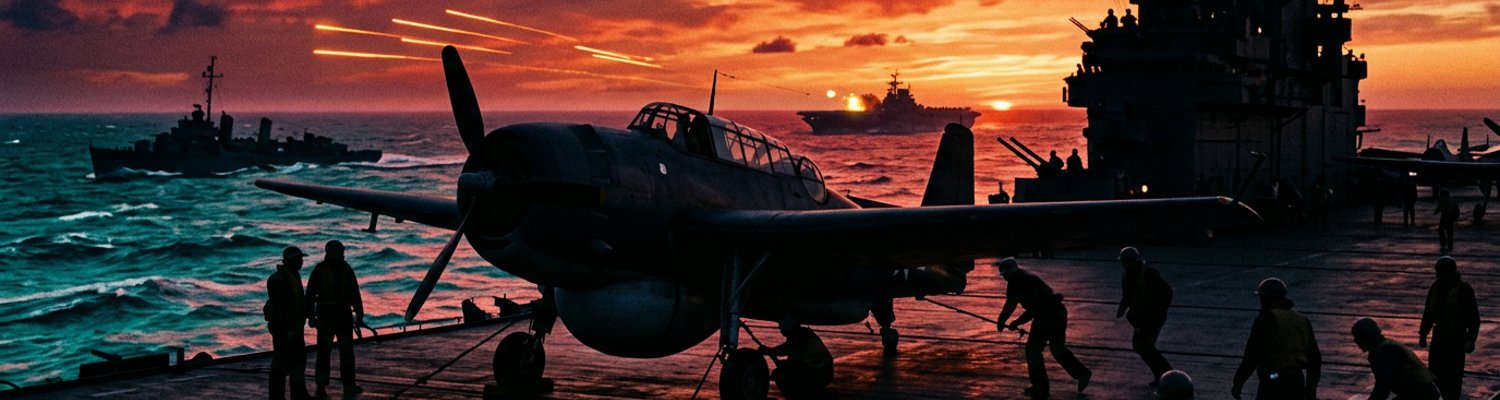
Piston rods inside the starboard arresting gear engine of USS Essex sheared apart under the violent impact of a battle damaged Grumman F6F Hellcat landing hard on the flight deck. The tailhook tore loose from the aircraft rear fuselage frame, sending high tensile steel cable whipping across the wooden deck. Hydraulic fluid erupted from the fractured accumulator cylinder under high pressure, spraying the catwalks and pooling around the lower maintenance gallery. Damage control sailors charged directly into the spraying oil with hand extinguishers, cut away the snarled arresting wire with oxygen acetylene torches, and manually bled the reserve valves to restore partial hydraulic pressure. Flight deck crews handled heavy bombs, loaded ammunition belts, and serviced hot aircraft engines for seventy straight hours without meaningful rest, pushing their bodies past normal operational limits.
Muscle fatigue and cumulative sleep deprivation degraded situational awareness across bridge watchstanders and task force command staffs following these seventy hours of continuous flight operations. Continuous general quarters alerts, tropical heat, and endless combat sorties stripped away the remaining stamina of the sailors operating the heavy machinery. Temperatures in the lower compartments regularly rose past one hundred degrees, creating intense heat below decks that prevented off duty men from sleeping during their brief rest periods. Helmsmen struggled to keep their eyes open while steering large warships, radar operators missed faint blips on glowing cathode ray tubes, and junior deck officers fumbled routine tactical maneuvers. Task force staff planners struggled to process reconnaissance reports, their slowed thinking and blurred vision causing miscommunications between carrier task groups.
Boilers aboard the screening destroyers burned immense quantities of bunker oil to maintain thirty knot speeds while shielding the carrier groups from persistent enemy threats. High operational speeds, combined with constant zigzag patterns and evasive maneuvers, rapidly emptied the fuel tanks of these smaller warships. Critical fuel depletion among accompanying light destroyers forced Admiral William F Halsey to prioritize mid ocean replenishment east of Luzon on December 17 1944 over storm avoidance. Ships such as USS Hull, USS Monaghan, and USS Spence consumed their oil reserves until gauges registered near empty levels, leaving them dangerously unstable in the mounting Pacific swells. Light destroyers relied on the weight of bottom tank fuel oil for ballast to counter the heavy topside weight of radar masts, guns, and director towers.
Ballast deficiencies made immediate refueling the only practical way to keep these top heavy escorts from capsizing in the worsening ocean chop. Fueling crews on the supply tankers and destroyers wrestled heavy rubber lines across churning water gaps, but rising crests repeatedly ripped the hoses away and smashed bronze couplings against the hull plates. Line handling parties on the wet forecastles slipped on slick steel decks, dodging thrashing cables as the ships swung violently through thirty degree rolls. Destroyers took on only tiny fractions of their needed fuel before parting hawsers forced commanders to abort the hookups. Halsey ordered the fueling operations paused and scheduled a renewed attempt for the following morning, keeping the exhausted, low ballast ships directly in the path of the converging cyclone.
Weather Miscalculations and Tactical Trapping East of Luzon
Commander George F Kosco plotted the fleet new rendezvous positions across the navigational charts of the flagship USS New Jersey, trying to guide the low fuel warships toward calmer waters for the morning fueling. Physical exhaustion and sleep deprivation dulled the critical judgment of the aerological staff after three days of relentless combat support operations off Mindoro. Aerologists worked in cramped, dimly lit plotting rooms where humidity curled the edges of their paper maps and sweat smeared pencil lines. Third Fleet aerological officer Commander George F Kosco miscalculated the storm center by over 100 nautical miles due to sparse oceanic barometric reports and misleading weather data. Isolated weather outposts on distant islands transmitted conflicting pressure readings that gave the impression of a harmless atmospheric trough rather than a rapidly intensifying, tightly packed disturbance. Bridge watchstanders accepted these inaccurate projections without challenge because continuous general quarters drills and heavy heat had eroded their capacity to cross examine incoming navigational data.
Admiral William F Halsey shifted fleet fueling coordinates repeatedly based on these flawed projections, steering Task Force 38 directly into the path of an intensifying tropical cyclone with sustained winds exceeding 100 knots. Helmsmen fought to hold their courses as each successive order threw the carrier task groups into heavier cross swells and rising head seas. Boiler rooms on the screening destroyers consumed precious reserves of fuel oil battling the surging chop, while exhausted water tenders fought disorientation in engine spaces exceeding one hundred and fifteen degrees. Machinist mates lost their footing on slick floor plates, scalded by leaking steam pipes as violent ship rolls dislodged unsecured tools and deck gratings. Thick rain squalls and gray cloud banks swept across the formation, blinding lookout teams and preventing bridge crews from recognizing the distinct circular cloud patterns of an approaching typhoon. Halsey believed these maneuvers would bring the fleet into shielded waters for emergency fueling, but the constant turns drove the top heavy warships straight toward the advancing vortex.
Mandates for radio silence and communication delays between Task Force 38 and Task Group 30.8 replenishment vessels prevented timely tactical dispersal before barometric pressures plummeted below 27.30 inches. Wartime security doctrines strictly forbade broadcast transmissions to conceal the fleet from Japanese reconnaissance, restricting bridge officers to visual blinker signals and ultra high frequency tactical talk circuits. Sheets of horizontal spray and screaming wind gusts rapidly extinguished visual signal lamps, while antenna masts whipped violently enough to snap lead lines and garble outgoing messages. Fleet oilers fell miles behind their assigned stations, unable to pump oil or coordinate rendezvous points across the whiteout conditions. Communication watchstanders collapsed over their equipment after days without rest, letting urgent contact reports from scattered oilers sit unprocessed on radio shack clipboards.
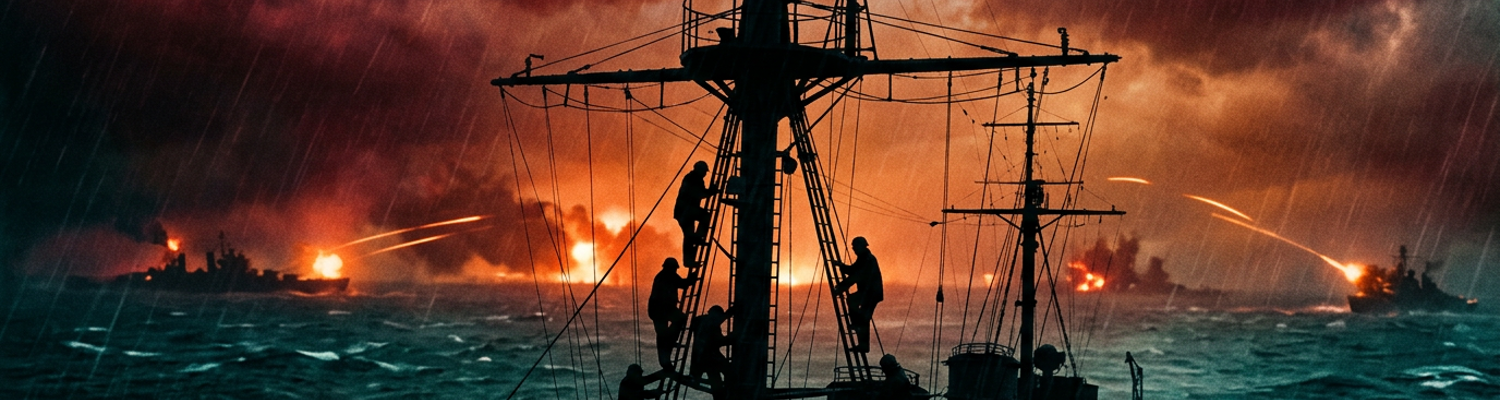
Captains aboard the fuel starved destroyers waited in vain for dispersal permissions from the flagship as the storm enveloped their isolated formations. Ships rolled past sixty degrees into mountain sized waves, throwing crewmen against bulkheads and fracturing limbs among exhausted engine room gangs. Seawater poured down ventilation cowls and flooded through severed intake trunks, drowning electrical switchboards and shorting emergency lighting across the lower hull compartments. Firemen and water tenders stood waist deep in oily water, fighting to relight drowned burners while toxic fumes filled the dead air spaces. Damage control parties fought pitch black compartments and rising bilges with portable submersible pumps, struggling to keep generators running while their warships swung toward their permanent capsizing angles.
Fueling Rendezvous Failures and Ballast Depletion
Pumps could not correct these fatal list angles because nearly empty fuel bunkers deprived the light warships of essential low down ballast. Seventy foot swells and gale force gusts repeatedly parted fueling hoses, forcing the cancellation of underway replenishment with destroyer bunker reserves down to critical ten to fifteen percent thresholds. Fleet oilers rolled violently through thirty degree arcs as surging crests threw them within yards of the escorting destroyers, snapping messenger lines and wrenching heavy steel replenishment booms off their swivel pins. Line handling parties on drenched forecastles fought freezing spray and diesel slick steel decks, struggling to haul thick rubber fuel hoses across boiling water gaps while exhausted sailors lost their footing and slid against lifeline stanchions. Bronze hose couplings fractured against ship hull plating with loud metallic cracks, spraying gallons of viscous bunker oil across open decks before tension winches could retrieve the flailing lines. Task force commanders recognized that the whipping gear threatened to crush deck crews and rip out deck fittings, prompting them to terminate all replenishment attempts and order the fuel starved destroyers to break away into the storm.
Destroyers of the Farragut class broke away from the fleet oilers with their bottom hull plates riding precariously high out of the water. Top heavy Farragut class destroyers, modified with heavy wartime radar suites and additional 40mm anti aircraft batteries, possessed severely diminished righting arms when unballasted. Navy shipyards had packed tons of new machinery high above the main decks during successive wartime overhauls, installing twin and quad Bofors gun tubs, fire control directors, and bulky radio mast antennas without adding matching counterweights to the lower hull spaces. Righting arms that once generated powerful mechanical leverage to snap a rolling warship back upright shrank to mere fractions of an inch once bottom fuel tanks emptied down to residual sludge. Bridge officers on ships like USS Hull and USS Monaghan watched mechanical inclinometer needles swing past forty degrees during routine turns, fighting intense dread as the hulls hung suspended at the apex of each roll before sluggishly pulling themselves back. Exhausted watchstanders recognized that these top heavy modifications had transformed their nimble prewar destroyers into unstable pendulums that could not survive a sudden wind knockdown without bottom weight.
Skippers resisted taking on seawater ballast because contaminated fuel lines would disable boilers, leaving unballasted vessels unable to maintain steerageway in the storm troughs. Flooding bottom fuel compartments with hundreds of tons of seawater would restore stability to the keel, but incoming brine would stir up thick petroleum sludge and contaminate the vessel fuel manifolds. Saltwater contamination reaching the burner tips would instantly extinguish firebox flames, stripping boilers of operating pressure and killing steam to propulsion turbines and electrical generators. Captains knew that dead boilers meant total paralysis, leaving ships without hydraulic power for steering gears, lights for flooded compartments, or electricity for emergency bilge pumps. Commanding officers chose to keep their remaining clean oil flowing to the burners in a desperate bid to maintain propeller revolutions and hold their ship bows into the advancing seas. Monstrous wind gusts quickly overpowered the lightened bows, spinning the unballasted destroyers broadside into deep wave troughs where rudders lost all directional bite and hulls rolled helplessly on their beam ends.
Destroyer Capsizings and Hull Failures
Destroyer USS Hull took the brunt of these broadside impacts as monstrous crests slammed against her unballasted hull plates and drove the warship onto her side. Exhausted bridge watchstanders clung desperately to bulkhead rails with blistered hands, their mental sharpness entirely gone after four continuous days of general quarters alerts and relentless tropical heat. Inclinometer needles swung wildly past fifty and sixty degrees while machinist mates in the boiler rooms slipped across grease covered floor plates, struggling to keep their footing as loose tools, heavy floor gratings, and unsecured equipment crashed around them. Bridge officers debated counterflooding the empty bottom fuel tanks with seawater, but cumulative sleep deprivation and cognitive fog paralyzed their judgment during the final critical minutes when ballast weight might have saved the ship. USS Hull took rolls past seventy degrees before hurricane force winds pinned her on her beam ends, allowing sea water to flood the stacks and down the ship with 202 casualties. Ocean water rushed straight down the exposed boiler uptakes, extinguishing the fires in blinding clouds of scalding steam that killed all electrical power and left the hull overturned in the boiling foam.
Destroyer USS Monaghan wallowed through the same boiling foam less than five miles away, her crew paralyzed by physical exhaustion as heavy rain and driving spray blinded the bridge lookouts. Cumulative sleep deprivation and continuous combat tempo off Mindoro had pushed the officers and sailors past their breaking points, leaving bridge personnel unable to coordinate emergency maneuvers as sixty foot seas repeatedly crashed over the forecastle. Water tenders in the sweltering fire rooms worked in states of severe mental fog and physical delirium, having endured seventy hours of high tempo combat support without meaningful rest or hot food. USS Monaghan suffered total electrical failure when sea spray drowned her switchboards, causing her to capsize to starboard with only six surviving sailors out of 256 aboard. Darkness swallowed the lower compartments the moment the main generators died, leaving firemen and machinist mates trapped in sweltering boiler spaces where oily water rose rapidly above their waists and scalded their limbs. Wind and ocean swells pushed the dead destroyer flat onto the ocean surface, driving her starboard deck edge under water until the hull rolled keel upward and plunged downward.
Destroyer USS Spence shared this downward plunge as screaming gusts drove the light warship directly into the deepest wave troughs of the storm center. Exhaustion dulled the reflexes of the bridge crew, who had stood watch for days without relief while tracking radar contacts and fighting heavy cross swells in the open sea. Helmsmen fought severe vertigo and cognitive collapse as the ship pitched violently through the darkness, stripping the depleted watchstanders of their ability to anticipate the monstrous wave crests. USS Spence experienced severe rudder jamming and ventilator flooding, rolling completely over into the trough with the loss of 317 officers and crewmen. Torrential cascades of seawater poured down the shattered ventilator cowls directly into the lower engine rooms, shorting out electrical motors and drowning the emergency bilge pumps before damage control parties could seal the openings. Trapped air inside the hull burst out through ripped deck seams as the ship turned turtle, throwing dozens of oil soaked sailors into the churning ocean before the inverted steel hull sank beneath the surface.
Hangar Deck Collapses and Firefighting Under Extremis
Ocean swells that drowned the destroyers slammed directly into the light carriers USS Monterey, USS Cowpens, and USS Langley as the cyclone reached peak fury across the formation. Flight deck tiedowns and heavy hangar cable restraints failed on these light carriers during violent rolls exceeding thirty degrees. Exhausted deck crews, already pushed past physical limits by three continuous days of combat flight operations off Mindoro, could only watch in terror as high tensile steel tie down chains stretched and sheared under the immense lateral loads. Sleep deprivation and severe muscular fatigue dulled the men reflexes, leaving sailors unable to dodge the severed cables that whipped across the metal decking with lethal force. Every heavy roll beyond thirty degrees snapped additional turnbuckles and ripped welded deck pad eyes clean out of the structural plating, turning tightly packed air groups into uncontrolled masses of sliding machinery.
Steel landing gear struts sheared apart across the enclosed spaces as loose F6F Hellcats and TBF Avengers acted as battering rams across slick hangar decks, severing auxiliary fuel lines and igniting massive aviation gasoline blazes below decks. The five ton aircraft slid back and forth across the wet, oily steel with every tilt of the hull, smashing into bulkheads and crushing neighboring planes into piles of tangled wreckage. High octane aviation gasoline erupted from ruptured auxiliary wing tanks and sliced deck fuel lines, mixing with pooled saltwater to create deep pools of volatile fuel. Friction sparks from grinding aluminum and steel quickly ignited the vapor, generating widespread fires that swept from frame to frame. Mental exhaustion rapidly shifted into panic among the trapped hangar crews, who struggled to maintain footing on the oily deck while suffocating smoke filled the compartment and intense heat began cooking off machine gun ammunition. Toxic fumes and blinding soot poured straight into the ship air intakes, forcing ventilation blowers to push deadly carbon monoxide down into the propulsion machinery spaces.
Lieutenant Gerald R Ford donned a gas mask to assess hangar conflagrations and lead damage control parties through suffocating smoke aboard the heavily damaged USS Monterey. Ford gripped blistering handrails to descend into the darkened, smoke filled hangar bay, where blinding soot reduced visibility to inches and heat melted the insulation off overhead electrical cables. The future president found damage control parties reeling from smoke inhalation and combat fatigue, paralyzed by the scale of the blazes and the continuous noise of exploding heavy caliber cartridges. Ford rallied the exhausted sailors through direct physical direction, organizing hose teams to lay down foam blankets and operate manual fire equipment across the violently tilting deck. Water and chemical foam washed over the burning deck, but the fierce gale repeatedly blew the smothering agents away, forcing the men to fight the flames at close range.
Firefighters advanced directly into the blistering heat with handheld nozzles, spraying continuous streams of seawater to cool unexploded aerial depth charges and volatile fuel tanks. Damage control teams improvised urgent measures to eliminate the fuel sources feeding the conflagration on USS Monterey and the companion carriers. Sailors lashed emergency recovery cables to the blackened skeletons of burning Hellcats and Avengers, using physical strength and ship winches to haul the wrecked planes toward the deck openings. Exhausted deck hands shoved several charred aircraft through the hangar doors and over the ship side, sending tons of burning metal into the rough sea below. Boiler technicians in the sweltering fire rooms below decks used wet rags over their faces to breathe, manually operating feed pumps to keep steam pressure up while the hangar deck fires were brought under control. Damage control officers finally secured the charred hangar spaces after hours of intense firefighting, leaving the battered carrier with extensive structural damage, dozens of destroyed warplanes, and an utterly spent crew.
Trauma Triage Amid Chemical Burns and Blackouts
Corpsmen carried wounded sailors away from the charred hangar bays and down through narrow escape scuttles into the ship interior. Triage teams treated waves of casualties suffering compound fractures, traumatic limb amputations from shifting rolling stock, and chemical skin sloughing caused by sloshing seawater and fuel mixtures. Broken Hellcats, loose aircraft tugs, and tumbling auxiliary fuel tanks had battered flight deck personnel across oil slicked decking, crushing bone and ripping flesh before firefighting teams could secure the loose machinery. High octane aviation gasoline floating atop pools of seawater soaked through the dungarees of the sailors, chemically burning their limbs and causing large sheets of skin to peel away in raw layers. Medical attendants snipped away sodden clothing with trauma shears, washing exposed chemical burns with sterile saline while burned crewmen shivered from severe shock and physical exhaustion. Stretcher bearers carried these casualties deeper into the hull toward secondary dressing rooms as ventilation ducts pulled thick gasoline vapors down into the lower compartments.
Gasoline vapors rapidly permeated the lower decks after damaged blowers sucked raw fuel mist from the hangar blazes into the ship interior. Naval surgeons and corpsmen operated in pitch darkness, using battle lanterns in listing sickbays fouled by toxic, atomized aviation fuel fumes. Severed electrical trunks and flooded auxiliary switchboards killed compartment lighting, leaving medical teams to work under the faint, swinging beams of handheld battery lamps while toxic petroleum mists burned their eyes and airways. Surgical assistants gripped bulkheads with one hand and held lanterns with the other, pinning operating tables against the walls as the ship heeled through thirty degree rolls. Surgeons clamped severed arteries and performed emergency amputations amid the violent pitching, desperate to control internal bleeding before unconscious sailors succumbed to shock. Exhausted surgical teams applied tourniquets and packed gaping wounds with sulfa powder, pushing their failing physical strength to the limit as fresh casualties continued to arrive from flooded engineering spaces.
Ropes and canvas straps secured the wounded against the hull plating as violent rolls threw unsecured equipment across the sweltering medical compartments. Medical personnel lashed litter patients directly to structural bulkheads to prevent immobilized sailors from being thrown across wet, pitching steel deckplates. Corpsmen bound the stretchers tightly against exposed steel frames and overhead steam pipes, elevating patients above the contaminated bilge water sloshing across the deckplates. Suspended casualties hung sideways along the tilting walls, groaning as sudden shifts in gravitational load stressed freshly splinted compound fractures and raw surgical stumps. Freezing seawater and fuel oil continued to splash over the tied stretchers, but the sturdy lashings kept the immobilized men from dropping into the oily pools below. Exhausted corpsmen waded through the greasy bilge water from bulkhead to bulkhead, replacing soaked bandages, administering morphine syrettes, and monitoring weak pulses as the cyclone continued to batter the hull.
Court of Inquiry and Institutional Reforms
Warships of the Third Fleet limped into the sheltered lagoon at Ulithi naval base with flooded compartments, buckled flight decks, and hundreds of maimed sailors requiring immediate onshore hospitalization. Admiral Chester Nimitz convened a Court of Inquiry at Ulithi naval base to uncover the tactical and command failures that led the fleet directly into the storm center. Court members, led by Vice Admiral John H Hoover, interviewed shell shocked watchstanders, battered destroyer captains, and aerologists who were still suffering from profound physical depletion and cognitive collapse. Bridge officers testified that seventy hours of continuous combat alerts off Mindoro had completely drained their mental sharpness, making it impossible to interpret the plunging barometers and erratic wind shifts accurately. Senior officers admitted that cumulative sleep deprivation had warped their judgment, replacing objective tactical reasoning with an irrational obsession to complete the fueling mission at all costs. The inquiry determined Halsey committed errors of judgment driven by operational tunnel vision and acute fatigue, concluding that the admiral prioritized the schedule of the Mindoro landings over the obvious meteorological warnings threatening his ships.
Investigators documented 790 naval personnel killed, 146 aircraft destroyed, and severe structural damage to over a dozen fleet units across Third Fleet. Shipyard repair teams at Ulithi inspected crushed carrier catwalks, torn arresting engines, twisted destroyer superstructures, and buckled hull plates that required months of emergency drydock repairs. Surviving sailors from the capsized destroyers described floating for days in the open sea while fighting delirium, physical exhaustion, and untreated chemical burns before rescue craft pulled them from the water. Medical officers testified that surviving crews throughout the task force exhibited acute combat neurosis, showing involuntary muscle tremors, blank stares, and total emotional numbness following days of unrelenting terror. Technical inspectors discovered that continuous general quarters alerts had prevented maintenance crews from securing heavy deck gear, which turned loose equipment into destructive projectiles that smashed through bulkheads. Naval leaders confronted the harsh reality that environmental forces and human exhaustion had inflicted more tactical damage on Third Fleet than any single Imperial Japanese Navy surface engagement of the Pacific War.
Admiral Chester Nimitz responded to these devastating findings by overhauling the weather forecasting apparatus of the entire Pacific theater to ensure task force commanders never navigated into an undetected cyclone again. The disaster directly compelled the United States Navy to establish the Pacific Fleet Weather Central at Guam and implement strict meteorological tracking doctrines for carrier task groups. Naval aviators flying stripped down Consolidated PB4Y-1 Liberators were assigned to fly daily weather reconnaissance missions directly into tropical disturbances to pinpoint storm coordinates, central pressures, and wind speeds before fleet units approached danger zones. Fleet aerologists received modern radar equipment and dedicated radio channels to broadcast immediate storm warnings directly to bridge watchstanders, bypassing congested operational communication lines. Revised naval regulations also granted individual ship captains explicit authority to flood fuel tanks with seawater ballast and alter course away from heavy seas without waiting for permission from the task group commander. Maintenance crews simultaneously replaced worn out deck fittings across all fleet carriers, installing high tensile steel tie down chains and heavy duty pad eyes to keep aircraft anchored against hurricane force winds.