
Failure of Interwar Doctrine and Serial 10327
Reefs and jagged coral formations flanked the narrow transit lanes of the South China Sea. American submarine crews had almost no room to maneuver as violent winter storms battered the western Pacific. Heavy monsoon fog rolled over the surface each night, cutting visibility down to several boat lengths and hiding both shallow banks and enemy patrol craft in a thick gray blanket. Inside the pitch black submarine hulls, temperatures routinely climbed past one hundred degrees, mixing stale sweat with leaking diesel oil and battery acid. Escaping Japanese depth charge attacks in these restricted waters meant dropping all the way down into the mud, which sharply increased the danger of a catastrophic hull rupture against the rocky bottom.
Hull plating scraped along these jagged seafloors because peacetime tactics forced boats to operate submerged in bright daylight. Declassified patrol logs and tactical summaries in Serial 10327 documented how peacetime doctrine mandated submerged daylight periscope approaches against enemy ships. Prewar naval planners had taught officers that rising to the surface during the day invited instant destruction from enemy aviation. Captains had to creep forward at two knots while relying strictly on brief periscope observations through glass lenses. Submerged boats drained their heavy storage batteries within hours, creating hazardous buildups of toxic fumes while their target vessels easily pulled away over the horizon.
Freighters that passed directly in front of the periscopes exposed another catastrophic flaw in American naval planning. Torpedo crews struggled with the severe physical limitations of the Mark 18 electric torpedo. Temperamental battery cells inside these weapons off-gassed explosive hydrogen into the bilges and restricted sprint speeds to twenty-nine knots. The magnetic Mark 6 exploder suffered chronic depth keeping and premature detonation failures against Japanese merchant shipping. Torpedoes fired on textbook firing angles routinely ran ten feet beneath target keels or exploded prematurely in open water hundreds of yards short of their targets. Submarine captains watched through periscope eyepieces as multiple perfect spreads produced thunderous surface geysers without striking iron.
Commanders on the frontline recognized that rigid peacetime directives caused catastrophic interception failures across western Pacific patrol zones. Skipper after skipper realized that continuing to follow prewar doctrine would lead to total mission failure and the needless loss of their boats. Patrol crews began surfacing under the cover of night, using SJ search radar to track targets through heavy monsoon fog and slip through gaps in Japanese escort screens. Torpedo gangs disabled the unreliable magnetic exploders to rely strictly on impact detonation. Deck officers adjusted their fire control solutions for close range surface attacks under the night sky, allowing the diesel engines to run wide open and overtake retreating convoys.
Mark 18 Battery Bottlenecks and Hydrogen Hazards
Mark 18 electric torpedoes slipped into the forward firing tubes to support these close range nocturnal attacks. Deck officers valued this stealth capability because standard steam gas torpedoes left prominent white wakes of compressed air and exhaust bubbles that enemy lookouts easily traced back to the submarine position. The Mark 18 electric torpedo eliminated daytime wake visibility but severely limited sprint speed to less than thirty knots. Japanese merchant vessels and subchasers easily outran weapons traveling at twenty-nine knots whenever convoy lookouts spotted the submarine before the torpedoes reached their targets. Submarine captains had to stalk enemy ships from sharper forward angles and close the range to less than fifteen hundred yards to compensate for this sluggish run speed. Course changes by Japanese helmsmen completely wrecked these tight geometry calculations, leaving the slow torpedoes to churn through empty water while the escorts turned to counterattack.
Depth charges dropped by Japanese destroyers forced the submarines deep into the mud, beginning hours of silent running that exposed the crews to a second internal hazard. Lead-acid battery cells off-gassed explosive hydrogen gas into forward torpedo rooms, creating acute detonation hazards during long submerged patrols. Torpedo crews stored dozens of these heavy weapons in the forward compartment, where each weapon contained a massive battery assembly of eighty cells generating corrosive fumes. Confined hull spaces trapped this odorless gas in the overhead pockets of the compartment, where ambient concentrations climbed steadily whenever the submarine remained submerged to evade depth charges. Torpedo gunners watched the dial needles on portable combustible gas indicators climb past four percent, identifying the critical boundary where a single spark would trigger a catastrophic compartment explosion. Condensation and battery acid mist coated the steel bulkheads and open electrical switches, making every metallic movement inside the forward room a potential ignition source.
Sparks from wet switches threatened instant destruction, forcing torpedomen to abandon the rigid servicing directives issued by naval ordnance bureaus. Submarine crews relied on portable hydrogen burners and hazardous ventilation routines rather than depot mandated servicing guidelines. Torpedomen positioned portable catalytic burners along the narrow walking deck, using electrically heated platinum filaments to convert accumulated hydrogen gas into harmless water droplets. Motor machinists simultaneously modified the submarine piping by connecting auxiliary air hoses directly from the torpedo room bilges into the diesel intake ducts. Submarines surfaced under cover of darkness to clear the forward hull, opening the bypass valves so the big diesel engines could pull the volatile air out of the compartment and vent it overboard. Escaping fumes roared through the ventilation manifold at high velocity, requiring torpedomen to regulate the air valves by hand while watch standers searched the moonlit sea for enemy hunter-killer groups.
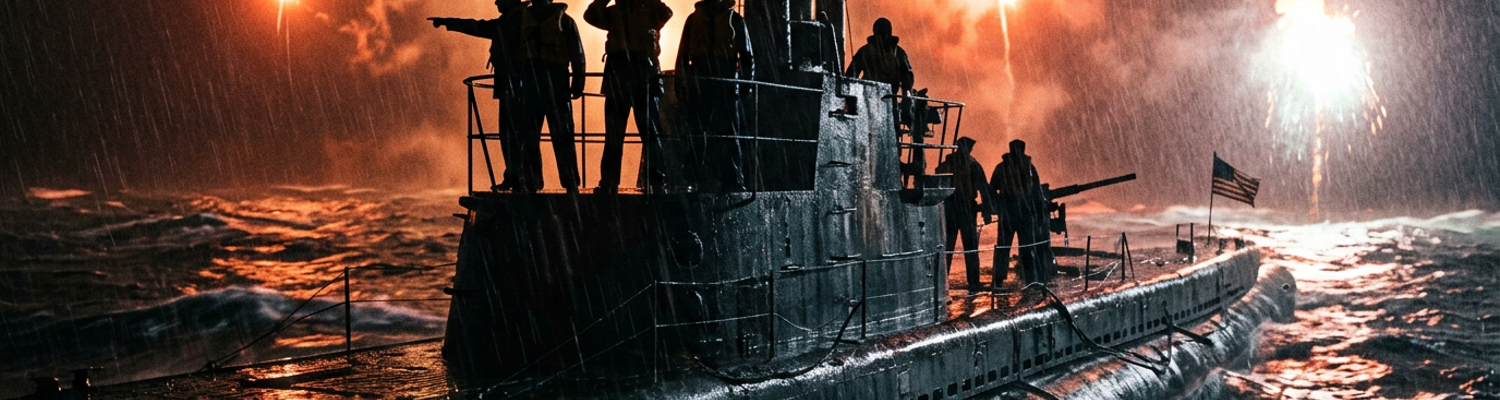
Lookouts gripped their binoculars on the open bridge during these surface blowdowns, straining to detect incoming aircraft through the driving monsoon drizzle. Sudden blinding flashes shattered the night whenever Japanese escorts fired star shells over the water, lighting up the submarine hull in a searing chemical glare. Skippers shouted crash dive commands into the bridge voice tubes, sending the deck force through the conning tower hatch before the forward torpedo room had purged its dangerous hydrogen levels. Electricians killed main lighting circuits and pulled secondary fuse blocks throughout the boat to prevent stray electrical arcs while the hull plunged toward the bottom. Torpedo gangs sat in pitch black darkness with salt soaked rags pressed across their mouths, monitoring battery casing temperatures with shielded red flashlights as depth charges shook the forward compartment. Frontline crews held their positions next to the flooded tubes and waited out the enemy attack, determined to keep their slow running electric weapons ready for the next firing approach.
Navigation Hazards Along the Dangerous Ground
Captains ordered their helmsmen to break contact and withdraw toward the Dangerous Ground, seeking sanctuary from Japanese escort vessels while keeping their torpedoes primed for the next attack run. SG Reports 102 through 108 recorded hazardous navigational transits along the uncharted coral reefs and shallow shoals of the Dangerous Ground during these wide westward flanking maneuvers. Interwar navigation charts provided virtually no reliable sounding data for these treacherous coral formations, forcing navigators to rely on nineteenth century British Admiralty surveys that marked dozens of deadly reefs as position doubtful. Quartermasters tracked dead reckoning positions on paper charts under dim red battle lanterns, watching the needle on the fathometer swing violently from hundreds of fathoms down to thirty feet within minutes. Sudden underwater crosscurrents dragged the submarines sideways toward massive coral heads that rose vertically from the depths, threatening to rip open outer ballast tanks without warning. Rising monsoon winds whipped the sea into foaming swells, pushing heavy squall lines directly across the submarine path.
Rain battered the bridge watch as heavy monsoonal squalls frequently reduced surface visibility to near zero, forcing reliance on experimental SJ radar sets for shoal avoidance. Lookouts could not see their own bow through the torrential downpour, leaving the surface watch completely blind to breaking surf, exposed rocks, and enemy patrol craft. Radar technicians sat crammed inside the conning tower, manually rotating the mast antenna to sweep narrow microwave beams through the driving sheets of water. Cathode ray screens flickered with heavy wave clutter, requiring operators to distinguish between the surging crests of storm swells and the solid echo pings returning from exposed coral shelves. Navigators marked each radar contact onto grease pencil plotting boards, calling out immediate heading adjustments to the helmsmen every two minutes. Rudder orders steered the boats through narrow, uncharted breaks in the coral barrier, but these tight maneuvers continuously forced the vessels into dangerously restricted shallows.
Shoals closed in on both sides of the transit lanes, where shallow operating depths eliminated deep diving options, leaving boats vulnerable to seabed grounding and Japanese aerial detection. Japanese patrol bombers operated from coastal air bases across occupied Indochina and Borneo, searching for the dark shadows of submerged hulls against the pale sand bottom. Skippers could not order standard crash dives when aircraft engines roared overhead, knowing that diving at a steep down angle would drive the bow straight into the coral floor and rupture the pressure hull. Diving officers used fine trim controls to keep the boats level and barely submerged, leaving only inches of clearance between the keel and the jagged seabed below. Lookouts stationed on the surface endured sudden, searing flashes as Japanese patrol aircraft dropped magnesium parachute flares over the shoals, illuminating thousands of yards of open water in blinding white light. Bridge personnel ducked behind the conning tower sheer while diesel exhaust puffed into the night, keeping the engines at low revolutions to avoid throwing up a telltale phosphorescent wake.
Helmsmen eased their wheels to hold steady headings along the edge of the flare light, tracking the narrow soundings shouted up from the control room. Sound powered telephone talkers relayed constant depth updates from the sonic fathometer, warning the bridge whenever the sea bottom climbed toward twenty feet beneath the keel. Frontline crews discarded standard peacetime cruising doctrine, refusing to keep their boats submerged during the day when daylight aircraft sweeps made shallow waters completely impassable. Captains exploited the cover of darkness and passing squall fronts instead, running their diesels directly through the treacherous coral passages to emerge back into the deep waters of the main Japanese shipping channels. Watch standers raised binoculars toward the open horizon as the radar scope picked up a new line of surface contacts, setting up the coordinates for another night attack run.
Circular Runs and Field-Modified Firing Pins
Technicians fed bearing and range updates into the mechanical Torpedo Data Computer, matching submarine speed to the lumbering Japanese freighter column ahead. Torpedomen in the forward room primed their Mark 18 electric weapons, but repeated duds across the western Pacific had eroded frontline faith in factory assembled exploder mechanisms. Bureau of Ordnance depots had delivered contact exploders with rigid tolerances and heavy firing pins that routinely failed to crush primer caps upon impact, turning direct hits into useless metallic thuds against merchant steel hulls. Submarine torpedomen used unauthorized machine shop modifications to lighten firing pins and bypass faulty depot tolerances. Machinists clamped the delicate firing pins into small onboard bench lathes in the forward room, carefully shaving down the metal mass and cutting back trigger spring tension to ensure high sensitivity when striking enemy armor. Torpedo gangs reassembled the modified warhead assemblies under red battle lanterns, testing each lightened pin by hand before sliding the field altered weapons into the greased tube barrels.
Torpedo tube outer doors swung open into the dark sea as skippers barked firing orders through the control room voice tubes. Ejection impulses of compressed air hurled the electric torpedoes out into the swells, but mechanical failures deep inside the weapons immediately threatened the launching boats with instant destruction. Defective steering gyros caused multiple Mark 18 torpedoes to execute lethal circular runs back toward launching submarines. Internal gyro bearings seized up or tumbled out of alignment when cold seawater pressed against the external rudder linkages, locking the steering vanes hard over instead of holding the commanded attack heading. Sonar operators clamped headphones over their ears in sudden horror as high frequency propeller beats curved sharply away from the target convoy and swung back on reciprocal bearings toward the American hull. Watch standers on the open bridge stared into the black water as phosphorescent foam churned across the surface, tracking the blunt snout of their own weapon as it looped directly toward the submarine ballast tanks.
Skippers shouted emergency evasive maneuvers down the conning tower hatch, ordering flank speed on all diesel engines to pull their hulls clear of the incoming warheads. Standard electrical steering stations proved dangerously slow during these frantic evasions, leaving the vessels trapped in wide, sluggish turns while their own weapons closed the distance. Emergency manual rudder overrides were instituted on frontline boats following close range circle back incidents documented in patrol debriefs. Motor machinists altered the hydraulic steering rams by mounting secondary bypass valves and mechanical hand wheels directly in the aft steering compartments. Helmsmen trained to disengage electrical servo motors the instant a circle back warning sounded, throwing their full physical weight onto the manual gear linkages to force the bronze rudder blades hard over against water pressure. Deck crews gripped whatever handholds they could find as the boats banked violently into radical turns, waiting for sonar operators to confirm that each running torpedo had tracked straight toward the convoy targets before steadying up on pursuit courses.
Nighttime Surface Radar Tactics and Visual Extremes
Pursuit courses locked the diesel submarines onto parallel tracks alongside the fleeing merchant ships, keeping the boats running fast on the surface rather than creeping underwater. Crews discarded submerged daylight doctrine to conduct coordinated nighttime surface attacks directed by SJ surface search radar. Peacetime manuals had instructed skippers to make slow, solitary daylight periscope runs at three knots, but that method consistently allowed fast convoys to pull out of range. SJ radar antennas mounted on the submarine shears swept narrow microwave beams through the darkness, displaying accurate target bearings and ranges onto cathode ray scopes in the conning tower. Radar plotters traced the movements of Japanese freighters and protective escorts onto grease pencil boards, calling out exact speed estimates to the bridge every ninety seconds. Captains used this steady stream of electronic range data to maneuver their diesel boats into forward firing sectors, outpacing the convoy by running four main engines wide open at eighteen knots.
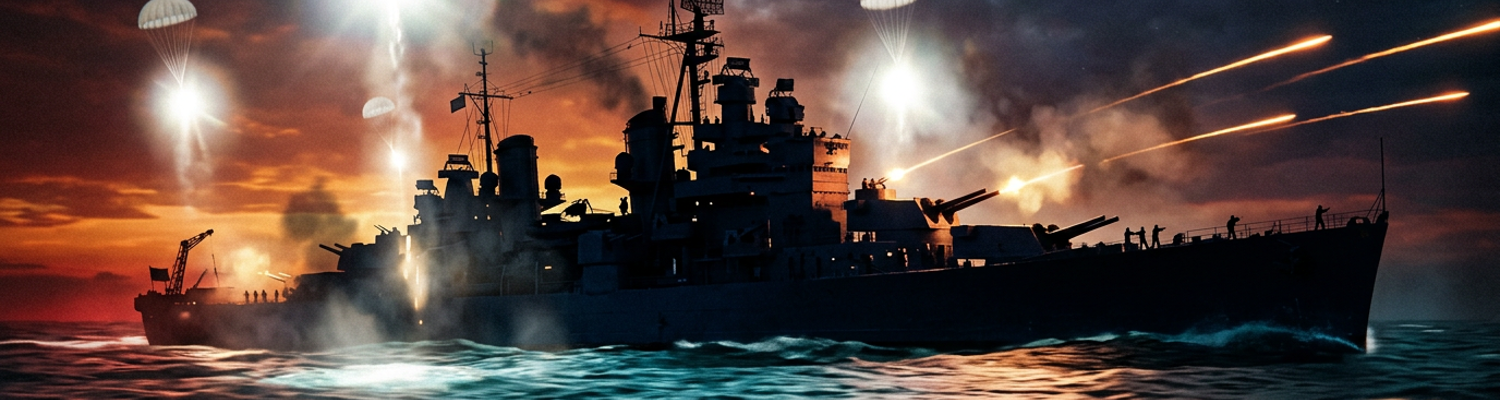
Engine roar and heavy vibration pulsed through the entire hull during these high speed surface chases, driving interior air temperatures past one hundred degrees. Submariners endured extreme sensory shifts from suffocating pitch black interiors to the blinding glare of Japanese star shells and aircraft flares. Men moved between the damp, foul blackness of the lower flats and the rain swept open bridge, where lookout eyes took minutes to adjust to the dim horizon. Japanese escorts broke that darkness without warning by launching five inch star shells into the cloud base, while patrol floatplanes dropped bright magnesium parachute flares directly over the convoy. Chemical glare turned miles of black ocean into bright white light, blinding bridge officers and forcing them to duck behind the steel splash shields to protect their ruined night vision. Lookouts pressed the heels of their hands into their eyes to clear the dazzling afterimages, waiting for the burning canisters to burn out in the water before searching the waves for charging enemy destroyers.
Enemy destroyers raced outward along predicted approach paths, but their visual lookouts struggled to detect the American boats in the darkness between flare bursts. Coordinated multi boat surface attacks overwhelmed convoy escorts unable to effectively track low profile radar targets in darkness. American skippers operated in small tactical groups, taking radio instructions to converge on the merchant column from several different points of the compass at the same moment. Ballast tanks were flooded down until the submarine deck rode barely feet above the water, reducing the silhouette of each boat so that it blended directly into the dark ocean swells. Japanese optical directors and primitive search instruments could not resolve these low riding hulls against the clutter of the sea surface. Escorts focused on a contact on one flank suddenly found their merchant ships taking torpedo hits from an unseen attacker maneuvering on the opposite side.
Torpedo spreads launched from the surfaced submarines in coordinated waves, striking the steel plates of Japanese transport ships below the waterline. Submarine commanders tracked the impacts by the physical shudder of the deck and the sudden sight of burning cargo against the night sky. Japanese merchant ships lost power and listed sharply into the water, blocking the transit routes of trailing vessels and throwing the remaining convoy columns into total disarray. Escort craft fired depth charges into empty ocean stretches miles behind the true submarine positions, chasing false sonar echoes while the attackers held firm radar tracking on their next targets. Bridge watch teams kept their diesels running at full revolutions, cutting across the wakes of burning freighters to clear the illumination zone and haul ahead of the scattered survivors. Torpedomen in the forward and aft compartments threw open the inner tube doors, hauling fresh Mark 18 weapons onto the loading skids to prime the tubes for another surface firing run.
Attrition Warfare on the Dutch East Indies Pipeline
Steel skids groaned under the two ton weight of the reloads as torpedomen wrestled each greased casing into the bronze tube guides with hand cranked chain hoists. Sweat poured from bare chested loaders into the bilge water while the boat surged ahead on the surface to stay in contact with the convoy. Crews endured debilitating compartment temperatures exceeding one hundred degrees Fahrenheit during sustained multi day pursuit operations, which sapped muscle strength and dulled mental focus across every watch section. Salt tablets and lukewarm drinking water did little to alleviate heat exhaustion in the unventilated torpedo rooms, where men suffered painful heat rashes and muscle cramps while securing the tube doors. Exhaust fans circulating through the spaces merely pushed hot, oil saturated air across the machinery, forcing relief crews to take turns lying flat on the steel deck plates to catch whatever faint draft moved along the bilge line. Exhausted machinists kept their positions at the auxiliary manifolds despite the heavy heat, monitoring pressure gauges to prepare the hydraulic system for the next firing sequence.
Valves hissed as technicians adjusted the boat trim, keeping the submarine riding low in the water while plotters tracked the enemy tankers along the coast. American commanders directed these relentless attacks to cut off the supply routes that kept the Japanese war economy alive. Submarine groups systematically severed the vital petroleum pipeline linking Dutch East Indies refineries to the Japanese home islands, hunting the heavy oil carriers that hauled crude from Tarakan, Balikpapan, and Palembang. Stripping Japan of its fuel reserves required methodical encirclement of the Luzon Strait and the South China Sea, where packs of two or three American boats set up overlapping patrol barriers across known navigation routes. Spotters on the bridge scanned the dark horizon for oil smudges and low silhouettes, knowing that every sunk tanker grounded enemy aircraft and immobilized frontline warships in the home islands. Navigation officers updated their track charts under dim red lanterns, calculating the exact speed of the Japanese merchant column to guide sister submarines into position ahead of the convoy.
Radiomen tapped out coded sighting reports through encrypted transmitters, sharing target coordinates with the other submarines spread across the channel. The campaign succeeded through calculated convoy tracking and unglamorous attrition rather than solitary ace patrols. Postwar popular culture often imagined submarine battles as daring individual duels led by solitary commanders, but actual frontline victory depended on tedious hours of plotting radar blips and coordinating joint strikes. Skippers held back from reckless solo charges, choosing instead to shadow Japanese escorts from beyond visual range while guiding companion submarines into lethal crossfires. Merchant convoys zig zagged desperately through shallow coastal waters, but continuous contact reports from the trailing boats allowed the pack to systematically wear down the escort screen over several sleepless days and nights. Coordinated torpedo salvoes eventually tore through the hulls of the remaining cargo ships, ensuring that industrial oil reserves never reached Japanese homeland ports.
Oil slicks spread across the water behind the shattered convoy, marking the final resting places of the heavily laden tankers. Submarine lookouts watched through rain streaked binoculars as the burning merchant ships broke apart and slid beneath the waves. Escort subchasers circled the perimeter in confusion, dropping depth charges into empty sea lanes while the American group had already slipped outward into deeper water. Captains ordered all main engines brought up to standard cruising revolutions, turning their bows toward open water to recharge depleted battery banks before the next contact alert sounded. Deck officers cleared the bridge watch of all non essential personnel, leaving only the primary lookouts to scan the overcast sky for retaliatory Japanese aircraft. Motor machinists below wiped condensation from the steel bulkheads and aligned the fuel valves to draw from reserve diesel tanks for the long transit south.
SG Reports and the Rejection of Peacetime Protocol
Diesel oil surged through the newly aligned feed lines into the main engine manifolds, driving the submarines southward toward advanced staging bases at Fremantle and Pearl Harbor. Yeomen and navigation officers spent these transit days compiling patrol debriefs, documenting how improvised night radar runs and modified exploders had salvaged missions that standard doctrine had nearly ruined. Patrol logs gathered in conning towers detailed how skippers had ignored prewar manuals to run wide open on the surface through heavy monsoon fog and shallow reef channels. Tactical records in SG Reports 102 through 108 formalized operational lessons learned from frontline improvisation. Staff planners reviewed every recorded radar plot, fuel expenditure, and evasive maneuver to verify why low profile surface attacks succeeded where submerged daylight stalking had failed. Fleet tacticians accepted these detailed combat summaries, writing the field tested methods directly into dispatch files that would guide incoming submarine divisions across the western Pacific.
Submarine divisions arriving from repair bases received these updated manuals before slipping out into the patrol sectors of the South China Sea. The codification of coordinated wolfpack doctrines permanently replaced lone wolf operating concepts in Pacific Fleet operational orders. Headquarters tacticians divided open shipping corridors into shared hunting grids, grouping three or four boats under a designated pack commander to stalk convoys cooperatively. Operational instructions required skippers to maintain steady communication loops over high frequency radio, passing target coordinates across dozens of miles so companion boats could maneuver into forward firing positions. Group commanders positioned their vessels along predicted convoy transit lines, setting up coordinated traps that overwhelmed Japanese subchasers trying to defend scattered merchant columns. Patrol skippers gave up the freedom of independent cruising to follow these collective movement directives, locking their boats into radio coordinated interception schemes that overwhelmed enemy convoys.
Radio transmitters in conning towers broadcast convoy sighting bearings in brief, coded bursts that kept sister boats moving in tight operational sync. Subsurface warfare transitioned from speculative peacetime theory into an industrialized campaign of systematic commercial interdiction. Peacetime strategists had envisioned American submarines fighting solitary periscope duels against enemy combat warships, but combat reality in the western Pacific demanded the steady, factory like destruction of Japan merchant marine. Operational planners tracked victory through monthly tonnage tallies, calculating the exact volume of lost crude oil, bauxite, and rubber denied to Japanese factories. Shipyards on the American west coast launched fresh Gato class and Balao class boats to feed this attritional campaign, treating submarines as mass produced hunting instruments rather than individual ace platforms. Depot mechanics and ordnance shops crated thousands of tested torpedoes and modified exploders to support this relentless operational schedule, loading the weapons directly onto forward bound tenders.
Tender crews hoisted these standardized weapons into submarine storage compartments alongside replacement radar vacuum tubes and heavy battery cell assemblies. Armament officers checked every lightened firing pin and verified depth setting mechanisms before signing the transfer manifests on the supply decks. Frontline skippers took these refitted boats out through the harbor nets, setting course for the choke points of the Luzon Strait with wolfpack operational orders secured in the chart drawers. Bridge lookouts raised their binoculars to scan the horizon while motor machinists balanced engine speeds for the long northward run. Radar plotters tested their cathode ray scopes at sea, tracking friendly escort craft to calibrate their range settings for upcoming night surface engagements. Helmsmen held the compass headings steady through the southern swells, guiding the heavily armed submarines back toward the Japanese shipping lanes for the next coordinated raid.