
Amphibious Landings and Coral Defenses
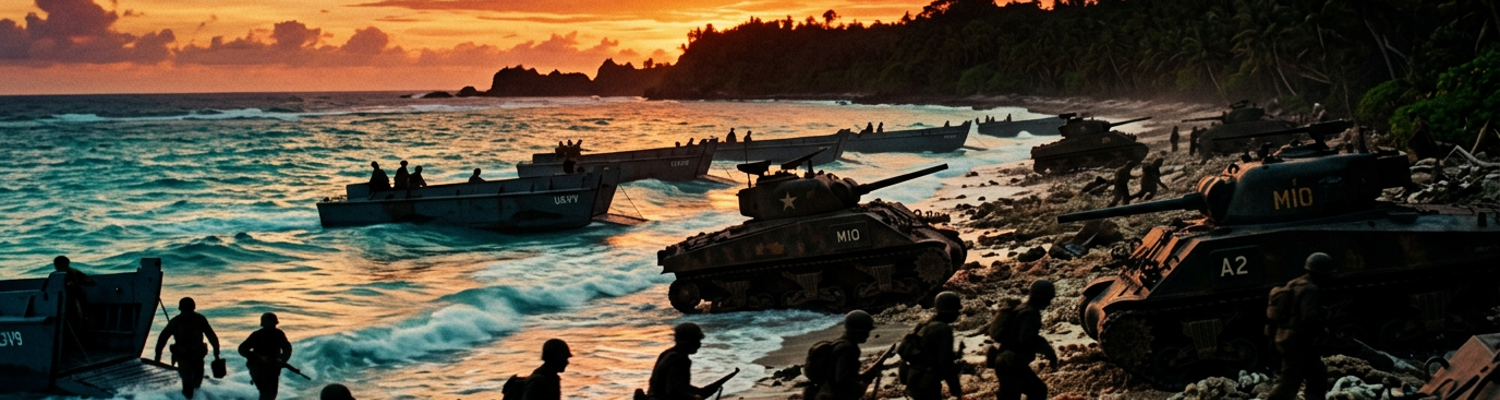
Field manuals issued to United States Army assault troops promised that naval barrages would destroy shoreline bunkers and clear the path for a rapid inland sprint. Soldiers of the 41st Infantry Division discovered a completely different reality when they landed at Bosnek on May 27, 1944, under Lieutenant General Walter Krueger and his Sixth Army command to seize critical airfields. General Douglas MacArthur had guaranteed the Joint Chiefs of Staff in Washington that these landing grounds would fall within days to support the planned invasion of the Marianas. Porous limestone terrain absorbed the preliminary naval shells with minimal damage to the fortified garrison instead of crumbling under naval fire. Ramps on landing craft dropped directly onto jagged coral reefs that tore through rubber tires and tracked vehicles, stranding infantrymen in chest-deep water under an unexpected silence.
Steel landing craft attempting to bring heavy equipment ashore triggered a coordinated trap engineered by Colonel Naoyuki Kuzume. Japanese defenders utilized concealed Type 94 75mm mountain guns and dual-purpose coastal artillery inside the Mokmer Ridge coral caves to shell incoming landing craft. Gun crews hidden within natural limestone caverns rolled their artillery pieces out onto reinforced tracks, fired directly down into the crowded landing lanes, and pulled the weapons back into the rock before counterbattery fire could strike them. Exploding shells tore wooden hulls apart, set supply barges on fire, and forced navy coxswains to scatter into deeper water. Colonel Oliver P. Newman pushed his lead regiment onto the narrow strip of sand, but the loss of vital radio trucks and artillery tractors on the reef immediately paralyzed his command chain.
Infantry battalions reorganizing along the exposed beach pushed westward into a tight bottleneck trapped between sheer limestone cliffs and the sea. Inelastic defensive fire along the narrow coastal defile halted the American advance short of Mokmer, Borokoe, and Sorido airfields. Concrete pillboxes, interlocking machine-gun nests, and pre-sighted mortar pits pinned down the lead companies, preventing them from deploying their superior numbers. American commanders radioed Sixth Army headquarters that their forward platoons could neither scale the cliff faces nor bring tanks forward through the rubble. This tactical stalemate immediately endangered the strategic timetable of the Pacific War, as MacArthur had promised Admiral Chester Nimitz that Biak would supply land-based bombers to protect the upcoming invasion of Saipan.
Telegrams from Walter Krueger warning of the stalled advance sent shockwaves through high-level military councils in Brisbane, Pearl Harbor, and Washington. Lieutenant General George Kenney faced immediate demands from the Navy to explain why Fifth Air Force fighters were not already operating from Biak runways to neutralize Japanese airfields in the Caroline Islands. Admiral Ernest King in Washington seized upon the reports of Krueger and his halted drive to question whether the Southwest Pacific route deserved continued priority over central Pacific naval thrusts. MacArthur reacted with acute concern, recognizing that any prolonged delay on Biak gave the Navy a valid pretext to strip Sixth Army of shipping and resources. Krueger received blunt orders from MacArthur to relieve ineffective frontline commanders and capture the airstrips immediately through direct frontal assault. Krueger responded by ordering his depleted regiments to renew their direct assault against the cliff positions at dawn without waiting for specialized siege equipment.
Signal Intelligence and Operation Kon
Infantrymen surging forward against the fortified cliffs faced devastating mortar and machine-gun barrages, while a second threat emerged through intercepted enemy radio traffic. Cryptanalysts at Allied Central Bureau in Brisbane decrypted confidential communications from Imperial General Headquarters that revealed Operation Kon, a high-stakes naval relief plan for Biak. Japanese commanders viewed Biak as the decisive barrier protecting their petroleum supply lines in the Dutch East Indies and their major anchorage at Halmahera. Deciphered messages showed that Tokyo had suspended other regional operations to assemble a powerful strike force designed to reinforce Colonel Kuzume and drive the invaders into the sea. Intelligence officers quickly sent translated transcripts to General Douglas MacArthur and his naval commanders, warning them that a formidable surface fleet was steaming toward the exposed landing beaches.
Battleships Yamato and Musashi led the most dangerous element of this approaching fleet, carrying eighteen-inch guns capable of destroying American positions from twenty miles away. Intercepted orders explicitly directed these two massive warships, accompanied by cruisers and destroyer-borne reinforcements, to bombard the crowded beachhead at Bosnek. Japanese destroyers packed with veteran infantry planned to slip past the Allied screen during the naval bombardment to land fresh combat units directly on the island. Sixth Army units held only a strip of sand barely two hundred yards wide, where ammunition dumps, medical stations, and thousands of support troops remained completely exposed to heavy naval fire. Rear Admiral Victor Crutchley shifted Allied cruisers and destroyers of Task Force 74 into defensive positions north of Biak, but his light warships possessed neither the armor nor the heavy guns required to withstand an engagement against Japanese capital ships.
Nimitz studied the defensive reports alongside Pacific Fleet strategists, altering operational risk calculations across the entire theater as high-level commanders scrambled to safeguard the invasion forces. General MacArthur pressed the Joint Chiefs of Staff and the Pacific Ocean Areas command to divert heavy warships from the Central Pacific to shield his exposed beachhead. This request provoked fierce arguments inside the Navy Department, where Admiral Ernest King resisted any diversion of resources that might delay the scheduled assault on Saipan. Admiral Raymond Spruance and the Fifth Fleet maintained their westward drive toward the Marianas, forcing the men on Biak to endure the growing probability of a catastrophic surface bombardment without American battleship protection. This tactical crisis on Biak pushed the Army and Navy commands into an intense dispute over whether to protect Krueger or prioritize the invasion fleet assembling for the Marianas.
Admiral Matome Ugaki resolved this inter-service crisis unexpectedly on June 13, 1944, when Japanese scout planes detected the approach of Task Force 58 off the coast of Saipan. Imperial General Headquarters abruptly ordered Yamato and Musashi to reverse course and rejoin the Combined Fleet for the defense of the Marianas. This sudden redeployment spared Sixth Army from naval destruction, but it left the strategic schedule deeply damaged. Allied intelligence had provided timely tactical warning, yet Walter Krueger remained under severe political pressure from MacArthur to conquer the remaining cave positions and declare the airfields operational. Krueger reorganized his forward regiments, replaced exhausted battalion commanders, and ordered a renewed push across the scorched coral toward the southern edge of Mokmer airfield.
Premature Victory Announcements and Washington Backlash
Riflemen advancing across the crushed rock ran directly into interlocking machine-gun fire and high-angle mortar barrages from the limestone ridges, halting Sixth Army short of the runway trenches. General Douglas MacArthur nevertheless issued an official press release on May 31, 1944, claiming that Biak had effectively fallen and its airfields were secured. Radios across the Southwest Pacific broadcast this victory announcement while wounded American soldiers were still being dragged behind stalled Sherman tanks on the southern edge of the airfield. MacArthur asserted in his public bulletin that the capture of the island marked the strategic collapse of enemy defenses in western New Guinea and eliminated remaining opposition. Combat troops of the 41st Infantry Division heard these optimistic bulletins while trapped in shallow coral scrapes under continuous artillery fire from the surrounding cliffs.
Navy strategists discovered that Mokmer airfield remained an active combat zone where Japanese gunners zeroed in on every square yard of the exposed runway, contradicting the premature victory claims. Admiral Chester Nimitz faced severe strategic disruptions because Sixth Army remained pinned down, jeopardizing air support timetables for Operation Forager. Pacific Fleet battle plans counted on Fifth Air Force heavy bombers flying from Biak to neutralize Japanese airfields in the Caroline Islands before American assault transports arrived off Saipan. Aviation engineers attempting to repair the bomb craters and grade the surface came under direct artillery fire from the West Caves, losing bulldozers, fuel trucks, and airfield construction personnel. Carrier strike groups of Task Force 58 had to divert additional combat aircraft to suppress enemy island bases on Truk and Yap, straining naval fuel reserves and leaving the Marianas invasion fleet with less carrier-based air defense.
General George C. Marshall in Washington sent sharp private inquiries challenging the overly optimistic operational assessments after Navy dispatches revealed the true crisis on the island. Marshall pointed out that official victory bulletins released to the international press contradicted operational logs describing severe American casualties and paralyzed airfield construction. War Department leaders demanded an unvarnished explanation for the discrepancy, warning that inaccurate combat estimates endangered high-level planning across the entire Pacific theater. Joint Chiefs of Staff planners openly questioned whether the Southwest Pacific command could be trusted to deliver promised air cover for coordinated amphibious offensives. MacArthur fired back defensive radio cables to Washington, blaming dense jungle cover and hidden cave systems while maintaining that his troops would clear the remaining Japanese strongpoints within days.
Lieutenant General Walter Krueger received caustic reprimands from MacArthur ordering him to eliminate all delays and capture the ridges dominating Mokmer airfield immediately. Krueger sent sharp radio dispatches directly to the beachhead at Bosnek to confront Major General Horace Fuller, insisting on aggressive frontal assaults against fortified limestone positions. Fuller argued that throwing depleted infantry regiments against unmapped cave complexes without heavy artillery and fresh water would destroy his division without opening the airfields. Army command disputes escalated as Krueger pressed for immediate tactical speed to validate the disputed May 31 victory announcement. Krueger relieved Fuller of command of Task Force Hurricane, prompting the reassignment of command responsibilities and the arrival of a fresh regiment for another frontal attack across the open airfield.
Command Crisis and the Relief of Horace Fuller
Infantrymen of the newly committed 34th Infantry Regiment moved straight into assembly areas along the beachhead to prepare for this renewed push across the open coral. Krueger exerted intense pressure on Major General Horace Fuller to bypass fortified ridge positions and capture Mokmer Airfield immediately. Fuller insisted that storming the airfield without first eliminating the heavy machine guns and mountain artillery emplaced inside the unmapped limestone ridges would subject his battalions to heavy interlocking crossfire. Krueger dismissed these warnings as excessive caution, arguing that strategic directives from theater headquarters required the instant capture of the airstrip regardless of flanking fire. American rifle companies surged forward under direct orders across the open coral flats, only to be struck by Japanese mortar barrages and direct cannon fire from the elevated caves above Mokmer. Wounded soldiers took cover behind disabled Sherman tanks while enemy artillery shells struck the exposed runways, leaving the American frontline pinned down under high temperatures.
Artillery shrapnel severed American frontline telephone lines, prompting Krueger to blame division leadership rather than terrain and Japanese cave defenses for the stalled drive. Krueger intervened directly by issuing operational commands to subordinate units, ordering tactical movements without consulting division officers. Fuller requested relief from division command after Krueger superseded his tactical authority and bypassed division leadership to deploy reinforcements. Fuller stated that this direct intervention disrupted the chain of command and made it impossible to conduct a disciplined offensive against fortified cave positions. Krueger accepted the resignation on the spot, temporarily handing division authority to Brigadier General Jens A. Doe while drafting an urgent message to theater headquarters explaining the command collapse. Telegraph operators at Sixth Army headquarters encoded the report detailing the departure and beamed the high-priority radio message across the Coral Sea to Brisbane.
Teletype machines inside the Brisbane headquarters printed the incoming dispatch, triggering immediate alarm among strategic planners who recognized the political danger of a division-level command crisis. Admiral Ernest King and senior Navy leaders in Washington seized upon the reports of a relieved Army division commander to argue that the Southwest Pacific route was an inefficient drain on critical landing ships and war materiel. MacArthur understood that prolonged deadlock on Biak gave naval strategists justification to prioritize the Central Pacific advance toward Formosa and bypass the Philippines entirely. War Department planners warned MacArthur that continued failure to secure the runways endangered Allied air superiority across the operational theater just as the assault on Saipan was beginning. MacArthur needed an immediate change of field leadership to satisfy Washington and protect his strategic campaign to liberate the Philippine archipelago.
MacArthur dispatched Lieutenant General Robert L. Eichelberger to take direct charge of operations on Biak and restore momentum. Eichelberger received instructions to relieve any subordinate regimental or battalion commanders who showed hesitation, reorganize the fractured assault elements, and capture the coral ridges through continuous pressure. Flight crews prepped a converted B-17 bomber to carry Eichelberger and his staff officers across northern New Guinea straight into the contested landing zone. Eichelberger climbed into the dusty command post at Bosnek while Japanese mortar shells exploded along the beach perimeter, personally taking operational control of Sixth Army forces on the island. Combat engineers and infantry officers gathered under the jungle canopy as Eichelberger outlined a strict attack schedule designed to overrun the ridge defenses and open Mokmer Airfield within days.
West Caves Neutralization and Strategic Aftermath
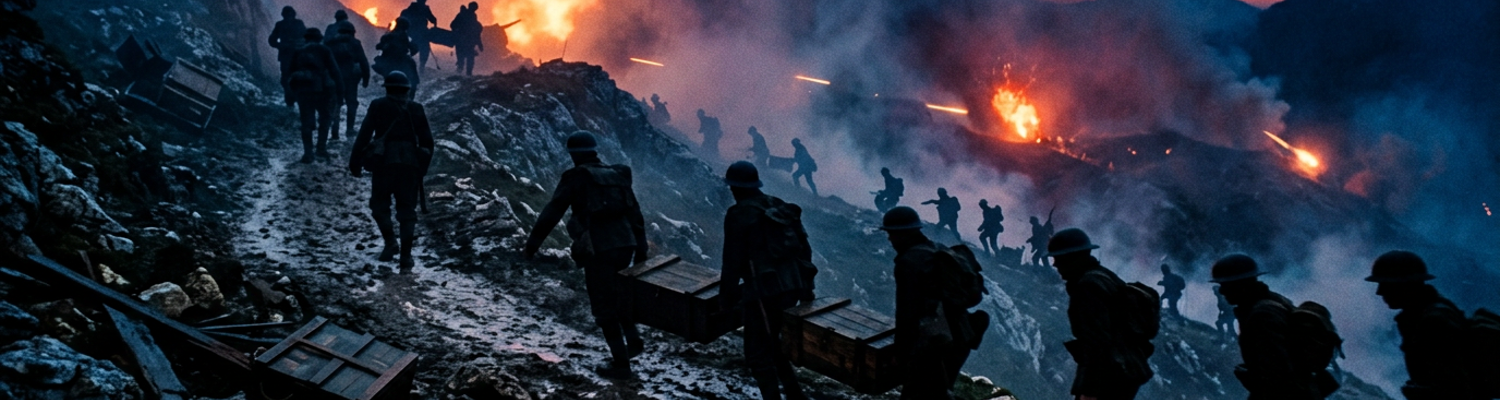
Eichelberger directed concentrated assaults utilizing armor, engineering demolitions, and chemical incendiaries to reduce the fortified Japanese West Caves complex. American infantry companies advanced behind M4 Sherman tanks toward the jagged limestone sinkholes that sheltered hundreds of entrenched Japanese defenders under Colonel Kuzume. Combat engineers rolled fifty-five-gallon drums of gasoline and oil directly into the underground crevices, followed by white phosphorus grenades and TNT satchel charges that sent massive shockwaves through the subterranean corridors. Bulldozers pushed crushed coral into the smoking cave mouths to seal off remaining gun positions and smother hidden snipers. American infantrymen finally secured the rim of the West Caves on June 27, ending organized artillery fire onto the airfields and exposing the charred remains of the Japanese command bunker.
Soldiers scattered into the surrounding northern ravines to wage prolonged guerilla warfare, preventing American units from declaring the island secure. Aviation engineers struggled under intermittent sniper fire to clear rubble and grade the airstrips at Mokmer, Borokoe, and Sorido, leaving the runways unusable for heavy bombers long past their target dates. Prolonged resistance on Biak delayed the operational schedule across western New Guinea by nearly two months. Allied headquarters had to postpone scheduled amphibious jumps toward the Vogelkop Peninsula and Morotai while transport shipping remained tied down supplying three embattled infantry regiments on Biak. Naval task forces operating in the Philippine Sea had to absorb dangerous operational burdens during the assault on Saipan without the promised land-based air cover from Fifth Air Force squadrons. General Douglas MacArthur watched his carefully orchestrated operational calendar slip away week after week as transport vessels burned precious fuel sitting idle off the Bosnek reef.
Admiral Ernest King seized upon these paralyzed transport fleets and missed landing deadlines to challenge the entire Pacific strategy inside the Joint Chiefs of Staff. Institutional mistrust between the Southwest Pacific Area command and the Joint Chiefs of Staff fueled bitter arguments ahead of the Philippine campaign. Senior naval officers pointed out that MacArthur had promised an operational airfield within days of the landing, yet Sixth Army had required weeks of grinding siege warfare that absorbed critical landing ships. Admiral Chester Nimitz and his staff used the logistical paralysis on Biak to argue that the United States military should bypass the Philippine island of Luzon entirely in favor of an amphibious thrust toward Formosa and the Chinese coast. Army Chief of Staff George C. Marshall demanded detailed casualty reports and logistical accounting from Brisbane, openly doubting public assertions that operations were proceeding according to plan.
MacArthur boarded a transport plane to travel to Pearl Harbor, knowing that the political fallout from Biak threatened his strategic objective of liberating the Philippines. President Franklin D. Roosevelt convened the Honolulu conference with MacArthur and Nimitz to settle this bitter strategic dispute over whether to strike Luzon or Formosa. Nimitz presented operational charts highlighting the acute shipping bottlenecks and severe ground delays that had crippled Sixth Army across western New Guinea. MacArthur countered with intense political arguments about American moral obligations to the Filipino people, ultimately winning presidential approval for the Leyte invasion while leaving naval leadership deeply skeptical of Southwest Pacific battle claims. Naval planners in Washington accepted the decision with sharp reluctance, imposing strict oversight on Sixth Army shipping allocations as assault fleets began staging for the Philippine beaches.