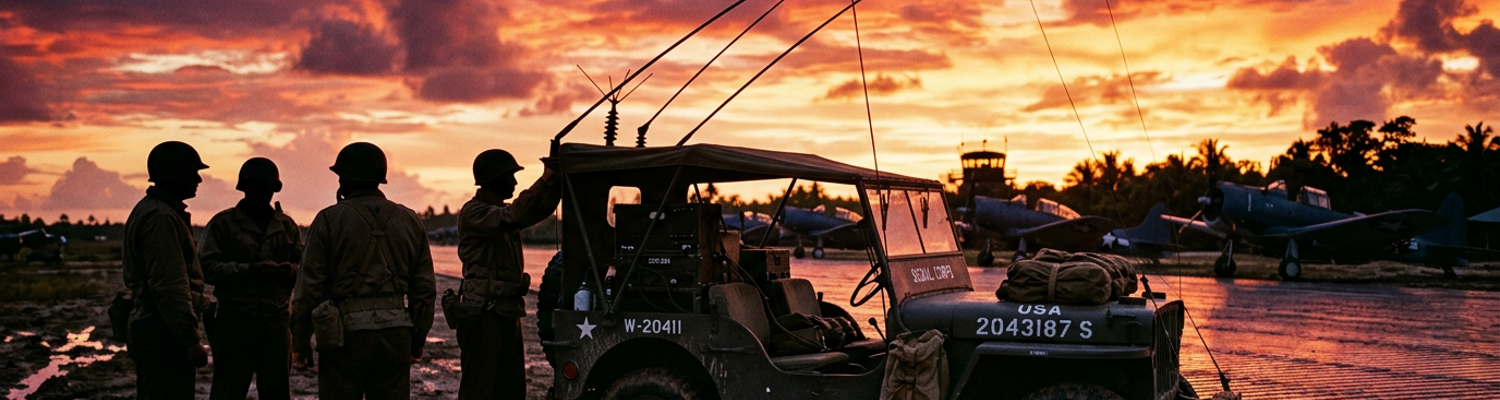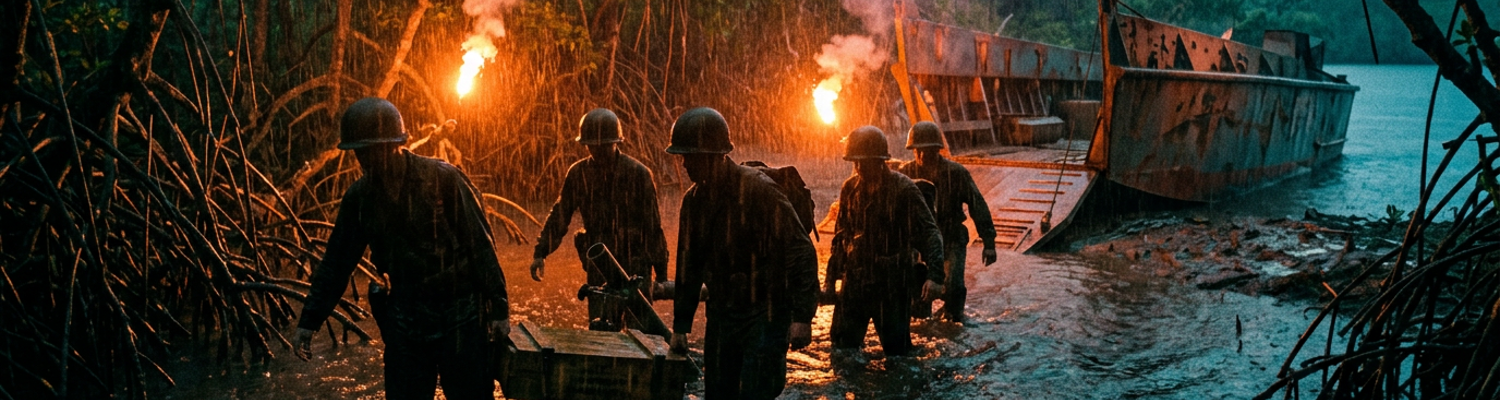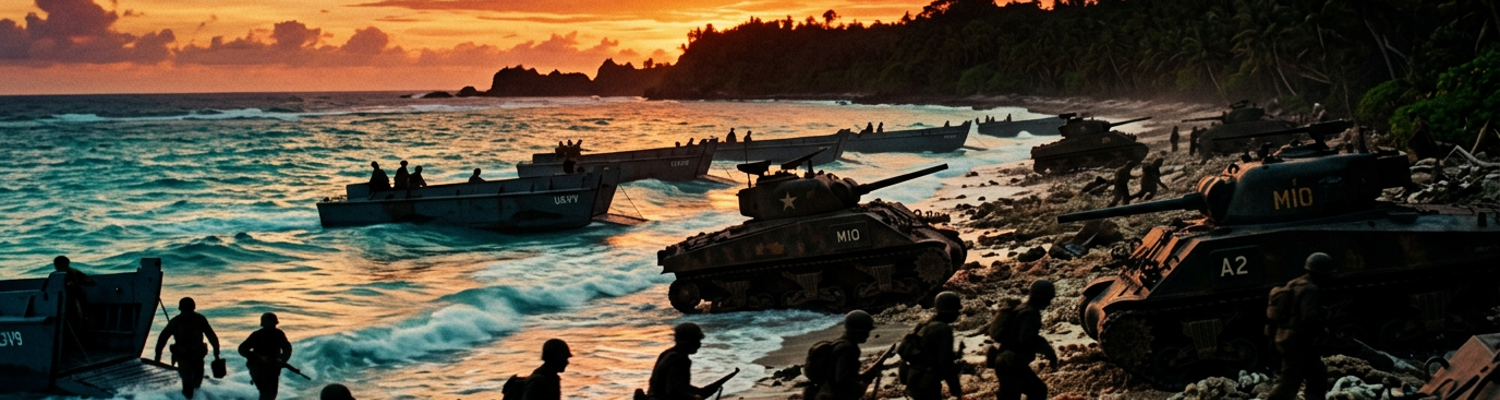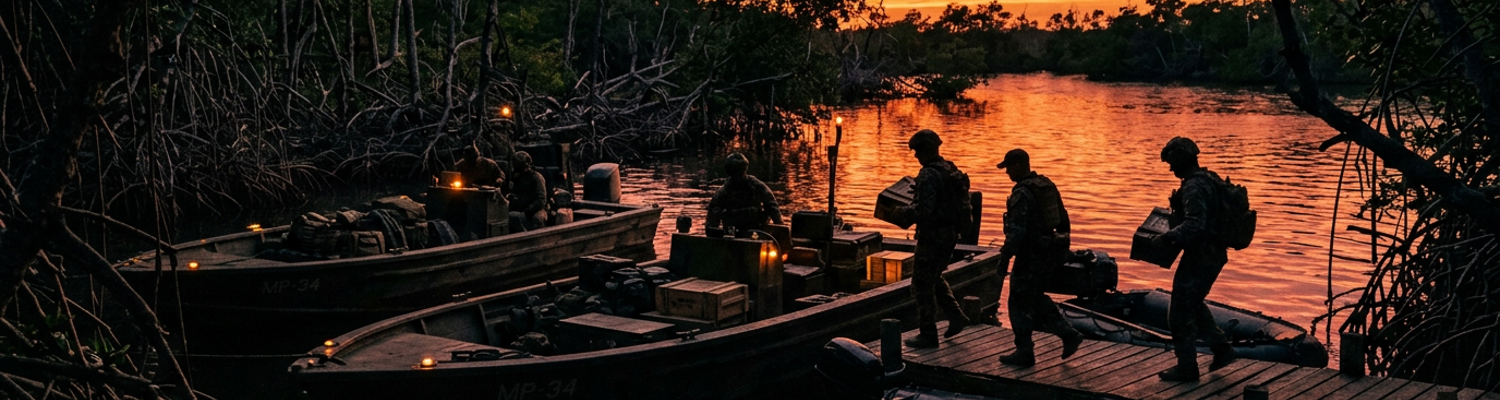
<h2>Staging Operations at Camp Ritchie Teknaf</h2><p>Eighty-five-foot wooden crash boats maneuvered through thick silt along the Naf River estuary to unload weapons, fuel drums, and inflatable landing craft. These converted air-sea rescue vessels carried thousands of gallons of high-octane aviation fuel within range of Japanese coastal guns, requiring constant vigilance from the crews. Shallow river mud regularly sucked into the cooling intakes beneath the wooden hulls, causing the marine motor manifolds to overheat within minutes of starting. Mechanics climbed into the cramped bilges with hand tools to unbolt the clogged bronze strainers and ream out the packed mud with stiff wire rods before the engine cylinder heads warped from the extreme heat. American soldiers and naval specialists from the newly formed Arakan Field Unit and OSS Maritime Unit Swimming Group 2 established Camp Ritchie near Teknaf to house these crews and service the vulnerable boats. Headquarters officers immediately coordinated forward operational integration with British South East Asia Command to furnish tactical reconnaissance on enemy beachheads and mangrove channels for advancing Allied ground forces.</p><p>Trucks hauling supplies for the advancing divisions bogged down continuously along the primitive road access linking northern supply depots to the Teknaf staging area. Monsoonal downpours battered the coastal camp daily, washing out timber road culverts and turning the unpaved supply tracks into deep ruts of thick red mud that defeated standard heavy vehicle axles. Rainwater saturated the camp perimeter and penetrated the canvas storage tents, creating severe logistical strain as tropical moisture collected around boxed munitions and sensitive electrical equipment. Extreme tropical humidity accelerated the rapid deterioration of ordnance, causing brass bullet primers to corrode green and military explosives to absorb damp air until their detonators misfired during routine bench tests. Armorers dismantled weapons and explosive devices on crude bamboo tables every morning, scrubbing the metal parts with diesel fuel and wire brushes to strip away rust and mildew before the moving components locked solid. Technicians sealed delicate demolition fuses and battery terminals inside empty ration tins dipped in melted paraffin wax to protect the ignition components from the corrosive salt air.</p><p>Explosives protected by this improvised wax were loaded directly into inflatable rubber craft as combat engineers wrestled with failing propulsion systems along the muddy riverbank. Saltwater and suspended silt eroded the delicate cooling impellers of the outboard motors assigned to the maritime teams, causing the small engines to seize after short runs through the estuary shallows. Mechanics lacked factory replacement parts for these specific motors, so they salvaged sheet brass from discarded artillery shell casings and hand-cut replacement impeller blades with cold chisels to restore water circulation. Machinists inserted layers of dense parachute cloth into the flexible fuel lines to catch fine grit before the contaminated fuel reached the delicate carburetor jets. Engineers worked shoulder-deep in the muddy tide beneath the wooden hulls, swapping sheared propeller pins for cut lengths of common galvanized fencing wire so the reconnaissance craft could operate on schedule.</p><p>Swimmers from Swimming Group 2 boarded these repaired craft to launch nighttime reconnaissance runs into the dense network of tidal creeks and enemy-held beaches along the Arakan coast. Operators carried experimental Lambertsen closed-circuit rebreathers, but the cloudy, sediment-heavy water in the mangrove chaungs frequently clogged the delicate exhalation flapper valves. Scouts paddled two-man kayaks through treacherous surf lines to measure beach gradients, probe mudflats for natural obstructions, and pinpoint hidden Japanese artillery positions. Every foot of surveyed coastline generated detailed hydrographic maps that British commanders used to plot the upcoming amphibious landings of the Indian XV Corps. Crews returned to the muddy banks of Camp Ritchie before dawn, hauling their waterlogged craft ashore so armorers and mechanics could immediately strip down the salt-encrusted weapons and rebuild the stressed motors for the next infiltration.</p><h2>Air Rescue Boat Range and Mechanical Limitations</h2><p>P-564 and two matching eighty-five-foot USAAF Air Rescue Boats served as the primary insertion craft to carry these re-equipped reconnaissance teams across the open reaches of the Bay of Bengal. Converted from high-speed aircraft rescue vessels, these wooden craft possessed high-output marine engines that consumed hundreds of gallons of aviation gasoline each hour. Combat crews tackled this severe fuel range deficit by rolling dozens of fifty-five-gallon steel drums filled with aviation gasoline directly onto the exposed weather decks. Heavy Manila ropes and canvas cargo nets bound the volatile cylinders against the wooden gunwales and deck cleats while violent ocean swells rolled the hulls from side to side. Sailors stood watch beside the lashing points with fire axes and foam nozzles, prepared to chop the hazardous drums overboard if Japanese shore batteries opened fire or if breaking waves tore the mountings loose.</p><p>Driftwood torn loose from flooded jungle estuaries smashed against the wooden hulls as torrential squalls battered the overloaded decks, turning the coastal sea routes into hazardous fields of floating debris. Submerged logs struck the spinning drive shafts beneath the water, bending bronze propeller blades and provoking severe mechanical vibrations that rattled the boats from stem to stern. Tidal flotsam and suspended mud clogged the narrow sea scoops along the boat bottoms, causing immediate cooling-intake blockages for the high-performance engines. Engine water jackets boiled violently within minutes, venting clouds of scalding steam across the enclosed spaces and threatening to warp the cylinder heads. Motor machinists squeezed into the stifling bilges with iron wrenches, unbolting sea strainers beneath blistering hot exhaust pipes to scrape out packed swamp grass and mud before the propulsion plants seized completely.</p><p>Machinists cleared the clogged water strainers repeatedly while boatswains dived over the sides into heavy swells with butcher knives and hacksaw blades to cut mangrove roots away from the fouled propellers. Swimmers worked beneath the pitching hulls between cresting waves, sawing through jammed fibers just inches from the drive struts while undertows shoved their bodies against the twin rudders. Deckhands on P-564 simultaneously operated manual rotary pumps in the pouring rain to transfer gasoline from the deck barrels into the lower fuel tanks before rough seas ruptured the containers. Leaking fuel fumes mingled with salty ocean spray across the slick planking, prompting officers to shut down all electrical gear to prevent sparks from igniting a catastrophic deck explosion. Engineers completed the dangerous hand-siphon operation in near total darkness, lashing the emptied barrels securely in place as the forward lookout spotted the silhouette of the enemy-held Arakan coastline through the storm.</p><p>Throttles dropped back to idle as the muffled exhaust bypasses directed engine gases deep underwater to hide the sound of the idling craft from Japanese shore listening posts. Mechanics wrapped oil-soaked burlap strips around rattling valve cover brackets and metal linkages to silence the clinking hardware before it echoed across the quiet water. Deck teams lowered inflatable rubber assault boats over the side into the surf, holding the small craft against the wooden hull with long boat hooks while reconnaissance scouts loaded their weapons and hydrographic gear. Coxswains monitored the clearing strainers and temperature gauges constantly, nursing the stressed cooling systems while keeping the vessels stationary three miles off the Japanese-held beaches. Operators cast off the painter lines and paddled quietly into the night, leaving P-564 to circle at low revolutions offshore to wait for their return signals.</p><h2>Submersible Failures in Silt-Choked Chaungs</h2><p>Rubber assault boats towed British Motorised Submersible Canoes, known as Sleeping Beauties, through the dark coastal chop toward the mouth of a mangrove-dominated tidal chaung. Scouts released the tow cables as the shallow banks narrowed, allowing solo operators lying flat inside the cockpits to start their quiet electric motors and slip into the murky current. Dense mangrove canopies blocked out the night sky above the narrow waterways, cutting off ambient light and forcing pilots to navigate by shielded compass dials while submerged up to their necks in muddy water. Incoming tides dragged massive volumes of coastal sediment into the mangrove channels, turning the water into a thick, swirling mixture that reduced underwater visibility to zero. Operators adjusted their ballast tanks to submerge their craft below the surface, skimming inches above the silt bed as they probed for hidden Japanese supply barges anchored along the shore.</p><p>Silt particles suspended in the hypersaline water ground against the delicate propeller shaft bearings as the submersibles navigated the winding channel. Factory rubber packing seals around the moving drive shafts were designed for clean ocean conditions and failed rapidly against the sharp estuarine grit, letting briny mud force its way into the sealed hull compartments. Saltwater accumulated around the lead-acid battery cells mounted beneath the pilot seats, creating immediate conductive paths between the positive and negative terminals. Pervasive electrical short-circuits erupted across the drive batteries, melting the copper wiring harnesses and filling the flooded cockpits with choking sulfur gas. Pilots dragged the heavy craft into thick mangrove roots and signaled their recovery teams, desperate to hide the experimental British weapons before daylight revealed their positions to Japanese shore lookouts.</p><p>Unit mechanics hauled the disabled Sleeping Beauties onto muddy sand spits concealed beneath low-hanging foliage to begin repairs without depot support or factory spare parts. Soldiers set up small hand pumps and scooped bucketfuls of gritty water from the drowned battery boxes while boat mechanics stripped off the warped metal inspection covers. Technicians cut new gaskets from the rubber carcasses of damaged tires and sliced strips of canvas sailcloth to replace the waterlogged paper seals that had disintegrated in the bilge. Crews repacked the propeller shaft glands by hand, tamping dense strands of cotton twine soaked in heavy grease into the packing boxes to prevent additional sediment from washing past the drive shafts. Mechanics carefully scraped hardened corrosion off the lead terminals with bayonets and tested each battery cell with crude test lamps to see which units could still produce voltage.</p><p>Electricians stripped burnt insulation away from ruined wire looms, twisting strands of scavenged aircraft cable directly onto surviving battery lugs to bypass dead switches and blown fuse panels. Solvents were completely unavailable in the jungle swamp, so technicians washed gritty motor armatures in gasoline drained from boat carburetors and dried the copper windings over small kerosene stoves sheltered inside canvas gear bags. Mechanics wrapped every ad-hoc wiring repair in layers of sticky friction tape and sealed the exposed copper joints with melted wax salvaged from ration crates to keep out the humid sea air. Crews tightened the makeshift gasket plates with hand wrenches, levered the canoes back into the outgoing creek tide, and engaged the rebuilt drive motors to verify that the prop shafts turned smoothly without leaking. Pilots climbed back into the low-slung cockpits, sealed their breathing gear, and steered the repaired submersibles out of the chaung to resume their reconnaissance sweep toward enemy anchorages along the coast.</p><h2>Field Modifications for LARU Rebreathers</h2><p>Divers slid from the cockpits into the black coastal surf and swam toward the enemy anchorages, relying on the combat application of Lambertsen Amphibious Respiratory Unit closed-circuit oxygen rebreathers for bubble-free coastal approaches. This specialized breathing gear recycled exhaled oxygen through a chemical canister filled with soda lime to absorb carbon dioxide, allowing maritime operators to glide unseen beneath the surface without releasing revealing trails of bubbles to Japanese beach lookouts. Strong ocean currents and heavy breakers along the Arakan sandbars pounded the reconnaissance swimmers as they approached the shallows. Violent breaker lines caught the swimming scouts off balance, twisting the corrugated rubber hoses and pulling the flexible rubber mouthpieces sideways out of their clenched jaws. Seawater forced its way past the displaced exhalation check valves, flooding the flexible counterlung bags and saturating the chemical absorbent stored inside the metal canisters.</p><p>Seawater reacted violently with the chemical absorbent granules inside the canisters, generating hazardous caustic soda lime washouts that resulted when violent tidal surges breached the rebreather mouthpiece and breathing bag. This alkaline chemical slurry surged into the breathing tubes and burned the mouths, lips, and throats of the swimmers with blistering heat. Operators fought against uncontrollable gagging and violent coughing fits while trapped underwater in total darkness just yards from Japanese machine-gun nests. Swimmers who inhaled even tiny droplets of the corrosive mixture suffered chemical burns across their windpipes, causing immediate spasms that threatened to drown them if they lost consciousness. Injured scouts signaled their partners through jerks on canvas buddy lines, pulling themselves back through the surf to recovery boats before the caustic mixture caused fatal respiratory damage.</p><p>Armorers and unit personnel developed strict field protocols to dry absorbent canisters and meter oxygen flow amidst extreme turbidity to stop the chemical burn injuries. Technicians rigged drying stations using gasoline cook stoves and metal mess trays, heating the moist soda lime over low flames to drive out tropical moisture before repacking the canisters. Mechanics inspected every rubber diaphragm and check valve with dental probes, cleaning away sharp silt grains and reinforcing the mouthpieces with heavy friction tape to prevent dislodgement in heavy surf. Soldiers double-clamped the breathing hoses to the canister housings with copper safety wire, eliminating loose joints where sea swells could force open a leak. Armorers sealed the reconditioned canisters in water-resistant paraffin wax, storing them in dry canvas lockers until swimmers attached the units to their chest harnesses for tactical insertion.</p><p>Silt churned up from the shallow seabed darkened the tidal creeks as divers descended, blocking all ambient light and rendering luminous cylinder pressure gauges completely unreadable. Operators could not read their dials or visually monitor their gas consumption while swimming through the dense concentrations of suspended mud. Technicians solved this operational hazard by establishing a tactile metering protocol that allowed swimmers to calculate oxygen consumption by physical sensation alone. Divers learned to tap the manual bypass valve levers with counted thumb pulses, releasing small bursts of pure oxygen into the breathing loop to match their kicking cadence. Swimmers checked the inflation of the rubber breathing bag against their chests, judging gas volume by physical pressure rather than visual dials. Reconnaissance teams latched their modified rebreathers into place, checked the sealed mouthpieces in the shallows, and pushed forward into the heavy surf to complete their hydrographic surveys of the Japanese defense line.</p><h2>Hydrographic Surveys Supporting Indian XV Corps</h2><p>Lead weights pulled marked survey lines through the surf as swimmers crawled across the submerged sandbars toward the beaches of Akyab. Covert surf-zone and beachhead gradient reconnaissance was essential to support Indian XV Corps amphibious assaults against Akyab, where uncharted shoals could strand landing vessels far out under enemy artillery fire. Scouts advanced through the pounding breakers in pairs, driving wooden pegs into the sea bottom and reeling out knotted measuring lines to plot the precise slope of the approach. Heavy ocean swells regularly ripped the braided ropes from their hands and jammed the dials of their mechanical depth gauges with coarse sand. Swimmers cleared the fouled mechanisms by tapping the brass housings against their weight belts and rechecking each measurement by hand in the dark. These slope calculations established whether British assault craft could ground their bows close enough to dry land to drop ramps without drowning heavily equipped infantry.</p><p>Kayaks crewed by two-man scout teams glided away from supporting rubber craft to take sounding measurements across expansive intertidal mudflats. Operators used night infiltrations to reach these wide tidal shelves, where receding waters left miles of soft silt that could swallow walking soldiers up to their waists. Scouts thrust calibrated bamboo poles into the muddy bottom every few yards, noting the water depth and sediment firmness on waterproof slate boards strapped to their forearms. Grit frequently clogged the kayak rudder brackets, forcing crews to steer solely with short paddle strokes while fighting sideways currents that threatened to drive them onto exposed sand spits. Swimmers slid into the warm mud when the shallows became too thin to float, dragging their boats forward by hand to muffle the sound of their movement from Japanese sentries on the dunes. Field teams mapped safe approach channels through the treacherous mud, identifying narrow tidal windows that could float loaded infantry transports without grounding them on the bars.</p><p>Timber stakes embedded beneath the low-tide mark blocked the surveyed channels, sharpened into jagged anti-boat obstacles designed to rip open landing craft hulls. Systematic detection and manual plotting of Japanese anti-boat stakes, wire obstructions, and hidden shoreline hazards required divers to move along the barrier lines by touch alone. Swimmers felt along submerged wooden posts in complete darkness, tracing barbed wire strands and checking for attached explosive charges or tripwires linked to buried artillery shells. Rusted wire cut through the canvas gloves worn by the divers, while suspended grit jammed their cutting pliers until technicians worked the pivot joints free with motor oil and bare fingers. Scouts tied strips of numbered tape to the pilings to mark defensive clearings and recorded each hazard location directly onto their wrist slates. Divers documented the exact layout of every obstruction belt, pinpointing the thinnest obstacle lines where combat engineers could breach paths for the incoming assault waves.</p><p>Rubber craft pulled the reconnaissance swimmers from the surf just as the tide turned back toward the open sea. Navigators transferred the handwritten soundings, mud assessments, and obstacle bearings from the grease-penciled slates onto British military grid charts inside the boat cockpits. Soldiers coated the paper survey maps with melted candle wax to shield the freshly drawn depth lines from monsoon rain and saltwater spray. Radio operators transmitted the completed gradient profiles and cleared beach approaches directly to Indian XV Corps headquarters aboard offshore command ships. Command staffs adjusted their landing schedules and lane markers based on the hydrographic data, directing assault waves toward the firmest beach sectors. The small boats accelerated their muffled engines and steered into the coastal mist, withdrawing toward Teknaf before daylight exposed their presence to the island garrison.</p><h2>Pre-Assault Beachhead Reconnaissance on Ramree Island</h2><p>Mechanics at Teknaf immediately overhauled the salt-crusted engines and patched hull seams so OSS Maritime Unit scouts could push south toward Ramree Island to conduct high-risk hydrographic surveys preceding Operation Matador in January 1945. Allied commanders required accurate depth soundings and gradient profiles along the northern Kyaukpyu beaches before the assault fleet could send landing craft over the uncharted shoals. Navigators on the infiltration craft discovered that heavy Bay of Bengal swells threw off their brass sounding leads, while gritty sediment jammed the gears of their mechanical depth line reels. Crewmen stripped down the fouled winches on pitching deck planks, filing away burred teeth with handheld rasps and greasing the ratchets with waterproof gun oil to keep the measuring lines running freely. Swimmers took over when the water thinned to six feet, plunging into the breaker line with weighted hemp cords tied to their wrists to record bottom contours by hand. These reconnaissance swimmers worked directly inside the surf shelf, noting submerged sand ridges where British infantry landing craft risked grounding hundreds of yards from dry ground.</p><p>Scouts crawled past those outer sandbars into the shallows to execute visual and tactile mapping of near-shore defensive obstacles under direct observation from Japanese coastal batteries. Concrete gun emplacements and camouflaged artillery bunkers lined the high sand ridges above Kyaukpyu, forcing the swimmers to submerge their bodies until only their noses and eyes broke the surface. Divers encountered jagged lines of sharpened wooden stakes and steel anti-boat rails driven into the sea floor, many laced with barbed wire and linked by tripwires to buried sea mines. Saltwater corrosion froze the hinge pins of their wire-cutting tools, compelling divers to pry open the rusted cutters by hand and scour the pivots with gritty sand until the blades bit into wire strands. Swimmers documented each obstacle row through physical touch, using their fingers to count wire strands, check explosive trigger pegs, and measure the distance between heavy pilings. Team members scratched these obstacle dimensions into paraffin-coated aluminum arm slates with brass nails, ducking beneath crashing waves whenever Japanese searchlights swept the shoreline.</p><p>Swimmers smoothed away sand troughs and dragged wet burlap over their belly crawl marks to preserve clandestine unit footprints as the survey team retreated into the breakers. Fast-ebbing tides exposed long mud shelves that threatened to trap the withdrawing scouts under the guns of Japanese shore garrisons, prompting the men to slide their bodies flat along natural water gullies to stay hidden. Recovery boats met the swimmers outside the breaker line, where crewmen hauled the shivering scouts over gunwales and immediately grabbed the aluminum arm slates. Navigators transferred the grease-pencil notes and scratched coordinates onto master navigational charts, working quickly before the rough seas erased the temporary markings.</p><p>Rain squalls and sea spray threatened to turn the paper into wet pulp inside the open cockpits as the boats turned back toward the staging areas. Officers countered the dampness by sealing the finished target maps inside vulcanized rubber map pouches and drafting duplicate sets of landing lane charts on waterproof tracing linen with India ink. Speedboats rushed these finalized intelligence packets across the bay to deliver the tidal soundings and obstacle layouts directly to Allied assault task force commanders aboard HMS Queen Elizabeth and nearby command flagships. Couriers handed the waterproof pouches to the planning staffs just hours before the invasion transports unloaded their troops into the landing craft.</p>
OSS Maritime Unit Infiltrations on the Arakan Coast

USMilitaryArchive
Published on
10
Views
0
Likes
Text Size
Preserve the Legacy of Service
History isn't just written in textbooks—it is preserved by family members, researchers, and veterans who ensure the details are never lost. Join our community to bookmark records, build custom reading collections, and share stories.