
Rice Anchorage Landings and Doctrine Collapse
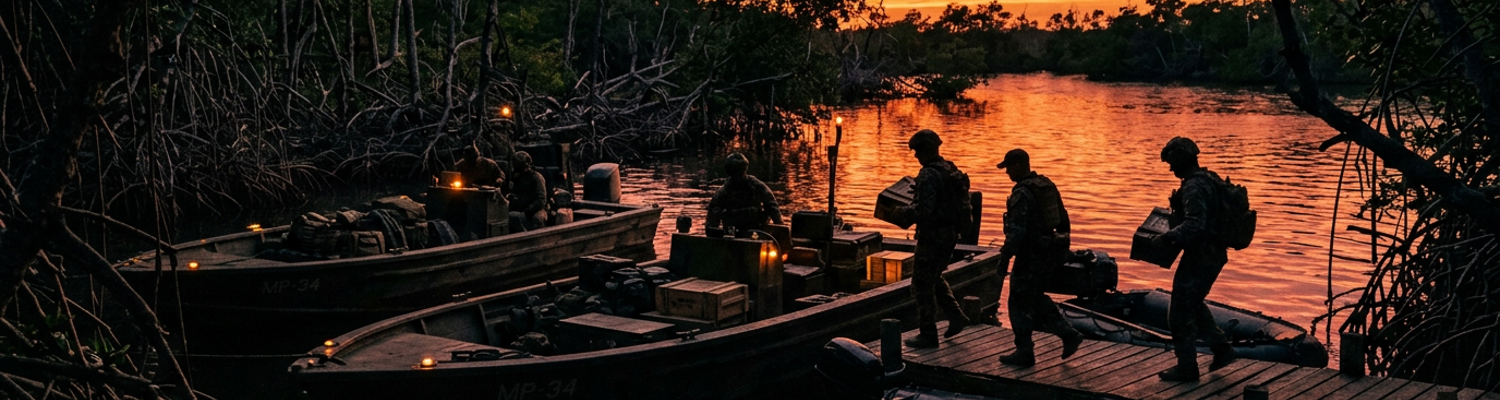
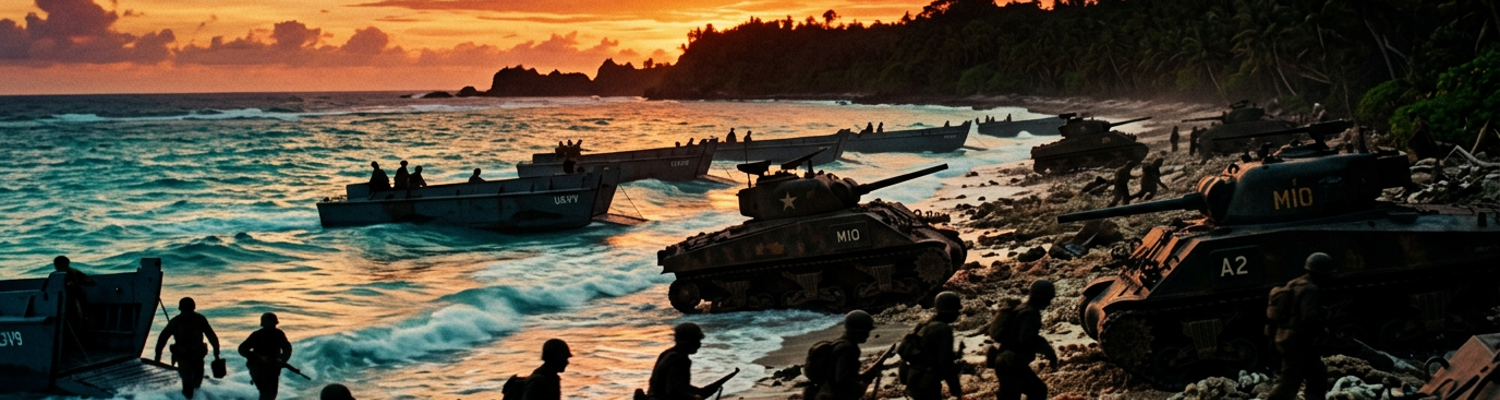
Transports swung heavy cargo nets over their sides off the northern coast of New Georgia. Thousands of soldiers and Marines hauled hundred-pound packs, mortar tubes, and heavy ammunition crates down into pitching landing craft. Colonel Harry B. Liversedge commanded this joint Northern Landing Group as it went ashore on July 5, 1943. He paired his seasoned 1st Marine Raider Battalion alongside soldiers from the 3rd Battalion, 145th Infantry and the 3rd Battalion, 148th Infantry of the 37th Infantry Division. Inter-service friction immediately strained the operation because Army commanders expected deliberate supply buildups with field kitchens and extra uniforms. Marine officers favored rapid foot marches with light equipment. Navy task force planners had allocated too few landing craft for both services, stacking crates of Army field rations directly on top of Marine ammunition pallets in a disordered scramble inside the ship holds. Sailors yelled across the dark cargo bays as winches groaned under the weight of water trailers and heavy machine guns that the shallow landing boats could barely hold. Coxswains gunned their engines in the darkness and steered the overloaded Higgins boats through heavy surf toward what navigation charts marked as a dry landing strip at the mouth of the Wharton River.
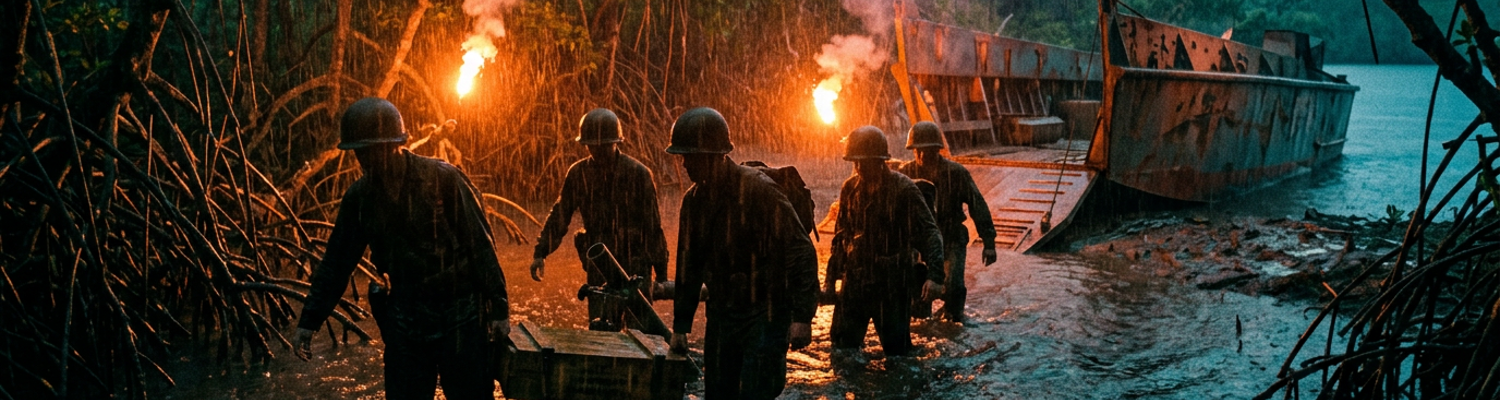
Steel bow ramps slammed down into black water as War Department amphibious doctrine failed completely. The ramps discharged troops into uncharted mangrove swamps around the mouth of the Wharton River instead of firm beaches. Standard doctrine manuals had promised an orderly staging area where beachmasters could establish supply dumps, vehicle exit lanes, and perimeter defenses within the first hour of debarkation. Soldiers and Marines instead plunged into waist-deep water and tangled aerial roots that snagged weapons, tore field packs, and threw heavily laden infantrymen into hidden underwater sinkholes. Army officers shouted conflicting orders across the tree roots while Marine noncommissioned officers struggled to drag waterlogged mortar baseplates through the dense brush. This exposed the complete lack of joint swamp-fighting rehearsals between the two services. Soldiers accustomed to rigid dispersal drills bunched together in panic along the tree lines, blocking Marine squads attempting to move forward into the jungle. Landing craft ground their propellers against submerged logs and mudbanks, trapping subsequent boat waves in a growing logjam along the winding river entrance.
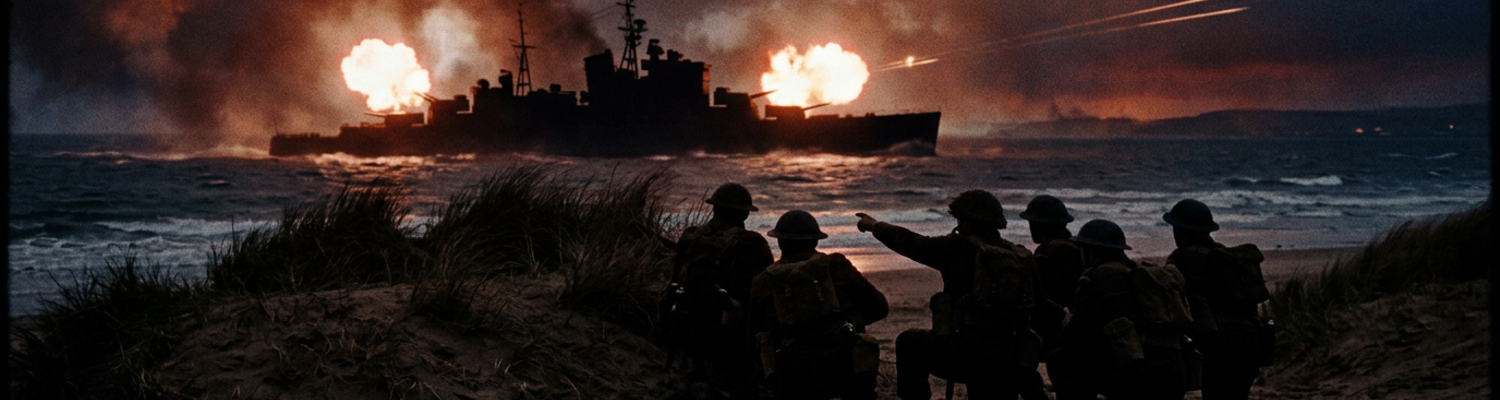
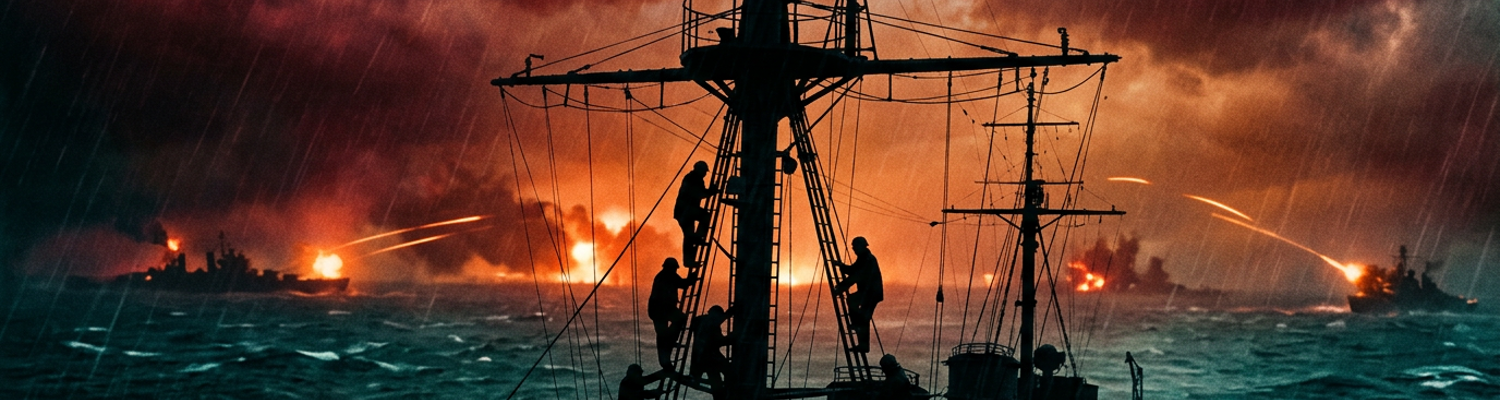
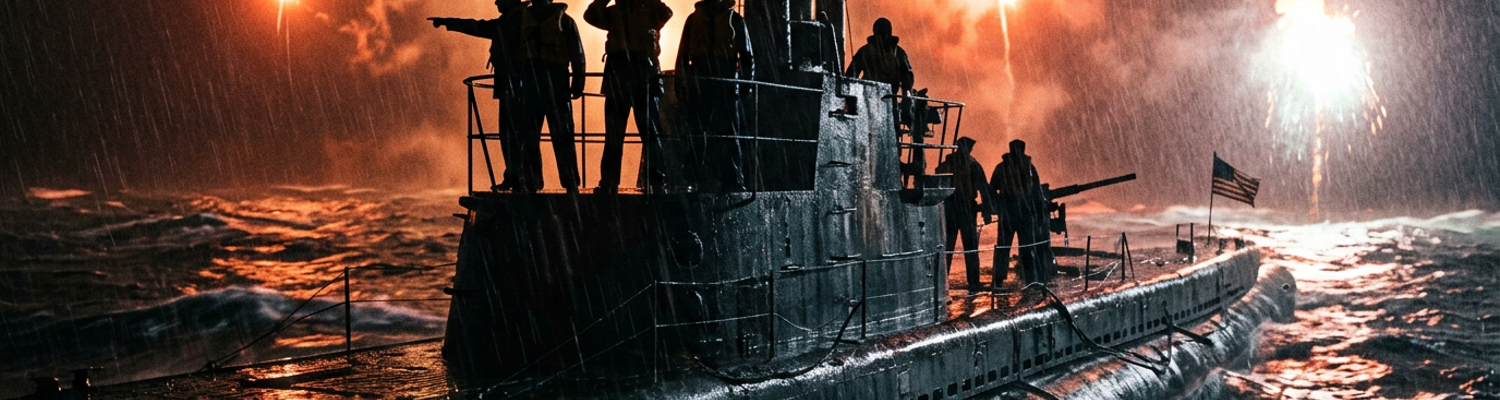
Destroyer-transports standing off the coast reversed their engines and departed prematurely under fear of Japanese naval counterattack. This marooned troops while deep mud and waist-deep water drowned radio batteries and critical signal equipment. Navy commanders refused to risk their thin-skinned hulls in daylight near the narrow waters of the Kula Gulf. They cut short the unloading process and left vital heavy weapons and half the expeditionary rations stranded on distant ship decks. Signal corpsmen struggled desperately to keep their waterproof bags sealed, but the thick swamp muck tore through canvas covers and seeped into the battery terminals of every SCR-284 radio set. Corrosive saltwater rendered the dry cells useless within minutes, cutting off Colonel Liversedge from his offshore fire support ships and separating the Marine Raiders from the trailing Army battalions. The premature departure of the fleet stripped the ground forces of their naval gunfire lifeline and destroyed any schedule for regular resupply. Supply officers found themselves knee-deep in tidal silt, frantically searching for scattered wooden crates that were sinking beneath the mangrove roots.
Riflemen hauled the few recovered ration boxes onto exposed mangrove bolls while Colonel Liversedge surveyed the chaotic perimeter in the pouring rain. Inter-service friction intensified between headquarters staffs as Army officers demanded an immediate pause to locate missing medical supplies and reorganize scattered company gear. Marine commanders insisted on pressing inland before Japanese coastal spotters pinpointed their positions. Marine runners had to navigate the flooded jungle paths on foot to deliver handwritten messages between the 1st Raider Battalion and the 3rd Battalions of the 145th and 148th Infantry. This slowed command coordination to a crawl. Staff officers realized that the swamp had destroyed their land-based telephone wire spools alongside their radios, leaving hand signals and foot messengers as their only means of coordinating defensive sectors. Soldiers and Marines divided the surviving dry cartridges among themselves, shouldered their wet rifles, and pushed southward along the muddy trail toward the Japanese stronghold at Bairoko.
SOPAC Operational Friction and Aerial Resupply Failures
Mud sucked at the boots of the advancing columns as scouts cut narrow pathways into the rugged terrain of the Dragons Peninsula. Frontline soldiers of the Northern Landing Group were reduced to a third of a K-ration per day while conducting exhausting reconnaissance. Men had to ration individual biscuits and small tins of meat across twenty-four-hour shifts. Constant downpours soaked their uniforms and softened the cardboard ration packaging into pulpy mush that fouled what little food remained. Hunger quickly drained physical stamina as platoons scrambled over jagged coral ridges and waded across waist-deep mangrove channels in search of Japanese outpost positions. Company commanders watched their men grow dizzy from caloric deficits and severe heat exhaustion, but operational orders still required continuous forward patrols to locate the main defenses protecting Bairoko Harbor. Trail messengers returned to the coastal staging area with urgent pleas for emergency food and ammunition drops. They warned that the entire strike force would soon be physically incapacitated without immediate aerial relief.
Admiral William F. Halsey and his SOPAC naval staff clashed with the 37th Infantry Division headquarters on Guadalcanal over who held operational authority to direct the requested flights. Severe logistical miscommunication erupted between the two commands, stalling relief efforts while field reports sat unread on command desks. Naval planners argued that transport aircraft belonged under unified South Pacific theater control and refused to release planes without formal maritime clearance. Army division staff insisted that immediate tactical necessity superseded theater paperwork. Radio officers transmitted messages on conflicting frequencies and used incompatible routing codes, which delayed urgent supply requisitions for days at a time. Staff officers traded angry teletype messages over missing cargo manifests and conflicting coordinate grids instead of loading pallets onto the staging fields at Henderson Field. Army supply officers eventually bypassed proper naval channels out of desperation. They secured a handful of twin-engine transport planes and hastily packed them with whatever small-arms cartridges and dry rations were sitting on the Guadalcanal airstrips.
C-47 transport planes arrived over the northern coast of New Georgia without experienced ground spotters to guide their approaches. The pilots attempting parachute drops routinely misidentified swamp landmarks, dropping essential ammunition and food into thick jungle canopies out of reach. Crewmen looked down at an unbroken blanket of green forest where uniform mangrove clusters, winding tidal creeks, and misty lagoons made accurate map reading almost impossible from three hundred feet in the air. Loadmasters pushed wooden crates and canvas-wrapped bundles through open cargo doors, watching white and red parachutes blossom over the wrong ridges miles away from the designated coordinates. Heavy wooden boxes crashed into the upper branches of hundred-foot trees, where the suspension cords tangled hopelessly around massive limbs far above the forest floor. Other drop bundles broke free from their harnesses under the strain of sudden descents. These heavy packages hurtled straight through the foliage to shatter against hidden limestone rocks or disappear beneath deep tidal muck.
Riflemen scrambled across the flooded ground toward the drifting parachutes only to find most of the supplies completely unrecoverable. Soldiers attempted to shoot down stranded cargo bundles with rifle fire or climb the slick tree trunks with field telephone wire. The dense vegetation defeated every effort to bring the rations down. Patrols recovered fewer than a dozen intact ammunition canisters out of entire flight loads, leaving mortar crews without high-explosive shells and rifle companies with only a few loose clips per man. Colonel Liversedge gathered his battalion commanders in the rain to assess their depleted physical strength and dwindling inventory of clean ammunition. Officers decided to cancel planned preliminary bombardments and push the starving troops straight toward the fortified enemy pillboxes along the Bairoko trail.
Naval Gunfire Denial and Inter-Service Command Strain
Scouts from the 1st Marine Raider Battalion took heavy fire from concealed enemy positions after advancing less than a mile down the trail. Commander Saburo Okumura and his Kure 6th Special Naval Landing Force occupied fortified coral and coconut-log bunker networks with overlapping machine-gun arcs that ground troops could not breach without heavy ordnance. Japanese gunners had packed crushed limestone and dense palm trunks across dozens of mutual-support redoubts, leaving only narrow firing slits just inches above the swamp water. Type 92 heavy machine guns fired down pre-registered lanes through the undergrowth, killing Marine point men and pinning trailing Army platoons in the stagnant mud. Infantrymen hurled fragmentation grenades against the log mounds, but the blasts merely chipped the damp timber while Japanese crews inside remained untouched. Colonel Liversedge realized his light sixty-millimeter mortars could not crack these reinforced roofs. He ordered his radiomen to transmit an urgent request to the offshore fleet for destroyer bombardments.
Navy task force commanders repeatedly denied ground force requests for destroyer gunfire support against Bairoko. They cited shallow reef hazards and Japanese shore battery risks as their primary reasons for withholding the fleet. Senior naval officers warned that navigating the narrow entrance of Bairoko Harbor would expose five-inch destroyers to uncharted coral heads and grounding. Fleet headquarters also feared that Japanese coastal artillery units concealed along the surrounding bluffs would bracket stationary warships and sink them in the restricted bay. Marine and Army staff officers argued back over crackling radio circuits that their riflemen were dying in the open without artillery, but the fleet refused to change its position. Battalion leaders watched their forward momentum collapse as radio operators received final confirmation that no naval shells would strike the Japanese harbor works. Colonel Liversedge immediately turned to his air liaison officers, ordering them to bypass the fleet and petition the naval air command on Guadalcanal for direct aerial strikes.
Raider and Army battalion commanders faced bitter resistance from naval air coordinators who refused dedicated close air support strikes against confirmed enemy redoubts. Naval flight planners insisted that theater dive bombers and torpedo planes belonged on high-priority maritime interdiction missions rather than tactical strikes over dense jungle. Staff officers at the airfield argued that pilots could not identify friendly lines through the triple-canopy forest without forward air controllers, creating too much danger of hitting American positions. Army commanders pointed out their marked trail maps and laid out yellow recognition panels on open mudflats, but flight leaders still rejected the proposed strike coordinates. Hours of abrasive radio transmissions produced only vague promises of future support, leaving the ground troops with no air cover while enemy snipers picked off wounded men in the brush. Company officers closed their radio sets in frustration and realized that their infantrymen would have to assault the fortified harbor defenses entirely on their own.
Riflemen from the 1st Raider Battalion and the 148th Infantry fixed bayonets and crawled through the mud under continuous machine-gun fire. Squads attempted to flank Okumura outer pillboxes by creeping through tangled mangrove roots, but interlocking fire lanes cut down any man who raised his head. Demolition teams rushed forward with satchel charges and blocks of TNT, only to be killed by Japanese snipers concealed in the palm trees above the log bunkers. Bloodied platoons dragged their dead and wounded back into tidal gullies, unable to crack a single major strongpoint without the naval guns and dive bombers that theater commanders had withheld. Colonel Liversedge halted the attack as evening approached, pulling his exhausted companies back along the trail to dig shallow trenches in the swamp muck.
Frontline Medical Collapse During the Bairoko Assault
Soldiers from the 3rd Battalion, 148th Infantry and Marines from the 1st Marine Raider Battalion climbed out of their waterlogged trenches at dawn on July 20, 1943, to launch the coordinated assault on Bairoko Harbor. Concealed Japanese pillboxes and bunker lines immediately erupted with heavy machine-gun fire and high-explosive barrages that trapped the attacking waves in exposed mangrove clearings. The assault on Bairoko Harbor collapsed into tactical stalemate as the joint force took heavy machine-gun and ninety-millimeter mortar fire. Mortar fragments shredded the jungle canopy and hurled hot metal across the wet ground, cutting down rifle squads before they could reach throwing distance of the Japanese log parapets. Company commanders tried to push fire teams through interlocking avenues of Japanese machine-gun fire, but every forward thrust ground to a complete halt against the fortified harbor perimeter. Trapped platoons flattened themselves in the black mud, unable to maneuver forward or break through the interlocking bands of enemy fire.
Corpsmen crawled through the mud under continuous rifle fire to drag wounded men back to the rear collection points. Battalion aid stations were overrun by casualties and completely exhausted local supplies of blood plasma, sulfa drugs, and morphine within the first two hours of combat. Navy surgeons worked in flooded hollows behind the front line, using dirty salt water to wash out shrapnel wounds because fresh water cans were empty. Medical officers quickly ran out of sterile bandages and tore up muddy field shirts to bind sucking chest wounds and shattered limbs. Severe supply shortages caused by theater shipping delays meant that doctors had no dry plasma left to revive men dying from massive blood loss. Wounded soldiers and Marines lay side by side on wet palm fronds in the rain, groaning in pain while medical personnel desperately searched empty supply crates for unused morphine syrettes.
Casualties multiplied rapidly across the perimeter as Japanese spotters directed high-angle mortar rounds directly into the crowded aid collection areas. The attacking force suffered approximately 250 casualties, including 49 dead, with half of the wounded becoming completely immobilized litter cases under fire. Every non-ambulatory casualty required four to six riflemen to carry him along the flooded paths, which stripped frontline companies of their remaining combat strength. Stretcher teams improvised litters by running saplings through poncho sleeves, but the slick wooden poles repeatedly snapped under the weight of heavy men. Marine and Army riflemen had to drop their weapons in the brush to lift their screaming comrades out of the rising swamp water. Japanese snipers positioned in nearby trees shot directly at these carry details, wounding additional men and killing several stretcher bearers in the aid stations.
Liversedge recognized that his force could not break the Japanese defenses and ordered a general withdrawal toward Enogai to prevent the capture of his aid stations. Headquarters personnel and communications men formed emergency carry details, shouldering over one hundred litter patients across miles of knee-deep swamp. Exhausted soldiers and Marines took turns carrying the litters through continuous downpours while rear-guard squads traded rifle fire with advancing Japanese patrols. Marine and Army officers shared their last canteens of clean water with the most severely wounded men as the long evacuation column stretched out along the narrow jungle path. The retreating troops carried every wounded man into the perimeter at Enogai by nightfall, collapsing into the muddy defensive positions without ammunition, rations, or medical supplies.
Agonizing Swamp Evacuations and Retraction to Enogai
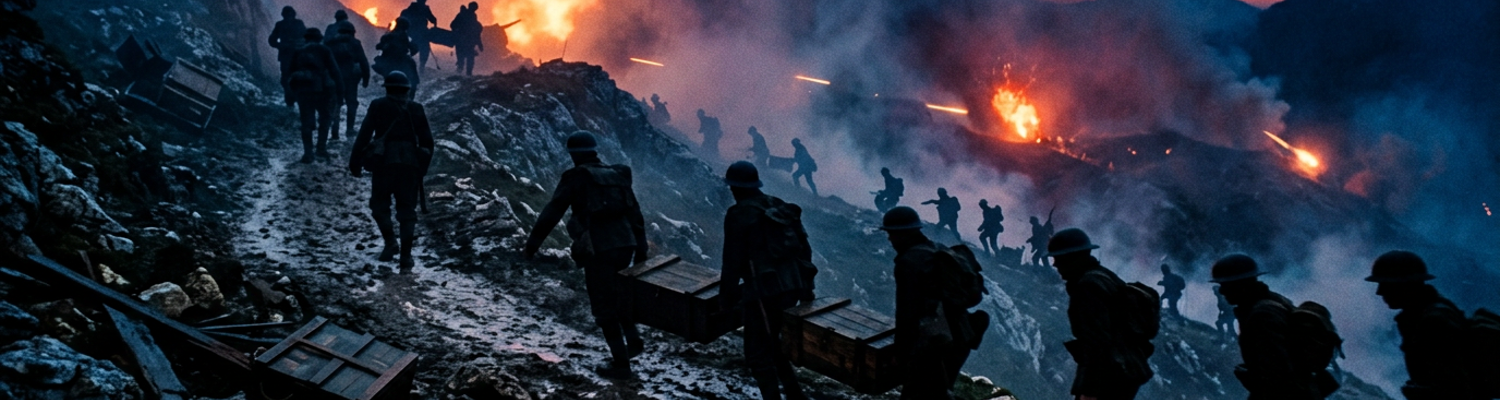
Corpsmen knelt beside rows of soaked litters in the mud at Enogai to examine dozens of critical casualties who had survived the fighting around Bairoko. Lacking field ambulances or motor transport, the force required up to eight men per stretcher to carry wounded soldiers through waist-deep mangrove morasses back to Enogai Inlet. Bearers worked in rotating shifts of four relief pairs because the suction of the tidal mud repeatedly dragged men down beneath the surface. Soldiers and Marines locked their arms under the rough wooden poles, bracing their boots against submerged roots to keep the stretchers elevated above the foul saltwater. Every step through the tangled morass threatened to pitch a screaming patient headfirst into the black sludge, forcing the bearers to move at an agonizingly slow crawl. Mangrove branches tore at open flesh wounds and ripped away wet bandages as each team forced its way through the dense vegetation.
Snipers fired from high boughs directly into the slow-moving evacuation columns as the bearers struggled along the trail. Wounded soldiers endured multi-day litter evacuations along sniper-harassed trails without pain relief, causing severe secondary mortality from shock and jungle infections. Medical personnel had completely depleted their stores of morphine and antiseptic washes during the initial assault, leaving compound fractures and open abdominal wounds exposed to flies and swamp water. Corpsmen could do nothing for men screaming in agony except wrap torn undershirts around hemorrhaging limbs and secure shattered bones with bamboo splints. Gangrene and tropical ulcerations set in within twenty-four hours across the waterlogged flesh of casualties lying exposed in the tropical heat. Stretcher bearers could only wash feverish faces with brackish rainwater and push forward along the slippery tracks as dying men slipped into comas beside them.
Radiomen at Enogai Inlet transmitted repeated distress calls across naval frequencies requesting offshore Higgins boats and fast motor torpedo craft to evacuate the dying. Offshore naval commanders delayed dispatching rescue vessels into the unmapped inlet because they feared nighttime torpedo attacks and uncharted coral reefs along the coastline. The costly retreat demonstrated the failure of deploying an ad hoc joint Army and Marine task force without an integrated naval logistics and medical evacuation pipeline. Planners had thrown together separate Army and Marine units under an emergency field command while completely omitting unified boat pools, dedicated evacuation tenders, and synchronized naval medical support. Service rivalries deepened on shore as Army field officers and Marine commanders argued bitterly over remaining transport priorities while dead bodies accumulated along the water line. Navy flotilla leaders remained unwilling to risk their vessels in the shallow channel, leaving the ground forces isolated at the edge of the lagoon without surgical facilities.
Liversedge established a static perimeter around Enogai, ordering his surviving riflemen to dig defensive foxholes into the coral banks. Exhausted infantrymen and Raiders stacked coral rocks and waterlogged logs across the trail approaches to prepare for Japanese counterattacks from Bairoko. Working parties laid field telephone wire between the scattered platoon sectors and salvaged loose cartridges from the pockets of fallen comrades. Navy PBY Catalina flying boats and small landing craft finally slipped into the inlet under cover of darkness to take on the most critical litter cases. Surviving Marines and soldiers cleaned their fouled weapons with diesel fuel and distributed the few remaining dry rifle rounds among the forward sentry pits.