
Task Force 81 Operational Architecture
Limestone bluffs and scrub covered ridges rose sharply behind the open sands of Gela, giving Italian coastal gunners and German armored units a commanding view of the entire Sicilian landing area. Italian soldiers of the Livorno Division and coastal defense units manned reinforced concrete pillboxes, wire entanglements, and field guns positioned across the dunes. German Hermann Goring Panzer Division tank crews held dozens of medium tanks and heavy Tiger tanks in reserve near the inland crossroads, ready to counterattack any force crossing the shoreline. Hidden sandbars lay just fifty yards out in the surf, threatening to strand landing craft in deep water under direct artillery fire. Interlocking defenses and steep bluffs formed a deadly natural trap where any stalled assault wave faced constant observation and zeroed in mortar fire.
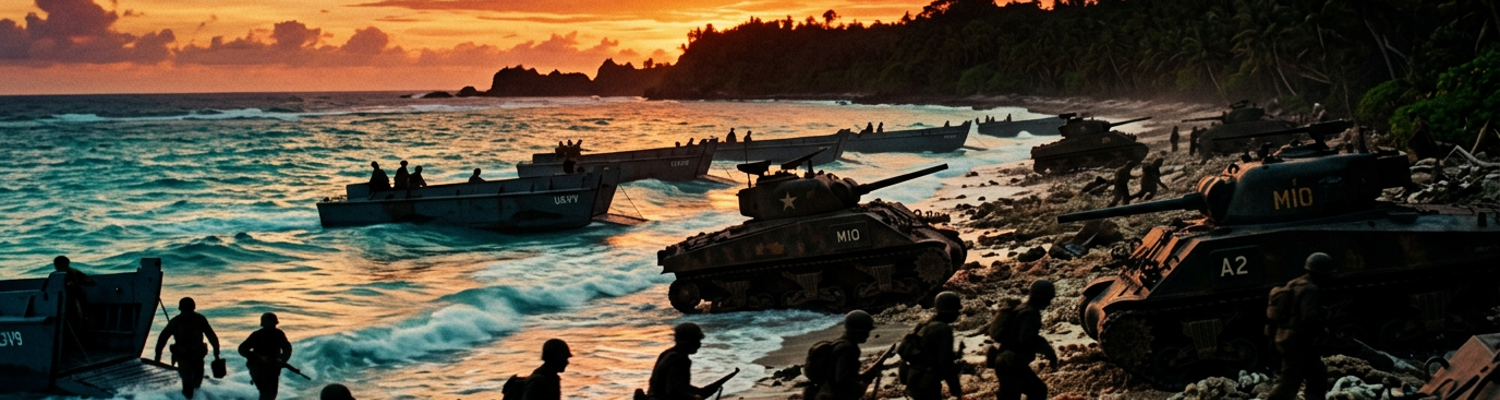
Task Force 81 received orders to drive directly into this defensive ring and land Major General Terry Allen and his 1st Infantry Division alongside Colonel William O. Darby and his Ranger battalions across the contested Gela beaches. Rangers prepared to assault the town pier and flanking sands to clear the urban waterfront, while infantry regiments faced wide open dunes swept by machine guns. Soldiers loaded into wooden assault boats with heavy combat gear, wire cutters, and portable field radios, bracing for the impact of heavy surf against the shoals. Navy coxswains navigated the pitch black coastal waters without lights, fighting engine stalls and shifting currents to deliver assault teams precisely on schedule. Ship to shore teamwork remained the only way to get men, weapons, and vehicles onto the sand before enemy armor could roll down from the high ground.
Admiral John L. Hall established his amphibious assault headquarters aboard the attack transport USS Samuel Chase to coordinate this complex shoreward movement and direct the Gela Dime Attack Force. Hall brought Terry Allen and the army division staff directly into the transport ship interior, setting up a joint command center deep below the main deck. Steel bulkheads trapped the summer Mediterranean heat, while banks of vacuum tube receivers and transmitters hummed under heavy electrical loads. Attack transports like the Chase lacked dedicated command facilities, forcing naval controllers and army commanders to share cramped chart rooms designed for basic cargo operations. Watch officers, messengers, and telegraph operators clustered over paper plotting maps, trying to trace boat waves through scattered Morse code clicks and crackling radio reports.
Radio antennae mounted along the transport superstructure struggled to pull in clear signals as heavy surf and enemy shelling battered the landing craft. Waves swamped delicate shore radios as soon as troops stepped off the boat ramps, soaking battery packs and cutting off frontline units from the fleet. Hall and Allen stood over empty map grids in the stifling compartment, watching grease pencil tracks freeze as incoming tactical dispatches slowed to a trickle. Lookouts on the deck of USS Samuel Chase peered through binoculars at distant gun flashes along the dunes, unable to distinguish friendly positions from enemy strongpoints. Hall ordered his communications crew to switch frequencies and test backup circuits, but the dead silence on the army nets left the offshore command isolated while combat raged across the beaches.
Beachhead Communications Network Collapse
Saltwater breached the canvas waterproofing of portable SCR-284 radio sets the moment army signalmen dropped off landing ramps into chest deep surf off the Gela coast. Breakers swamped the wooden Higgins boats and overturned wading troops, submerging the sixty pound transmitter units, lead acid storage batteries, and hand cranked generators in Mediterranean brine. Waterlogged SCR-284 radio sets failed during amphibious landings through rough surf, leaving assault battalions unable to contact offshore fire support ships. Signal soldiers dragged the flooded equipment boxes onto open sand and desperately wiped down connection terminals with greasy rags, but corrosive salt water had already seeped into the vacuum tube sockets and shorted the coils. Technicians tried swapping out spare parts from rubber transport bags, only to find the replacement dry cell batteries ruined by moisture as well. Infantry officers abandoned the dead transmitters along the waterline and ordered their communications sections to run terrestrial wire lines across the dunes toward forward observation posts.
Spools of telephone wire unrolled across the sand as army linemen sprinted behind the assault waves to link frontline rifle companies with naval gunfire liaison teams near the high water mark. Field telephone crews dug shallow trenches with entrenching tools to bury the rubber coated cables away from tracked vehicles and exploding shells. Terrestrial wire lines between forward observation posts and naval gunfire liaison teams were repeatedly severed by Italian artillery barrages. Italian coastal batteries and field howitzers inland fired high explosive rounds along the landing beaches, sending hot steel fragments through the sand dunes and cutting copper wires in dozens of places at once. Linemen crawled back along the broken circuits under machine gun fire to splice severed copper strands by hand, but every fresh enemy salvo tore up the newly repaired lines. Liaison officers stared at silent EE-8 field telephone handsets, unable to receive elevation corrections, target coordinates, or danger close warnings from the ridge tops.
Runners attempted to deliver handwritten firing coordinates on foot, but mortar fragments and rifle fire killed or wounded messengers before they could reach the liaison teams on the dunes. Signalmen tried using blinker lights, signal lamps, and semaphore flags from exposed sand berms, but thick black smoke from burning landing craft and dust thrown up by exploding shells obscured the shore from lookout bridges. Cruisers and destroyers patrolling close inshore kept their gun crews standing by the loaded five inch and six inch mounts, waiting for verified target markers that never arrived through the haze. Naval liaison officers on the beach could see enemy infantry and armored vehicles gathering on the inland slopes, yet they had no working radio or telephone connection to call down preliminary bombardments. Lookouts aboard USS Samuel Chase reported continuous radio silence on army tactical frequencies while listening to uncoordinated gunfire rattling across the Sicilian shoreline. Admiral Hall kept fire support destroyers holding their fire on designated landing sectors to prevent naval artillery shells from landing among unlocated assault battalions.
Axis Armored Counterattacks at Gela
Destroyer gunners held their five inch rounds in the loading trays while the Italian 4th Mountain Infantry Division Livorno and Mobile Group E launched a coordinated counterattack fielding Renault R35 light tanks against the landing beaches. Italian armored columns advanced in two converging prongs, grinding down the highway from Ponte Olivo airfield and over the rolling wheat fields toward the coastal road. French built Renault light tanks rumbled forward behind thick cast steel hulls that deflected standard American rifle fire and carbine rounds with loud metallic snaps. Italian infantrymen advanced tightly behind the armored hulls with Breda machine guns, spraying direct fire into the shallow foxholes American troops had scratched into the sand dunes. Tank treads churned through the dry soil and crushed thin wire entanglements, pushing the enemy armored spearhead within a few hundred yards of the water where assault boats were still offloading supplies under relentless machine gun fire.
Riflemen of the 1st Infantry Division and Ranger forces lacked heavy anti tank guns and armor support, threatening a total collapse of the interior defense perimeter. American medium tanks and 37 millimeter anti tank guns remained stuck aboard transport vessels offshore or trapped inside landing craft stranded on hidden sandbars. Infantrymen knelt in shallow irrigation ditches with shoulder fired bazookas, watching their rockets bounce off curved tank turrets or fail to detonate against the hulls at steep angles. Colonel William Darby gathered his Rangers along the masonry walls and stone doorways of Gela, hurling sticky grenades and explosive charges into the tank drive sprockets to tear off steel track pins. Desperate soldiers shoved thermite grenades into vehicle engine louvers and fired Browning Automatic Rifles through narrow periscope vision slits, but the sheer weight of enemy armor pushed the defenders step by step back toward the open surf.
Signalmen pinned against the waterline tapped out frantic emergency pleas to USS Samuel Chase, reporting that enemy tanks had broken through the forward positions. Static and dead batteries still choked the army communication nets, but naval gunfire liaison officers on the beachhead finally managed to establish an improvised voice link with the fleet. Admiral Hall and Major General Terry Allen huddled over unverified grease pencil marks on the plotting table aboard USS Samuel Chase as fragmented distress calls confirmed tanks rolling into rifle company command posts. Hall realized that holding naval gunfire to protect unlocated friendly positions risked the destruction of the entire landing force. Navy watch officers grabbed bridge handsets and bypassed standard shore clearance routines, relaying direct fire orders across fleet tactical circuits to the gunline destroyers patrolling just offshore.
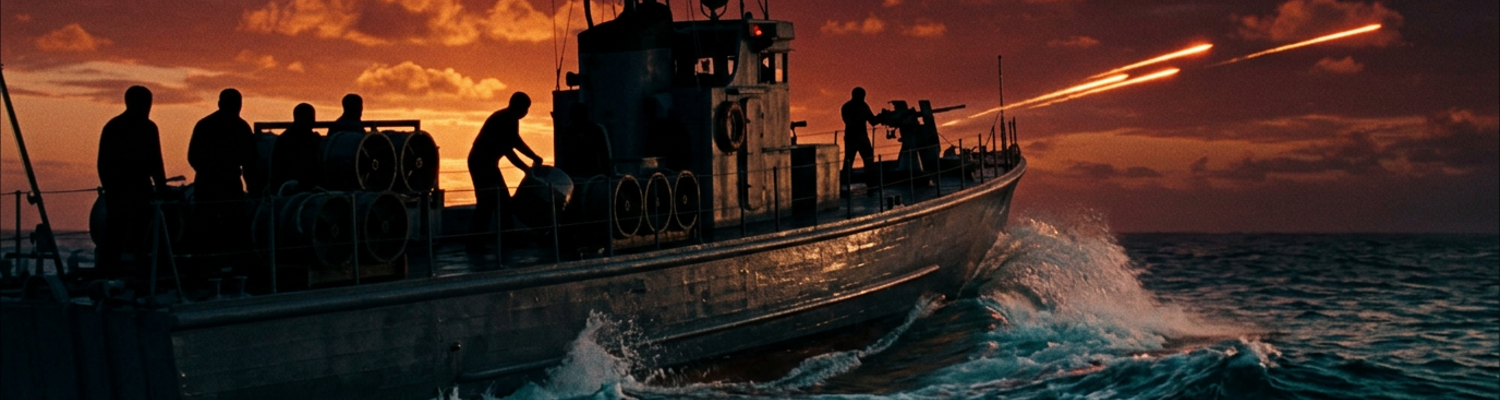
Destroyers like USS Shubrick surged through the shallow coastal swells, training twin five inch gun mounts directly onto the dust clouds rising over the Gela plain. Gunnery officers tracked the muzzle flashes of the Renault tanks over open iron sights, bringing naval artillery shells down just hundreds of yards in front of the retreating American infantry. High explosive fifty four pound projectiles slammed into the dry earth, throwing towering plumes of black smoke and geysers of rock across the advancing Italian formations. Direct naval blasts flipped several Renault light tanks onto their sides and ripped their tracks into twisted metal fragments, halting the advance of Mobile Group E. Italian infantry units broke from the burning wreckage and retreated into inland olive groves under relentless broadsides, leaving shattered vehicles smoldering across the edge of the dunes.
Cruiser Interventions by Boise and Savannah
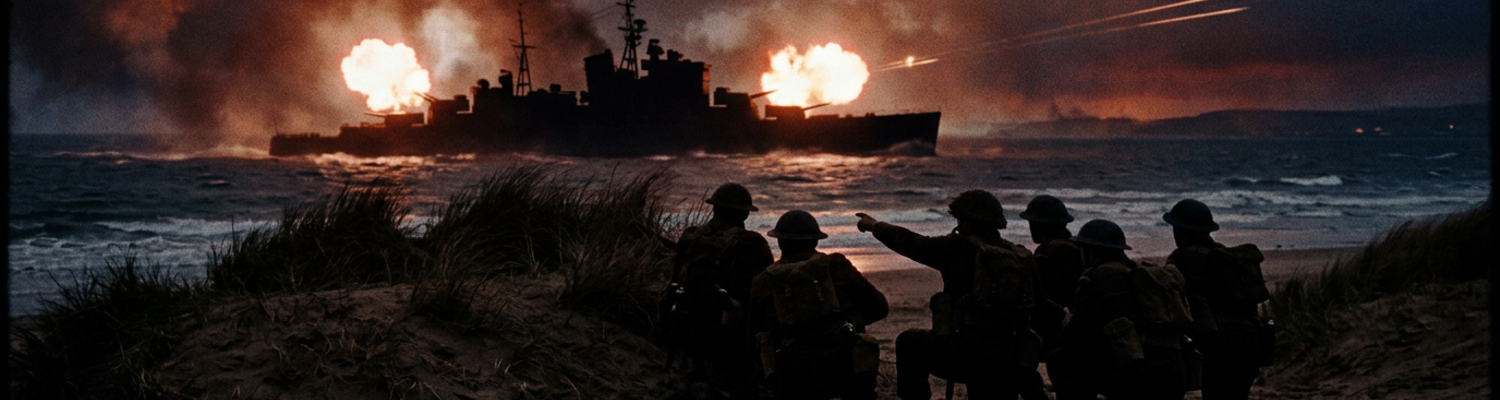
Tanks from the Italian reserve rallied behind the olive groves to reorganize their counterattack against the exposed American beachhead. Light cruisers USS Boise and USS Savannah pushed through the shallow coastal shoals to engage the advancing Italian armor at close coastal ranges. Both warships cleared their decks for action, turning broadside to the land to bring all fifteen of their six inch guns to bear on the approaching armored columns. Handling crews belowdecks in the cruiser magazines loaded one hundred and thirty pound high explosive projectiles into hydraulic hoists, feeding the guns to deliver rapid fire six inch main battery broadsides at a rate of ten rounds per minute from each barrel. Gunnery officers sighted the dust clouds kicked up by the tanks through optical rangefinders, opening direct fire that threw up towering columns of pulverized dirt across the forward slope. Steel fragments and explosive concussion waves ripped apart several Italian armored vehicles and threw their turrets into the dirt, but the low limestone bluffs soon hid the surviving tanks as they maneuvered into reverse slope depressions.
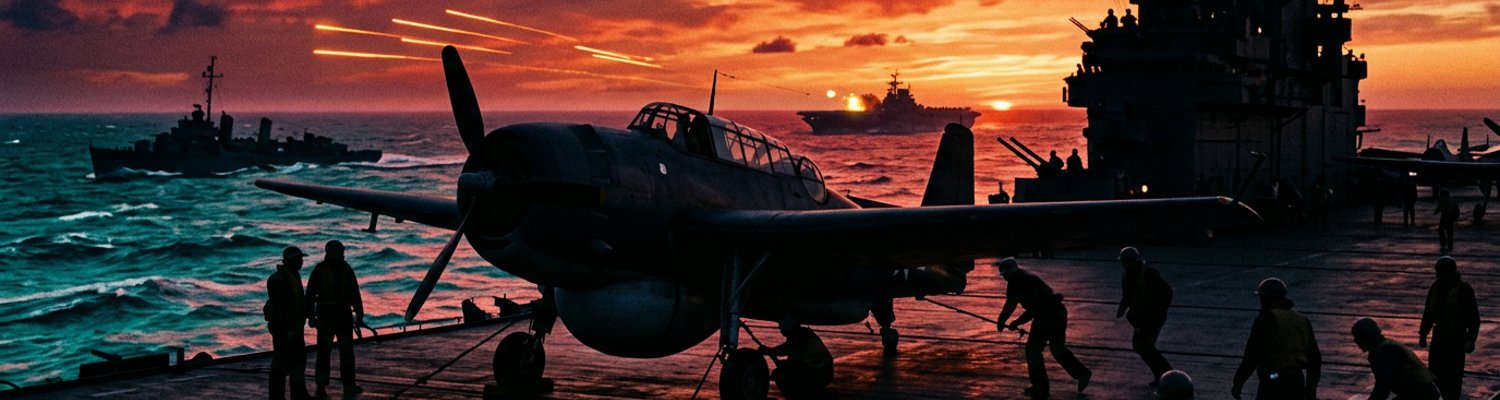
Catapults mounted on the quarterdecks of Boise and Savannah launched Curtiss SOC Seagull floatplanes into the sky to locate the hidden armor. Slow biplanes banked over the coastal plain at low altitude, their observers peering through open cockpits to spot target coordinates and direct naval gunfire back to the cruisers. German Messerschmitt Bf 109 and Italian Macchi C.202 fighters immediately swarmed the vulnerable floatplanes over the bay. Wooden and fabric Seagulls lacked the airspeed and armor plating to defend themselves against the cannon armed monoplanes. Aviators threw their lumbering aircraft into sharp skidding turns just feet above the ocean swells to evade high speed diving passes, while gunners fired single handheld machine guns from the rear cockpits. Italian Macchi C.202 fighters shot one Savannah floatplane into the sea and riddled another with machine gun bullets, forcing the damaged aircraft to limp away toward offshore patrol sectors.
Observers inside the surviving floatplanes continued transmitting elevation corrections and target coordinates over high frequency radios despite constant fighter passes. Plotting rooms deep inside Boise and Savannah translated these airborne radio fixes into direct deflection settings, raining continuous rapid fire salvos over the crest of the bluffs. Heavy naval projectiles crashed into the defiles where the Italian tanks attempted to regroup, blowing tracks off hulls, igniting vehicle fuel supplies, and halting the armored drive completely. Admiral Hall and his staff stood trapped inside the stifling headquarters compartment miles offshore aboard USS Samuel Chase, listening to the continuous thunder of the cruiser guns vibrating through the transport steel deck plates. Dead radio links and broken shore wires still blocked frontline casualty reports and beachhead positions from reaching the plotting boards, leaving the command staff blind to the actual infantry positions. Hall maintained the cruiser bombardment orders based entirely on the spotter plane voice signals, committing Boise and Savannah to hammer the inland roads with six inch fire until the remaining Italian forces withdrew.
Flagship Command Isolation Aboard Samuel Chase
Cruiser vibrations rattled the steel bulkheads of the joint operations room deep inside USS Samuel Chase, where Admiral John Hall and Major General Terry Allen received battle reports delayed by multiple hours. Heavy summer heat and diesel exhaust pooled in the low ceilinged compartment as signal officers handed the two commanders carbon copied dispatches that described tactical crises from early morning rather than the immediate fight. Messengers brought crumpled message slips indicating that rifle companies were calling for emergency anti tank fire at road junctions that the enemy had already bypassed hours earlier. Staff officers attempted to track frontline movements with grease pencils across acetate covered wall charts, but every blue line representing American positions was dangerously obsolete the moment it was drawn. Radio technicians worked frantically at their receiver panels, testing secondary quartz crystals and clearing carbon buildup from transmitter relays to establish contact with the 1st Infantry Division command post. Static and enemy interference continued to drown out voice calls from the beachhead, leaving the two senior commanders with no reliable record of whether forward battalions were holding the ridges or falling back toward the water.
Admiral Hall led his tactical staff up steel ladders to the flagship bridge wing to observe the Sicilian coastline directly with high powered pedestal binoculars. Thick white smoke from burning wheat fields and greasy black clouds from hit supply dumps drifted across the Gela plain, hiding the American foxholes from the lookouts. Flagship decision makers were forced to deduce frontline perimeter positions by visually tracking offshore shell bursts and burning tanks on the Sicilian ridgeline. Watch officers set up optical azimuth instruments on the bridge bulwarks, taking continuous compass bearings to each orange muzzle flash and each column of black smoke rising from ruptured vehicle fuel tanks. Staff officers matched these visual bearings against grid coordinates on their coastal maps, identifying where Allied naval shells were landing in relation to the burning hulks of Italian light tanks. Every stationary pillar of smoke along the road to Ponte Olivo airfield provided the only physical evidence that American infantry bazookas and naval guns had stopped an armored thrust at that specific map square.
Artillery explosions walking steadily southward toward the beach sandbars warned Allen and Hall that Axis armored elements were pressing between the unlinked American units. Allen studied the rising dust trails through his binoculars and warned that misidentifying the frontline boundary by even two hundred yards could cause naval bombardments to wipe out his own advancing infantry. Hall accepted the operational hazard, using the visual line of burning hulls on the ridgeline as a definitive safety boundary for offshore fire support. Watch officers used voice tubes and sound powered telephone handsets to relay target bearings directly to the bridge wings of destroyers and light cruisers cruising along the inner boat lanes. Warships swung their five inch and six inch gun mounts in unison, walking high explosive fragmentation shells across the reverse slopes just north of the smoking tanks to break up gathering enemy infantry. Naval projectiles cratered the limestone ridges, throwing up protective barriers of pulverized rock that shielded the isolated rifle companies until beach signalmen could finally repair their flooded radio transmitters.
Anchorage Friendly Fire Catastrophe
Signalmen testing their repaired radio sets on the beach dunes picked up frantic aircraft sighting reports rather than tactical infantry calls. Naval and shore gunners were placed on hair trigger air defense alerts on the night of July 11 following days of repeated Luftwaffe and Regia Aeronautica air attacks. German Ju 88 bombers and Italian fighter bombers had spent forty eight hours strafing the landing craft, setting ammunition ship Robert Rowan on fire, and forcing tired gun crews into a state of total exhaustion. Soldiers manning fifty caliber machine guns along the dunes chambered fresh ammunition belts and kept their fingers against the triggers, while offshore transport gunners tracked every flickering shadow across the water. Admiral Hall and General Allen stood over the plotting table in the humid operations compartment of USS Samuel Chase, waiting for word on whether an incoming airborne reinforcement mission had cleared the Sicilian coast.
Staff officers aboard the flagship had failed to distribute flight schedules to the surrounding fleet before the evening communications blackout took effect. Allied planners intended to drop reinforcement paratroopers inland to bolster beleaguered infantry lines, but the warning dispatch traveled through choked naval message channels at an excruciating crawl. Cruisers, destroyers, and landing ships anchored across the roadstead never received the updated safety corridor coordinates or the designated arrival timetable. Shore gunners huddled in coastal foxholes received no word at all, leaving hundreds of antiaircraft crews believing that any approaching airplane was an Axis bomber hunting for fuel dumps. Flight formations of unarmed transport aircraft approached the coast in total darkness at four hundred feet, relying entirely on the assumption that Allied naval guns would hold their fire along the marked shoreline corridor.
Machine gunners aboard an offshore merchant vessel opened fire on the low flying silhouettes, triggering an immediate chain reaction of gunfire across the entire anchorage. Delayed radio warnings regarding the arrival of transport aircraft resulted in the downing of twenty three Douglas C-47 aircraft carrying the 82nd Airborne Division 504th Parachute Infantry Regiment. Hundreds of naval twenty millimeter and forty millimeter antiaircraft barrels tracked the slow transports, filling the flight path with an impenetrable ceiling of bursting steel and white hot tracer fire. Twin engine C-47 transports caught fire in midair as explosive shells ripped into wing fuel tanks and severed hydraulic control lines, sending burning aircraft plunging into the Mediterranean. Paratroopers inside the shredded cabins attempted to jump from low altitudes, but ascending shells shredded parachutes and killed soldiers before they could drop clear of the falling wreckage. Wreckage from shattered planes splashed into the surf line or crashed onto the dunes, scattering equipment and casualties across the very beachhead the regiment had been sent to reinforce.
Admiral Hall stared from the flagship bridge wing at the flaming arcs across the roadstead, powerless to break through the local gunfire to halt the disaster. Signal lamps flashed emergency cease fire orders from USS Samuel Chase into the smoky darkness, but local gunners remained locked in combat frenzy and ignored the visual blinks. Radio operators shouted frantic cease fire directives over open tactical frequencies until the last surviving transports broke formation and fled southward toward Malta and Tunisia. Higgins boats dropped into the swells under direct orders from Hall, motoring through oily waters to recover floating parachutists and haul badly burned survivors over wooden gunwales. Naval corpsmen dragged injured airborne infantrymen onto the lit decks of USS Samuel Chase, turning the flagship mess tables into triage stations while the surviving battalions of the 504th Parachute Infantry Regiment regrouped in scattered clusters across the dark Sicilian fields.