
Wooden SC-497 Class Design and Conception
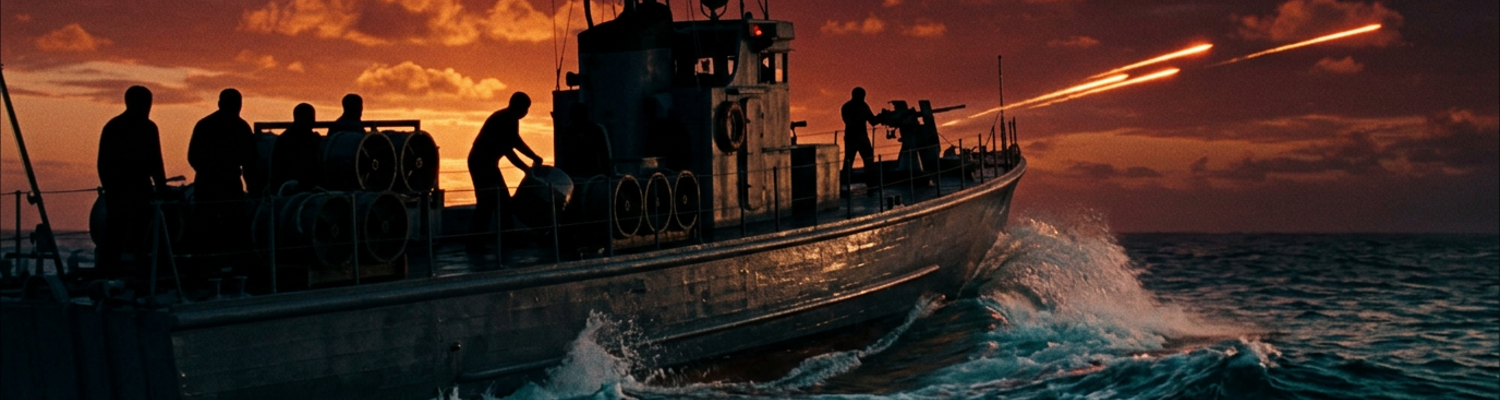
Engineers torqued brass mounting bolts across the keel timbers of a prototype patrol craft as emergency orders demanded an immediate shield for American coastal shipping lanes. The United States Navy procured the 110-foot SC-497 class subchaser using non-magnetic wooden hull construction to conserve scarce structural steel and utilize civilian boatyards. Civilian builders of luxury yachts and wooden workboats along the Gulf and Atlantic coasts held large reserves of seasoned white oak and yellow pine that fleet shipyards could not use. Bureau of Ships architects realized that small commercial yards could mass-produce wooden hulls without competing for the critical materials and drydock facilities needed for fleet destroyers and aircraft carriers. Wood construction also eliminated the danger of magnetic influence sea mines, allowing the small vessels to patrol shallow harbor approaches without setting off hidden explosive devices. Shipwrights fastened heavy oak frames to double-planked hulls with bronze screws, producing a ninety-eight-ton vessel equipped with depth charge tracks, Y-gun projectors, and light naval weapons.
Machinists lowered twin General Motors diesel engines into the narrow hull compartments to drive the newly armed vessels at speeds up to twenty knots. Early diesel powerplants generated intense structural vibrations and engine noise that interfered with sensitive low-frequency hull-mounted sonar arrays. Heavy two-stroke diesel cylinders fired in rapid sequence, sending mechanical shuddering directly through the engine beds and into the flexible wooden frames. Sonar operators sitting forward of the machinery space pressed rubber headphones against their ears, struggling to isolate submarine echoes from the deafening clatter of their own drive train. Technicians attempted to dampen the sound transmission by installing thick rubber pads under the diesel mounts, but engine vibrations continued to blind the listening equipment at standard cruising speeds.
Admirals accepted these acoustic blind spots because prewar naval doctrine conceived the wooden subchaser strictly as an auxiliary harbor craft rather than an open-sea combatant capable of enduring sustained frontline operations. Navy doctrine writers envisioned the 110-foot wooden hulls operating entirely within protected waters, escorting merchant traffic through minefields, guarding anti-submarine gate nets, and watching anchorages for saboteurs. Naval architects provided the subchasers with limited fuel capacity, small crew berths, and light galley gear under the assumption that crews would return to shore bases each evening for hot food and replenishment. Fleet command reserved all long-range escort assignments and deep-water submarine hunting for steel destroyers and larger ocean-going gunboats. Peacetime budgets left coastal defense districts without sufficient steel warships, forcing planners to assume that enemy submarines would never strike commercial shipping inside domestic waters.
U-boats shattered that peacetime assumption in May 1942 when German submarines launched an aggressive offensive against merchant shipping throughout the Gulf of Mexico. Torpedoman crews aboard German Type IX submarines sank merchant vessels and oil tankers within sight of American beaches, leaving the Eighth Naval District with almost no steel warships to protect critical sea lanes. Naval commanders in New Orleans ordered the fragile wooden SC-497 class subchasers away from harbor entrances and pushed them straight into open ocean patrols. Crews lashed extra fuel drums to the exposed wooden decks and stacked depth charge cases along the narrow passageways, overloading hulls built only for sheltered coastal duties. Sailors steered their vibrating wooden boats through rough offshore chop toward towering plumes of tanker smoke, beginning an unexpected frontline trial against combat submarines in the open Gulf.
U-507 Incursion and Eighth District Mobilization
U-507 ignited those towering plumes of smoke on May 4, 1942, when the German submarine torpedoed the unarmed steam freighter Norlindo off the Dry Tortugas, initiating an unhindered U-boat campaign across the Gulf of Mexico. Detonation shockwaves tore open the freighter starboard side, sinking the vessel in less than ten minutes and leaving merchant survivors adrift on wooden life rafts. Korvettenkapitan Harro Schacht then steered his Type IX boat westward into the heart of the Gulf, encountering commercial cargo carriers and oil tankers sailing without escort or radar detection. Unprotected merchant vessels followed predictable deep-water lanes while coastal towns kept their shoreline lights illuminated at night, making passing ships easy targets against the horizon. U-507 sank six ships in quick succession across the central Gulf, confirming that German submarines could operate across the sea lanes without immediate counterattacks from American naval vessels.
Officers under the Commander Inshore Patrol Eighth Naval District in New Orleans scrambled to respond to these unchecked attacks, yet the district possessed zero fleet destroyers and lacked coordinated offshore convoy routing systems to protect transit lanes. War planners in Washington had assigned all modern steel destroyers to Atlantic convoy runs and Pacific fleet actions, leaving the southern naval district with an empty order of battle. Headquarters staff plotted each torpedo impact with colored pins on wall charts, receiving frantic distress calls from burning ships hours after the attackers had already slipped away. Merchant captains continued to depart Gulf ports under independent sailing orders, heading directly into the path of U-507 because naval control offices had no organized system to divert traffic into safe holding anchorages. Naval commanders realized that only small coastal craft stood between enemy torpedoes and the vulnerable petroleum shipments sailing out of the Mississippi River.
Subchasers of the newly commissioned SC-497 class and commandeered civilian yachts were scrambled to sea with inexperienced Naval Reserve crews to screen the Mississippi River passes. Young reserve ensigns took command of 110-foot wooden hulls with only weeks of classroom training at coastal navigation schools, leading crewmen who had never fired naval weapons or operated sonar gear under combat conditions. Shipyards stripped mahogany fittings and canvas awnings from requisitioned private pleasure boats, bolting heavy depth charge racks onto light stern decks that were never built to withstand explosive recoil. Wooden SC-497 subchasers charged down the muddy currents of South Pass and Southwest Pass, their twin diesel engines roaring at maximum revolutions to intercept reported periscope sightings. Silt plumes and temperature layers where river mud collided with dense Gulf saltwater blinded the subchaser sonar transducers, producing false acoustic echoes that misled novice operators. Lookouts stood strapped to exposed bridge wings through blinding rain, searching the dark chop for periscope shears while heavily loaded tankers slipped past the delta into the open sea.
Sailors aboard the wooden subchasers could not prevent German torpedoes from striking those outward-bound tankers, forcing the patrol craft to shift repeatedly from offensive hunter-killers to rescue vessels. Oak hulls nudged through burning slicks of heavy crude oil as deckhands threw cargo nets and hemp lines over the side to haul blackened merchant survivors aboard. Torpedomen rolled three-hundred-pound depth charges down stern tracks into the foaming wake, firing explosive patterns at blind sonar contacts to keep the submerged enemy down while the rescue work continued. Wooden frames groaned under the underwater shockwaves of their own ordnance, loosening hull planking and flooding engine bilges with oily seawater. Commanders at the mouth of the river ordered battered subchasers to tie up alongside fuel barges at Burrwood, pump out their bilges, replenish depth charges, and head straight back out into the shipping channels.
Mississippi River Plumes and Acoustic Distortion
Propellers churned through muddy river water as the refueled subchasers steered away from Burrwood and re-entered the open shipping channels to resume their patrol. Freshwater discharge from the Mississippi River delta created sharp haloclines and steep summer thermoclines across the northern Gulf of Mexico. Subchaser hulls surged over a massive surface blanket of warm, silt-choked river water that floated directly over the much colder and denser saltwater of the open sea. Silt particles and organic runoff formed thick physical suspensions that scattered high-frequency sound waves before the energy could travel more than a few hundred yards. Sound gear mounted beneath the forward keels blasted ultrasonic pulses into these liquid boundaries, but the drastic changes in water density shattered the outgoing acoustic energy. Sonar transducers struggled to return readable signals as sound waves hit the sudden changes in water density and bounced right back toward the surface.
Transducer diaphragms captured violent reverberations from those surface bounces, deafening the sound watch while leaving the deeper water completely hidden. Thermal and salinity layering generated pervasive shadow zones that bent active sonar pings away from submerged German Type IX submarines. German commanders steered their heavy boats beneath the cold salt layer at silent speeds, knowing that the dense boundary would deflect incoming sound beams back toward the sky. Subchaser pingers projected pulses that curved harmlessly over the submerged targets, generating false bottom readings that indicated shallow mud banks where hundreds of feet of deep water actually lay. Heavy diesel clatter from the subchaser engines vibrated through the wooden planking, mixing with the bounced sonar pings to mask the low hum of enemy electric motors. Watch officers peered at erratic depth dials and paper recorders that failed to register steel targets lurking directly beneath their keels.
Subchaser sound operators abandoned standard automated ranging protocols to improvise manual acoustic tracking techniques and bearing-drift calculations. Ensigns ordered their technicians to switch off the active sound projectors to silence the confusing echoes bouncing off the delta silt. Listeners pressed Bakelite headphones tight against their ears, turning the transducer handwheel inch by inch to detect the faint rhythm of turning submarine propellers or humming electric drive motors. Plotting teams stood around narrow chart tables in the wheelhouse, marking successive compass bearings with soft graphite pencils to measure the target lateral drift. Stopwatches clicked in the dim compartments as sailors counted propeller revolutions, calculating the enemy craft speed and heading from raw acoustic changes alone. Crewmen converted these raw bearing lines into manual firing solutions, estimating the submarine future position without the aid of mechanical fire-control computers.
Torpedomen slammed explosive depth charges onto the stern release tracks as soon as the bridge called out these estimated coordinates. Captains opened their diesel throttles to sprint over the projected intercept points, laying down wide diamond patterns of explosive canisters to blanket the blind zones. Depth charges tumbled into the muddy wake, their hydrostatic pistols set for deep detonations beneath the protective temperature shelf. Underwater concussions hammered against the subchaser wooden frames, shaking caulking from the seams while the explosive shockwaves dissipated along the dense thermocline below. Type IX commanders reacted to the distant detonations by diving into deeper trenches off the continental shelf, evading destruction but losing their firing angles against outbound merchant convoys. Lookouts scanned the boiling surface for oil slicks and floating wreckage as the subchasers circled back, reloading their stern racks for another sweep across the muddy passes.
Engine-Room Conditions and Improvised Ordnance
Diesel engines roared beneath the main deck as helmsmen brought the wooden subchasers around to begin another run over the churned water. Engine-room temperatures aboard wooden subchasers routinely exceeded 110 degrees Fahrenheit in the Gulf summer heat, exhausting reserve mechanics during multi-day patrols. Machinists stripped down to their undershirts and soaked cloth rags in bucket water to wrap around their foreheads, yet the stagnant air inside the unventilated bilge spaces caused frequent heat cramps and dizziness. Reserve motor machinists took turns working ten-minute shifts near the roaring manifolds before climbing the steel ladder to vomit into the ocean breeze and catch a breath of cooler air. Salt buildup and high operating heat threatened to seize lubricating pumps, forcing the mechanics to crawl across vibrating floorboards to grease bearings by hand while the ships pitched in the river chop. Exhausted engine crews kept the twin shafts turning at maximum revolutions, delivering the bursts of speed the bridge needed to maneuver over suspected submarine contacts.
Deckhands secured heavy depth charges onto the stern equipment as the vessels surged ahead toward those plotted contact points. Due to severe shortages of K-gun side projectors, crews jury-rigged stern drop racks and altered spacing timers to create wide depth charge dispersion patterns. Naval armories in New Orleans could not provide enough standard side-throwing projectors to equip the rapidly growing subchaser fleet, leaving the wooden craft with only basic stern gravity tracks to lay explosive patterns. Torpedomen adjusted the release catches on the steel drop chutes, wiring mechanical timers and angled wooden guide rails to fling alternating canisters slightly outward into the propeller wash. Captains combined these mechanical adjustments with sharp rudder kicks, steering zigzag courses at twelve knots so the falling charges exploded across a broad lateral area rather than in a tight single file. Blast concussions from these wider patterns bracketed deep targets without rupturing the subchaser aft hull planks, keeping enemy commanders pinned beneath the surface while nearby commercial traffic fled the danger area.
Tankers loaded with aviation fuel and crude oil still took heavy hits whenever German torpedoes penetrated the subchaser screen along the shipping lanes. Flames shot hundreds of feet into the sky from ruptured cargo holds, turning the merchant vessels into listing hulks that threatened to sink into deep water with hundreds of thousands of barrels of oil. Subchaser crews escorted torpedoed, burning tankers into shallow sandbar anchorages off barrier islands to salvage critical petroleum cargo. Wooden subchasers pulled alongside the scorched steel hulls, using portable water monitors to hose down smoking decks while deckhands tossed wire towlines to surviving merchant sailors. Navigators steered the stricken giants across muddy shoals toward the protected lee of the islands, grounding the tankers in soft sand so they could not slide into the deep offshore trenches. Armed lookouts on the subchasers kept their light guns trained on the surrounding water throughout the grounding operations, guarding the salvage parties against follow-up submarine attacks until river tugboats arrived to pump out the oil.
Tugboats pulled barges alongside the beached tankers as subchasers established a protective patrol ring around the barrier shoals. Deck officers kept their sound transducers sweeping the tidal passes, listening for the telltale beat of enemy propellers trying to slip into the shallow bays. Pumps transferred thousands of barrels of undamaged fuel into river lighters, clearing the grounded hulls before the incoming Gulf tide could shift the sandbars and break their keels. Subchaser gunners fired periodic bursts from their forward twenty-millimeter cannons at floating debris to deter surfaced U-boats from making night torpedo runs against the salvage fleet. Commanders completed the salvage operations by escorting the loaded fuel barges through the sheltered inland waterways toward refineries in New Orleans, ensuring that the oil reached war industries despite the German attacks.
Weapons Modernization and Wooden Fleet Obsolescence
Shipyard mechanics in New Orleans hauled the wooden subchasers onto marine railways to prepare the battered vessels for urgent structural and tactical overhauls. Combat operations during the summer blitz had exposed critical limitations in the SC-497 class, most notably a recurring sonar blind spot that allowed U-boats to slip away during final attack runs. Technicians addressed this tactical failure by bolting Mark 20 Mousetrap rocket projectors onto the forecastle deck on both sides of the forward gun. These forward-throwing launchers fired salvos of rocket-propelled depth charges ahead of the bow, allowing sound operators to hold uninterrupted sonar lock on a diving submarine right through the moment of firing. Riggers also mounted compact SO-series microwave surface-search radar antennas atop the wooden tripod masts, running coaxial cables down to small viewing scopes in the pilothouse. Watchstanders utilized these new radar systems to track surfaced U-boats through night darkness, heavy rain, and river fog, allowing the wooden patrol boats to detect surface targets and attack submerged submarines without breaking contact.
Destroyer escorts built with steel hulls soon arrived to take over those offshore tracking duties as American fleet production expanded in late 1942. The introduction of dedicated steel-hulled destroyer escorts and the formal implementation of the coastal convoy network ended the emergency operational reliance on subchasers. Merchant freighters and oil tankers no longer sailed alone across open water, but instead moved in organized groups protected by continuous air coverage and dedicated ocean escorts. Destroyer escorts carried heavy three-inch artillery, expansive depth charge inventories, and high-powered sonar gear that operated effectively in rough seas without suffering the hull leaks and severe vibrations that plagued light wooden craft. German submarine commanders found fewer vulnerable targets along the shipping lanes and faced immediate counterattacks whenever they approached the transit lanes, making operations across the Gulf far more dangerous and far less productive. German naval command reacted to these dense coastal defenses by pulling Type IX submarines away from the Mississippi River delta and Florida Straits, ordering U-boat commanders to search for unprotected merchant traffic in the Caribbean and South Atlantic.
Subchasers of the SC-497 class were gradually withdrawn from frontline Gulf anti-submarine screens and repurposed for secondary amphibious control, smoke screening, and utility dispatch as the submarine campaign shifted away from American coastal waters. Deckhands removed heavy depth charge racks and forward Mousetrap launchers to reduce structural strain on aging oak frames. Shipfitters mounted high-capacity chemical smoke generators across the sterns, converting the wooden boats into fast screening craft that could lay white fog barriers to conceal combat ships from coastal artillery batteries. Dockyard teams also installed specialized radio transmitters, loudspeaker systems, and colored navigation boards along the bridge deck, outfitting the 110-foot vessels to serve as primary guide craft for amphibious landings. Experienced reserve crews steered their modified wooden vessels away from Gulf bases toward overseas assembly harbors in the Mediterranean and Pacific, where navigators guided landing craft toward invasion beaches and carried operational orders between fleet anchorages.