
Abwehr Section I H West in the Maghreb
Pliers slipped in the sweaty palm of Corporal Erich Vogl as he stripped insulation from an emergency antenna wire inside a darkened attic in Casablanca. Sand clogged the vent slots of the shortwave receiver beside him, driving internal operating temperatures past safe limits and threatening to crack the hot glass tubes. Vogl tightened the brass terminal lugs with his bare fingers while loud static interference crackled through his rubber headphones. Amt Ausland Abwehr Section I H West established surveillance outposts across French North Africa to track Allied preparations, and Vogl had spent weeks logging shipping traffic along the Moroccan coast. Alarm sirens sounded across the harbor below as port authorities activated coastal blackout protocols, cutting municipal electricity and plunging the safe house into darkness. Vogl switched his radio rig to a heavy lead acid battery pack and began tapping out an urgent contact report on the brass telegraph key.
Radio transmitters across the coastline echoed with garbled distress calls as Allied naval jamming blocked the German operational frequencies. German intelligence handlers in Rabat, Oran, and Algiers realized that incoming transport fleets were already bearing down on their landing zones. Officers pulled classified files from wooden cabinets and doused the paper bundles with kerosene to destroy identity records of local informers and covert bank accounts. Flames scorched the plaster walls as staff personnel stuffed cipher disks and radio crystals into canvas sacks to haul them into the streets. Vichy French guards abandoned their exterior checkpoints around the German consulates, leaving the intelligence outposts without armed protection just as naval artillery shells began bursting over the beaches. Vogl grabbed his encrypted signal book, smashed the glass radio tubes with the heavy pliers, and ran down the back stairs toward the harbor road.
Rifle fire crackled along the harbor road as American landing teams fought their way through the waterfront warehouses. Soldiers from United States Army assault companies cornered fleeing Axis personnel against masonry sea walls and disarmed them before they could scatter their baggage into the surf. Counter Intelligence Corps specialists moved directly behind the frontline infantry to search every captured bag and seize partially burned code fragments, identification papers, and hidden currency. Enlisted search teams secured the damaged consulate buildings, collecting charred documents from smoking ash heaps and prying loose floorboards to uncover hidden radio sets. Engineers forced open heavy iron safes with crowbars, hauling out administrative logs, regional agent payroll sheets, and route maps marked with drop zones. Military police marched Vogl and dozens of captured Abwehr agents into makeshift barbed wire holding pens established on the dunes under armed guard.
Prisoners from these coastal detention pens were transferred into specialized interrogation facilities where Allied analysts matched individual statements against seized records. The 6825th Military Intelligence Service Center compiled detailed interrogation dossiers in postwar Austria documenting German espionage operations in North Africa. American intelligence officers systematically questioned captured staff officers, technicians, and couriers to extract organizational charts, pay receipts, and radio schedule logs. Investigators confronted German section leaders with their own recovered signal traffic, forcing them to reconstruct clandestine communication networks and identify their undercover contacts in Morocco and Algeria. Dossiers assembled by the center exposed how German case officers recruited local agents, how funds moved through neutral banks, and why their surveillance network failed to predict the invasion landings. Clerks typed the final debriefing summaries into permanent record binders, filing them alongside captured signal books and station maps for distribution to military intelligence headquarters.
Desert Reconnaissance of Sonderkommando Dora
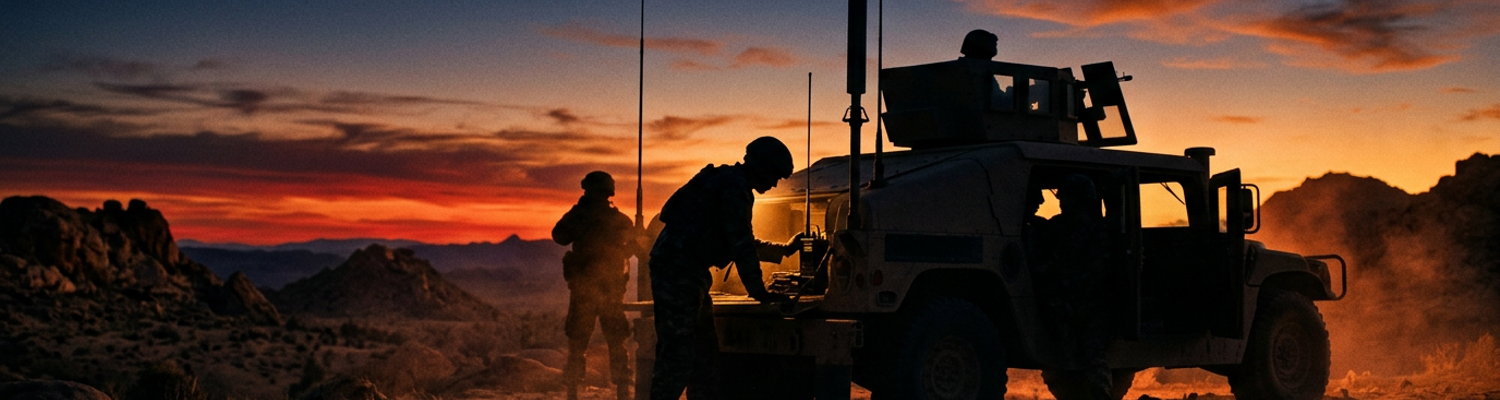
Station maps recovered from the coastal vaults traced German intelligence tracks straight into the Fezzan basin where desert operators faced extreme isolation. Sonderkommando Dora deployed heavily armed all terrain vehicles equipped with long range radio transmitters to monitor desert approaches from southern Libya. Enlisted mechanics reinforced heavy open topped trucks with bolted sheet metal and dual machine gun mounts while specialized felt air filters struggled against the fine dust churning up from dry lake beds. Radio operators packed thick grease around their generator bearings and tuned hundred watt transmitters to blast Morse signals past rocky plateaus toward northern coastal relay stations. Drivers steered these heavily overloaded convoys through soft dunes, shoveling dry gravel under spinning tires whenever wheel hubs sank deep into hidden silt pockets under the baking afternoon sun. Enlisted crewmen rationed warm well water from rusty iron canisters, swabbing oil and grit from their carburetors with cotton rags while constantly scanning the empty horizons for advancing Allied reconnaissance columns.
Aircraft dispatched by coastal commanders circled low over these sand tracks to pass sighting reports directly to the rolling ground columns. Aussenstelle Tripoli coordinated deep desert scouting patrols and air ground signals intelligence across the Sahara. Staff specialists inside the Tripoli base logged radio intercept traffic from British long range desert units, calculating enemy vehicle positions and routing flight paths for twin engine reconnaissance planes over the southern borders. Flight crews dropped weighted canvas message canisters onto isolated dune outposts whenever atmospheric static drowned out high frequency voice transmissions between cockpits and convoy teams. Ground operators retrieved these metal weighted tubes from the sand, unrolled the hand drawn grid charts across flat vehicle hoods, and keyed their heavy transmitters to confirm patrol coordinates across hundreds of miles of open waste. Technicians matched aerial photography against ground terrain markers, identifying dry riverbeds and camel paths that Allied motorized patrols could use to slip past Axis outposts undetected.
Antenna masts raised on telescoping poles caught fierce desert gusts that threatened to snap their guy wires while operators transmitted enemy sighting grids back to Tripoli. Technicians cranked portable hand generators until their shoulder muscles burned, pushing raw electrical power into hot vacuum tubes that glowed bright orange inside canvas covered radio trucks. Intense engine heat and baking desert winds regularly boiled coolant out of the truck radiators, forcing drivers to collect the scalding drainage in tin cups and pour it back into the engine blocks. Soldiers dismounted into the grit with rifles ready whenever distant dust clouds rose on the horizon, expecting surprise raids from Free French motorized units or British desert scouts. Gun crews loaded brass belt ammunition into heavy machine guns, securing firing positions behind low rock outcrops to shield their vulnerable radio equipment from incoming fire.
Bullets from sudden desert skirmishes pitted the steel hulls of the transport trucks, forcing German drivers to make quick tactical withdrawals through uncharted canyons. Navigators tracked their escape routes across featureless plains using shadow sun compasses and odometer counts, steering damaged vehicles away from dried mudflats where tires could bog down completely. Drivers shifted into low gears to climb steep gravel escarpments while machine gunners fired rearward bursts to deter pursuing light scout cars. Crews salvaged usable spark plugs, tires, and radio batteries from immobilized vehicles, setting fire to stripped chassis so enemy raiders could not capture working German parts. Mechanics rigged wire tow ropes between the remaining trucks, hauling failing transports and their exhausted radio operators northward across the scorched desert trail.
Ignored Operation Torch Warning Dispatches
Steel tow ropes dropped into the sand as the battered convoy reached northern coastal outposts where telegraph keys were already chattering with alarming intelligence. Field agents working for the Abwehr gathered reports in late October 1942 detailing the precise landing dates and Moroccan target beaches for Operation Torch. Field informants working inside harbor offices, customs warehouses, and coastal rail depots had observed Allied supply buildups and tracked covert troop movements across Atlantic and Mediterranean approaches. Informants identified the primary target beaches at Fedala, Safi, and Port Lyautey, noting that the amphibious assault would strike during the first week of November. Local case officers cross referenced these sighting logs with harbor master manifests and verified that massive Anglo American transport armadas were setting sail toward western Morocco. Radio teams encoded the urgent coordinates into high priority cipher dispatches and transmitted the warnings directly to Abwehr headquarters in Berlin.
Evaluators in Berlin dismissed and destroyed the reconnaissance warnings, arguing Allied logistics could not support a large scale amphibious invasion. German intelligence analysts insisted that the Western Allies lacked the transport tonnage, trained landing crews, and specialized landing craft required to cross thousands of miles of open ocean. Staff planners assumed the gathering convoys were merely routine supply fleets bound for Malta, Egypt, or the British home islands rather than an invasion armada aimed at North Africa. Clerks tossed the urgent field dispatches into wire wastebaskets or fed them into incinerator furnaces, treating the reports as enemy deception designed to pull German divisions away from the Russian front. Staff officers stamped negative assessments on the regional intelligence summaries, assuring the German High Command that no imminent landing threat existed along the Atlantic coastline of Morocco.
Teletype ribbons bearing these dismissive assessments clattered into coastal stations across Morocco, leaving frontline German intelligence officers without reinforcements or defensive alerts. Field agents in Casablanca and Rabat watched empty ocean horizons through binoculars, waiting in vain for mine laying vessels, naval escorts, or Luftwaffe fighter squadrons to protect the exposed shoreline. Coast watchers remained isolated inside their safe houses with strict orders to avoid creating panic among local French authorities who shared the belief that no invasion was coming. American warships slipped silently through the dark on the night of November 7, crossing the Atlantic swells completely undetected by German patrol planes or submarine screens. Lookouts on Moroccan headlands only discovered the true danger when naval spotlights swept across dark silhouettes of hundreds of transport ships anchoring directly off the designated landing beaches.
Diesel engines roared to life as American landing craft splashed into the rolling surf off Fedala, Mehdia, and Safi. German intelligence agents scrambled through safe house basements to burn their remaining notebooks, realizing that the precise invasion warnings they had gathered weeks earlier had been completely ignored. Radio operators hammered out final emergency signals to Berlin, reporting heavy naval bombardment and incoming assault waves against the Moroccan shoreline before the first artillery shells severed their transmission cables. Frontline sentries abandoned their optical rangefinders and grabbed rifles, bracing for the impact of amphibious shock troops storming through the morning fog.
Amphibious Chaos Along the Moroccan Shoreline
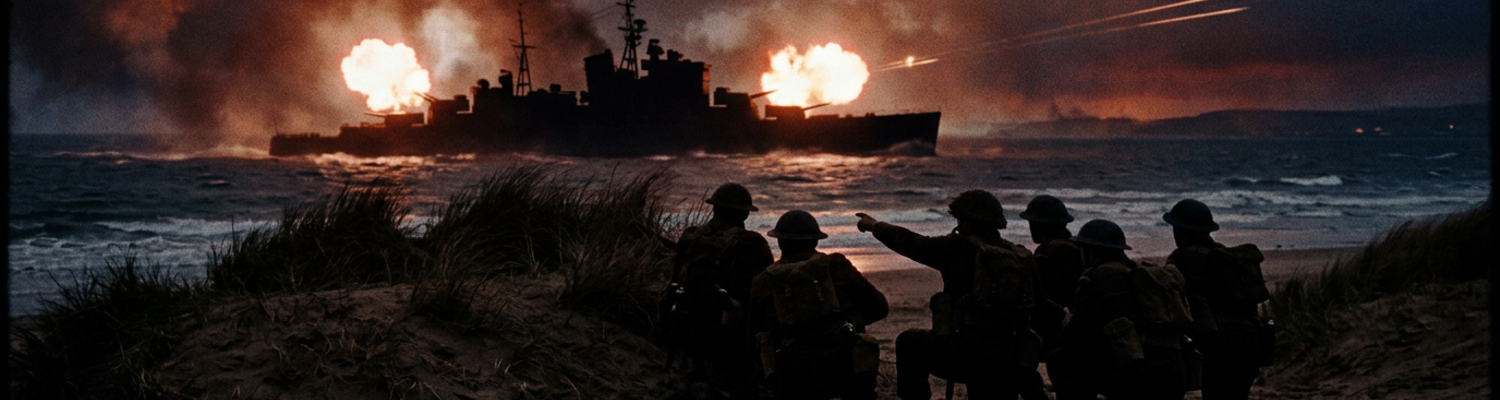
Infantrymen from the United States Army landing at Mehdia and Fedala navigated disorienting surf, swamped landing craft, and misplaced heavy weapons under coastal fire from those alerted shore positions. Atlantic rollers reaching heights of ten to fifteen feet slammed into the blunt wooden bows of the Higgins boats, throwing vessels sideways and flipping several craft end over end in the shallow surf. Coxswains fought desperately with their throttles and rudders to maintain formation, but breaking waves crested over the gunwales, swamping the bilges and drowning out the diesel engines with brine and sand. Soldiers burdened with sixty pound combat rucksacks, heavy cartridge belts, and spare mortar rounds plunged into eight feet of water as the landing craft grounded prematurely on offshore sandbars. Machine gun teams lost their heavy water cooled weapons, steel tripods, and canvas ammunition boxes beneath the churning ocean waves, forcing exhausted survivors to scramble ashore completely unarmed. Disarmed crews huddled behind scattered driftwood and the broken wooden ribs of wrecked boats, searching blindly through the breakers with their bare hands in frantic attempts to salvage discarded weapons.
Troops endured immediate tactical disorientation on the beaches caused by conflicting intelligence regarding Vichy French coastal resistance while scouring the shoreline for those missing weapons. Operation Torch planners had assured the landing forces that French colonial garrisons were sympathetic to the Allied cause and would offer no meaningful resistance or might even assist the landings. French coastal artillery batteries, naval escort vessels, and entrenched machine gun nests instead treated the Americans as hostile invaders, opening devastating crossfire directly across the exposed sand. Inexperienced company officers carrying waterlogged paper maps shouted contradictory orders into the din of exploding shells, uncertain whether diplomatic protocols still prohibited them from firing on French defenders. Saltwater immersion had ruined the delicate battery packs and vacuum tubes of their portable radios, leaving front line commanders unable to contact the fleet offshore to request supporting gunfire or clarify their combat orders. Stranded platoons remained pinned down behind low sand berms, taking casualties from French snipers while their own officers struggled to formulate an impromptu tactical plan.
Sergeants took immediate control of the pinned down squads, ordering their riflemen to discard useless lifebelts, fix bayonets, and prepare to assault the concrete pillboxes spitting fire from the bluffs. Riflemen crawled through shallow drainage cuts and patches of coarse beach grass, keeping their faces pressed into the sand as heavy machine gun bullets clipped the vegetation inches above their heads. Combat engineers dragged metal torpedoes through the sand to the base of the wire entanglements, locking the threaded pipe sections together before shoving them beneath the thick French barriers. High explosive detonations shattered the barbed wire fences into flying metal fragments, tearing open wide gaps through the perimeter and throwing up dense curtains of black smoke. Infantry assault teams charged through the smoking breaches with M1 Garand rifles and fragmentation grenades, throwing explosives directly into the concrete firing embrasures to suppress the French machine gunners. Gun crews inside the French bunkers surrendered their smoking positions after brief hand to hand skirmishes, leaving the coastal ridge in American hands and silencing the guns that commanded the landing zone.
Soldiers consolidated their scattered companies along the captured ridges, redistributing salvaged ammunition from the fallen and setting up defensive perimeters against potential French counterattacks. Messengers ran down the bluffs to direct subsequent boat waves toward clear landing sectors, steering incoming craft away from the submerged wrecks that littered the surf line. Shore parties dragged functional jeeps and anti tank guns out of the swamped Higgins boats, using heavy ropes and wooden track mats to haul the vehicles across the loose beach sand. Scouts advanced inland through olive groves and farm roads toward the critical airfields and coastal highways, establishing roadblocks to intercept French reinforcements marching from regional garrisons. Artillery observers positioned on the high ground established direct visual contact with offshore cruisers, using signal lamps to call in precise naval gunfire against remaining inland redoubts.
Mechanical Breakdown in Forward Armored Columns
Tanks of the forward spearhead rumbled past those pulverized redoubts, turning east into the arid scrubland to cut off retreating French forces and secure the inland road network. Crews operating M3 Lee and Stuart tanks endured choking dust storms that blinded periscopes and caused acute respiratory distress. Gusting desert winds whipped up loose topsoil into towering red squalls, blotting out the midday sun and wrapping each vehicle in a dense cloud of flying gravel. Vision blocks and periscope glass quickly turned opaque under the relentless scouring of airborne grit, forcing tank commanders to pop their top hatches and steer with their bare heads exposed to the abrasive gale. Fine dust filtered through every ventilation slot and hatch gap, filling the steel compartments with dry particulate haze that burned the throats and lungs of the men inside. Gun crews gasped for clean air, wrapping greasy rags over their mouths and flushing their raw, reddened eyes with water from their personal canteens as the convoy plunged deeper into uncharted ground.
Maps issued to the column commanders failed completely in this rugged terrain, showing vague topographical lines where real tracks turned into rocky dry washes and drifting dunes. Fine desert sand clogged air filters and engine manifolds, triggering severe mechanical breakdowns along unmapped transit routes. Silt particles penetrated the felt intake gaskets of the radial engines and mixed with engine oil inside the crankcases. Cylinders lost compression within hours as the abrasive sludge ground down piston rings and scored the polished interior walls of engine blocks. Intake manifolds choked on baked sand crusts, causing carburetors to flood and sparking violent backfires that echoed through the stalled vehicle columns. Drivers shoved hard against frozen foot pedals, but seized drive shafts and snapped valves brought dozens of medium and light tanks to a dead halt along the desolate tracks.
Mechanics vaulted from following supply trucks with tool rolls and spare gaskets to begin emergency field repairs directly on the open ground. Enlisted tankers stripped off their sweat soaked shirts and leaned over blistering engine compartments, burning their bare forearms against hot steel while unbolting carburetors and oil bath air cleaners. Crewmen washed fouled intake valves with small tins of gasoline, scraping away thick layers of gritty paste with pocketknives and wire brushes. Maintenance sergeants quickly realized that spare parts were nonexistent on these forgotten inland trails, forcing them to cannibalize hopelessly ruined Stuart tanks to keep the heavier M3 Lees functional. Soldiers salvaged working spark plugs, undamaged copper fuel lines, and clean air filter elements from the light tanks, leaving the stripped chassis abandoned in the dirt. Tankers poured fresh oil into the salvaged engines and cranked the heavy inertia starters by hand, cheering as radial motors sputtered back to life with smoky bursts of exhaust.
Steel cables unspooled from recovery winches as crews hitched the remaining dead tanks behind the operational vehicles. Drivers shifted into low gear and eased their clutches forward, lurching ahead under the strain of pulling twenty ton loads through deep, shifting sand. Rubber track pads wore down to bare metal on the flinty desert floor, throwing sparks as the overloaded tanks crawled onward at less than five miles an hour. Exhausted commanders stood upright in their turret rings, wiping caked dust from their goggles while keeping watch for hostile French armored cars reported along the northern ridges. Spearhead units finally spotted the perimeter fences of the inland airfield just before nightfall, rolling into defensive hull down positions to secure the airstrip before their dry fuel tanks ran completely empty.
Freezing Mountain Mud of the Tunisian Dorsal
Tankers secured the captured airfield perimeter with their drained M3 Lees through the dark, freeing infantry regiments to march eastward into the rugged passes of the Tunisian frontier. Winter rainstorms broke over the mountains within hours, washing away dry topsoil and exposing jagged limestone ledges along the spine of the Grand Dorsal. Infantry squads occupied waterlogged foxholes in the Grand Dorsal, suffering trench foot and exposure in sodden winter uniforms. Freezing groundwater pooled around their ankles as soon as entrenching tools pierced the rocky clay, turning the shallow fighting pits into muddy cisterns. Enlisted riflemen huddled together under torn canvas shelter halves, shivering uncontrollably as continuous sleet soaked their wool overcoats and flannel shirts. Soldiers used pocketknives to slit open their ruined leather boots, exposing swollen, blackened toes after days of standing in the freezing slurry without dry socks.
Trucks carrying dry footwear, wool blankets, and field rations sat stranded miles behind the lines as the unpaved mountain roads collapsed into bottomless gutters. Impassable mud stalled supply trucks along mountain defiles, forcing riflemen to haul mortar plates and small arms ammunition up steep rocky slopes by hand. Drivers gunned their six wheel drive engines until clutches burned out, but spinning tires merely dug the heavy vehicles down to their axles in the red clay. Convoy commanders ordered their drivers to dismount with shovels and axes, cutting scrub oak branches to wedge underneath the buried wheels to gain traction. Thick suction pulled the rubber overshoes off the feet of the working drivers, trapping hundreds of vehicles between vertical rock walls and sheer cliff drops. Exhausted supply sergeants broke open the padlocked wooden crates on the stalled tailgates, distributing combat loads directly onto the backs of whatever foot soldiers could still walk.
Riflemen bent double under eighty pound loads, gripping canvas sling straps with raw, bleeding fingers as they climbed the muddy ravines toward the crest. Men carried eighty one millimeter mortar baseplates balanced against their collarbones, while team partners scrambled behind with twenty pound bipods and wooden cases of high explosive shells. Boots lost all traction on the wet shale, sending soldiers tumbling backward down forty foot embankments into swollen runoff ditches. Soldiers dug the tips of their M1 Garand bayonets into the steep dirt banks to create makeshift handholds, dragging their companions upward one step at a time through driving sleet. Gun crews dumped their metal loads beside the forward foxholes, their breath rasping in the thin mountain air as they collapsed onto the wet scree.
Mortar crews bolted the heavy steel tubes to their baseplates in the pouring rain, jamming round spades into the rocky soil to brace the weapons against recoil. German spotter planes droned over the clouds, directing enemy artillery batteries to fire high explosive salvos into the reverse slope of the ridge. Shrapnel sliced through the wet scrub brush, showering the exposed American weapon pits with iron splinters and shattered rock. Squad leaders wiped grease and gritty mud from their mortar sights with shirt sleeves, leveling the bubble vials by hand to aim across the valley. Gunner corporals dropped the first finned shells down the blackened barrels, firing rapid rounds at German armored reconnaissance cars attempting to force the road below.
Tactical Reconnaissance Failures at Faid Pass
Mortar fragments ricocheted off the armored scout cars as the vehicles wheeled around and retreated into the dust at the base of the pass. American combat commands lacked advance ground reconnaissance regarding concentrated German armor positions prior to the counterattack at Faid Pass. Riflemen of the 168th Infantry Regiment occupied scattered outposts along the jagged crests of the high hills, watching the flat desert floor through scratched field glasses without any scout patrols probing the ravines ahead. Telephone wires strung across the scrub connected isolated platoon foxholes to rear bunkers, but lookouts had no motorized reconnaissance teams to check the rising dust clouds east of the defile. Squad leaders ordered their men to conserve ammunition and scrape out deeper fighting trenches in the hard limestone before the morning heat set in.
Limestone dust filled the mouths of digging riflemen when the low whine of aircraft engines suddenly cut through the morning silence. Dispersed infantry units faced devastating dive bombing and high velocity fire from concealed German antitank guns. Junkers 87 dive bombers peeled out of the sun in steep vertical dives, triggering mechanical sirens that screeched over the mountain peaks as five hundred pound bombs struck the open infantry positions. Concussion waves collapsed shallow slit trenches, burying machine gun crews under piles of pulverized shale and choking the wounded with bitter black cordite smoke. German gunners stationed on hidden knolls rolled back their camouflage netting and traversed long barrels, sending flat trajectory high explosive shells straight into the rocky perimeters. Splintering boulders turned into lethal projectiles that shredded canvas web gear, severed telephone cables, and pinned entire American companies to the bare ground.
Copper wires dangled uselessly over the rocks as isolated platoons looked down to see dozens of camouflaged German tanks grinding through the pass unopposed. Panzer Mark IV tanks fired their main guns into forward machine gun nests while half tracks carrying infantry fanned out across the dry washes to cut the retreat roads. Soldiers grabbed their shoulder rifles and light bazookas, firing hollow charge rockets at oncoming tank treads only to watch the light warheads bounce off heavy frontal plates without detonating. Gunners operating towed thirty seven millimeter antitank guns tried to swing their steel split trails around by hand, but high velocity solid shot from the German cannons slammed through their thin gun shields before the crews could set their sights. Flames engulfed the American weapon pits, forcing surviving loaders and ammunition bearers to abandon their wrecked guns and scramble for cover among the boulder fields.
Runners crawled between the granite boulders under heavy machine gun fire to carry handwritten withdrawal orders to the remaining platoon pockets. Sergeants smashed optical rangefinders and burned cipher codebooks with pocket lighters so the advancing German infantry would not capture intact signal gear. Riflemen slung their M1 rifles across their shoulders, helped wounded companions down the steep reverse slopes, and began slipping past German armored patrols in the growing dusk. Enlisted men discarded empty water canteens and extra cartridge belts to move faster across the open salt flats toward the distant western hills. Surviving squads moved quietly in single file across the dark desert floor, watching the burning hulks of their abandoned transport trucks flicker behind them against the mountain skyline.
Postwar Intelligence Assessments of German Networks
Smoke from those burning transport trucks settled over the desert battlefields where Allied counteroffensives slowly compressed the Axis perimeter until over two hundred thousand German and Italian troops surrendered on the Cape Bon peninsula. Allied military police separated captured staff officers from enlisted ranks, herding high ranking personnel into secure detention barracks and seizing hundreds of wooden trunks filled with discarded radio pads, cipher keys, and daily signal logs. The 6825th Military Intelligence Service Center interrogated captured Abwehr officers to map enemy intelligence collection methods in North Africa. American interrogators placed these German officers in bare holding rooms, spreading out captured signal logs, encrypted message slips, and regional contact lists on wooden tables to trace every radio station and desert outpost from Morocco to Libya. German case officers sat under bare electric lightbulbs, pointing at acetate map overlays as they explained how undercover informers in Casablanca, Algiers, and Tunis had gathered operational intelligence on Allied harbor traffic and troop movements. Interrogators documented these spy rings on typed index cards and pinned tracking charts along the compound walls to determine why such detailed tactical reports never altered Axis battlefield decisions.
Paper charts taped to the plaster walls revealed a spy network choked by bureaucratic rivalry between military branches and competing political agencies. Postwar debriefings confirmed that internal friction in German intelligence evaluation repeatedly prevented frontline reconnaissance from altering Axis strategy. Field dispatches drafted by motorized desert scouts and port informants had been funneled through regional command posts in Tripoli and Rome before reaching central evaluation offices in Berlin. German evaluators dismissed frontline observations that conflicted with high command assumptions regarding Allied shipping tonnage and North African logistical limits. Rival departments routinely sat on incoming reconnaissance traffic or rewrote operational warnings to flatter senior commanders, leaving German combat divisions blind to impending Allied offensives. Analysts marked grease pencil lines across the organizational diagrams to highlight how urgent field dispatches stalled inside command silos while Allied columns advanced across Tunisia unopposed.
Grease pencil lines on the working maps traced this breakdown directly to junior evaluation officers who feared contradicting senior staff with unpalatable frontline facts. Captured German staff captains described the exhaustion and fatalism that settled over their evaluation sections as the North African campaign slipped out of control. Radio intercept operators had logged hundreds of new Allied transmission nets expanding across the western Mediterranean, yet senior evaluation bureaus refused to alter strategic troop deployments because political authorities insisted the Western Allies lacked combat shipping. Interrogators cross examined captured officers using their own surviving logbooks, forcing them to acknowledge that accurate ground reconnaissance had been treated as defeatist alarmism by high command evaluators. German officers signed their official interrogation transcripts and surrendered their final field diaries to American intelligence teams preparing the comprehensive historical evaluations.
American intelligence teams bound these signed transcripts into thick classified binders alongside captured operational maps and signal decrypts. Enlisted clerks typed multi page reports on manual typewriters, cataloging the organizational failures, signal protocols, and field methods of the defeated Abwehr networks. Technicians boxed the master dossiers and shipped them across the Atlantic to military intelligence schools, where instructors used the North African case studies to redesign American combat intelligence doctrine. Logistics specialists loaded the heavy wooden crates onto transport planes bound for Washington, sealing the North African intelligence records into permanent military archives.