
Crisis at Santo Tomas and the Liberation Mandate
Teletype machines rattled across the operations tent at Guimba as incoming decryption transcripts dismantled the Allied plan for a methodical advance through Luzon. Intelligence reports in late January 1945 indicated the Imperial Japanese Army planned to execute civilian captives held in Manila. Intercepted radio traffic and scout reports confirmed that Japanese garrison engineers were hauling aerial bombs, fuel drums, and demolition blocks into civilian compounds across the city. Santo Tomas Internment Camp held over 3,700 Allied civilian men, women, and children suffering severe malnutrition after three years of confinement behind concrete walls, surviving on daily rations reduced to less than six hundred calories of watery corn gruel and boiled weeds. Hundreds of prisoners lay bedridden with beriberi while Japanese sentries took up firing positions along the upper balconies of the main building. Garrison troops dug machine gun pits around the entrance gates to prepare for the systematic destruction of the prisoners.
General Douglas MacArthur ordered an immediate hundred mile dash to rescue the internees before Japanese garrison troops could carry out liquidation orders. MacArthur bypassed the original corps level movement schedule and instructed the 1st Cavalry Division to form a specialized motorized strike force. Major General Verne Mudge divided his cavalrymen into three motorized flying columns capable of breaking through enemy lines without stopping to secure their flanks. Troopers packed into six by six cargo trucks, jeeps, and light reconnaissance vehicles behind a spearhead of Sherman medium tanks. Cavalrymen stripped their trucks of field baggage, canvas tarpaulins, and personal gear to make room for extra wooden crates of ammunition and five gallon gasoline cans. Drivers received strict instructions to keep their vehicles moving at maximum speed through sniper fire and small arms resistance along Route 3, since stopping on the open highway would give enemy units time to organize coordinated counterattacks against the exposed column.
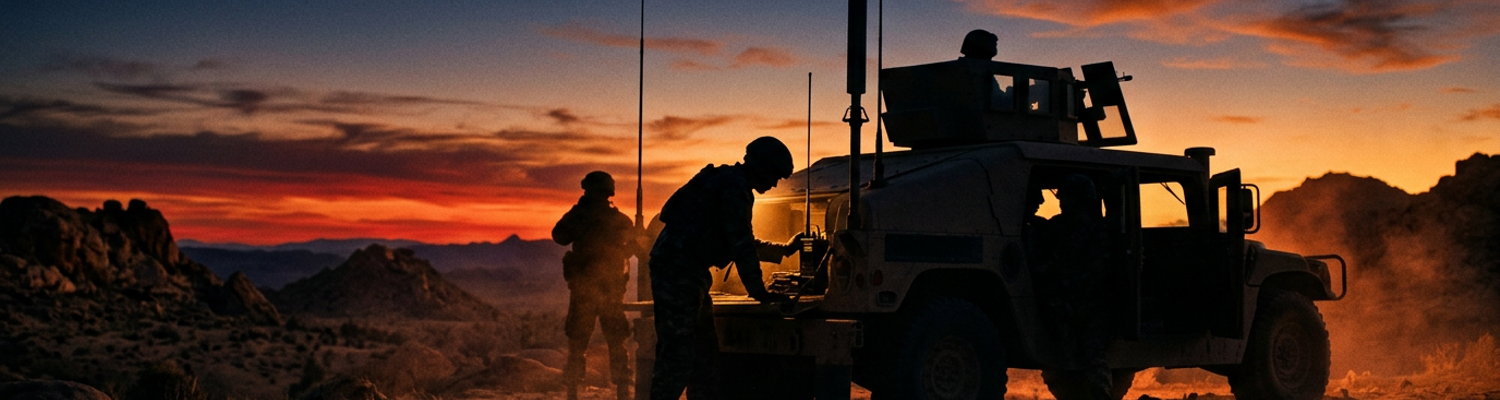
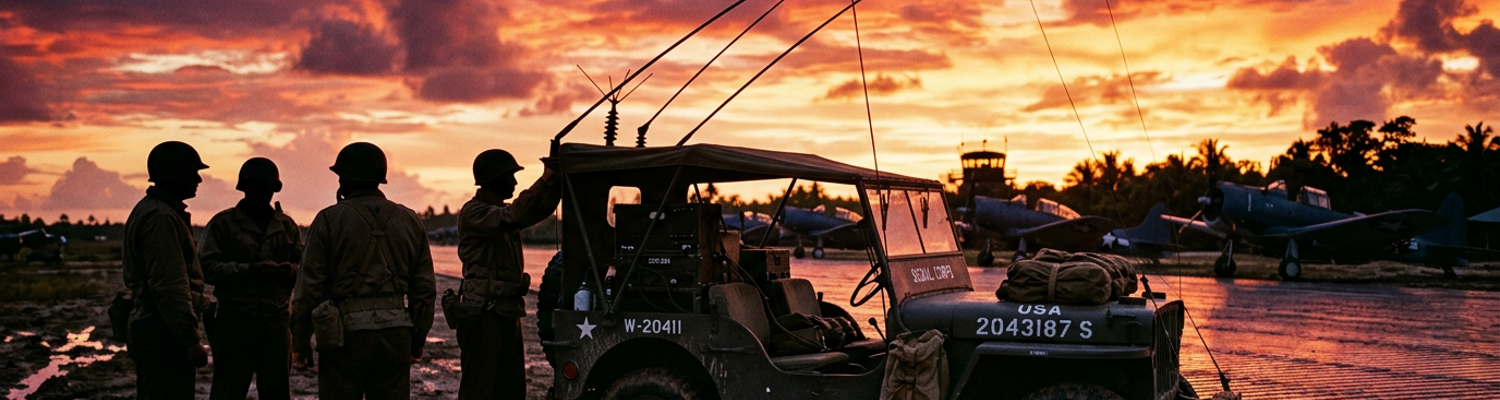
Artillery battalions fell behind within the first twenty miles of the sprint, leaving the lightly armored column vulnerable to concealed Japanese antitank guns and bridge demolition teams. Sixth Army commanders solved this loss of fire support by assigning Marine Air Groups 24 and 32 to operate as flying artillery directly ahead of the lead vehicles. Air Liaison Parties consisting of Marine aviators and communications specialists mounted SCR-193 and SCR-542 radio sets into the rear compartments of open topped quarter ton jeeps. Technicians wrapped water resistant tape around exposed electrical splices and lashed long whip antennas to jeep frames with wire so the equipment would survive constant pounding across potholed dirt tracks. Marine radio officers took seats beside cavalry scouts in the point vehicles to establish direct two way voice communication with the cockpits of dive bombers cruising above the advance.
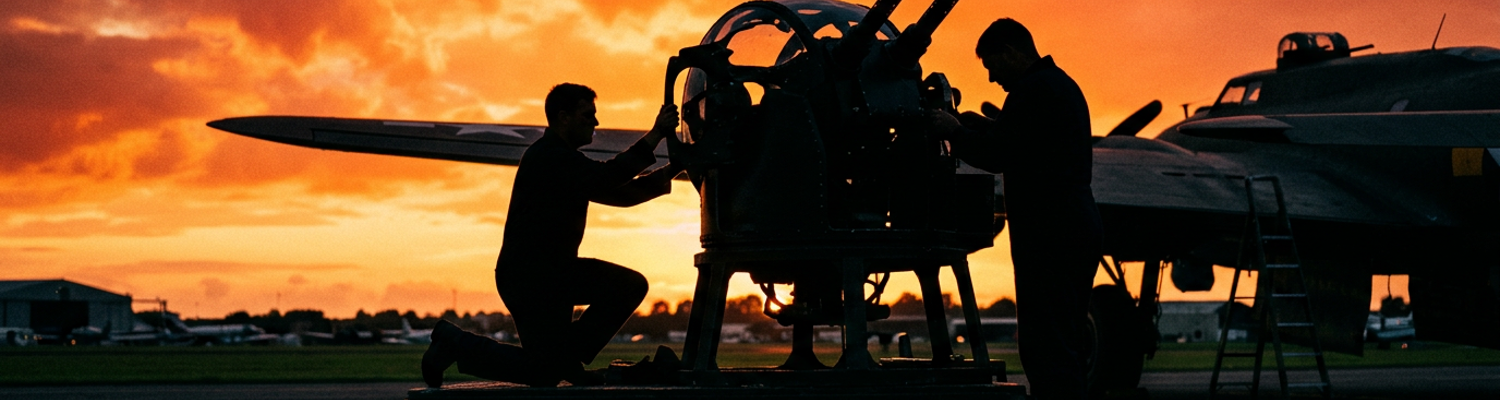
Douglas SBD Dauntless dive bombers lined the pierced steel planking at Mangaldan airfield as mechanics finished fueling the aircraft under a sweltering morning sun. Ground crews worked through blinding dust and engine exhaust to crank starter flywheels, test flight controls, and winch five hundred pound high explosive bombs onto ventral centerline racks. Marine aviators climbed into cockpits where baking sheet metal burned through flight suits, checking radio channels against ground test frequencies while sweat dripped across their plotting boards. Flight leaders signaled their wingmen, released their handbrakes, and pushed their throttles forward into grit kicked up by the spinning propellers. Aircraft launched down the runway in two plane sections at fifteen minute intervals, turning south toward the central plains to spot ambushes along the cavalry highway.
Keith McCutcheon and Mangaldan Air Support Innovations
Lieutenant Colonel Keith B. McCutcheon tracked those ascending dive bombers from a command tent at Mangaldan Airfield in Pangasinan. McCutcheon adapted SBD-5 Dauntless dive bombers for close in ground support, insisting that combat aircraft should operate as immediate flying artillery directly over the infantry despite prevailing Army air doctrine that favored deep interdiction missions. Ground crews and pilots operated from an unpaved, dust choked dirt strip carved out of coastal farmland, battling tropical heat and abrasive grit to maintain seven combat squadrons. Mechanics worked around the clock in open sided canvas shelters to tune aircraft radios to ground force voice channels while armorers fitted instantaneous nose fuses into five hundred pound high explosive bombs so the weapons would burst on the surface instead of digging harmlessly into the soft dirt. Field tents served as improvised briefing rooms where McCutcheon drilled aircrews on infantry maneuvers and radio protocols to ensure every aviator understood the exact sight lines and blind spots of the tank commanders racing south below.
Marine communications officers riding inside the point jeeps utilized those matched radio frequencies to bypass the layered command channels that normally delayed battlefield air support. Standard military doctrine required frontline infantry officers to route airstrike requests through battalion, regimental, and division headquarters, consuming hours while Japanese defenders organized counterattacks. McCutcheon dismantled that cumbersome process by putting qualified pilots directly into forward vehicles equipped with heavy radio rigs, allowing forward controllers to exercise direct voice control over dive bombers orbiting in steady overhead stacks. Aviators kept their hands on their throttles as they circled over the central Luzon plains, scanning tree lines and culverts while waiting for coordinates to break through their earphones. Lead pilots adjusted their flight paths in response to ground calls, cutting off Japanese ambushes before enemy machine gun crews could establish defensive crossfires against the road columns. Ground controllers spotted camouflaged Japanese pillboxes, popped colored smoke grenades to designate targets, and talked incoming pilots down through their visual runs with rapid real time corrections.
Shrapnel from the resulting detonations shredded palm fronds and roadside brush mere footsteps from the cavalry scouts. Marine aviators rejected standard safety buffers to allow ordnance delivery within yards of frontline American ground units. Conventional military regulations mandated safety buffers of several hundred yards to prevent friendly troops from being caught in bomb fragmentation patterns, but McCutcheon trained his pilots to disregard these excessive margins. Dauntless pilots split their perforated dive flaps, rolled inverted, and plunged into seventy degree dives to release their ordnance directly into reinforced Japanese log barricades and antitank emplacements. Explosive concussions shook the steering columns of the American jeeps and showered vehicle hoods with smoking dirt as dive bombers pulled hard out of their descents, climbed back above small arms range, and headed north to reload their bomb racks at Mangaldan.
Air Liaison Party Operations in Radio Jeeps
Mud and pulverized asphalt settled across the metal hoods of the lead convoy vehicles while fresh flights of Dauntless dive bombers took up circling orbits over the advancing column. Marine pilots were assigned directly to ground forces as forward air controllers operating from modified radio equipped jeeps. Veteran aviators squeezed into the cramped passenger seats behind stripped windshields, balancing gridded maps and grease pencils across their knees as the 1st Cavalry spearhead accelerated down the highway. Army mechanics and Marine communications specialists had cut away the rear passenger benches of standard quarter ton trucks to bolt down high output transmitter units, auxiliary batteries, and heavy power generators. Modified open topped vehicles bounced violently through shell craters and over ruptured pavement, throwing controllers against the metal frames as they kept their eyes fixed on the tree lines ahead while translating messy ground combat into crisp aerial coordinates. Marine aviators serving on the ground understood the exact flight envelopes and cockpit blind spots of the Dauntless pilots above them, allowing them to guide strikes without missing a beat.
Air Liaison Parties used dedicated radio sets to communicate directly with overhead flight leaders on shared high frequency channels. Marine radio operators braced themselves against the rear quarter panels of the jolting jeeps, constantly spinning tuning dials to lock their equipment onto the assigned squadron frequencies. Tropical heat and engine vibrations caused vacuum tubes to overheat inside the metal radio housings, forcing technicians to wrap wet canvas rags around the equipment casing to keep the circuits operational. Long whip antennas lashed to the jeep bumpers swayed wildly as the vehicles swerved around burning trucks and debris, yet continuous high frequency signals cut through the roar of cavalry engines and aerial radial motors. Overhead flight leaders listened through their leather flight helmets as the controllers in the jeeps called out specific visual landmarks, such as bends in irrigation ditches, red tiled church steeples, and hidden concrete culverts. Direct voice links gave both the aviators aloft and the controllers on the ground an identical real time picture of the tactical environment unfolding along the road to Manila.
Marine air controllers eliminated bureaucratic clearance chains through direct ground to cockpit contact, reducing air support response times from hours to minutes. Traditional Army procedures dictated that an infantry commander facing an enemy roadblock had to telephone division headquarters, wait for staff officers to review target coordinates, and hope that an air base received the request before the target moved. Modified radio jeeps changed that entire reality by stripping away every intermediate layer of command between the soldier under fire and the pilot above. Japanese machine guns opened fire from camouflaged riverbank bunkers, prompting the forward air controller to press his microphone button and assign the target immediately to the nearest pair of circling dive bombers. Dauntless pilots rolled into their diving runs within two or three minutes of the first rifle shot. Aviators released heavy ordnance into fortified positions before enemy gunners could reposition their weapons or fall back to secondary defense lines.
Sherman tanks pushed through the drifting smoke of these strikes without cutting their throttles, grinding directly over shattered log bunkers that had threatened to halt the advance. Cavalry commanders leaned out of their turrets to signal the radio jeeps trailing immediately behind them, pointing toward sniper nests concealed in distant bamboo thickets. Marine controllers answered with quick hand signals, keyed their transmitters, and guided trailing flights of SBDs onto the targets with color coded map grid coordinates. Bomb fragments and blast waves cleared the highway shoulders of Japanese ambush squads before anti tank guns could track the leading vehicles. Motorized columns maintained thirty miles per hour along the central highway, keeping the pressure on retreating garrison forces as the outer defensive perimeter of Manila drew steadily closer.
Cavalry Division Flying Column Dash
Brigadier General William C. Chase launched the 1st Cavalry Division flying column just past midnight on February 1, 1945, committing nearly seven hundred trucks, tanks, and assault vehicles to that non stop sprint toward the capital. Chase divided his motorized force into three aggressive serials made up of cavalry troopers from the 5th and 8th Cavalry Regiments, reinforced by medium tanks from the 44th Tank Battalion. Drivers stepped hard on their gas pedals in pitch darkness, navigating shell pocked roads without headlights to slip past entrenched Japanese field armies scattered across the central plains. Mechanics checked cooling systems and lashed spare fuel drums to vehicle fenders, knowing that any mechanical breakdown on the narrow route could stall the entire column. Troopers gripped their carbines and machine guns along the open truck beds, bracing against the violent sway of the vehicles as the convoy surged southward through the dark.
Bamboo groves and drainage ditches bordering the road concealed Japanese ambush squads, creating deadly traps along the route as daylight broke over the central plains. Motorized columns advanced rapidly toward Manila with completely exposed flanks along high risk ambush corridors, having left trailing infantry divisions and supply units far behind in the dust. Enemy infantry belonging to the Shimbu and Kembu defensive groups held the flanking mountain ridges and rural villages, waiting for opportunities to sever the single highway route. Chase ordered his drivers never to slow down for sniper fire, instructing lead tanks to blast through roadside obstacles rather than deploy into defensive formations. Disabled vehicles were shoved immediately into muddy roadside ditches so trailing trucks would not lose forward speed. Cavalry commanders kept their eyes locked on the countryside while their radio operators looked to the morning sky for their aerial shield.
Marine dive bombers maintained continuous nine plane coverage from dawn until dusk directly over the speeding column, flying low search orbits over the surrounding countryside. Squadrons from Marine Aircraft Groups 24 and 32 rotated these nine plane flights continuously throughout the daylight hours, sending fresh relief sections from Mangaldan before earlier flights had to turn back for fuel. Aviators sat in cramped SBD Dauntless cockpits, peering through their windshields to scour river crossings, bridge approaches, and forested terrain up to thirty miles ahead of the lead cavalry vehicles. Pilots tracked the long plume of yellow dust churned up by the cavalry trucks, using that visual trail to stay anchored directly over the vulnerable spearhead. Japanese troops attempting to mass along the highway shoulders or haul heavy field guns into firing positions triggered immediate vertical descents from the circling dive bombers.
Dauntless dive bombers plunged toward these threatened ambush points, releasing five hundred pound bombs to blast Japanese positions before enemy gunners could fire a single shell into the American ranks. Forward air controllers riding in the front radio jeeps called out target coordinates in rapid bursts, directing the screaming dive bombers onto reinforced stone farmhouses and hidden log bunkers. Concussions from instantaneous fused bomb strikes flattened roadside bamboo patches and collapsed enemy antitank trenches mere yards ahead of the leading cavalry scout cars. Sherman tanks ground through the smoking debris without cutting speed, their steel tracks chewing up ruptured concrete and shattered Japanese gun carriages. Troopers in the following open topped trucks raised their weapons toward the burning tree lines, speeding through the cleared corridor as the road opened toward the northern gates of Manila.
Precision SBD Dauntless Strikes Along Route Three
Route 3 unfolded beneath the banking wings of the Douglas dive bombers as a narrow gray ribbon running through endless rice paddies, irrigation canals, and bamboo groves. Overhead SBD crews scouted forward terrain to alert ground commanders to fortified roadblocks, hidden artillery, and ambushes that lay directly in the path of the speeding 1st Cavalry spearhead. Rear seat radiomen scanned the landscape with binoculars, tracing every drainage ditch, tree clump, and concrete bridge for signs of fresh digging or camouflaged Japanese positions. Observers spotted enemy soldiers stacking tree trunks across the highway or wheeling heavy 75 millimeter artillery pieces into roadside sugarcane fields, prompting pilots to radio instant grid coordinates down to the air liaison officers in the lead jeeps. Ground commanders used these live aerial reports to steer their fast moving scout cars around prepared ambush zones and bring direct tank fire against flanking enemy squads before Japanese gunners could register the range.
Marine pilots flew steep diving attacks with wing dive brakes deployed to suppress Japanese strongpoints along Route 3 whenever enemy resistance refused to yield to ground fire. Flight leaders kicked their rudders and shoved their control sticks forward at nine thousand feet, tipping their bombers into seventy degree vertical dives directly over the highway. Distinctive perforated dive brakes opened along the trailing edges of the main wings with a loud mechanical clunk, creating aerodynamic drag that stabilized each aircraft during its high speed descent. Aerodynamic drag kept the diving airplanes from accelerating out of control, giving the pilots precious extra seconds to align their optical gunsights squarely on fortified machine gun bunkers, concrete culverts, and log roadblocks. Japanese antiaircraft gunners threw streams of 20 millimeter tracer rounds and small arms fire up at the diving planes. Steep angles of descent and air brake stability allowed the Marine aviators to hold their aim true against the enemy muzzle flashes.
Aviators delivered 500 pound and 1,000 pound bombs mere seconds ahead of approaching cavalry armored vehicles, relying on instantaneous fuses to crush the targets without cratering the road surface under American wheels. Pilots squeezed their stick mounted bomb releases at fifteen hundred feet, sending the heavy ordnance hurtling downward while pulling their aircraft out of the dives just above the treetops. Massive high explosive detonations shattered Japanese antitank revetments and buried camouflaged gun pits in blinding clouds of pulverized dirt, smoke, and shattered timbers mere heartbeats before the lead American tanks reached the strike zones. Sherman tanks and armored half tracks surged straight through the drifting black smoke and falling debris with their throttles wide open. Tank crews felt the hot shockwaves through the armor plates while their machine guns swept the dazed enemy survivors away from the pavement. Lead cavalry drivers steered around burning wreckage and continued their high speed sprint southward down Route 3, maintaining relentless forward momentum toward the outskirts of Manila.
Neutralization of Defended Bottlenecks and River Crossings
Japanese engineers detonated heavy demolition charges along the route, as retreating Japanese units blew critical bridges and entrenched infantry across the Pampanga and Angat River crossings to halt the American spearhead. Heavy explosive charges hurled concrete bridge decks into the brown river currents, cutting Route 3 and stranding the lead cavalry vehicles along the exposed northern dikes. Japanese troops belonging to the defending garrisons had transformed the southern embankments into fortified barriers, digging log reinforced bunkers, machine gun revetments, and antitank pits beneath the riverbank vegetation. Machine gun fire and mortar shrapnel raked the open roadway the instant American scout cars rounded the final bends, punching holes through truck cabs and driving cavalry troopers into muddy roadside irrigation ditches. Tank crews from the 44th Tank Battalion swung their 75 millimeter turrets toward the opposite shore, but their armor piercing and high explosive shells merely chipped the thick palm logs and dirt berms shielding the Japanese gunners. Motorized columns faced the immediate threat of a prolonged bottleneck that would give Japanese forces in Manila time to slaughter their civilian captives.
Marine forward air controllers drove their open topped radio jeeps directly into the heavy enemy fire at the water edge to break the impasse. Controllers unspooled remote microphone cables, jumped into muddy craters for cover, and pointed their field glasses at the muzzle flashes blinking through the opposite foliage. Aviators operating the high output radio transmitters established immediate voice contact with circling flights of SBD Dauntless dive bombers overhead, bypassing intermediate command posts to describe the hidden bunkers in plain language. Air Liaison Parties directed low altitude dive bombing strikes that demolished Japanese riverbank bunkers directly ahead of bridging units waiting along the congested roadway. Overhead pilots shoved their control sticks forward, opened their perforated dive brakes, and dove steeply through sheets of defensive small arms fire to release five hundred pound bombs at treetop level. Heavy high explosive detonations erupted across the southern shoreline, lifting entire log bunkers into the air and tearing away the camouflaged machine gun emplacements that barred the river approaches.
Cavalry combat engineers rushed their heavy bridging trucks forward the moment the debris from the bomb blasts settled into the water. Soldiers from the 8th Engineer Combat Battalion leaped into the shallows alongside assault boats, running cable lines and dragging heavy pneumatic floats toward the shattered bridge pilings. Dauntless dive bombers maintained continuous low altitude orbits right above the far bank, strafing fleeing Japanese infantry squads with fifty caliber machine guns whenever enemy riflemen attempted to reform their defensive lines. Close air coordination enabled cavalry combat engineers to rapidly secure crossing points without breaking operational momentum. Soldiers bolted steel treadway spans together under the continuous roar of friendly aircraft engines, transforming severed crossings into functional ponton causeways in record time. Armored bulldozers shoved smoldering timbers into the current and graded muddy approach ramps, clearing paths for waiting tanks before the dust from the air strikes had completely cleared.
Sherman tanks rumbled across the assembled ponton spans with their engine exhausts roaring against the river currents. Drivers kept their tracks centered on the narrow treadways, pushing straight through drifting haze and climbing the freshly graded southern banks to reestablish the advance down Route 3. Motorized infantry in open topped six by six trucks followed bumper to bumper behind the armor, crossing the Pampanga and Angat barriers without leaving their vehicles. Overhead Marine pilots tipped their wings to acknowledge the crossing, climbing back into loose cruise formations to reconnoiter the next series of highway bottlenecks leading toward Novaliches and Grace Park. Radio operators inside the Air Liaison Party jeeps adjusted their transmitter frequencies to match the incoming afternoon flight sections, maintaining constant voice contact as the column picked up speed once again. American scout cars accelerated through the flattened Japanese river defense lines, keeping the drive aimed directly toward the gates of the internment camp.
Gates of Santo Tomas Internment Camp Breached
Exhaust fumes trailed behind the leading M8 armored cars and Air Liaison Party radio jeeps as they navigated darkened city boulevards toward the high masonry walls enclosing the university campus. Darkness covered the northern suburbs of Manila until Japanese small arms fire erupted from roadside revetments along the final approaches to Calle Espana. Tank gunners answered the ambush with direct machine gun bursts, clearing defensive sniper nests and giving the wheeled vehicles room to maneuver through the perimeter avenues. Leading cavalry Sherman tanks accompanied by Marine forward air controllers rammed through the gates of Santo Tomas on the evening of February 3. Iron grillwork snapped under the force of the multi ton hulls, sending metal fragments across the gravel driveway as American vehicles surged onto the university grounds.
Rifle fire cracked against the masonry walls of the main entrance as cavalry troopers and Marine controllers dismounted into the darkness to secure the courtyard. Relief columns arrived at the compound sixty six hours after departing, preempting the garrison liquidation of the camp. Japanese garrison troops had already prepared demolition charges, aerial bombs, and machine guns inside the compound to execute the civilian population before Allied ground forces could breach the city. Troopers from the 8th Cavalry Regiment fanned out across the central plaza to cut electrical detonation cables and eliminate armed sentries who were retreating toward the Education Building. Armored vehicles took up defensive firing positions around the courtyard perimeter, training their heavy machine guns on the upper balconies to suppress any remaining snipers.
Wooden barriers tumbled onto the floor inside the main university building as American troopers smashed through locked barricades to reach the interior dormitories. Troopers carried battery lanterns and field flashlights into the crowded hallways, where thousands of starved civilian prisoners crowded the stairwells to touch the uniforms of the rescue force. Over 3,700 Allied internees were liberated, validating McCutcheon pioneer doctrine of integrated frontline Marine close air support. Combat medics from the cavalry serials immediately unloaded plasma, vitamin supplements, and emergency field rations from the support trucks to treat hundreds of bedridden patients suffering from extreme starvation and beriberi. Marine forward air controllers checked on the civilian hospital wards while using their vehicle transmitters to notify division headquarters that the internment population was safely under Allied control.
Radio operators inside the Air Liaison Party jeeps tapped their microphones to pass defensive target reference points back to the command post at Mangaldan. Marine aviators orbiting to the north received coordinates for Japanese artillery batteries and troop concentrations that were organizing counterattacks across the Pasig River. Cavalry officers and Marine controllers coordinated additional supply drops and daylight patrol sectors across Manila, maintaining the direct air to ground radio coordination that had protected the column over its entire hundred mile advance. Mechanics parked their scarred armored cars against the campus gates to form permanent defensive roadblocks. Infantry squads established fortified machine gun nests along the perimeter masonry to defend the liberated internees through the night.