
Hollywood Dogfight Myths and Mathematical Combat Realities
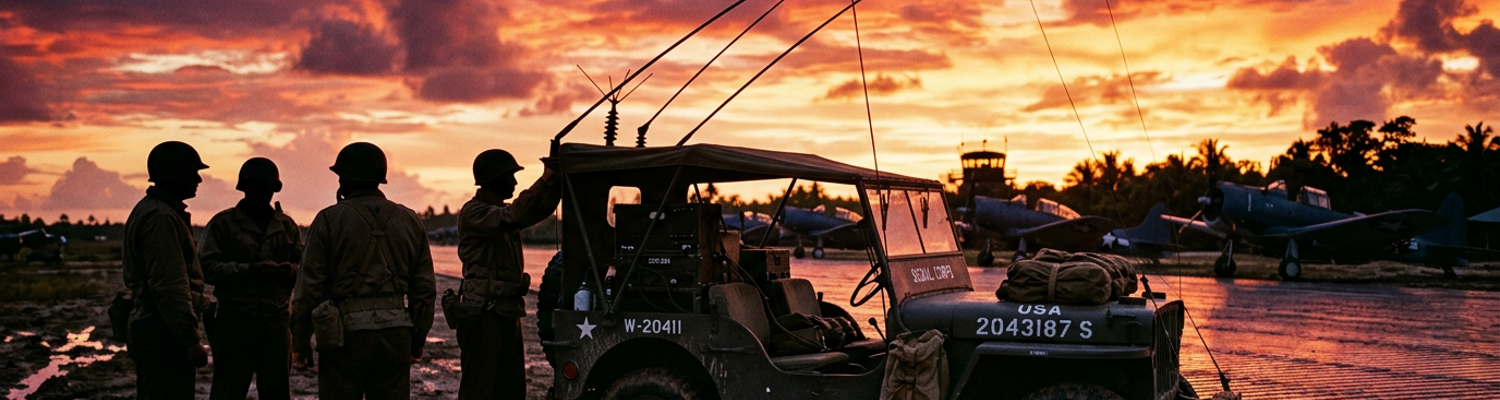
Army Air Forces training manuals promised recruits that disciplined gunnery fundamentals would turn incoming enemy fighters into steady targets, but combat crews arriving at frontline airfields encountered an operational reality that contradicted every standard classroom exercise. Gunners discovered that subzero temperatures at twenty-five thousand feet froze hydraulic fluid in power turrets while severe slipstreams through open waist windows numbed their hands inside thick leather mittens. Popular wartime newsreels and postwar cinema depicted aerial combat as instinctual duels decided by individual pilot marksmanship, showing calm airmen effortlessly tracking enemy targets through clean glass and destroying incoming aircraft with short bursts of machine gun fire. Luftwaffe interceptors instead attacked in mass head-on passes at steep dive angles, leaving gunners with less than two seconds to estimate range and press their electric triggers before the aircraft swept past.
Fighter aircraft closed the distance at combined speeds exceeding five hundred miles per hour, giving human eyes and nervous systems no time to compensate for bullet drop, crosswinds, and changing barrel harmonics. Operational records from the Eighth Air Force revealed that unaided human visual tracking and high deflection closure rates produced an exceptionally low percentage of lethal hits in combat. Heavy bombers frequently expended upwards of ten thousand rounds of fifty-caliber ammunition during a single mission to down one enemy plane, with the vast majority of bullets flying harmlessly into the slipstream. Powered turrets offered mechanical assistance, but their manual control systems remained too sluggish to follow an interceptor curving through high-deflection dive angles. Gunners nevertheless returned to base convinced that their individual turret bursts had scored direct hits against the falling aircraft.
Officers in base intelligence huts recorded every claim from returning aircrews who reported seeing the same damaged fighter crash into the clouds. Military planners initially resisted statistical evaluations of air combat, relying instead on subjective gunner after-action reports that severely exaggerated enemy aircraft kill counts. Debriefing sheets routinely credited Eighth Air Force bomber groups with shooting down dozens or even hundreds of German aircraft during missions where Luftwaffe records later confirmed only single-digit losses. Bomber commands used these swollen numbers to argue that heavily armed bomber formations could protect themselves without dedicated long-range fighter escorts. Command staff filed away these inflated victory totals on mimeographed forms, masking a soaring operational attrition rate that threatened to wipe out entire bomb groups over Germany.
Bomber losses climbed to unsustainable levels throughout the autumn of 1943. Civilian scientists inside the National Defense Research Committee stepped into the crisis, demanding rigorous mathematical modeling to replace anecdotal testimony from shaken gunners. Mathematician Warren Weaver mobilized the Applied Mathematics Panel to strip away Hollywood dogfight myths and analyze air warfare as a precise system of probability, ballistics, and relative motion. Researchers gathered operational firing data, calculating the exact dispersion patterns of heavy machine guns and the flight envelopes of German fighters. Analytic teams at university laboratories began drafting new gun-laying fire-control tables and calibrating gyroscopic lead-computing gunsights for frontline bomber turrets.
Mobilization of the Applied Mathematics Panel
Gunsight calibration tables for these turrets repeatedly broke down under actual combat conditions because traditional proving ground formulas ignored the violent physical realities of high-altitude flight. Fifty-caliber machine gun bullets curved unpredictably when fired sideways across four-hundred-mile-per-hour slipstreams, while subzero air at twenty-five thousand feet altered muzzle velocities, powder burn rates, and barrel vibrations. Heavy bomber crews continued to spray thousands of rounds into empty sky, unable to hit diving German interceptors that closed at rates human eyes could not track. Civilian scientific leaders inside the government realized that standard military ordnance workshops lacked the advanced theoretical tools to untangle these multivariable ballistics puzzles. The National Defense Research Committee chartered the Applied Mathematics Panel in November 1942 under the leadership of mathematician Warren Weaver to bring systematic mathematical analysis to these soaring operational failures. Weaver accepted the post on the strict condition that his civilian teams would bypass military guesswork and examine raw combat data directly from the airfields.
Weaver organized academic mathematicians and mathematical statisticians from institutions including Columbia, Princeton, and the University of California at Berkeley to resolve quantitative air combat bottlenecks. Professors left quiet seminar rooms and established dedicated war research offices, filling university halls with mechanical desktop calculators, drafting boards, and crates of declassified operational flight logs. Statistical specialists at Columbia University tackled the chaotic dispersion patterns of machine gun fire and analyzed the probability of scoring lethal hits against evasive enemy fighters. Analysts at Princeton University evaluated blast mechanics, fragment trajectories, and the destructive power of cannon shells detonating near aircraft fuel cells. Mathematical statisticians at Berkeley examined formation bombing patterns and calculated how weapon dispersion shifted during evasive flight maneuvers. These academic recruits discovered that frontline gunnery manuals used simplified geometric assumptions that fell apart completely whenever an interceptor approached from steep vertical dive angles.
Warren Weaver directed the organization so the panel operated as a scientific clearinghouse tasked with converting raw ballistics, aerodynamics, and gunnery challenges into formal mathematical models for the United States Army Air Forces. Flight commanders, turret manufacturers, and base intelligence officers sent their most perplexing technical failures directly into his network for quantitative diagnosis. Academic teams dissected each incoming problem, translating erratic slipstream forces, optical gunsight lag, and target speed into precise systems of differential equations. Researchers tested these theoretical equations against actual bullet-hole clusters in combat-damaged bombers and tracked gun-camera films frame by frame. Mathematical models revealed that gunners had been systematically underestimating the necessary lead distance by up to fifty percent during high-speed passes.
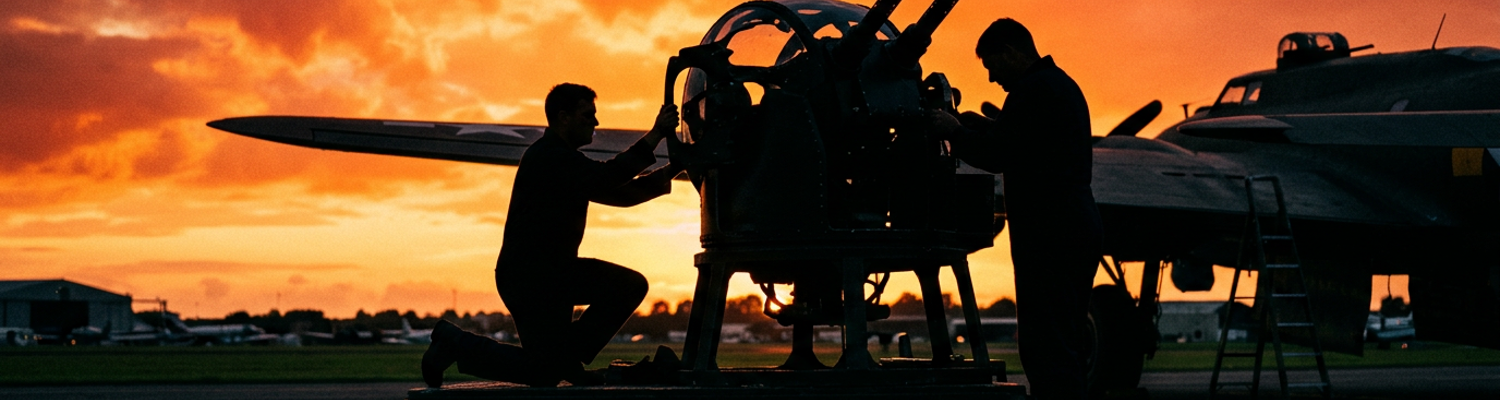
Turret mechanics at frontline depots used these calculations to recut the internal analog cams in gyroscopic sights, ensuring crosshairs compensated for violent slipstream deflection. Flight crews received updated sight-setting charts that replaced instinctual marksmanship rules with clear mathematical instructions based on enemy fighter wingspans and approach angles. Bomber groups flying out of England installed synchronized gun-camera equipment to record real-time bullet trajectories during combat missions over occupied Europe. Technical officers gathered these newly exposed film reels and shipped the raw ballistic data straight back to university computing rooms for continuous refinement. Armorers bolted the revised lead-computing sights into B-17 and B-24 power turrets, locking in mechanical deflection angles that forced gunners to aim dozens of yards ahead of diving Luftwaffe interceptors.
Pursuit Curves and Lead-Computing Gunsight Analytics
Turret gunners struggled to achieve those radical lead angles using the standard ring-and-bead sights mounted above their twin fifty-caliber machine gun barrels. Recruits had learned to align a fighter inside circular reticles, estimating lead distances by judging how many reticle rings the enemy aircraft covered. Combat flights proved that this visual method completely collapsed whenever German pilots attacked from high side angles or steep dives. Statistical evaluations proved that manual optical ring sights introduced systematic aiming errors that manual gunner corrections could not overcome at high deflection angles. Aircrews under fire consistently underestimated the necessary lead distance by up to two hundred yards, firing directly at the enemy airframe instead of the patch of sky the fighter would occupy two seconds later. These systematic pointing errors multiplied as ranges shifted, causing heavy machine gun bursts to stream harmlessly through empty air behind the maneuvering fighters.
Luftwaffe interceptors maintained those extreme angles by banking through continuous diving turns rather than flying straight toward the American bomber formations. Applied Mathematics Panel researchers calculated nonlinear pursuit curves to describe the precise aerodynamic geometry flown by Axis interceptors attacking bomber formations. Warren Weaver and his research teams analyzed operational combat films to map how enemy pilots rolled and pulled high gravitational forces to keep their cannon sights locked on vulnerable bomber engines. These dynamic equations revealed that an attacking fighter traveled along a complex spiral where flight velocity, turn radius, and deflection angles changed continuously every fraction of a second. Standard training manuals had treated these aerial passes as flat geometric problems, leaving gunners completely incapable of calculating the true speed and spatial curve of an incoming fighter.
Mathematicians formulated algorithms to correct for muzzle velocity, relative target speed, bullet gravity drop, and air resistance inside automated lead-computing sights such as the Sperry K-3 and K-4. Civilian scientists reduced complex ballistics equations into mechanical components, using miniature analog computing mechanisms, electrical potentiometers, and spinning gyroscopes. A turret gunner simply set a dial for the known wingspan of a Messerschmitt Bf 109 or Focke-Wulf 190 and adjusted a foot pedal or hand grip to keep illuminated reticle points touching the target wingtips. Gyroscopic sensors inside the metal sight chassis measured the tracking rate as the gunner followed the incoming aircraft, while internal cams instantly calculated the precise lead angle required for bullet travel time. Mechanical linkages pushed the machine gun barrels far out of direct alignment with the visual line of sight, forcing the heavy barrels to lead the target automatically.
Gunners in Eighth Air Force bomb groups tested these offset sight systems during high-altitude combat missions over northern Europe. Aircrews tracking curving interceptors kept their reticle marks clamped on enemy wings, allowing the internal gyroscopes and cams to calculate the changing geometry of the attack. Automated turrets swung the guns ahead of diving fighters, placing concentrated fifty-caliber bullet patterns directly into the interceptor flight paths. Intelligence officers examining synchronized gun-camera films confirmed that hit rates against high-deflection targets climbed significantly once turrets relied on mechanical computation instead of human estimation. Armorers and base mechanics in England immediately prioritized the retrofitting of lead-computing sights into the upper and lower turrets of all frontline heavy bombers.
Heavy Bomber Formation Geometry and Defensive Fire Limitations
Mechanics bolting these new computing sights into airframes still watched bomber squadrons take punishing losses over occupied territory. Army Air Forces doctrine insisted that packing dozens of B-17 and B-24 bombers into stepped combat box formations would create an impenetrable wall of mutually supporting defensive fire. Warren Weaver directed his researchers to test this core assumption against operational flight data, evaluating combat box formations to determine whether interlocking turret fire actually provided the defensive shield claimed by doctrine. Mathematical teams mapped the spatial fields of fire for every bomber in a standard eighteen-plane box and discovered that theoretical overlapping protection existed only on flat training diagrams. Real formations required pilots to constantly adjust throttles and rudder pedals to avoid midair collisions, which routinely threw gunners out of alignment and created massive blind gaps that German fighter pilots quickly exploited. Gunners tracking diving interceptors frequently held their fire or cut their bursts short because adjacent bombers drifted directly across their line of sight.
Bomber airframes drifting into these line-of-fire blind spots forced gunners at open waist windows and nose positions to take rushed shots at extreme deflection angles. Calculations established that flexible fifty-caliber machine guns suffered severe aerodynamic dispersion and high ballistic vibration, requiring thousands of rounds for every confirmed fighter kill. Air rushing past open fuselage hatches struck flexible gun barrels with massive sideways pressure, bending the weapon mounts and warping the trajectory of outgoing bullets. High ballistic vibration shook manual pintle mounts so violently that gunners could not hold their crosshairs on target for more than a fraction of a second. Shells sprayed in wide conical patterns that spread dozens of yards apart before traveling two hundred yards through the thin air. Combat data compiled by panel statisticians proved that waist and nose gunners burned through entire ammunition cans without scoring structural hits.
Ammunition cans emptied by the dozen during every German fighter pass piled up on cabin floors and created a crushing weight problem for high-altitude operations. Mathematical analysis demonstrated that weight dedicated to defensive gunners, heavy armor plating, and ammunition rounds incurred severe penalties in bomber payload capacity and cruising altitude. Weaver and his colleagues calculated the exact operational toll of equipping heavy bombers with thirteen machine guns, ten crew members, steel flak vests, and thousands of heavy brass cartridges. Every extra pound of protective steel and ammunition dragged aircraft engines down, stripping hundreds of feet of operational ceiling away from fully loaded bomb groups. Flak batteries on the ground targeted these lower formations with devastating accuracy because the bombers lacked the climbing power to fly above heavy antiaircraft fire. Removing excess defensive hardware allowed bombers to carry significantly heavier explosive payloads and cruise through thinner air where German interceptors struggled to climb.
Commanders altered combat group loadouts based on these mathematical findings, stripping away redundant gun positions and reducing ammunition allowances to boost aircraft operating ceilings over Germany. Eighth Air Force leaders recognized that self-defending bomber formations could not stop coordinated interceptor sweeps without catastrophic casualties. Planners shifted their survival doctrine away from relying entirely on massed turret crossfire and began demanding external drop tanks for escort fighters. Engineers rushed production of auxiliary fuel tanks that allowed P-47 Thunderbolts and P-51 Mustangs to stay glued to the bombers deep into Central Europe. Ground crews rolled fuel trailers out to English fighter runways, pumping gasoline into wing tanks so escorts could break up German attacks before interceptors ever reached the bomber boxes.
Statistical Mechanics of AMP Note Number Twenty-Seven
Mustang fighters carrying pressurized drop tanks swept German interceptors away from the bomber boxes, proving that operational calculations could resolve tactical crises that classroom gunnery theory never anticipated. Technical officers gathered the flight logs, ammunition expenditure reports, and strike camera films from those long escort missions to determine why extra fuel and escort coverage succeeded where massed defensive turrets had failed. Warren Weaver authored AMP Note Number 27 in January 1946, titled Comments on a General Theory of Air Warfare, summarizing wartime quantitative combat studies. Weaver gathered three years of classified firing trials, combat footage, and depot maintenance logs to explain the physical realities of modern aerial warfare. Civilian mathematicians working at university computing rooms checked every ballistics curve against real operational losses, translating thousands of dogfight records into standardized operational equations. Analysts bound these empirical combat findings into official reference volumes, delivering the technical summaries directly to senior Army Air Forces generals.
Pages of the document abandoned subjective concepts of aerial heroism, framing air combat as a quantifiable stochastic system governed by weapon dispersion and target vulnerability distributions. Civilian statisticians demonstrated that no pilot, regardless of personal courage or physical reflexes, could reliably predict where an individual bullet would strike in turbulent high-altitude air. Machine gun barrels whipped violently during sustained bursts, spraying bullets through changing crosswinds in predictable cones of dispersion rather than straight lines. Interceptor airframes presented specific vulnerability distributions, meaning an attacking fighter suffered fatal damage only when bullets struck vital components like oil radiators, oxygen bottles, fuel cells, or pilot cockpits. Statistical calculations proved that shooting down an enemy aircraft required concentrating a calculable volume of lead across that vulnerable target area rather than hoping for a lucky shot from an individual gunner. Aircrews and unit commanders had to treat aerial engagements as predictable physical processes where weapon dispersion patterns mattered far more than individual marksmanship.
Weaver utilized the concept of military worth to evaluate weapons systems, balancing physical destruction against development time, crew casualties, and production resource costs. Military planners frequently demanded heavier cannons, complicated radar sets, and thicker armor plates without considering the industrial strain required to build and maintain them. Weaver showed that an advanced weapon was practically useless if factory retooling delayed its delivery until the fighting ended, or if its maintenance required delicate parts that mechanics could not service on muddy frontline airfields. High casualty rates among skilled flight crews also degraded overall operational efficiency, meaning an aircraft that brought its crew home safely while inflicting steady damage delivered superior combat value over time. Calculations forced ordnance boards to balance the steel, aluminum, and factory hours needed for heavy bomber construction against the real industrial damage those planes inflicted on enemy infrastructure.
Officers on procurement boards canceled several complicated gun turret contracts and simplified frontline bomber layouts after reviewing these mathematical balance sheets. Armament crews at frontline air bases stripped out unreliable pintle mounts and surplus waist guns that added dead weight without improving combat survival. Base mechanics adjusted gunsight maintenance schedules to focus strictly on gyroscopic lead computers that delivered proven hit densities during combat sweeps. Factory managers in Detroit and Seattle retooled assembly fixtures according to these quantitative recommendations, turning out long-range fighters designed around measurable hit probabilities and drop-tank endurance. Training schools across the postwar military revised their flight curricula to teach young officers how to calculate weapon dispersion, target vulnerability, and mechanical reliability before flying into contested airspace.
Integration of Cunningham Models and Early Game Theory
Warren Weaver expanded this technical curriculum by synthesizing the mathematical air-to-air combat formulations of British tactical analyst L. B. C. Cunningham with American empirical gun camera data. Cunningham had spent the early war years developing differential equations that plotted fighter pursuit curves and target lead angles for the Royal Air Force. Applied Mathematics Panel researchers projected thousands of feet of synchronized sixteen-millimeter gun camera film onto calibrated wall grids, measuring the actual flight paths of German interceptors against the theoretical curves. Technicians counted individual bullet impacts on wings, fuselages, and engine cowlings to determine the true strike probability of heavy machine guns during high-speed passes. Mathematical comparisons between the formulas and the combat footage revealed that interceptor dives obeyed strict aerodynamic rules, allowing analysts to predict target positions with mathematical accuracy rather than pilot guesswork.
Weaver expanded these predictive calculations as the study incorporated principles from John von Neumann and Oskar Morgenstern and their newly published game theory to analyze interactive tactical choices between interceptor pilots and bomber formations. Interceptor pilots did not fly fixed routes, but constantly shifted their dive angles and breakaway distances based on how bomber formations deployed their defensive turrets. Mathematical analysts treated each aerial encounter as a two-sided contest where both the German pilot and the American bomber formation adjusted their behavior to maximize their own advantage. Researchers calculated the precise mathematical payoffs for various attack angles, showing how an interceptor could balance its own survival against the time required to fire an effective burst into a bomber fuselage. Bomber formations simultaneously adjusted their flight intervals, airspeeds, and turret fire sectors to create defensive conditions that forced interceptors into less effective firing positions. Tactical officers used these game theory equations to replace romantic pilot duels with calculated matrices that showed how opposing aircrews responded to each other under combat pressure.
Mathematicians used these interactive combat matrices to evaluate how specific mechanical parts affected survival in the air. The mathematical framework enabled researchers to determine which combat parameters were sensitive to equipment design and which were insensitive to weapon changes. Calculations proved that turret tracking speed, gunsight gyroscopic computing rates, and armor thickness around vital fuel lines were highly sensitive variables where small engineering improvements significantly increased combat survival. Firing rates of flexible machine guns and slight increases in ammunition caliber proved almost entirely insensitive, because heavy vibrations and high-speed slipstreams scattered bullets across wide areas regardless of weapon modifications. Weaver showed that spending industrial labor and raw materials to marginally increase machine gun firing rates provided no measurable tactical benefit to combat crews. Engineers instead needed to direct factory resources toward automated fire-control mechanisms that directly altered sensitive parameters like gun-tracking speed and deflection compensation.
Armorers and procurement officers used these sensitivity evaluations to overhaul equipment programs across major aircraft manufacturing plants. Procurement boards canceled contracts for experimental high-rate machine guns and heavy manual gun mounts that added dead weight without improving hit probabilities. Factory technicians installed upgraded electric turret motors and refined gyroscopic lead sights that allowed gunners to track maneuvering fighters smoothly under heavy gravitational forces. Bomber commanders in operational squadrons adjusted their flight formations to enforce the defensive spacing required by the interactive combat models. Flight leaders drilled their crews on these standardized firing distances and tracking procedures, locking mathematical combat analysis directly into daily mission routines.
Transition to Project RAND and Cold War Doctrine
Bomber crews drilling these precise gunnery steps soon discovered that manual tracking broke down completely against high-speed jet interceptors closing at over eight hundred feet per second. Weaver and his quantitative critique exposed the fatal operational inefficiencies of defensive bomber gunnery, directly shaping the Air Force decision to eliminate gunners on strategic jet bombers. Studies proved that human gunners inside freezing turrets could not perceive closure rates or manipulate mechanical sight controls fast enough to track swept-wing jets passing through the bomber formation. Heavy power turrets, ammunition chutes, armor plating, and emergency life-support gear for multiple gunners added tens of thousands of pounds of dead weight to strategic airframes. This excess mass generated severe aerodynamic drag, robbing heavy bombers of cruising altitude and burning thousands of gallons of precious aviation fuel that could have extended mission ranges. Factory assembly lines eliminated waist blisters, belly balls, and upper turrets, redirecting that saved airframe capacity directly into enlarged internal fuel tanks, electronic jamming gear, and nuclear weapons bays.
Engineers loading atomic weapons into those expanded bomb bays confronted complex new operational questions about bomber routing, fuel consumption, and enemy radar detection. Protocols developed by the Applied Mathematics Panel transferred directly to Project RAND upon its creation in 1946, establishing the foundational analytical methods for systems analysis. Civilian mathematicians who had spent the war plotting pursuit curves and gunnery dispersion moved straight into Project RAND offices in Santa Monica, carrying working papers and data files with them. Researchers expanded the quantitative framework into multilayered evaluations of entire military architectures, linking aircraft design choices directly to industrial procurement costs, base vulnerabilities, and target survival rates. Analysts calculated how changing a single variable, such as cruising speed or radar-jamming frequency, altered the overall combat efficiency of a strategic bomber fleet thousands of miles away. Pentagon procurement boards adopted these quantitative systems models to evaluate billion-dollar weapons programs, discarding traditional dogfighting concepts that failed to demonstrate clear statistical advantages on the drawing board.
Weaver and his stochastic air warfare model shifted postwar air defense doctrine from visual dogfighting dogmas to automated radar-guided interception, surface-to-air missile rings, and nuclear deterrence calculations. Interception teams stopped relying on pilots scanning the horizon through cockpit glass, because high-speed jet engagements left zero time for visual target identification or manual deflection gunnery. Ground-controlled interception centers fed real-time search radar sweeps directly to all-weather jet fighters, directing pilots along automated approach vectors until onboard tracking radars locked onto the target radar return. Weapons officers inside interceptors pressed fire-control switches that automatically unleashed radar-guided missiles from miles away, destroying enemy bombers before either pilot ever spotted the opposing airframe. Army commanders deployed rings of radar-guided Nike Ajax and Nike Hercules surface-to-air missile batteries around major industrial cities and strategic bomber fields. These missile belts turned defensive airspace into overlapping weapon engagement zones, replacing erratic antiaircraft shell bursts with computer-steered warheads that adjusted their flight paths midair.
Statisticians fed tracking data from these missile rings and radar networks directly into early digital mainframes to calculate the mathematical balance of nuclear deterrence. War planners ran thousands of stochastic combat simulations, modeling how many atomic bombers could survive automated interceptor screens to reach designated industrial targets. Simulations proved that achieving total air defense was mathematically impossible once opposing forces fielded nuclear weapons and long-range jet bombers. Military planners recognized that national survival depended on maintaining an invulnerable second-strike force that guaranteed unacceptable retaliatory destruction to any attacking nation. Strategic Air Command commanders locked these target-probability matrices directly into daily alert orders, ordering crews to keep armed B-52 bombers idling on runway alert aprons with running jet engines and preprogrammed flight vectors toward Soviet targets.