
Cavity Magnetron Development at the MIT Radiation Laboratory
Reconnaissance aircrews patrolling the slot between Pacific islands radioed desperate reports of undetected Japanese surface units slipping past American positions in the dark. Fleet lookouts relying on binoculars repeatedly failed to see incoming enemy warships until hostile torpedoes struck, proving that existing visual doctrine could not defend Allied shipping lanes. Older shipboard radars offered little relief because their metric wave pulses scattered wildly across the water, filling receiver screens with blinding surface clutter that easily masked low profile destroyers. Naval operational planners in Washington concluded that American warships required a completely new form of radar emitting narrow, high frequency microwave beams capable of discerning a steel hull against turbulent sea swells. Chief of Naval Operations staff members bypassed routine peacetime procurement channels and carried urgent operational requirements directly to Cambridge, Massachusetts, ordering the newly formed Radiation Laboratory at the Massachusetts Institute of Technology to build a practical microwave combat set.
Physicists at the MIT Radiation Laboratory seized upon the cavity magnetron, an advanced copper vacuum tube invented in Britain that generated powerful radio pulses at a ten centimeter wavelength. Industrial engineers from the Raytheon Manufacturing Company joined the university researchers, turning the delicate laboratory device into a rugged, mass producible power tube designed specifically for the Navy SG surface search radar. This ten centimeter microwave technology replaced the bulky wire frame antennas of older metric wave radars with a compact parabolic reflector dish that rotated continuously on a warship mast. The tightly focused microwave beam cut cleanly through rolling ocean waves, reflecting sharp echoes off low targets that previously disappeared inside ocean clutter. Early rooftop and coastal trials in Boston proved that the new microwave set could reliably track small harbor vessels through dense fog, prompting Navy leadership to immediately order the unproven equipment into active combat production.
Raytheon production lines could not tool up fast enough to satisfy fleet demands, forcing civilian technicians to construct the initial batch of SG radar sets by hand inside university workshops. Navy officers refused to delay shipment for regular factory testing, hauling these preproduction laboratory prototypes straight from experimental workbenches to waiting naval shipyards. These early prototype machines remained delicate laboratory apparatuses rather than durable combat gear, suffering from erratic power supplies, fragile vacuum tubes, and exposed wiring that corroded quickly around saltwater. Civilian scientists accompanied the prototype units down to the docks to assist naval yard workers who had never before seen microwave hardware or rotating parabolic dishes. Riggers hoisted the experimental assemblies up cruiser masts and bolted the heavy indicator consoles into cramped chart rooms and flag bridges, completing prototype installations on frontline warships including the light cruiser Boise and the light cruiser Helena just days before the vessels departed for combat in the South Pacific.
Sailors aboard the outbound cruisers discovered that operating these temperamental prototypes required constant mechanical improvisation and intense technical supervision. Shipboard technicians lacked printed maintenance manuals, relying on handwritten notes from MIT researchers to align the finicky magnetron circuits and keep the cathode ray display tubes glowing evenly. Heavy vibrations from steam turbines and test firing guns frequently knocked the delicate waveguides out of alignment, forcing radar gangs to scramble into masthead platforms to adjust loose fittings by flashlight. Operators stared into the new plan position indicator screens, learning by trial and error how to distinguish true ship targets from wave crests and tropical rain squalls. Fleet commanders ordered the cruisers into the dangerous straits around Guadalcanal, staking the survival of their crews on an unproven civilian prototype.
Early Pacific Fleet Radar Deployment and Component Failures
Copper waveguides routing high power microwave pulses up the cruiser masts immediately trapped the dense tropical humidity and salt spray of the forward combat zone around Guadalcanal. Saltwater mist seeped through unsealed flange joints along the exposed superstructure, settling into the rectangular brass conduits as liquid condensation. High voltage radio pulses surging from the magnetron ionized this pooled moisture, creating intense electrical arcing that crackled violently through the hollow transmission lines. This continuous internal arcing scorched the delicate silver plating lining the interior walls, degraded transmitter output, and filled the plan position indicator screens with blinding flashes of false static. Radar gangs climbed aloft in heavy swells to inspect the damage, using hand drills to bore small weep holes at the lowest bends of the pipes so trapped seawater could drain onto the deck plates. Technicians then coated the damaged pipe seams with thick layers of friction tape, shellac, and canvas strips to keep tropical rain squalls from entering the sensitive microwave conduits.
Gunfire recoil from the cruisers main battery turrets instantly rattled those masthead repairs loose, while violent sea shock shattered the fragile vacuum tubes and delicate receiver crystals mounted inside the consoles below deck. Silicon receiver crystals within the mixer circuits were especially prone to disintegrating under these mechanical shocks, which snapped the microscopic cat whisker wires that detected incoming ten centimeter microwave pulses. The physical destruction of these fragile crystal mixers instantly killed receiver sensitivity, wiping true surface targets from the plan position indicator screens and leaving bridge officers completely blind to night threats. Enlisted ratings working inside stifling, unventilated radar plots scrambled in the dark with flashlights between their teeth, pulling hot, fractured glass envelopes from chassis sockets and seating replacement crystals with steady fingers while the decks pitched beneath them. Routine hull vibrations from high speed engine turns and concussions from nearby depth charge patterns destroyed these brittle glass and silicon parts faster than supply divisions could replace them, quickly exhausting the emergency spare lockers aboard every cruiser and destroyer in the task force.
Radar ratings facing empty supply lockers slipped ashore at South Pacific advance bases like Espiritu Santo and Noumea, scouring depot warehouses to scrounge replacement parts for their broken systems. Navy logistics pipelines had not yet established distribution networks for experimental microwave hardware in forward operating areas, leaving combat ships without factory built vacuum tubes, silicon crystals, or spare cavity magnetrons. Enlisted technicians bartered bags of coffee, canned meat rations, and machine shop tools with merchant marine freighters and army signal units to secure commercial radio tubes, insulated wiring, and soldering flux. Repair parties stripped electrical components from wrecked patrol bombers and dismantled abandoned coastal radio shacks, using shipboard machine lathes to grind and reshape salvaged parts until they fit inside the custom Raytheon consoles. Technicians soldered these improvised components into the receiver chassis, aligned the temperamental magnetron circuits, and tuned the antenna rotation gears just as flag officers ordered the warships to form a battle line for the night action. Division officers energized the jury rigged sets under full generator load, watching the cathode ray tubes illuminate with sweeping trace lines as Task Force 64 steamed toward Savo Island.
Microwave SG Radar Versus Metric SC Fleet Sets
Helena technicians watched a continuous spatial map materialize on their new Plan Position Indicator screen as the ten centimeter beam swept past the rugged shoreline of Savo Island. This circular Plan Position Indicator display translated microwave pulses into a direct overhead map of the sea, updating the compass bearing and distance of every solid object with each full rotation of the masthead antenna. Radar operators read target ranges directly from concentric distance rings etched into the glass face, while moving objects left glowing phosphor trails that revealed their speed and heading. Watch officers clustered around the glowing console could see the precise gaps between friendly ships in the cruising column without relying on voice reports from bridge lookouts. This direct visual plot eliminated the delays of manual plotting boards, allowing combat teams to distinguish water channels, rocky headlands, and vessel silhouettes at a single glance.
SC radar consoles on adjacent American warships offered no such spatial picture, restricting operators to an ambiguous horizontal trace across a narrow A scope tube. These older metric sets fired broad radio pulses that appeared merely as jagged vertical spikes along a single baseline ruler, forcing technicians to estimate target bearings by rotating their heavy wire antennas back and forth across the horizon. High volcanic ridges along the coast reflected these wide metric waves back into the receivers with tremendous strength, filling the displays with massive electrical spikes that submerged weaker target returns beneath thick static. Operators twisting receiver gain dials could not separate the blip of an approaching destroyer from the massive reflection of a tropical island lying several miles behind it. This severe limitation left metric search operators guessing whether their scopes showed enemy hulls or harmless landmasses.
Norman Scott committed his flag to this older equipment, relying on the SC radar aboard his flagship USS San Francisco to direct Task Group 64 into the dark passage. Scott and his staff stationed themselves on the cruiser bridge, trusting the familiar metric set while treating experimental microwave reports with deep skepticism. San Francisco moved forward in the cruiser column with its SC antenna sweeping toward Cape Esperance, only to have the looming cliffs of Guadalcanal completely overwhelm its receiver circuits. Land clutter saturated the flagship scopes with blinding static that wiped out all tactical visibility along the southern and western bearings. Scott evaluated the clear scopes on his own bridge and concluded that no hostile surface units had entered the channel, unaware that his radar was effectively blinded by the nearby coastline.
Helena tracked three incoming Japanese warships and two screening destroyers on its Plan Position Indicator screen at twenty seven thousand yards, exposing the stark disparity in situational awareness across Task Group 64. Boise confirmed the enemy course and speed with its own microwave set, but the four American destroyers and the flagship possessed either blind SC consoles or no radar gear at all. Helena division officers fed range and bearing coordinates directly to their gunnery computers and bridge watch officers, creating total tactical clarity on one ship while the fleet commander remained disoriented. Captain Gilbert Hoover on Helena opened radio communication over the tactical network to alert the flagship, but the blind staff on San Francisco questioned the coordinates and refused permission to open fire. Scott kept the task group on its patrol course while Helena gunners stood by their loaded six inch turrets, aiming their guns directly at targets that the task group commander still could not see.
Shipboard Modifications and Environmental Hardening on USS Helena
Helena gunners held those precise target bearings because shipboard technicians had integrated the radar plot directly with the navigating bridge through dedicated voice tube links. Standard fleet doctrine required radar operators to relay raw contact data through multiple phone talkers and plotting officers before information ever reached the captain, introducing dangerous delays during fast moving night engagements. Helena officers eliminated this cumbersome arrangement by running metal acoustic tubes straight from the glowing SG console in the radio space up to the command level and fire control directors. Operators sitting in the dark compartment spoke continuous compass angles and range changes into the brass mouthpieces, giving the bridge watch an instant verbal description of target maneuvers. This direct audio conduit allowed the cruiser gunnery computers to ingest fresh tracking data every few seconds without suffering clerical errors or telephone disconnects. Crewmen on the bridge listened to the steady rhythm of bearing reports, watching their optical directors train onto the invisible targets long before the flagship recognized the enemy presence.
Silica desiccator canisters jury rigged along the exterior waveguide runs preserved this clear radar picture by suppressing internal moisture condensation. Tropical ocean air constantly leaked into the unpressurized brass conduits connecting the below deck magnetron to the masthead antenna, creating pools of salt water that caused high voltage electrical arcing. Shipboard electricians resolved this persistent hazard by fabricating small metal cylinders from scrap pipe and filling them with granular silica gel scavenged from supply depots. Technicians tapped these homemade canisters directly into the copper waveguide seams, routing dry air through the rectangular tubes to absorb humidity before liquid water could settle along the interior walls. Duty ratings monitored the glass inspection windows of these canisters around the clock, baking saturated pink crystals in galley ovens to restore their deep blue drying capacity. This constant chemical drying prevented internal flashovers, allowing the magnetron to pump clean ten centimeter pulses into the night sky without burning out delicate components.
Rubber blast dampeners installed around the SG antenna pedestal cushioned the rotating scanner assembly against the violent concussions generated by the cruiser main battery fire. Helena carried fifteen rapid firing six inch guns in five triple turrets, producing tremendous muzzle overpressure that repeatedly knocked masthead instruments out of alignment during test salvos. Ship fitters addressed the structural vulnerability by cutting heavy shock pads from salvaged vehicle tires and machinery gaskets, fitting them tightly between the antenna support base and the foremast platform. Sturdy steel retainer collars held these improvised rubber cushions in place, absorbing the sharp vertical and lateral vibrations that otherwise warped the drive gears and broke delicate coaxial connections. Enlisted technicians climbed the mast between drills to verify that the shock mountings remained secure and that the drive motor turned freely without binding. The reinforced mounting kept the curved metal reflector spinning smoothly at four revolutions per minute, guaranteeing that no gun concussions or high speed hull tremors would shake the microwave beam off target.
Captain Gilbert Hoover leaned over the bridge voice tube to receive these steady scanner reports as the enemy cruisers crossed directly into Helena primary firing arc. Voice reports from the SG console informed Hoover that three heavy Japanese ships were steaming across his bow at a range of less than five thousand yards, completely exposed to American guns. Radio operators on the tactical circuit continued to transmit urgent queries to San Francisco, but Admiral Scott remained trapped in confusion, fearing that Helena directors were locked onto friendly American destroyers. Hoover realized that waiting for flagship authorization would forfeit the tactical surprise achieved by his hardened microwave radar set. Fire control officers reported all five triple turrets trained, loaded with high explosive shells, and matched to the radar plot exact coordinates. Hoover stepped toward his gun control officer and delivered the order to commence firing, unleashing a devastating fifteen gun broadside into the darkness without waiting for Scott to signal.
Night Detection off Cape Esperance in Tropical Squalls
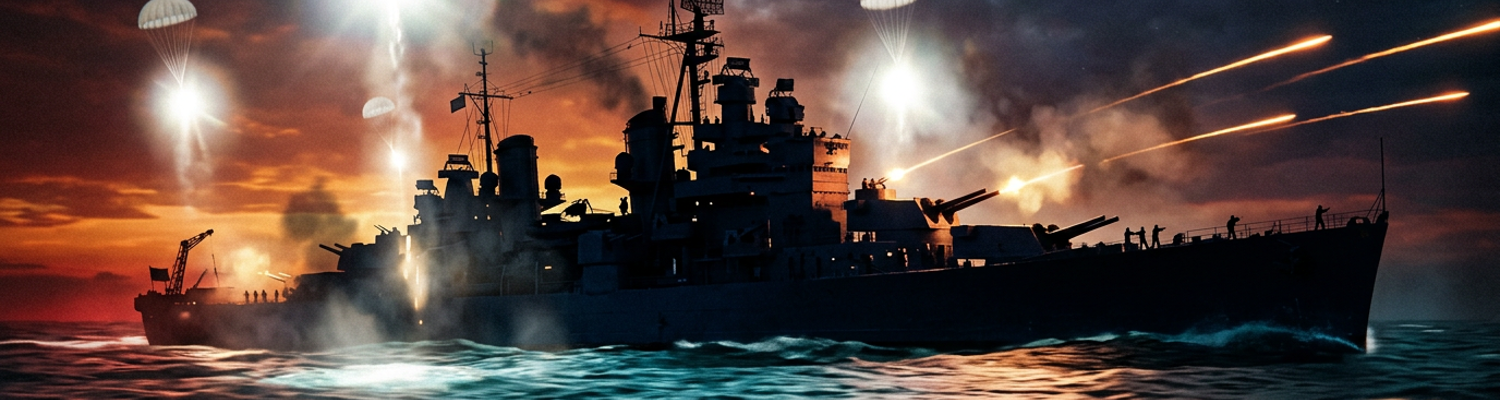
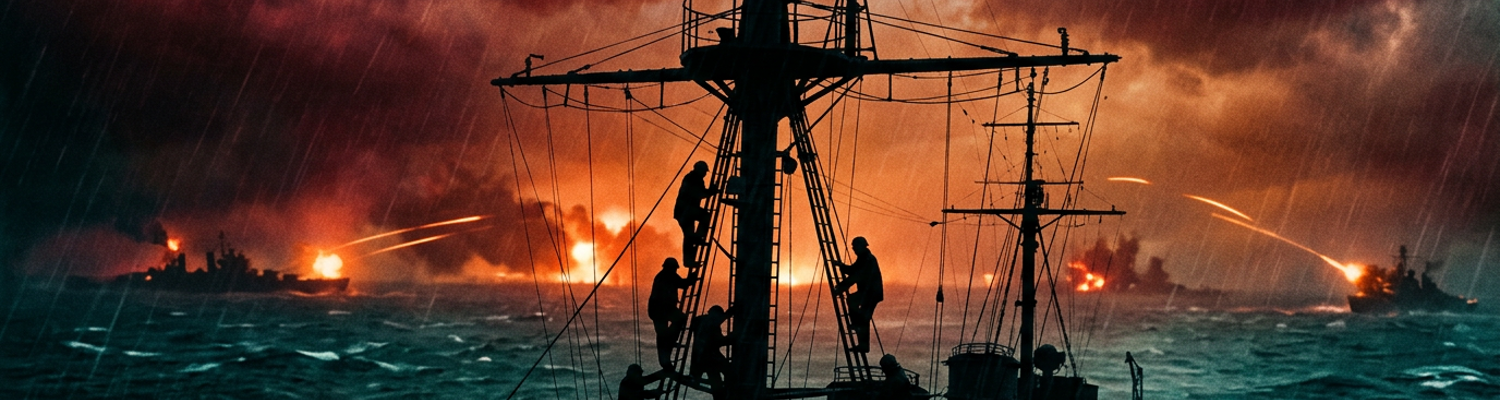
Projectiles from Helena opening salvos tore through the tropical squall and struck the leading Japanese warships, converting twenty minutes of silent microwave tracking into immediate physical destruction. Helena SG radar had initiated this tactical trap by acquiring Admiral Aritomo Goto cruiser force at nearly twenty seven thousand yards off Guadalcanal, registering the incoming hulls as distinct glowing pips on the circular display screen. Pitch black conditions and heavy rain squalls swept across the channel between Savo Island and the mainland, preventing visual lookouts on both sides from spotting surface targets and rendering optical gun directors ineffective. Wind whipped saltwater spray over the forward superstructure, but the ten centimeter pulses passed straight through the cascading downpours without losing resolution or scattering across the surface of the sea. Radar operators watched the phosphor trails lengthen across the glass face with each antenna rotation, tracking the enemy warships through three separate course alterations as Goto rounded the western cape. Plotting officers converted these constant range and bearing changes into firing coordinates every ten seconds, feeding exact target locations to the gun crews while lookouts on the open bridge still saw only empty blackness.
San Francisco failed to replicate this clear target picture because its metric SC radar completely failed to acquire the Japanese formation through the torrential weather. Radio operators on the flagship rotated their cumbersome wire mattress antenna toward the approaching contacts, but the long meter wavelength pulses scattered against the sheets of tropical rain and the looming mass of Cape Esperance. Massive land clutter overwhelmed the receiver circuits, filling the flagship narrow A scope with jagged static spikes that buried the echoes of Goto approaching cruisers. Technicians adjusted gain controls and calibrated their timing circuits in vain, unable to produce a single reliable range spike for the fire control team. Admiral Norman Scott examined the flooded scopes and concluded that the channel ahead remained clear of hostile vessels, ignoring radio warnings from Helena because his own instruments showed nothing. This technical blindness convinced Scott that Helena gunners were aiming at the friendly American destroyers scouting ahead of the main column, paralyzing the flagship command staff at the critical moment of interception.
Helena gunners ignored that hesitation and maintained a rapid rhythm of fire, using the SG radar continuous plots to walk heavy six inch salvos directly across the center of the Japanese line. Shells hammered the superstructure of Goto flagship Aoba at point blank range, smashing the compass bridge and cutting down the Japanese commander before his lookouts ever identified the source of the gunfire. Goto died believing he had fallen under friendly fire from Japanese army batteries, having received no optical warning of the American warships waiting in the dark. Torpedoes remained lashed in their deck tubes and gun barrels remained locked in their cruising cradles aboard the trailing cruisers Furutaka and Kinugasa as explosions tore through their hulls. Boise and Salt Lake City joined the barrage by locking their fire directors onto the coordinates illuminated by Helena tracer fire, turning the pitch black strait into a destructive crossfire of burning steel and ruptured bulkheads.
Flames from detonating powder magazines and ruptured fuel tanks aboard the shattered cruiser Furutaka cast a crimson glow over the surrounding waves, ending the tactical confusion that had gripped the American line. Scott observed the exploding enemy hulls through bridge binoculars and finally authorized general firing across the task group, aligning his cruisers with the targets Helena had tracked since the opening minutes of the approach. Helena microwave scanner continued its unbroken rotation throughout the surface melee, separating the blazing wrecks of Goto warships from surviving vessels attempting to flee into the rain squalls. Radar plot operators tracked the crippled destroyer Fubuki as it foundered under concentrated broadsides, feeding fresh bearings to the secondary battery until the target slipped beneath the surface. Plotting teams shifted their microwave beam toward the escaping heavy cruiser Kinugasa, calling out steady range steps as the Japanese survivor retreated westward through the squall.
The Interrogatory Roger Miscommunication and Ambush
Kinugasa slipped through the outer edge of the radar beam because the devastating ambush had been triggered minutes earlier by a fateful breakdown in voice radio protocol. Helena held the Japanese formation on its glowing Plan Position Indicator at five thousand yards, providing Captain Gilbert Hoover with a perfect firing solution that the flagship could not verify. Microwave pulses from the ten centimeter scanner mapped out five distinct enemy silhouettes crossing directly in front of the American column, while optical lookouts finally confirmed dark shapes against the horizon. Radio operators aboard Helena lifted the transmitter handset of the Talk Between Ships voice circuit to request formal combat clearance from the task group commander. Helena transmitted the standard radio query Interrogatory Roger over the airwaves, asking San Francisco for official permission to open fire with its fifteen rapid firing guns. Hoover stood beside the bridge radar repeater expecting an immediate order to shoot, convinced that the flagship staff understood the tactical trap revealed on the glowing screen.
Scott listened to the loudspeaker in the flagship pilot house without realizing that Helena had achieved total radar lock on an approaching enemy column. San Francisco older metric radar displayed only blinding land clutter from Cape Esperance, leaving the admiral convinced that the contacts were the three friendly American destroyers thrown out of position during a recent column turn. Fear of shelling his own vessels led the task force commander to treat the voice transmission as an ordinary information update rather than an urgent firing request. Scott keyed his bridge microphone and answered with the single codeword Roger, intending only to acknowledge receipt of the signal rather than authorize a broadside against the unknown targets. Naval communication doctrine defined the spoken word Roger strictly as an acknowledgement that a message had arrived, but Scott added no clarifying instructions and issued no order to hold fire.
Helena watch officers received the brief radio acknowledgment and instantly interpreted the response as full tactical approval to engage. Hoover took the reply as direct permission to execute his firing solution, having already synchronized all five main battery turrets with the continuous bearing numbers piped from the microwave radar room. Gun directors energized their electrical firing circuits at once, hurling forty five heavy shells toward the Japanese flagship Aoba in the opening seconds of the attack. Cruisers Boise and Salt Lake City steamed directly behind Helena, saw their sister ship unleash blinding sheets of flame into the rain, and opened fire with their own main batteries under the belief that the flagship had ordered a general assault. American gunners turned Scott misunderstood radio receipt into a sudden gunnery ambush, catching the Japanese force completely unprepared with their guns trained fore and aft in cruising cradles.
Projectiles from three American cruisers tore through Aoba bridge structure and ignited open ready service ammunition boxes across the upper decks. Admiral Aritomo Goto fell mortally wounded on his command platform, convinced until his death that he was being struck by friendly Japanese shore artillery. Scott watched the unexpected cannonade erupt along his battle line in utter disbelief, grabbing his microphone to order an immediate cease fire because he still believed his cruisers were destroying their own destroyers. Radar operators aboard Helena kept their ten centimeter beam fixed on the burning enemy hulls through the temporary pause in firing, tracking every target maneuver on the Plan Position Indicator. Scott finally recognized the burning wrecks as Japanese warships when enemy shells splashed near San Francisco, prompting him to rescind the cease fire and order all ships to resume maximum rate of fire.
Friendly Crossfire on USS Duncan and Boise Magazine Penetrations
Salvos from the American battle line poured back into the black channel, completely unaware that the destroyer USS Duncan had charged ahead of the column alone. Duncan had lunged into the night without radar coordination, tracking an enemy cruiser on her own fire control instruments while entirely detached from Admiral Scott tactical formation. This aggressive advance placed the solitary destroyer in the hazardous zone between the opposing fleets, stripping her of the shared situational awareness provided by the flagship and Helena microwave radar plot. Bridge officers on the trailing American cruisers spotted a low, unidentified silhouette firing near the Japanese formation and mistook Duncan for an enemy vessel maneuvering to deliver a torpedo attack. Shells from both the American cruisers and Japanese warships converged upon the lone destroyer from opposite horizons, trapping Duncan in a devastating friendly crossfire that shredded her unarmored hull plating. Ruptured steam lines scalded the engine room personnel while exploding ready service ammunition boxes tore away deck guns, leaving the ship burning out of control and forcing the surviving crewmen to abandon the waterlogged wreck in the dark.
Searchlight beams from USS Boise stabbed across the water near the sinking destroyer, illuminating a Japanese heavy cruiser but instantly exposing the American warship to concentrated return fire. Japanese gunners aboard the cruiser Kinugasa locked their optical directors onto the brilliant carbon arc glare and answered with rapid salvos of heavy eight inch shells. An armor piercing projectile smashed through Boise port bow below the waterline, piercing the outer hull and detonating directly inside the forward magazine handling spaces. The impact ignited stacks of bagged smokeless powder waiting in the ammunition hoists, producing an instantaneous fireball that gutted the working flats beneath the forward turrets. Shock waves blew out electrical junction boxes, crumpled interior watertight bulkheads, and instantly incinerated the sailors stationed throughout the lower ammunition handling rooms. Seawater rushed through the shattered hull plating at hundreds of gallons per minute, filling the lower compartments and drowning the smoldering powder charges before the main magazine could detonate and tear the entire cruiser apart.
Cordite smoke from the burning powder flats surged through the shattered ammunition trunks into the forward living compartments, suffocating dozens of sailors trapped in the darkened spaces below decks. Boise corpsmen established emergency battle dressing stations in the wardroom and crew mess, quickly becoming overwhelmed by hundreds of severe flash burns and lethal cordite gas asphyxiation casualties. Medical personnel worked under dim red battle lanterns, cutting charred cloth from raw flesh and coating severe thermal burns with soothing ointment while administering morphine to the agonizingly injured. Orderlies fitted manual inhalator masks over sailors who collapsed from inhaling toxic nitrogen dioxide gas, but the corrosive chemical fumes destroyed lung tissue faster than medical teams could clear the airway passages. Stretcher bearers carried dead sailors out to the open deck and stacked them along the passageways to create room for incoming casualties, laboring without pause as the damaged cruiser steered out of formation to extinguish the remaining fires on her forward deck.
Evolution of Combat Information Centers and Technical Obsolescence
Fleet planners inspecting Boise scorched bulkheads and tallying the casualties realized that the cruiser near destruction and the fatal shelling of Duncan had exposed a broken command structure. Helena had tracked the Japanese formation perfectly on its microwave screen, but that vital tactical picture had remained locked inside a cramped radio compartment, forcing operators to shout ranges through brass tubes while senior officers on the bridge remained disoriented. The chaotic night action off Cape Esperance demonstrated the urgent requirement for dedicated shipboard Combat Information Centers where combat data could be evaluated centrally before captains issued firing orders. Naval authorities issued immediate redesign orders to naval shipyards, instructing engineers to clear large interior compartments below the armor decks of every fleet warship. Draughtsmen drew up standardized blueprints for these new plotting rooms, installing illuminated edge lit glass boards where tactical officers could manually track ship positions as fast as radar operators spoke. Shipyard mechanics cut access hatches through interior bulkheads and pulled thick electrical conduits from the SG receiver units straight into these command hubs, ensuring that radar plots sat at the exact center of shipboard decision making.
Raytheon assembly lines expanded production to supply these redesigned spaces, manufacturing hundreds of standardized SG sets for accelerated installation across all Pacific surface combatants. Naval staff officers established mandatory training programs at naval stations in Pearl Harbor and Florida, standardizing microwave operating doctrine so radar operators across different hulls followed identical reporting procedures. Fleet commanders ended the practice of relying on optical lookouts for primary night detection, making the glowing cathode ray tube the mandatory foundation for fleet navigation and tactical gunnery. Shipyard technicians boarded every battleship, aircraft carrier, cruiser, and destroyer arriving in forward staging bases, welding heavy equipment racks into radio compartments and pulling heavy coaxial lines up through the superstructures. Maintenance units stocked advance supply depots at Espiritu Santo and Noumea with factory made vacuum tubes, spare magnetrons, and precut waveguide sections, eliminating the desperate parts scrounging that had plagued early cruiser crews. Destroyer squadrons and cruiser divisions operating across the Solomon Islands routinely maintained rigid column formations through pitch black channels and launched synchronized torpedo attacks because every warship now operated under the same standardized microwave doctrine.
Antennas on the earliest SG installations suffered severe blind spots whenever combat operations shifted into turbulent open waters. The original parabolic dish rested on a fixed pedestal that tilted with every roll of the warship, pointing the narrow microwave beam straight into the sky or burying it in heavy ocean swells. Electronics designers solved this tracking failure by developing an upgraded SG system, which incorporated an internal gyroscopic stabilizer that kept the dish level with the horizon regardless of hull motion. Navy maintenance depots began replacing the early SG sets across the fleet, unbolting the older fixed pedestals from masthead platforms and hoisting the heavier, gyro stabilized assemblies into place with dockside cranes. Engineers integrated these modernized microwave antennas with newer fire control radars, creating coordinated electronic suites that fed tracking data directly into mechanical gunnery computers. Dockyard crews disassembled the remaining prototype SG hardware from Helena and Boise, scrapping the worn hand built components that had initiated microwave combat in the dark waters of Cape Esperance.