
Min River Estuary Observation Posts
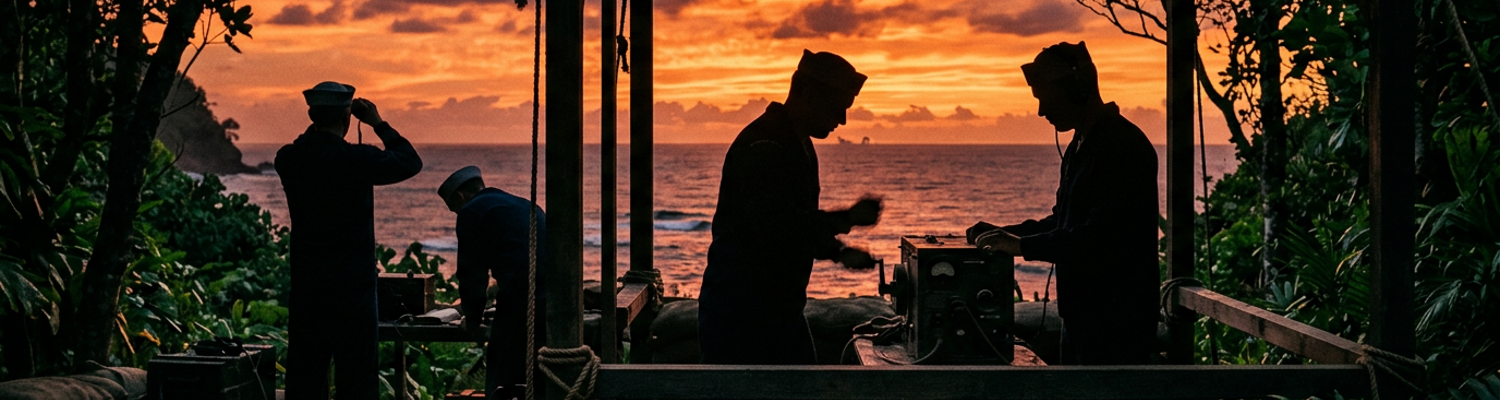
Radio operators detected an unexpected surge in Japanese military transmissions across the coastal water channel. Naval Group China and Office of Naval Intelligence operatives had established these clandestine observation posts around the Min River estuary in mid-1944 to identify enemy maritime traffic. Lookouts dropped their cleaning rags and swung heavy optical binoculars toward the river mouth to scan the sea haze for Imperial Japanese maritime convoys transiting the Formosa Strait. Corpsmen and technicians hauled battery boxes through stagnant mud in the communication trench to clear space for signalmen drafting sighting reports for Allied air bases inland. Spotters on the seaward cliff picked out the shapes of two armed freighters rounding the outer sandbars under destroyer escort.
Couriers from local Chinese pirate guerrilla units sprinted down the ridge trails to deliver exact watercraft bearings for those incoming ships to the observation post. Naval personnel partnered with these local coastal fighters to monitor Imperial Japanese maritime convoys transiting the Formosa Strait using a combination of American radio gear and native maritime networks. Coastal fighters watched the bays from disguised sampans to note when enemy freighters dropped anchor or tried to slip past shallow shoals during night hours. Armed lookouts brought reports of Japanese naval escorts directly to the hillside station to warn the sailors about nearby patrol launches probing the river inlets. Watchstanders logged the reported ship speeds, hull sizes, and compass headings onto weathered slate boards to calculate the interception windows for American strike aircraft.
Slate boards filled rapidly with chalk marks as the detachment struggled to track these vessels without replacement equipment from the rear bases. Detachments endured severe logistical isolation in the rugged coastal hills of Fujian by relying on precarious inland supply routes that crossed mountain passes on foot. Porters hauled rice bags, dry radio batteries, and engine fuel over steep dirt trails that washed out during heavy summer rainstorms. Starvation rations forced men to survive on meager bowls of boiled grain as fungal rot ruined paper supply cartons. Moisture from the damp river valley spoiled field dressings and corroded internal generator parts. Corpsmen boiled reusable bandages over charcoal embers while mechanics cleaned engine valves with river sand.
Charcoal embers provided just enough heat to dry the ignition points before the crew pulled the starter cord on their remaining gasoline generator. Diesel exhaust and smoke drifted out of the hillside bunker as the generator spun up to feed electricity into the transmitter. Transmitters clicked rhythmically as the operator sent encoded coordinates out to Fourteenth Air Force headquarters and waiting submarine patrols. Confirmation signals arrived over the receiver fifteen minutes later to indicate that twin engine bombers had departed inland runways. Sailors secured the radio gear beneath water resistant canvas, grabbed their carbines, and moved out to defensive firing pits along the wet tree line.
Sampan Fleets and Coastal Amphibious Raids
Sailors slipped out of their defensive firing pits once the Japanese shore search turned back toward the garrison. Allied raiding parties utilized native junks and wooden sampans to conduct low visibility nighttime assaults against Japanese littoral outposts across the coast. Crews painted the wooden hulls dark gray and trimmed the woven sails low to the gunwales so the boats blended into the darkness of the river delta. Navy corpsmen checked their canvas medical bags by wrapping morphine ampules in greasy cotton rags and packing sulfur powder into waterproof tins. Steersmen guided the sampans into the open channel with long wooden oars to avoid gasoline engines entirely. These silent timber vessels allowed the combined American and Chinese assault teams to slide undetected past Japanese searchlight beams sweeping across the outer harbor sandbars.
Sandbars and hidden granite reefs forced navigators to take continuous depth soundings with lead weighted lines as the craft entered the shallow estuary delta. Raiders contended with complex littoral navigation, treacherous mudflats, and sudden tidal shifts across the estuary delta that threatened to strand the fleet. Coxswains tracked the rapid drop of the tide by watching the riverbanks to ensure heavy junks did not become trapped in deep mud within sight of Japanese machine guns. Crewmen scrambled over the wooden gunwales when the leading sampans scraped bottom to push the keels forward over slick clay beds. Corpsmen hauled floating stretcher poles and plasma flasks through the thick mire alongside the assault teams while boat handlers tied the vessels to exposed mangrove roots.
Raiders scrambled up the bank from the mangrove roots and fanned out in three strike elements toward the enemy perimeter. Assault forces targeted Japanese fuel dumps, coastal observation nodes, and riverine transport using silenced small arms and demolition charges. Gun teams crept within twenty paces of the observation bunker to neutralize two perimeter sentries with suppressed pistols before the guards could ring an iron alarm bell. Demolition specialists taped blocks of composition explosive onto stacked steel fuel drums and the rudder shafts of moored riverine patrol launches. Cordite smoke and bright orange fireballs erupted across the outpost as the timed charges detonated to throw burning gasoline over the pier. Corpsmen immediately pulled wounded raiders behind an overturned supply cart to apply field tourniquets to men hit by flying wood splinters.
Riflemen laid down suppressive fire toward the blazing bunker while litter teams dragged the bleeding casualties back across the flattened wire barrier. Stagnant mud weighed down the boots of retreating sailors as Japanese shore guns opened fire blindly into the estuary mist from secondary inland redoubts. Boat handlers hauled the casualties onto the low wooden decks of the sampans and shoved away from the bank just as falling tide levels exposed the outer shoals. Diesel exhaust from burning Japanese launches drifted over the water while the raiders hoisted their dark cloth sails and steered into the river center channel. Navigators matched their course to the surging ebb tide to guide the laden timber boats around emerging mudbanks and out into the open sea.
Cargo Drops and Frontline Medical Improvisation
Corpsmen worked across the blood slick deck planks of the retreating sampans to cut away soaked canvas jackets from wounded men. Exploding mortar fragments had shredded muscle tissue, cracked ribs, and peppered the raiders with jagged iron during the assault. Embedded Navy corpsmen faced an escalating crisis once they hauled the wounded into the concealed hillside outpost. Debilitating outbreaks of falciparum malaria and bacillary dysentery were already gutting operational strength across the isolated encampment. High fevers and unrelenting intestinal infections left dozens of American sailors and Chinese guerrillas bedridden on split bamboo platforms. Sick watchstanders collapsed from acute dehydration while attempting to haul battery boxes or carry water buckets up from the stream.
Cargo drops flown over the Himalayan Hump airlift route failed to replenish empty storage bins whenever monsoon storms grounded transport aircraft. Naval Group China personnel relied entirely on these perilous aerial supply runs from airbases in eastern India. Turbulent weather over high mountain passes and patrolling Japanese fighters routinely halted scheduled flights for weeks at a time. Misdropped cargo parachutes drifted miles away across jagged granite peaks where rushing mountain torrents destroyed the wooden crates. Enemy ground patrols seized essential cartons of atabrine tablets, sulfa powder, and blood plasma that landed outside the designated drop zones. Medical supply shortages became acute across the isolated coastal stations as corpsmen ran out of basic surgical scissors, suture needles, and clean dressings.
Tea leaves gathered from terraced hillside farms provided the raw material to replace missing medicines. Corpsmen boiled dark concentrated infusions inside cast iron mess kettles over open hearths to create emergency antiseptic washes. Rich tannic acid extracted from the boiled leaves formed a protective astringent coating over agonizing skin burns caused by exploding fuel drums. Medical personnel ground raw camphor blocks purchased from local coastal merchants into a fine white powder. Pharmacist mates dissolved the aromatic resin into hot vegetable oil to create a soothing antibacterial paste for open wounds. Corpsmen swabbed the pungent camphor mixture directly over jagged shrapnel lacerations and covered them with strips of boiled cotton cloth.
Litter bearers carried the freshly bandaged raiders into dry storage tunnels deep inside the granite cliffside. Armed sentries took up positions at the cave mouths to guard the recovering men against advancing Japanese search detachments. Stagnant mud and persistent coastal heat accelerated wound contamination for men left outside the cool cavern walls. Minor puncture gashes swelled with pus rapidly in the humid jungle air. Medical personnel prioritized moving the most severe burn cases into the deepest sections of the rock shelter to avoid the damp river fog. Cave walls provided a stable environment for the wounded sailors to rest while the rest of the detachment prepared for the next radio watch.
Radio Transmitters and Clandestine Strike Vectoring
Signal detachments operated concealed low power radio transmitters around the clock from hidden hillside outposts just above the cave complex. Technicians unspooled thin copper aerials through damp pine branches and jagged rock fissures to keep the equipment invisible to Japanese reconnaissance aircraft. Navy radiomen and Chinese spotters huddled over wet wooden battery crates to take four hour shifts on the hand cranked generators. Damp air rusted dial faces and corroded delicate vacuum tube sockets inside the transmitter chassis. Corpsmen checked on the exhausted operators between medical rounds to wipe sweat from the men and wrap raw blisters on their palms. Continuous signal watches monitored every rumble of engine activity along the shoreline to record the compass bearings and ship classes of Imperial Japanese supply convoys.
Coastwatchers relayed real time maritime coordinates to Fourteenth Air Force bombers and offshore Allied submarine wolfpacks. Operators translated the visual tracking notes into five letter cipher groups to encode vessel tonnages and escort formations into tight sequences of dots and dashes. Fourteenth Air Force command posts hundreds of miles inland decrypted these reports within minutes to launch twin engine bombers. Submarine wolfpacks patrolling submerged along the continental shelf picked up the same Morse transmissions on trailing wire antennas. Pilots adjusted their flight paths over the open water using updated coordinates flashed by the hillside stations to ensure bomb loads struck moving ships. Explosions rocked the coastal approaches as inland bombers dropped high explosive ordnance directly across the decks of targeted enemy transports.
Radiomen implemented strict transmission burst protocols to prevent triangulation by Japanese mobile radio direction finding units operating on the lower coastal roads. Japanese tracking trucks equipped with rotatable loop antennas searched the ridgelines constantly to hunt down any signal that stayed on the air for more than ninety seconds. American operators limited their outgoing Morse reports to rapid twenty second bursts before cutting generator power and pulling the antenna disconnect plugs. Technicians rapidly switched between prearranged quartz crystals to scramble their operating frequencies and baffle enemy intercept stations located across the river mouth. Signalmen wiped moisture from the quartz crystals with dry gauze pads after every broadcast to keep the delicate radio components from shorting out. Watch teams packed the heavy receiver sets into oiled canvas covers between transmissions to prepare for immediate evacuation.
Infantry Sweeps and Japanese Counter-Reconnaissance
Spotters tumbled through the brushwood curtain with empty hands to alert the watch officer that enemy infantry columns had crossed the coastal river shoals. Imperial Japanese forces launched aggressive counter reconnaissance sweeps and punitive mop up operations across the Fujian interior in early 1945. Motorized infantry companies and combat engineering teams fanned out along the base of the coastal ridges to burn fishing hamlets and track signal trails upward. Radiomen shoved their cipher pads and frequency logs into an iron brazier to ignite the classified paper with lighter fluid. Corpsmen shouldered canvas medical satchels crammed with tea leaf salves and carbine ammunition before helping fever stricken malaria patients climb out of their bamboo cots. Riflemen took up blocking positions along the granite boulders outside the cave entrance to cover the initial withdrawal into the high timber.
Japanese riflemen opened fire from the lower ravine as their lead scouts spotted the American rear guard scrambling across the exposed rocks. Captured naval personnel and local guerrillas operated under the constant threat of summary execution under Japanese counter espionage decrees. Sailors and Chinese irregulars knew that surrender meant immediate torture and beheading by military police squads. Chinese guerrilla riflemen returned fire with captured Japanese Arisaka carbines to force the enemy sweep squads into taking cover behind terrace walls. Corpsmen dragged a wounded sailor away from the stone perimeter wall when shrapnel from a rifle grenade tore through his leg. Rearguard riflemen emptied their twenty round magazines into the advancing enemy skirmish line to buy valuable minutes for the command staff to escape.
Signal units and corpsmen executed rapid tactical displacements through rugged defiles while fighting rearguard delaying actions along the slippery mountain trails. Technicians carried forty pound transmitter boxes on bamboo shoulder yokes through narrow gorges choked with dense bamboo thickets and wet clay. Embedded corpsmen alternated between hauling stretchers and firing carbines into the brush while their boots sank into stagnant mud. Acrid cordite smoke drifted through the hemlock canopy alongside oily black diesel exhaust rising from Japanese scout trucks on the cart paths far below. Guerrilla guides led the American detachments along razorback ridges to plant concealed friction fused landmines in the narrow passes. Medical personnel administered morphine to screaming casualties on the move by clamping severed blood vessels with hemostats and packing wounds with sulfa powder.
Litter teams lowered the bleeding casualties into a concealed limestone cavern near the mountain crest as cold rain swept over the Fujian ridgelines. Corpsmen stripped off waterlogged bandages by the glow of a single hooded flashlight to flush mud from torn flesh with boiled water. Radiomen hauled the hand cranked generator out of its canvas tarp to inspect the waterproof seals for damage. Rearguard scouts slipped into the cave entrance with reports that the Japanese mop up columns had halted their ascent at the lower defile. Technicians clamped battery leads to the portable transceiver and began tuning the dials to listen for emergency homing frequencies from inland Allied command posts.
Transmitter Keys and Littoral Shipping Interdiction
Earphones hummed with faint static as radiomen verified an emergency frequency link back to Fourteenth Air Force headquarters. Embedded Navy corpsmen watched the exhausted operators sag against the damp rock wall with involuntary hand tremors and dull stares. Sustained sleep deprivation, starvation rations, and relentless mortar bombardment produced severe psychological combat fatigue among the isolated sailors. Weeks of subsisting on quarter rations of moldy unhusked rice and ditch water reduced muscular sailors to thin frames plagued by dizziness and chronic dysentery. Japanese knee mortars and mountain guns continued to fire high explosive shells across the limestone ravines outside the cave entrance. Medical personnel cleaned soot and stagnant mud from the faces of trembling watchstanders while administering hot infusions of wild ginger to steady shaking fingers.
Transmitter keys clattered under the signalmen as the coordinates of fresh Japanese maritime movements flashed across the encrypted airwaves. Naval Group China coastwatchers and guerrilla raiders forced Japanese merchant shipping out of coastal shallows and into deep water Allied submarine kill zones. Nightly amphibious raids by junk borne demolition teams destroyed enemy wharf pilings, fuel barges, and river checkpoints. Japanese merchant captains could no longer travel close to the coastline or anchor inside shallow river mouths without facing satchel charges and naval mines. Cargo steamers moved twenty miles out into the deep channels of the Formosa Strait to steer directly into prearranged submarine patrol sectors. Torpedo spreads struck the exposed hulls of the diverted freighters to detonate boilers and sink critical shipments of bauxite and petroleum.
Diesel exhaust and burning fuel oil drifted across the open water as Allied aircraft swept over the channel to strafe the remaining convoy escorts. Medical improvisation and irregular coastal warfare proved decisive in disrupting Japanese shipping through the Formosa Strait. Embedded corpsmen kept the raiding units operational by treating infected wounds with boiled camphor salves and extracting shrapnel on damp cave floors. Navy officers and Chinese guerrilla captains combined these frontline medical recoveries with localized junk operations to maintain constant pressure on Japanese sea lanes. Enemy logistical planners suffered severe tonnage losses along the South China coast. Japanese commanders canceled scheduled troop transfers and abandoned vital maritime transport corridors between the home islands and Southeast Asia.
Lookouts peered through scratched brass binoculars from the upper rim of the limestone cavern to watch the burning transport ships sink below the water. Corpsmen packed clean dressings made from boiled parachute cloth into their canvas medical bags to prepare the walking wounded for another march. Signalmen unscrewed the portable radio antennas from the rock fissures overhead and packed the dry cell batteries back into wooden chests. Chinese irregulars shouldered captured Japanese rifles and carried stretchers down the rear defile to screen the American detachment. Sailors withdrew deeper into the mountain ridges before enemy search patrols could locate their cave entrance.