
Glider Towrope Failures at Wright Field
Radio operators at Wright Field logged the first sign of trouble when a C-47 transport pilot reported violent, rhythmic shuddering along his towline. Flight controllers in the tower alerted the officer of the day, triggering an immediate chain of command decision to place emergency crash crews on full alert along the runway. Wright Field Materiel Command had organized these flight tests in 1942 to evaluate experimental braided synthetic towlines for military gliders under tactical flight stresses. Military planners needed a replacement for natural Manila hemp, which was trapped in Japanese-controlled Pacific territories, forcing the Army Air Forces to evaluate synthetic substitutes for towing heavy Waco CG-4A gliders. Ground observers watched through optical rangefinders as the transport plane banked sharply through gusting wind, pulling the loaded glider through heavy propeller wash that twisted the towrope into violent loops. Flight controllers radioed the pilot to level out, but the braided synthetic line between the two aircraft began smoking as surface friction stripped away outer protective coatings.
Nylon polymers inside the braided towline core rapidly melted as aerodynamic friction and internal heat buildup accumulated during the high-velocity maneuver. Static laboratory tests had shown that synthetic fibers possessed high tensile strength, but those static tests failed to simulate the dynamic heat generated when individual braided strands rubbed against each other under flight loads. Air rushing past the line at over one hundred miles per hour whipped the slack rope, while cyclic stretching generated friction deep inside the core where trapped heat could not escape. Temperatures within the dense synthetic weave spiked past the melting point of the polymer, softening the load-bearing strands until they turned into slippery, translucent paste. Ground crews saw the three-hundred-foot line stretch out into an unnaturally thin cord before it gave way entirely. Tension along the melting rope snapped the remaining outer fibers, severing the connection while the glider was banking through a low-altitude drill barely two hundred feet off the ground.
Glider pilots lost forward momentum the instant the severed line snapped, leaving the unpowered aircraft without sufficient airspeed or altitude to glide safely back to the runway. Snapping towropes during these low-altitude glider drills caused severe crashes, driving the fragile wood-and-canvas aircraft into perimeter drainage ditches and rough terrain. Impact forces tore off wings, collapsed the landing skids, and crushed the forward cockpits, sending injured crewmen to the base hospital and exposing critical tensile thresholds that laboratory pull-rigs had never revealed. Crash crews extinguished small brush fires around the shattered airframes while Materiel Command investigators cordoned off the impact zone to gather physical evidence. Technicians recovered the broken ends of the synthetic cable, finding charred and fused plastic nodes where clean fiber breaks should have occurred. Materiel Command officers boxed the melted line remnants and rushed them straight to the airfield laboratories for chemical and mechanical analysis.
Engineers at Wright Field clamped the melted line fragments into mechanical pull-testers to measure how severely flight-induced thermal breakdown degraded the synthetic material. Laboratory dials revealed that dynamic heating had cut the operational tensile threshold of the braided nylon to less than half of its published factory rating. Test directors concluded that standard braided weaves trapped friction-generated heat, proving that mass-produced synthetic towlines could not survive the violent tugging of tactical combat maneuvers without melting from the inside out. Command staff compiled the crash telemetry and laboratory fracture data into an urgent technical memorandum for Army Air Forces headquarters. General officers at Wright Field signed emergency orders halting all low-altitude synthetic towline drills and dispatched a courier team to the War Production Board in Washington with physical samples of the melted rope.
Wartime Silk Embargo and Strategic Polymer Shortages
Couriers delivered the charred nylon segments straight to War Production Board planners who were already confronting an immediate supply deficit across every branch of the military. The surprise attack on Pearl Harbor and the rapid expansion of Japanese naval control across Pacific shipping lanes had completely cut off the flow of raw cocoon silk into American ports. Military parachutes had depended almost entirely on imported Japanese raw silk, which possessed the smooth surface, dense strength, and flexibility needed to deploy cleanly without catching fire from canopy friction. That sudden cutoff left domestic military warehouses with barely enough natural silk yardage to cover a few months of routine training, just as the War Department ordered a massive mobilization of airborne infantry and heavy bomber squadrons. Planners calculated that building hundreds of thousands of emergency escape chutes and cargo canopies from dwindling civilian silk reserves was impossible. War Production Board administrators realized that American chemical manufacturers had to replace natural silk immediately, passing the procurement emergency to joint military leadership.
Joint Army-Navy Munitions Board officers responded to the silk crisis by assigning top-tier priority classifications to synthetic polymers, establishing absolute military necessity for man-made fibers. These emergency ratings gave military parachute contracts first claim over every pound of raw chemical feedstock in the country, cutting off civilian stockings, brushes, and consumer plastics overnight. Chemical factories redirected huge vats of coal, air, and water into continuous polymer production, running extrusion machines day and night to produce experimental nylon threads for military weaving mills. Commercial textile mills in New England and the South ripped out cotton and rayon setups to retool high-speed looms for synthetic yarn, despite knowing very little about how the plastic thread behaved under high friction. Military procurement officers stamped priority orders onto every production batch, forcing textile factories to meet urgent production quotas before testing how synthetic cloth would react to freezing altitudes or the violent shock of a ripcord pull. Depot commanders loaded the freshly woven synthetic canopies directly onto transport trucks and rushed them to frontline air bases before flight surgeons or safety boards could finish evaluating field trials.
Flight crews inspected the new synthetic parachutes with deep anxiety after unpacking the stiff, chemical-smelling fabric in base readiness rooms. Aviators and paratroopers had trusted traditional imported silk with their lives, valuing its softness and proven track record under extreme bailout conditions. Frontline personnel feared that the untested synthetic substitutes would melt from friction heat during deployment, glue their folds together inside the packs, or snap violently in subzero air. Rumors spread rapidly through squadron barracks that synthetic nylon generated dangerous static electricity during falls, or that friction between the suspension lines would burn right through the canopy fabric before the chute could slow a falling man. Veteran bomber pilots quietly hoarded older silk canopies in their personal lockers, flatly refusing to strap on the synthetic replacements for combat missions over occupied territory. Squadron commanders faced open protests from airmen who demanded physical proof that man-made plastic could withstand the brutal jerk of a parachute opening at two hundred miles per hour.
Parachute riggers packed lead test dummies into the synthetic harnesses and kicked them out of transport doors over local drop zones to demonstrate canopy strength to nervous flight crews. Ground recovery teams watched dummy loads plunge toward the turf, noting that while the synthetic fabric held together against air drag, suspension lines routinely scorched and melted small pinholes into the nylon canopy skirts during rapid deployment. Riggers retrieved the test chutes, spread the synthetic cloth across long wooden packing tables, and used magnifying lenses to document every friction burn and pulled seam for base engineering officers. Base commanders adjusted packing manuals on the spot, ordering riggers to powder the synthetic panels with french chalk to reduce static friction and inserting heavy cotton sleeve protectors around the main shroud lines. Ground crews repacked hundreds of synthetic parachutes under these improvised field modifications while flight leaders ordered every available crewman back into the air for immediate tactical training.
General Preference Order M-356 and Industrial Commandeering
Parachute packs snapped open across military drop zones nationwide as hundreds of airborne recruits jumped each day, exhausting synthetic fabric stockpiles faster than regional supply depots could replenish them. Flight training commands burned through thousands of canopies every month, tearing seams on rough landing grounds and wearing out shroud lines under intense drill schedules. War Production Board officials in Washington calculated that piecemeal factory orders and voluntary commercial limits could never meet the skyrocketing demand of mass mobilization. Administrators responded by issuing General Preference Order M-356, an emergency federal directive that froze all commercial nylon yarn sales and distribution across the United States. Federal agents locked down civilian textile warehouses, halting yarn shipments destined for private clothing mills and leaving commercial weavers without raw materials. Civilian merchants surrendered their wholesale inventories to military custody, terminating the domestic consumer market overnight to preserve every ounce of synthetic fiber for battlefield gear.
DuPont production lines in Seaford, Delaware, and Martinsville, Virginia, fell under full federal requisition to feed these ravenous military supply networks, clearing out all remaining commercial business. Armed guards patrolled the factory perimeters while company supervisors stripped consumer packaging, civilian order books, and fashion dyes from the shop floors. Chemical workers operated massive polymer reactors around the clock, heating chemical feedstocks into molten plastic under intense steam pressure to maintain maximum output. Mechanical pumps forced the melted plastic through tiny spinneret holes to produce continuous synthetic filaments, drawing the cooled threads over stretching rollers to align their chemical structures for maximum tensile strength. Plant technicians inspected every spool for mechanical flaws, rejecting uneven fibers and packing certified bobbins into government shipping crates right off the production line.
Yarn spools from the requisitioned plants entered strict distribution channels under War Production Board allocation mandates that split every pound of polymer among critical frontline programs. Procurement boards routed massive quantities of fine continuous-filament yardage directly to parachute factories, prioritizing emergency aircrew chutes and troop parachutes for expanding airborne divisions. Chemical crews simultaneously spun heavy-denier synthetic cords for tire plants, which wove the thick fibers into experimental tire cord plies for B-29 heavy bombers. These massive four-engine bombers needed synthetic tire reinforcement because standard cotton cords blew out under the punishing heat and friction of landing fully loaded aircraft on rough Pacific coral strips. Ordnance depots absorbed the remaining synthetic yardage to manufacture artillery powder bags, using the synthetic weave because it burned away completely inside hot gun breeches without leaving smoldering cloth scraps to detonate the next powder charge prematurely.
Boxcars backed into the Seaford and Martinsville rail sidings to take on wooden crates of synthetic yarn, tire cord fabric, and woven powder bags as fast as warehouse crews could stack them. Stevedores slammed the heavy sliding doors shut and clamped numbered lead seals across the latches to guard the cargo against civilian diversion. Switch engines shunted the priority freight onto express tracks, routing the cars straight toward rubber factories in Akron and ordnance depots in Pennsylvania without stopping at civilian waypoints. Industrial textile workers met the arriving shipments at factory bays, rolling heavy bobbins directly onto waiting looms to begin weaving combat equipment for operational airfields overseas.
Textile Loom Conversions and Mechanical Overload
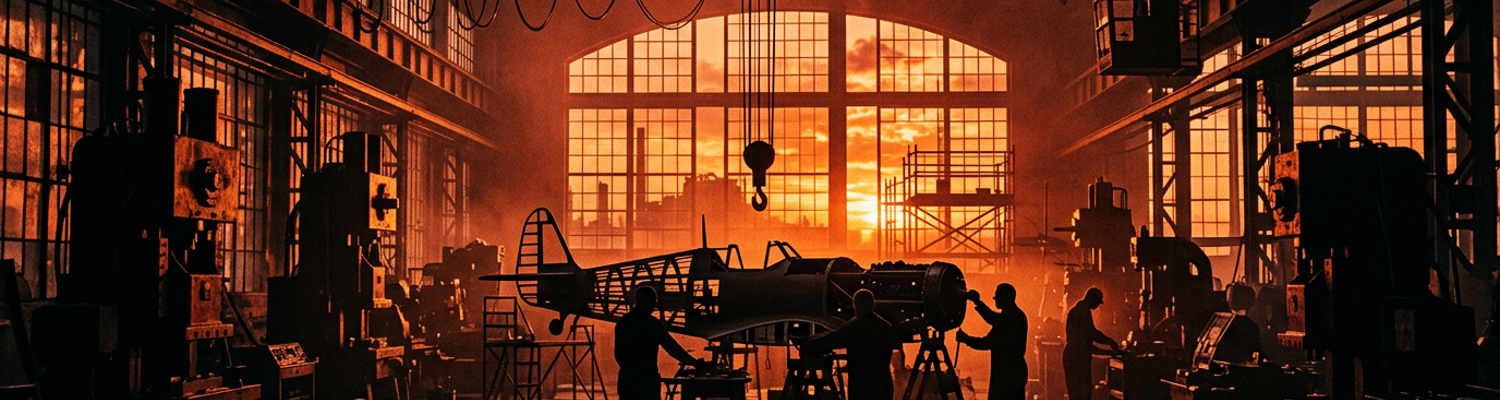
Loom fixers across Southern textile mills clamped the dense synthetic spools onto machinery that had spent decades processing low-tensile cotton and rayon. Factory mechanics worked through the night in North Carolina, South Carolina, and Georgia, modifying mechanical gear ratios and adjusting shuttle boxes to feed military-grade synthetic filament through frames built for natural fibers. Mill owners converted entire weaving rooms by swapping out lightweight wooden components, installing reinforced hickory picker sticks, and weighting down harness frames to control the rigid plastic thread. Warp beams built to carry light cotton threads bowed under the high mechanical tension required to keep the slippery synthetic ends separated on the loom. Textile operators quickly discovered that the synthetic filament did not stretch, give, or absorb spindle oil the way cotton yarns had always done. Rigid nylon strands snapped under sudden tension spikes, lashing across spinning gears and wrapping tight knots around rotating loom shafts before weavers could step on the brake pedals. Broken fibers tangled the harness wires and jammed the warp drop wires, forcing workrooms to halt dozens of clattering machines at a time to cut away knotted plastic nests with utility knives.
Nylon filaments cut deep grooves directly into cast-iron guides, polished shuttles, and hardened steel tension eyes as the abrasive thread dragged across bare metal surfaces during continuous high-speed runs. Overheated loom bearings smoked and rattled under the relentless mechanical strain, burning away thin mineral oils that had been formulated exclusively for low-friction cotton spinning. Heavy cast-iron drive shafts expanded inside their bronze sleeve bushings until excessive friction locked the rotating metal in place, throwing thick leather drive belts off overhead ceiling pulleys with loud cracks. Recurring line jams multiplied across weaving sheds as synthetic filaments frayed against notched steel reeds, creating thick fuzz balls that blocked the flying shuttles mid-stroke and shredded wide swaths of parachute cloth. Line jams repeatedly tripped automatic stop motions, but the high inertia of the converted machines frequently crushed delicate reed wires before the heavy cast-iron flywheels could spin down. Fixers and maintenance men ran along the narrow floor alleys carrying grease guns, replacement gears, and heavy wrenches, hammering bent shuttle tips straight and prying jammed frames loose to restart frozen production lines.
War Production Board quotas intensified each week, forcing mill managers to run these damaged machines through punishing around-the-clock schedules despite mounting mechanical breakdowns. Plant directors established unbroken 24-hour operating days divided into three rotating shifts, ordering workers to keep every available frame clattering seven days a week to meet federal delivery targets for airborne divisions. Loom fixers skipped standard overhaul schedules and cancelled routine oil cleanouts because shop supervisors strictly forbade shutting down overhead drive shafts for preventive maintenance. Exhausted mechanics squirted heavy lubricating oil directly onto red-hot bearings and sprayed solvent over gummed gears while drive belts whipped past their hands at full operating speed. Overworked weavers stood on oil-soaked floorboards for twelve hours at a stretch, reaching between violently oscillating harnesses to tie broken synthetic cords under dim ceiling lamps. Workers wiped sweat and black machine grime from their eyes while floor sweepers continually hauled barrels of frayed synthetic waste away from the thrumming looms. Foremen checked off yardage tallies against government clipboards at the end of each shift and shoved bolts of freshly woven parachute cloth directly into wooden shipping crates for transport to military cutting depots.
Jim Crow Hiring Barriers in War Production
Depot inspectors logged incoming shipments that fell tens of thousands of yards short of military contract quotas because Southern textile mills ran out of white operators to staff the looms. Wooden crates arriving at military supply depots from North Carolina, South Carolina, and Georgia contained only a fraction of the high-tenacity nylon yardage required for parachute canopies and glider towropes. Southern defense textile contractors enforced strict Jim Crow segregation policies across their facilities, deliberately barring African American workers from entering production lines and operating industrial textile machinery. Mill managers turned away thousands of experienced regional Black applicants at the factory gates, refusing to place Black men or women in carding rooms, spinning bays, or high-speed weave sheds. Company executives restricted the few Black laborers they did hire to low-paying outdoor maintenance roles, assigning them to unload coal cars, dig drainage ditches, and haul raw chemical drums across muddy rail sidings. Warp beams remained unloaded and mechanical pickers sat frozen in their guide tracks, leaving valuable synthetic filament locked inside storage sheds. Empty loom benches and idle shuttle boxes accumulated dust across entire plant wings while War Department delivery deadlines for airborne canopies and towlines slipped weeks behind schedule.
War Department procurement officers traced these compounding deficits directly to factory labor shortfalls that crippled weaving output while massive regional Black labor reserves remained deliberately excluded from defense employment. Tens of thousands of Black workers lived within walking distance of synthetic yarn mills and polymer processing plants across the rural South, possessing agricultural mechanical skills and factory experience, yet company hiring agents turned them away on sight. Plant superintendents insisted that regional racial customs superseded wartime emergency directives, openly ignoring formal petitions from local civil rights organizations and compliance inquiries from federal fair employment monitors. Mechanical looms stood motionless through critical evening and midnight shifts because mill owners chose to run facilities at half capacity rather than allow integrated work crews onto the factory floors. Ordnance supply officers reported that glider towrope braiding lines and bomber tire cord factories similarly ran understaffed, starved of raw nylon filament because polymer spin-draw units sat inactive for lack of available white operators. Fabric shortages cascaded downstream into parachute rigging depots and glider assembly plants, forcing military quartermasters to ration canopy packs and postpone scheduled tactical flight exercises for newly formed airborne regiments.
Quartermasters warned factory directors that these missed delivery targets directly undermined combat preparations, prompting federal contract monitors to demand the immediate hiring and promotion of Black machine operators. White worker hate strikes erupted across chemical and textile plants facing urgent production mandates as soon as supervisors attempted to place Black trainees onto factory floors. White spinners, loom fixers, and chemical handlers walked off their shifts in wildcat strikes, cutting electrical switches to overhead drive belts, locking tool chests, and abandoning operating machines mid-cycle. Chemical workers in Virginia and synthetic yarn weavers in Georgia staged simultaneous walkouts, shutting off steam valves and leaving caustic chemical baths unattended whenever Black workers stepped onto the main spinning decks. Management recalcitrance compounded the operational paralysis as mill directors refused to discipline striking white workers and actively blamed federal non-discrimination mandates for disrupting defense production. Molten synthetic polymer cooled and solidified inside unheated extruder pumps and chemical spinnerets during these sudden walkouts, ruining delicate mechanical components and halting yarn synthesis for days at a time. Factory managers met with striking white shop stewards inside locked administrative offices to negotiate local segregation compromises while War Production Board couriers waited outside the gates with stacks of unfilled military requisitions.
Federal Labor Interventions Under Dr. Robert Weaver
Couriers rushed those stalled requisitions directly to Dr. Robert C. Weaver, chief of the Negro Employment and Training Branch of the War Production Board. Weaver reviewed the growing pile of unmet military orders alongside regional labor surveys, finding that synthetic fiber contractors were turning away qualified Black workers while machinery stood idle. Field investigators under Weaver's direction fanned out to industrial plants across Virginia, the Carolinas, and Georgia to document intentional racial exclusion on factory floors holding high-priority defense contracts. Investigators interviewed rejected applicants, collected employment records, and watched plant gates where hiring agents barred local Black workers while mechanical looms sat empty and extruder pumps seized up. These field reports proved that mill managers were choosing to run plants at half capacity rather than abandon Jim Crow hiring practices during a national supply crisis. Weaver assembled the documented evidence into detailed case dossiers that linked specific contractor hiring barriers directly to the severe shortages of military nylon.
Case dossiers moved immediately from Weaver's office to the Fair Employment Practice Committee to trigger direct federal enforcement of Executive Order 8802 against recalcitrant contractors. Committee officers summoned mill executives and plant managers to emergency compliance reviews, warning them that racial discrimination violated binding federal defense contracts. Weaver pressed government monitors to use their full statutory authority, reminding contractors that defying federal directives would lead to the loss of their priority raw material allocations or prompt the military to seize plant operations. Mill owners attempted to defend their discriminatory policies by claiming that hiring Black operators would provoke plant-wide strikes among white workers, but federal monitors dismissed these arguments and refused to grant exemptions. Compliance officials issued binding mandates requiring defense contractors to open all vocational training classes, chemical handling posts, and mechanical loom benches to Black applicants without delay. Factory directors signed the required compliance agreements under the immediate threat of contract termination, officially opening the production floors to integrated work crews.
Machine operators and chemical workers from local Black communities walked onto these factory floors to break the severe labor bottlenecks that had paralyzed synthetic production. Skilled Black workers took control of chemical mixing tanks, regulated autoclave temperatures, and loaded synthetic polymer chips into high-speed extrusion units that had stood frozen for weeks. Experienced Black weavers took over unmanned loom batteries, threading slippery synthetic filaments through heavy harnesses, clearing jammed shuttle boxes, and restarting stalled drive belts across the weaving rooms. Continuous shift rotations maintained steady heat inside the polymer lines, preventing molten nylon from cooling and hardening inside delicate spinneret nozzles. Production tallies rebounded as the fully staffed plants doubled their output of high-tenacity nylon cord and raw parachute fabric. Warehouse crews stacked crates of freshly woven military cloth on loading docks and rolled them directly into waiting Army freight cars bound for airborne rigging depots.
Frontline Delivery and Synthetic Quality Control
Technicians at airborne rigging depots unloaded the arriving freight cars, carrying heavy wooden crates of synthetic fabric straight to mechanical inspection tables. Cutters and seamstresses spread the slick nylon cloth across fifty-foot wooden benches, using electric rotary blades to shape the material into triangular canopy gores. Sewing machine operators joined the synthetic panels with double-needle chain stitches and bound the seams with high-strength nylon tape to prevent unraveling under explosive opening shocks. Mass fielding of reliable nylon T-5 parachute canopies across operational Army Airborne divisions replaced dwindling reserves of natural Japanese silk with rugged, mass-produced domestic gear. Riggers attached twenty-eight braided suspension lines to the canopy hems, threading the lines through riser links and folding the fabric into compact backpack trays fitted with heavy canvas static lines. Riggers stamped approved serial numbers onto completed pack trays and loaded crated T-5 parachutes into transport trucks bound for tactical airfields.
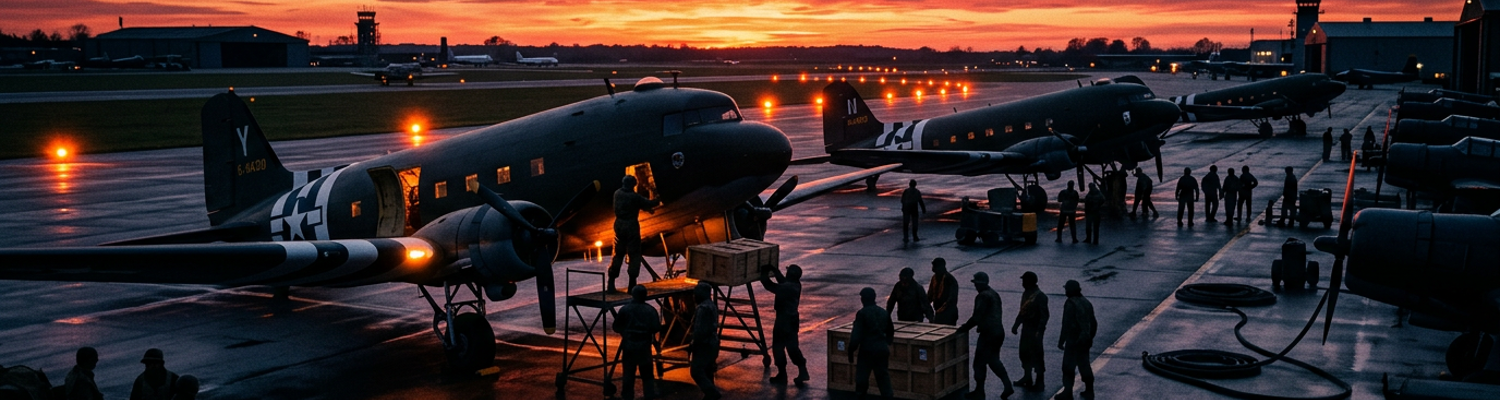
Trucks delivered the parachute crates directly to airfield staging hangars, where ground mechanics stacked the equipment beside long wooden spools of synthetic glider rope. Aviation engineers and cordage manufacturers had solved the dangerous melting failures discovered during early Wright Field flight trials by running raw nylon fibers through specialized thermal-setting chambers. This industrial heating and stretching process locked the polymer chains into tight alignment, substantially increasing the melting temperature of the material and stabilizing its internal structure against frictional heat. Standardization of high-tensile, heat-stabilized braided nylon towlines to prevent friction melting during airborne assaults gave military planners a reliable towing system capable of handling the extreme dynamic shocks of combat glider operations. Riggers fitted the eleven-sixteenths-inch braided lines with heavy forged steel attachment rings and wrapped protective canvas sleeves around sections subject to abrasion against glider tow releases. Flight crews hitched these reinforced synthetic ropes to C-47 transport planes and Waco CG-4A gliders, proving through grueling cross-country drills that the heat-treated lines would not melt, smoke, or part under violent propeller wash.
Pilots and flight commanders reported that these flawless synthetic lines and parachutes depended on an unbroken stream of high-tenacity yarn from Southern spinning mills. War Production Board administrators and fair employment monitors worked together to safeguard that factory output from the racial hiring disputes that had previously paralyzed production. Establishment of federal civil rights oversight protocols within wartime defense logistics to guarantee critical military production transformed emergency fair employment directives into standard contract requirements. Federal compliance monitors conducted unannounced inspections across textile mills and chemical processing facilities in Virginia, North Carolina, and Georgia to verify that plant gates and skilled machine benches remained open to Black workers. Contract officers warned company executives that maintaining Jim Crow exclusion or tolerating wildcat hate strikes by white employees would result in immediate cancellation of priority fuel allocations and military production orders. Factory managers complied by keeping integrated workforces on continuous around-the-clock schedules, allowing extruder pumps, spinning bobbins, and mechanical looms to run at peak capacity without interruption.
Nylon cordage and woven parachute cloth moved without delay from these fully staffed mills into military supply pipelines feeding operational airborne units. Logistics officers at port embarkation depots checked incoming crates against combat readiness manifests, verifying that every T-5 parachute pack and glider towline met rigid tensile standards before loading them into overseas cargo vessels. Airborne infantry regiments in England and North Africa drew their newly issued nylon chutes and braided towlines, replacing worn training equipment with combat-ready synthetic assemblies. Jumpmasters ran soldiers through rigorous pre-mission inspections inside airfield staging hangars, checking harness buckles, static line pins, and canopy release mechanisms. Glider pilots inspected the standardized heat-stabilized towropes coiled in their aircraft nose compartments, satisfied that the synthetic lines would hold fast during nighttime combat assaults across occupied territory.