
Night Combat and Weapon Failures at Columbus
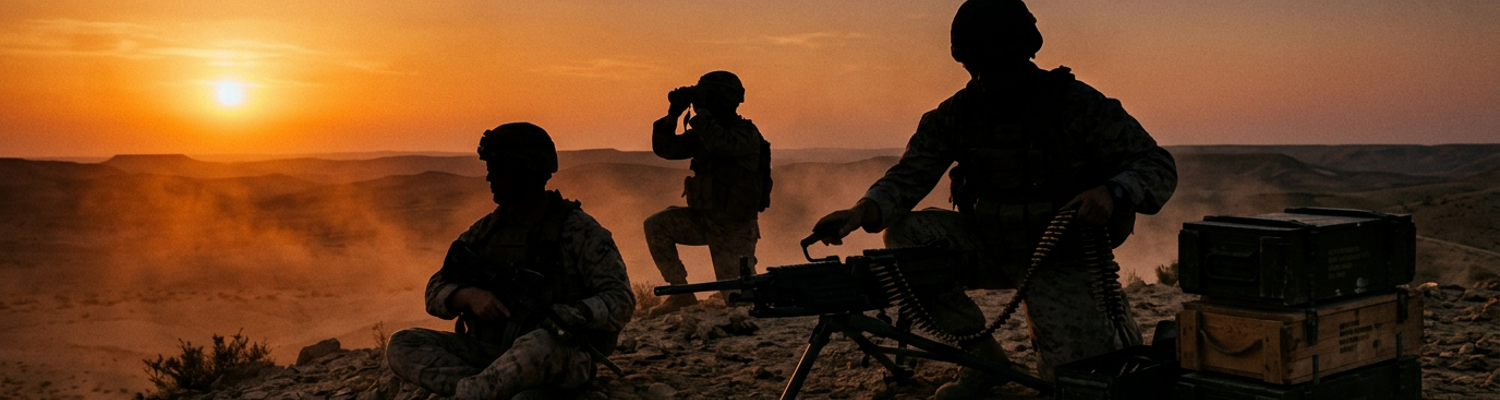
Pack mules and sweating troopers dragged heavy wooden crates, steel tripods, and canvas wrapped receivers across the churning desert sand to establish firing lines around Camp Furlong. Moving hundreds of rounds of crated ammunition and three dozen pack animals under sudden rifle fire created instant bottlenecks near the stables and regimental tents. Pancho Villa and his raiders assaulted Columbus, New Mexico, in the pitch black before dawn on March 9, 1916, engaging the garrison troops of the 13th Cavalry Regiment across open dirt roads and burning buildings. Soldiers hauled their Springfield Armory produced M1909 machine rifles toward shallow depressions in the earth, struggling to lock the thirty pound steel weapons onto low metal bipods while bullets punched through wood frames and adobe walls. Every crew required at least three men simply to maneuver the bulky weapon, position the awkward ammunition chests, and clear firing lanes against oncoming horsemen. Muzzle flashes from Mexican carbines illuminated the swirling dust, forcing the cavalrymen to drop flat and shove their gun barrels into the sand to return fire.
Sand poured directly into the exposed receiver slots as gunners attempted to employ the M1909 machine rifle, causing repeated jams and broken firing pins in total darkness. The delicate firing pin inside each rifle bolt absorbed the shock of every rapid mechanical cycle, snapping under impact when cold metal struck hard brass primers. Crew members reached into the scorching receiver wells with bare fingers, burning their palms while extracting sheared metal fragments from the locking mechanism. Each broken pin forced a crew out of the fight, compelling them to dig through canvas spare parts rolls to find replacement components by sense of touch alone while incoming rounds struck the dirt around their shoulders. Replacements driven into place without visual alignment bent the small retaining springs and wedged the internal slides tight inside the receivers. Even when a firing pin remained intact, the tight manufacturing tolerances demanded by Springfield Armory caused the bolts to bind whenever fine desert grit drifted into the exposed action.
Action jams multiplied as metal feed strips caused the next cascade of mechanical failures when loaders attempted to force fresh ammunition into the side of the sputtering guns. The thirty round flat feed strip could not be tactilely aligned by blinded crews under fire, cementing the weapon frontline reputation as the Daylight Gun. Each stamped sheet metal strip had to enter the feed port with its brass teeth facing perfectly level, but total darkness made it impossible to feel which side was right side up. Exhausted soldiers pushed strips upside down or tilted the thin metal trays by even a fraction of an inch, causing the rising cartridge feed arm to slam directly against the brass edges, crumpling the ammunition and jamming the bolt halfway open. Frontline medical personnel crawling among the firing pits treated loaders who had shredded their fingernails and battered their knuckles against jammed breeches while using clearing rods to pound mangled copper cartridges out of the chambers.
Cavalrymen abandoned their immobilized Benet Mercie guns and drew standard Springfield rifles or Colt automatic pistols to defend their positions along the burning railroad depot. Machine gun crews who managed to keep a single weapon operating had to post an assistant gunner directly above the receiver to coordinate feed strip insertions with the intermittent flash of friendly muzzle discharges. Those brief points of light allowed the loaders to see the guide grooves for a fraction of a second, shoving another thirty round strip through the feed block before the darkness closed back over the mechanism. Troopers continued clearing fouled chambers and swapping out broken pins until their supply of spare parts ran completely out. Mexican attackers retreated south across the international boundary as dawn revealed the town in ruins, leaving the surviving garrison to collect piles of twisted feed strips, fractured firing pins, and discarded cleaning rods from the sand.
Hotchkiss Origins and Springfield Armory Production
Medics dressing shredded fingers and burned palms beside the field hospital watched ordnance officers stack those damaged weapons onto wooden inspection tables to diagnose their catastrophic mechanical failure. The broken machine rifle had entered American service through European drawing boards rather than frontier testing grounds. Laurence Benet and Henri Mercie designed the weapon as the Hotchkiss Portative, and the light machine rifle was officially adopted by the United States Army in 1909. American military planners wanted an automatic weapon light enough to ride inside cavalry saddle scabbards, replacing the heavy water cooled machine guns that required entire pack trains to haul across rough terrain. The Ordnance Department believed the French design offered an ideal combination of portability and sustained firepower, ordering the gun into domestic production to equip frontier regiments.
Springfield Armory and Colt manufactured roughly 670 units chambered in the standard service cartridge, the .30-06 Springfield. Adapting the foreign design to the American cartridge required factory engineers to reshape the chamber, bolt face, and feed mechanism for a longer and much more powerful rifle round. Machinists milled each receiver out of solid forged steel blocks, holding internal cuts to microscopic tolerances that functioned smoothly during clean factory trials. Colt completed a small commercial run while government workers at Springfield built the vast majority of the contract, sending finished rifles out to border outposts in heavy wooden shipping crates. Cavalrymen unpacked these precision tools without comprehensive training manuals or specialized armorer tools, expecting the weapons to operate with the simple durability of standard bolt action rifles instead of the sensitivity of laboratory instruments.
Steel locking nuts inside the receiver drove the operation of this fragile internal mechanism. The weapon utilized an intricate rotating locking nut and gas piston mechanism that proved fragile and highly vulnerable to desert dust and fouling. High pressure combustion gas bled from a port near the muzzle, driving a long steel piston backward to twist the interrupted threads of the locking nut and release the bolt. Unburned powder residue baked onto the sliding tracks after just a few rapid bursts, coating the narrow clearance grooves in sticky black carbon. Windblown desert dust entered the unsealed action ports and mixed with standard issue lubricating oil, creating a gritty abrasive paste that seized the rotating sleeve in place. Gun crews trying to force the charging handles open sheared the delicate operating lugs or stripped the locking threads, rendering the automatic action completely dead.
Armorers dismantling the dead guns under the morning sun discovered that the gas cylinders had clogged completely with soot and pulverized sand. Delicate firing pin shafts snapped because bolts slammed forward against misaligned locking nuts, transmitting violent mechanical shocks straight into the unsupported steel strikers. Ordnance officers documented each cracked firing pin and stripped thread, compiling detailed failure reports for regiment commanders at Fort Bliss. These reports confirmed that tight factory tolerances prevented the total inventory of 670 rifles from cycling reliably outside controlled testing rooms. Cavalry officers preparing to ride south into Mexico on the Punitive Expedition ordered their remaining machine gun crews to strip every receiver down to bare metal, submerging the components in gasoline drums to wash away the grit.
War College Memorandum 9053 and Preparedness Shortages
Gasoline soaked rags turned dark gray and reeked of raw petroleum as troopers scrubbed carbon from the scraped receiver grooves beside the border supply wagons, exposing how few functioning guns actually remained on the line. Medics swabbing chemical burns and gasoline rashes off the arms of these soldiers could count the reassembled weapons on two hands, recognizing that the border garrison had nearly exhausted its entire supply of automatic weapons in a single night of skirmishing. Cleaned bolts and stripped gas cylinders were laid out on blankets next to the regimental aid station, revealing that Camp Furlong had only four Benet Mercie machine rifles to defend the entire sector during the raid. Two of those four guns had suffered broken firing pins or bent feed mechanisms within the first ten minutes of fire, cutting the garrison automatic fire capacity in half while hundreds of mounted attackers still swept through the town. Field surgeons and hospital corpsmen treating bullet wounds among the machine gun crews understood that this sudden loss of fire support forced individual riflemen to absorb the full weight of the assault with their standard five shot Springfields. The desperate scramble to clean and salvage these few surviving weapons highlighted a severe equipment deficit that stretched far beyond the perimeter of Columbus.
Staff officers at the War Department had already documented this exact mechanical and industrial failure months before Mexican raiders set foot across the border. The War College Division of the General Staff issued a landmark classified memorandum in September 1915 designated as WCD 9053-90 and titled Statement of a Proper Military Policy for the United States. This internal report gathered inventory counts from every military post across the continent and revealed that the entire Regular Army and the National Guard combined possessed fewer than 700 Benet Mercie M1909 machine rifles. Factory assembly lines at Springfield Armory had halted regular production of the model, leaving arsenals without reserve crates or replacement receivers to issue when weapons broke down in the field. Planners studying the ongoing battles in Europe calculated that foreign armies were consuming hundreds of automatic weapons each month, while American stockpiles could barely issue a single gun per company across the entire national frontier. Medical officers tracking casualties noted that modern warfare demanded volume of fire to suppress enemy lines, yet American supply depots held only several hundred delicate, air cooled machine rifles to protect the entire country.
Regiments stationed in the desert sand felt this national equipment shortage immediately. Prewar regulations authorized merely four automatic machine rifles for an entire regiment of infantry or cavalry, dividing those four guns into a single specialized machine gun troop or platoon. This standard layout left American tactical units critically outmatched by European combat standards, where French and German regiments routinely operated dozens of Maxim, Hotchkiss, and Vickers heavy machine guns supported by dedicated ammunition carriers. An American cavalry commander who lost two guns to jammed feed strips or sheared locking nuts had lost fifty percent of his heavy firepower in seconds. Medics working the triage tables saw the human cost of this organizational math when under equipped squads rushed into open ground to replace the fire of an immobilized gun, taking direct rifle hits to their chests and limbs. Field commanders on the border realized that their units lacked both the weapon volume and the mechanical durability required to establish sustained defensive perimeters.
Cavalry commanders organizing the pursuit into Chihuahua reorganized their remaining machine gun platoons around the few surviving Benet Mercie receivers that still cycled rounds during daylight test firing. Ordnance sergeants packed canvas tool rolls with extra firing pins, extractor claws, and hand filed feed strips, strapping those spare parts chests onto the pack saddles of the strongest mules. Troopers loaded the thirty pound machine rifles into leather scabbards on their saddle skirts, securing the metal bipod legs with leather tie down straps before mounting up along the border fence. Regimental officers issued direct orders to machine gun crews to conserve their ammunition and avoid rapid automatic bursts, instructing them to fire single shots whenever possible to prevent the delicate internal locking nuts from expanding under intense heat. Troop columns of the 13th Cavalry Regiment spurred their horses across the boundary line into the dry northern Mexican hills, carrying their four fragile automatic rifles at the head of the dust choked advance.
Cavalry Field Modifications and Procurement Delays
Dust worked straight into the unsealed receiver joints of the advancing machine rifles as cavalry troopers assigned to General John J. Pershing faced immediate mechanical failures. Medics swabbing chemical burns and treating shredded knuckles watched the men invent clever field adjustments around evening campfires to keep the daylight gun functional in the dark. Gun crews filed deep notches into the brass feed strips, glued leather shims onto the outer edges, and raised distinct metal burrs with cold chisels so loaders could feel the proper orientation with their fingertips at night. Troopers also collected extra strikers from regimental armorer chests and stockpiled spare firing pins inside their saddlebags, knowing the delicate steel shafts would snap after just a few bursts of automatic fire. Platoon armorers distributed small tins of kerosene to thin out the heavy grease, teaching loaders to wipe every individual thirty round strip clean before sliding it into the rifle feedway. These improvised border expedients kept a handful of guns cycling during skirmishes, but frontline officers knew that hand notched feed strips could not solve the army wide shortage of modern weapons.
Congress addressed this acute shortage directly by passing the National Defense Act of June 1916, authorizing a twelve million dollar emergency procurement fund for modern automatic weapons. This massive financial package granted military leaders enough capital to purchase thousands of reliable light and heavy machine guns from private domestic factories. Border commanders anticipated an immediate shipment of new weapons to replace their battered French designed rifles, expecting crated machine guns to arrive by train at Fort Bliss and Columbus within weeks. Field medics organizing litter teams and bandage packs for expanded desert campaigns hoped that higher defensive firepower would shield forward cavalry outposts from being overrun by mounted raiders. The sudden availability of millions of dollars seemed to guarantee that every cavalry troop and infantry company would soon deploy with proven, continuous fire weapons. Instead of rapid factory deliveries, the sudden cash influx stalled inside the administrative system of military procurement bureaus.
Ordnance Department officials generated severe administrative friction and bureaucratic inertia that delayed contract awards for months despite critical frontline shortages on the Mexican border. Senior procurement officers refused to purchase off the shelf commercial machine guns, demanding exhaustive tests to determine whether water cooled Vickers guns or air cooled Lewis guns best met military specifications. Board members debated firing rates and mounting brackets in East Coast conference rooms while field units in Chihuahua continued scouring the border for working spare parts. Factory owners who held the production rights to the Lewis gun saw their bids repeatedly rejected or shelved because ordnance inspectors insisted on minor mechanical alterations and licensing concessions. Administrative friction and bureaucratic inertia within the Ordnance Department delayed contract awards despite critical frontline shortages on the Mexican border, leaving depot supply shelves completely empty through the summer and autumn of 1916.
Supply wagons rolling south toward Pershing and his forward base at Colonia Dublan carried standard rations and feed oats but no replacement machine rifles to bolster frontline firepower. Surgeons at field hospitals near Colonia Dublan dressed deep recoil cuts and powder burns on gunners who had to manually feed distorted brass strips into temperamental receivers during running desert skirmishes. Cavalry platoons operating along the Mexican border had no choice but to carry the discredited Benet Mercie rifles through the end of the expedition, wrapping the worn receivers in canvas to protect them from blowing sand. Regimental armorers stripped wrecked guns to harvest intact locking collars and gas pistons, assembling salvaged hybrid mechanisms that fired only three or four rounds before locking solid. Machine gun crews packed their remaining M1909 rifles back into pack scabbards and led their limping horses north through the border gate at Columbus, stacking their heavily worn weapons in depot armories without a single new machine gun arriving to take their place.
Machine Gun Board Trials and Rapid Obsolescence
Depot racks held these scarred Benet Mercie receivers in dust covered rows when the nation entered the European war in April 1917, exposing an army with almost no modern automatic weapons for trench combat. Medics and field surgeons who had treated scorched hands and severed fingers along the Mexican border watched Washington hurriedly assemble technical boards to solve the equipment crisis. The May 1917 Machine Gun Board convened competitive trials at Springfield Armory and the Sandy Hook Proving Ground to evaluate domestic and foreign automatic weapons under sustained firing conditions. Ordnance testers bolted dozens of machine guns to wooden benches, feeding thousands of rounds through each mechanism to measure endurance, heat dissipation, and mechanical failure rates. These grueling trials proved that the delicate French designed action could not compete with modern designs, prompting the board to select the water cooled Browning M1917 and the air cooled Lewis gun for wartime mass production.
Ordnance Department officials signed emergency industrial contracts for these newly approved weapons while officially discarding the M1909 Benet Mercie from primary combat roles prior to the American Expeditionary Forces deploying to France. Frontline medical officers who had seen cavalrymen clear jammed feed strips under live fire knew that taking the temperamental machine rifle into European mud would produce massive casualties. Combat commanders refused to ship the weapon across the Atlantic, recognizing that its exposed locking nut and fragile firing pins would instantly freeze in waterlogged trenches. American divisions boarding transport ships in New York sailed without the Benet Mercie, relying instead on foreign allies to supply French Chauchat automatic rifles and Hotchkiss machine guns until domestic assembly lines could deliver Browning guns in volume. Armory clerks struck the M1909 from active combat registries, leaving hundreds of surplus receivers stacked in crates on depot loading docks.
Dockworkers loaded those crated weapons onto railway cars, relegating the surplus M1909 rifles to domestic training cantonments and coastal defense installations before their rapid retirement from service. Recruits at crowded mobilization camps handled the worn machine rifles on target ranges to learn the fundamentals of automatic fire, but instructors never permitted the fragile mechanisms near embarkation ports. Drill sergeants taught soldiers how to clear brass jams and disassemble gas pistons on classroom tables, using the old French design solely as a mechanical teaching aid. Artillerymen assigned to coastal fortifications bolted additional surplus guns onto fixed concrete parapets to guard harbor channels against potential enemy raiders. Artillery detachments eventually unbolted the guns from their coastal mounts and packed them back into grease lined transport chests when replacement weapons arrived from commercial factories.
Arsenal armorers pulled these aging machine rifles out of cantonment arms rooms and harbor bunkers as newly manufactured Browning and Lewis guns finally flooded military warehouses in late 1918. Ordnance officers condemned the remaining M1909 inventory for rapid retirement from service, ordering technicians to strip the receivers down to salvageable components. Factory workers salvaged functional steel springs and melted down cracked gas cylinders, broken locking nuts, and bent feed strips for raw material. Supply clerks erased the weapon from federal property ledgers, striking every serial number from active ordnance catalogs. Arsenal technicians packed the final surviving guns into wooden storage crates, labeled the containers as obsolete surplus, and locked them inside the underground vaults of Rock Island Arsenal.