
Marine Corps training manuals promised a battlefield of clear lines. Helmand Province offered a 360-degree ambush, a landscape that imposed its own terms. Into this environment, the United States Marine Corps was decisively inserted during the Global War on Terror.
Archival evidence shows the main influx began around 2009 with the arrival of the 2nd Marine Expeditionary Brigade. This was not a tentative probe but a large-scale offensive. Operation Khanjar in July 2009, the largest Marine offensive since Fallujah, saw roughly 4,000 Marines from units like 2nd Battalion, 8th Marines, and 1st Battalion, 5th Marines push into the Helmand River valley. Their objective was to establish a permanent presence in districts like Garmsir and Nawa-I-Barakzayi.
At its peak, the Marine deployment in Helmand reached 20,000 personnel. They were tasked with securing a hostile area the size of West Virginia.
This immense and sparsely populated battlespace, defined by isolated patrol bases, immediately created a heavy dependence on air power. Each base was an island, cut off by terrain and threat from timely ground reinforcement. Close Air Support (CAS) became a non-negotiable requirement for survival.
The constant, pervasive threat of Improvised Explosive Devices rendered ground-based reinforcement slow and perilous. A ground-based Quick Reaction Force could be disabled by a single IED, while M777 howitzer batteries required time to establish firing positions. Airpower, delivered by AV-8B Harriers, F/A-18 Hornets, and A-10 Thunderbolt IIs, became the default solution. A Joint Terminal Attack Controller (JTAC) embedded with an infantry patrol could summon precision-guided munitions within minutes.
The operational tempo was punishing, with Marine aviators from squadrons like VMA-223 flying constant sorties from Kandahar Airfield to support grunts in contact. The reliance was so absolute that ground commanders often delayed operations if a certified JTAC was not available.
This system, however, was only as strong as its weakest link. The physical and electromagnetic landscape of Helmand was uniquely hostile to modern communications. The province is a terrain of extremes, from open deserts to the tangled vegetation of the “Green Zone” along the Helmand River. This fertile area, a maze of poppy fields and deep irrigation ditches, was a primary insurgent sanctuary. Compounding this was the prevalence of qalas, traditional mud-brick compounds with walls several feet thick that degraded radio signals as effectively as reinforced concrete.
In districts like Sangin, these factors created a communications nightmare. Standard issue AN/PRC-117 and AN/PRC-152 radios depend heavily on line-of-sight for VHF/UHF transmissions. Within a wadi or the narrow alleyways of a village, this line-of-sight was nonexistent. A squad pinned down could be geographically close to supporting aircraft but electronically deaf. This forced units to rely on satellite communications, but available channels were a finite, over-subscribed resource. A patrol's radio operator might have to climb onto an exposed rooftop simply to achieve the satellite uplink, a life-or-death gamble. After-action reports from the period are replete with instances where signal degradation from terrain masking directly delayed life-saving fire support.
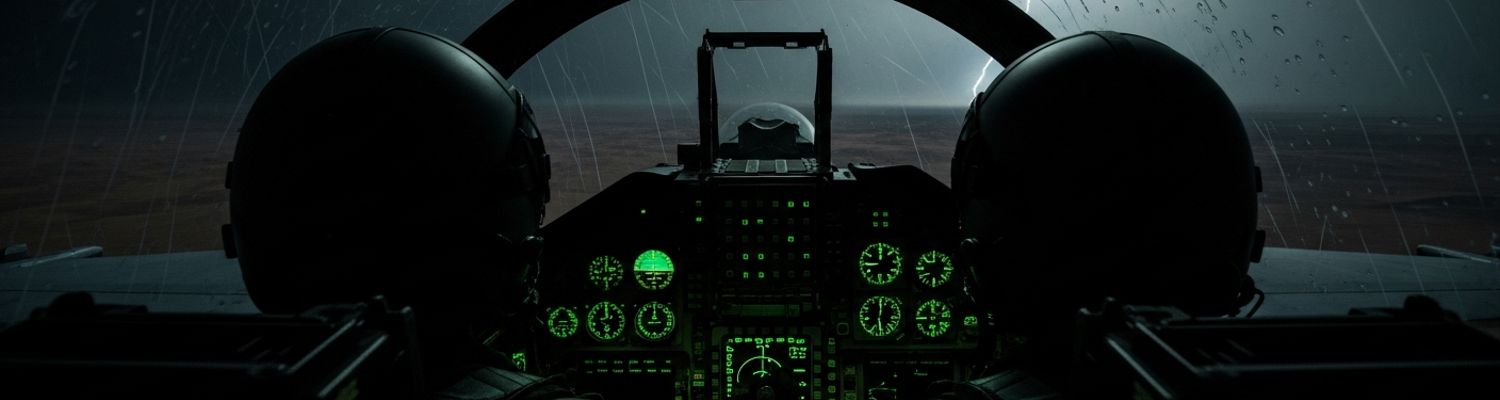
In the high summer of 2009, during the surge operations of Operation Khanjar, a two-seat FA-18D Hornet from a Marine All-Weather Fighter Attack Squadron launched from Kandahar Airfield. The sortie was assigned to support a platoon from 1st Battalion, 5th Marines, conducting a clearing operation in the Green Zone south of Nawa-I-Barakzayi.
The pre-flight briefing was standard. The aircrew and the ground force’s JTAC confirmed communication protocols, including primary and alternate frequencies on the aircraft’s AN/ARC-210 radios, HAVE QUICK II frequency-hopping patterns, and secure encryption keys. The Hornet arrived on station at 20,000 feet, its crew establishing a clear link with the JTAC, callsign Ash-Bringer 3. The aircraft began a figure-eight pattern, its sensor pod scanning the terrain as the Marine patrol pushed forward on foot.
The system connecting the pilot and his Weapon Systems Officer (WSO) to the grunts was a complex chain. It relied on the Hornet’s dual AN/ARC-210 transceivers integrated through the MIL-STD-1553B databus. On the ground, the JTAC used an AN/PRC-117G manpack radio. The link was stable as the patrol reported movement.
The JTAC noted suspicious personnel observing the patrol before melting back into the vegetation, a classic Taliban tactic to lure a patrol into a pre-sited ambush. He requested the Hornet crew focus their sensors on a crossroads a kilometer ahead. The WSO in the F/A-18D acknowledged and began slewing the targeting pod.
Just as he confirmed he had eyes on the intersection, the secure UHF voice channel in his headset went dead. The channel did not crackle. It simply ceased. The WSO announced “lost comms” and began cycling through alternate frequencies. Nothing. He attempted to raise Ash-Bringer 3 on the non-secure guard frequency. Silence. The pilot tried a call via the SATCOM channel. Still no response. They adjusted their transponder to squawk code 7600, alerting air traffic controllers to their status.
Below them, the JTAC was performing his own frantic battle drill, swapping cables, checking battery power, and ordering his radio operator to try the secondary radio. The result was the same. The patrol was now electronically deaf. The Hornet crew was electronically blind, orbiting uselessly as their countrymen walked toward a trap.
The silence, stretching from seconds into minutes, represented a total failure of the technological overmatch that was supposed to guarantee their survival. The ground commander faced an impossible decision: halt and become a static target, push forward into the kill zone, or fall back and trigger the ambush.
The signals intelligence environment in Helmand was a source of constant friction. The adversary’s communications strategy was a hybrid of modern technology and ancient methods. Insurgent commanders used satellite phones and disposable SIM cards for high-level coordination. At the tactical level, they reverted to runners and coded signals. This created an ambiguous picture for Marine intelligence sections. An intercepted transmission might provide a piece of a puzzle, but rarely the complete plan. This forced ground commanders into a state of perpetual second-guessing. The sheer volume of civilian radio and phone traffic further complicated matters, creating a digital cacophony.
This flawed intelligence picture had direct consequences for command and control, particularly during a CAS mission. The 9-line brief, the structured data transmission from a JTAC to an aircraft, is the bedrock of airpower. It requires absolute precision. A fragmented SIGINT feed meant that critical lines in this brief were often built on incomplete information. A JTAC, frequently under fire, was forced to translate garbled intercepts and visual sightings into the concrete data a pilot needed. The pressure on these individuals was extraordinary. A single misinterpretation could lead to a missed target or a fratricide incident. After-action reports from Sangin and Marjah document instances where CAS missions were delayed or aborted because the C2 loop was contaminated by uncertainty.
The arrival of the USS Dwight D. Eisenhower (CVN-69) and its embarked Carrier Air Wing 7 (CVW-7) in the North Arabian Sea in 2009 and 2010 marked a significant escalation in available air power. The carrier strike group was a self-contained instrument of war. During its 2009 deployment, CVW-7 flew over 2,000 combat sorties, totaling more than 16,000 flight hours. This operational rhythm was punishing. On the flight deck, crews worked in a dangerous environment to launch and recover F/A-18C Hornets and F/A-18F Super Hornets around the clock. Squadrons like VFA-103 and VFA-143 were tasked with providing direct support to coalition forces.
The distance from the carrier to Helmand necessitated extensive aerial refueling, adding another layer of complexity to every mission. The entire system was structured to deliver immediate CAS. To overcome the distance, CVW-7 dedicated a significant portion of its assets to pre-planned “on station” missions. Aircraft were already airborne, loitering in designated sectors over Afghanistan, ready to be tasked by a JTAC. During the 2009-2010 surge, it was common for an aircrew to launch for a briefed mission only to be re-tasked to a higher priority “Troops-In-Contact” situation. The F/A-18s served as a flying arsenal of GPS and laser-guided bombs.
This relentless efficiency inadvertently fostered a powerful and dangerous illusion. For the Marine infantryman in a Helmand firefight, the sound of a Hornet overhead was the sound of salvation. The near-constant availability of this airpower created a deep psychological dependency. It was no longer viewed as a supporting asset but as a guaranteed component of any operation. The technical and human architecture that made this possible was invisible to the ground troops. They only knew that when they called, jets appeared. This fostered a belief in a flawless system that could not fail.
When the system did fail, due to weather, jamming, or equipment malfunction, the psychological break was absolute. The silence on the radio was not just an absence of communication; it was the shattering of a core belief, leaving Marines to confront the fact that their lifeline had been severed.
Flight logs from Marine aviation units at Kandahar Airfield during the 2009-2012 surge reveal a system at the edge of human endurance. For aircrews in squadrons like VMA-223 or VMFA(AW)-224, the sortie rate was unrelenting. A typical crew day began before sunrise and extended for 12 to 14 hours, a cycle repeated with minimal downtime for a seven-month deployment. This process was a study in physiological attrition. Pilots endured long hours in cramped cockpits, strapped into ejection seats, wearing bulky survival gear in extreme temperatures. Long-duration missions are known to degrade performance, with pilots experiencing slower reaction times and reduced vigilance after approximately seven hours. In Helmand, sorties could easily last this long, often requiring multiple aerial refuelings.
This was not simple exhaustion. It was a degradation of combat effectiveness. The physiological strain was compounded by an intense psychological burden. The pressure to perform flawlessly, to instantly transition from hours of monotonous orbiting to the split-second complexity of a firefight, was a constant source of stress. This relentless cycle stripped away resilience, leaving aircrews in a state of perpetual fatigue.
The degradation of decision-making under such sustained pressure is a documented phenomenon. In aviation, fatigue induces a form of tunnel vision where a pilot might fixate on one task to the exclusion of all other data. A fatigued aircrew might be slower to process verbal commands from a JTAC, misinterpret a data point, or fail to notice a critical change in the tactical situation. The mental workload of simultaneously flying the aircraft, managing sensors, communicating, and preparing to release ordnance is already high; fatigue acts as a multiplier, increasing the probability of error with every passing hour on station.
This accumulated fatigue was then amplified by unreliable communications. The link between a pilot and the JTAC is a bond of trust. When that link failed, it injected a massive and immediate dose of stress into an already overloaded system. For an aircrew over Helmand, the instantaneous silence on a UHF frequency was an existential threat. It meant a Marine patrol was now alone. The immediate cockpit procedures were frantic: cycling through frequencies on the AN/ARC-210, attempting a SATCOM re-link, and checking crypto-fill settings, all while maintaining flight path. Each silent second stretched into an eternity. This specific stressor, the feeling of being unable to help friendly forces in mortal danger due to equipment failure, was a powerful catalyst for psychological strain.
After-action reports from the Helmand surge indicate that Marine forward air control personnel, specifically JTACs, experienced a uniquely punishing form of psychological erosion. The JTAC, a single Marine attached to an infantry patrol, was the sole conduit to CAS. His function was the 9-line brief, a formalized transmission of target data that had to be perfectly accurate under extreme duress. The responsibility for guiding a 500-pound bomb onto an enemy position meters from his own squad, a “Danger Close” mission, induced acute stress reactions that degraded the very skills needed to perform the task.
When a JTAC keyed his AN/PRC-117G radio and was met with silence, the tactical problem was superseded by a psychological crisis. The absence of a pilot’s voice was the severing of a lifeline, confirming a patrol’s total isolation. The repeated experience of communications failure conditioned these controllers to anticipate system failure, creating a state of anxiety where the future breakdown of communication was a constant presence.
Further back at the Forward Operating Bases, a different kind of burnout was taking hold among the ground crews and intelligence analysts managing signals intelligence. These Marines spent grueling 12-hour shifts inside secure facilities, their world reduced to the glow of a monitor. Their mission was to build a coherent intelligence picture from a chaotic stream of adversary communications. The psychological toll came from the combination of high stakes and persistent ambiguity. An analyst might intercept chatter indicating an impending ambush but lack the specific data to provide a concrete warning. This generated a corrosive sense of responsibility without agency. They were aware of threats materializing in real-time but were often powerless to provide the actionable intelligence that could prevent a casualty.
Ultimately, the repeated, systemic failures of technology had a deeply corrosive effect on the morale of ground units. For an infantry Marine in a Sangin firefight, the promise of American power was the sound of a jet engine. The near-constant availability of CAS had created a deep psychological dependency on a system assumed to be infallible. When that system broke down, the impact was not just tactical. It shattered the core belief in technological superiority, replacing it with a conviction that, when it mattered most, they were on their own. This erosion of trust extended up the chain of command, creating a perception that leadership was either unaware of or unable to fix the fundamental communication problems putting lives at risk. After-action reports from units like 3rd Battalion, 5th Marines, during their 2010 deployment document a fighting force that learned to rely on its own organic firepower, viewing air support as a bonus rather than a guarantee.
Post-deployment health data from 2010 reveals a force under significant strain. Department of Defense health surveillance programs, such as the Post-Deployment Health Reassessment (PDHRA), were designed to systematically capture the condition of returning personnel. Analysis of these assessments from Marine units completing tours in Helmand showed a distinct upward trend in self-reported mental health concerns. Initial post-deployment screenings often showed lower rates of distress. The follow-up assessments conducted 3 to 6 months later consistently captured a higher prevalence of issues. The initial euphoria of survival masked underlying problems, which surfaced only after the adrenaline subsided. The data pointed to a rise in anxiety disorders, persistent sleep disruption, and depression.
The data further showed that personnel directly involved in the CAS loop were experiencing disproportionately high rates of burnout and acute stress reactions. For Forward Air Controllers and JTACs, the psychological load was intense. The mental state required to maintain precision while under fire induced symptoms of Acute Stress Reaction (ASR), including disorientation and hyper-alertness. For aircrews, the strain was one of attrition. Long sortie durations and the constant pressure of being a ground unit’s lifeline led to cumulative fatigue. Research into Remotely Piloted Aircraft operators, who faced similar pressures, found that over 26% of active-duty operators reported high levels of emotional exhaustion. This was not simple tiredness; it was a degradation of the critical decision-making faculties required for combat.
The direct linkage between these psychological tolls and the persistent unreliability of communications is unavoidable. The entire architecture of Close Air Support rested on the ability of a JTAC on the ground to speak to a pilot in the air. When that link failed, it was a catastrophic stressor for both. For the JTAC, keying his radio and receiving only silence was a moment of absolute isolation. For the aircrew, the sudden loss of communication with a ground unit known to be in contact with the enemy induced a feeling of profound helplessness. The stress was not just about the risk of personal harm, but about the failure to protect others, a powerful corrosive on the psyche of personnel trained for that exact purpose.