
AEF Air Service Supply Failures at Gengault Aerodrome
Nieuport 28 pursuit aircraft rolled into the damp hangars of Gengault Aerodrome near Toul in March 1918 without a single weapon installed on their engine cowlings. Men of the newly formed 94th Aero Squadron uncrated their French built fighters and discovered empty wooden fairings and bare tubular frames where twin Vickers machine guns should have rested. Supply officers at the American air depot in Colombey les Belles had forwarded the airframes from production plants without gun mounts, synchronization generators, or ammunition chutes. American mechanics searched the transport crates across the muddy flight line, but the essential ordnance hardware remained trapped in French warehouses and stalled railway cars hundreds of miles to the rear. Major Raoul Lufbery inspected the empty cowlings alongside his squadron commanders and confirmed that not a single operational gun existed on the field.
Couriers delivered urgent written directives from headquarters ordering the 94th Aero Squadron to begin active sector patrols despite the total absence of armament. French military officials supervising the quiet Toul sector wanted an Allied air presence over the lines to protect infantry positions from German artillery spotters. Squadron pilots adjusted their leather helmets and climbed into the unarmed cockpits to carry out regular reconnaissance flights. Flight leaders could not cancel the scheduled operations because Allied ground commanders relied on visual air sweeps to track enemy troop movements across the Meuse River valley. Pilots tested their rotary engines against wooden wheel chocks, lifted off the sod field, and flew directly toward the active frontline trenches with only empty cockpits and their navigation maps.
Aviators from the 94th Aero Squadron conducted operational combat patrols without weapons, relying on aggressive flight profiles to deter Imperial German Air Service reconnaissance aircraft. Whenever German observation planes crossed the lines, the Americans banked hard and dived straight toward the enemy formations at full throttle. Pilots held tight formation and feigned attack runs, pulling up only at the final moment before German observers could notice the absence of gun barrels and flash suppressors on the engine cowlings. Enemy crews frequently broke off their reconnaissance photographic runs and turned back toward their home bases. German gunners in the rear cockpits occasionally sprayed machine gun fire at the diving Nieuports, forcing the Americans to execute violent side slips and snap rolls to evade incoming tracer rounds without being able to shoot back.
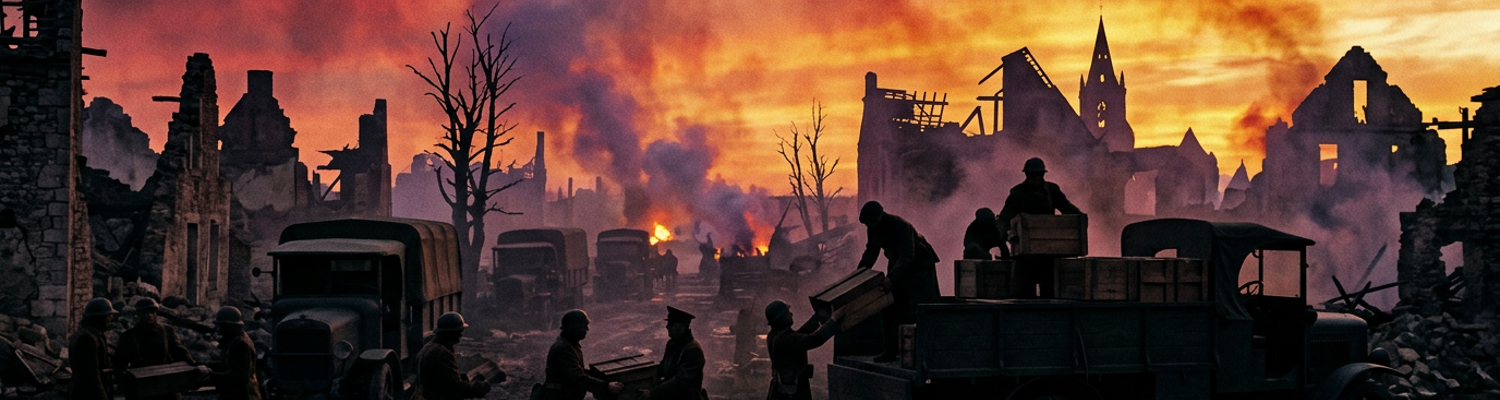
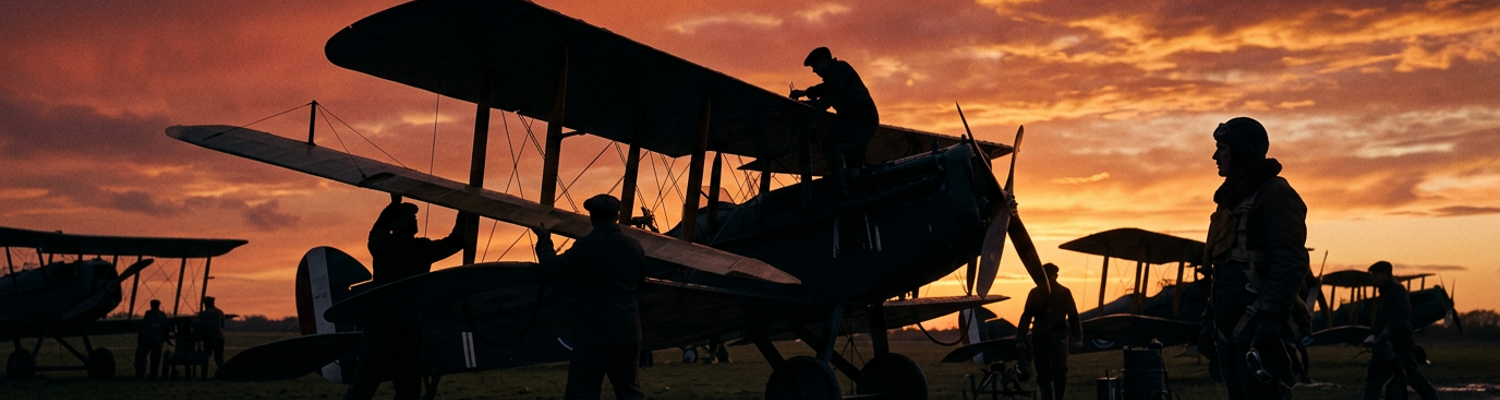
Mechanics at Gengault Aerodrome worked through cold nights in open ended canvas hangars to prepare the arriving hardware that officers requested and collected from French depots. Squadron armorer sergeants improvised mounting brackets out of scrap metal and modified trigger cables while waiting for standard American ordnance shipments to clear the congested French rail network. Drivers steered supply trucks through deep road ruts hauling individual machine guns, synchronizer drives, and cases of ammunition as fast as French logistics units released them. Pilots examined each newly mounted Vickers gun as it was bolted to an airframe. Flight leaders scheduled live fire test runs against target pits at the edge of the airfield the moment the first guns were synchronized to fire through the spinning wooden propellers.
Bureaucratic Requisition Gridlock and Synchronizer Shortages
Target pits at the perimeter of the field absorbed only scattered bursts because armory personnel quickly ran out of synchronized guns to calibrate. Mechanics discovered that the French built Nieuport 28 airframes required specific muzzle attachments and proprietary mechanical linkages that had never been packed into the delivery crates. Frontline supply officers faced weeks of administrative delays attempting to requisition Vickers machine guns and corresponding synchronizer gears through AEF depots. Staff officers inside the supply hubs shuffled paperwork between American and French logistics bureaus, demanding duplicate authorization forms while combat units waited without equipment. Armament specialists at Toul watched the rail lines daily, but freight cars brought only general supplies and aircraft spare parts rather than the critical mechanical timing drives needed to connect machine gun triggers to the spinning rotary engine shafts.
Steel mounting brackets and synchronized linkages failed to arrive from supply depots, leaving early Nieuport 28 fighters stranded on Toul flight lines without functional weapon systems. Airframe cowlings lacked the standardized steel cradles designed to clamp Vickers receivers directly against the upper fuselage longerons. Mechanics tried to secure individual guns using hand bent iron straps, but engine vibrations during high speed ground runs shook these makeshift fixtures loose within minutes. Cockpit controls remained incomplete as well, with control cables hanging limp from empty spade grip triggers because no distributor boxes arrived to transmit hand pressure to the weapon sears. Pilots walking the muddy ramps could only count the growing line of dead airframes as the squadron combat readiness dropped to zero.
Armorers and pilots refused to accept this operational standstill and drove supply trucks directly to French escadrilles stationed across the sector to beg for spare parts. French mechanics occasionally traded worn synchronizer cams and spare steel rods in exchange for American tobacco, canned rations, and aviation fuel. Sergeant armorers hauled these mismatched components back to the canvas hangars at Gengault and altered them with hand files and bench vises to fit the Nieuport engine cowlings. Working by lantern light, the men ground down French linkage rods millimeter by millimeter so the mechanical trip levers could clear the spinning propeller hubs. Every individual plane became a custom assembly project, because parts taken from different French sources never matched the exact bolt patterns of the American squadron airframes.
Technicians drilled new alignment holes through the wooden longerons and bolted single Vickers guns onto the port side of each engine deck, completely abandoning the planned twin gun configuration. Mechanics adjusted the modified synchronizer gears with manual timing disks, rotating the wooden propellers by hand while measuring the exact gap between the piston stroke and the firing pin release. Test rounds still clipped propeller tips on several trial runs when engine vibrations warped the improvised pushrods at full throttle, forcing mechanics to pull the weapons and rebuild the trigger linkages from heavier metal stock. Squadron commanders certified only a tiny handful of these single gun Nieuports for operational patrols by the end of March, sending pilots aloft with half their intended firepower while the remaining fighters sat tethered in the mud.
Structural Wing Fabric Failures During Combat Dives
Pilots taking these few armed fighters into combat over the front lines soon subjected the airframes to violent combat dives against enemy observation planes. French manufacturers had delivered the Nieuport 28 with a severe structural vulnerability sealed inside the upper wing assemblies. Factory workers had built hollow wing leading edges without solid wood reinforcement underneath, leaving an open cavity between the upper and lower skins. Defective factory dope application failed to seal and tighten the fabric properly, while inadequate rib stitching left the cloth weakly anchored to the wooden framework. Aerodynamic pressure built up inside the hollow leading edges during steep dives, forcing air pockets to expand under the skin and balloon the outer linen covering. Rushing air caught the inflated pockets, snapped the frail thread lines, and ripped the outer fabric clean off the wooden ribs in midair.
James Meissner experienced this catastrophic in flight shedding of upper wing fabric while diving his Nieuport at an enemy two seater over the Toul sector in May 1918. Meissner pushed his nose down at maximum throttle to close the distance on the German aircraft, watching his airspeed indicator climb rapidly. Sudden tearing sounds erupted above his cockpit as air pressure peeled the entire upper fabric surface off his left wing, leaving bare wooden ribs exposed to the wind. The stripped wing lost nearly all lift immediately, snapping the fighter into an uncontrolled roll toward the ground below. Meissner wrestled with his wooden control stick and stamped his rudder pedals against the violent spin, cutting the rotary engine throttle to prevent the bare wing frame from snapping in half. Sideslipping all the way down through small arms fire from the trenches, he managed to level the shuddering plane just above the grass and crash land on an Allied reserve field.
Edward Rickenbacker faced the identical structural failure over Montsec only days later while attacking three German Albatros scouts in the same Toul sector. Rickenbacker dove his fighter past one hundred and fifty miles per hour to fire a burst into one of the German scouts, pulling out sharply as the enemy plane plunged downward. Violent shuddering rattled the upper wing frame as aerodynamic pressure ballooned the linen, ripping the fabric strip from the right wing and peeling it back into the slipstream. His right wing dipped toward the earth as the loss of lifting surface whipped the aircraft into a flat spin toward German artillery positions. Rickenbacker held full opposite aileron and feathered his throttle, fighting the controls as the plane dragged its broken wing through thousands of feet of airspace. The spinning Nieuport finally flattened out above the tree canopy, allowing Rickenbacker to nurse the crippled machine across the trench lines and bounce down onto the sod runway at Gengault Aerodrome.
Mechanics swarmed around the battered fighter the moment it rolled to a stop, examining the bare wooden ribs and torn shreds of linen clinging to the rear spar. Squadron technical officers realized that regular factory production standards had compromised the entire operational fleet of Nieuport 28 aircraft. Enlisted riggers and mechanics refused to wait for official French modification kits or bureaucratic permission from the air depot at Colombey les Belles. Crew chiefs stripped the remaining upper wings inside the damp hangars, carefully reinforcing the hollow leading edges with hand cut strips of canvas, heavier rib stitching, and extra coats of cellulose dope. Pilots tested each reinforced wing in steep power dives over the airfield perimeter, confirming that the hand sewn seams held tight before clearing the aircraft for operational patrols.
Frontline Wing Modifications and Leading Edge Reinforcements
Flight leaders recognized that isolated repairs could not protect the entire squadron during sustained air combat over the front lines. Edward Rickenbacker collaborated with ground crews to develop field expedient wing repair procedures that could be standardized across every Nieuport 28 in the unit. His years spent diagnosing metal fatigue, chassis vibrations, and engine stress on American dirt tracks gave him practical mechanical insight that regular flight officers lacked. Rickenbacker gathered the flight line riggers, crew chiefs, and carpenters inside the drafty canvas hangars at Gengault to inspect the stripped wing panels resting across wooden sawhorses. Ground crews and pilots together marked the exact stress points along the front spars where aerodynamic vacuum ripped the thin factory threads away from the rib caps. Mechanics then disassembled each fighter, unbolting the fragile upper wings and lining them up along the hangar walls for complete structural reinforcement.
Squadron mechanics manually re stitched the linen fabric around wing ribs and reinforced the leading edges with heavy cord and dope to withstand extreme dive forces. Enlisted riggers worked with curved upholstery needles and thick waxed cord, punching through the top and bottom fabric layers to bind the cloth directly to each wooden rib cap. Crews spaced these structural stitches barely an inch apart, doubling the original French factory knot count and tying off each loop with secure square knots. Men glued supplementary strips of tough aircraft linen over the nose ribs along the hollow leading edges and bound the curvature with heavy cord wraps to stop high speed air from inflating the skin. Armorers and riggers then brushed multiple coats of pungent cellulose dope across the linen, soaking the weave until the fabric contracted into a rigid surface that resisted aerodynamic suction.
Riggers hoisted the cured wings back onto the center section struts and adjusted the steel rigging wires with brass turnbuckles. Technicians used plumb bobs and wooden sighting gauges to re align the dihedral and incidence angles, eliminating any warping caused by the tightened fabric. Mechanics safety wired every turnbuckle barrel and checked control cable clearances before pushing the reassembled Nieuport fighters out into the flight line mud. Rickenbacker and his fellow flight leaders climbed into the cockpits, taxiing past the mud ruts to run high altitude stress tests over the aerodrome. Pilots threw their fighters into steep dives from ten thousand feet, watching the newly corded and doped leading edges slice cleanly through the slipstream without a single stitch tearing loose.
Squadron commanders cleared these field modified pursuit planes for combat sweeps across the Saint Mihiel and Toul sectors the following morning. American pilots took their re stitched fighters straight into patrol zones against Imperial German Albatros and Pfalz scouts, diving aggressively without fear of shedding their upper wing skins. Crew chiefs on the ground established mandatory post flight inspection routines, examining the reinforced leading edge seams and cord lashings with flashlights after every combat sortie. Ground crews patched small punctures caused by antiaircraft shrapnel and applied fresh dope to keep the wing surfaces impervious to damp French weather. Mechanics kept their needle kits, heavy cord, and dope cans stacked directly beside the flight line, maintaining a self reliant frontline repair depot that completely bypassed the paralyzed logistics channels of the AEF Air Service.
Improvised Synchronizer Machining and Armament Integration
Armorers shifted their attention from wing fabric directly to the engine decks, hauling portable foot powered lathes and hand tools into the maintenance sheds to resolve the deadly timing failures of their firing systems. Factory supplied Alkan synchronizers arriving from French depots suffered from uneven cam lobes, soft metal bushings, and loose drive couplings that slipped under the violent torque of spinning rotary engines. Unit mechanics modified and re machined defective Alkan synchronizer gear components in field workshops to ensure machine guns timed accurately through propeller arcs. Technicians clamped the French timing cams into vise jaws, recut the contact faces with fine files, and turned replacement bronze bushings on small bench lathes to eliminate mechanical play in the rotating shafts. Ground crews then linked these reworked gear assemblies directly to the engine crankshafts, turning the wooden propellers through complete rotations by hand to verify that every firing pulse tripped the Vickers sears precisely when the blades cleared the muzzle path.
Propeller clearance tests proved the re machined gears functioned, but the aircraft still flew with only a single gun mounted off center on the port side. Pilots needed balanced firepower across both sides of the fuselage deck to fight German scouts on equal terms. Ground crews fabricated custom ammunition chutes and improvised mountings to secure twin Vickers guns without official depot level engineering support. Enlisted metalworkers cut sheet steel and discarded motor brackets into rigid saddle clamps, bolting the frames directly to the upper fuselage longerons just forward of the cockpit coaming. Mechanics reinforced these field built weapon beds with heavy cross bracing to prevent engine vibrations from rattling the gun sights out of true during combat maneuvers.
Ammunition belts twisted inside the cramped forward fuselage whenever pilots yanked their control sticks into sharp combat maneuvers, causing immediate weapon jams if cartridges entered the gun breeches at an angle. Armorers hammered sheet tin and scrap zinc into smooth curved channels to direct the fabric ammunition belts out of the interior storage boxes and straight into the Vickers feed blocks. Crews shaped matching ejection chutes alongside the gun breeches, guiding empty brass hulls and cloth belt fragments safely down into the slipstream beneath the fuselage belly. Technicians burnished every inner seam and polished the rivet heads flat with emery cloth to keep rounds from snagging as the belt pulled through the mechanism. Live fire runs over the perimeter target butts confirmed that the hand built chutes fed full belts without a single misfeed or jammed cartridge.
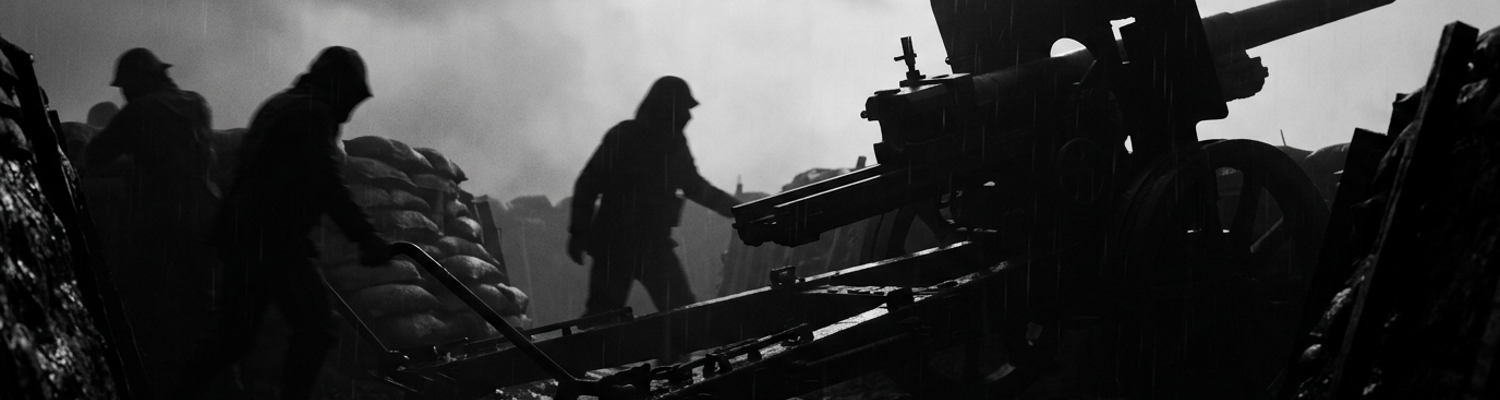
Aviators climbed into the cockpits of their newly armed Nieuports to test the completed weapon systems against ground targets laid out along the airfield perimeter. Flight leaders fired sustained twin bursts from low altitude, watching tracer rounds stitch tight patterns into the target pits while their propellers spun completely untouched. Rotary engine vibrations failed to shake the hand machined Alkan linkages out of alignment or loosen the shop built mounting bolts on the fuselage frames. Squadron commanders inspected the target scorecards and immediately ordered ground crews to install the improvised mounts, custom chutes, and re machined synchronizer gears across every remaining airframe at Gengault Aerodrome. Mechanics wheeled the fully armed pursuit planes out to the flight line by dawn, providing the 94th Aero Squadron with the twin gun striking power required for offensive combat patrols above the Toul sector.
Operational Consequences and Transition to the SPAD XIII
Pursuit planes climbed through low morning clouds to patrol the Saint Mihiel sector, but sustained operational combat immediately exposed the limits of field modifications. Pilots diving on German observation planes still felt the wing fabric flutter under heavy air resistance, and several flyers reported popped stitches along the lower wing surfaces after pulling out of steep descents. Engine heat from the rotary engines softened the hand applied cellulose dope, causing linen sections along the forward ribs to lose tension during multi hour sorties. Armament problems also persisted at high altitudes, where extreme cold thickened lubricant on the improvised trigger linkages and caused the left hand Vickers guns to cycle slower than the right. Recoil vibrations repeatedly loosened the saddle bolts holding the custom ammunition chutes, causing fabric belts to snag against sheet metal edges during tight banking turns. Technical officers logged recurring gun jams and structural fabric tears across squadron maintenance logs, sending formal complaint reports up the chain of command.
Colonel William Mitchell reviewed these combat reports and recognized that severe structural deficiencies and armament reliability issues of the Nieuport 28 forced the AEF Air Service to expedite acquisition of the structurally superior SPAD XIII. Headquarters officers cut through French industrial allocation red tape, demanding that French supply depots immediately redirect SPAD XIII fighters originally promised to French escadrilles directly to American pursuit squadrons. The SPAD XIII offered a rigid two spar wing structure built around heavy internal bracing wires that completely prevented fabric ballooning during vertical power dives. Its stationary engine eliminated the gyroscopic pull of rotary power plants, and factory engineered engine decks incorporated twin Vickers guns with factory machined synchronizer gears. Transport trains delivered the first shipments of SPAD fighters to Colombey les Belles in July 1918, where American ferry pilots accepted the sturdy biplanes for immediate transfer to front line squadrons.
Ground crews at Gengault Aerodrome inspected the newly arrived SPAD fighters and applied the hard learned lessons of the spring armament crisis directly to the fresh airframes. Mechanics dismantled the French factory synchronizer drives, checked gear tolerances on bench lathes, and synchronized the twin Vickers guns against the perimeter target butts before certifying each aircraft for operational duty. Enlisted armorers measured ammunition belt clearances through the feed blocks with brass feeler gauges, ensuring rounds seated flush without catching on internal guide lips. Riggers inspected the factory wing stitching and tightened wire turnbuckles to exact tension benchmarks, refusing to clear any pursuit plane until technical leads checked every structural joint by hand. Squadron commanders mandated these exact field repair protocols across the entire group, forcing every mechanic to memorize the new armorer and maintenance standards before touching the aircraft.
Squadron armorer sergeants documented these inspection checklists and distributed standardized tool kits to ground crews throughout the 1st Pursuit Group. Technical directives mandated daily timing checks with manual degree wheels, strict solvent washing of gun breeches to remove powder residue, and mandatory post flight wing wire tension checks after every high speed dive. Armorers in the 27th, 95th, and 147th Aero Squadrons adopted the Gengault workshop layout, building dedicated benches for gun calibration and fabric patching directly alongside their canvas hangars. Ground crews pushed flights of twin gun SPAD XIII fighters out into the morning fog of the Saint Mihiel offensive, running Hispano Suiza engines up to full power as pilots completed their final cockpit weapon checks.