
Tenth Army Military Government Architecture on Okinawa
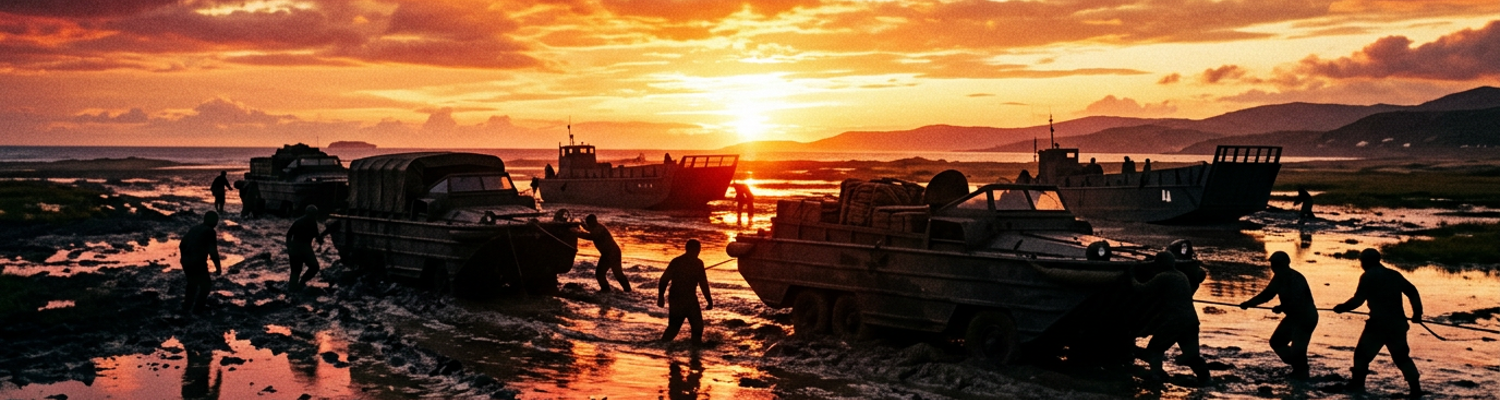
Steel drive shafts sheared inside an amphibious DUKW truck as its bronze propeller slammed into a submerged coral ridge five hundred yards off the Hagushi assault beaches. The engine shook violently against the sudden resistance, spraying scorched gear oil across the lower deck plates before the transmission housing cracked open. Crewmen lunged forward to kill the throttle, grab wooden wedge plugs, and hammer them into punctured hull seams while salt water rushed past the floorboards toward crated medical supplies. Combat engineers aboard a trailing landing craft ignored the waving distress flags of the crewmen, steering hard to port to keep their own load of high explosive artillery shells moving directly toward the shoreline. Assault divisions pushed inland without waiting for supply echelons, leaving shore parties to drag broken transport vehicles out of the surf and shove them into coral crevices to clear the narrow beach channels.
Lieutenant General Simon Bolivar Buckner Jr. commanded his flagship from the transport screening area, subordinating military government shipping allocations to the immediate tactical needs of Tenth Army combat units. Buckner stripped away valuable cargo space, landing craft allocations, and vehicle deck slots that planners had originally promised to civilian support teams. This operational decision left food stockpiles, field kitchens, water purification gear, and canvas field hospitals sitting in deep holds aboard cargo ships anchored miles away in the transport screening area. Deputy Commander Brigadier General William E. Crist organized his military government apparatus to operate under these severe logistical deficits, establishing a makeshift command structure that had to salvage discarded combat rations and broken vehicles instead of relying on scheduled supply runs.
Brigadier General Crist divided his field personnel into four standardized Civil Affairs Military Government detachment tiers designed to process civilians through every phase of the inland advance. Lightweight A teams advanced directly behind the frontline infantry regiments, conducting initial reconnaissance, coaxing frightened villagers out of hillside caves, and guiding refugee columns away from active artillery barrages. Larger B teams operated directly behind corps boundaries, managing rear staging areas where medical corpsmen treated wounded civilians and distributed meager water rations before truck convoys transported the families farther north. Camp administration fell to C teams, who supervised semi permanent base facilities, constructed perimeter fences, set up mass sanitation trenches, and registered tens of thousands of displaced farm families. District control rested with D teams, who directed regional food distribution networks, oversaw civilian agricultural labor in northern farming communities, and coordinated local governance across entire prefectural zones.
Officers in these D teams struggled to establish working district supply lines because combat quartermasters repeatedly impounded civilian transport trucks and captured grain stockpiles for frontline infantry battalions. Marine and Army combat commanders treated military government officers as bureaucratic rivals who clogged vital supply roads with civilian foot columns and hoarded scarce fuel drums. Crist pushed back against these combat staff officers during daily headquarters briefings, warning that unchecked civilian starvation and disease would eventually spread into combat sectors and block military supply routes. Combat officers ignored these warnings, ordering armed military police to divert civilian transport trucks away from crowded camps and redirect them toward frontline artillery positions near the Shuri line. Military government detachments scrambled across muddy northern farm roads to haul bags of sweet potatoes on hand drawn wooden carts, digging crude drainage ditches around overcrowded refugee encampments using broken entrenching shovels.
Rapid Population Surge at Camp Ishikawa
Steel shovel blades snapped against subterranean coral shelves as Civil Affairs C team work crews attempted to widen drainage ditches across the narrow Ishikawa Isthmus. Tenth Army engineers had originally laid out Camp Ishikawa on this pinched neck of land to hold a maximum capacity of ten thousand people. Combat logistics officers at field headquarters refused repeated requests to expand the camp perimeter into adjacent meadows, reserving every available acre of flat ground for heavy artillery parks and reserve ammunition dumps. Island command planners insisted that civilian holding areas remain tightly confined between Kin Bay and the western sea cliffs so that military police could secure the vital north to south supply corridors with minimal guard personnel. Camp guards stood by the registration checkpoint as daily convoys arrived, watching intake clerks record hundreds of new civilian arrivals every hour without having any vacant tents to assign them.
Convoys of open bed cargo trucks hauled non combatants directly from the southern Shuri Line combat zone to dump them at the Ishikawa gate. Marine and Army assault divisions battling across the southern limestone ridges ordered all local inhabitants removed immediately to eliminate crossfire hazards and prevent Japanese soldiers from hiding among civilian crowds. Frontline quartermasters loaded these fleeing civilians onto empty ammunition trucks returning north, ordering drivers to unload their human cargo at the isthmus checkpoint and head straight back to the forward battery positions. The surging crowd pouring through the gates consisted primarily of orphans, elderly civilians, and severe blast casualties suffering from jagged shell splinter wounds, third degree burns, and crushed limbs. Camp Ishikawa rapidly absorbed this relentless human influx, swelling past thirty thousand refugees and packing the narrow isthmus with three times the population that military government planners had engineered the site to hold.
Canvas tents remained locked inside Tenth Army quartermaster warehouses because supply officers hoarded standard fabric shelters for combat headquarters and vehicle repair shops. This severe shelter deficit left over twenty thousand displaced civilians exposed to heavy spring rains and raw coastal winds on bare, muddy ground. Deprived of military timber and tarpaulins, civilian work parties fanned out into surrounding countryside to strip ruined villages for building supplies. Thousands of displaced civilians constructed crude lean tos from salvaged sugarcane thatch and bombed out corrugated tin, wiring rusted metal sheets to bamboo uprights and scrap lumber. Families huddled beneath these low, leaking shanties on damp dirt floors, sharing small spaces without blankets, dry clothes, or floor matting.
Navy medical officers assigned to the Ishikawa dispensaries waded through the flooded shantytown alleys to treat infected blast wounds and stop spreading dysentery outbreaks. Sanitation teams lacked standard mechanical chlorination units and pipe fittings, forcing Navy corpsmen to treat drinking water by hand with chemical tablets inside punctured fuel drums. Tenth Army staff officers rejected written emergency requisitions for water purification trucks and heavy trench digging machinery, stating that combat divisions holding the line near Shuri required all available engineering assets. Civil Affairs officers circumvented these command refusals by trading captured Japanese carpenter tools and sugar rations to local Seabee detachments in exchange for scrap oil drums and discarded copper piping. Refugee work details used these salvaged drums to build crude gravity fed wash stations along the camp perimeter, setting up twenty four hour boiling watches over open wood fires to keep dysentery from sweeping through the crowded compound.
Torrential May Rains and Overland Supply Collapse
Rainwater smothered these outdoor hearths when the seasonal plum rains swept across central Okinawa in mid May 1945. Continuous downpours poured over the island day and night, turning unpaved clay routes and the vital arterial highway of Route 1 into impassable quagmires. Heavy military traffic quickly churned the softened roadbed into deep troughs of liquid red clay that trapped and immobilized standard cargo trucks. Drivers slammed their transfer cases into low range four wheel drive and repeatedly rocked their clutch pedals, but the heavy clay suction gripped the dual rear wheels, burning out clutch plates and snapping drive shafts. Tenth Army combat engineers kept all their motorized road graders, bulldozers, and crushed coral dump trucks in the south to keep heavy artillery shells moving toward the Shuri battle lines, refusing repeated requests to repair the northern approaches. Military police eventually shuttered Route 1 to all wheeled traffic after dozens of disabled supply trucks sank up to their axles and blocked the entire right of way.
Mudslides along the saturated highway embankments broke loose beneath the relentless downpour, tearing down the wooden poles that carried essential communication lines. Falling trees and wet clay sheared the landline telephone and telegraph wires linking Camp Ishikawa directly to Tenth Army rear headquarters at Yontan. This total wire outage eliminated the camp administration only direct link to island command, leaving civil affairs staff unable to report their collapsing supplies or request emergency medical shipments. Tenth Army Signal Corps repair teams lacked tracked transport to carry fresh wire spools through the flooded ravines, while tactical commanders refused to grant camp officers access to combat radio frequencies. Ishikawa personnel distributed the last emergency food reserves inside the camp warehouse as they remained completely cut off from the main military supply network.
Amphibious DUKW trucks from Tenth Army transportation pools attempted to bypass the blocked roads by launching overland supply runs across the flooded coastal lowlands. Logistics officers loaded the six wheeled boat trucks with emergency allotments of staple grain rations, including fifty pound sacks of dry rice, pinto beans, and milled flour. Drivers steered the amphibious vehicles off the paved surfaces and attempted to navigate through flooded farming basins, hoping the hollow hulls would skim across the surface of the mud. The heavy vehicles instead broke through the topsoil crust, and their smooth steel hulls high centered against submerged terrace walls and sunken stone dikes. Drivers redlined their engines until coolant boiled out of the radiator caps, but the spinning tires dug deep ruts in the wet silt without producing forward movement, snapping internal winch cables when crews tried to pull themselves free. Rear echelon commanders refused to dispatch tracked recovery tractors to pull the stranded vehicles out of the muck, declaring that all heavy recovery machinery belonged exclusively to southern artillery battalions. Civil Affairs workers distributed raw field greens and spoiled sweet potato vines to the refugees after the failure of these amphibious supply runs left the camp entirely without staple grain rations.
The Hagushi Beachmaster and Quartermaster Feuds
Tenth Army civil affairs officers hurried back to the Hagushi landing beaches to secure reserve grain, canned rations, and medical supplies directly from the coastal staging dumps. Navy beachmasters and Marine Amphibious Corps quartermasters immediately confronted the arriving officers at the reef control stations, triggering bitter jurisdictional clashes over who controlled the shoreline. Civil affairs personnel presented signed emergency requisitions demanding immediate landing craft runs and cargo trucks to haul food north to the starving crowds at Camp Ishikawa. Marine quartermasters flatly rejected the Army paperwork, insisting that Tenth Army civil affairs teams held no command authority over combat beach logistics while front line units were still locked in heavy combat to the south. Navy beachmasters backed the Marines, declaring that every foot of shoreline and every pontoon barge fell exclusively under fleet beachmaster control until the tactical amphibious phase officially ended. Marine quartermasters ended the confrontation by posting armed sentries along the coral causeways, ordering them to physically bar civil affairs personnel from approaching the watercraft staging areas.
Landing craft coxswains obeyed these Marine guards and steered their blunt nosed Higgins boats and mechanized landing craft away from civil supply lanes to make room for tactical combat gear. Navy beachmasters systematically denied landing craft staging space for civil relief cargo along the narrow Hagushi reef cuts, ordering shore crews to keep every slip open for fighting units. Beachmasters prioritized pallet after pallet of artillery ammunition over crated blood plasma and standard field rations, routing heavy explosive shells onto the coral causeways without pause. Shore party controllers flagged inward bound lighters loaded with whole blood, surgical bandages, and field rations back into deep water whenever forward battery positions radioed for emergency shell deliveries. Marine artillery units and Tenth Army howitzer crews near Shuri fired hundreds of tons of munitions daily, pushing the beachmasters to pack every square yard of dry sand with high explosive ordnance while life saving medical crates remained marooned on the open water. Crane operators repeatedly hoisted artillery powder canisters onto waiting trucks while emergency relief containers were shoved aside into the high tide wash.
Navy transport vessels anchored three miles offshore rode heavy ocean swells while holding hundreds of tons of civil aid inside their sealed lower compartments. Bureaucratic gridlock over offload manifests paralyzed the transport crews because Tenth Army civil affairs officers, Marine logistics planners, and fleet supply clerks had recorded conflicting cargo declarations before sailing from staging bases. Cargo officers aboard the assault transports could not reconcile civil affairs priority slips with standard Navy offload manifests, leaving cargo handlers without clear authorization to break stowage. Marine Amphibious Corps quartermasters refused to countersign the release papers, stranding palletized dried beans, sacks of rice, and crated surgical kits offshore aboard transport vessels for days on end. Transport captains refused to send their crewmen into the holds to dig out buried medical crates because shifting heavy deck loads risked destabilizing their ships during frequent Japanese air raids. Winch crews aboard the cargo ships shut off their steam boilers and lashed down their hoist booms, leaving tons of essential food and surgical equipment locked beneath steel hatch covers while thousands of sick refugees waited on shore.
Emergency Triage Protocols under Penicillin Scarcity
Surgeons at Camp Ishikawa confronted the immediate fallout of this shipping embargo as hundreds of wounded civilians collapsed along the muddy dispensary approaches. Triage teams dragged blast casualties onto unhinged wooden doors and split bamboo litters, carrying them into open air clearings because the crude thatch infirmary huts were already packed with dying dysentery patients. Medical officers set up makeshift operating stations directly under the rain, working through swarms of blowflies to cut away blackened, dead muscle tissue caused by traumatic shrapnel wounds and rapidly spreading secondary gangrene. Supply shortages stripped the surgical teams of adequate general anesthetics, leaving doctors with only fractional bottles of ether and no chloroform to blunt the agony of extensive tissue excision. Corpsmen and local Okinawan volunteers held screaming men, women, and children down on raw timber trestles while surgeons used unsterilized shears and scalpels to scrape necrotic flesh down to viable bone. Mud and human waste washed across the bare soil beneath the operating tables, introducing lethal soil microbes back into raw wounds before doctors could finish binding them with strips of torn civilian clothing.
Sulfanilamide powder dusted into these gaping surgical wounds could not halt systemic infections once deep bacterial contamination took hold. Field doctors desperately requisitioned injectable penicillin from Tenth Army medical supply depots, but combat logistics officers enforced stringent rationing rules that reserved all antibiotic stocks for fighting troops. Island command medical directives restricted penicillin administration exclusively to operable military cases and high priority combat casualties scheduled for immediate evacuation to fleet hospital ships. Civilian trauma wards received only yellow cartons of dry topical sulfanilamide, an older antibacterial agent that formed useless crusts over wet, weeping blast wounds without killing the underlying anaerobic bacteria. Camp administrators argued that withholding systemic antibiotics turned minor shrapnel lacerations into lethal cases of gas gangrene, but Tenth Army medical quartermasters refused to unlock their refrigerated supply vaults for non combatants. Navy corpsmen watched young Okinawans die of septic fever and dehydration within forty eight hours of debridement while cases of military penicillin sat unissued in guarded rear area depots five miles away.
Cardboard cartons of sterile saline intravenous solutions emptied during this same logistical cutoff, leaving medical officers without the basic fluids needed to counter circulatory shock. Severe hemorrhage, wound exudate, and uncontrolled diarrheal dehydration drove dozens of civilian blast victims into hypovolemic collapse on the dirt floors of the holding sheds every morning. Navy doctors improvised austere plasma sparing techniques to stretch their few remaining cans of dried normal human serum albumin, cutting standard infusion volumes by half and reserving intravenous units solely for patients with vanishing peripheral pulses. Sanitation crews kept salvaged fifty five gallon drums boiling over scrap wood fires around the clock, collecting the steam sterilized water and cooling it in enamel buckets so medics could administer crude fluid replacements by mouth or through rectal drip tubes. Medical orderlies fitted rubber catheters to gravity funnels, using this boiled water to flush out infected abdominal cavities and sustain failing blood pressures when combat supply officers rejected all further emergency fluid requisitions. Exhausted surgical teams clamped off severed arteries with rusted hemostats and patched abdominal wall tears under the open sky, watching the diluted blood thin to pink water in the mud.
Typhus Containment and DDT Dusting Cordons
Mud saturated with rainwater and runoff from collapsed trench latrines flooded into the civilian huts, triggering outbreaks of scrub typhus and epidemic louse borne typhus. Body lice multiplied rapidly inside soaked, unwashed clothing, while larval chigger mites climbed out of the surrounding brush into the damp bedding of sleeping families. Medical officers identified the severe fevers, persistent headaches, and characteristic skin rashes that signaled advancing rickettsial infections across the overcrowded compound. Tenth Army combat staff officers rejected written emergency warnings from camp doctors, dismissing the civilian epidemic as a secondary problem that did not threaten combat divisions. Marine and Army logistics commanders refused to release gasoline powered disinfectant foggers or military entomology personnel, keeping every mechanical sanitation unit reserved for combat rest areas. Combat officers ordered military police to seal the civilian camp perimeter instead of sharing chemical supplies, leaving camp doctors without the power equipment needed to disinfect the saturated living quarters.
Corpsmen from Civil Affairs detachments established mandatory delousing cordons around the Camp Ishikawa perimeter gates using hand operated duster pumps dispensing ten percent DDT powder. Navy medical teams and military police forced every arriving and departing civilian into narrow barbed wire chutes to receive direct chemical treatment. Technicians inserted the metal nozzles of hand plunger dusters into shirt collars, waistbands, trouser cuffs, and sleeves, pumping the dry white chemical deep into inner fabric layers. Mechanical power dusters remained locked inside Marine Corps quartermaster depots along the Hagushi beaches, forcing the dusting teams to work manual pumps until their arms cramped from exhaustion. Dusting crews blasted hundreds of pounds of the insecticide across skin and hair each day, coating crowds in white dust to kill body lice and chiggers before the vectors could reach military supply roads. Work details processed more than three thousand refugees every twelve hours through these checkpoint cordons, creating thick clouds of chemical powder that hung over the muddy camp entrance.
Laborers organized into indigenous Okinawan sanitation squads moved through this chemical haze into the camp interior to dig deep pit lime latrines amid the continuous downpour. Civilian work details took dull pickaxes and broken entrenching shovels to dig six foot trenches through the slippery clay, carving drainage channels to divert sewage away from crowded huts. Squad members carried heavy wooden crates of slaked lime through knee deep mud, shoveling thick layers of the white powder across the bottom and sides of every new trench. Chemical reactions between the moisture and the caustic lime helped neutralize pathogens, reduce foul odors, and prevent blowflies from turning the latrines into secondary disease vectors. Tenth Army quartermasters refused to deliver treated lumber or prefabricated wooden toilet covers, forcing the work squads to weave crude screening covers from salvaged bamboo poles and sugarcane stalks.
Gravediggers assigned to these Okinawan sanitation squads searched through flooded lean tos alongside the new latrines to collect bodies for burial despite the ongoing downpours. Stretcher bearers lifted dead civilians onto split bamboo litters and flatbed handcarts, recovering victims of typhus, dysentery, and traumatic blast injuries before tropical heat accelerated tissue decay. Civil Affairs officers submitted urgent requisitions for wooden coffins, canvas burial shrouds, and motorized backhoes, but Tenth Army logistics officers rejected every supply request. Combat engineers kept every available bulldozer and trenching excavator tied to forward artillery positions and southern road repair projects near the Shuri front. Sanitation workers carried the dead to high coral ridges beyond the wire, digging mass graves by hand into the limestone shelf with dull mattocks. Burial details stacked the shrouded bodies in long rows, spreading fresh slaked lime over the corpses before shoveling wet clay into the open trenches.
Improvised Sea Lifts and Inter-Service Logistics
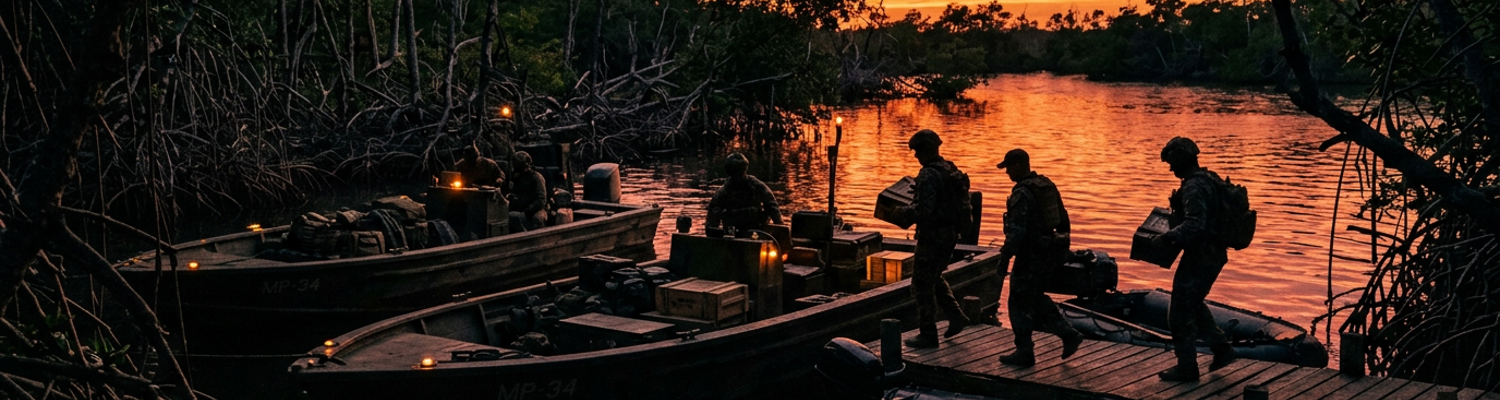
Army Civil Affairs officers bypassed the official supply chain to establish an emergency supply route by sea as the burial trenches expanded across the limestone ridges. Combat quartermasters at Hagushi still refused to release trucks or road machinery, forcing Army officers to initiate unsanctioned logistical workarounds with sympathetic Navy vessel crews anchored in the sheltered waters of Chimu Wan. Civil Affairs personnel made covert contact with junior Navy officers commanding Landing Craft Tank vessels, offering stolen motor gasoline and hand carved souvenirs in exchange for unauthorized delivery runs. Navy skippers agreed to circumvent official fleet manifests, steering their blunt, heavy craft out of the main Hagushi roadstead and around the northern headlands under cover of coastal squalls. Crews loaded the flat steel decks with surplus Navy rations, dry beans, and crated medical supplies pulled directly from the holds of offshore transports without the knowledge of beachmaster authorities.
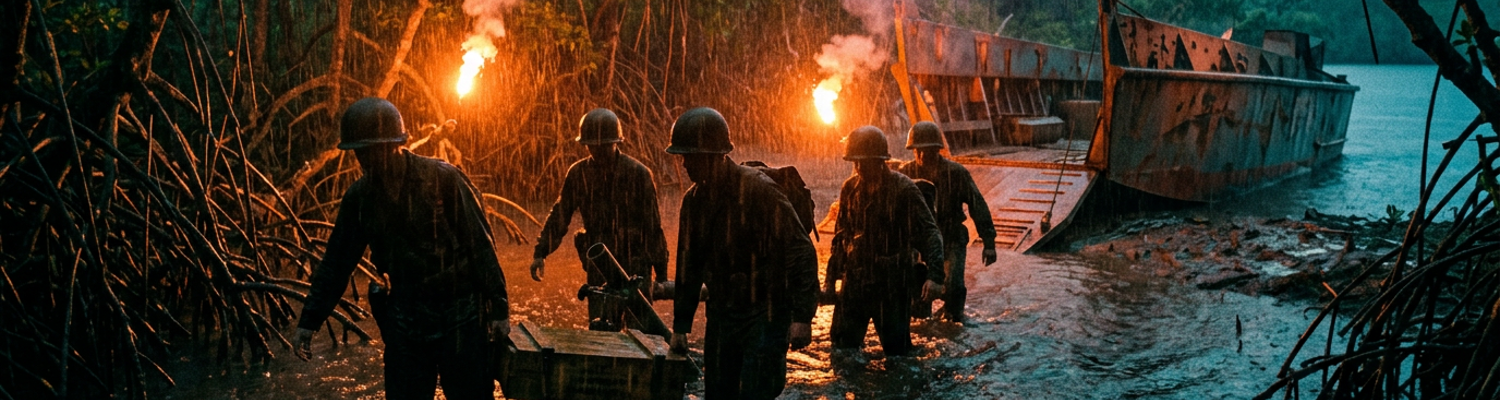
Skippers commanding the landing craft encountered severe navigation hazards as they brought their overloaded vessels into the shallow, uncharted bight of Chimu Wan. Jagged coral heads scraped against steel hull plates, and receding tidal currents threatened to ground the heavy flat bottomed craft hundreds of yards short of the muddy shoreline. Bow winch operators dropped stern kedge anchors into the surf to steady the craft while deckhands lowered the heavy bow ramps directly into four feet of surging water. Okinawan civilian work details and off duty soldiers waded waist deep through the breaking waves, hauling hundred pound bags of rice and crated plasma off the ramps on their shoulders before beachmaster patrol craft could detect the unauthorized runs. Engine crews continuously feathered their diesel throttles against the surf to prevent waves from twisting the vessels sideways and swamping the exposed cargo compartments.
Seabee detachments from Navy Construction Battalions stepped in to resolve these dangerous surf landings by installing rudimentary pontoon causeways along the eastern coast to bypass ruined inland roads. Seabee work crews towed strings of welded steel pontoon cubes into Chimu Wan, securing the buoyant boxes end to end with heavy steel splice plates and locking pins. Combat engineers drove timber piling clusters and heavy steel anchor flukes into the coral reef to hold the floating roadway steady against the ocean swell. Seabee bulldozer mechanics rapidly laid timber decking and steel treadway mats across the pontoons, creating a continuous bridge from deep water straight onto the firm coastal terrace. Supply trucks that had stalled in the inland mud were rerouted along these coastal pontoons, allowing unloading crews to roll cargo carts directly from grounded landing craft ramps to dry land without dropping supplies into the surf.
Marine quartermasters entered into informal barter agreements with Army medical detachments stationed along this new coastal corridor, trading balanced rations for captured Japanese medical supplies and equipment. Medical officers sorted through captured Japanese military supply depots in the northern hills, collecting undamaged surgical kits, dental extractors, glass ampoules of morphine, and field microscopes abandoned by retreating Japanese forces. Marine Amphibious Corps quartermasters desperately needed these captured medical tools to replace equipment lost in the southern mud, readily agreeing to swap their own ration reserves for the Japanese gear. Supply sergeants finalized these covert trades behind the beach dunes, exchanging crates of captured surgical tools for cases of canned pork, evaporated milk, and dry split peas. Army orderlies hauled these traded food stocks across the pontoon causeways into Camp Ishikawa, distributing hot meals to starving blast victims and stabilizing the camp population before the next wave of civilian casualties reached the wire.
Institutional Legacy for Joint Military Government Operations
Brigadier General Crist compiled field notes and supply manifests from these wire checkpoints, using the records of unauthorized sea runs and fatal delays to write scathing Tenth Army post operational reports. Crist documented how the absence of a centralized joint logistics command over civil affairs had triggered complete administrative paralysis across the island. Army division quartermasters, Marine amphibious corps logistics chiefs, and Navy beachmasters had each controlled separate, uncoordinated supply pipelines, treating civilian survival as an inconvenient distraction rather than a vital operational task. Combat commanders had repeatedly seized civilian trucks, blocked access to landing beaches, and hoarded medical reserves because no single joint authority possessed the power to balance military government requisitions against tactical combat priorities. Bureaucratic friction between service branches had turned simple requests for food and medicine into bitter jurisdictional arguments while displaced families starved in flooded tents. Crist submitted these official reports to War Department planners, documenting how leaving military government subordinate to competing service branches had allowed typhus, dysentery, and starvation to devastate the northern rear area.
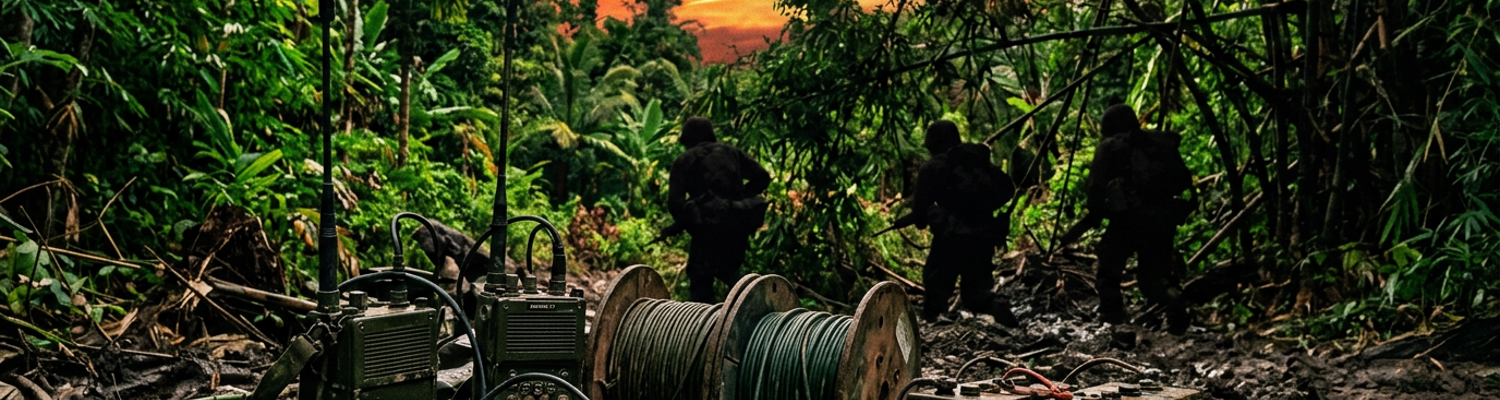
Staff officers at Pacific theater headquarters reviewed these Tenth Army findings and carried out a sweeping revision of military government doctrine for future amphibious operations. Planners rewrote civil affairs field manuals to mandate organic cargo shipping allocations that combat quartermasters could not legally impound or divert. New operational guidelines required every joint task force to assign dedicated cargo ships, landing craft allotments, and coastal staging zones solely for civilian relief cargo before assault troops ever hit the beaches. Doctrine writers also mandated independent, dedicated communication nets for civil affairs detachments, issuing long range radio sets and separate telephone lines so camp administrators could manage non combatant containment without competing for tactical circuits. Signal corps specialists added heavy duty mobile transmitters and insulated field wire to standard military government equipment tables to ensure isolated camps could call for emergency supplies during bad weather, replacing the vulnerable shared combat telephone trunks that had washed out during the Ishikawa crisis.
General Douglas MacArthur applied these revised doctrines and hard won Ishikawa lessons when his staff initiated the administrative restructuring of the postwar American occupation of Japan. Occupation planners at General Headquarters established a centralized civilian supply and health apparatus under direct Supreme Commander control, stripping individual army corps and naval commands of the power to impound relief shipments. Military government teams deployed into Japanese home island prefectures with their own assigned motor pools, guaranteed food quotas, and dedicated radio links, preventing the jurisdictional rivalries that had crippled operations on Okinawa. Public health officers utilized standardized DDT dusting stations, secured vaccine pipelines, and centralized logistics depots across mainland cities to manage millions of displaced refugees without running out of basic supplies. Quartermasters maintained strict, ring fenced stockpiles of rice, flour, and penicillin in port warehouses specifically designated for non combatant relief rather than tactical combat reserves. Administrators distributed thousands of tons of grain and medical supplies through these direct joint channels, stabilizing devastated urban populations across Honshu and Kyushu while combat divisions disarmed the surrendering Japanese armed forces.