High Seas Boarding of German Blockade Runner Odenwald
Light cruiser USS Omaha and destroyer USS Somers capture a disguised Nazi freighter in the equatorial Atlantic.
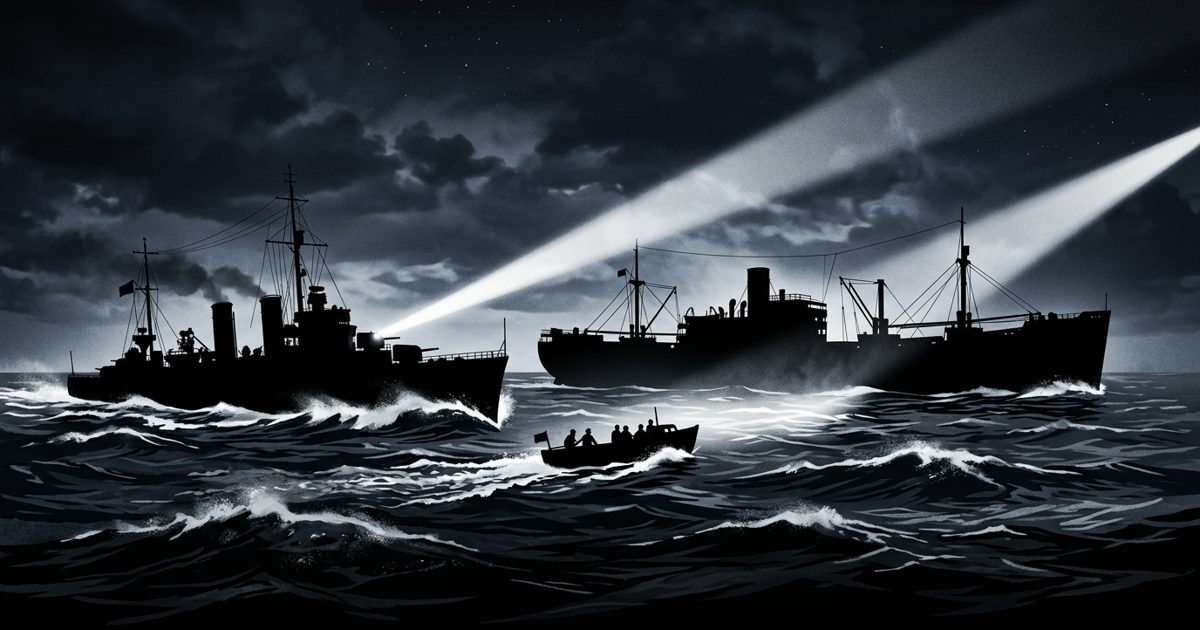
Lookouts aboard the light cruiser USS Omaha spotted a suspicious merchant ship steaming without lights through the equatorial waters of the South Atlantic. Captain Theodore E. Chandler immediately ordered his vessel and the escorting destroyer USS Somers to close the distance and flash identification signals. The unidentified vessel ran up American colors and identified herself by radio as the freighter Willmoto out of Philadelphia. Discrepancies in the merchant vessel hull profile and evasive steering aroused instant suspicion among the American officers. Chandler signaled the freighter to heave to and prepared an armed boarding party.
Lieutenant George K. Carmichael led a team of fifteen armed sailors across choppy waters in a motorized whaleboat to inspect the stopped merchantman. Submerged detonation charges exploded deep inside the hull just as the Americans climbed up the cargo vessel ladders. German sailors abandoned ship in lifeboats after opening the sea cocks and setting scuttling fuses to prevent the capture of their vessel. The boarding party discovered that the vessel was actually the German freighter Odenwald, carrying thousands of tons of high-grade raw rubber and truck tires from Japan to Germany. Carmichael divided his men into armed security squads and emergency damage-control teams.
Machinists and damage-control sailors descended into dark flooded machinery compartments to locate open valves and rising seawater. Engineering personnel raced against rushing ocean water to secure bilge lines, close compromised sea cocks, and cut live electrical detonation wires connected to unexploded charges. Technicians successfully restarted the diesel auxiliary generators, restoring electrical lighting and powering pumps to stabilize the flooded ship. Captain Chandler dispatched additional support personnel to establish complete control over the captured prize vessel and organize an armed escort to Puerto Rico. Federal admiralty courts subsequently awarded formal salvage shares to the crews of Omaha and Somers for saving the critical rubber shipment.