Full Calendar
THIS DAY IN U.S. MILITARY HISTORY • NOVEMBER 7 2004 U.S. Marine Corps War in Iraq

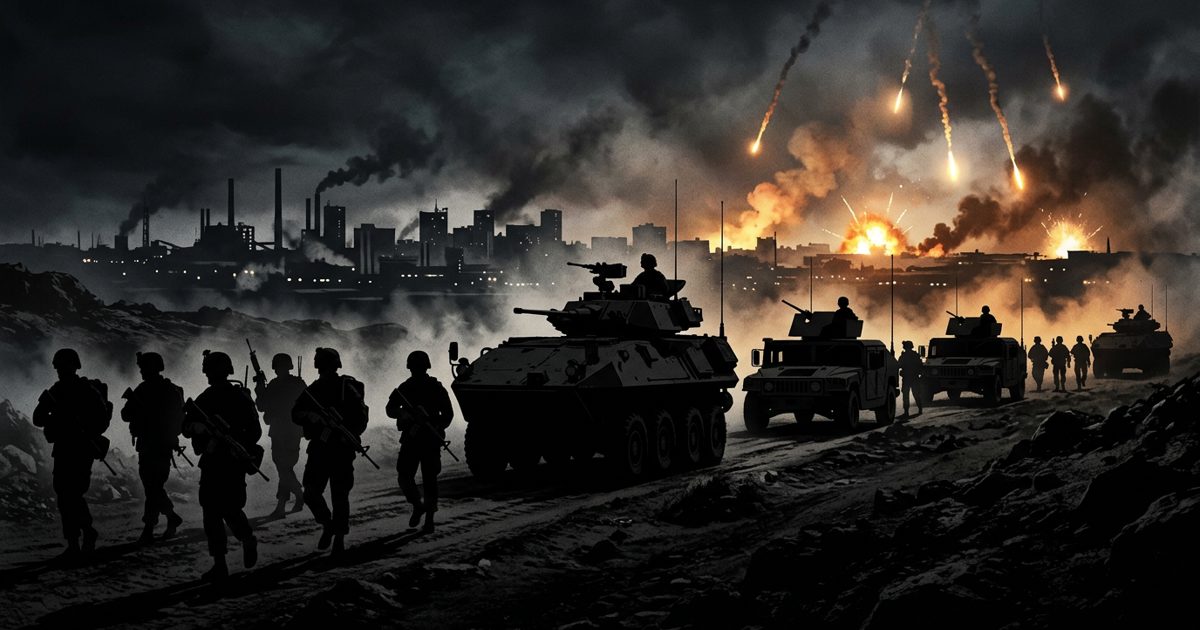
Coalition Forces Open Operation Phantom Fury in Fallujah

Marine Regimental Combat Teams and Army mechanized units isolated the insurgent stronghold of Fallujah to begin the heaviest urban assault of the Iraq War.
Coalition Forces Open Operation Phantom Fury in Fallujah

Marines from Regimental Combat Team 1 and Regimental Combat Team 7 initiated Operation Phantom Fury on the evening of November 7, 2004, aiming to clear fortified insurgent networks from Fallujah. Joint elements including the 3d Light Armored Reconnaissance Battalion and the Army 1st Battalion, 9th Infantry Regiment moved against the western outskirts of the city. Assault forces stormed Fallujah General Hospital and secured the two key bridges spanning the Euphrates River before midnight. These positions deprived enemy cells of medical facilities and cut off river transit routes into the urban center.

Soldiers assigned to the mechanized columns quickly fortified the captured crossings while heavy artillery batteries opened counter-battery fire against enemy mortar pits. Armored vehicles from the 2nd Brigade Combat Team, 1st Cavalry Division deployed across the southern edge of Fallujah to prevent fighters from slipping through the encirclement. Air Force strike aircraft and Marine helicopter gunships conducted precision strikes against pre-identified command bunkers and weapons caches throughout the night. The coordinated bombardment destroyed defensive barricades and severed insurgent communication networks across the northern approaches to the city.

Engineers breached perimeter wire and anti-tank ditches along that northern axis under cover of the darkness to create assault lanes. Combat teams pushed through these initial breaches at dawn to prepare the primary clearing drive through the dense neighborhoods of Jolan and Nazal. Coalition commanders deployed twelve thousand American service members alongside Iraqi security forces for the ensuing street-by-street battles. The offensive resulted in weeks of close-quarters urban combat that broke the insurgent grip on the city and yielded thousands of seized weapons.

CHRONOLOGICAL RECORD

November 7 Across U.S. Military History

8 Verified Events
1811 U.S. Army Landmark Event • Tecumseh's War

Harrison Defeats Shawnee Warriors at Tippecanoe

Governor William Henry Harrison led roughly one thousand soldiers and militia against forces allied with the Shawnee prophet Tenskwatawa near Prophetstown on November 7, 1811. American sentries repelled a surprise pre-dawn assault and held their defensive perimeter through two hours of intense hand-to-hand combat. Troops subsequently burned the village and dispersed the tribal confederacy.

1861 U.S. Army Landmark Event • Civil War

Ulysses S. Grant Fights at Belmont

General Ulysses S. Grant commanded his first major combat action on November 7, 1861, landing three thousand Union troops at Belmont, Missouri. Federal regiments overran Camp Johnston and burned the Confederate encampment before heavy enemy artillery forced a fighting withdrawal to river transports. Grant re-embarked his forces under protection from Union timberclad gunboats on the Mississippi River.

1861 U.S. Navy Landmark Event • Civil War

Union Warships Capture Port Royal Sound

Flag Officer Samuel Francis Du Pont steered seventeen Union naval vessels into Port Royal Sound, South Carolina, on November 7, 1861. Warships steamed in an elliptical formation to deliver continuous broadsides against Fort Walker and Fort Beauregard. Confederate garrisons abandoned both forts after five hours of bombardment, securing a vital deep-water coaling station for the South Atlantic Blockading Squadron.

1861 U.S. Navy • Civil War

Sailors Raid Galveston Bay Aboard Cutters

Sailors from the frigate USS Santee launched a night boat expedition into Galveston Bay, Texas, on November 7, 1861. Lieutenant James E. Jouett led forty volunteers past Confederate harbor fortifications to board the armed rebel schooner Royal Yacht in fierce deck fighting. Crewmen burned the hostile vessel and captured its defenders, earning helmsman George H. Bell the Medal of Honor.

1918 U.S. Army • World War I

First Division Reaches Heights Overlooking Sedan

Infantrymen of the U.S. 1st Division drove northward through heavy German artillery fire to seize the high ground south of Sedan on November 7, 1918. American regiments advanced more than twenty miles during the final phase of the Meuse-Argonne Offensive to sever German supply railroads. Allied leadership subsequently adjusted sector boundaries to permit French units to liberate the city itself.

1944 U.S. Army Air Forces • World War II

American Lightning Fighters Clash Over Nis

Pilots flying P-38 Lightnings from the 82nd Fighter Group engaged Soviet aircraft over Nis, Yugoslavia, on November 7, 1944, in an accidental friendly fire encounter. American fighters mistook a Soviet truck convoy for retreating German forces and launched strafing runs. Scrambled Soviet Yak-9 fighters retaliated in an aerial dogfight that downed multiple aircraft on both sides before commanders halted combat.

1973 Joint Service Landmark Event • Cold War

Congress Enacts the War Powers Resolution

Lawmakers in the United States Congress overrode President Richard Nixon's veto to enact the War Powers Resolution into federal law on November 7, 1973. The legislation restricted executive authority by mandating that presidents notify Congress within forty-eight hours of introducing American troops into hostilities. Troop commitments were limited to sixty days without explicit statutory authorization or a formal declaration of war.

2009 U.S. Navy • Global War on Terrorism

USS New York Enters Naval Fleet Service

Sailors manned the rails as the amphibious transport dock USS New York was commissioned in New York City on November 7, 2009. Shipbuilders incorporated seven and a half tons of salvaged World Trade Center steel into the vessel's bow stem. The modern warship joined the Atlantic Fleet to deploy Marine expeditionary forces, tiltrotor aircraft, and air-cushion landing craft.

MEDAL OF HONOR ACTION 1967

Specialist Robert F. Stryker Shields Squad at Loc Ninh

Specialist Fourth Class Robert Francis Stryker served as a grenadier with Company C, 1st Battalion, 26th Infantry Regiment, 1st Infantry Division during Operation Shenandoah II. His unit advanced into dense jungle on November 7, 1967, during a reconnaissance in force near Loc Ninh. Enemy automatic weapons and rocket-propelled grenades struck the advancing infantrymen from fortified bunkers and surrounding trees. Stryker moved through hostile fire with his grenade launcher, neutralizing snipers and disrupting an attempted enemy encirclement of the company.

North Vietnamese soldiers detonated a concealed anti-personnel mine near several wounded American soldiers lying trapped in the engagement area. Stryker observed the impending blast and threw his body directly over the weapon to absorb the explosion. The detonation mortally wounded Stryker while shielding at least six comrades from fatal injury. Vice President Spiro Agnew posthumously presented the Medal of Honor to Stryker's family to commemorate his self-sacrifice.