Full Calendar
THIS DAY IN U.S. MILITARY HISTORY • NOVEMBER 9 1944 U.S. Army World War II

Third Army Soldiers Assault Across the Flooded Moselle River

Major General James Van Fleet leads the 90th Infantry Division across treacherous currents at Cattenom to encircle German forts around Metz.
Third Army Soldiers Assault Across the Flooded Moselle River

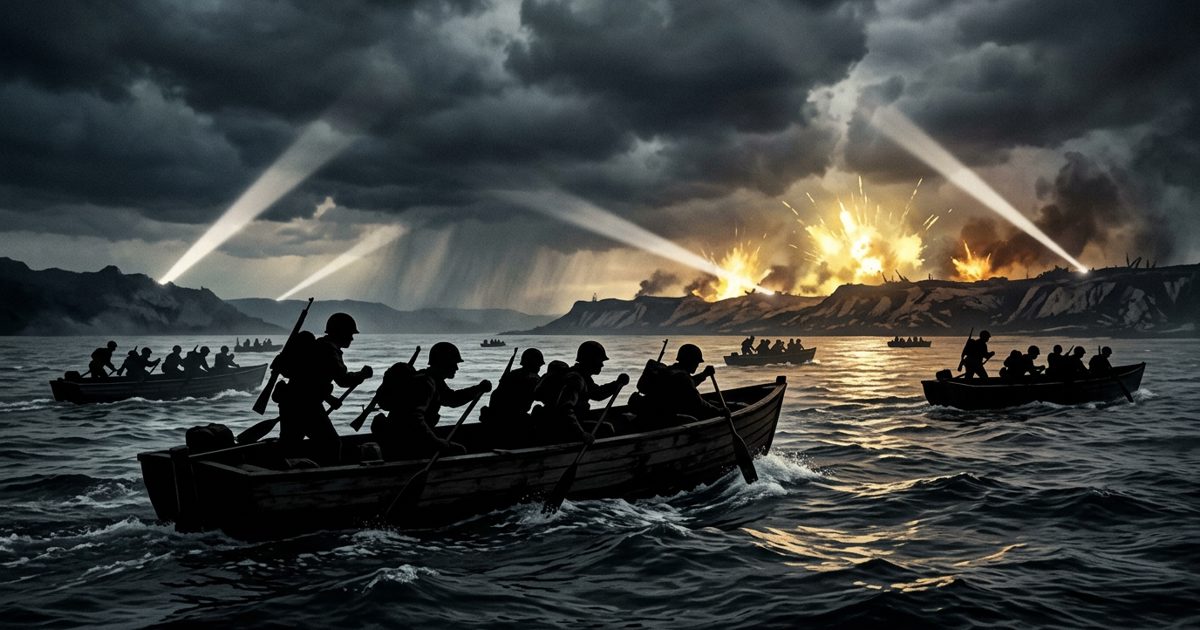
Soldiers of the 90th Infantry Division slid assault boats into the swollen Moselle River north of Thionville under darkness in the opening moves of the encirclement of Metz. Heavy autumn rains had transformed the river into a roaring torrent over one thousand yards wide, submerging roads, swamps, and enemy minefields. Major General James Van Fleet assigned the 358th and 359th Infantry Regiments to force crossings at Cattenom and Malling despite the freezing water and treacherous currents. German defenders from the 19th Volksgrenadier Division waited on the high ground of the eastern bank behind prepared entrenchments and stone fortifications. American riflemen paddled through the heavy current while artillery battalions on the western bluffs hurled preparatory barrages to suppress enemy machine guns.

Infantrymen scrambled onto the muddy eastern banks as German shells tore into the landing sites and damaged numerous canvas assault craft. Combat engineers struggled through freezing floodwaters to anchor guide cables and assemble heavy pontoon bridges under concentrated enemy artillery fire. German gunners in the commanding fortifications of Fort Koenigsmacker zeroed their heavy pieces onto the crossing sites, periodically severing the bridges and isolating the initial assault waves. American soldiers secured a shallow bridgehead, dug into the saturated soil, and repelled repeated infantry counterattacks with rifle fire and close mortar support. Isolated battalions held their ground without heavy armor support while engineers repeatedly repaired bridge sections against the rising river.

Tanks and tank destroyers crossed the completed spans over the following days to reinforce the expanding bridgehead and link with advancing units from the south. Third Army troops pushed southward toward Boulay-Moselle, completing the encirclement of Metz and trapping thousands of German defenders within the fortified ring. Van Fleet's crossing breached the German Moselle defensive line at the cost of over two thousand casualties across the division. Capture of the surrounding forts enabled Lieutenant General George S. Patton's forces to capture the fortress city on November 22 and drive onward toward the German frontier.

CHRONOLOGICAL RECORD

November 9 Across U.S. Military History

9 Verified Events
1780 U.S. Army Landmark Event • American Revolutionary War

Patriot Militia Repels British Attack at Fishdam Ford

Brigadier General Thomas Sumter positioned his South Carolina militia in defensive lines along the Broad River after setting decoy campfires. British Major James Wemyss launched an attempted surprise assault with the 63rd Regiment of Foot and loyalist cavalry around one in the morning. Alert Patriot sentries delivered devastating volleys from the tree line, wounding and capturing Wemyss while repelling the British regulars.

1822 U.S. Navy • West Indies Anti-Piracy Operations

USS Alligator Engages Pirate Schooners Off Cuba

Lieutenant William Howard Allen dispatched armed boats from the schooner USS Alligator into shallow coastal waters east of Matanzas to liberate captured merchant vessels. American sailors boarded and captured the pirate schooner Revenge despite taking heavy grape and musket fire. Allen sustained mortal wounds during the sharp engagement, but his crew recovered five captive merchant ships.

1862 U.S. Army Landmark Event • American Civil War

Ambrose Burnside Assumes Command of Potomac Army

Major General Ambrose E. Burnside formally accepted command of the Union Army of the Potomac following President Abraham Lincoln's executive order removing Major General George B. McClellan. Burnside immediately organized the massive federal force into three grand divisions to simplify battlefield administration. Headquarters began drafting an operational plan to advance rapidly across Virginia toward Fredericksburg.

1887 U.S. Navy Landmark Event • Pre-WWI Expansion

United States Obtains Rights to Pearl Harbor

Representatives of the United States and the Hawaiian Kingdom exchanged ratifications of a supplementary convention granting the American military exclusive rights to enter and maintain a coaling and repair station at Pearl Harbor. Navy leadership secured permanent access to the strategic sheltered lagoon on Oahu. Engineering surveys began evaluating dredging projects to clear the shallow coral reef at the harbor entrance.

1918 U.S. Army • World War I

Soldier Swims Meuse River for Combat Reconnaissance

Private First Class Harold I. Johnston of Company A, 356th Infantry, 89th Division, volunteered to swim across the freezing Meuse River near Pouilly under direct German machine-gun fire. Johnston reached the hostile eastern bank and gathered critical intelligence on enemy troop dispositions before swimming back through the swift current. Army leadership awarded him the Medal of Honor for the mission.

1921 U.S. Navy Landmark Event • Interwar Period

USS Olympia Delivers the World War Unknown

Cruiser USS Olympia docked at the Washington Navy Yard after braving heavy Atlantic gales while carrying the remains of the World War I Unknown Soldier from France. Sailors fired ceremonial gun salutes as an honor guard transferred the flag-draped casket ashore for transit to the Capitol Rotunda. President Warren G. Harding presided over public mourning preceding burial at Arlington National Cemetery.

1942 U.S. Army Landmark Event • World War II

First Infantry Division Drives Toward Oran

Infantrymen of the 16th Infantry Regiment repelled a determined Vichy French counterattack near the coastal village of La Macta in French North Africa during Operation Torch. Combat engineers and Rangers reinforced the bridgehead, stabilizing the eastern flank of the invasion beachhead. Allied columns resumed their coordinated advance along the Mediterranean coast, trapping defending garrisons before the surrender of Oran the following day.

1967 U.S. Air Force • Vietnam War

Air Force Pilot Ejects Over Laotian Jungle

Lieutenant Lance P. Sijan ejected from his damaged F-4C Phantom II after premature bomb detonation disabled the aircraft over the Ban Loboy Ford in Laos. Sijan survived compound fractures and severe head trauma, evading hostile patrols across rugged limestone karst for forty-six days without food or survival gear. President Gerald R. Ford posthumously presented him the Medal of Honor for his extraordinary resistance.

2013 U.S. Navy • Modern Era

Navy Christens Lead Supercarrier Gerald R. Ford

Shipbuilders and naval leaders christened USS Gerald R. Ford at Newport News Shipbuilding in Virginia, designating the first ship of a new nuclear-powered aircraft carrier class. Susan Ford Bales, the former president's daughter and ship sponsor, smashed a ceremonial bottle of sparkling wine against the bow. Construction teams integrated electromagnetic catapults and advanced arresting gear to replace steam systems used on older flattops.

MILITARY AVIATION 1950

Navy Panther Pilot Downs MiG-15 in Historic Jet Dogfight

Lieutenant Commander William T. Amen led a division of Grumman F9F-2 Panther jets from Fighter Squadron 111 off the aircraft carrier USS Philippine Sea on an escort mission over North Korea. American strike aircraft targeted the strategic international bridges spanning the Yalu River near Sinuiju to cut Chinese supply routes into the peninsula. Soviet-piloted MiG-15 fighters from the 139th Guards Fighter Aviation Regiment scrambled from bases in Manchuria to intercept the carrier strike group. Amen spotted swept-wing enemy jets diving through the cloud layers and turned his flight to meet the high-speed attack.

Amen latched onto the tail of an enemy fighter piloted by Senior Lieutenant Mikhail Grachev as both aircraft plummeted toward the rugged terrain below. Four 20mm nose cannons on the Panther scored multiple direct hits on the diving MiG-15 at three thousand feet. Wingmen observed the damaged jet roll inverted and explode into a mountainside before the pilot could eject. Naval authorities officially credited Amen with the first confirmed aerial victory of one jet aircraft over another in United States Navy history. Recovery of the Panthers aboard Philippine Sea completed the combat strike without the loss of a single carrier aircraft.