
Eighth Army Medical Logistics in Winter 1951
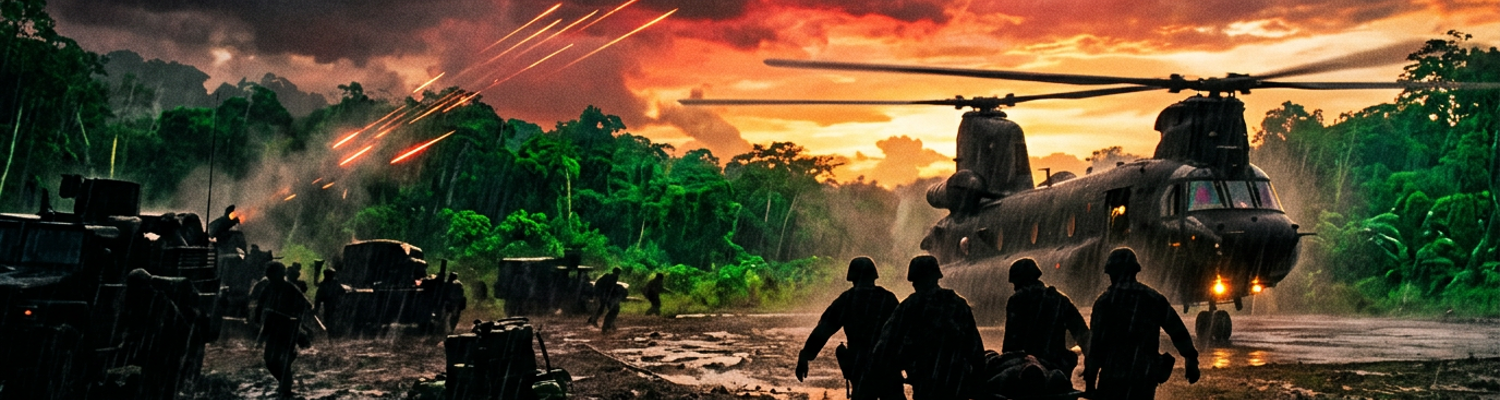
GMC two-and-a-half-ton cargo trucks, Dodge M43 ambulances, and Caterpillar road graders labored along frozen supply routes north of the 38th parallel as the winter offensive began. Drivers pumped stiff brake pedals and wrestled steering wheels against frozen ruts, but engine blocks cracked when cooling systems froze in the subzero gales. Motor oil thickened into heavy sludge inside crankcases, starving mechanical parts of lubrication and causing transport engines to seize on steep mountain ascents. Severe winter conditions during the 1951 to 1952 Korean frontline operations caused systemic breakdowns in Eighth Army combat supply and field hospital support. Infantry units defending snow-covered ridges ran short of artillery shells, dry clothing, and tent heater fuel when their support convoys stalled along single-lane mountain ledges. Drivers abandoned immobilized trucks in deep drifts, blocking the narrow mountain passes and leaving vital medical and combat cargo stranded miles behind the frontline battle positions.
Supplies stranded in these stalled vehicle columns left forward aid posts cut off from essential gear as nighttime temperatures plunged well below zero. Fractured military logistics prevented the timely delivery of whole blood supplies and specialized cold-weather medical equipment to triage stations. Glass bottles of whole blood that did reach frontline medical units arrived frozen solid, cracking open under internal expansion and rendering the life-saving fluid completely unusable. Battalion corpsmen attempted to thaw salvageable blood containers inside pots of boiling water over small camp stoves or carried individual bottles beneath their heavy parkas to melt the plasma against their own chests. Intravenous rubber hoses lost all flexibility in the bitter cold, stiffening and snapping under slight pressure when medical staff attempted to bend them to administer infusions. Hospital corpsmen burned empty wooden ammunition boxes and shipping crates inside metal stove drums to keep shock victims from freezing to death on bare canvas litters.
Litters crowded with frostbitten soldiers filled the triage tents faster than field surgeons could examine them. Medical personnel in forward surgical units worked around the clock as environmental cold injuries rapidly surpassed casualties caused by enemy artillery and small arms fire. Thousands of combat troops arrived at collection stations suffering from severe frostbite and trench foot because standard leather combat boots absorbed moisture and froze solid around their feet. Blinding snowstorms and ice on rotor blades grounded Bell H-13 Sioux casualty evacuation helicopters, eliminating the fastest method for moving critical trauma patients away from the ridgelines. Ground ambulances attempting to navigate steep downhill switchbacks skidded off iced roads into rocky ravines, stranding patients and drivers for hours in freezing temperatures. Field doctors sent urgent written requests up through division command channels demanding immediate logistical reforms and cold-weather supplies for frontline units.
General James Van Fleet received these written requests at Eighth Army headquarters in Seoul and compiled them into formal inspection reports for higher command. Army inspectors verified that the Army, Navy, and Air Force operated separate, competing supply channels that created bottlenecks at coastal supply depots in Pusan. Medical companies often lacked basic items like insulated blood storage chests and cold-weather tents while neighboring service depots held excess inventories behind uncoordinated supply lines. Van Fleet transmitted detailed casualty lists and distribution failure records across the Pacific to the Joint Chiefs of Staff and defense leadership in Washington. Pentagon staff officers discovered from the Korean reports that uncoordinated procurement rules and inter-service administrative friction directly undermined field survival rates. Defense Secretary Robert Lovett received these frontline medical logistics reports at his desk and directed his staff to draft a centralized directives system to eliminate inter-service logistical chaos.
Service Branch Competition and Korean Cargo Bottlenecks
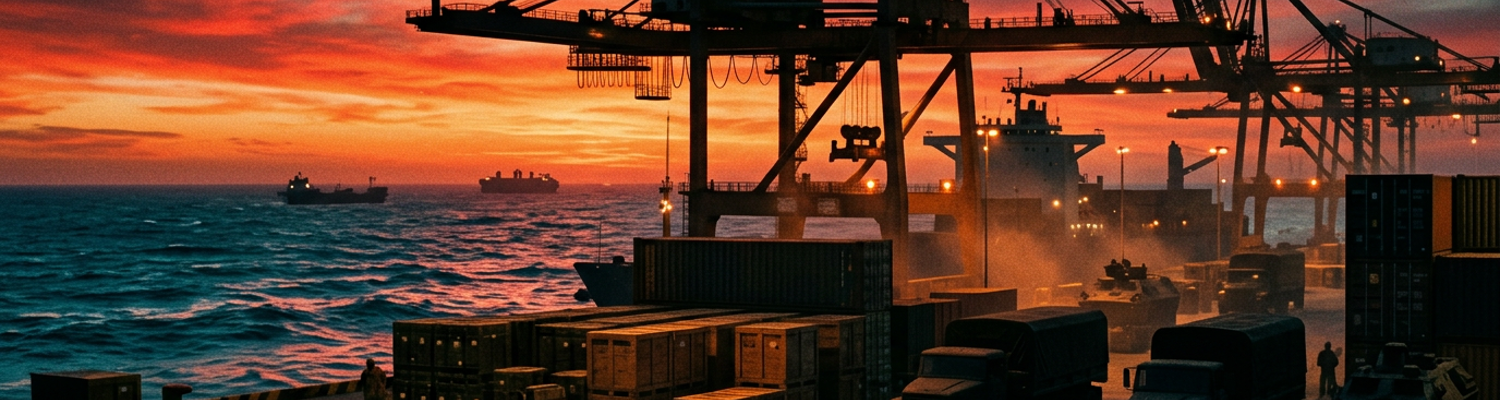
Investigators in the Pentagon traced the distribution breakdown directly to the coastal docks of Pusan, where heavy ocean freighters waited in long lines because separate military commands refused to coordinate their cargo manifests. Redundant supply pipelines and conflicting requisition systems caused critical transport delays and dockside cargo bottlenecks across Korean ports of entry. Cargo vessels and chartered merchantmen rode at anchor in crowded roadsteads for weeks because local harbor masters possessed no master list showing what equipment rested inside each hold. Stevedores unloaded crates onto open wharves without standard inventory forms, stacking crates of low-priority administrative paperwork and office furniture directly on top of vital pallets containing winter parkas and artillery components. Cranes sat motionless for hours while terminal superintendents argued over which service branch possessed the legal authority to clear space on the concrete aprons. Long columns of unassigned wooden boxes piled up under the winter sleet, soaking through cardboard packaging and ruining sensitive radar tubes and engine gaskets before shore crews could identify their final destinations.
Soldiers, sailors, and airmen watched these dockside losses multiply because the Army, Navy, and Air Force operated autonomous and mutually hostile procurement and distribution networks during the Korean War. Each military branch maintained its own independent purchasing boards, regional warehouses, and shipping contracts, treating sister branches as commercial rivals rather than battlefield partners. Army quartermasters locked their warehouse compounds behind chain-link fences and armed sentries, flatly refusing to share pallet space, forklift trucks, or fuel barrels with Navy supply officers stationed at the same port. Air Force cargo officers established duplicate supply depots across southern Japan, hoarding spare aircraft engines and cold-weather clothing inside private storage yards while Eighth Army infantry battalions fought without basic shelter. Service branch leaders hoarded rare raw materials and industrial factory capacity in the United States, driving up prices and creating artificial shortages of common equipment such as nylon tow ropes, dry batteries, and canvas tarpaulins. Inter-service rivalries grew so bitter that branch logisticians routinely concealed warehouse manifests from joint inspectors, ensuring that excess stockpiles remained hidden from other services.
Boxcars stood idle on the rail sidings outside Pusan while logistics officers argued over priority stamps for these hidden stores. Each armed service assigned the highest emergency priority code to its own shipments, saturating the single-track Korean rail system with competing, contradictory transit orders. Train dispatchers confronted stacks of urgent movement directives from three separate military commands, forcing them to halt loaded trains on side tracks because track managers could not determine which cargo took actual precedence. Redundant supply pipelines funneled identical items through separate channels, resulting in three different branches shipping duplicate shipments of standard five-gallon gasoline cans and field rations over the same congested railway line. Frontline Eighth Army depots ran out of mortar rounds and field wire while miles behind the lines, sidings filled with uncoordinated boxcars full of low-priority administrative equipment and service-specific goods. Train crews often disconnected railcars and left them abandoned in rail yards when destination codes proved unreadable or conflicted with local division paperwork.
Quartermasters broke open the sealed steel doors of these abandoned cars with crowbars to search through the unlabeled crates for winter footwear and rifle ammunition. Tactical units resorted to informal foraging, sending armed truck details directly to coastal wharves to intercept incoming barges and seize needed supplies before rival service branches claimed them. Field commanders established barter networks, trading captured North Korean weapons or aviation fuel for basic field medical kits and truck tires. Regimental supply officers kept unauthorized ledgers to bypass the rigid, contradictory service regulations that paralyzed the formal distribution system. General Matthew Ridgway and his theater staff in Tokyo gathered records of stranded tonnage, duplicated procurement contracts, and crippled supply trains to expose the logistical impasse. Staff officers drafted emergency port clearance schedules and padlocked unauthorized service warehouses, forcing branch quartermasters to surrender their independent shipping manifests to joint harbor controllers.
Congressional Pressure and the O'Mahoney Supply Bill
Cargo manifests surrendered to those joint harbor controllers arrived on Capitol Hill alongside grim casualty reports from the frozen Korean ridgelines. Senator Joseph C. O'Mahoney launched aggressive congressional scrutiny into military waste in response to frontline logistical failures and mounting casualties. O'Mahoney summoned generals, admirals, and defense procurement directors before the Senate Appropriations Committee to account for the paralysis in combat distribution. Investigators laid out long display tables covered with duplicate military gear, demonstrating how the services purchased identical supplies such as cotton undershirts, dry batteries, and standard light bulbs under conflicting catalog numbers at wildly divergent prices. Witnesses from the military admitted under sharp interrogation that separate branch quartermasters hoarded factory production lines and chartered competing cargo ships while infantrymen froze in frontline foxholes without basic cold-weather gear. O'Mahoney slammed thick warehouse ledgers onto the committee tables, warning Pentagon officials that Congress would dismantle their independent purchasing fiefdoms if they failed to eliminate the duplication.
O'Mahoney drafted radical legislation proposing an independent fourth branch of the armed services dedicated exclusively to supply management and procurement. This proposed supply agency aimed to strip the Army, Navy, and Air Force of their separate purchasing authorities and place all military contracting under a unified civilian administrator. Lawmakers backing the plan argued that only an autonomous, service-wide supply command could force standardized catalog numbers, shared warehouses, and joint transport schedules onto the competing military branches. Joint Chiefs of Staff members and uniformed service chiefs reacted with open fury, viewing the creation of a fourth military arm as a direct assault on military authority and combat readiness. Branch leaders argued before congressional committees that civilian control over field supply would leave combat commanders unable to direct ammunition, fuel, and medical gear to critical battle sectors during wartime crises. Admirals and generals mobilized their legislative liaison officers across Capitol Hill, lobbying committee members to preserve service control over military logistics.
Robert Lovett intervened in the escalating standoff between Capitol Hill and the service chiefs to negotiate a workable compromise. Lovett met privately with O'Mahoney in Capitol conference rooms, acknowledging the validity of the committee records regarding dockside confusion and wasteful inter-service competition. The defense secretary persuaded O'Mahoney that creating an entirely new military branch in the middle of the Korean War would paralyze ongoing frontline shipments and fracture theater command. O'Mahoney agreed to shelve the immediate creation of a fourth service in exchange for binding statutory authority granted directly to the defense secretary. Lawmakers codified this bargain by attaching the O'Mahoney Amendment to the pending 1953 defense appropriations bill, prohibiting the services from spending procurement funds without complying with regulations issued by the secretary.
Lawmakers steered this amended appropriations bill through the Senate chamber alongside the companion Defense Cataloging and Standardization Act in July 1952. The newly enacted statutes handed Lovett legal authority to cut off defense funding to any armed service that refused to pool resources or coordinate requisitions. Pentagon staff officers immediately began drafting centralized administrative regulations to establish common catalog numbers, combined warehouse facilities, and integrated transport schedules across all three branches. Armed service logisticians recognized that continued resistance to joint coordination would risk the total loss of their independent purchasing budgets. Lovett signed initial organizational orders at his desk and instructed his policy aides to issue formal Department of Defense directives establishing unified supply standards across the armed forces.
Pentagon Opposition to a Fourth Service Branch
Couriers carried Lovett's initial organizational orders across the Pentagon outer ring, triggering immediate resistance from uniform bureau chiefs determined to defend their traditional jurisdictions. Traditional service leadership fiercely resisted the O'Mahoney proposal to protect their statutory purchasing independence and administrative sovereignty. Navy bureau chiefs, Army technical service commanders, and Air Force materiel generals viewed the proposed separate fourth service as an intolerable threat to their institutional control. Uniformed leaders argued that combat commanders required direct, unbroken control over their own weapons, vehicles, and hospital gear to ensure tactical success in Korea. Branch logisticians circulated formal staff studies showing that a detached civilian agency would fail to understand specialized combat needs and would cause fatal delays along active battlefronts. General Omar Bradley and the Joint Chiefs of Staff met in closed strategy sessions to organize formal military resistance against any external agency taking over their purchasing pipelines.
William C. Foster entered these closed strategy sessions to confront the military chiefs with the political realities building on Capitol Hill. Foster warned the assembled flag officers that congressional anger over Korean supply failures had reached a breaking point and would not subside. Secretary of Defense Robert A. Lovett and Deputy Secretary William C. Foster recognized that congressional intervention would permanently fragment defense leadership unless preempted administratively. Foster explained that if lawmakers passed a statutory mandate creating an independent fourth branch, the Pentagon would lose internal control over defense budgeting and materiel allocation forever. This statutory intervention would establish a rival civilian bureaucracy, causing permanent jurisdictional battles between supply managers and operational field commanders. Lovett summoned the service secretaries to his private office to present an internal administrative alternative that would centralize procurement under the Office of the Secretary of Defense rather than an outside agency.
Frank Pace and Navy Secretary Dan Kimball examined Lovett's administrative alternative alongside their top military logisticians. The service secretaries recognized that accepting secretarial regulations within the Pentagon was the only practical way to stop Congress from dismantling their independent supply departments. Military lawyers and procurement officers worked through the night to review each provision of the draft directives, ensuring that combat commanders retained immediate command over tactical ammunition, warships, and frontline combat vehicles. Lovett agreed to protect direct branch control over operational distribution while asserting complete secretarial authority over common commercial items, contract terms, and catalog numbers. Pentagon drafting teams integrated the congressional standardization goals directly into department-wide administrative procedures, disarming legislative arguments for an autonomous supply branch. Lovett and Foster approved the formal charter for the Defense Supply Management Agency, anchoring centralized procurement management securely inside the civilian defense secretariat.
Printers in the Pentagon basement produced thousands of copies of the approved charter alongside detailed instruction packets to prepare the new regulations for immediate distribution. Press crews ran printing equipment throughout the night, packaging uniform catalog rules and joint procurement mandates for military contracting offices worldwide. Uniformed quartermasters who had spent months fighting the O'Mahoney proposal received these binding administrative directives on their desks and began realigning their purchasing contracts to comply with the civilian standards. Defense liaisons delivered copies of the completed directives to Senator O'Mahoney and his committee staff, demonstrating that the Pentagon possessed the administrative tools to eliminate inter-service waste without legislative disruption. Lovett forwarded the finalized directives package to President Harry Truman for executive approval and immediate enforcement across the entire military establishment.
The April 1952 Defense Directives Charter
Truman reviewed the executive submission at the White House and returned the signed authorization papers to the Pentagon without demanding revisions. Robert Lovett and William Foster issued the foundational charter establishing the formal Department of Defense Directives System on April 15, 1952, translating that White House support into active departmental policy. The new administrative system established legally binding civilian regulations across all military branches without requiring statutory reorganization by Congress. Staff attorneys drafted the charter so that secretarial orders bypassed legislative debates and committee amendments, drawing directly on existing executive authority over departmental management. Lovett stamped his official signature onto the master charter document, anchoring civilian command over common procurement, inventory catalogs, and warehousing methods.
Couriers carried carbon copies of the signed charter along the Pentagon rings to the headquarters of the Army, Navy, and Air Force. Service secretaries received numbered policy folders containing explicit standards that superseded individual branch regulations regarding cross-service requisitions and joint distribution depots. William Foster oversaw this distribution process, holding daily administrative briefings to ensure that uniformed bureau chiefs understood the compulsory nature of the new system. General staff officers could no longer alter civilian purchasing rules by appealing to traditional branch customs, because any violation of a published directive placed a procurement officer in direct breach of defense regulations. Military lawyers inside the service departments examined the charter text and advised their respective chiefs of staff that Lovett had created an airtight legal framework leaving no procedural room for defiance.
Admirals and generals gathered their senior logisticians in closed staff rooms to adjust branch procurement machinery to this legal framework. Supply officers began replacing separate service stock numbers with single federal catalog codes on purchase orders for ammunition boxes, truck batteries, and field dressings. Civilian administrators appointed by Foster entered military depots in Pusan, Tokyo, and San Francisco to inspect cargo manifests and ensure that dock crews loaded ships according to unified departmental priorities rather than branch preferences. Depot managers who previously hoarded transport space surrendered their excess warehouse bays to joint custody teams, allowing whole blood containers and cold-weather clothing to move directly to frontline airfields without jurisdictional hold-ups. Transport pilots and truck drivers across the Pacific distribution network began receiving standardized shipping papers that allowed different service branches to handle the same crates without repacking or relabeling.
Joseph O'Mahoney examined these joint shipping records on Capitol Hill and suspended further committee hearings on his proposal for an independent supply branch. Lawmakers accepted the administrative charter as practical proof that civilian defense executives could enforce discipline across the military services without expanding statutory bureaucracy. Lovett used the success of the April charter to issue additional binding directives governing weapons research, budget allocations, and inter-service intelligence sharing throughout the remaining months of 1952. Clerk typists in the defense secretariat fed thick stacks of stencil paper into mimeograph machines, turning out numbered regulations that permanently reshaped daily military administration. Boxed shipments of the new regulatory binders left Washington on transport planes bound for military commands across North America, Europe, and Asia, delivering mandatory procurement schedules to base quartermasters worldwide.
Civilian Defense Control and Modern Administrative Governance
Quartermasters unpacked these heavy binders inside base supply offices from Yokohama to Frankfurt, tearing up old branch requisition forms to comply with the unified regulations. Supply sergeants hauled wooden crates of separate branch catalogs into incinerators, replacing them with single federal stock ledgers that listed identical parts under identical numbers. Warehouse crews spent long shifts relabeling storage bins with standard federal stock numbers, stripping away the independent cataloging marks that the Army, Navy, and Air Force had defended for generations. Logisticians at coastal shipping terminals began combining cross-service freight onto single railcars and cargo ships, eliminating the private transport pools that had paralyzed Korean ports. Capitol Hill staff investigators arrived at defense depots to find uniform purchase contracts and consolidated warehousing already functioning under civilian secretarial authority. Legislative staff members carried these verified field reports back to Capitol Hill, proving that internal Pentagon reforms were actively dismantling inter-service logistics barriers.
Senator Joseph O'Mahoney reviewed these verification reports on Capitol Hill and dropped his push to break apart the military supply system through legislation. Congressional committees set aside draft bills for an independent civilian procurement agency after seeing that secretarial mandates eliminated the price disparities and duplicate purchasing contracts exposed during the Korean winter crisis. Lawmakers recognized that imposing an external civilian supply service by statute would create fresh jurisdictional friction between battlefield commanders and outside administrators. Senate leaders chose instead to reinforce the secretarial regulatory mechanism, relying on Lovett's administrative orders rather than statutory surgery to control defense spending. Armed services committee members informed President Truman that Congress would monitor the directives system closely but would hold further legislative interference in reserve. Civilian defense executives used this legislative retreat to secure direct decision-making power over armed service budgets and equipment allocations.
Robert Lovett anchored this newly won executive dominance into daily Pentagon management by issuing numbered instructions that bound every uniform service chief directly to the Secretary of Defense. Lovett's directive system established the permanent operational framework for civilian executive control and consolidated authority within the Office of the Secretary of Defense. Before these binding orders took effect, the civilian defense secretary operated largely as a mediator between three autonomous service departments that ran their own budgets and purchasing networks. Lovett replaced informal inter-service negotiation with legally enforceable secretarial decrees that uniformed commanders could not challenge or dilute through service appeals. Civilian assistant secretaries used these numbered directives to take control of weapon development programs, inventory policies, and joint logistics commands across the military establishment. Branch chiefs who had once bypassed secretarial authority now had to present every major expenditure and operational reorganization to civilian review boards for formal approval.
Clerks inside the defense secretariat stamped new directive serial numbers onto administrative orders for weapons development, personnel policy, and military hospital logistics. Defense couriers hand-delivered these numbered folders to the Joint Chiefs of Staff, establishing clear operational boundaries that subordinate military bureaus had to follow without exception. Logistics officers in Washington transferred control of shared transport fleets and common medical stockpiles to joint management agencies directly accountable to civilian defense directors. Harbor masters at Pusan and San Francisco loaded transport ships using single departmental manifests, routing blood shipments, winter parkas, and artillery shells directly to frontline units without a single competing service requisition form. Dock workers swung crane hooks over open cargo holds along the Korean docks, lowering standardized palettes of mortar shells into waiting trucks that departed immediately for frontline combat sectors.