
Landing Mishap and Structural Failure
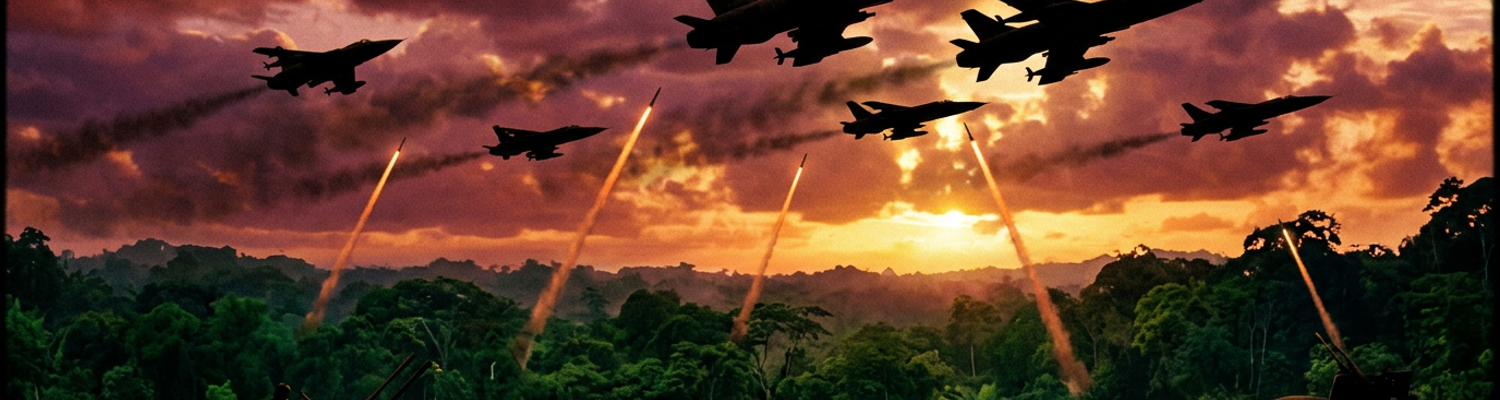
Steel bomb racks hung empty along the centerline and wings of McDonnell Douglas F-4B Phantom II Bureau Number 152213 as the twin-engine jet completed its combat run over I Corps on the night of September 19, 1969. Marine Fighter Attack Squadron 122 had loaded the warplane with high-explosive ordnance and external fuel tanks to strike enemy supply routes through worsening monsoon weather. Marine aviators expended their ordnance in the target area before turning back toward Chu Lai Airbase under overcast skies. Ground radar controllers monitored the heavy fighter as it descended through rain squalls toward the coastal strip, where inches of standing water pooled across the expeditionary runway. Twin General Electric J79 turbojet engines throttled down as the crew lined up on their final approach path, relying on cockpit flight instruments to gauge their glide slope through the murk. Main landing gear tires slammed onto the saturated AM-2 aluminum matting at touchdown speed, instantly initiating a severe loss of directional control.
Water trapped beneath the rolling tires prevented the high-pressure rubber from contacting the grooved aluminum surface, sending the twenty-ton aircraft into violent hydroplaning along the runway centerline. Aerodynamic rudder inputs and emergency wheel braking failed to arrest the skid as the jet glided over a continuous sheet of rainwater. Enormous sideways forces built up along the landing gear mountings while the Phantom veered sharply toward the edge of the runway. High-strength steel struts twisted and snapped under the violent lateral loads, collapsing the landing gear and dropping the fuselage directly onto the metal planks. Jagged aluminum matting tore open the underside of the sliding aircraft, crushing structural bulkheads, rupturing pressurized fuel cells, and causing major structural airframe loss before the metal carcass skidded to a stop.
Chu Lai crash-fire-rescue teams launched emergency vehicles and foam trucks the moment the crippled F-4B ground to a halt on the runway. Severe operational restrictions complicated the emergency response because the coastal airfield maintained strict nighttime blackout rules to prevent enemy mortar and rocket barrages. Vehicle drivers navigated without standard high-beam headlights, peering through heavy rain while following dim hooded marker lamps along the flooded taxiways. Rain-soaked sandy soil flanking the aluminum strip threatened to bog down the heavy recovery equipment, forcing emergency crews to keep their trucks on the slippery metal planks. Rescue personnel approached the smoking wreckage with chemical foam lines deployed, working in near-total darkness to neutralize leaking JP-4 aviation fuel and pull the uninjured aircrew out of the battered cockpit.
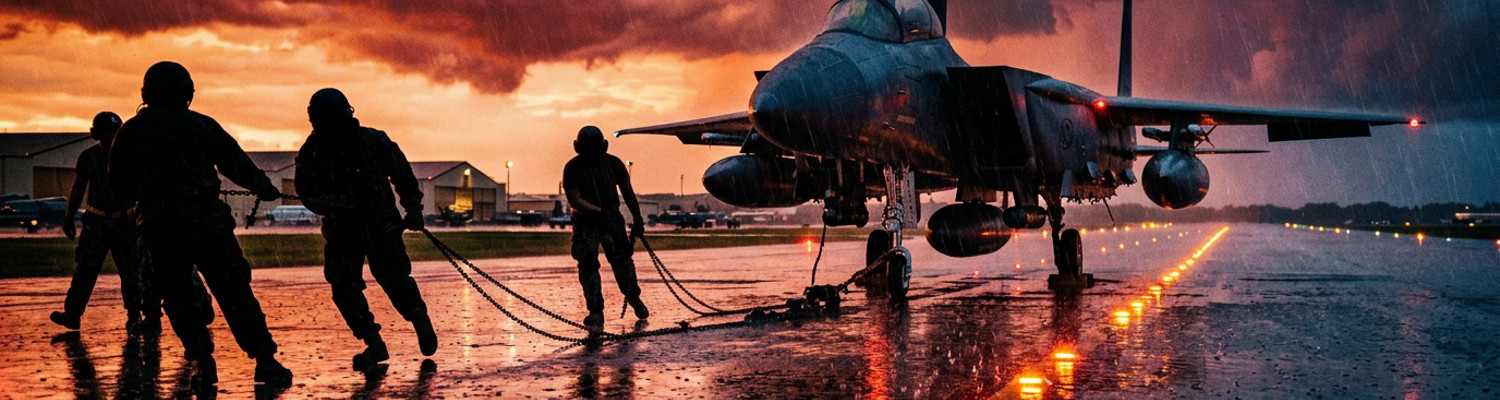
Investigators arrived at the crash site as soon as the aviators reached safety, shining shielded red flashlights over the sheared landing gear struts and mangled belly panels. On-scene maintenance officers documented the extensive night landing strike damage, confirming that the airframe had suffered terminal structural twisting that precluded depot repair. Expeditionary runway conditions at Chu Lai had offered zero drainage during the cloudburst, leaving water trapped within the corrugated seams of the matting and creating a lethal hydroplaning hazard. Base recovery teams maneuvered tracked clearing vehicles and heavy nylon straps around the ruined jet, hauling the structural wreck off the runway to clear the landing strip for incoming night sorties.
Degradation of Aluminum Matting Runways
Tractors dragged the shattered F-4B onto the sandy margins of Chu Lai Airbase, exposing the battered foundation of the expeditionary runway system. Continuous monsoon downpours had turned the sandy subgrade beneath the airfield into liquid mud, removing the uniform foundation required to support heavy flight operations. Interlocking seams of the AM-2 aluminum matting flexed violently under the impact of landing aircraft without solid earth beneath the metal panels. Repetitive pounding broke the male and female locking edges of the extruded aluminum planks, allowing individual panels to work loose and buckle upward across the landing zone. Surface flooding caused total friction loss across the entire strip as jet touchdowns pumped water and sand slurry through the fractured joints, eliminating tire traction. Marine engineers worked along the centerline with replacement locking bars and sledgehammers, attempting to reseat the buckled metal panels before the next flight of Phantoms returned from the target area.
Steel pendant cables of the expeditionary MOREST M-21 arresting gear took over the primary burden of stopping the returning Phantoms because the distorted matting offered zero usable wheel braking. Marine aviators slammed their tailhooks down ahead of touchdown, aiming to snag the wire before their jets could hydroplane off the narrow runway. Shore-based arresting engines positioned in sandbagged revetments beside the runway absorbed severe mechanical stress during these heavy arrested landings. Rapid recovery cycles caused severe cable wear, fraying the heavy steel wire ropes as tailhooks struck them against the ribbed aluminum joints at over one hundred and thirty knots. Infiltrating water and grit coated the internal friction brake assemblies, inducing severe clutch slippage that dangerously lengthened rollout distances across the wet strip. Maintenance mechanics worked continuously between landing intervals, adjusting hydraulic line pressures and flushing grit out of the clutch packs to keep the arresting system operational.
Clutches inside the expeditionary MOREST M-21 engines slipped despite these emergency cleanings, permitting aircraft to roll much farther down the flooded runway before the cable halted their forward momentum. McDonnell Douglas F-4B main gear assemblies experienced intense mechanical loads during these extended high-speed wet-arrestment rollouts, triggering excessive tire blowout rates across VMFA-122. High tire pressures of nearly three hundred pounds per square inch made the rolling rubber vulnerable to the jagged edges of distorted matting joints and sheared fasteners. Violent deceleration forced spinning tires against protruding aluminum lip edges as the aircraft yawed on the wet surface, gouging deep cuts through the tread plies and blowing internal cords. Exploded tires threw chunks of vulcanized tread into wheel wells and severed hydraulic lines, locking wheel assemblies and sending sparks showering across the soaked runway as bare wheel rims ground against the aluminum planks.
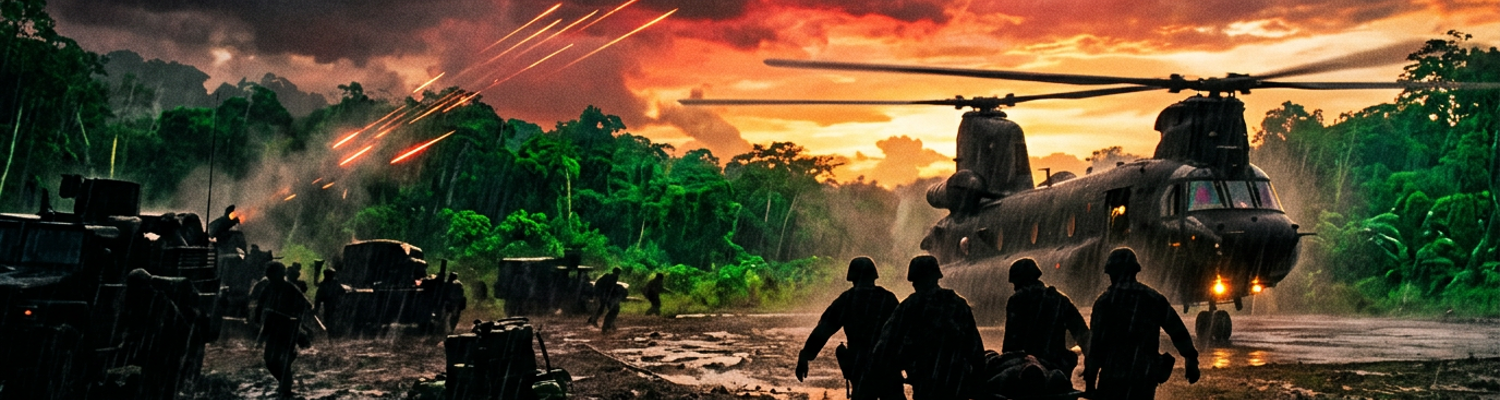
Mechanics rushed onto the active runway with tow tractors and heavy jacks after each blowout, hoisting damaged jets to clear the strip before overhead aircraft burned through their remaining fuel. Ground crews worked in drenching rain and total darkness under blackout conditions, unbolting shredded wheel assemblies and mounting fresh rubber while engines idled nearby. Airfield operations officers faced a severe logistics shortage as the relentless operational tempo rapidly exhausted the local supply of replacement F-4B main tires and M-21 brake components. Supply personnel radioed emergency requisitions to Da Nang to replenish depleted storehouses while technicians cannibalized parts from grounded aircraft to keep front-line jets flight-ready. Marine commanders ordered the next flight of Phantoms into the night sky the moment the runway was cleared, continuing combat sorties over the coastal mountains despite the deteriorating airfield surface.
Logistics Deficits and Parts Cannibalization
J79-GE-8 turbojet engines burned through finite operating hours over those dark ridgelines while Marine Aircraft Group 13 struggled against chronic supply depot shortfalls of critical replacement components. Deep logistics bottlenecks between rear-echelon depots in the United States and advanced bases in South Vietnam left supply storehouses at Chu Lai without essential engine parts. Flight line maintenance personnel opened priority shipping crates only to find them empty of turbine rotor blades, combustion liners, fuel nozzles, and afterburner control units. Radar replacement packages were equally scarce in supply tents across the group, with backorders for receiver-transmitters and antenna synchronizers stretching back several months. Supply clerks submitted urgent electronic requisitions to naval aviation depots at Subic Bay and Da Nang every morning, but resupply cargo transports rarely carried the specialized avionics boxes and turbojet hardware required to keep the heavy fighters airworthy. Ground crews watched the operational ready rates of MAG-13 squadrons sink steadily as broken components accumulated on repair benches without replacement parts to fix them.
Mechanics countered these mounting supply deficits by carrying out the systematic cannibalization of grounded F-4B airframes on the flight line to maintain required operational ready rates. Maintenance officers selected disabled Phantoms with severe battle damage or major structural wear and parked them inside sandbagged revetments to serve as parts donors. Ground crews swarmed over these stripped jets with wrenches and screwdrivers, unbolting hydraulic pumps, generator drives, landing gear valves, and engine accessories to install on aircraft scheduled for upcoming strikes. Technicians worked through heavy downpours under blackout conditions, tracing wiring bundles and detaching functional assemblies before carrying the dripping parts to waiting jets. Stripped airframes lost their landing gear doors, canopy actuators, wing panels, and tail components until they rested on wooden jacks as hollow aluminum shells surrounded by red warning tags. Squadron maintenance chiefs kept handwritten boards showing which aircraft carried borrowed components, balancing the immediate demands of the night flight schedule against the gradual loss of their reserve fleet.
McDonnell Douglas APQ-72 radar systems installed in the noses of those active and donor Phantoms suffered severe corrosion caused by continuous exposure to salt air, humidity, and fine grit. Chu Lai sat directly against the South China Sea, where coastal onshore winds drove fine beach sand and ocean salt mist through the seams of forward avionics compartments and unsealed radomes. Tropical rainstorms kept humidity levels near saturation point, turning airborne salt and silica dust into an abrasive, conductive film that coated delicate vacuum tubes and waveguide flanges. Pitted electrical pins and oxidized wire terminals caused intermittent short circuits inside the antenna dish drive motors and receiver chassis. Radar intercept officers in the rear cockpits reported radar displays dropping offline during high-speed runs, blinding crews to terrain obstacles and target checkpoints in heavy monsoon overcast. Technicians pulled the heavy fiberglass radomes forward on their guide rails between flights, using alcohol swabs and brass wire brushes to scrub chalky green corrosion off sensitive connectors.
Electricians tested those scrubbed connectors with portable multimeters and latched the fiberglass nose cones shut as soon as the circuits showed minimum electrical continuity. Line mechanics rolled mobile starter carts up to the revetments, spinning the transplanted J79-GE-8 turbojets up to ignition speed to verify that scavenged fuel pumps and starter valves held pressure without leaking. Flight line supervisors initialed yellow maintenance logs to clear each patched fighter for the next wave of night sorties, assigning the aircraft to waiting aircrews before the engines cooled. Pilots taxied out past the line of gutted donor airframes and lined up on the damaged aluminum matting, pushing throttles into afterburner to launch another strike run through the stormy coastal darkness.
Radar Guidance and Blind Strike Coordination
F-4B Phantoms climbed off the flexed aluminum matting and ascended directly into thick monsoon clouds, leveling off at assigned altitudes where solid overcast eliminated visual contact with the terrain below. Marine Air Support Squadron radar teams tracked each fighter on ground displays, preparing to conduct ground-controlled radar bombing profiles using mobile AN/TPQ-10 radar sets positioned at forward direct air support centers. Technicians inside the air-conditioned electronics vans relied on precision conical-scan tracking antennas and analog computers to guide the blind jets along steady flight paths toward unseen coordinates. Radar controllers issued minute heading and airspeed adjustments over ultra-high-frequency radio channels to keep each Phantom centered on a calculated bomb release corridor. Aircrews in the darkened cockpits surrendered visual navigation entirely, flying purely on cockpit instruments while waiting for the ground station to transmit the tone that would automatically trigger their bomb shackles.
Radio transmissions carrying those automated release tones frequently broke down when heavy rain squalls swept across the radar antenna horns. Strike aircraft suffered repeated beacon tracking dropouts as dense cloud layers scattered transponder signals, causing the aircraft symbol on ground plotting scopes to flicker and split into broken radar clutter. Marine controllers confronted simultaneous tactical frequency congestion on operational air request networks, where emergency medical evacuations, artillery adjustment missions, and strike flights crowded onto the same limited radio channels. Overlapping broadcasts generated screeching feedback that masked vital steering commands, forcing operators to repeat azimuth corrections to keep pilots aligned with target runs. Technicians had to abort the attack profile whenever a transponder dropout persisted for more than two seconds, instructing the aviator to climb out through the turbulence and re-enter the holding pattern.
Pilots burned through finite internal fuel reserves while orbiting in those turbulent holding patterns near isolated valleys where allied infantry required immediate close air support. Marine combat outposts and allied defensive garrisons frequently demanded blind bomb drops within five hundred meters of their perimeter wires to break up night ground assaults. Bombing clearances within such narrow margins created extreme accuracy challenges, as slight tracking errors, sudden wind shear, or altimeter calibration drift could send strings of high explosives directly into friendly trenches. Fire support coordinators in the field listened to artillery reports and verified forward coordinates over field radios, calculating safety distances before granting clearance to release heavy ordnance so close to their own troops. Ground troops pulled back into sandbagged bunkers and covered their ears against the impending detonations, waiting for the strike aircraft to drop their ordnance through the fog.
Radar controllers guided the approaching Phantom through that blinding fog, watching the illuminated blip intercept the firing azimuth before transmitting the tone to drop the ordnance. Solenoids inside the wing bomb racks snapped open under electrical impulse, releasing strings of five-hundred-pound high-explosive bombs into the cloud deck. Explosions tore through the jungle canopy seconds later, rattling timber revetments across the friendly outpost as radar operators matched the radar plot against the target coordinates on their grease-pencil boards. Pilots pulled the lightened fighters into steep climbing turns away from the concussion shockwaves, throttling back their engines to conserve fuel before setting a return course toward the flooded runway at Chu Lai.
Monsoon Flight Conditions and Terrain Hazards
Rain squalls battered the climbing fighters as heavy monsoon clouds closed over the high peaks of the Annamite Range, producing continuous torrential downpours across the flight path. Heavy monsoon ceilings dropped to within a few hundred feet of the jagged mountain jungle, bringing fierce turbulence that battered every aircraft attempting to cross the ridgelines. These extreme conditions grounded light observation aircraft across the I Corps Tactical Zone, forcing airborne forward air controllers to secure their single-engine Bird Dogs and twin-engine Broncos inside sandbagged revetments at Da Nang and Chu Lai. Without those airborne forward air controllers circling low over the valleys to mark enemy targets with white phosphorus smoke rockets and guide strikes visually, Marine flight crews lost their primary spotters over the mountainous terrain. Squadron commanders had to push their heavy Phantoms into the turbulent cloud deck to maintain air pressure against enemy supply networks, forcing crews to navigate through mountain passes on flight instruments alone without visual reconnaissance.
Radar operators at the Tactical Air Direction Center took control of those instrument-guided jets, tracking faint transponder returns across their scopes to shepherd the heavy F-4Bs through the rugged terrain around Quang Tin. Heightened reliance on Tactical Air Direction Center vectors became the only way to move strike aircraft through the narrow gaps between storm cells and granite bluffs. Marine flight crews relied entirely on ground radar controllers for steering commands and minimum safe altitude advisories, holding their wings level as heavy cloud banks concealed the mountain faces of the province. Radio frequencies crackled with constant heading updates and urgent rate-of-descent corrections, keeping the twin-engine jets aligned with clear air pockets where steep rock faces flanked both sides of the flight path. Heavy monsoons distorted radio signals and generated sweeping radar clutter that broke transponder locks, while steep ridgelines frequently blocked line-of-sight transmissions between ground antennas and low-flying jets. Radar technicians inside the mobile operations vans watched the glowing blips carefully, anticipating terrain hazards and broadcasting rapid altitude warnings over the radio network before pilots drifted toward unmapped ridge tops.
F-4B pilots acknowledged those radar warnings and held steady headings on their flight instruments until ground controllers cleared them to descend below the overcast for low-altitude ordnance delivery. Severe spatial disorientation risks threatened aircrews the moment they transitioned abruptly from instrument flight inside the cloud deck to high-speed visual bombing runs near the jungle canopy. Aviators tore their eyes from glowing artificial horizons and altimeter dials to stare into driving rain and absolute darkness, where false horizons and flickering artillery flares warped their perception of pitch and bank angle. Violent inner-ear illusions pulled at the pilots during rapid descents and sharp pull-ups, producing false sensations of an inverted dive or an uncontrolled roll toward the unseen trees. Radar intercept officers in the rear cockpits shouted altitude warnings over the intercom system, cross-checking radar altimeters against barometric needles to pull their pilots back from sensory confusion before weapon release. Pilots braced against the flight controls to steady their dive angles, dropping their high-explosive bombs onto designated target coordinates before hauling back on the stick to climb away from the rising ridgelines.
Ferry Flight Staging and Rapid Deployment
Flight crews hauling back on those vibrating control sticks were flying on raw adrenaline after arriving at Chu Lai with zero time to adjust to combat. Marine Aircraft Group 15 had initiated the rapid deployment of fourteen F-4B Phantoms from Marine Corps Air Station Iwakuni between September 1 and 5, 1969, to rebuild depleted strike rosters in South Vietnam. Maintenance specialists at the Japanese base worked double shifts across the flight line, inspecting hydraulic seals, testing electrical busses, and mounting twin 370-gallon external fuel tanks to ensure the heavy fighters could cross open ocean safely. Pilots and radar intercept officers packed essential gear into aluminum baggage pods hung beneath the wings while squadron navigators plotted overwater corridors designed to skirt regional storm fronts. Flight leaders scheduled departures in tightly spaced sections, pushing crews through quick pre-flight briefings so the aircraft could maintain scheduled arrival windows along the island route. Ground marshals waved the twin-engine jets out of their revetments and directed them toward the active runway, launching the aircraft in waves across the ocean to begin their long ferry flight southward.
Naha Air Base on Okinawa received the first wave of Phantoms as the flight crews touched down for their initial intermediate staging and fuel stop. Base refueling crews at Naha rushed fuel trucks to the flight line, pumping aviation fuel into the internal cells and external drop tanks while aviators drained water bottles and checked weather teletype reports. Marine pilots kept their engines running on auxiliary power units during these brief servicing windows, minimizing time on the ramp before taxiing back out to the runway for departure across the East China Sea. Naval Air Station Cubi Point in the Philippines served as the second critical staging hub, where line personnel marshaled the fourteen jets into transit revetments for maintenance checks and fuel servicing. Navy technicians at Cubi Point inspected tires for heat blistering, checked arresting hook hold-down springs, and flushed salt spray from air intakes that had skimmed low over tropical ocean swells. Flight leaders collected clearance paperwork from naval air traffic control, conducted final compass checks, and led their sections off the Philippine runway, heading west across the South China Sea directly toward the combat zone in South Vietnam.
Tires from the ferried F-4Bs slammed onto the aluminum matting at Chu Lai at the end of that overwater crossing, delivering the replacement aircraft directly into an operational crisis. Marine Aircraft Group 13 commanders faced heavy sortie quotas and immediate combat demands, prompting them to push the newly arrived flight crews into high-tempo combat sorties without transition or acclimatization days. Aviators who unbuckled their harnesses and climbed down boarding ladders stepped straight from the overwater ferry flight into tactical briefing shacks rather than rest quarters. Base operations officers handed the weary crews grease-penciled map boards, radio frequency cards, and radar bombing coordinates for immediate night missions over I Corps. Ground crews worked around the clock outside the revetments, pumping fresh fuel into the warm tanks, bolting high-explosive ordnance onto bomb racks, and wiping oil from engine access doors. Pilots strapped back into ejection seats with sweat-soaked flight gear, taxiing heavily laden fighters back onto the slick aluminum matting to launch into blind monsoon cloud layers over the Annamite Range.
Airfield Rebuilds and Logistical Lessons
Airframe structures sustained brutal mechanical strain during those blind climbs through churning monsoon turbulence, accelerating deep structural fatigue across the entire fighter fleet. Maintenance specialists conducting comprehensive post-deployment assessments later confirmed excessive airframe wear directly linked to forward expeditionary basing in high-humidity coastal zones. Inspectors at rear-echelon rework facilities discovered widespread galvanic corrosion spreading through internal wing spars, keel beams, and titanium engine compartments where salt-laden moisture pooled without evaporating. Moisture seeped past degraded rubber cockpit seals and unpressurized access doors, settling inside internal keels where stagnant water corroded electrical terminal blocks and pitted structural alloy rivets. Specialists documented severe delamination along fiberglass radar radomes and deep exfoliation corrosion across wing-fold hinges that spent months soaked by coastal humidity in uncovered flight-line revetments. Depot maintenance logs revealed that forward expeditionary basing in the wet Vietnamese climate consumed more than three times the projected maintenance man-hours per flight hour, forcing aviation commands to ground dozens of frontline aircraft for extensive structural rebuilds.
Engineers linked those extensive airframe rebuilds directly to the physical limitations of short expeditionary airfields tasked with supporting sustained operations by twin-engine heavy fighter-bombers. McDonnell Douglas designed the fifty-four-thousand-pound F-4 Phantom for paved concrete runways or aircraft carrier catapults, yet Chu Lai forced flight crews to operate heavily armed warplanes from an eight-thousand-foot strip of interlocking aluminum planks. Heavy bomb racks, external fuel tanks, and twin J79 turbojet engines pounded the flexible AM-2 metal surface during high-speed takeoffs, generating violent ground vibration that shook cockpit instrument panels and fatigued main landing gear attachment fittings. Short runway lengths gave returning pilots no margin for smooth flare maneuvers, requiring them to chop their throttles and slam heavy gear assemblies onto the matting at high sink rates to catch arresting cables before running off the end of the strip. Repetitive arrested recoveries drove tremendous shock loads through the tailhook assemblies and rear fuselage bulkheads, cracking structural frames and pulling internal support ribs out of alignment. Base operations officers watched landing strips buckle under these continuous shock forces, proving that short tactical airfields designed for light single-engine attack jets could not endure the punishing weight and landing loads of heavy twin-engine fighter-bombers.
Marine Corps headquarters initiated massive logistical overhauls to correct those operational airfield failures and protect deployed fighter squadrons from catastrophic equipment attrition. Aviation planners overhauled deployed squadron parts allocations, tripling the mandatory on-hand inventory levels for high-stress F-4 components such as J79 combustion cans, main landing gear tires, and radar receiver packages. Supply depots introduced sealed, environmentally controlled transport containers to protect delicate avionics modules from tropical humidity and salt air before technicians mounted them into aircraft on the flight line. Naval Mobile Construction Battalions simultaneously launched major expeditionary runway resurfacing programs, tearing up miles of fractured AM-2 aluminum matting at forward bases to install permanent crushed-rock foundations and thick asphalt surfaces. Seabees poured heavy reinforced concrete landing pads at runway thresholds and anchored upgraded MOREST arresting gear assemblies into deep concrete footings to absorb the impact of wet-weather fighter recoveries without cable pullouts. Construction teams completed the new all-weather asphalt runways and handed the hardened flight lines over to Marine Aircraft Group commanders, establishing the durable surface needed to launch fully loaded fighter-bombers on around-the-clock combat schedules.