
Telemetry Blackout and Post Splashdown Silence
Radio receivers across the Atlantic recovery line hissed with background static when Project Mercury ground stations lost contact with Aurora 7 during atmospheric reentry. Cape Canaveral flight controllers stared at frozen instrument consoles as a forty minute telemetry and high frequency radio blackout began, leaving the civilian space agency completely unaware of the spacecraft condition. Astronaut Scott Carpenter had fired his retrorockets three seconds late and at an incorrect pitch angle, causing Aurora 7 to overshoot its planned landing zone by two hundred and fifty nautical miles northeast of Puerto Rico on May 24, 1962. The complete communication breakdown meant flight directors in Florida could pass no direct orders to the distant recovery task force, forcing naval commanders on the scene to operate entirely on their own initiative. Operations officers on the bridge of the primary recovery carrier stood over silent speaker channels while junior technicians penciled crude ballistic arcs across laminated sea charts.
Chartroom technicians aboard the recovery flagship tracked the widening trajectory error as radar tracking posts on Grand Turk and Bermuda relayed conflicting contact reports. Rear Admiral John L. Chew and his Task Force 140 staff had to make rapid tactical choices without guidance from Florida, because civilian controllers held unverified status reports and refused to broadcast an unconfirmed splashdown fix. Bridge officers realized that the capsule had plunged far over the horizon and well outside the radar envelopes of the primary recovery ring, landing in open ocean where picket coverage was dangerously thin. Watchstanders responded by ordering the immediate diversion of Atlantic Fleet destroyers and picket ships toward provisional coordinates calculated from the last radar sweep. Engine rooms aboard forward destroyers pushed their steam boilers to flank speed, cutting eastward through heavy Atlantic swells toward the estimated impact zone.
Boiler turbines shuddered under maximum output as the destroyers raced against falling fuel reserves and fading afternoon daylight to close the distance. Flight crews aboard land based search planes took off from naval air stations in Puerto Rico and Florida without precise target coordinates, relying on ultra high frequency radio direction finding gear to listen for the emergency rescue beacon. Logbooks in the combat information centers accumulated hurried handwritten notes detailing the total failure of civilian communications lines during the descent phase. Communications officers worked with backup Morse code transmitters to bypass saturated teletype circuits, documenting how civilian control rooms had lost situational awareness the moment the capsule dropped below the radio horizon. Signalmen stood on the upper bridge wings with heavy optical binoculars, searching rolling ocean waves for any trace of orange dye marker or an unfurled nylon parachute canopy.
Binoculars swept across hundreds of square miles of vacant water while deck crews on the recovery aircraft carrier readied heavy hoisting nets, retrieval cables, and medical stretchers. Aircrews in twin engine patrol aircraft flew broad creeping line search patterns, scanning the surface along the projected drift track to spot any trace of the tiny spacecraft. Combat planners inside the flagship chartroom transcribed raw radio intercepts into operational logbooks, compiling an unvarnished record of how telemetry dead zones and radio silence paralyzed central command. Navigation officers marked off each empty search sector on master plotting boards with red grease pencils, shifting fleet search formations further east toward the provisional target grid.
SOFAR Hydrophone Networks and Aerial Search Sweeps
Hydrophone arrays belonging to the Navy Sound Surveillance System and the offshore SOFAR network registered the sharp acoustic impact of the capsule while fleet plotters redrew their charts. Underwater listening stations positioned from Bermuda down to the Caribbean basin recorded the sound waves generated when Aurora 7 hit the sea surface and detonated its small underwater explosive locator charge. Civilian and military acoustic specialists working inside windowless shore stations monitored the faint signals on rolling paper drum recorders to calculate exact sound arrival times. Sonar analysts drew acoustic bearing lines from separate hydrophone positions, producing a consolidated fix that placed the spacecraft roughly two hundred and fifty nautical miles beyond the planned recovery zone. Watchstanders at Caribbean Sea Frontier command headquarters matched these sound records against early radar plots and transmitted the acoustic coordinates directly to flight dispatchers at nearby naval airfields.
Flight crews at Naval Station Roosevelt Roads sprinted across the tarmac as emergency launch orders sent land based Navy patrol aircraft into the air for visual sector searches. Aviation mechanics hurried to top off fuel tanks and preheat radial engines so that multiple Neptune crews could take off without standard instrument checks or formal weather briefings. Navigators laid out paper grid charts over cockpit consoles to divide the vast ocean area northeast of Puerto Rico into narrow search lanes based on the hydrophone coordinates. Twin engine patrol aircraft from Patrol Squadron Eighteen climbed away from the coast, flying low under cloud cover to begin visual sweeps of the whitecapped swells. Pilots dropped their planes down to an altitude of fifteen hundred feet, forcing observers in the side blister windows to scan rolling blue water against blinding tropical sun glare.
Lookouts aboard a patrol plane spotted a bright streak of greenish yellow water dye cutting across the rolling Atlantic waves nearly an hour after reentry. Copilots banked the heavy patrol aircraft into a tight descending spiral, bringing the plane down across the ocean surface to verify what lay at the center of the fluorescent stain. Crew members leaning against observation windows confirmed that Scott Carpenter was floating calmly inside a small yellow life raft tethered alongside the scorched black hull of Aurora 7. Aviators saw Carpenter wave at their low flying patrol plane as it passed overhead, proving that the astronaut had escaped his sweltering cockpit and survived the flight intact. Radio operators on the Neptune immediately keyed their transmitters to broadcast visual contact coordinates across Navy tactical channels to the flagship operations room.
Operations officers aboard the primary recovery carrier USS Intrepid readied their helicopter squadrons while fleet destroyers altered their headings toward the coordinates provided by Patrol Squadron Eighteen. Flight leaders in the circling Neptune dropped floating smoke markers and rescue dye onto the water to establish a clear visual beacon for inbound rescue aircraft. Aircrewmen kept their patrol plane orbiting over the bobbing raft to monitor sea conditions and track ocean drift while surface recovery units were still many miles away. Tactical logbook keepers on the flagship bridge documented the exact time of the visual sighting and noted how underwater hydrophone data had succeeded where civilian radio and radar nets had failed. Deck officers ordered forward destroyers to maintain flank speed toward the marker smoke while rescue helicopters launched from carrier flight decks to secure the floating spacecraft.
Liberty Bell 7 Sinking and Flotation Failures
Aviators guiding those rescue helicopters flew under strict cautions born from the accidental firing of the explosive hatch on Liberty Bell 7 on July 21, 1961, which flooded the cabin with seawater. Astronaut Virgil Gus Grissom had completed his suborbital flight and was resting on his contour couch, waiting for Navy recovery teams to hook onto his capsule. Explosive squibs unexpectedly ignited without any command from the pilot, blowing the side hatch completely away and letting heavy Atlantic swells pour over the sill. Ocean water surged across the instrument panel and filled the cockpit footwells within seconds, leaving Grissom with no time to secure his oxygen hoses or seal his helmet. Grissom made an emergency exit directly into the Atlantic without a deployed neck dam, causing his Mercury spacesuit to fill with heavy seawater.
Marine Corps aviators in a Seahorse helicopter arrived over the swimming astronaut and snagged the capsule hoisting cable as ocean water poured through the open hatch. Copilot John Reinhard guided the mechanical winch from the open cargo doorway, watching the nose of the spacecraft bob beneath the rotor wash. Helicopter engine strain spiked violently as the flooded spacecraft exceeded the maximum lift limit, forcing the crew to struggle with the heavy load. Warning lights flashed inside the cockpit while the radial engine shuddered under the immense downward drag, with cylinder head temperatures climbing toward complete failure. Pilot James Lewis saw that the sinking capsule was pulling his wheels toward the waves, ordering his crewman to shear the cable and let Liberty Bell 7 slip beneath the ocean surface.
Seawater dragged at Grissom as the lost capsule vanished into the deep ocean abyss. Air bubbled out through his unsealed collar with every passing wave, rapidly reducing the buoyancy of his rubberized suit. Grissom kicked with his boots against the rolling swells, but open oxygen inlet valves continued to swallow water and pull his shoulders beneath the surface. Rotor wash from the hovering aircraft battered his head, churning white foam into his eyes while he struggled to signal his growing distress. Aviators aboard a second Seahorse helicopter finally spotted his sinking shoulders and dropped a horsecollar rescue sling into the water beside him. Grissom looped his arms through the canvas harness with his remaining strength, allowing the winch operator to reel his waterlogged body up into the cabin.
Flight surgeons aboard the aircraft carrier USS Randolph stripped off the waterlogged spacesuit while Grissom sat shivering in the quiet sickbay ward. Exhaustion and disbelief filled the carrier medical spaces as naval doctors drained nearly five gallons of seawater from the silver garment. Civilian engineers and Task Force 140 operations officers gathered around the cot with handwritten clipboards, frantically recording his raw unprocessed account of the hatch failure. Grissom repeatedly insisted that he had not bumped the explosive firing plunger or touched the manual release with his helmet. Intelligence officers documented every mechanical detail of the unsealed neck dam and the swamped helicopter engine, drafting emergency rules to ensure recovery teams never again prioritized a sinking capsule over a floating astronaut. Technicians transcribed these urgent notes into official fleet logs before the carrier reached port, drafting new salvage protocols for future Mercury capsule recoveries.
Revised Flotation Collars and Helicopter Extraction Procedures
Engineers aboard the recovery carrier spread grease stained drafting sheets across mess tables to translate those urgent logbook entries into rigid operational directives. Task Force 140 commanders decreed an immediate redesign of recovery doctrine, mandating that Navy frogmen attach an auxiliary flotation collar before any hatch release took place. Divers received strict orders to leap into the ocean swells from hovering helicopters and secure the heavy rubberized collar around the titanium shingles of the spacecraft within seconds of reaching the water. Inflatable air bags made of multi ply synthetic fabric were engineered to wrap completely around the lower hull, giving the bobbing Mercury capsule thousands of pounds of reserve buoyancy even if the cabin flooded to the window line. Frogmen conducted wet rehearsals off the carrier fantail, testing high pressure gas bottles and manual inflation hoses to ensure the collar deployed without fouling the recovery antenna fairing or external umbilical lines. Fleet doctrine strictly forbade astronauts from reaching for their hatch detonator plungers or cracking open cabin seals until the swimming divers fully inflated the collar and gave a visual hand signal to the orbiting flight leader.
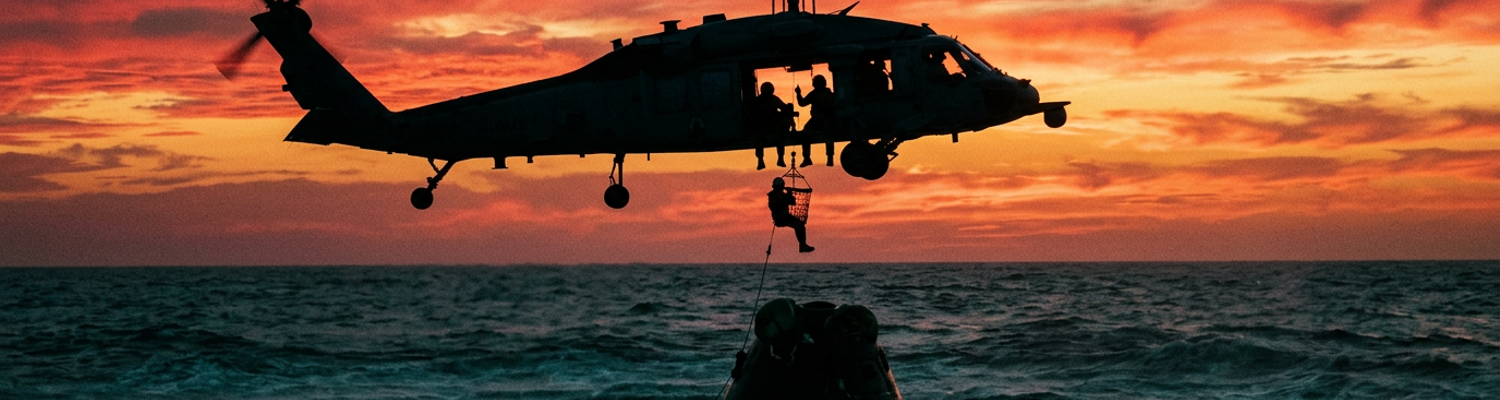
Winch operators leaned through open cargo doors to lower a horsecollar rescue sling directly toward the water the moment swimming frogmen gave that visual hand signal. Fleet recovery coordinators integrated the helicopter horsecollar rescue sling into all recovery plans to lift the astronaut directly from the water prior to capsule retrieval. Navy planners refused to let recovery crews repeat the mistake of hooking onto the metal spacecraft while a pilot remained trapped inside the sweltering cockpit footwells. Astronauts practiced slipping the padded yellow band beneath their armpits and locking their hands across their chests, allowing the winch motor to pull them cleanly away from the rolling waves and up into the helicopter cargo bay. Flight surgeons aboard the carrier tracked these open water lifts to confirm that an exhausted pilot wearing a flooded spacesuit could be hauled safely aboard without suffering hypothermia or chest constriction. Rescue aviators kept their hovering aircraft locked in position above the ocean until the astronaut was pulled across the doorway sill and strapped into an interior seat, leaving the secured capsule behind in the ocean swells.
Helicopters assigned to lift that secured capsule from the waves carried newly mandated hardware designed to protect flight crews from catastrophic ocean drags. Aviation mechanics completed the mandatory installation of specialized cable shears on all Navy and Marine recovery helicopters to safeguard crews during hoisting failures. Task Force 140 officers remembered how swamping water in Liberty Bell 7 had nearly pulled a Seahorse helicopter beneath the waves, threatening the lives of everyone on board the aircraft. Armorers mounted heavy steel guillotine cutters onto the external hoist booms, wiring pyrotechnic cartridges to guarded firing toggles located beside the pilot and the hoist operator. Hardened chisel blades inside the cutter body could sever a thick braided steel hoisting cable within a fraction of a second, dropping thousands of pounds of dead weight before a strained radial engine lost rotor speed. Squadron commanders ordered armorers to load live explosive squibs into every helicopter cable guillotine prior to each Atlantic recovery sortie.
Task Force 140 Recovery Lines and Corridor Deployments
Squibs wired into those hoist cutters gave helicopter crews an emergency safeguard across the vast ocean recovery lines of Task Force 140, established under Rear Admiral John L. Chew. Chew commanded Destroyer Flotilla Four and brought a veteran surface warfare discipline to the experimental task of catching manned capsules falling out of space. Naval planners under his direction positioned over twenty Atlantic Fleet warships, including aircraft carriers and destroyers, along pre designated abort recovery areas. Steam turbines hummed inside warship boiler rooms across thousands of square miles of ocean as captains maintained exact station coordinates on radio silence. Chew monitored this immense surface deployment from his flagship operations room, where watchstanders tracked each vessel along the projected climb corridor of the rocket. Navigation officers marked every ship position in blue grease pencil on giant Plexiglas status boards, noting fuel states and steam pressures in case a booster failed during launch.
Plexiglas plotting charts reflected the formal designation of recovery areas Alpha, Bravo, and Charlie to manage suborbital trajectories and initial orbital insertion aborts. Area Alpha covered the shallow waters immediately downrange from Cape Canaveral, stationing coastal destroyers and amphibious craft to retrieve an astronaut if the escape tower fired directly off the launch pad. Area Bravo stretched deeper into the Atlantic basin along the suborbital flight path, where heavier warships stood ready for emergency landings triggered by premature engine cutoffs. Area Charlie centered on the waters surrounding Bermuda, providing a dense screen of destroyers and an aircraft carrier to handle high speed aborts during the final seconds of orbital insertion. Captains in Area Charlie kept their crews at general quarters throughout the ascent phase to prepare for high speed ballistic impacts.
Lookouts aboard those forward destroyers stood down from general quarters in the surreal quiet hours after the spacecraft cleared the atmosphere, leaving bridge officers to record the logistical strain of holding the ocean corridor. Engineers and deck officers frantically compiled handwritten reports on fuel consumption, boiler wear, and radar tracking gaps while ship hulls still rocked in the Atlantic swells. Radio teletype machines clattered inside carrier communication centers, printing out urgent memos about dead spots between ships and the shore stations at Grand Bahama and Bermuda. Chew gathered these unprocessed fleet dispatches at his command desk, studying handwritten logs that revealed how narrow the margins of error had been across each designated recovery area. Junior officers transcribed radar plots and radio logs into official command records, documenting that even minor navigation drifts by individual destroyers created blind zones large enough to lose a floating capsule.
Destroyer captains adjusted their boiler room routines and radar watch bills to eliminate those blind spots along the abort corridors. Chew directed his staff to draft revised cruising instructions that tightened spacing between picket ships in Area Bravo and Area Charlie. Supply officers calculated the heavy fuel consumption of keeping twenty warships steaming at readiness, scheduling fleet oilers to refuel destroyers at sea immediately after each recovery operation. Deck crews hauled heavy towing hawsers and capsule handling cradles into carrier hangars for inspection, repairing frayed lines and salt encrusted winches before vessels returned to port. Chew signed off on the revised task force operational orders, sending priority teletype dispatches to fleet commanders in Norfolk to lock in the tighter ship spacing for the next manned mission.
Joint Military Command Friction and Communications Protocols
Teletype operators in Norfolk received the tactical dispatches within minutes, yet no written routine could immediately resolve the procedural divide between civilian flight directors at Mercury Control and naval task group commanders operating aboard flagship USS Intrepid. Officers inside the flag plot of Intrepid confronted this split culture during the quiet hours following the Carpenter retrieval, as civilian flight controllers in Florida expected warships to follow direct orders from civilian consoles. Naval commanders answered strictly to their maritime chain of command, refusing to surrender operational control over fleet aircraft and escort destroyers to technicians stationed hundreds of miles away. Staff logbooks recorded tense conferences where civilian representatives pressed for immediate access to flight instruments and onboard film canisters, while carrier officers prioritized vessel safety, flight deck security, and open ocean navigation. Clerks transcribed these raw disputes onto carbon paper memorandum sheets while the astronaut floated beyond radar range.
Carbon paper logs kept by Intrepid radiomen revealed that these command disputes were magnified by severe high frequency radio propagation delays between sea recovery pickets and mainland mission coordination centers. Atmospheric interference across the western Atlantic warped high frequency radio channels, creating unpredictable skip zones and multi hour signal backlogs between picket destroyers and Cape Canaveral. Radio transmitters on forward destroyers tapped out Morse code and teletype updates, but fluctuating ionospheric layers scattered the signals across empty ocean expanses instead of reaching mainland receiver towers. Flight directors at Mercury Control sat over dead speaker channels, broadcasting urgent search instructions based on hours old assumptions while naval aviators on the scene had already improvised new flight paths. Communication officers aboard Intrepid paced across radio shacks littered with rejected message slips, recording the exact minute each transmission stalled in atmospheric static. Technicians glued these delayed paper tapes into post flight operational binders alongside the rejected message slips.
Defense officials examined those operational binders in the days following the splashdown, using the documented failures to guide the drafting of new directives to formally establish chain of command authority between the military on scene commander and civilian representatives. Naval legal officers and civilian aerospace managers debated the text line by line, defining the exact boundaries where civilian mission direction ended and military operational command began. The resulting regulations established that the military on scene commander exercised absolute tactical control over all armed forces ships, aircraft, and recovery personnel throughout the ocean retrieval phase. Civilian liaisons retained full technical oversight regarding astronaut health, biomedical data, and capsule engineering safeguards, but they possessed no legal power to steer warships or overrule flight safety decisions made by a vessel captain. Defense officials bound the finalized directive into leather backed command binders and dispatched copies to Atlantic Fleet headquarters to lock the chain of command into official shipboard doctrine.
Couriers delivered those leather backed binders directly to warship bridges and naval air stations along the Atlantic seaboard, where operations officers began rewriting their recovery watch bills. Naval task group commanders briefed their bridge teams on the strict legal boundaries separating military rescue maneuvers from civilian engineering protocols. Signalmen installed dedicated teleprinter circuits to bypass overloaded civilian channels, running direct communication lines between carrier flag plots and shore based naval headquarters. Flight leaders gathered in carrier ready rooms to rehearse the handoff procedures, practicing how helicopter crews would report capsule coordinates directly to the naval on scene commander before relaying data to Cape Canaveral. Watch officers stamped their signed acknowledgments onto the new command orders and filed them into shipboard tactical safes.
Codification of the Mercury Ocean Recovery System
Steel safe doors swung shut across those flagship chartrooms while staff officers gathered the loose salt stained clipboards and handwritten action reports left behind from each Mercury splashdown. Naval planners and engineers sat side by side beneath dim compartment bulbs, methodically sorting through raw records of swamped cockpits, acoustic fixes, and communication dead zones to eliminate the deadly guesswork of ocean salvage. Operations clerks transcribed these unprocessed operational lessons directly into the formal Mercury Ocean Recovery System manual, establishing what the fleet designated as MORS doctrine. MORS codified every phase of offshore retrieval into step by step procedures, replacing improvised maritime rescue with standardized technical checklists for locating, stabilizing, and hoisting floating spacecraft. Clerks locked these finalized blueprints inside the manual to govern how naval forces prepared for all future orbital landings.
Manual checklists inside those MORS binders dictated exact mechanical safeguards for every ship, helicopter, and rescue boat assigned to the recovery corridor. Aviation mechanics followed the new directives to verify that explosive cable guillotines were armed and wired on every helicopter rescue hoist before rotor blades began turning. Deck crews on recovery destroyers inspected custom lifting cradles, nylon sea drogues, and heavy towing bridles to guarantee that capsules floating in rough seas could be secured without damaging their delicate heat shields. Radio operators tuned shipboard transmitters to dedicated high frequency frequencies, ensuring that hydrophone sound fixes and aerial search sightings reached on scene commanders without interference from commercial or civilian airwaves. Officers throughout Task Force 140 drilled their watchstanders on these standardized protocols, running timed exercises on the carrier flight decks.
Pararescue teams from the Air Force and Navy frogmen staged aboard primary recovery aircraft to execute these drills under rigid air drop deployment timelines. Parachute jumpers sat strapped into canvas troop seats inside land based patrol planes and carrier based helicopters with auxiliary flotation collars resting at their feet. Training officers timed every jump drill with stopwatches, requiring divers to exit the aircraft and hit the sea within five minutes of spotting a floating capsule to prevent another sinking disaster. Swimming pairs practiced wrestling inflatable rubber collars around the titanium capsule hulls in heavy Atlantic chop, securing high pressure gas valves and verifying buoyancy before giving the visual all clear signal. Jump logs confirmed that deploying pre positioned airborne teams directly onto splashdown coordinates protected the astronaut and secured the spacecraft before surface ships arrived.
Surface warships steaming toward those coordinates relied on aircraft carriers and amphibious assault ships, which naval planners standardized as the primary command platforms for subsequent space missions. Amphibious assault ships offered expansive flat flight decks and extensive internal troop staging areas, making them ideal floating bases for housing dozens of rescue helicopters, medical teams, and technical specialists. Shipfitters in naval shipyards installed dedicated communications vans, telemetry receiver antennas, and specialized capsule hoisting cranes directly onto carrier and amphibious hangar decks. Medical bays inside these large deck warships were upgraded with specialized contamination isolation facilities and surgical suites designed to evaluate returning astronauts immediately after extraction from the sea. Deck crews secured the heavy capsule tie down cradles to the hangar deck, hoisted the recovery helicopters into overhead maintenance tracks, and locked the heavy steel hangar bay doors.