
Improvised Straggler Cordons on the Ourcq River
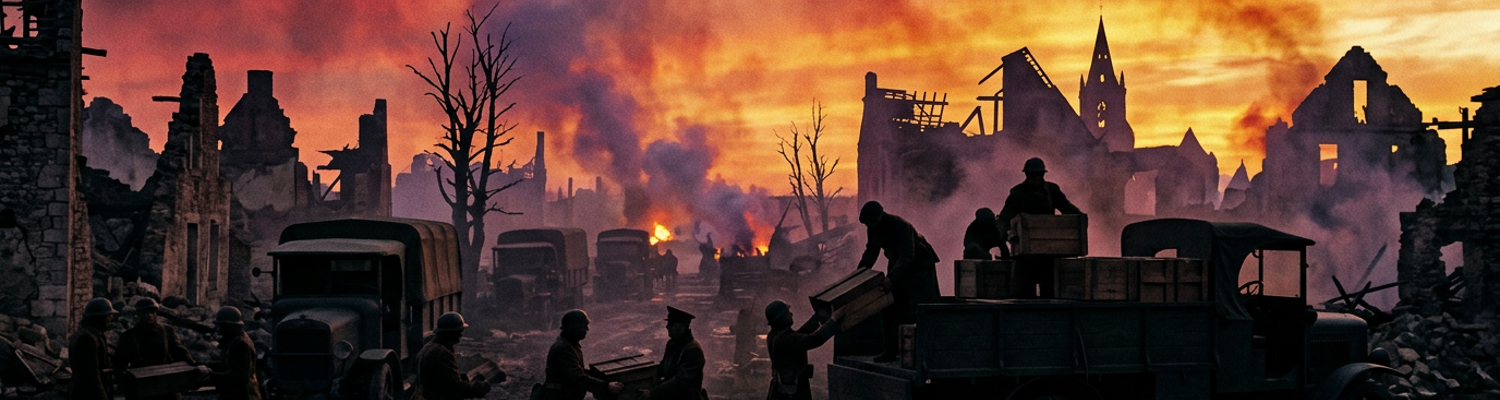
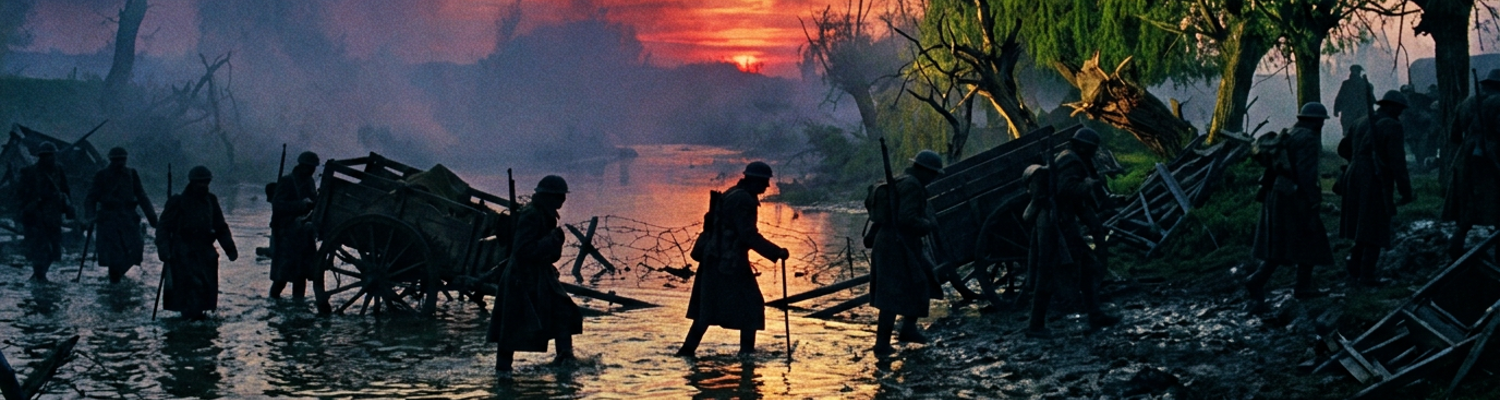
Soldiers stumbled through the muddy shallows of the Ourcq River as German artillery cratered the surrounding meadows and wrecked the wooden trestle bridges. Thick black smoke hung over the swampy valley floor, blinding the retreating ranks while shrapnel cut through the willow trees and severed field communication lines. The 42nd Division Military Police Company erected emergency straggler cordons and traffic checkpoints along these damaged crossings on July 31, 1918, to halt the breakdown of command. Guards planted their boots in the churned clay, using coiled barbed wire and overturned supply wagons to seal off the narrow causeways. Every footbridge, ford, and culvert quickly filled with armed sentries who inspected identification tags and turned back anyone attempting to flee south toward the divisional rear. Sentries focused their attention on the smoke choked trails leading away from the contested ridges, where forward battalions had broken apart under continuous machine gun fire.
Machine gun fire had scattered thousands of disoriented soldiers retreating from the assaults on Sergy and Croix Rouge Farm. Men dragged their boots through the weeds with blank faces, many missing their helmets, water canteens, and gas masks after surviving days of close range fighting in the village ruins. Shell shock and physical exhaustion left whole platoons unable to identify their company commanders or explain how they had drifted so far from their assigned sectors. Military police officers stood directly in their path, using leveled sidearms and loud verbal commands to funnel the flow of troops into dry gullies and sunken wagon roads behind the river. Field clerks immediately sat on ammunition crates with grease pencils and waterproof rosters, logging the division, regiment, and casualty status of every survivor pulled from the stream of retreating men.
Rifles, bayonets, and canvas bandoliers accumulated in heaps beside the checkpoints as noncommissioned officers searched each retreating group. Military police halted unauthorized rearward movement, secured abandoned ordnance, and organized separated infantrymen into provisional rifle squads. Sergeants divided the gathered men by the painted emblems on their helmets, distributed fresh cartridges from overturned caissons, and appointed veteran corporals to lead the newly formed units. Machine gunners without weapons received serviceable Springfield rifles from the discard piles, while disoriented runners took up positions as flank security along the muddy creek bends. Runner teams quickly led these reconstituted squads into defensive trenches dug along the southern bluffs to cover the artillery parks from a sudden German counterattack.
Telephone wires hummed with urgent traffic as division staff officers took count of the regrouped fighting strength holding the riverline. Provost marshals compiled hand scrawled rosters on greasy paper sheets, detailing how many stragglers belonged to the infantry regiments of Iowa, Alabama, and New York. These handwritten lists provided the division commander with his only reliable picture of combat losses before fresh field orders could be issued for the morning. Battalion commanders used the new tallies to replace shattered companies at the front with mixed formations of regrouped soldiers. Exhausted infantrymen crouched behind their parapets with fixed bayonets, watching the burning timber of Sergy while medical teams carried the remaining wounded across the cordoned bridges.
Combat Fatigue Screening and Line Reorganization Protocols
Litter bearers transferred their wounded comrades past provost marshals who established forward sorting pens in ruined stone structures to evaluate shell shocked soldiers. Provost details converted blasted stone barn walls, roofless dairy sheds, and cracked cellar foundations into holding areas, penning the men between damp limestone rubble and coils of concertina wire. Assistant division surgeons stood alongside military police officers at the splintered doorways, shining carbide lanterns directly into glazed eyes to separate soldiers with ruptured eardrums and violent body tremors from those suffering from temporary physical fatigue. Men sat slumped against the wet chalk blocks without speaking, their field uniforms caked in Ourcq mud and their fingers twitching from concussive detonations that had buried them in shell holes during the river assault. Surgeons tagged the most severe neurological casualties with paper labels for immediate wagon evacuation to field hospitals down the valley, leaving the vast majority of stragglers corralled inside the stone enclosures under armed sentry watch.
Interrogators moved down the crowded rows of men to differentiate between deliberate deserters and concussed stragglers who lost their units during intense artillery barrages. Military police lieutenants and divisional intelligence personnel questioned every soldier individually, examining rifle bolts for recent powder residue and checking web belts to see if ammunition had been discarded. Officers pressed each man for his regiment, his company commander name, and the specific terrain features where he had lost visual contact with his platoon in the machine gun fire around Sergy. Men who had deliberately thrown away their rifles, stripped off their helmets, and fled south without orders were placed under armed arrest in a guarded cellar to await formal court martial charges. Concussed infantrymen who had simply drifted across the river flats after German high explosive barrages wiped out their corporals received fresh water, hard bread, and short rest intervals on piles of dry straw. Questioning details logged each name on divisional casualty rosters, separating outright runaways from stunned fighters who remained physically capable of returning to the line once the concussive stupor cleared from their minds.
Noncommissioned officers collected these cleared soldiers from the holding pens and integrated remnants of battered infantry battalions into combat detachments slated for return to frontline staging sectors. Experienced sergeants organized the men into temporary twenty man rifle squads, combining isolated survivors from Iowa, Alabama, and New York regiments into unified tactical teams regardless of their original company assignments. Ordnance specialists issued replacement Springfield rifles, canvas bandoliers holding sixty rounds of ammunition, and boxed gas masks from supply crates stacked in the farmyard mud. Sergeants inspected the line to verify that bayonets locked firmly onto rifle barrels and that every rifleman carried two full water canteens. Staff lieutenants delivered route maps and written sector instructions to veteran corporals selected to lead these improvised combat groups back across the cordoned bridges. Squad leaders gave low verbal commands, formed their newly organized detachments into single file columns, and marched them through the marsh grass toward the frontline staging trenches to reinforce the contested bluffs before sunrise.
Epidemic Influenza Triage and Chemical Casualty Isolation
Infantrymen unable to keep pace with the departing columns collapsed into the mud with burning fevers, coughing violently while their comrades disappeared toward the bluffs. Checkpoints improvised quarantine pens along the river crossings when the initial wave of the 1918 influenza epidemic struck infantry regiments along the Aisne Marne front. Provost guards dragged these feverish soldiers out of the roadway ditches, taking their rifles and penning them inside open cattle enclosures to stop the spread of infection through the regrouped companies. Soldiers shivered violently under canvas tarpaulins stripped from smashed supply wagons, their breath coming in short rattling gasps as bronchial infections took hold in the wet river basin. Cold rain soaked the corralled men through their wool uniforms, turning the penned dirt into a deep mire where soldiers huddled together against the damp morning air.
Sentries and untrained military police screened fever stricken infantrymen pulled from the mire, separating contagious soldiers from blistered mustard gas casualties and unwounded stragglers. Guards inspected yellow burns on swollen eyelids, smelled uniforms for the faint garlic odor of mustard agent, and felt hot foreheads with bare palms to determine who belonged in isolation. Chemical burns covered the necks, wrists, and groins of soldiers who had crawled through saturated wheat fields, making them gasp for air beside respiratory patients whose lungs filled with fluid. Provost officers lacked protective rubber gloves and cotton face masks, exposing their own screeners to both airborne influenza droplets and vapor rising from contaminated tunics. Clerks nailed crude wooden signs marked for gas and sickness onto fence posts, directing walking stragglers back toward weapon depots while herding disabled men into covered stone outbuildings.
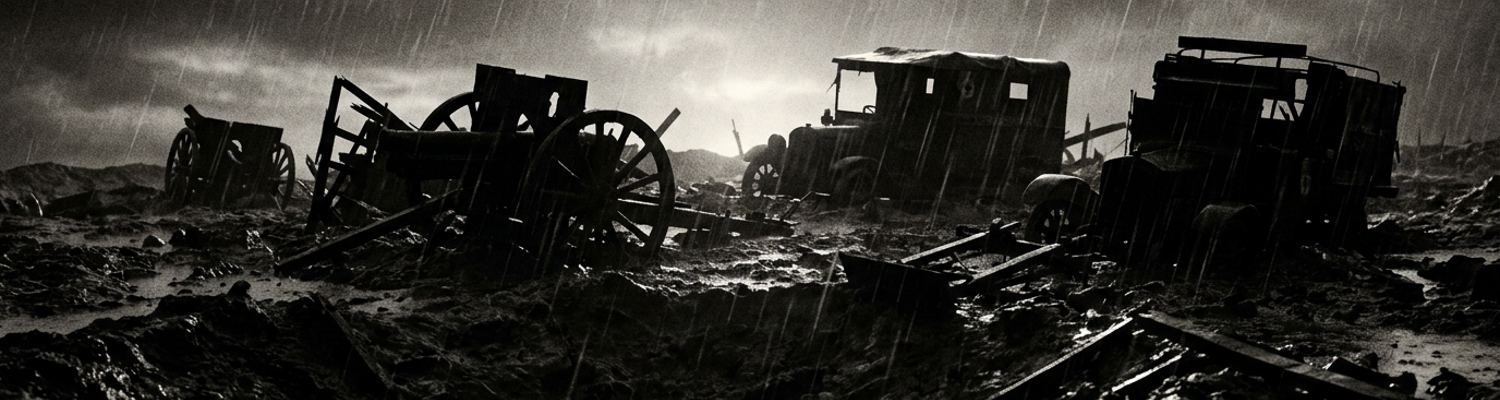
Farmhouses along the road received these disabled soldiers into their ruined kitchens and cellars, where a critical lack of motor ambulances forced provost detachments to hold contagious and gassed casualties without medical evacuation. Damaged Ford Model T ambulances sat abandoned in ditches along the Ourcq with cracked axles and shrapnel punctured radiators, cutting off the divisional evacuation chain back to the field hospitals at La Ferte sous Jouarre. Shell cracked plaster fell from the ceilings onto rows of gasping men laid side by side on wet flagstones, livestock stalls, and moldering straw. Provost guards carried zinc buckets of well water and baking soda solutions to wash burning eyes and skin, but they had no sterile gauze, cough medicines, or clean dry uniforms to replace chemical soaked wool. Medical corpsmen assigned to the division stayed pinned down miles ahead at forward battalion aid posts, leaving military police details to manage the dying men entirely on their own.
Sergeants chalked tally marks across the peeling wallpaper of the farmhouse hallways to track the dead, the infected, and the soldiers blinded by gas. Provost details carried deceased soldiers into adjoining apple orchards to clear floor space for the continuous stream of feverish infantrymen stumbling in from the river. Guards stacked discarded gas masks, blood streaked coats, and contaminated cartridge belts in burning piles behind the stone barns to destroy the toxic chemical residue before the wind shifted. Lieutenants dispatched mounted couriers down the southern roads with emergency casualty reports, requesting fresh water barrels and urgent medical transport before the remaining holding areas overflowed. Sentry posts along the perimeter locked their bayonets and held the cordon tight around the isolation houses, barring any exposed soldier from rejoining the tactical march toward the forward bluffs.
July 31 Muster Roll Accounting Discrepancies
Clerks from the provost marshal section worked directly behind those guarded bayonet lines inside damaged French farmhouses, compiling emergency muster rolls on rough plank tables. Shrapnel holes in the stone masonry let in damp drafts that fluttered the greasy paper sheets, while tallow candles guttered in empty brass shell casings to light the room. These provost clerks examined dog tags, field passes, and water soaked paybooks collected from intercepted soldiers, revealing vast discrepancies against frontline company rosters delivered earlier by liaison runners. Entire rifle platoons listed on official morning assault manifests as holding forward positions did not match the names of men huddled outside in the mud holding pens. Company commanders had sent initial casualty estimates hours earlier without knowing that their squads had broken into isolated groups in the smoke around Sergy and Croix Rouge Farm. Staff lieutenants scratched out these false company tallies with steel nibbed pens, stacking dozens of conflicting morning rosters beside the farmhouse hearth to determine who had actually survived the river crossings.
River crossings under continuous German artillery barrages had produced rapid attrition across the valley floor, leaving hundreds of unaccounted soldiers miscategorized as missing in action rather than stragglers. Soldiers had plunged into water filled shell craters or crawled through dense riverbank willows when German machine gun nests raked the wooden trestles, cutting them off from their original squads. Platoon corporals and surviving company lieutenants had assumed these separated men were dead in the mud or captured in enemy counterattacks, writing them down as missing in their hasty field messages. Provost details stationed at the crossing culverts found these same unaccounted soldiers wandering south without rifles, helmets, or canteens, dazed by concussions but physically alive. Clerks dipped their pens into blue inkwells to strike names off official missing lists and enter them into provisional straggler rosters, updating company counts man by man as the soldiers filed past the tables. Provost sergeants gathered these wet tally sheets and bound them into thick notebooks to carry to the division command post.
Ledgers filled with unprocessed casualty reports exposed severe communication blind spots between divisional headquarters and forward assault elements. Division staff officers in rear chateaus continued to plan early morning counterattacks using outdated telephone reports, assuming frontline battalions possessed twice their actual fighting strength along the ridges. Forward company officers could not send accurate messenger runners through German box barrages, leaving divisional headquarters completely blind to the true level of attrition on the bluffs above the Ourcq. Clerks in the farmhouse pointed out to staff couriers that entire regiments had lost over half their combat effectives to artillery, machine gun fire, and chemical gas, rendering the planned dawn offensives impossible without massive reinforcements. Staff officers compared the recovered straggler tallies with forward assault maps, discovering that the frontline troops had pulled back several hundred yards south of their reported objectives during the night fighting. Military police captains gathered these corrected casualty ledgers into waterproof dispatch bags and sent mounted couriers down the southern road to halt the divisional bombardment orders before American guns fired onto their own reorganized infantry lines.
Establishment of Permanent Corps Military Police Companies
Couriers spurred their lathered horses past shattered caissons and gridlocked supply wagons to deliver the emergency dispatches to headquarters before division artillery fired on friendly troops. The chaotic casualty reports from the Ourcq River crossings exposed how close front line commanders had come to total operational collapse amid severed field wires and panicked retreats. Severe command failures along the Ourcq prompted General John J. Pershing and the AEF Provost Marshal General to overhaul rear echelon control operations across the entire expeditionary force. Pershing reviewed the blood smeared muster rolls and handwritten field complaints alongside Provost Marshal General William H. Allaire, recognizing that disorganized rear roads and uncontrolled river crossings had almost paralyzed combat regiments on the bluffs. Staff officers at General Headquarters realized that forward provost marshals could not maintain discipline when traffic jams trapped ambulances and stragglers walked through broken checkpoints unchecked. War department inspectors documented how the lack of organized rear area security had allowed combat units to evaporate into swampy creek bottoms, triggering immediate demands for a professional provost administration.
General John J. Pershing targeted the frontline infantry ranks first, ordering an immediate end to the practice of pulling riflemen away from combat companies to guard bridges and crossroads. Line infantry companies holding the muddy banks of the Ourcq had lost hundreds of experienced riflemen because local commanders routinely stripped squads to build improvised guard details. The AEF ended the reliance on temporary details drawn from depleted line infantry units to staff forward provost posts, as these temporary sentries possessed no formal training in traffic management, chemical casualty screening, or battlefield prisoner interrogation. Infantrymen assigned to emergency provost duty often sympathized with exhausted comrades fleeing forward artillery barrages, letting disorganized groups slip through barricades without recording their names or regiments. Other borrowed soldiers abandoned their road posts entirely during intense German shelling, leaving ammunition convoys stranded in ditches and blocking vital counterattack routes. General Headquarters permanently abolished these borrowed details, ordering every detached rifleman back to his original infantry battalion to fill shattered rifle companies before the next push toward the Vesle River.
Commanders instituted permanent, dedicated corps level military police companies with standardized doctrine for traffic control and straggler interception to replace the withdrawn line troops. Army planners organized these new units as self contained operational outfits, equipping them with their own motor trucks, Indian motorcycles, sidecars, and field telephone switchboards. Provost officers implemented a uniform system of rear area management, printing pocket sized guidebooks that defined exact procedures for setting up crossroads cordons, checking travel passes, and impounding stray ordnance. Sentries assigned to forward posts received strict instructions to treat straggler containment as an active security mission rather than a casual guard shift. Military police details established dual lane flow networks across damaged bridges, routing motorized ammunition convoys along dedicated stone highways while directing walking wounded and mule wagons onto separate dirt bypasses. Specially designated provost teams built permanent timber gates and barbed wire enclosures at key junctions, preventing panicked soldiers from scattering into farm fields when high explosive shells struck the roads.
Provost marshals positioned these newly formed companies directly behind corps boundaries, establishing systematic straggler processing stations within sight of contested communication trenches. Soldiers intercepted without signed travel orders or medical evacuation tags passed through wooden sorting corrals staffed by trained military police interrogators and attached corps medical officers. Screeners matched each separated infantryman against real time company manifests, identifying whether a soldier suffered from concussive shock, toxic gas inhalation, or deliberate desertion before deciding his disposition. Interrogators quickly routed shell shocked and gassed men onto motor ambulances heading south, while weapon specialists refitted unwounded infantrymen with rifles, ammunition belts, and clean gas masks. Armed provost corporals organized these recovered riflemen into provisional march platoons, marching them back up the supply tracks under veteran noncommissioned officers to rejoin their parent divisions. Military police teams secured every river crossing and trailhead from the Ourcq to the Vesle, locking the operational rear behind an unbroken cordon of trained sentries who stood ready to repel any future retreat.