
First Army Planning for the Meuse Argonne Offensive
Springfield rifles clicked softly in the predawn darkness as American soldiers tightened their heavy canvas web gear along the shattered front line north of Verdun. Infantrymen checked their ten pocket cartridge belts, bayonet scabbards, and rubberized gas masks while listening to the low rumble of German artillery far to the north. Chalky mud and pooled rainwater coated every leather trench boot, turning the floor of the American jump off trenches into a heavy mire that dragged at soldiers carrying sixty pound combat loads. Barbed wire entanglements, shattered tree stumps, and overlapping shell craters stretched across the barren expanse of no man's land toward the formidable limestone ridge of Montfaucon. Ammunition carriers hauled heavy wooden crates of rifle rounds and hand grenades down narrow communication trenches, stacking them beside sweating mortar teams and machine gunners. Field telephone operators crouched beside battery powered switchboards in damp dugouts, holding printed operational orders that carried the aggressive ambitions of First Army headquarters.
Officers on the American Expeditionary Forces First Army General Staff formulated an aggressive timetable in September 1918 requiring rapid penetrations across difficult terrain to turn those operational orders into an overwhelming breakthrough. Operational planning prioritized rapid forward momentum to overwhelm German defenses before reserves could reposition from the Hindenburg Line. General John J. Pershing and his operations officers intended to shatter three heavily fortified German defensive belts in a single coordinated stroke, driving deep into enemy territory before machine gun garrisons could react. Staff maps in the rear projected an advance of nearly ten miles on the first day, demanding that front line doughboys overrun the dominant hilltop fortress of Montfaucon by mid afternoon. Planners treated speed as their primary tactical defense, betting that rapid American movement would paralyze the German high command and prevent enemy artillery from zeroing in on advancing columns. Tactical doctrine therefore subordinated cautious flank protection and logistical buildup to relentless forward momentum, leaving assault units with instructions to bypass isolated strongpoints rather than halt for heavy weapons support.
Staff planners assigned two complete combat divisions to advance concurrently along a narrow, severely degraded sector between Esnes and Montfaucon to maintain that relentless forward momentum. Division commanders received orders to drive tens of thousands of men forward through a bottleneck barely four miles wide, where the churned up remnants of the 1916 Verdun battleground lay directly in their path. Maps at headquarters designated a crude wagon trail running north from the ruins of Esnes as a primary division axis, though aerial reconnaissance and patrol reports showed the roadbed had been obliterated by years of explosive cratering. Limestone foundations had crumbled into vast stretches of deep muck, flooded craters, and severed corduroy log tracks that could barely support a single foot soldier, let alone wheeled transport. Logistical planners nevertheless scheduled heavy artillery regiments, animal drawn supply columns, motorized ambulances, and ammunition wagons to follow immediately behind the advancing waves of riflemen along that very corridor.
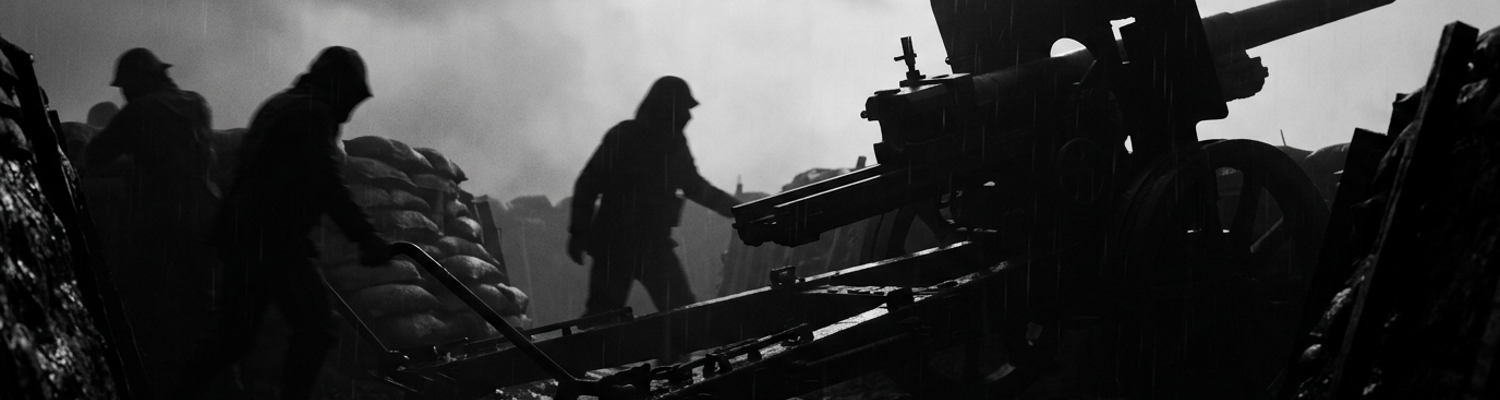
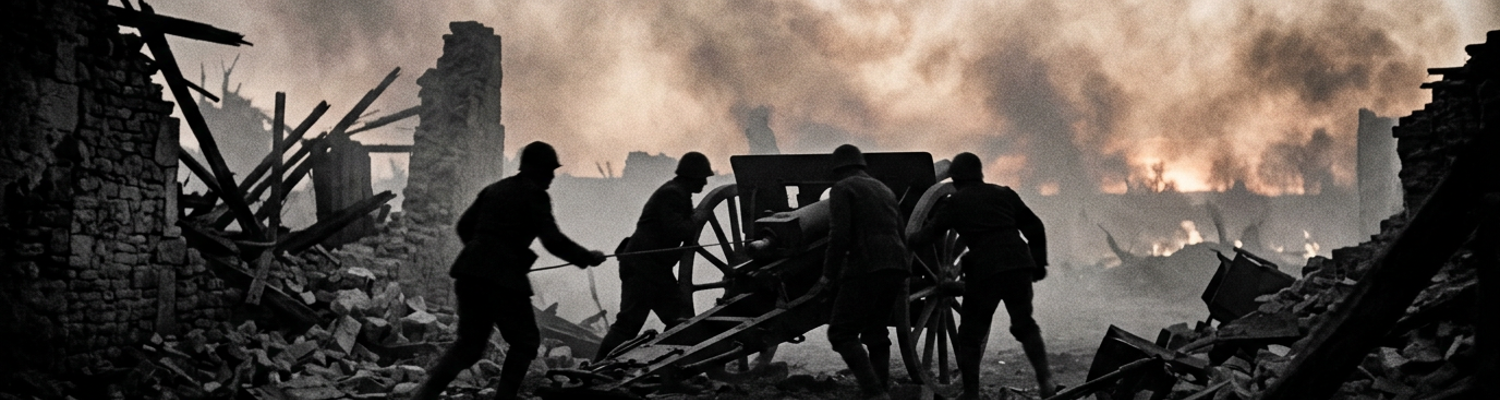
Pioneer engineers received the staggering assignment of rebuilding this ruined passage under active artillery fire as soon as the infantry pushed past the German wire. Engineering officers received only hand picks, shovels, and scattered bundles of wooden timbers to fill craters deep enough to trap entire escort wagons. Motor trucks and horse drawn limbers loaded with heavy high explosive shells crowded bumper to tailgate along the muddy ditch banks behind Esnes, waiting for the signal to roll forward. Artillery batteries unlimbered their seventy five millimeter guns wheel to wheel in adjacent fields, cutting deep ruts into the soft clay as gun crews stacked brass casings in the darkness. American infantrymen loaded their rifle magazines and fixed eighteen inch bayonets in the crowded jumping off trenches, shoulder to shoulder along a narrow front that offered no room to maneuver if the single supply artery failed.
The Esnes to Malancourt Bottleneck
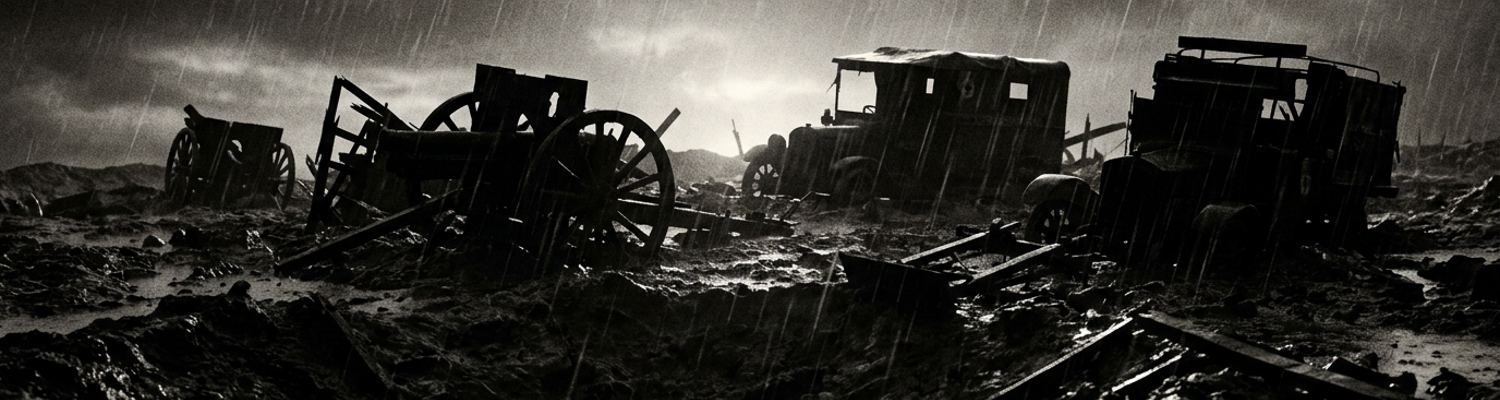
Supply columns immediately attempted to roll forward directly behind those attacking troops, but the primary axis of advance relied on a single roadway running from Esnes through Malancourt toward Montfaucon across four years of shelled wasteland. Artillery bombardments had obliterated existing stone roadbeds, leaving deep shell craters and unstable soil across the entire division boundary. Heavy autumn rain and constant shellfire since 1916 had turned the underlying clay and chalk into deep, sticky muck. Heavy ammunition wagons, water carts, and artillery limbers tried to traverse this churned earth, causing their narrow iron tires to cut straight through the soft topsoil and sink to the hubs. Drivers shouted and whipped their straining draft horses, but the animals slipped and collapsed in the churned earth, blocking hundreds of vehicles following directly behind them.
Liberty trucks and escort wagons could not steer away from the growing snarl because no parallel lateral roads existed to divert traffic or relieve divisional transport congestion across the devastated battlefield. Wide expanses of waterlogged trenches, tangled belts of rusted barbed wire, and overlapping craters flanked both edges of the lane, preventing drivers from cutting new paths through the waste. Divisional planners had routed the entire 79th Division, along with corps artillery and elements of neighboring units, onto this solitary dirt track. Pioneer troops from the 304th Engineer Regiment threw freshly cut logs and scrap wood into the deepest mud holes, but the heavy motor trucks cracked the green timber and drove the logs deep into the sludge. Broken axles, burned out clutches, and cracked drive shafts soon stranded three ton standardized Liberty trucks directly across the Malancourt crossing, freezing forward movement for miles to the south.
Motorcycle messengers struggled to squeeze between the motionless fenders of those stranded vehicles, carrying reports that the stalled column now stretched past the smashed cellars of Esnes. American artillery batteries desperately needed to advance to knock out machine gun nests holding up the doughboys, but seventy five millimeter guns sat locked wheel to wheel behind stalled soup kitchens and feed wagons. German artillery observers stationed in the high observation towers atop the limestone ridge of Montfaucon spotted the motionless convoy through field glasses. German batteries immediately zeroed in on the road, firing salvo after salvo of high explosive and gas shells directly into the concentrated line of men, beasts, and machinery. Exploding shells ripped through canvas truck covers and killed draft teams where they stood, sending drivers scurrying underneath disabled chassis for shelter while fires swept through open ammunition crates.
Infantry battalions fighting ahead around Montfaucon rapidly burned through their basic ammunition loads, waiting in vain for resupply limbers that lay trapped in the Malancourt mud. Machine gun crews rationed their water supplies to keep their cooling jackets functional, while riflemen picked through the cartridge belts of fallen comrades to replenish their Springfield clips. Wounded soldiers gathered by the hundreds at forward aid stations because motor ambulances could not push through the jammed vehicles to reach field hospitals in the rear. Pioneer working parties eventually abandoned systematic road grading and used hand tools and crowbars to lever overturned wagons, dead mules, and abandoned trucks directly into roadside craters to force a single clear lane forward.
Priority Dispatch of Heavy Artillery Tractors
Military police enforced a General Staff scheduling directive that gave heavy motorized corps artillery tractors movement priority over division level combat engineer trains the moment engineers opened that single emergency lane. First Army planners believed that long range siege guns had to reach forward firing positions immediately to shatter the reinforced concrete observation bunkers around Montfaucon before German reserves arrived from the Hindenburg Line. Staff officers at Souilly therefore instructed road control posts to halt all horse drawn tool wagons, rock hauling carts, and bridge repair units in favor of heavy motorized batteries. Pioneer companies from the 304th Engineer Regiment were forced to step aside into flooded shell holes, watching empty handed as their scheduled road repair window evaporated. Division logisticians pleaded with transport marshals to let rock hauling wagons stabilize the churned subsoil before sending heavy machinery forward, but priority orders from army headquarters left no room for local adjustments. Military dispatchers insisted that fire support took absolute precedence over engineering logistics, ordering the ponderous artillery regiments forward into the narrow breach.
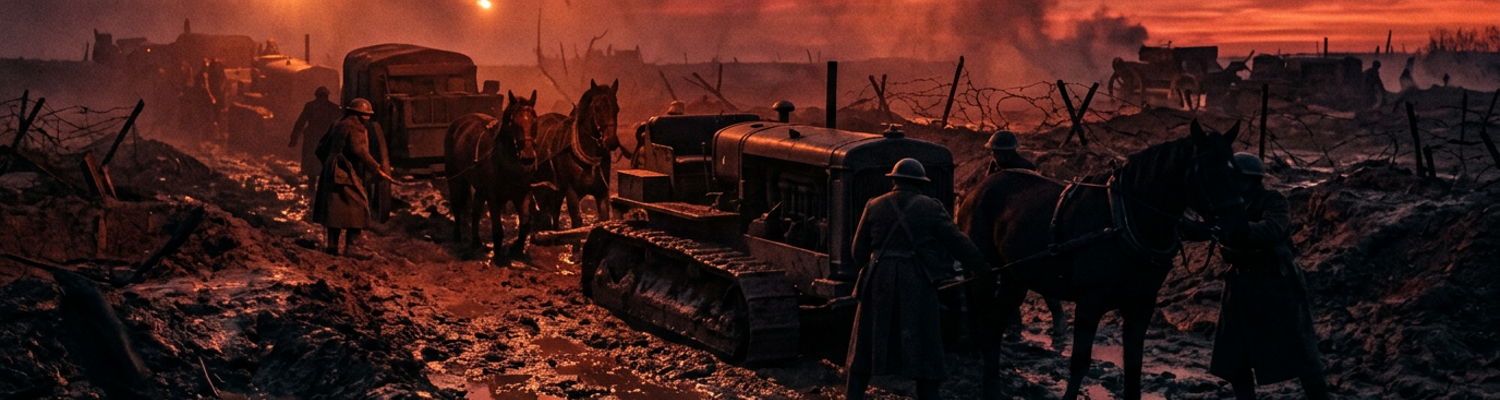
Holt heavy artillery tractors advanced onto the pulverized roadway before combat engineers could stabilize the ground with crushed stone and timber fascines. These powerful fifty five and seventy five horsepower machines hauled eight inch howitzers and heavy gun carriages that weighed tens of thousands of pounds. Wide steel track plates bit violently into the wet chalky clay, tearing away the fragile crust of earth that horse drawn traffic had compacted during the night. Exhaust fumes and the clanking roar of metal treads filled the air as tractor drivers opened their throttles to overcome rising resistance in the damp soil. Grinding mechanical torque sheared through the fragile topsoil, churning the single cleared path into deep trenches of liquid mud. Pioneer work parties could only watch from the shoulders as their carefully stacked bundles of brushwood were crushed into the mire before they could be laid across the ruts.
Steel tracks pushing through the mud encountered hollow pockets where old French and German communication trenches crossed beneath the trail. The massive axle loads of the tractors fractured surviving trench culverts and sank into waterlogged crater lips, immobilizing the column. Metal chassis bottomed out against the wet clay, leaving steel drive tracks spinning uselessly without traction. Heavy steel tow cables snapped when recovery crews attempted to use trailing machines to drag the lead tractors out of the collapsed craters. Gasoline smoke and steam poured from overheated engines as drivers struggled to free their treads, wedging the multi ton vehicles even deeper into the mud until the single roadway was completely sealed. Stalled machinery blocked every square foot of the roadway, creating an impenetrable barrier that halted all traffic behind it.
Gunners and truck drivers shut down their engines behind the grounded tractors, trapped along a narrow corridor that could neither advance nor retreat. Pioneer battalions gathered around the sunken machines with picks, shovels, and timber levers, but hand tools could not budge multi ton artillery combinations buried up to their radiators in muck. Engineer supply wagons loaded with crushed stone, corduroy logs, and heavy timbers sat immobilized three miles to the south, unable to reach the breach to lay a solid foundation. Infantry assault battalions on the southern slopes of Montfaucon fired their remaining cartridges against German machine gun nests without artillery support, while the corps guns assigned to blast open the ridge remained locked in the Malancourt mud. German forward observers spotted the motionless tangle from their periscopes and directed fresh artillery barrages into the stationary column of guns and supply vehicles.
Culvert Collapses and Roadbed Disintegration
Artillery shells crashed down the length of the exposed road, blowing apart stone culverts and fracturing the underground drainage channels that routed runoff away from the roadbed. Collapsed drainage culverts flooded the subgrade, transforming the single available road into an impassable trough of liquid mud. Autumn rainwater pooled across four years of pulverized shell holes and poured into the broken foundations, dissolving the compacted chalk into a thick gray slurry. Pioneer engineers from the 304th Engineer Regiment attempted to cut diversionary ditches toward nearby craters, but the rising water overwhelmed their hand tools and washed away their dirt revetments. Heavy tractor tracks and artillery wheels sliced deep through the softened crust, exposing soft underground clay that swallowed three ton trucks down to their axles within minutes. Steaming tractor engines sputtered and stalled as wet mud surged over their lower drive housings, cementing the lead corps artillery pieces directly across the only route forward.
Engineer wagons carrying crushed rock and corduroy timber remained trapped miles to the rear behind stalled motorized gun carriages. Pioneer officers dispatched motorcycle couriers and runners on foot down the jammed road to guide the engineer trains forward, but the messengers found the horse drawn columns completely hemmed in by three ton trucks. Teamsters tried to whip their six mule draft teams around the heavy Holt tractors, only for narrow iron rimmed wagon wheels to plunge off the crumbling road shoulders into waist deep mire. Desperate drivers cut through leather harness traces with pocket knives to rescue suffocating mules that had collapsed chest deep in the liquid clay. Engineering work parties at the Malancourt crossing exhausted their meager hand supplies of gravel, leaving soldiers to shovel loose clods of topsoil and broken rifles into bottomless ruts that swallowed every load. Work crews threw their shovels onto the ditch banks in frustration, unable to stabilize a single yard of ground without the heavy foundation stone locked away in the trapped wagons.
Transport columns stacked up bumper to tailgate behind the immobilized engineering wagons, spreading the blockage backward through the ruins of Esnes toward Avocourt and Dombasle. A continuous thirty mile logistical gridlock developed within hours, halting all vehicle and horse drawn movement across the Fifth Corps rear area. Motorized field ambulances carrying hundreds of bleeding casualties from the Montfaucon fight ground to a dead halt beside overturned ammunition caissons and cold rolling kitchens. Military police stationed at muddy crossroads threw up their hands as staff cars carrying corps commanders became wedged tightly between horse drawn water carts and heavy artillery limbers. Drivers shut off their engines to conserve fuel in the pouring rain, leaving thousands of vehicles frozen in place along a narrow dirt causeway flanked by waterlogged shell craters and barbed wire. Officers on foot shouted contradictory orders down the dark column, but no vehicle could push forward through the liquid roadbed or turn around in the swampy waste.
Frontline commanders fighting on the open southern slopes of Montfaucon rapidly expended their remaining rifle clips, machine gun belts, and clean drinking water while waiting in vain for the missing supply columns. American officers ordered their exhausted troops to fix bayonets and scavenge German Mauser rifles and moldy ration bread from overrun trenches to hold their positions. Stretcher bearers carried wounded soldiers into flooded aid station dugouts, laying casualties in the mud because evacuation ambulances sat trapped miles to the south. Artillery gunners supporting the assault ran out of high explosive shells, leaving the doughboys without counter battery fire against fortified German observation bunkers. German commanders from the 1st Guards and 5th Guard divisions seized on the paralysis, marching fresh infantry regiments and field batteries into the line to rake the exposed American assault brigades with enfilade fire.
Severed Field Communications and Evacuation Failures
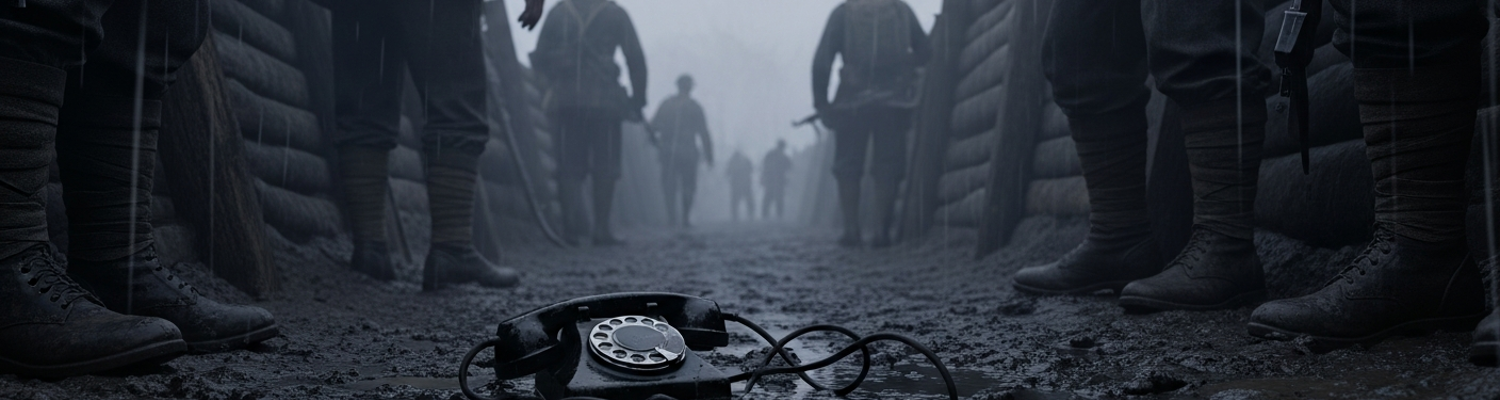
American brigade commanders reached for their battery powered field telephones to call down counter battery barrages against these newly positioned German gun crews, but their handsets produced only static. Churning tractor tracks and stalled wagon wheels severed ground laid field telephone lines, cutting frontline commanders off from First Army headquarters. Signal Corps linemen crawled along the shattered causeways with wire spools and hand pliers, hunting through freezing rainwater to find broken wire ends buried beneath overturned caissons. Iron wheel rims and heavy steel treads ground the insulated copper wiring directly into the chalky mud, slicing the cables in dozens of places along every hundred yards of roadbed. Brigade switchboard operators turned their manual magneto cranks repeatedly without response, leaving frontline colonels with no choice but to send company runners southward through the gridlock with handwritten messages.
Company runners struggled through deep mud, delaying battlefield intelligence reports and artillery support requests by crucial hours. Infantry messengers sank past their puttees into waterlogged clay as they tried to skirt the wall of dead draft animals, locked trucks, and overturned wagons choking the single corridor through Malancourt. Heavy gas masks and soaked wool uniforms weighed down the couriers, forcing exhausted men to crawl on hands and knees across collapsed trench parapets under persistent machine gun fire. Dispatch bags containing map coordinates of fortified German pillboxes reached division command posts hours after attacking battalions had already suffered severe casualties or fallen back from their objectives. Corps artillery officers received outdated target requests for positions their own infantry had already evacuated, leaving rearward batteries to fire into empty trenches while active enemy strongpoints remained intact.
Medical corpsmen faced similar paralysis because horse drawn ambulances and litter bearers could not move wounded soldiers south, leaving triage stations overwhelmed along the roadside. Field medics laid canvas stretchers side by side in the freezing rain, covering open wounds and broken limbs with wet shelter halves because hospital tents remained packed in supply wagons miles behind the front. Stretcher teams carried casualties on their shoulders through waist deep mud toward the road, only to find the passage entirely blocked by artillery tractors and immovable three ton trucks. Exhausted litter bearers collapsed into waterlogged shell holes beneath the weight of wooden litters, leaving hundreds of bleeding men lying along the wet banks of the road. Regimental surgeons ran out of clean bandages, morphine, and chloroform, forcing medical officers to wash dirty dressings in crater water while sorting casualties into rows behind the parapets.
Battalion commanders dispatched armed patrols across the cratered ground between Malancourt and Avocourt to find dry cart paths or firm ground capable of supporting pack trains. Reconnaissance patrols discovered only wide belts of intact German barbed wire, unexploded mortar shells, and waterlogged marshland that swallowed pack mules within paces of leaving the road. Military police units attempted to clear a pathway for walking wounded by pushing abandoned touring cars and empty ammunition caissons off the road embankments with wooden levers. Overturned vehicle frames rolled down into the roadside drainage ditches, blocking the remaining water runoff and submerging nearby telephone wires under several feet of standing water. American division leaders remained completely without communication in their command dugouts, isolated from their pinned down infantry battalions as darkness halted operations around the ruins of Montfaucon.
Frontline Deprivation in the Seventy Ninth Division
Assault regiments trapped in forward shell scrapes beneath the German pillboxes realized that forward elements of the 79th Division had outrun their supply trains and were left without rations, potable water, and small arms ammunition resupply. Soldiers had exhausted their iron rations during the initial assault through the German wire, leaving thousands of men without food for over thirty hours. Thirst drove desperate doughboys to scoop yellowish rainwater directly from bomb craters and drainage ditches, risking mustard gas contamination and severe dysentery because water carts remained stuck miles to the rear. Squad leaders searched the bodies of fallen soldiers to collect half empty cartridge belts, discovering that assault companies had fired off nearly their entire basic issue of three hundred rounds per man. Platoon sergeants distributed remaining five round stripper clips among surviving riflemen, warning their men that no transport wagons had crossed the shattered ground behind them to deliver fresh wooden ammunition crates.
Riflemen attempting to conserve their scarce ammunition encountered sudden mechanical failures because infantrymen lacked lubricating oil for their M1903 Springfield rifles, causing bolt actions to seize when exposed to abrasive trench mud. Fine chalk dust and wet clay from the cratered fields coated the steel bolt raceways, locking lugs, and magazine wells of the weapons during the advance. Dry friction and abrasive grit locked the tight tolerances of the bolt mechanisms together, preventing soldiers from chambering fresh rounds or ejecting swollen brass cartridge cases. Men kicked closed bolt handles with their heavy trench boots or struck them with entrenching tools to force the actions open, frequently snapping off extractor hooks and bending cocking pieces. Damaged rifles littered the ditch banks as frontline doughboys stripped dry bolts and wiped them with greasy wool socks in futile attempts to clear the grinding silt.
Machine gunners rushed forward with crew served weapons to provide defensive fire for the disabled riflemen, but Chauchat automatic rifles and Browning machine guns overheated and jammed repeatedly due to carbon fouling and contaminated water cooling jackets. French supplied Chauchat teams struggled with open sided curved magazines that scooped up liquid trench mire, forcing thick grit directly into the firing chambers while intense sustained fire hardened unburned propellant into heavy carbon deposits along the recoil assemblies. Thermal expansion caused the light automatic barrels to bind tightly inside their outer casings, halting rapid fire within seconds of engaging enemy counterattacks. Machine gun crews operating heavier support weapons poured muddy crater runoff into their cooling systems when clean water cans failed to arrive, introducing thick silt that blocked coolant channels and boiled away into dense steam. Boiling steam and baked residue seized the internal pistons and feed mechanisms, forcing gunners to dismantle their hot weapons in exposed shell holes while German machine guns swept the ridge.
Surviving doughboys crawled between the isolated shell craters to gather functional German weaponry from abandoned frontline trenches. Soldiers retrieved discarded Mauser rifles and canvas belts of German ammunition from captured dugouts, using enemy equipment to establish basic defensive perimeters on the open ground. Exhausted company runners attempting to carry requests for water, rifle oil, and ammunition back to division headquarters disappeared into the shell torn landscape under constant enemy artillery fire. Regimental commanders halted further offensive rushes against the fortified crest of Montfaucon, keeping their battered battalions pinned in shallow trenches to prevent complete annihilation. Troops hunkered down in the cold clay with empty canteens and fouled weapons, holding their ground through the night while German reinforcements from the 1st Guards Division strengthened the concrete strongpoints on the heights above.
Tactical Stagnation Before Montfaucon Redoubts
Maxim machine guns swept the barren chalk slopes with interlocking fire the moment lead platoons of the 79th Division rose from their scrapes. American infantrymen scrambled forward without the rolling barrages that operational doctrine demanded, discovering that German wire entanglements remained uncut across the sunken roads. Lacking accompanying field artillery support and replenishment, the 79th Division ground to a halt before fortified German machine gun nests. Nestled inside concrete pillboxes and camouflaged stone basements, enemy gunners caught advancing doughboys in grazing crossfires that tore through rifle companies within minutes. Platoon leaders blew their trench whistles and waved their men toward shelter in shell craters, but the open terrain offered no protection against weapons firing hundreds of rounds per minute. Surviving soldiers pressed their bodies into the mud, pinned beneath the direct view of the ruined church towers on the crest.
German artillery observers perched in thick concrete cupolas and the shattered masonry of the village church directed plunging artillery fire onto the stalled American infantry with impunity. Artillery officers tracked every movement across the open valley through high magnification scissor periscopes. Telephone wires running safely along the reverse slope carried precise firing coordinates back to heavy howitzer batteries stationed in the Bois de Cuisy and along the Meuse heights. High explosive shells and shrapnel cases detonated directly above shallow craters, showering pinned riflemen with jagged iron splinters and pulverized limestone. American officers could not call down counter battery fire to suppress these observation posts because divisional field guns remained locked in the traffic jams miles to the south. Shellbursts threw showers of wet clay across the 313th and 314th Infantry lines, shattering company cohesion and forcing battalion leaders to abandon their scheduled afternoon rushes.
General Joseph Kuhn reported to Fifth Corps headquarters that the critical initial timetable objective of taking Montfaucon on September 26 failed, buying the defenders twenty four hours of vital recovery time. German commanders utilized this unexpected reprieve to shuttle veteran infantry units from the 1st Guards and 5th Guard Divisions into the second defensive belt. Labor parties dragged fresh ammunition boxes, heavy Maxim tripods, and coiled telephone wire up the reverse slope under the cover of gathering darkness. Pioneer teams reinforced basement shelters throughout the ruined village, establishing interlocking fields of fire that turned individual brick farmhouses into mutually supporting redoubts. Fresh field batteries rolled into concealed orchards north of the crest, establishing registered firing zones across every draw and gully leading to the summit. American planners had expected rapid momentum to capture the dominating heights before the enemy could react, but the operational pause permitted the German garrison to double its defensive strength.
Regimental officers crawled from crater to crater to reorganize scattered squads, consolidating the surviving men of the 313th and 314th Infantry into makeshift defensive lines. Messengers moved southward on foot through the dark fields, carrying urgent orders for any available horse drawn battery to bypass the clogged road and drag their guns into firing positions by hand. Stretcher bearers hauled wounded soldiers into collapsed German dugouts to shelter them from the persistent rain and fragmentation rounds that swept the slopes. Colonels conferred over damp tactical maps by shaded flashlights, issuing orders for a renewed frontal assault against the redoubts scheduled for the following morning. Exhausted riflemen distributed their few remaining rounds of captured German ammunition and wiped the grit from their bayonets, waiting in the freezing mud for dawn to reveal the fortified ridge above them.
German Consolidation on the Kriemhilde Stellung
Staff officers under General Georg von der Marwitz recognized that the American advance had lost its forward momentum and immediately routed seasoned units of the 1st Guard Division, the 5th Guard Division, and the 117th Infantry Division toward the threatened gap. The delay at Montfaucon allowed the German Fifth Army to rush veteran reserve divisions into the defensive sector by rail and forced marches. Troop trains rolled into rear railheads near Dun sur Meuse and Romagne sous Montfaucon, discharging thousands of rested soldiers equipped with full ammunition loads and dry field rations. Fresh infantry regiments marched along intact, well paved roads north of the front line while American assault divisions struggled without food or rifle oil in the mud below. Artillery teams unlimbered additional field guns and heavy howitzers in concealed ravines north of the ridge, establishing registered firing zones that swept every gully and sunken road leading away from the crest.
Pioneer companies strung wide belts of thick barbed wire through the tangled brush of the Bois de Romagne and across open farmland, anchoring wire coils to steel screw pickets to build barriers several yards deep. German engineers and arriving infantry fully manned and fortified the formidable bunkers of the Kriemhilde Stellung main line of resistance beneath that canopy of defensive fire. Combat engineers cleared fields of fire with hand axes and explosive charges, leveling stone farmhouses and chopping down orchards to deny advancing doughboys any cover. Work crews bolted heavy steel armor plates over machine gun embrasures and reinforced deep concrete dugouts with fresh timbers, creating bombproof shelters that could withstand direct hits from heavy artillery. Signal battalions ran armored telephone lines through deep communication trenches, linking forward observation cupolas directly to concealed mortar positions and heavy battery command posts across the heights.
American infantry battalions pushed through the ruins of Montfaucon on September 27 only to slam directly into this newly reinforced wall of steel and concrete. First Army planners had originally counted on sweeping past the second and third defensive lines within forty eight hours to disrupt German rail lines at Sedan. What began as an engineer scheduling miscalculation transformed a planned swift breakthrough into a grinding multi week war of attrition. Heavy Holt artillery tractors and supply caissons remained firmly embedded in the Malancourt mud, denying forward divisions the heavy artillery support and engineering materials required to breach the concrete defenses. Division commanders had to pause their battered infantry units for several days simply to clear traffic jams and haul basic rations to the front line on the backs of pack animals.
Pack mules and carrying parties reached the forward positions just as renewed American attacks crashed against the Kriemhilde Stellung during the opening weeks of October. Maxim machine guns firing from undamaged concrete pillboxes caught charging doughboys in interlocking bands of grazing fire across the slopes of the Cote Dame Marie and the fields near Romagne. American rifle companies suffered staggering casualties as they crawled through uncut wire entanglements under continuous high explosive shellfire and mustard gas barrages. General John J. Pershing rotated shattered divisions out of the line and threw fresh, inexperienced units directly into the same deadly obstacles, gaining ground only by hundreds of yards at a time. Field hospitals along the Meuse overflowed with thousands of wounded soldiers while front line regiments engaged in brutal hand to hand trench fighting to take isolated machine gun pits.