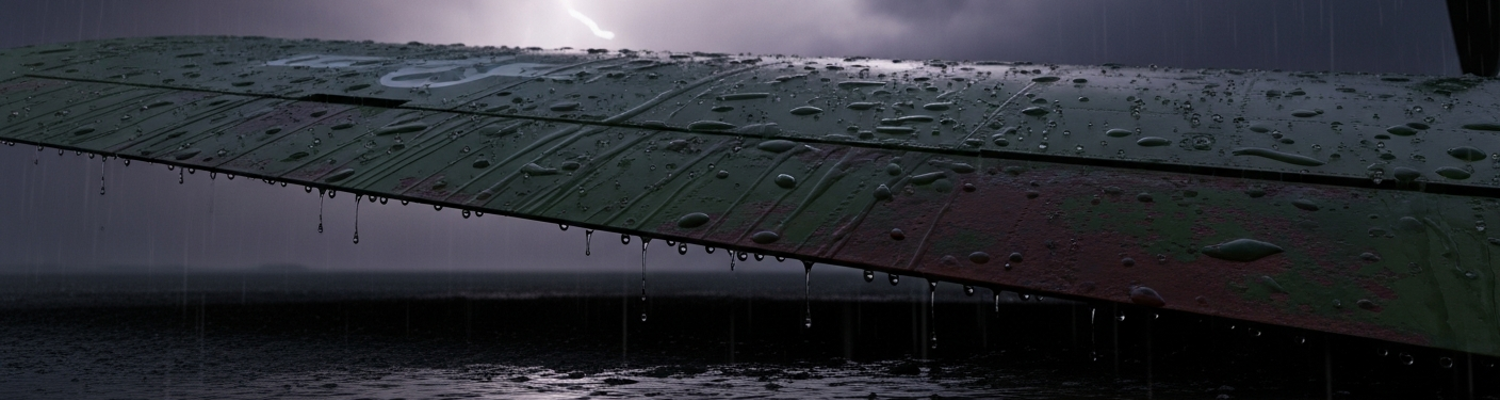

In the S-3 planning cells of the 2nd Battalion, 9th Marines, Operation Steel Vengeance took shape throughout the summer of 1970. Positioned in Quang Tri Province, the northernmost tactical zone in South Vietnam, the battalion was tasked with countering infiltration from the People’s Army of Vietnam (PAVN) 304th Division. This was a conventional force, not local insurgents, operating from a network of concealed bunkers and supply lines west of the Dong Ha Combat Base. Steel Vengeance was designed as a spoiling attack, a combined-arms operation to disrupt a suspected enemy buildup before it could threaten allied positions along the vital Route 9 corridor. It was not planned as a simple reconnaissance mission. It was an explicit effort to break a specific enemy formation.
The entire concept depended on paper.
Central to the plan was a significant psychological warfare component. This PSYOP phase would precede the main ground assault, delivered by the OV-10 Bronco aircraft of a Marine Observation Squadron. The Bronco was chosen for its specific performance envelope. Its twin-boom configuration and powerful turboprop engines enabled low, slow flight over the hazardous jungle canopy of Quang Tri, a profile impossible for faster jets or more vulnerable helicopters. The aircraft could hug the terrain, delivering its payload with a degree of precision. The plan specified the use of M129 leaflet bombs, non-lethal munitions designed to split open in mid-air and disperse thousands of paper flyers over a designated grid square. The success of the operation’s opening phase rested on the ability of these pilots to navigate to a featureless patch of jungle and release their cargo at the exact moment for the wind to carry the messages to their intended audience.
The objective was subversion. The leaflets, produced by the 7th PSYOP Group, were part of the Chieu Hoi, or Open Arms program, which encouraged enemy defections. This was not a generic appeal. Intelligence derived from captured soldiers and long-range reconnaissance patrols (LRRP) had identified a specific company within the 304th Division’s 66th Regiment. Reports indicated this unit was suffering from low morale and a malaria outbreak. The leaflets were crafted with specific messaging, referencing the hardships of jungle life, the absence of medical supplies, and the futility of their fight. They included maps to designated safe rally points and carried the official symbol of the Chieu Hoi program, guaranteeing safe passage to any PAVN soldier who surrendered with one. The PSYOP campaign was designed to trigger a failure in enemy cohesion, persuading dozens of soldiers from a single unit to abandon their posts. Planners hoped this would create disorder in the enemy’s command structure moments before 2/9’s ground assault began. The operational timeline allocated a six-hour window between the final leaflet drop and the first helicopter insertions.
Operational logs from the 7th PSYOP Group detail a persistent adversary that was not the PAVN: the weather. The humidity of Quang Tri Province during the monsoon season was a constant, corrosive force. Standard-issue paper leaflets were almost useless in this environment. The paper stock, intended for drier climates, absorbed moisture from the air. Inside the M129 leaflet bombs, these damp stacks of paper would fuse into a solid, pulpy mass. During test drops, armorers discovered that when the bomb’s outer shell was blown apart by its detonator, the payload would often plummet to the jungle floor as a single, unreadable brick. To counter this, planners submitted a high-priority requisition for specialized, humidity-resistant paper. This was not a standard supply item. It was a wax-impregnated, polymer-coated substrate that had to be sourced from depots in Okinawa or the continental United States, creating a significant procurement lead time.
The paper was only the first point of potential failure.
The delivery system itself was unreliable under the specific stresses of the mission. The OV-10 Broncos of Marine Observation Squadron 6 (VMO-6) were tasked with low-altitude flight, which subjected the airframe and its munitions to constant, high-frequency vibrations. Maintenance records from VMO-6 at Dong Ha Combat Base show a sharp increase in work orders for components related to the M129 leaflet bomb. The primary issue was the dispenser’s fuze-actuator assembly. This electromechanical component, responsible for timing the detonation that split the bomb casing, was failing at a high rate. The humidity corroded its delicate contact points, while the jarring of low-level flight caused micro-fractures in the retaining clips holding the timing mechanism. Requisitions for replacement actuators sent to the main air supply hub at Da Nang were often given a low-priority designation compared to items for fighter aircraft. This forced VMO-6 armorers into a routine of cannibalizing parts from other leaflet bombs to meet mission requirements, introducing another variable into an already complex system.
The entire ground-attack plan for 2/9 Marines was built on the assumption that the Chieu Hoi leaflets would work. Intelligence had pinpointed a company within the PAVN 304th Division’s 66th Regiment reportedly suffering from a malaria outbreak and depleted morale. The leaflets were crafted to exploit these specific hardships. Planners theorized this would create a breakdown in the enemy’s command structure hours before 2/9’s helicopters were scheduled to land. Any failure in the PSYOP phase, whether from pulpy paper or a faulty dispenser, meant that the Marines would not be striking a disorganized foe. They would instead be launching an attack against a prepared and alert North Vietnamese Army regiment in fortified positions.
Military Sea Transportation Service operational logs from mid-1970 pinpoint the origin of the failure that would affect Operation Steel Vengeance. The breakdown occurred aboard the USNS Point Barrow (T-AKD-1), a cargo ship dock operating off the coast of I Corps. The Point Barrow was a civil-service-manned auxiliary vessel tasked with delivering oversized and sensitive military hardware. Originally built with an ice-strengthened hull for Arctic missions, the aging ship was a logistical workhorse in Southeast Asia. Deep within its hold were pallets of the specialized, wax-and-polymer-coated paper. Without this paper, the psychological dimension of the assault was nullified. The plan called for a routine underway replenishment (UNREP) with a smaller vessel that would ferry the cargo to the armorers at Dong Ha.
As the Point Barrow maneuvered for the transfer, a failure crippled its ability to hold a steady course. Deck logs and engineering reports (USNS Point Barrow, Deck Log, 14 AUG 1970) indicate a complete loss of hydraulic pressure in the ship’s primary steering gear mechanism. Multiple seals within the hydraulic rams had failed, likely due to a combination of age, metal fatigue, and the stress of operating in heavy seas. The 10,000-ton vessel was effectively adrift. While its propulsion was unaffected, the ship could not be reliably steered, making the close-quarters maneuvering for an UNREP impossible. The civilian merchant marine crew began the process of isolating the failed components and attempting to fabricate replacement seals from bulk stock. The PSYOP paper was now delayed just miles from shore. The initial repair estimate was 24 hours.
That estimate proved optimistic.
The delay stretched to 72 hours. For three days, the USNS Point Barrow remained at sea as its crew worked to rebuild the steering system. The UNREP vessel assigned to meet it was forced to steam in circles, burning fuel. Onshore, the S-3 staff of 2/9 Marines received the updates with mounting concern. Every hour the paper remained on the ship was an hour lost from the operational timetable. The six-hour window between the leaflet drop and the helicopter assault was predicated on a precise sequence of events. This delay unraveled the core assumption of the operation. The 72-hour delay gave the PAVN 304th Division 72 more hours to prepare its defenses, move its units, and recover from the conditions PSYOP planners intended to exploit. When the Point Barrow finally signaled it could hold course, the transfer was completed, but the paper was three days late.
After the 72-hour delay at sea, the wax-coated leaflet paper finally reached the port complex at Da Nang. The pallets were scheduled for immediate offloading at the Bridge Cargo Complex, a wharf built by Navy Seabees to handle the flow of supplies into I Corps. The transfer from the USNS Point Barrow to a Landing Craft Utility (LCU) had been completed, and all that remained was a dockside lift. A 20-ton floating crane was maneuvered into position. Its operator engaged the hoist, the wire ropes went taut, and the first pallet of specialized paper lifted from the LCU’s deck. Then, the crane’s boom shuddered and froze, the load dangling feet above the landing craft.
The entire PSYOP plan was now dependent on a single piece of machinery.
An investigation by a Naval Support Activity Da Nang maintenance team revealed a seizure of the boom derrick’s primary hydraulic ram. A post-mortem examination of the failed component showed a slow decay accelerated by the environment. The polished steel surface of the main piston rod was covered in rust blooms and microscopic pitting from constant exposure to salt spray and humidity. This external corrosion had compromised the ram’s wiper seals, which were designed to keep contaminants out of the hydraulic system. Once the seals were breached, saltwater and moisture mixed with the hydraulic fluid, creating a corrosive and abrasive slurry that attacked the system from within. Maintenance logs (NARA Record Group 181) showed the fluid had not been tested or replaced in over a year. The contaminated fluid had scoured the internal cylinder walls and caused galvanic corrosion between the steel cylinder and its bronze fittings. The internal pressure seals were shredded, and the piston had become fused to the cylinder wall by rust and metal debris.
Repair was not an option. The seized crane was now blocking one of the most active cargo berths in Da Nang. Port operations officers determined that every other heavy-lift crane was already assigned to higher-priority tasks, chiefly the offloading of ammunition, artillery, and rations. The window for the leaflet drop was closing. An urgent request to attempt a manual transfer of the paper was denied; the risk of damage to the specialized paper stock was deemed too high, and the process would take too long. The 2/9 Marines and the VMO-6 armorers at Dong Ha were notified of another indefinite delay. The paper was physically in Vietnam, yet inaccessible. The operational timeline for Steel Vengeance was shattered. The original six-hour psychological preparation window had been replaced by a multi-day mechanical problem that gave the PAVN 304th Division more time to rest, rearm, and prepare. The new estimate for getting the paper to the airfield was 48 hours, pending the arrival of a replacement floating crane from the Chu Lai detachment.
By the time two VMO-6 OV-10 Broncos lifted off the steel planking of Dong Ha’s runway, the operational timeline was fiction. The planned six-hour preparatory window had been compressed to less than ninety minutes. As the aircraft gained altitude, the lead elements of 2/9’s ground assault force were already boarding their CH-46 Sea Knight helicopters. The psychological offensive was no longer a prelude to the main attack; it was a last-ditch effort running almost concurrently. The mission brief ordered the pilots to fly a low-level profile, hugging the jungle canopy at less than 1,000 feet to mitigate unpredictable winds. Their target was a narrow, grid-defined box west of the Khe Gio Bridge, an area believed to house the command elements of the PAVN 66th Regiment. The plan was for a single pass, with both aircraft releasing their M129 leaflet bombs simultaneously.
The first sign of failure came from the wingman’s aircraft.
As the two Broncos descended into the target valley, they encountered significant wind shear from a western ridgeline. The wingman released his payload of two M129 bombs on the lead pilot’s mark. The canisters split open, but the crosswind caught the emerging cloud of paper, shredding the dispersal pattern. A significant portion of the leaflets were blown eastward, scattering harmlessly across an unoccupied stretch of jungle. Archival logs show the drop was at least 500 meters off its intended impact point. It was an incomplete dispersal. The primary aircraft, callsign Spectre 1, carried the bulk of the mission’s payload: four M129 bombs packed with the specialized leaflets. This was the core of the PSYOP effort.
Spectre 1’s pilot lined up his run, centering the target grid in his gunsight. He depressed the ordnance-release button. Nothing happened. A check of the cockpit systems showed the armament panel was active and the release stations were armed. He cycled the master arm switch and banked the aircraft for a second pass. He squeezed the release again. Nothing. The four bombs remained fixed to their hardpoints. With fuel running low and the ground assault imminent, the pilot transmitted the code for a mission failure and banked the Bronco back toward Dong Ha, its payload still attached.
A post-flight examination by VMO-6 armorers revealed the cause of the failure. Once the SUU-44/A auxiliary dispenser pod was removed from the airframe, technicians had to manually pry the assembly open. Inside, they found the electromechanical release mechanism for the forward bomb shackles was seized. The system relied on a small steel solenoid pin retracting to release a spring-loaded steel pawl, which would open the shackle. Maintenance reports indicate the solenoid pin was fused to its aluminum housing by galvanic corrosion. The constant exposure to salt-heavy air and humidity, combined with the vibrations of low-level flight, had allowed moisture to penetrate the unsealed actuator assembly. The interaction between the dissimilar metals, steel and aluminum, in the presence of an electrolyte created a chemical reaction that effectively welded the two components together. When the pilot pressed the release, the solenoid received the electrical charge but was physically incapable of moving the frozen pin. The psychological component of Operation Steel Vengeance had been defeated by a spot of rust less than a centimeter wide.
The 2nd Battalion, 9th Marines’ operational plan for Steel Vengeance was predicated on a successful psychological campaign. The lead elements of Fox Company, boarding their CH-46 Sea Knights at Dong Ha, had been briefed to expect disorganized resistance from a demoralized enemy. Planners had projected a high probability of encountering PAVN soldiers seeking to surrender. This expectation was based on a series of logistical and mechanical assumptions that had already failed. The Marines were flying into a tactical environment that bore no resemblance to the one described in their mission briefing.
The initial insertion into Landing Zone Wren, a small clearing west of the Khe Gio Bridge, was quiet. The first wave of Sea Knights touched down without incident. Fox Company’s 1st Platoon pushed out, moving toward a thicket of bamboo that marked the first phase line. It was there that the ambush was sprung. The quiet was broken not by sporadic fire, but by the volley of a prepared ambush. Unit after-action reports indicate the first rounds came from a concealed bunker complex with interlocking fields of fire from at least three RPD machine guns. Mortar rounds, pre-sighted on the LZ, began to walk across the clearing, pinning down the second wave of helicopters. The anticipated demoralization of the PAVN 304th Division had not occurred. The Marines had landed in a kill zone prepared by an enemy that was alert and waiting.
The failure to subvert the NVA 66th Regiment was total. The cascading logistical delays had given the North Vietnamese unit time. The few garbled leaflets scattered by the wind shear served not as persuasion, but as an early warning that a major American operation was imminent. Post-operation intelligence analysis concluded that PAVN commanders used the extra days to rest their troops, redistribute ammunition, and improve their defensive fortifications. Instead of finding hungry, fever-ridden soldiers, the lead Marines of Fox Company encountered a network of hardened earth-and-log bunkers, spider holes, and trench lines. The enemy they engaged was disciplined, well-supplied, and demonstrated an intact command structure. There were no defectors with Chieu Hoi passes, only determined fighters who poured a devastating volume of fire onto the exposed landing zone.
This resulted in heavier contact and far greater casualties for Fox Company than any projection had deemed possible. The 1st Platoon was immediately cut off and pinned down. Radio logs from the engagement show a series of desperate calls as the platoon leader was killed within the first thirty seconds of the firefight, and his radio operator was severely wounded moments later. The platoon’s M60 machine gun teams were specifically targeted and neutralized before they could establish a base of fire. What was intended to be a swift advance devolved into a static firefight, with the rest of Fox Company unable to move off the landing zone to support the lead platoon. Medevac requests flooded the battalion command net, but the intensity of the ground fire made landing impossible. Initial casualty reports, transmitted in grim, staccato bursts, indicated nearly a third of the first platoon was killed or wounded in the opening moments of the engagement. The kinetic phase of Operation Steel Vengeance had been decided by a series of mundane, corrosive failures miles away and days before.