
Formation of the 9th Corps d'Afrique
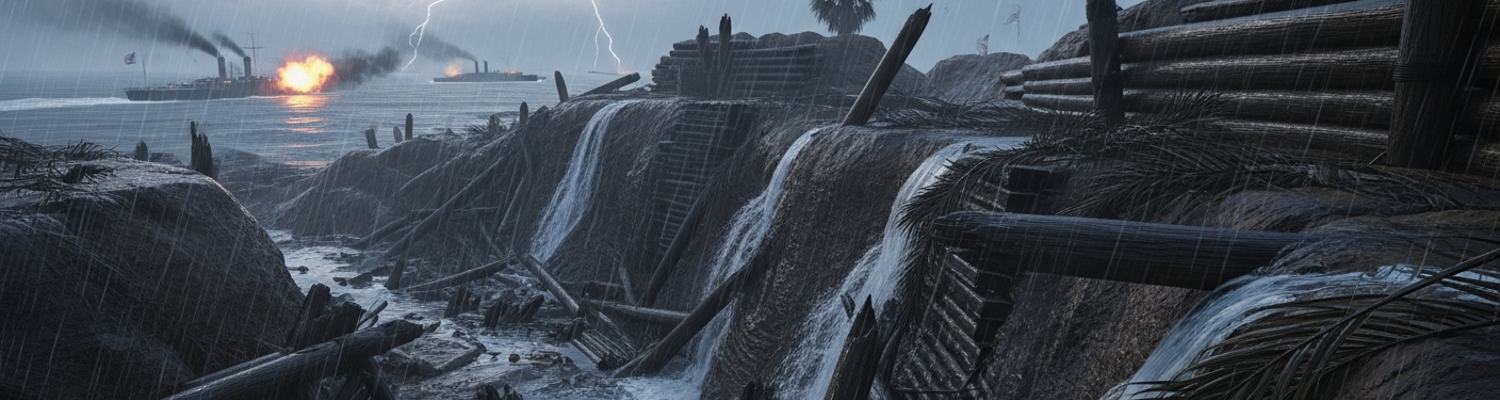
Mud liquefied along the river bluffs at Port Hudson as heavy rain collapsed the captured Confederate dirt walls faster than Union engineering details could shore them up. Cracked timber support walls snapped under the weight of wet soil, sliding whole sections of defensive ditch into the bayous and exposing the northern approach to sudden rebel raids. Union commanders had planned to hold the four mile perimeter with a small skeleton garrison, but the battered forts, unexploded artillery shells, and rotting wooden fences required hundreds of dedicated laborers working around the clock to prevent complete structural failure. Federal authorities organized the 9th Corps d'Afrique at Port Hudson in September 1863 to confront this crisis, drawing recruits primarily from formerly enslaved laborers across southern Louisiana who knew the local terrain and river bottomlands. Recruits dropped their cotton field hoes, took the military oath in soaked camps along the Mississippi River, and stepped straight into ranks without receiving standard infantry drill or uniforms.
Uniforms and standard gear remained absent when Adolphus Greely reported for duty as a young second lieutenant among the commissioned white volunteer officers assigned to lead the regiment. Greely and his fellow lieutenants found hundreds of enlistees standing in ragged civilian clothes without muskets, cartridge boxes, or dry barracks. Company captains improvised morning roll calls with scrap paper, sorting men into work parties rather than tactical squads because headquarters demanded immediate results on the broken ramparts. Commanders assigned the regiment immediately to strenuous garrison fatigue duty and heavy digging tasks to secure captured Confederate perimeter works before river dampness rotted what remained of the fortifications. Officers distributed rusted iron spades, pickaxes, and timber axes directly from river transport boats instead of issuing Springfield rifles to the recruits.
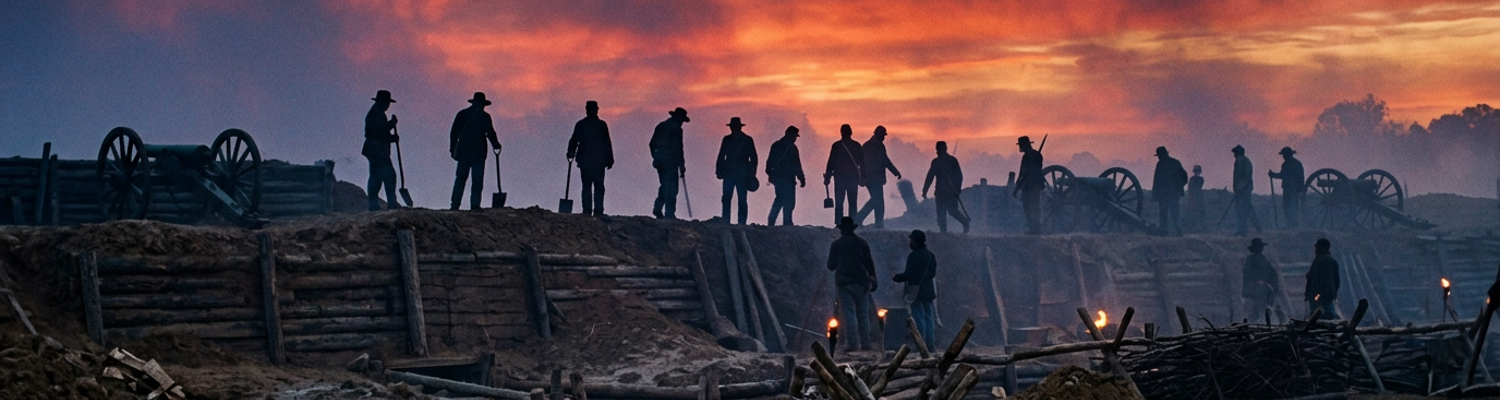
Recruits swung those iron spades into the dense clay of the outer dirt walls at sunrise as the working parties began clearing collapsed gun ports. Soldiers dug out buried cannon platforms, hauled tons of sludge from waterlogged trenches, and drove fresh cedar stakes into the outer ditch to replace the shattered Confederate branch barriers. Technical breakdowns compounded the physical strain when blunt shovels bent against hidden brickwork and wagon teams lost their footing on the greasy bluffs. Regimental details solved these failures by setting up field forges behind the battery lines, re-tipping dulled picks with salvage iron and carving replacement handles from fallen ash trees. Laborers hauled these reconditioned tools back to the wall through suffocating late summer heat, carving drainage channels through the clay to divert runoff away from powder magazines.
Powder magazines required constant protection, and drainage trenches slowly stabilized the earthen walls, but shifting soil continued to threaten the river batteries that commanded the Mississippi bend. Working crews waded chest deep into stagnant ravine water to anchor pine support walls, using hemp ropes and wooden mallets to drive pilings into the unstable silt. Squads packed fresh sod over exposed magazine roofs while sentries guarded the perimeter against Confederate cavalry patrols probing the outer picket lines. Greely and the regimental staff coordinated these round the clock digging shifts, rotating exhausted companies between timber cutting in the swamp and heavy earthmoving along the main forts. Sweat soaked soldiers tamped the final layers of clay into the gun platforms, locking the captured defenses into a functional Union stronghold.
Redesignation as the 81st US Colored Infantry
Strongholds required permanent maintenance, and cannons rolled onto those freshly tamped platforms just as official orders from the War Department arrived by riverboat to reshape the garrison structure. Bureau of Colored Troops standardization reorganized and redesignated the unit as the 81st United States Colored Infantry in April 1864, replacing the regional Corps d'Afrique title on every company roster. Federal authorities used this reorganization to clarify regimental duties, permanently redirecting the unit away from offensive field operations. Regimental commanders transferred their core operational focus from tactical field movement to technical military engineering and defensive maintenance across the four miles of river forts. Sergeants who had begun instructing recruits in formation marching and skirmish tactics packed away their drill manuals, reassigning the men to daily engineering rosters, tool sheds, and perimeter work details.
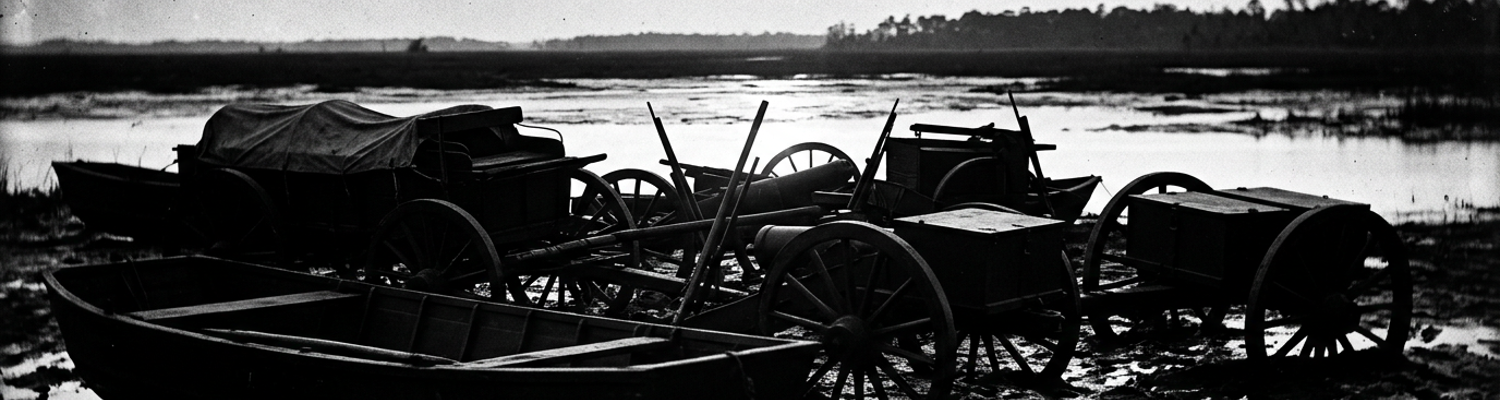
Work details reported to the tool racks inside the regimental depot, immediately exposing the severe supply reality of this new engineering mission. Soldiers of the 81st endured severe supply shortages and inferior tool allotments compared to veteran white infantry regiments operating across the Department of the Gulf. Quartermasters in New Orleans and Baton Rouge prioritized frontline white divisions for new equipment, sending Port Hudson worn out castoffs, dull axes, and brittle iron shovels that shattered after striking buried tree roots. Regimental requests for standard steel digging tools and heavy draft mules sat unanswered in department supply offices for weeks at a time. Enlisted details had to scavenge abandoned plantation sheds and river salvage piles to collect scrap iron, discarded wheelbarrows, and split timber so their construction crews could keep working. Lieutenant Adolphus Greely and company officers spent their mornings sorting through barrels of bent nails and fractured tool heads, cataloging broken implements that headquarters expected the regiment to use on the fortifications.
Fortifications demanded constant upkeep, so blacksmiths from the ranks converted those broken implements into usable gear by establishing repair shops inside the dry ditches behind Fort Desperate. Enlisted mechanics scavenged charcoal from burned Confederate cookhouses, pumped makeshift leather bellows, and welded brittle shovel blades onto tough white oak poles cut from local bottomlands. Working details modified blunt pickaxes into trenching tools that could penetrate hard baked clay without snapping under pressure. Engineers directed these modified tools against the rotting pine log support walls, replacing insect eaten wood with interlocking cypress beams that resisted river rot. Rainstorms continually washed away loose soil, but work crews developed angled timber chutes to direct water into runoff pipes before flash floods could undercut the newly laid gun platforms. Sentry squads stood watch along the work zones with loaded muskets, scanning the timberline while their comrades hammered replacement timbers into place.
Timbers formed the backbone of the defenses, and timber crews fastened heavy oak planks over the exposed magazine bunkers, bolting the wood down with hand forged spikes before the next storm system moved up the river valley. Soldiers hauled thick sod from the river flats and packed it across the bunker roofs, creating dense earth layers designed to absorb mortar fragments and summer heat. Fatigue details cleared thick brush across a three hundred yard clear zone outside the main ditch, dragging thorny branches into tangled branch barriers to slow any sudden cavalry assault. Officers inspected every wall angle with plumb lines and wooden levels, marking weak soil pockets for immediate reinforcement with fresh clay bags. Regimental work gangs rotated from timber cutting to ditch clearing without pause, keeping the dirt walls structurally sound through daily manual labor. Working parties stacked their reshaped shovels near the battery firing steps as dusk fell, setting warning stakes along the outer ditch before the night relief marched out to relieve the perimeter guards.
Department of the Gulf General Orders Number 17
Perimeter guards took their posts along the outer ditch just as dispatch couriers delivered Department of the Gulf General Orders No. 17 in July 1864, initiating an immediate structural overhaul of the garrison defenses. Major General Edward Canby issued the decree to consolidate the depleted ranks of the 81st with the 87th and 95th USCT engineer regiments, merging hundreds of veteran laborers and mechanics into a unified workforce. Regimental clerks cleared rough pine desks in the post headquarters, matching company rosters and folding transfer papers to integrate personnel from three separate commands into ten reorganized companies. Officers reassigned incoming sergeants to tool management and defensive ditch surveying, quickly absorbing veteran combat engineers who had operated along the Atchafalaya River and the Texas coastline. Department commanders attached the reorganized 81st directly to the Engineer Brigade to centralize technical fortifications work across the lower Mississippi River corridor, standardizing engineering procedures from Vicksburg down to New Orleans. This new brigade alignment ended scattered garrison assignments and placed all strategic engineering tasks under direct departmental supervision.
Department commanders used this supervision to establish specialized labor details for heavy carpentry, earthwork wall repair, and cannon placement along strategic river bluffs. Timber squads marched into the damp bottomland cypress stands with broadaxes and crosscut saws, cutting massive logs to frame artillery platforms and shore up unstable bomb shelters. Mechanics shaped these heavy logs into interlocking wooden frames along the steep bluff faces, using wooden pegs and iron bolts to keep shifting mud from collapsing into the river channel below. Carpentry crews simultaneously repaired bridge supports across deep ravines and constructed heavy timber walls to reinforce the soft soil of the dirt walls against persistent erosion. Fatigue squads hauled wagonloads of dense clay and woven brush bundles to rebuild deteriorating dirt walls, packing each layer with heavy wooden hammers to withstand both heavy weather and enemy cannon fire. Master carpenters supervised the construction of thick timber shelters and angled drainage pipes, preventing rainwater from flooding the underground powder magazines.
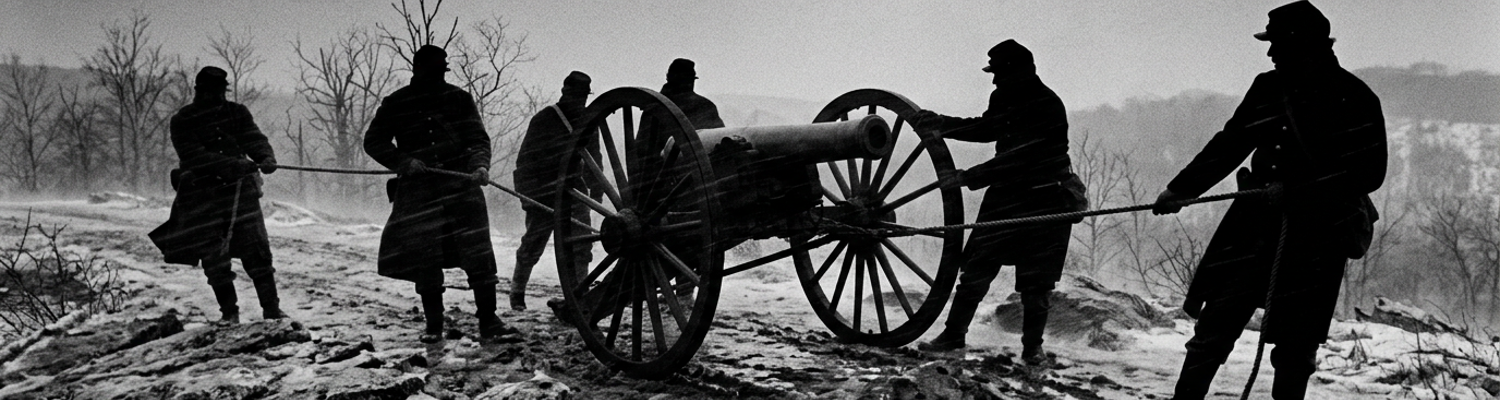
Powder magazines supplied the heavy guns, and artillery details moved into position as soon as the carpentry crews finished securing the gun emplacements, taking over the heavy task of moving siege cannons onto the high river bluffs. Soldiers rigged heavy hemp ropes, block and tackle systems, and three legged lifting frames to hoist thirty pounder Parrott rifles and massive smoothbore cannons up the rain slick bluffs from river barges. Ropes snapped under the weight of the eight thousand pound iron barrels, forcing crews to fashion double pulley systems and splice reinforced cables on the spot to avoid crushing the gun teams. Enlisted mechanics improvised wooden rollers from stripped oak trunks to walk the gun carriages across mud flats where supply wagons bogged down to their axles. Gunners and infantrymen wrestled the heavy weapons onto newly leveled timber frames, anchoring the turning tracks with forged iron pins driven into oak footings. Working parties calibrated the firing openings with wooden sight sticks, clearing sightlines through riverbank brush to give the batteries an unobstructed field of fire across the Mississippi channel.
Mississippi channel traffic relied on this protection, and river transport boats navigated the wide bend under the direct protection of these newly mounted batteries, confirming the operational success of the centralized engineering system. Lieutenant Adolphus Greely and company officers inspected the bluff works each morning, marking stress fractures along the soil walls with lime powder to guide the repair squads. Enlisted mechanics kept forge fires burning inside the dry trenches, reshaping stripped bolts, welding broken draft chains, and repairing timber sleds damaged during heavy hauling. Working parties packed fresh river dirt and gravel into the approach roads, laying split log wooden tracks to keep supply wagons moving between the river landing and the hilltop batteries. Guards took up fresh positions along the fortified bluff crest as darkness fell, watching the dark water below while relief crews unloaded another barge of cypress timbers at the Port Hudson wharf.
Earthwork Decay at Port Hudson
Wharf crews worked through the night, and combat engineers of the 81st United States Colored Infantry dragged those newly landed cypress timbers up the muddy bluff roads at daybreak to confront massive structural breakdown across the Confederate built dirt walls. Confederate engineers had thrown up the original defensive lines using fragile river soils and loose clay, but these dirt deposits could not withstand the heavy rainfall that battered coastal Louisiana. Heavy rain gouged deep gullies straight through the exterior dirt walls, melting hard packed dirt walls into liquid mud that poured down into the dry defensive ditches. Retaining walls constructed with unseasoned pine logs rotted through after months of high humidity and standing water, bulging outward until long stretches of earth slumped into the ditches. Lieutenant Adolphus Greely and the regimental inspection teams surveyed miles of crumbling forts where the defensive crest had dropped several feet below regulation height, stripping the garrison of vital cover against enemy sharpshooters. Working crews hurried along the damaged lines with measuring poles and shovels, driving oak stakes into the slumping wall faces to mark where the soil had liquefied completely.
Mud from this liquefaction created massive problems, and water pooling against those marker stakes soaked downward through the trench floors, exposing chronic drainage failures that compromised underground bomb shelters and heavy artillery platforms across the interior works. Confederate builders had failed to cut proper outflow pipes or graded ditches when throwing up the fortifications, leaving storm runoff with no avenue of escape from the enclosed forts. Floodwater backed up into the buried timber bomb shelters where garrison troops sheltered, submerging wooden walkways under several inches of foul sludge that warped support posts and ruined stored cartridges. Soaked earth beneath the artillery platforms softened until the weight of heavy siege guns tilted the timber flooring, throwing cannons off their level turning tracks and jamming the iron carriage wheels. Enlisted mechanics and carpenters from the 81st waded into the drowned chambers with hand drills and crosscut saws, hacking emergency drainage channels through the floorboards to let the trapped water flow out toward the rear ravines. Working parties then levered the shifted gun platforms back onto solid ground using oak beams and dry river gravel, racing against the moisture before rot could ruin the structural timbers.
Timber supports required stable ground, and engineers directing these timber repairs moved their survey crews toward the river bluffs to assess structural weaknesses along outer dirt walls vulnerable to sudden bank cave ins above the river bends. Mississippi River currents coiled tightly against the high bluffs below the fort, scouring the base of the cliffs and steadily undercutting the soft silt. Massive stress fractures split the outer earthworks where Confederate batteries had been placed too close to the edge, creating jagged cracks that ran parallel to the water for hundreds of yards. Bank cave ins threatened to drop entire gun crews, their heavy cannons, and tons of earth directly into the river channel without warning. Soldiers of the 81st hammered iron survey pins along the cracks and stretched cord lines across the gaps, measuring how quickly the bluff face pulled away from the main dirt walls.
Dirt walls needed immediate reinforcement, and soldiers hauling split logs rushed to the threatened cliff edges, driving long timber poles into the unstable dirt behind the cord lines to anchor the sliding earth. Work details constructed interlocking wooden frame walls along the most fragile drop offs, filling the hollow timber frames with broken brick, river stones, and packed clay to resist the pressure of the river below. Construction squads simultaneously threw up secondary dirt walls fifty yards inland from the crumbling bluffs, digging fresh rifle pits and packing grass faced dirt walls so the garrison would retain commanding fire over the river bend if the outer works sheared off. Regimental blacksmiths produced heavy iron braces at their trench forges, securing the wooden frame joints against the sideways movement of the shifting ground. Sentry parties patrolled the newly shored bluffs through the evening, inspecting the survey lines with lanterns to watch for any fresh sinking.
Combat Improvisation and Wall Reconstruction
Lantern beams revealed fresh cracks splitting the dirt walls at daybreak, prompting work details from the 81st to gather swamp vegetation for emergency wall repair materials. Heavy erosion had stripped the outer faces of the forts, leaving the exposed dirt walls vulnerable to immediate collapse. Fatigue parties marched into nearby bottomlands with axes and cane knives, cutting thick stands of river cane, willow branches, and scrap timber from abandoned plantation outbuildings. Soldiers wove the green willow branches and tough cane stalks around circular rows of driven stakes, creating sturdy, hollow woven baskets designed to hold packed earth. Other squads bundled the remaining river cane into tight, eight foot cylinders, securing the bundles with wire and tough wild rope. Working parties dragged these field improvised bundles, woven baskets, and wooden wall frames up the bluffs, anchoring them directly against the failing earthworks to form resilient retaining walls that absorbed shock and stopped soil runoff.
Soil runoff stopped, but the clay packed inside those new retaining walls dried into brittle crusts as grueling summer temperatures climbed above one hundred degrees, exposing the artillery positions to severe heat stress. Excessive heat baked the moisture out of the dirt wall faces, causing compromised gun openings and side walls to crumble into the gun pits under their own weight. Heavy recoil from federal thirty pounder siege guns accelerated the breakdown, fracturing the gun opening sides and widening firing ports until gunners had no protection against rebel sharpshooters. Regimental mechanics rebuilt the compromised gun openings and side walls using salvaged siege hardware recovered from abandoned Confederate positions, pulling rusted iron straps, bent frame plates, and loose bolts from ruined batteries. Blacksmiths fired portable field forges to straighten the iron bands, bolting the salvaged metal onto heavy scrap beams to frame durable gun opening sides that could withstand muzzle blast pressure. Fatigue details stacked earth filled woven baskets and timber frames along the interior side walls, pinning the walls with salvaged iron rods to insulate adjacent gun bays from exploding ammunition.
Ammunition bays required dry conditions, but stormwater accumulated rapidly behind those interior walls during sudden afternoon cloudbursts, triggering severe slope sliding that threatened to wash the dirt wall foundations into the bottom of the ditch. Soaked soil slumped downward in heavy sheets, warping gun platforms and cracking the earthen firing steps where infantry defenders stood. Combat engineers of the 81st troubleshot this slope sliding by cutting improvised drainage ditches along the interior trench floors, grading the channels by hand to direct runoff into hollow wooden troughs that emptied far down the ravine slopes. Working crews sliced thick grass from the river flats with sharpened spades, laying the grassy dirt blocks in overlapping courses to build resilient grass walls over the unstable banks. Plant roots within the grass blocks held the topsoil in place against continuous rainfall, preventing fresh washouts across the interior dirt wall faces. Fatigue squads completed the stabilization by driving wooden fences along the outer base of the earthworks, swinging heavy iron hammers to sink pointed cedar logs five feet into the hard dirt to build strong cedar fences.
Water Batteries and Lower Mississippi Outposts
Cedar fences secured the upper bluff lines, but lower down the slope, artillery crews faced unrelenting structural failures at the water batteries commanding naval passage along the Port Hudson bend of the Mississippi River. These low lying positions held heavy rifled cannons and smoothbore guns positioned just above the waterline to sweep the channel and protect Union shipping steaming through the sharp river curve. Shifting mud and river spray continuously fouled the iron turning rails and rotted the timber frames supporting these massive guns. Soldiers of the 81st United States Colored Infantry cleared the clogged pivot plates with iron scrapers and replaced waterlogged oak timbers beneath the platforms before the heavy barrels could tilt out of alignment. Heavy ropes and pry bars allowed the men to lift thirty pounder siege guns so carpenters could wedge fresh cypress blocks beneath the settled footing. Working parties replaced splintered sandbag dirt walls with fresh clay walls, ensuring federal gunners retained clear firing arcs over the river channel to block Confederate waterborne raids. Sentries guarded the gun platforms day and night, listening for steam engines or signaling bells while repair crews packed gravel into the gun openings to absorb the shock of future muzzle blasts.
Muzzle blasts shook the ground, but floodwaters swept down the Mississippi Valley soon after those openings were packed, threatening to shear away the foundations of the riverbank forts entirely. Swirling seasonal currents undercut the soft mud banks beneath the battery forts, scooping out tons of wet dirt and causing whole sections of the lower dirt walls to slide into the brown river. Combat engineers of the 81st engineered protective timber frames and heavy wooden supports along the exposed waterlines to prevent massive river surges from washing away the earthworks. Men felled cypress and swamp ash in nearby bayous, notching the logs together into large rectangular cages that they pinned directly against the eroding riverbank. Fatigue details filled these wooden cages with river rocks, broken brick rubble, and heavy mud, creating submerged breakwaters that absorbed the pounding current and deflected water away from the gun pits. Carpenters drove angled support beams behind the wooden cage walls to brace the dirt wall footings, driving long timber wedges into the framework to tighten the joints against the current. Blacksmiths forged heavy iron pins on site to bolt the support timbers together before the rising river could destabilize the heavy gun emplacements.
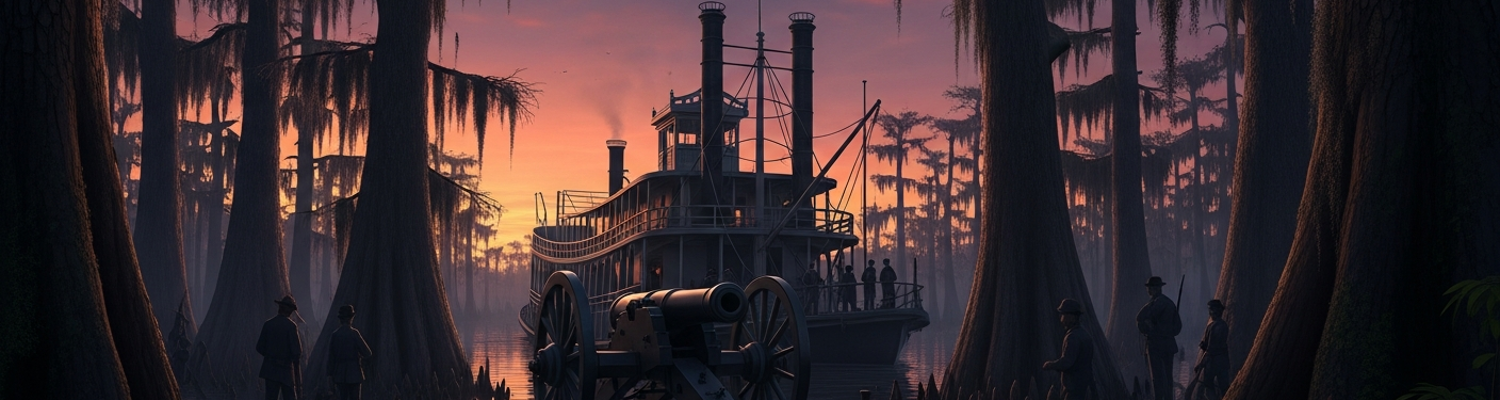
Gun emplacements secured the main channel, and detachments from the 81st marched out from these fortified river positions to establish isolated garrisons along outlying riverbanks and island outposts. Union naval transport boats and ironclad gunboats burning coal on their patrol runs relied on exposed river fuel depots, making these naval coaling stations prime targets for Confederate guerrilla ambushes. Regimental commanders stationed small squads at critical river landings, where soldiers threw up earth and log dirt walls to protect the coal barges, fuel docks, and repair stores. These isolated outposts also guarded the military telegraph lines that ran through tangled cypress swamps to connect Port Hudson with departmental headquarters downriver. Working parties cleared dense brush along the wire corridors, repaired broken glass insulators, and spliced telegraph lines severed by Confederate raiding parties. Sentry details patrolled the perimeter between the coaling docks and the timber dirt walls every hour, watching the tree line for snipers. Soldiers stood guard in small rifle pits dug along the riverbank approaches, keeping their muskets loaded and dry to ensure dispatch boats and coaling barges could operate without emptying their cartridge boxes.
Guerrilla Incursions and Perimeter Defense
Cartridge boxes remained strapped to the waists of these riverbank sentries as Confederate cavalry and irregular guerrilla bands operating in East Feliciana Parish shifted their attacks inland against isolated work details. Horsemen from local partisan units swept out of the dense pine forests along the northern boundary, targeting dispersed engineering parties of the 81st United States Colored Infantry whenever repair squads moved beyond supporting range of the heavy fort artillery. Mounted raiders fired short rifles from the tree line and attempted to cut off supply wagons hauling fresh lumber, forcing regimental commanders to establish fortified fallback points at every critical crossroads. Working crews laying drainage pipes or cutting logs in distant bayous were particularly vulnerable because the thick brush muffled the sound of galloping horses until the attackers were within pistol range. Sergeants deployed advance scouting squads along the wagon trails to spot ambushes before teams of mules hauling tools and building supplies entered narrow ravine passes. Combat engineers answered these hit and run tactics by transforming daily work routines into armed tactical maneuvers, turning vulnerable construction sites along the parish border into defensive combat positions.
Combat positions required constant vigilance, and soldiers of the 81st maintained armed guards and equipped their digging crews with muskets alongside shovels and axes during remote wall repairs across the exposed eastern lines. Squad leaders arranged work parties in paired teams, stationing half the men as perimeter lookouts while the remaining soldiers drove timber stakes and rebuilt washed out dirt walls in the ditches. Men drove their picks into hardened clay with one hand while keeping loaded Springfield rifles propped against the trench wall within arm reach. Sentries stood at fifty yard intervals in the brush with their cartridge boxes unclasped and their hammers at half cock to provide immediate early warning. Sudden shots from the perimeter sentries immediately halted all carpentry work, prompting combat engineers to drop their wooden hammers, grab their weapons, and form firing lines behind newly packed earthworks before guerrilla riders could breach the clearing. Officers directed concentrated rifle fire into the woodline to drive off the raiders, holding their ground without calling for reinforcements from the main fort.
Fort defenders needed clear sightlines, and axe details pushed into those contested woodlines the moment the shooting stopped, cutting down hundreds of oak, sweetgum, and pine trees along the perimeter. Laborers cleared broad forward fields of fire along all wooded perimeter approaches, stripping away the thick brush that Confederate guerrilla bands used to hide their mounted movements. Fatigue squads hauled the felled timber to the outer edge of the cleared zones and constructed defensive branch barriers to physically block cavalry charges. Soldiers sharpened the branches into interlocking spikes, pointed the tips toward the East Feliciana approaches, and anchored the heavy trunks into the earth with wooden stakes and iron wire to prevent mounted raiders from dragging the barricades aside. Regimental mechanics tied the fallen trunks together with scrap chain from the tool depots, creating a dense wall of sharpened wood that horses refused to charge. Guards occupied newly dug rifle pits behind these barricades, establishing overlapping lines of fire that kept the approaches open for repair parties and completely shut down surprise cavalry strikes against the drainage trenches.
Disease Outbreaks and Postwar Garrison Duty
Drainage trenches collected rainwater rapidly in these newly dug rifle pits, turning the earthworks into stagnant pools as summer heat settled over the river bluffs. Soldiers of the 81st United States Colored Infantry endured persistent outbreaks of malaria, dysentery, and yellow fever worsened by stagnant trench water and deficient medical supplies. Mosquitoes swarmed out of the flooded ditches by the millions, while river dirt and surface runoff contaminated the shallow drinking wells that fatigue squads dug behind the dirt walls. Regimental surgeons quickly exhausted their limited stockpiles of fever medicine and clean cotton bandages, leaving hospital attendants unable to treat the hundreds of men collapsing from fever and severe fluid loss. Combat engineers suffering from chills and chronic stomach cramps returned to the dirt walls regardless, shoveling out foul muck and cutting drainage channels by hand to keep gun platforms from sliding into the contaminated mud. Exhausted work details carried stricken comrades on wooden stretchers down to overcrowded canvas medical tents, where empty medicine chests left the garrison helpless against the spreading infections.
Infections spread rapidly through the camps, and steamboats arriving from New Orleans brought little relief to these sick and laboring troops, carrying administrative paperwork rather than the hospital stores and replacement equipment requested by post officers. Soldiers of the 81st confronted bureaucratic supply neglect that delayed rations, clothing, and construction materials through the end of combat operations in 1865. Barrels of flour and salt pork sat for weeks under the blistering sun on downriver docks until insects and mold ruined the meat, forcing fatigue squads to survive on reduced rations of spoiled hard bread and weak coffee. Uniforms rotted off the bodies of the digging details in the humid river bottomlands, compelling infantrymen to handle wheelbarrows and haul timber logs in shredded trousers and makeshift shoes fashioned from scrap leather and tent canvas. Requests for replacement spades, wheelbarrows, and iron spikes stalled inside distant supply depots, forcing regimental blacksmiths to reforge bent shovel blades and hammer out nails from salvaged scrap iron so fortification repairs could continue. Staff departments in New Orleans continued to prioritize departing white volunteer regiments for shipping space and clean clothing even after Confederate surrenders ended the war, leaving the laborers at Port Hudson without adequate shoes or dry blankets.
Blankets and shoes remained scarce, but combat engineers of the 81st United States Colored Infantry remained shoulder to shoulder on the bluff lines despite these neglected conditions, holding their picks and shovels while white regiments boarded transport boats for northern discharge centers. Regimental commanders kept these soldiers assigned to continuous defensive engineering, earthwork upkeep, and post war garrison service at Port Hudson until final muster out in 1866. Heavy winter storms and violent Mississippi River floods repeatedly tore into the clay forts, compelling daily fatigue details to reconstruct washing dirt walls, pack down settling artillery firing steps, and reset rotted timber walls across four miles of fortifications. Working crews dragged fresh cypress logs from surrounding swamps to shore up collapsing battery walls, cleared deep drainage canals clogged with dirt, and guarded millions of pounds of artillery ammunition stored inside deteriorating bomb shelter magazines. Squads manned the river batteries and patrolled the outer perimeters without interruption, preserving federal control over the vital Mississippi shipping corridor during the uncertain opening months of Reconstruction. Companies finally formed ranks on the parade ground to surrender their digging tools and Springfield muskets when discharge orders reached the post in 1866, collecting their final pay vouchers and boarding river steamboats to return to their communities across southern Louisiana.