
Post-Mortem Assessment of Operation Duval
Helicopters labored under crushing payloads to insert hundreds of combat-loaded riflemen, heavy mortar baseplates, and tons of boxed ammunition into the steep mountain ridgelines northwest of Da Nang. Engineers and logistics officers struggled to establish forward patrol bases across sheer limestone cliffs where dense triple-canopy jungle blocked landing zones and forced troops to clear helicopter pads by hand. Operation Duval concluded on 25 May 1967 with severe heat casualties and limited territorial control despite intensive combat patrols. Valley floor temperatures surged past one hundred degrees Fahrenheit with oppressive humidity, creating extreme physical conditions that drained canteens faster than supply drops could replenish them. Infantrymen carrying seventy-pound combat rucksacks, machine-gun belts, and radio sets repeatedly stumbled down loose rock slides, quickly reaching the limit of their physical endurance. Scores of riflemen collapsed along the trail network with acute heat prostration, leaving forward platoons immobilized across the brush-covered slopes.
First Battalion elements suffered reduced combat effectiveness after six consecutive days navigating these steep jungle inclines against elusive Viet Cong forces. Guerrilla fighters tracked the struggling American columns from elevated ridge positions, refusing open combat and instead initiating brief sniper exchanges before retreating into unmarked caves. Marine search parties scrambled through dense vines and vertical shale fields to locate these firing points, only to discover empty fighting holes and abandoned camouflage screens. Hostile snipers targeted officers and radio operators from concealed crevices, deliberately prolonging contact to force the exhausted Marines to stay pinned down in unshaded rock draws. Platoon sergeants ordered their men to ditch heavy entrenching tools and extra rations along the trail so they could haul unconscious heat casualties on makeshift poncho litters. Stretcher parties crawled toward small ridgeline clearings under harassing sniper fire, clearing brush with bayonets to make room for medical evacuation helicopters.
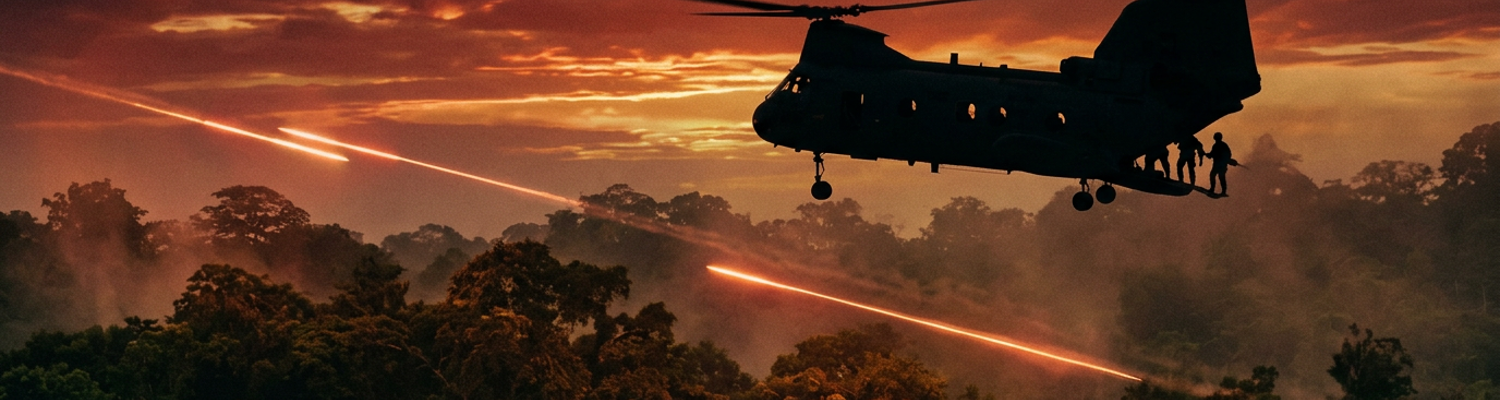
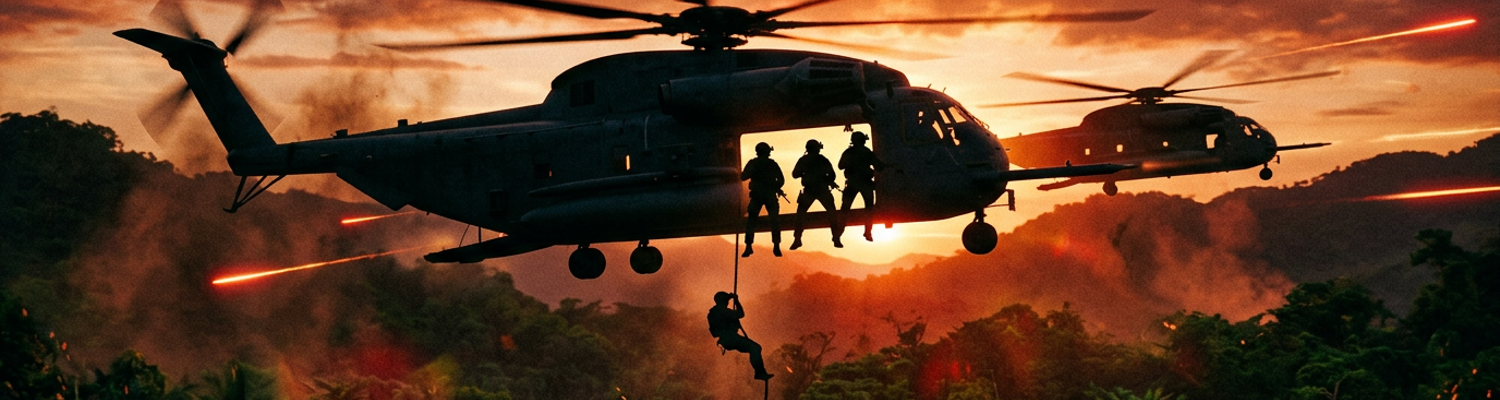
Pilots guided their aircraft over the towering mahogany trees, lowering hoist cables through narrow breaks in the canopy to pull wounded and heat-stricken men out of the valley. Heavy rotor wash tore tree limbs away, creating severe flight hazards while sniper rounds repeatedly punctured the fuselages and hydraulic lines of aircraft hovering motionless above the trees. Winch mechanisms jammed under the constant weight of double-litter loads, stranding dozens of delirious Marines on the ground without sufficient medical care or intravenous fluids. Transport aircraft attempting cargo drops faced similar mountain hazards, watching cargo parachutes snag in the upper canopy eighty feet above the jungle floor. Wooden supply crates containing water cans and plasma cartons plummeted into deep ravines and shattered against the boulders, leaving frontline companies without critical hydration. Ground commanders halted offensive movements and pooled their remaining canteens to keep critically ill troops alive until extraction teams could reach the isolated platoons.
Stretcher teams and rifle company commanders watched the forward advance stall while troops struggled for basic survival. Marine post-operation analyses identified major deficiencies in tactical coordination, sustainment, and medical extraction capabilities across Elephant Valley. Radio signals between deep ravines and mountain-top relay stations failed repeatedly, leaving isolated squads cut off from artillery support during sudden enemy contacts. Logistical planners misjudged the brutal terrain, failing to deliver water, salt tablets, and emergency medical supplies to troops scaling near-vertical slopes in hundred-degree heat. Aviation squadrons lacked the specialized hoist equipment required to retrieve casualties through dense triple-canopy foliage while operating under sniper fire. Regimental commanders terminated the operation, pulling the surviving companies back toward Da Nang to reorganize their depleted ranks and overhaul tactical extraction doctrine.
Radio Attenuation and Tactical Isolation Under Canopy
Radio operators returning to the Da Nang staging base unpacked rows of damaged transmitter sets to demonstrate how physical obstacles caused the communication collapse during the operation. Dense triple-canopy vegetation northwest of Da Nang severely degraded AN/PRC-25 radio propagation between rifle companies and regimental command. The standard twenty-five-pound backpack radio transmitted frequency modulated signals that required an open path between antennas, but two hundred feet of layered teak trees, dense bamboo thickets, and broad jungle leaves blocked the radio waves. High humidity and continuous moisture on the leaves absorbed the low-power electrical transmissions, reducing the effective broadcast range of the ten-foot whip antennas from four miles down to several hundred yards. Radio teams rapidly drained their heavy dry-cell battery packs trying to push stronger signals through the wet forest undergrowth. Marine signalmen attempted to increase transmitter power by hoisting auxiliary wire antennas into the upper tree branches, but falling limbs and enemy rifle fire repeatedly severed the copper lines. Staff officers at the regimental command post spent hours listening to empty static, leaving them unable to track the exact coordinates of their forward rifle companies across the rugged terrain.
Platoons operating in Elephant Valley frequently lost line-of-sight communication, preventing timely coordination of organic mortars and field artillery. Sheer limestone bluffs and deep river ravines deflected radio signals away from the rear combat bases, isolating individual squads whenever they descended into the rocky draws. Forward observers pressed the talk buttons on their handsets during sudden sniper ambushes, but their emergency calls for fire support failed to reach the mortar platoons stationed further up the valley. Mortar crews waited beside their eighty-one-millimeter tubes with high-explosive shells unpacked on wooden pallets, but gunners could not fire without verified target grids from the valley floor. Platoon sergeants sent designated runners scrambling across open trails to deliver written coordinate messages by hand, but hostile snipers often pinned these messengers down before they reached mortar positions. Marine howitzer batteries positioned miles away on cleared hilltops remained completely idle while frontline infantrymen engaged fortified cave positions using only their rifles and light machine guns. Platoon commanders exhausted their small-arms ammunition in prolonged firefights because they could not bring artillery barrages onto the hostile positions along the surrounding hillsides.
Observation planes orbited above the mountain peaks to locate the trapped ground forces and reestablish tactical control across the valley. Forward air controllers relied on airborne radio relays and hazardous ridge-line movement to maintain intermittent contact with maneuvering companies. Marine controllers on the ground climbed exposed rock ledges under hostile sniper fire, hoisting their radio packs above the brush to transmit coordinates to the circling Cessna O-1 aircraft. Radio operators often stood fully upright on bare granite outcrops to gain line-of-sight elevation, drawing intense machine-gun fire while repeating grid numbers into their microphones. Airborne observers copied these faint broken messages and relayed the target coordinates directly to attack jets waiting in overhead holding patterns. Heavy static and sudden signal dropouts still delayed tactical bomb runs by over thirty minutes, forcing strike pilots to drop their ordnance on alternate ridgeline coordinates rather than near the ambushed infantrymen. Company commanders responded by withdrawing their surviving squads into tight defensive perimeters along the stream beds, waiting for darkness to conceal their movement back toward battalion lines.
Heat Exhaustion and Rugged Terrain Evacuation Bottlenecks
Riflemen sheltering in these creek beds could not escape the suffocating air, as ambient temperatures exceeding one hundred degrees Fahrenheit caused widespread physical prostration and acute dehydration throughout First Battalion elements. Infantrymen quickly drained their two-quart canteens, but continuous sweating and heavy physical labor in the humid valley rapidly depleted their electrolytes. Delirious soldiers staggered against the wet canyon rocks with severe muscle cramps, violent nausea, and rapid pulses, rendering them completely incapable of holding their weapons. Navy corpsmen moved down the rocky banks to administer water purification tablets and insert intravenous needles into collapsed veins, but the supply of plastic saline bags ran dry within hours. Squad leaders stripped combat vests and heavy boots from their unconscious comrades, piling the limp men under brush shelters to shield them from the baking sun.
Casualty evacuation details diverted combat riflemen from perimeter security to transport heat casualties through restrictive ravines. Carrying a single comatose Marine through the boulder-strewn gullies required four to six riflemen to haul makeshift poncho litters across slick mud and steep rock steps. Removing these men from fighting holes left defensive lines thin and fragmented, creating wide gaps along the ridges that exposed company perimeters to sudden attacks. Viet Cong riflemen tracked the struggling litter teams through the dense bamboo, firing periodic bursts from concealed ridge positions into the evacuation routes. Stretcher-bearers had to drop their heavy litters, scramble for their weapons on the rocky ground, and return fire while trying to shield the heat casualties with their own bodies.
Helicopters attempting to extract these wounded men discovered that steep vertical terrain and heavy forest cover prevented landings, forcing units to rely on winch-and-hoist extraction under hostile fire. Pilots locked their Boeing Vertol CH-46 Sea Knight aircraft into stationary hovers above the eighty-foot teak trees, dangling steel hoist cables down through narrow openings in the leaf canopy. Hostile snipers on the opposing canyon walls directed automatic weapons fire straight into the hovering transports, punching bullet holes through metal skin and severing internal hydraulic lines. Ground crews below secured delirious Marines into horse-collar rescue slings and wire litters, but the cable winches frequently jammed under the strain of continuous hoisting. Lifting a single prostrated Marine out of the gulch consumed fifteen to twenty minutes, leaving the transport aircraft pinned motionless in midair while enemy rounds chipped granite fragments off the surrounding cliffs.
Aviation crews eventually pulled their damaged helicopters back toward Da Nang as fuel reserves ran low and daylight faded, stranding dozens of prostrated infantrymen along the rocky canyon floor. First Battalion commanders recognized that the physical collapse of their rifle companies had completely paralyzed offensive maneuver throughout Elephant Valley. Company commanders ordered surviving squad leaders to stack empty canteens and haul their prostrated comrades back into defensive perimeters along the stream bed. Infantrymen anchored poncho litters between tree trunks, posted sentries at three-yard intervals, and held their fire in the darkness while waiting for morning resupply flights.
Entrenched Viet Cong Defenses in Elephant Valley
Marine riflemen pushed outward from the stream bed at first light to secure landing clearings for the approaching resupply flights, moving directly into the outer perimeter of an entrenched enemy defensive complex. Viet Cong units utilized fortified bunker networks and interlocking trench lines integrated into natural rock outcroppings across the valley floor. Local guerrilla cadres and regional main-force troops spent months excavating deep tunnels beneath the granite boulders, capping each fighting position with thick layers of hand-hewn mahogany logs, tamped clay, and woven bamboo mats that could withstand heavy mortar fragments. Connecting trenches zigzagged between the rock formations, allowing defenders to shift automatic weapons between alternate firing ports without exposing themselves to overhead surveillance. Dirt embankments and fresh timber cuts were carefully covered with living brush, fern clusters, and tall elephant grass, masking the low-profile embrasures completely from the eyes of approaching point men until troops walked within twenty paces of the guns.
Gunners inside the rock bunkers held their fire until the lead Marine squads stepped into cleared trail intersections and dry stream gullies. Camouflaged fighting positions and pre-sighted fire lanes along primary avenues of approach pinned down maneuvering Marine platoons under sudden interlocking bursts of automatic fire. Heavy machine-gun rounds struck the dirt within inches of crawling riflemen, tearing through canvas rucksacks and chipping granite shards off boulders while squad leaders shouted for their men to hug the rocky ground. Flanking maneuvers collapsed almost immediately because secondary defensive pits had been cleared of tall grass, giving the concealed defenders unobstructed lines of sight across every possible gully and detour. Radio operators pressed into the mud attempted to call for squad-level smoke screens to mask their withdrawal, but hostile snipers perched in nearby ironwood trees picked off any Marine who attempted to kneel and toss a canister. Trapped platoon commanders quickly discovered that their standard M16 rifles and M60 machine guns could not penetrate the three-foot-thick log roofs or dislodge defenders firing from behind solid stone slabs.
Infantry units required direct-fire recoilless rifles and close air strikes to neutralize these fortified positions before ground assaults could advance. Weapons teams dragged M40 106-millimeter recoilless rifles and M72 light antitank weapons forward on their stomachs, scraping through the thorny brush to set heavy metal tripods behind low mounds of dirt. Gunners adjusted their optical sights under continuous small-arms fire and slammed high-explosive rounds straight into the bunker firing slits, shattering timber reinforcements and collapsing earthen berms with point-blank concussions. Attack aircraft swooped in over the canopy immediately after the ground-fired rockets detonated, as Marine pilots dropped five-hundred-pound high-explosive bombs and napalm canisters directly onto the reinforced trench systems along the canyon walls. Tremendous shockwaves cracked the exposed rock shelves and ignited the surrounding bamboo thickets, blinding the surviving enemy gunners with thick black smoke and suffocating heat. Squad leaders blew their whistles through the ringing silence, driving their riflemen out of the mud to clear the shattered bunkers with fragmentation grenades before the surviving defenders could reoccupy their weapon ports.
Assault squads charged across the blackened dirt to throw satchel charges and tear gas into the exposed tunnel entrances. Combat engineers moved behind the assault teams with axes and pickaxes to tear away remaining mahogany timbers, uncovering hidden stockpiles of mortar shells and buried communication wire linking the bunkers together. Stretcher teams followed the advancing infantry into the scorched clearing, loading the wounded riflemen who had been pinned down in the initial crossfire onto waiting ponchos. First Battalion officers consolidated their scattered platoons along the captured trench line, ordering perimeter security established while forward observers plotted defensive artillery fires to prevent counterattacks from the surrounding slopes.
Regimental Displacement from Chu Lai to Da Nang
Artillery shells stockpiled behind those defensive perimeters were already scarce because the Seventh Marine Regiment had uprooted its entire logistical base only days before entering the valley. Seventh Marine Regiment commanders transferred tactical responsibility around Chu Lai and Duc Pho to the Army Task Force Oregon in early May 1967, relinquishing their fortified cantonments, permanent supply depots, and established coastal transport lanes. Soldiers of Task Force Oregon moved into the vacated bunker complexes along Highway 1, while thousands of Marines packed their gear into combat crates and prepared for an emergency redeployment northward. Military Assistance Command orders directed the regiment to reinforce the expanding Da Nang Tactical Area of Responsibility without delay, forcing staff officers to collapse weeks of planned relocation procedures into a matter of days. Battalion supply sergeants crated crew-served weapons, stacked canvas tents, and loaded field rations onto waiting flatbed trucks under a burning sun as relief army units occupied the perimeter wire.
Trucks hauling the regiment rolled north along the rutted dirt surfaces of Highway 1 in continuous columns, transporting thousands of combat-loaded infantrymen and hundreds of tons of equipment. The accelerated movement north into the Da Nang Tactical Area of Responsibility severely overextended regimental motor transport assets, pushing heavy diesel engines and suspension springs well past their operational tolerances. Blown head gaskets, stripped gears, and shredded rubber tires littered the coastal roadway as drivers pushed their overloaded vehicles through extreme heat and deep gravel. Motor transport officers had too few operational trucks to carry both the rifle battalions and their heavy sustainment stores at the same time, forcing logistics teams to shuttle equipment in piecemeal echelons over sixty miles of hostile roadway. Drivers ran these supply shuttles for twenty hours a day through narrow village choke points, dodging roadside ambushes and leaving vital maintenance behind as deadlines loomed.
Mechanics arriving at Da Nang found no prepared repair bays or covered depots waiting for their battered vehicle fleets. Rapid relocation forced organic logistical units to improvise forward supply points, maintenance facilities, and ammunition distribution under extreme time constraints. Quartermasters dropped green canvas tarpaulins over bare dirt patches along the airstrip perimeter, stacking wooden crates of artillery propellant and mortar rounds straight onto the damp ground without proper sandbag revetments or overhead protection. Maintenance crews worked outdoors in blowing dust, using hand jacks and flashlights to weld cracked truck frames and rebuild hydraulic winches before the next convoy run. Ammunition handlers sorted artillery shells and small-arms rounds directly out of open cargo beds, rationing crates by hand to battalion supply officers who had arrived at the airfield without basic field transport.
Quartermasters assigned to First Battalion secured only a fraction of their authorized rations, water cans, and spare radio batteries before marching orders sent the infantry west toward Elephant Valley. Regimental commanders committed these undermanned and under-equipped rifle companies to sweep the mountain approaches before repair shops could service their support vehicles or replenish forward supply dumps. Staff officers diverted scarce utility trucks to haul high-explosive ordnance from the airfield, leaving the infantry to carry seven days of combat gear on their backs across the rising hills. Riflemen slung heavy mortar baseplates and bandoliers of machine-gun ammunition over their shoulders and marched into the western foothills, advancing toward the mountain passes while their forward supply dumps stood empty behind them.
Parallel County Fair Cordon Operations and Counter-Tunnel Tactics
Rifle companies remaining in the coastal lowlands absorbed the secondary burden of village pacification while their sister battalions pushed westward into the foothills. Concurrent with valley sweeps, regimental units executed County Fair cordon-and-search missions across rural hamlets surrounding Da Nang to sever the Viet Cong from their local supply hubs and civilian tax bases. Marine platoons moved out on foot in the middle of the night, slogging through waist-deep paddies and tidal canals to ring each targeted farming settlement before dawn. Blocking forces unrolled spools of razor-sharp concertina wire across footpaths, dikes, and irrigation ditches, while South Vietnamese national police and interpreter teams deployed mobile loudspeakers to announce mandatory curfews. Civil affairs personnel directed hundreds of startled villagers out of their homes and into central screening compounds, where government census records were cross-checked against resident rosters. Navy hospital corpsmen staffed makeshift medical tents to treat sick children and pass out hygiene supplies, but the rifle squads holding the village margins faced immediate armed resistance from guerrillas attempting to break through the net.
Sentries securing those perimeter dikes stepped into densely seeded obstacle belts containing concealed explosives and antipersonnel devices. Marines encountered pervasive booby traps, toe-popper mines, and sniper attrition while establishing civil screening perimeters through the surrounding bamboo groves and vegetable plots. Buried cast-iron toe-popper mines, often fashioned from rifle cartridges or small charges wrapped in rubber, detonated under minimal foot pressure, ripping through combat boots and shattering ankles. Grenades rigged to thin tripwires hung suspended inside thorn bushes, while sharpened punji stakes smeared with buffalo dung lined the hidden sides of mud berms to infect any Marine diving for cover. Snipers operating from elevated firing hides in ironwood trees took advantage of the noise, firing single accurate rounds to wound sentries and lure rescue details into secondary kill zones. Patrol leaders halted forward movement along the perimeter to sweep suspect paths with handheld mine detectors and bayonet blades, consuming critical hours while corpsmen applied tourniquets and called for medical evacuation helicopters.
Engineers scraping aside loose straw and sleeping mats inside the evacuated huts uncovered camouflaged trapdoors that dropped into extensive subterranean bunker complexes beneath the hamlet floors. Infantry squads and combat engineers improvised tunnel-denial tactics, employing riot control agents and satchel charges to clear underground bunker complexes without razing the wooden houses standing directly overhead. Marine riflemen hauled gasoline-powered Mighty Mite backpack blowers to the shaft mouths, feeding canisters of powdered CS riot-control gas into the engine intakes to drive dense chemical clouds hundreds of feet through the unmapped crawlways. Choking gas filled the humid dirt tunnels, forcing insurgent fighters out through disguised ventilation flues in nearby garden plots, where awaiting Marine sentries disarmed them in the brush. Demolition teams then lowered twenty-pound canvas satchel charges packed with C-4 plastic explosive into the underground command rooms, igniting timed delay fuses to collapse the earthen chambers safely below grade. Concussion blasts vented through the access holes with sharp geysers of dust, caving in the subterranean mahogany supports, destroying hidden rice caches, and crushing the secondary tunnel network under tons of packed clay.