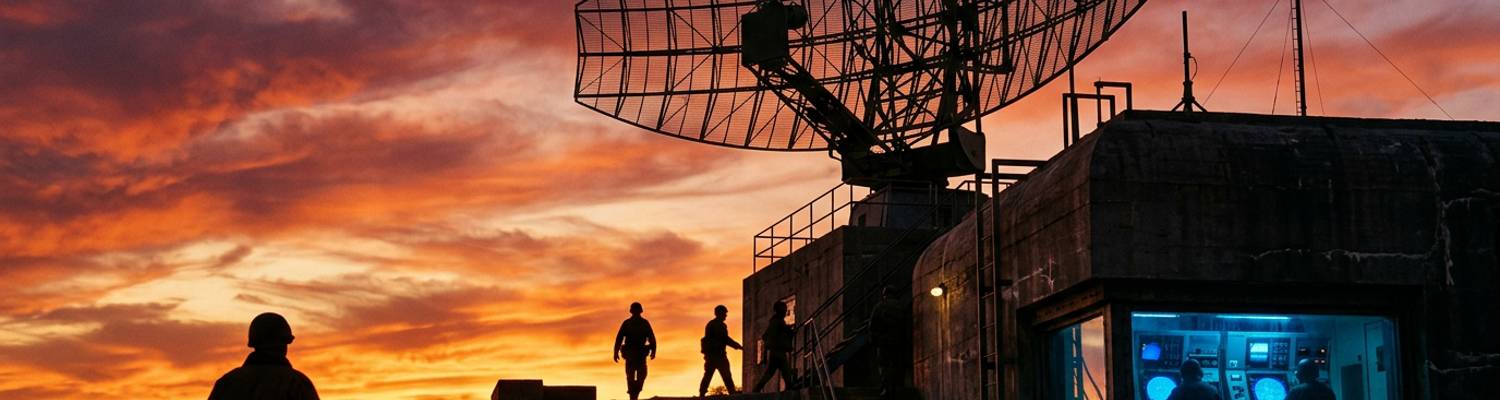

Postwar Civil Defense and the Birth of NAWAS
Switchboard patch cords snapped taut across civil defense consoles as emergency operators shouted over busy signals and static during nationwide mock attack drills. Dispatchers attempted to dial commercial telephone exchanges to warn major population centers, but standard telephone circuits seized up immediately as routine caller traffic and panicked citizens overwhelmed municipal switchrooms. Early warning tests exposed severe vulnerabilities and intolerable transmission lags in standard commercial telephone networks during air defense exercises, proving that civilian communications hardware broke down under operational stress. The Federal Civil Defense Act of 1950 established federal and civilian responsibility for warning populations against Soviet nuclear strikes, yet federal planners had failed to build dedicated wire networks to deliver those warnings. Dispatchers in municipal command centers slammed their telephone handsets onto metal cradles after discovering that routine commercial routing delayed flash bulletins by forty-five minutes or dropped the calls into dead silence.
Logbooks recording these dropped calls and forty-five minute delays landed on command desks at Air Defense Command headquarters in Colorado Springs, igniting sharp disputes between military officers and civil officials. Air Force commanders argued that civilian personnel lacked operational discipline and could not be trusted with secret radar tracking data or direct lines into combat operations rooms. The Office of Civil and Defense Mobilization required reliable liaison mechanisms with the Department of Defense to coordinate population warning across all states. Mobilization administrators insisted that military officers could not hoard vital attack intelligence while cities remained vulnerable to surprise strikes by long-range bombers. Pentagon representatives resisted civilian oversight by claiming that civil defense involvement would disrupt rapid military response times, leaving both agencies locked in a tense administrative standoff over control of emergency communication lines.
Telephone engineers bypassed the administrative deadlock by constructing a private and continuous voice circuit named the National Warning System, commonly called NAWAS. Technicians leased dedicated four-wire circuits that bypassed local commercial telephone exchanges entirely, running private wires directly between military combat centers and civilian emergency offices across the nation. Civil defense dispatchers received designated duty desks inside Air Defense Command sector headquarters, allowing civilian personnel to hear military radar plot reports directly without interrupting tactical fighter control. Wire crews tied the master microphone at the Colorado Springs combat operations center to more than two hundred primary warning points located in state capitals and major metropolitan dispatch hubs. Installation teams secured these private voice circuits through underground cable vaults and reinforced telephone junctions, insulating the warning path against routine commercial bottlenecks and civilian network failures.
Dispatchers tested this newly insulated network through daily voice drills, enforcing strict time limits to prepare for potential Soviet bomber incursions. Civil defense operators kept their dual-ear headsets plugged into live console jacks around the clock, listening to a low audio carrier hum that proved the hardlines remained connected across thousands of miles. Watch supervisors monitored stopwatch sweeps during surprise practice calls, requiring municipal alert points to answer roll calls within thirty seconds after Colorado Springs opened the circuit. Warning officers practiced flipping console switches to activate municipal siren networks, broadcast emergency tones on commercial radio, and clear emergency telephone lines to local governors. Civilian operators gripped their alert handsets and logged circuit resistance numbers on their clipboards, waiting for the central command console to broadcast the first live warning of incoming aircraft.
Annex 13 Architecture at Ent Air Force Base
Annex 13 authorized the construction of the National Warning System as a dedicated forty-five-thousand-mile four-wire telephone loop to deliver those voice warnings directly from the central command console. The system connected the NORAD Combat Operations Center at Ent Air Force Base directly to three hundred and seventy-six civilian warning points across the continental United States. Bell System installation crews routed private lines through underground cable vaults and reinforced mountain relay stations, shielding the voice circuit against routine commercial switchboard congestion. Engineers wired each circuit as an open and continuous loop where all connected stations could listen and respond simultaneously without waiting for an operator to complete a connection. Civil defense administrators celebrated the new network as a guaranteed channel to warn local populations, but military leaders viewed the physical installation with deep misgivings. Air Force generals objected to sharing secret radar tracking data with non-military agencies, setting off fierce bureaucratic disputes over who would control the master voice terminal inside the command bunker.
Controllers from Air Defense Command lost that administrative battle when federal directives placed civil defense personnel directly onto their watch floor. Civilian attack warning officers were stationed alongside military controllers inside the Colorado Springs operations center. Air Force officers resented the daily presence of civilian watchstanders who reported to the Office of Civil and Defense Mobilization in Washington rather than the military chain of command. Senior air controllers viewed these federal civil servants as security liabilities who had not been conditioned by military discipline or vetted through military command channels. Combat controllers frequently turned their plastic status boards away from civilian desks and lowered their voices during telephone calls to conceal unverified radar contacts. Civilian warning officers fought back by demanding immediate access to the giant transparent plotting map, arguing that withholding radar data left American cities completely unprotected against surprise bomber strikes.
Radar screens showing unidentified aircraft near northern Canada triggered immediate arguments over who had the legal right to broadcast an emergency bulletin. Air Defense Command doctrine required controllers to hold back public warnings until fighter interceptors scrambled from Arctic alert strips, made visual contact with the targets, and confirmed hostile intent. Civilian warning officers countered that modern jet bombers could cover hundreds of miles in the time needed for visual confirmation, leaving municipal sirens silent until nuclear weapons were already falling. Military supervisors warned that sounding a nationwide false alarm over a stray transport plane would trigger mass highway panics, shut down industrial plants, and humiliate the air defense command. Civilian officials insisted that their statutory duty was to save human lives through rapid warning rather than protect the public relations image of the armed forces. Both agencies remained locked in mutual suspicion as civilian officers kept their hands poised above their microphone keys while military officers guarded their classified tracking logs.
Microphones on the warning console became guarded territory during daily operational tests. Air Defense Command technicians wired duplicate monitoring speakers into the military commander console so officers could listen to every word spoken by civilian warning staff. Civilian attack warning officers read scripted roll calls into their handsets every morning, logging circuit latency and checking voice clarity with municipal emergency dispatchers across all time zones. Watch directors from the Air Force paced behind the civilian consoles with stopwatches and clipboards, documenting every transmission hesitation or procedural irregularity to build an official record of civilian incompetence. Civilian dispatchers ignored the hostile scrutiny and continued running their thirty-second speed drills, testing line amplifiers and signaling bells across the vast national telephone loop. Air Force technicians ultimately wired an emergency override switch into the senior military controller desk, giving commanders the hardware capability to cut the audio circuit before civilian dispatchers could broadcast an unauthorized attack warning.
SAGE Data Integration and Air Force Verification
Steel toggle switches gave senior military controllers absolute mechanical control over civilian warning lines just as the deployment of the Semi-Automatic Ground Environment introduced automated continental airspace tracking across North America. Air Defense Command erected windowless four-story concrete blockhouses across the country to house the new automated system, anchoring continental defense to massive combat computers. Each combat computer contained forty-nine thousand vacuum tubes, occupied an entire floor of reinforced concrete, and required three megawatts of electrical power to correlate radar sweeps from remote stations. Magnetic drum memories and vacuum tubes processed telephone data lines from long-range radar sites, converting raw radio echoes into standardized digital tracks on round cathode-ray screens. Air Force radar operators sat in front of blue-lit consoles, using handheld light guns to tag vector symbols that displayed the altitude, speed, and heading of every airborne target. Civilian mobilization liaisons watched these automated screens generate complete tactical overviews of North American skies, realizing that the military now possessed immediate warning data that never reached municipal civil defense offices.
Office of Civil and Defense Mobilization officials immediately demanded direct and unfiltered radar data feeds so local dispatchers could track incoming threats without waiting for military clearance. Air Force officers systematically refused civilian demands for raw radar data feeds due to strict operational security rules. Military commanders argued that sharing unredacted computer tracking streams would reveal classified radar operating frequencies, detection dead zones, and secret identification codes to personnel outside the Department of Defense. Air Force security directors emphasized that municipal switchboards and civilian dispatch offices lacked the armed perimeter guards and document vaults required to handle classified electronic intelligence. Tactical air directors locked down the computer output ports and kept civilian warning officers restricted to curated verbal summaries prepared by military staff. Civilian administrators protested that this operational security wall left civil defense directors completely blind during the opening minutes of a potential nuclear attack.
Air Defense Command enforced rigid verification rules requiring dual-radar confirmation and interceptor commitment before track validation. Controllers could not validate an emergency track or broadcast an alert bulletin simply because a single radar station or computer console plotted an unexplained blip. Military operating procedure required an overlapping radar site to detect the exact same target at matching coordinates and altitudes to rule out atmospheric temperature inversions, dense flocks of birds, or electronic malfunctions in the vacuum tube circuitry. Computer technicians ran diagnostic routines on magnetic core banks to confirm that the plotted vector was not a phantom contact generated by hardware drift. Combat directors kept warning microphones turned off while radar technicians cross-checked coordinate logs between separate radar squadrons to confirm the physical presence of an airborne intruder.
Klaxon horns sounded across northern flight lines the moment two separate radar stations confirmed an unidentified track, triggering the mandatory interceptor commitment needed for final validation. Duty controllers scrambled supersonic jet interceptors from arctic alert hangars into the flight path of the unverified radar contact. Combat rules prohibited Air Defense Command from declaring a hostile track until airborne pilots closed the distance, established visual contact through their cockpit canopies, and confirmed foreign military markings. Civilian attack warning officers sat at the warning terminal inside the command center, staring at sweep-second clocks while jet fighters burned fuel climbing toward the targets. Senior military controllers kept their hands rested near the circuit cutoff switches, refusing to open the voice loop to American cities until fighter pilots radioed positive visual identification back to the combat floor.
Operation Alert 1960 and Interagency Bottlenecks
Steel toggle switches stayed locked in the disconnect position on the master console while controllers waited for those visual cockpit reports, but the incoming threat data soon grew far too vast for individual fighter intercepts. Operation Alert 1960 simulated a massive multi-megaton Soviet bomber and missile attack across the continental United States to test national readiness. Exercise coordinators fed thousands of prepared target cards into the communication channels at Colorado Springs, filling cathode-ray tubes with formations of simulated Soviet bombers crossing the Arctic circle and ballistic missiles arcing over the polar ice cap. Plotters behind the transparent plexiglass map wall scrambled up rolling aluminum ladders, using red grease pencils to draw incoming bomber vectors over Hudson Bay and mark nuclear strike paths aiming directly at American industrial centers. Sweep-second hands ticked relentlessly on the wall clocks while interceptor squadrons burned through their fuel reserves searching empty northern skies for synthetic exercise targets that existed only on paper inject forms. Civilian liaison officers watched those red pencil lines converge on urban targets, growing increasingly desperate as the minutes required to alert municipal populations slipped away during procedural delays.
Air Force controllers locked down their data consoles as the mock warheads crossed the Canadian border, worsening that operational deadlock on the combat floor. Severe procedural friction emerged between Air Defense Command personnel safeguarding military security and civilian officials demanding prompt alerts. Federal civil defense administrators insisted that municipal populations needed every available second to seek basement shelter before nuclear blast waves leveled city centers. Air Force officers refused to authorize emergency broadcast scripts, arguing that raw electronic data could not be shared with outside agencies without exposing classified radar operating frequencies and secret interceptor readiness states. Military supervisors tilted their tactical clipboards away from civilian sightlines, while communications technicians guarded the master control panels to prevent civil defense directors from depressing the warning levers without general officer permission. Civilian administrators slammed their notebooks onto the steel consoles, shouting that protecting secret military radio codes was pointless if tens of millions of citizens perished in unalerted cities without hearing a single siren.
Sirens across the country never sounded because command post disagreements over track validation authority stalled the transmission of national attack warnings down to regional defense centers. Military commanders argued that only a uniformed general officer held the legal right to confirm hostile intent and declare a combat emergency, whereas civil defense leaders insisted that federal mobilization laws gave them independent power to sound public alarms. Bell System four-wire circuits sat entirely quiet as state warning operators across the country waited beside silent loudspeaker horns, receiving neither an initial yellow alert nor an urgent red attack warning. Civilian dispatchers inside reinforced concrete bunkers across eight federal civil defense regions checked line voltages with multimeters and tapped dead telephone cradles, unable to learn whether the silence signaled severed trunk lines or administrative paralysis in Colorado. Exercise umpires marked failing scores across civil defense evaluations as simulated nuclear detonations destroyed coastal shipyards, rail terminals, and state capitals. Watchstanders finally closed the official logbooks at Ent Air Force Base without ever transmitting a single nationwide air raid warning across the dedicated voice loops.
Radar Verification Protocols and Civil Warning Delays
Air Defense Command controllers refused to bypass military verification checklists to expedite simulated alerts to civilian operators, leaving those dedicated voice loops completely silent throughout the mock raid. Uniformed watch officers held paper inspection binders firmly against the console edge, methodically working through sequential track identification steps instead of releasing the emergency warning keys. Mobilization liaisons gestured at the radar repeaters and urged the defense team to sound a rapid preliminary alarm, pointing out that simulated nuclear bombers had already penetrated domestic air corridors. Watch directors pushed those civilian hands back from the master control board and reiterated that military regulations required positive track correlation from multiple ground stations, manual altitude verification, and formal division clearance. Technicians at the radar desks continued writing manual coordinate logs with grease pencils, cross-referencing azimuth numbers line by line rather than trusting automated computer plots. Rigid adherence to these sequential military rules formed an unyielding administrative barrier on the command floor, halting outgoing threat data at the source.
Sirens remained silent atop municipal towers from Boston to Detroit because protracted military confirmation procedures delayed simulated civilian siren activation by critical minutes across major metropolitan areas. Municipal dispatchers sat beside idle control consoles inside reinforced basements, staring at unlit signal lamps on their national warning receiver sets. City civil defense directors clutched telephone receivers to their ears and waited for the authorization telegrams or verbal release codes that never arrived through the military switchboards. Exercise plotters inside urban command rooms marked simulated nuclear detonations over industrial complexes, harbor docks, and rail junctions while public alarm relays remained completely dead. Ten to fifteen minutes of vital warning time passed while officers at Ent Air Force Base validated paperwork and awaited fighter interception reports. That severe operational delay left emergency services completely unaware that a simulated attack had breached the coastline.
Steel blast doors remained unsealed across metropolitan infrastructure because civilian warning points were left without actionable lead time to execute local protective measures. Municipal transit supervisors kept subway trains and commuter buses running along surface avenues directly beneath simulated fallout patterns, having received no command to divert passengers underground. School administrators and hospital workers continued routine daytime schedules unaware of incoming bombers, unable to usher students into reinforced basements or distribute emergency medical supplies. Local police departments failed to clear evacuation routes or secure designated shelter entrances, leaving millions of simulated urban residents out in the open streets. Civil defense teams in state capitals discovered that their expensive siren networks were rendered useless without timely military alert data to trigger the switches. The entire civilian protection plan collapsed under exercise conditions because warning delays eliminated the physical window needed to move populations to safety.
Inspectors tallied massive synthetic casualties across national assessment ledgers as civilian and military leaders confronted the systemic breakdown. Federal evaluation teams recorded millions of hypothetical deaths in cities where sirens failed to sound before simulated nuclear detonations struck urban centers. Mobilization administrators confronted Air Defense Command leadership over the locked warning panels, demanding immediate revisions to the joint operating doctrine that prioritized military security over public survival. General officers defended their strict checklist requirements, arguing that premature false alarms would trigger nationwide civilian panic and disrupt vital interceptor sorties. Communications technicians unhooked test recorder reels and filed away exercise tapes that documented hours of bureaucratic hesitation and empty audio channels. Civilian liaisons packed their briefing folders, unclipped their security badges at the bunker checkpoint, and submitted formal complaints detailing every minute lost to military procedural delays.
Annex 11 Mandates and Severed AT&T Relays
Couriers hand-carried those formal grievance reports straight to federal mobilization planners who were already struggling to implement national defense industrial policies. Annex 11 established essential facility protection programs and complex factory evacuation protocols for defense industrial centers across the country. Federal administrators drafted these rules to protect vital war production assets, ordering critical steel mills, electronics assembly plants, and aircraft factories to construct reinforced shelters for essential tooling and key personnel. Plant safety directors were required to rehearse complicated multi-stage evacuation plans that would send hundreds of thousands of specialized machinists away from vulnerable metropolitan targets along designated highway escape corridors. Civil defense leaders assumed that timely alerts from the Air Defense Command would give factory managers at least one full hour to bank blast furnaces, secure chemical vats, and clear workers off industrial floors. Every single operational step outlined in the civilian industrial protection doctrine depended on instantaneous voice warnings passing down through the national network.
Copper cables carried that warning traffic through ordinary commercial infrastructure that military engineers had long warned was far too fragile for wartime duty. Civil defense authorities leased private four-wire circuits from commercial telephone companies, believing that dedicated government contracts guaranteed survival against hostile action. Installation teams routed these private lines directly through unhardened commercial telephone central offices and line-of-sight microwave towers perched along mountaintops. Commercial relay stations lacked concrete blast shielding, backup battery vaults, or heavy emergency generators, leaving sensitive vacuum tube amplifiers exposed to severe weather and blast pressure. Air Force communications officers warned their civilian counterparts that stringing national defense circuits through rural telephone junctions created thousands of single points of failure across the continent. Civil defense officials dismissed those military objections as bureaucratic obstruction, refusing to pay the enormous costs required to bury trunk cables in reinforced underground conduits.
Umpires targeted those exposed wire paths on the second day of the national drill by writing nuclear strikes into the exercise scenario directly along commercial relay routes. Simulated high-altitude detonations in Operation Alert 1960 severed vulnerable commercial private-line relay stations across the Midwest and Northeast. Synthetic warheads burst thousands of feet above major river crossings and railroad corridors, toppling open-wire telephone poles and shattering microwave dishes on exposed ridgelines. Technicians at rural switching centers watched circuit breakers trip instantly on their power distribution panels as the simulated explosions severed local utility feeds. Vacuum tube banks overheated and burned out inside unattended concrete-block relay huts, breaking the physical audio connections that tied federal command bunkers to municipal centers. Warning loops linking Air Defense Command controllers to local civil defense points went silent as miles of commercial circuits went dead under the simulated nuclear strikes.
Switchboard operators inside municipal warning centers tapped dead telephone keys and listened to total silence on their monitoring headsets. The resulting communication blackout demonstrated that industrial evacuation plans could not function once regional warning loops went dead. Industrial safety directors inside sprawling defense plants never received the emergency broadcast codes needed to sound factory sirens or shut down high-pressure machinery. Foremen kept assembly lines running and blast furnaces roaring while thousands of aerospace workers welded airframes directly beneath simulated Soviet bomber approach routes. Commuter trains and supply trucks continued pulling into factory loading docks because local dispatchers had no working circuits to broadcast traffic halts or redirect outbound convoys. Civil defense umpires filled out inspection ledgers with failing grades across every industrial district, noting that factory gates remained shut and work shifts remained pinned inside unalerted target complexes.
Strategic Divergence Between Military and Civil Defense
Graphite pencils marked zero scores across civil defense binders as Pentagon analysts compared factory casualty tallies with strategic bomber readiness logs. Exercise evaluations revealed an irreconcilable doctrine gap between military retaliatory survival and civilian population protection. Air Defense Command controllers operated under battle mandates that prioritized airborne retaliatory weapons, focusing every radar sweep and circuit on launching interceptors and getting Strategic Air Command bombers off coastal runways before enemy warheads detonated. Military alert thresholds functioned around flash decisions measured in fractions of a minute, giving flight crews just enough warning to fire jet engines, scramble into open skies, and preserve the nuclear strike forces of the United States. Civilian populations required hours of advance notice to clear highway networks, shut down chemical reactors, and move millions of municipal residents into reinforced basements. Senior Air Force officers refused to compromise their narrow scramble margins to assist municipal planning, treating civilian shelter coordination as an unaffordable distraction from the primary mission of launching armed counterstrikes.
Investigators documented that uncompromising military stance across hundreds of interview pages as post-exercise investigations exposed the failure of inter-agency cooperation between the Air Force and civil mobilization agencies. Officials from the Office of Civil and Defense Mobilization testified before federal review boards that Air Force liaisons routinely withheld radar tracks, ignored joint operational planning sessions, and barred civilian staff from critical command decisions. Civil defense planners stated that Air Defense Command treated civilian directors as untrustworthy outsiders whose presence inside the bunker compromised operational security. Uniformed commanders fired back with equal hostility during debriefing sessions, accusing civilian administrators of demanding military capabilities that civil defense budgets had never funded. Liaison desks inside the Ent Air Force Base combat center stopped operating effectively during these administrative feuds, with officers and civilian directors communicating through stiff formal memorandums rather than speaking across the operations room floor.
Teletype circuits and tactical switchboards inside the Ent bunker confirmed that mechanical limitations exceeded administrative disputes. The exercise highlighted that tactical alert systems designed for armed forces survival were structurally incapable of supporting civil survival logistics. Military tracking loops fed threat data directly into interceptor cockpits, anti-aircraft missile batteries, and retaliatory bomber bases, funneling target coordinates through narrow point-to-point lines that could not broadcast to thousands of municipal civil defense offices at the same time. Armed forces survival required only small volumes of high-priority operational code words transmitted through a disciplined military chain of command, whereas civilian survival logistics demanded vast voice channels to coordinate food distribution, hospital staging, highway traffic management, and mass population movement. Civil defense directors needed persistent two-way updates regarding radioactive fallout patterns and blast perimeters, but the military alert network possessed only enough bandwidth to transmit brief combat scramble orders. Air Force technicians responded by severing the shared data patches on the combat room floor, locking their tactical communication banks to preserve armed forces channels and leaving civilian mobilization directors with disconnected headsets.