
Postwar Repatriation Flotillas and Asiatic Cholera Vectors
Medics of the United States Eighth Army scrambled across the wet timber of the Uraga piers to beat a forty-eight-hour readiness deadline before the next convoy of converted cargo transports entered Tokyo Bay. Enlisted personnel hauled heavy steam sterilization boilers down the docks, bolted high-pressure hoses to water pumps, and stacked crates of sulfur drugs and disinfectant powder under canvas shelters before nightfall. Mechanical crews worked under electric floodlights to repair sputtering generator engines, knowing that every inspection station along the waterfront required continuous electrical power to process incoming troopships. Harbor officers constantly checked clipboards against incoming radio dispatches, warning medical teams that any delay in clearing berths would stall the entire demobilization schedule. Lookouts stationed at the mouth of the bay soon signaled that the lead ships of the incoming flotilla had appeared on the horizon, bringing thousands of packed passengers toward the shore.
Transports carrying hundreds of thousands of demobilized personnel and displaced civilians rapidly threatened to overwhelm port processing stations up and down the Japanese coast. Dockside processing teams had been organized to handle routine cases of malnutrition and malaria, but harbor inspection squads boarding the incoming vessels immediately discovered severe gastrointestinal illness spreading through the lower decks. Eighth Army port authorities identified index cases across primary demobilization ports including Uraga, Sasebo, and Hakata, where military doctors found passengers collapsed on wooden bunks in severe shock. Medical orderlies wearing rubber aprons and gloves carried limp, dehydrated patients off the gangways while sanitarians collected stool samples for emergency microscope analysis. Harbor laboratories confirmed that the infection was spreading faster than local isolation wards could clear beds, creating an immediate risk of a nationwide epidemic.
Pathologists tracing the source confirmed what staff officers feared most, as military records noted the arrival of virulent Asiatic cholera aboard repatriation transports from Canton and Shanghai in April 1946. Harbor embarkation centers on the Asian mainland had collapsed under refugee pressure, allowing infected individuals to board crowded vessels without effective medical screening. Inside the dark, humid ship holds, poor sanitation and contaminated fresh water tanks caused the vibrio bacteria to multiply rapidly during the ocean crossing. Men, women, and children succumbed within hours to sudden vomiting and extreme fluid loss, exhausting shipboard medicine chests long before the vessels reached Japanese waters. Dead bodies wrapped in canvas had been buried at sea during the voyage, yet dozens of contagious carriers remained among the survivors crowded together at the ship railings.
Tugboats from the harbor master unit intercepted the inbound flotilla before any vessel could drop anchor near the main shore facilities. Public health officers faced a disastrous choice between honoring the established demobilization timetables or shutting down maritime traffic across the entire archipelago. Diverting hundreds of ships back to sea meant certain death for dehydrated passengers locked in stifling cargo compartments, while landing them on the mainland risked spreading an uncontrolled epidemic among a malnourished Japanese population lacking basic municipal water infrastructure. General Douglas MacArthur ordered an unprecedented containment protocol, refusing entry to the mainland while compelling port personnel to establish an offshore quarantine barrier directly inside Uraga Bay. Enlisted work details immediately began hoisting drums of calcium hypochlorite and specialized pumping machinery onto barges to confront the infected ships where they lay.
Sanitation Vulnerabilities Across the Devastated Home Islands
Barge crews hauled the heavy chemical drums toward the quarantined anchorages under emergency directives from the Public Health and Welfare Section, which determined that mainland escape of the cholera bacteria would spark uncontrolled outbreaks across vulnerable populations. Brigadier General Crawford F Sams instructed his medical intelligence officers to evaluate domestic living conditions across the home islands, finding that postwar displacement had stripped millions of people of bodily resistance. Japanese civilians lived packed into soot-stained train stations, ruined schoolhouses, and makeshift wooden shacks without soap or clean running water. Medical officers calculated that an infected traveler boarding an electric train at Uraga could seed municipal watersheds across the entire Kanto plain in less than twenty-four hours. Eighth Army staff officers warned occupation planners that fighting an epidemic across three prefectures would consume military personnel, vehicles, and fuel reserves needed for basic demobilization.
Occupation authorities recognized that the mainland public health infrastructure had suffered systemic destruction that made inland containment impossible. Iron water mains lay cracked throughout the metropolitan basin, because wartime aerial bombardment had demolished municipal water distribution systems and sewage networks throughout urban centers like Tokyo and Yokohama. High explosive and incendiary bombs had shattered underground cast iron conduits, causing water pressure to drop to zero across entire wards and allowing groundwater to seep into broken distribution pipes. Civilians desperate for drinking water tapped fractured mains directly beside ruptured sewer lines or used hand pumps to draw water from shallow pits dug into waste-soaked soil. Chronic coal and charcoal shortages prevented millions of families from boiling their daily water, compelling entire neighborhoods to drink contaminated surface runoff. Municipal sanitation departments lacked operational garbage trucks and motorized suction wagons to collect nightsoil, forcing workers to empty wooden honey buckets directly into open roadside gutters.
Neighborhood drainage ditches overflowed during summer storms, spilling raw sewage into unpaved streets and into bomb craters where children gathered to wash. Hospitals across eastern Honshu possessed almost no supplies to treat infected civilians, and severe mainland deficits in chlorine, intravenous saline solutions, and isolation beds left Japanese health authorities unable to mitigate widespread contagion. Industrial sabotage, air raids, and raw material blockades had paralyzed domestic chemical plants, completely halting domestic production of bleaching powder and bulk chlorine for municipal reservoirs. Prefectural doctors reported that contagious disease wards had been bombed out or occupied by homeless families, leaving only unheated wooden barracks with no sterile linens or running water. Pharmaceutical warehouses had exhausted their inventories of sterilized saline solution and distilled water, while shortages of rubber tubing and needle assemblies prevented doctors from setting up emergency intravenous drips for dehydrated patients. Brigadier General Sams and his occupation staff realized that infected Japanese civilians who caught cholera would die in municipal streets without ever seeing an isolation ward or receiving intravenous fluid therapy.
Brigadier General Crawford Sams and the Offshore Blockade
Brigadier General Crawford F Sams instituted an uncompromising maritime quarantine order barring incoming vessels from making landfall anywhere along the Japanese coast. The decision represented a calculated gamble that accepted immediate shipboard suffering to protect millions of mainland Japanese civilians from a catastrophic cholera epidemic. Staff officers under his command questioned the moral cost of trapping thousands of malnourished repatriates aboard crowded, sweltering ships where contaminated water and disease were already killing dozens each day. Sams calculated that the wrecked municipal sewer lines and shattered water pipes in nearby cities could not stop waterborne bacteria if even a single infected person stepped ashore. He refused every appeal to bring the sick into mainland hospitals, deciding that the open water of the harbor was the only natural barrier capable of halting the spread of the infection. Medical personnel stayed on the piers, watching through binoculars as yellow quarantine flags went up on the masts of the anchored fleet.
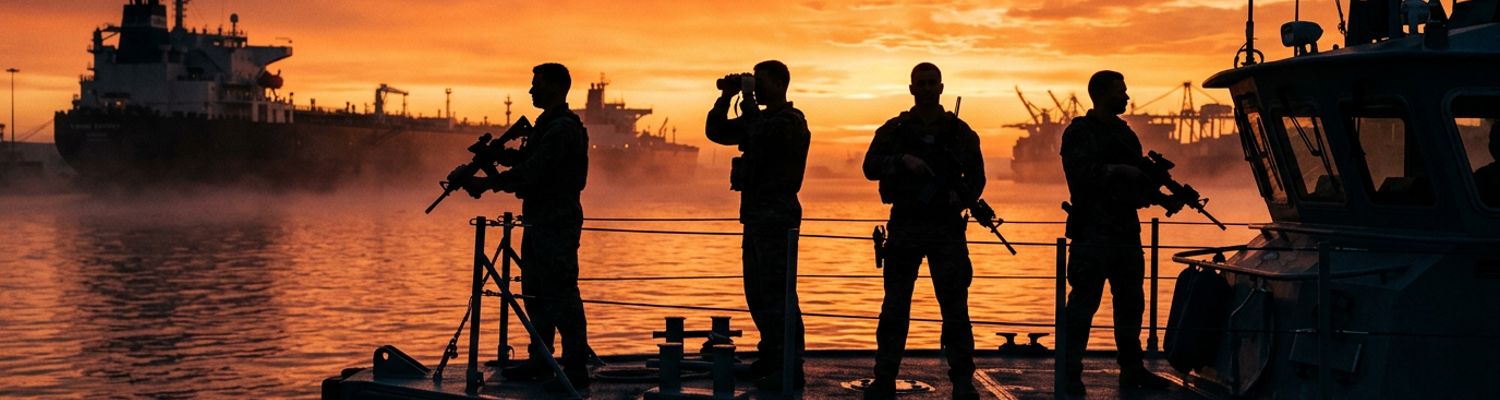
Eighth Army maritime patrols cordoned Uraga Bay, immobilizing transport ships under strict quarantine containment protocols. Armed motor launches circled the clustered transport hulls twenty-four hours a day to prevent unauthorized sampans, fishing skiffs, or desperate swimmers from reaching the beaches. Patrol crews used loudspeakers to order ship captains to cut their engines, drop anchor in designated grid squares, and raise quarantine signals. Guard details maintained a buffer zone of five hundred yards between individual ships to keep infected waste dumped from one vessel from drifting into the cooling intakes or water condensers of another. Harbor craft delivered essential food rations and drums of fresh water by winching wooden crates across open water, cutting tow cables immediately if shipboard crews attempted to board the supply vessels. Soldiers on the patrol boats wore rubberized ponchos, gloves, and canvas respirators, keeping their carbines ready to enforce complete isolation on the water.
Radio operators on the patrol boats forwarded desperate transmissions from civilian doctors trapped aboard the transports, who reported that passengers were dying in cargo holds without medicine or clean drinking water. Sams evaluated these casualty reports against epidemiological projections compiled by his public health section in Tokyo. His calculations demonstrated that releasing just ten symptomatic carriers into the ruined rail junctions of Yokohama would cause over fifty thousand infections across the Kanto plain within fourteen days. Local Japanese prefectural governors pleaded for permission to evacuate dying children to coastal clinics, but Sams denied every waiver request and kept the naval cordon firmly in place. He accepted the reality that hundreds of repatriates might perish on the ships, choosing that known loss over an uncontrollable inland crisis that would overwhelm the entire American occupation force.
Harbor tugboats maneuvered floating decontamination platforms alongside the anchored transports to begin treating the infected hulls where they floated. Navy corpsmen hoisted high-pressure pumps and hoses aboard the vessels to spray strong chemical solutions over wooden bulkheads, canvas cots, and mess decks. Medical teams pushed bags of chlorine granules into the bilge spaces and fresh water tanks of every ship while orderlies carried stool collection tubes down into the lower compartments to test every passenger. Personnel who showed no symptoms after ten days received cholera vaccine injections on the open decks, while corpses were wrapped in weighted canvas bags for immediate deep water burial outside the bay. Sams ordered the patrol boats to hold their firing lines around the perimeter until laboratory technicians confirmed three consecutive negative test results from every human being aboard each vessel.
Humanitarian Crisis Aboard Confined Repatriation Transports
Steel hulls held over 70,000 Japanese repatriates inside sweltering, crowded compartments anchored across Uraga Bay during the spring crisis of April and May while technicians worked through thousands of daily laboratory swabs. Temperatures inside the unventilated lower decks regularly climbed above one hundred degrees Fahrenheit, turning iron bulkheads scalding to the touch and baking the stagnant air. Families huddled shoulder to shoulder on grease-stained wooden floorboards alongside demobilized soldiers who had already spent weeks at sea surviving on meager rice rations. Hatches remained tightly restricted to control passenger movements between decks, preventing sea breezes from clearing the dense fumes of human waste and vomit that accumulated in the holds. Saltwater washrooms broke down under the overwhelming strain of thousands of passengers, spilling foul runoff into the narrow passageways and cargo pits. Bilge pumps frequently jammed with cloth scraps and solid waste, leaving contaminated wastewater sloshing around passenger luggage and bedding whenever ocean swells rolled through the anchorage.
Wastewater contamination seeped directly into wooden drinking casks and communal rice tubs, causing malnutrition, acute dehydration, and rapid disease transmission to intensify among the confined civilian and military passengers. Weakened by months of wartime starvation across distant overseas garrisons, hundreds of travelers collapsed on their soiled straw mats within hours of contracting the waterborne bacteria. Victims lost vital body fluids through uncontrollable bouts of watery diarrhea and projectile vomiting, shriveling their facial features and locking their limbs into agonizing muscle cramps. Infants and elderly refugees suffered the highest mortality rates because their parched throats could no longer swallow hard ship biscuits or the meager sips of warm water rationed from iron barrels. Stretcher bearers hauled limp casualties up iron companionways and laid them out along the open weather decks, hoping that cooler night air might lower their raging fevers.
Surgeons among the shipboard medical staff conducted emergency triage between rows of canvas cots while strictly prohibited from transferring symptomatic patients ashore. Japanese army doctors worked without rest in the open air, separating dying passengers from those who still had a pulse and might survive on basic oral fluids. Medical supplies dwindled to empty wooden crates within forty-eight hours, leaving physicians without sterile needles, rubber tubing, or commercial saline bags to restore blood pressure in collapsed veins. Resourceful orderlies boiled sea water and mixed it with small pinches of table salt and charcoal powder in empty beer bottles, using improvised glass droppers to wet the cracked lips of delirious children. Armed patrol launches circled within hailing distance, their machine gunners watching the decks through binoculars while officers shouted through bullhorns that any boat attempting to lower casualties into the water would be fired upon immediately.
Riflemen on the perimeter boats kept their weapons trained on the transport hulls as crewmen carried wrapped corpses toward the stern rails under the glare of harbor searchlights. Burial parties stacked dead bodies three deep along the fantails of the largest transports, sewing canvas shrouds around soldiers and civilians alike before recording their names in wet ship logs. Harbor lighters eventually pulled alongside to deliver sacks of powdered bleaching agent and fresh carboys of distilled water, requiring deck hands to lower heavy rope nets to hoist the supplies aboard without touching the delivery craft. Japanese captains used signal lamps to flash updated casualty lists to Eighth Army port control each morning, while harbor tugs winched flat-topped barges into the outer channel to consign canvas-wrapped remains to deep water.
Round-the-Clock Dockside Diagnostic Laboratories
Signalmen at Uraga port control logged those flashing casualty dispatches onto weathered chalkboards as empty burial barges returned from the outer channel. Combined US Army Medical Corps personnel and Japanese laboratory technicians erected continuous diagnostic stations along the Uraga wharves to turn the raw waterfront into a high-capacity screening line. Enlisted carpenters and local laborers knocked together rows of unpainted pine workbenches inside drafty transit sheds and covered open pier aprons with heavy canvas tarpaulins to shield delicate glassware from salt spray and driving rain. Medical supply officers unloaded hundreds of wooden crates filled with wire inoculating loops, glass Petri dishes, kerosene incubators, chemical reagents, and brass Bunsen burners hooked up to pressurized gas cylinders. American bacteriologists worked alongside experienced Japanese researchers from Tokyo research institutes, dividing daily shifts so that test benches remained manned every hour of the day and night. Steam sterilizers hissed along the quay walls as work crews boiled metal instruments and racks of sample vials over open coke braziers, filling the damp coastal air with the sharp reek of scorched metal and sulfur disinfectant.
Laboratory crews pulled cooled sample vials from those sterilizing racks as technicians scaled laboratory throughput to process 15,000 stool cultures per day, operating through dense sea fog and searchlight glare along the open wharves. Assembly lines of four technicians divided the labor, with one worker uncapping tubes, a second inoculating the nutrient broth, a third labeling test racks, and a fourth carrying trays into the heated incubation sheds. Heavy marine mist rolled off Tokyo Bay each evening to coat optical microscope lenses with moisture, forcing lab workers to wipe stage glass with lens paper every few minutes under the harsh beams of anti-aircraft searchlights mounted on truck beds. Exhausted microscopists sat on overturned shipping crates for eight-hour stretches, adjusting brass focus knobs with stiff fingers as couriers ran down the slippery piers carrying wooden boxes of fresh specimens from incoming harbor launches. Electric generators frequently backfired and surged, causing carbon-filament work lights to flicker above the benches and threatening the temperature stability of improvised water-jacket incubators. Eighth Army sergeants stood behind the processing rows with clipboards, tallying completed culture sheets while orderlies rushed fresh racks of rectal swabs from the landing craft directly to the laboratory benches.
Technicians utilized alkaline peptone water cultures to isolate vibrio strains from individual rectal swabs before authorizing any patient discharge. The alkaline liquid medium encouraged the fast-multiplying cholera bacteria to rise to the surface broth within six to eight hours, suppressing other intestinal flora that could confuse visual diagnosis. Japanese bacteriologists used platinum wire loops to skim microscopic film from the surface meniscus, streaking the liquid onto nutrient agar plates and testing suspicious colonies with specific cholera diagnostic serums. Field microscopists watched for rapid bacterial clumping under bright illumination, identifying the curved rods of the bacteria before cross-checking individual patient numbers against shipboard manifests. A single positive reaction showing clumped bacteria triggered an immediate red wax pencil mark on the transport manifest, condemning that entire ship section to another quarantine cycle. Port doctors signed discharge papers only after every passenger in a ship compartment passed three consecutive negative tests, keeping harbor tugs standing by to escort cleared transports to the mainland docks.
Bilateral Bacteriological Containment and Mass Inoculation
Tugboat crews guided those cleared vessels toward the mainland unloading slips while joint medical personnel boarded the remaining infected hulls to initiate vessel fumigation, systematic chemical dusting, and fluid replacement therapies across the quarantined fleet. American corpsmen and Japanese civilian nurses lugged heavy pressure sprayers and brass hand dusters down iron companionways into the dark lower holds where hundreds of sick passengers lay on soiled canvas cots. Sanitation squads ignited sulfur canisters and pumped thick chemical vapors into sealed cargo holds to kill lingering pathogens, while dusting teams forced white chemical powder through hand-cranked nozzles directly into passenger collars, waistbands, and bedding to wipe out lice and disease vectors. Medical orderlies hung rubberized saline flasks from overhead steam pipes and wooden beams, inserting gravity needles into the veins of severely dehydrated repatriates to restore failing blood pressure and replenish gallons of water lost to acute diarrhea. Japanese army doctors helped corpsmen mix distilled water and sodium chloride salts in glass jugs when bottled intravenous solutions ran low, sterilizing rubber tubing over kerosene stoves to keep lines open. Attending staff monitored those fluid lines throughout the night, taping needles to swollen wrists and adjusting pinch clamps to ensure steady fluid flow until weak pulses strengthened and muscle spasms stopped.
Inspectors from the Japanese Ministry of Health and Welfare climbed through those same treated ship holds alongside Eighth Army sanitation teams to streamline quarantine administration and verify that sanitation protocols met joint standards. Close technical integration between Eighth Army sanitation teams and the Japanese Ministry of Health and Welfare streamlined quarantine administration across every dock and anchorage in the bay. American officers provided motor transport, technical guidance, and chemical stocks, while Japanese health officials handled passenger interviews, translated ship logs, and assigned municipal nursing details to the most critical transports. Joint administrative desks inside the Uraga customs house processed compartment inspection records three times each day, establishing standardized clearance certificates that required joint signatures from both military and civilian medical officers before any ship could shift berths. Field staff linked the Uraga waterfront directly to prefectural health offices in Yokohama and Tokyo by military field telephone, warning municipal authorities whenever a cleared convoy received permission to discharge repatriates toward inland rail heads.
Occupation headquarters procured and expedited millions of cholera vaccine doses to inoculate port laborers, ship crews, and surrounding civilian districts before those repatriates could board mainland trains. Transport planes and refrigerated rail boxcars moved wooden crates packed with glass vaccine ampoules directly from military depots to Uraga under armed military escort, where logistics teams handed them over to waiting injection squads. Sanitation officers set up wooden inoculation pens along every dock gate, coal yard, and rail platform, requiring stevedores, lighter crews, and harbor pilots to receive injections before beginning their morning work shifts. Japanese nurses boiled metal syringes in open sterilizers, drew the cloudy vaccine liquid from multi-dose vials, and pressed needles into the upper arms of thousands of dockworkers and local residents every single day. Mobile vaccination units fanned out in military jeeps and commercial delivery vans across the Miura Peninsula, setting up temporary inoculation tables inside village town halls, schoolrooms, and fish markets to build an immune barrier around the harbor perimeter. Military police and local Japanese constables stamped civilian identification papers with waterproof red ink at every road junction, turning away any commuter or cart driver who could not present proof of recent cholera vaccination.
Epidemic Termination and Occupation Health Precedents
Checkpoints along the Miura Peninsula roads funneled thousands of verified civilians toward the railway platforms while Eighth Army port officers monitored telegraph logs for any signs of an inland outbreak. Military sentries and Japanese police kept these perimeter lines closed until regional health officers confirmed that no secondary infections had breached the harbor cordon. Rigid port containment successfully extinguished cholera transmission chains throughout the repatriation pipeline by November 1946. Medical technicians working along the Uraga wharves watched the daily yield of positive bacterial cultures steadily decline to zero as incoming transports completed their isolation periods without further cross-infection. Harbor launches made their final rounds across the outer anchorage to deliver clean clearance manifests to transport captains, signaling that the offshore cordons could finally open. Demobilization processing lines on the piers received the last waves of cleared soldiers and civilian families, guiding them directly through chemical dusting sheds and hot food stations before loading them onto eastbound trains bound for Tokyo and surrounding prefectures.
Brigadier General Crawford Sams compiled the waterfront casualty logs and inspection reports inside the Public Health and Welfare Section headquarters to measure the operational outcome of his containment directive. The successful suppression validated the high-risk maritime blockade as a defining triumph of early occupation administration. Staff planners in Tokyo and Washington had initially warned that trapping over seventy thousand malnourished people aboard unventilated troopships during peak summer heat risked mass mutiny and hundreds of preventable shipboard deaths. Sams demonstrated through raw morbidity records that the offshore barrier had prevented a catastrophic cholera epidemic from sweeping across mainland cities where destroyed sewers and dry water mains offered zero defense. Allied headquarters calculated that an inland outbreak would have overwhelmed the fragile Japanese hospital system and killed tens of thousands of weakened urban citizens within weeks. Eighth Army commanders endorsed his aggressive command decision, noting that the harbor blockade preserved military manpower and protected millions of vulnerable Japanese civilians without diverting precious occupation fuel and vehicle fleets into an inland epidemic emergency.
Japanese epidemiologists from the National Institute of Health gathered the laboratory logs, bench schematics, and chemical formulas from the Uraga transit sheds to establish modern public health safeguards across the country. Quarantine protocols and diagnostic laboratory standards developed at Uraga formed the framework for postwar Japanese epidemiology. Ministry of Health and Welfare officials adopted the alkaline peptone water culture methods and rapid rectal swab procedures as mandatory testing requirements for all international maritime terminals and coastal prefectures. Medical schools and municipal clinics integrated the combined screening lines, mobile injection units, and chemical vector dusting techniques directly into their contagious disease training curricula. Sanitation engineers in Tokyo and Osaka copied the Uraga port inspection manuals to construct permanent quarantine stations, stocking coastal warehouses with specialized culture media and water treatment equipment to monitor incoming shipping networks across the Pacific. Field teams packed up the temporary pier incubators and loaded surplus laboratory glassware into military transport trucks, moving the diagnostic hardware into permanent regional institutes that took over civilian epidemic surveillance.